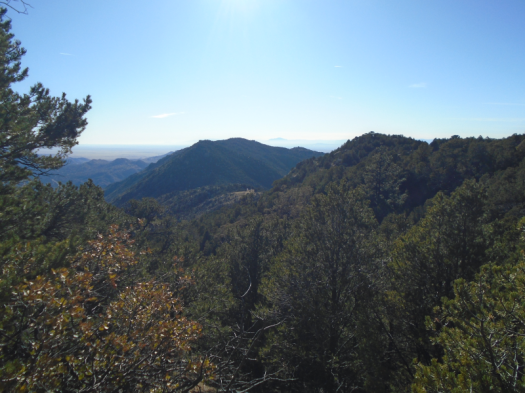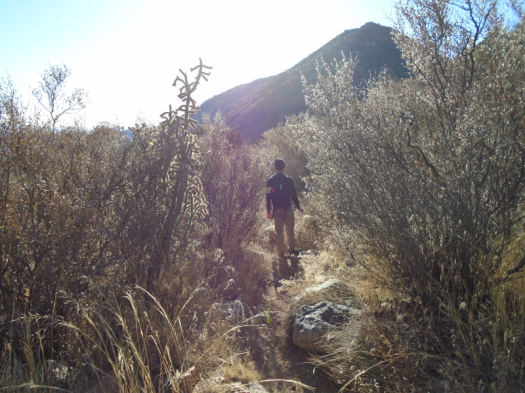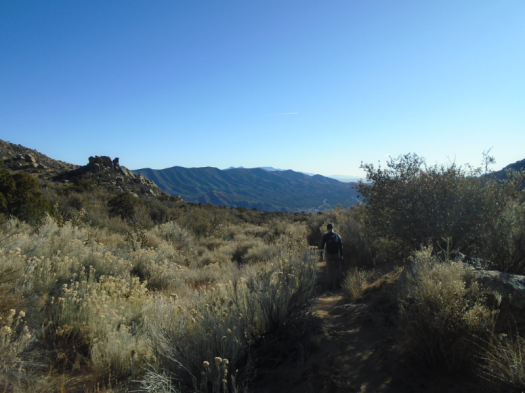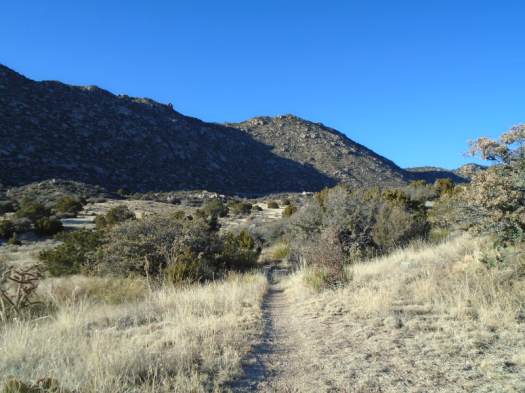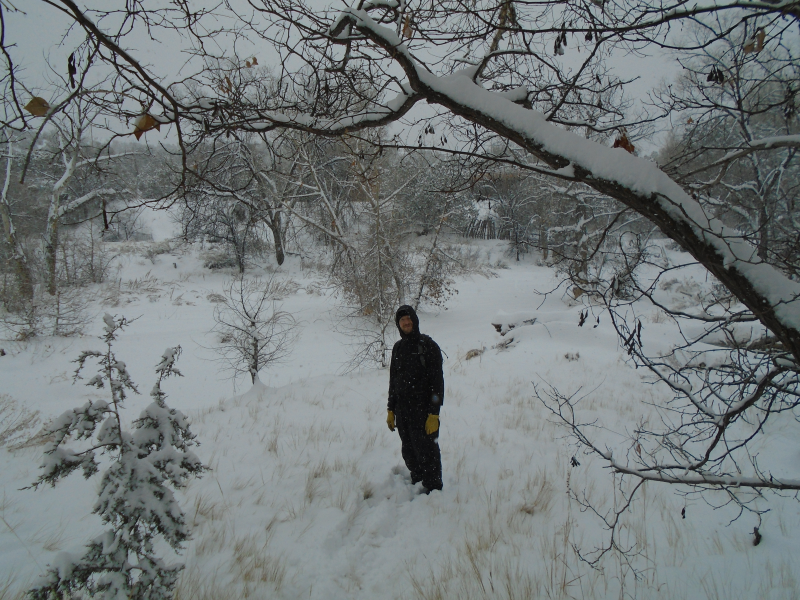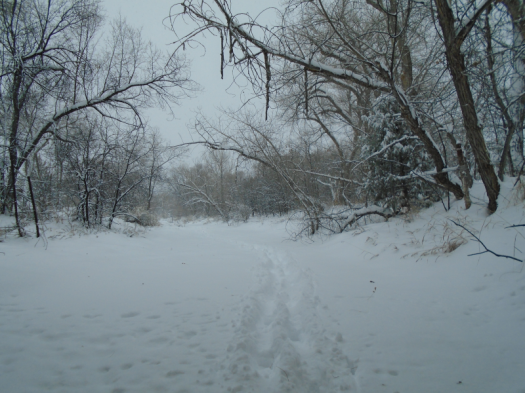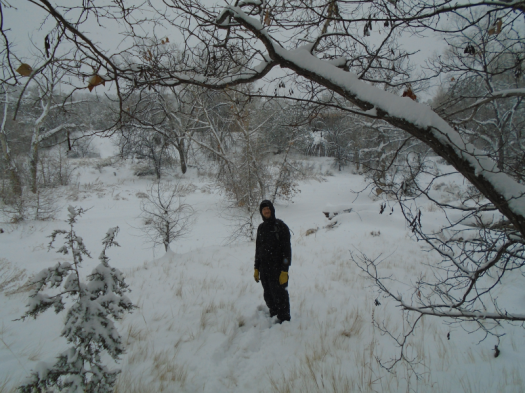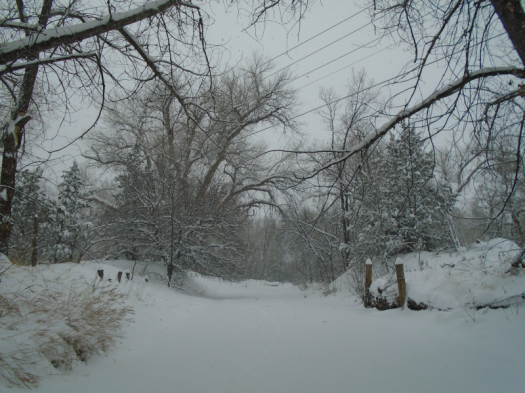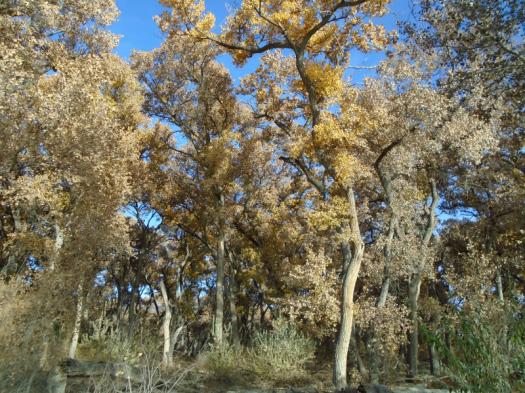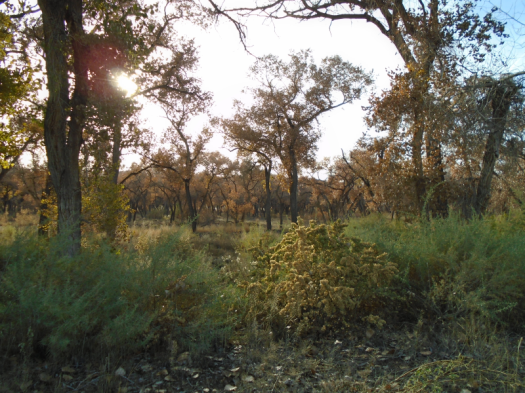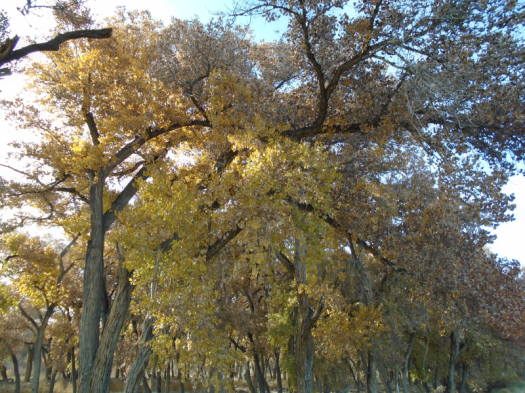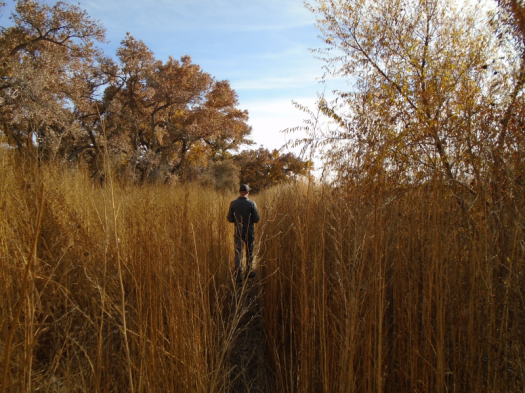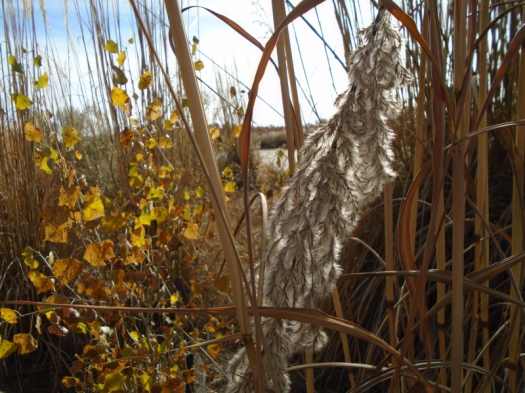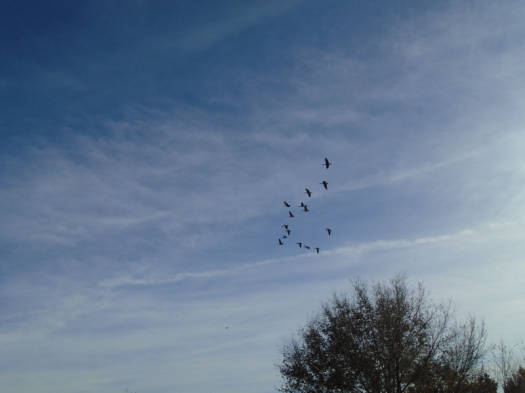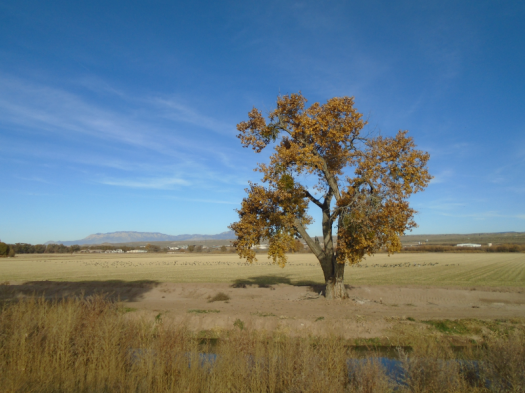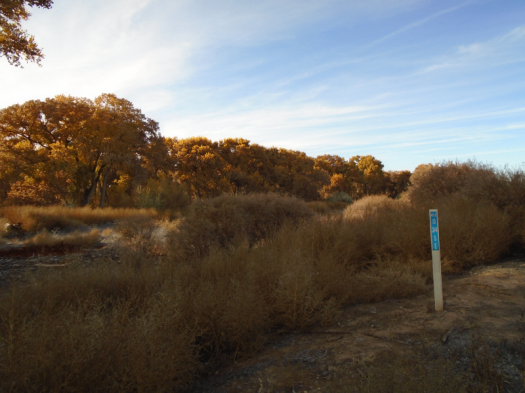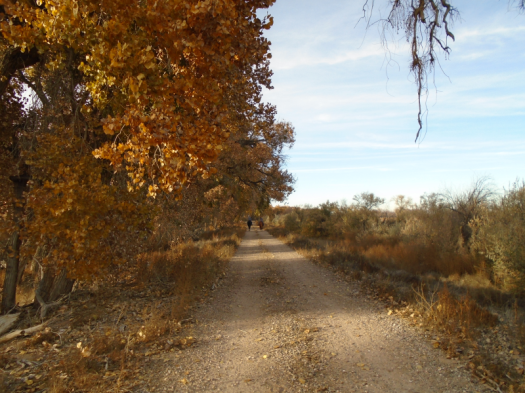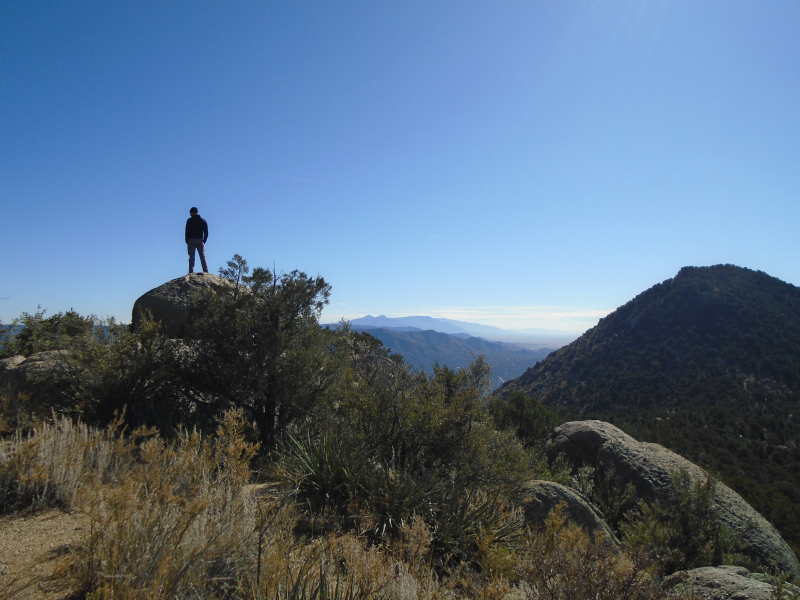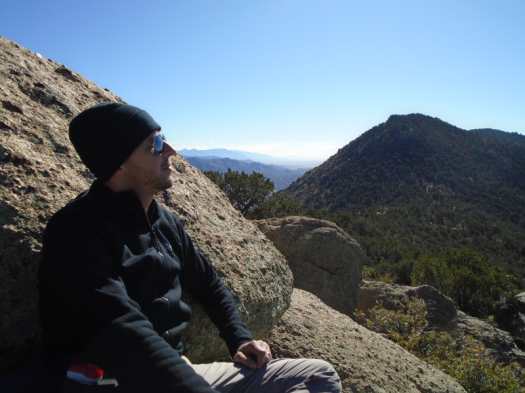
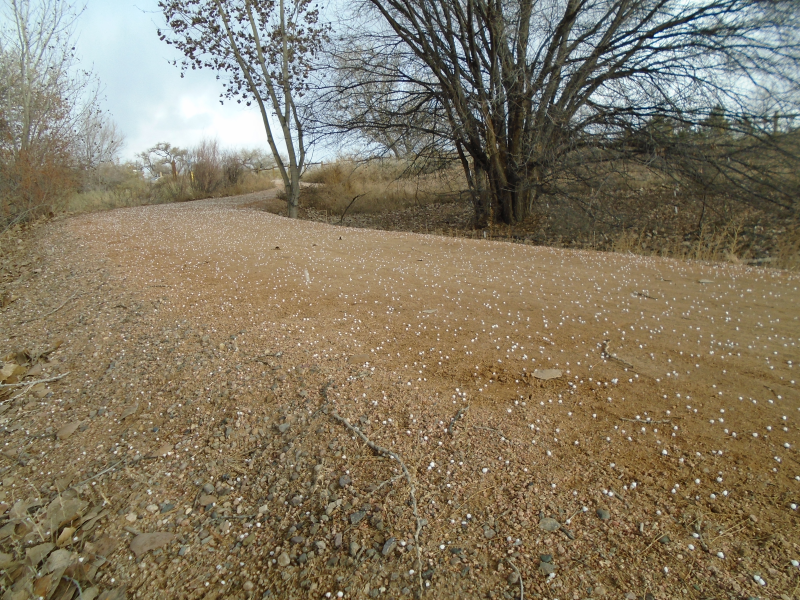
The winter bosque unleashes a micro-sleet storm

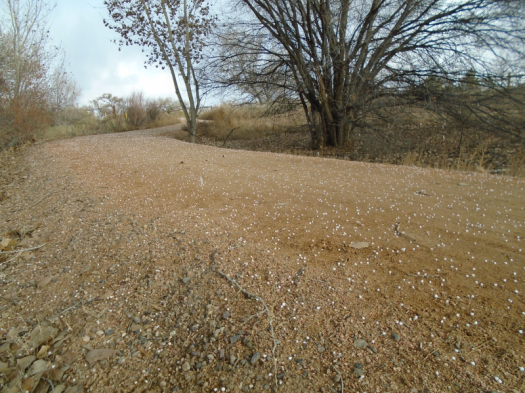
Yep, it’s definitely sleeting.

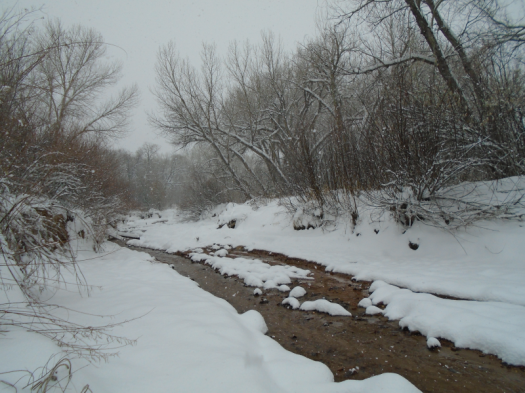
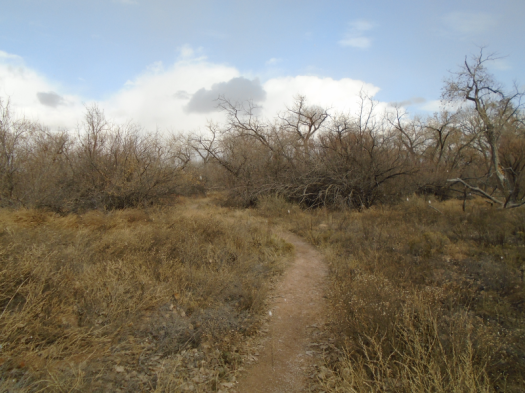
We’re less than a quarter mile from the trailhead in the Rio Grande river bosque. Little white pellets pelt us.

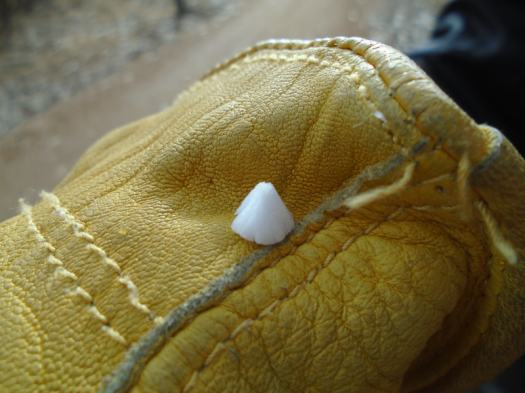
Sleet and sun will trade places for this entire hike. The precipitation cycles from little white blasting caps to light droplets barely touched with ice, and back again.

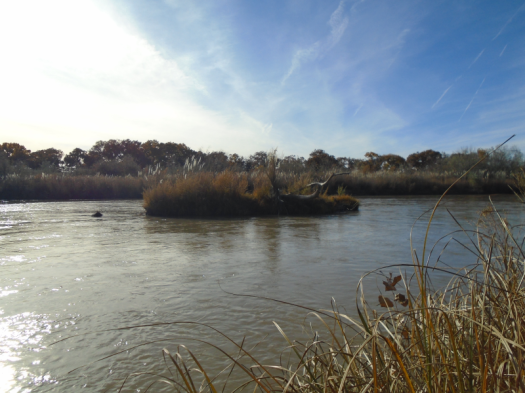
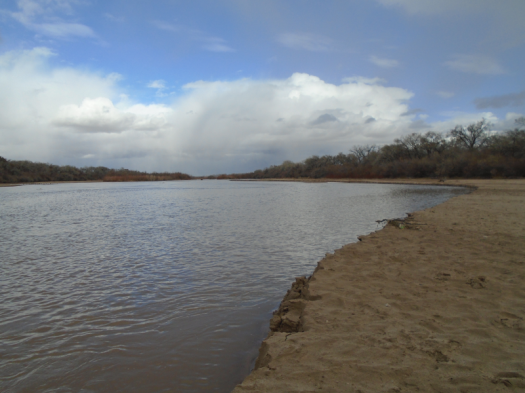
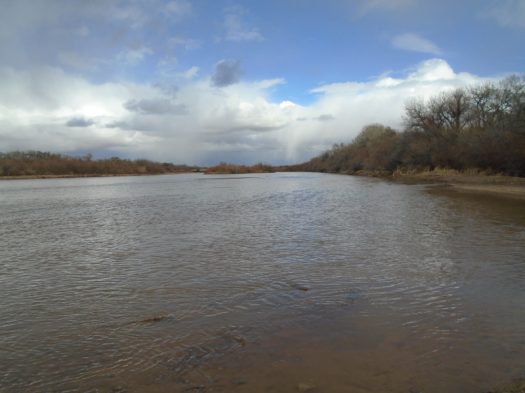
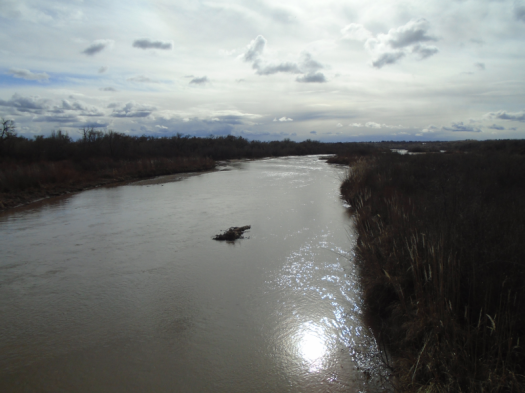
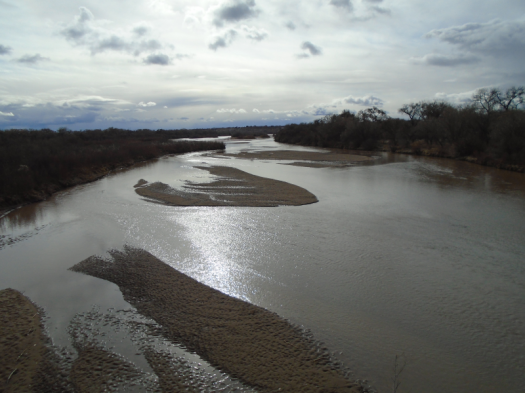
We walk out on a sandy landing. The river flows fast at its edge, wind-ruffled, bolstered by snowmelt or rain further north.
DSC03157.JPGDSC03162.JPG

Sun peeks at the trail, melts the pellets. The leaves beneath glisten.
DSC03151.JPG
Look closely and you can see the sleet falling!
DSC03165.JPG
Sleet on the trail
DSC03167.JPG
Blasting cap of sleet on my husband’s glove

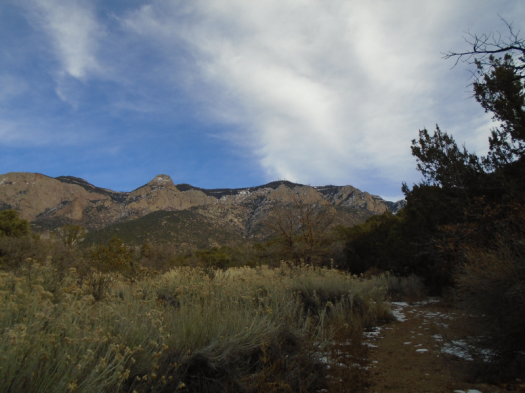
We walk up to the Montano Bridge, right into a biting west wind, for a better view of the storm. The sky’s a bruise above Rio Rancho and the Jemez. Snow blurs our view of Corrales. The curtain has dropped over the Sandias from Embudo Canyon to Placitas.
DSC03168.JPGDSC03170.JPG

We retrace our steps to the car. It’s 45 degrees there. No precipitation has fallen.

At our house this morning, outside looked and felt uninviting on this cold, cloudy winter day. I just barely dragged myself off the couch. My husband vowed to stay inside, changing his mind at the very last minute.

We almost missed quite a show.

Hike length: 3.8 miles

Difficulty: easiest

Trail traffic: moderate

Wildlife spotted/heard: sandhill cranes, ducks, geese, sparrows, crows

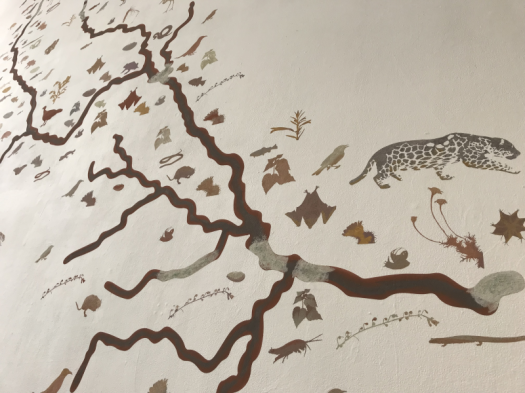
Postscript: I went straight from this hike to 516 Arts’ “Species in Peril Along the Rio Grande.” I hadn’t planned it that way, but today was the last day of this stunning, sobering exhibit. I’d been to several of its events and talks, including one in the gallery, and vowed to go back when I could spend some time and really take in all the works. I probably even tracked in a little red clay and sand today, which seems appropriate. Pictured is Ruben Olguin’s “Evaporation,” a mural that depicts more than 150 endangered species in the Rio Grande Valley using earth pigments from the valley.
IMG_3388.JPG


All the sunshine in the world: Winter solstice at Three Gun Spring

If this crossroads had a boulder to lie on, I’d be asleep in the sun.

Even sitting upright with my backpack for a cushion, my eyelids droop.

The 1,800-foot, 2-mile climb to the junction of Three Gun Spring Trail and Embudo Trail contributed. But the perfect nap conditions come from the direct sun. It pours onto this trail, this crossing, into my cells, warms me inside out.

Just as I sought on the shortest day of the year.

DSC03113.JPG

The hike up always makes me wonder if sun poisoning can happen when it’s 45 degrees. I roasted even in my floppy hat and long sleeves. The hoodie came off less than a mile in.

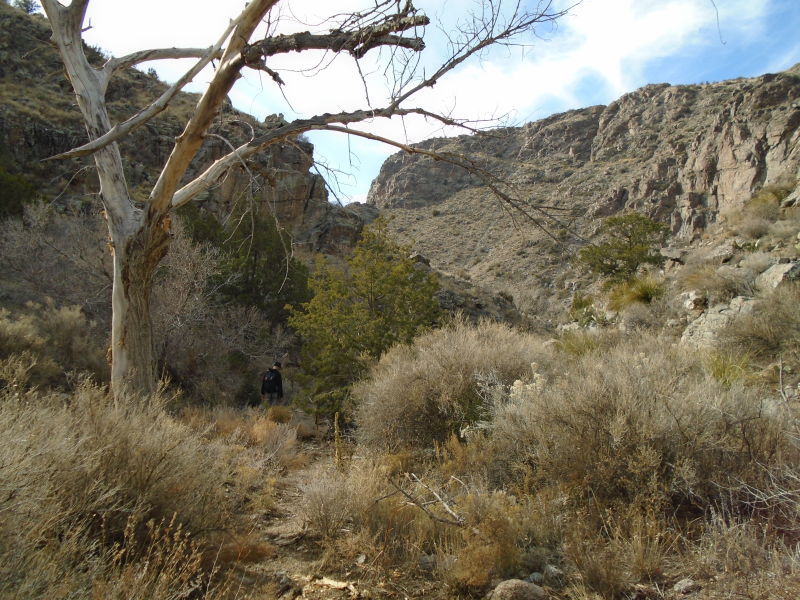
The canyon looks like an undifferentiated mass of boulders from the highway below. Birds dart among junipers in its lower reaches. As switchbacks lift you into the sky, the griddle turns on. This canyon soaks up heat and holds it.

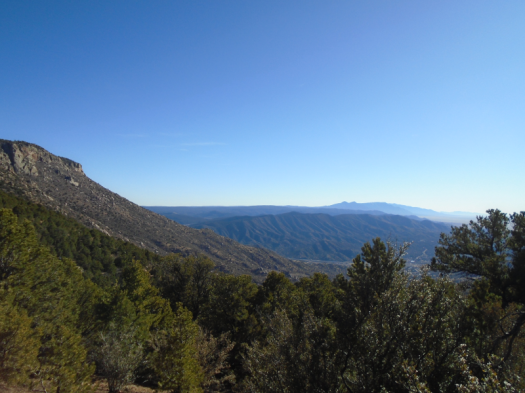
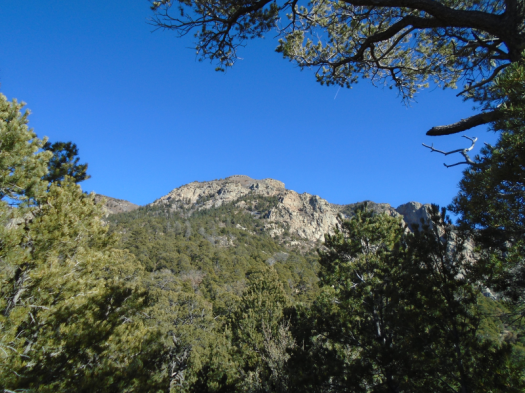
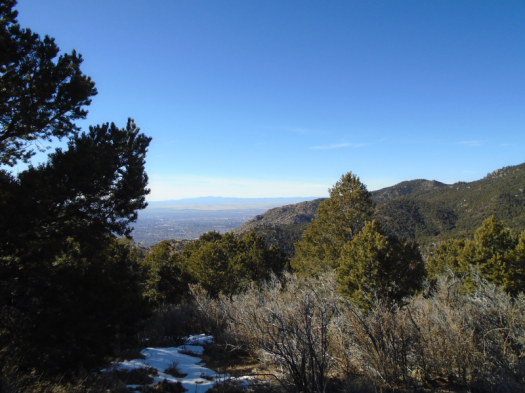
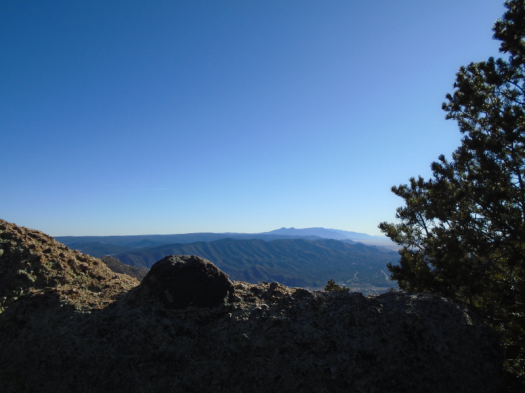
The reward: the stone walls that stretch into the blue. The layers of mountain ranges rolling to the south. The warmth to take me all through the winter.

Just as my legs reach their limit, the junction.

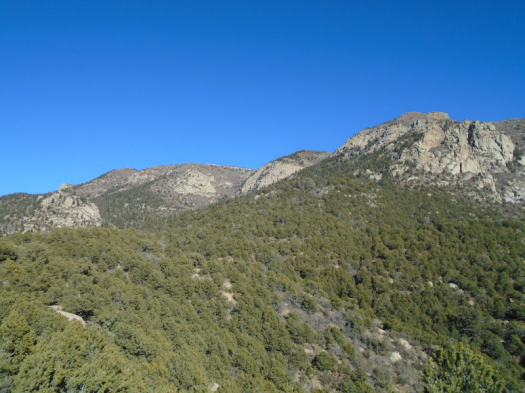
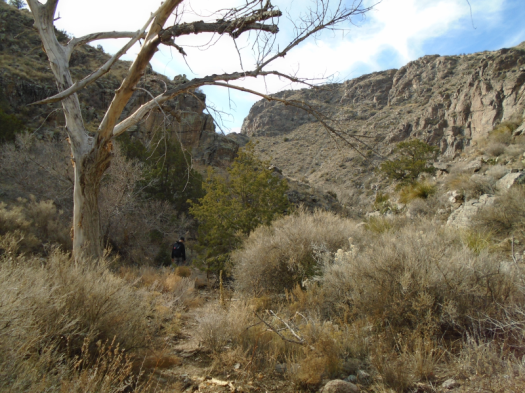
Even a few steps from this crossroads, trees press in, temperature drops, snow and ice patch the trail. Every turn presents a new view of soaring stone.

DSC03117.JPGDSC03122.JPGDSC03125.JPGDSC03127.JPG

DSC03124.JPG

Solar fortified, I descend the steep path with confidence, hips slightly ahead of my torso, heels into the earth. We pass another sun seeker lying on the hillside.

DSC03128.JPGDSC03132.JPGDSC03136.JPGDSC03139.JPG

We reach the canyon’s heart again. The sun goes from blaze to glow.

“Happy solstice!” call two women on their way up.

Right behind them, a couple with hiking poles.

Someone leaving the trailhead with poles at 3:23 p.m. on the winter solstice can have only one thing in mind: watching the year’s earliest sunset from the junction.

I can’t imagine navigating down that trail at dusk, but there’s no better place to soak up every last minute of sun.

Hike length: 4.5 miles

Difficulty: Officially, moderate. This section gets a solid difficult rating in my book.

Trail traffic: moderate, but none above the junction

Wildlife spotted: pinyon jays, blue jays, hawk, robin, juniper titmouse, beetle

TIPS: To continue a theme, this is hot and rattlesnake-friendly terrain, and I don’t recommend it April-October.

Embudo Canyon from a horse’s-eye view

One can scramble up giant boulder slabs in Embudo Canyon’s throat.

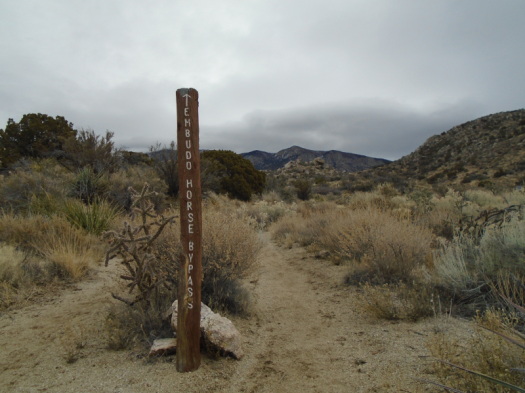
Or one can make like an equine, take the Embudo Horse Bypass, and walk along ridges above the canyon.

Today we chose the latter.

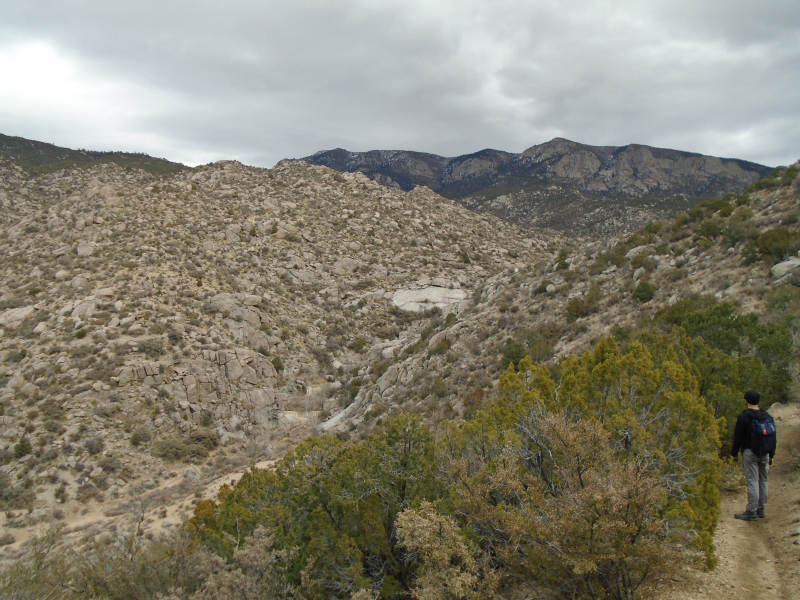
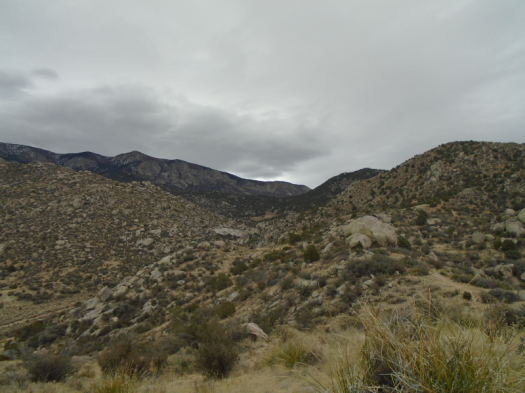
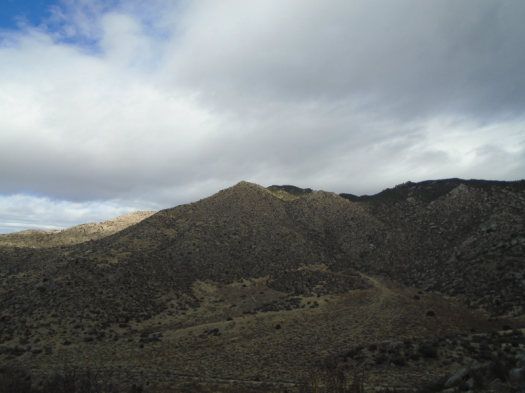
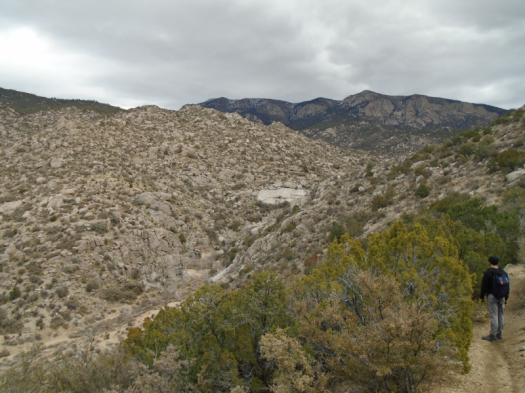
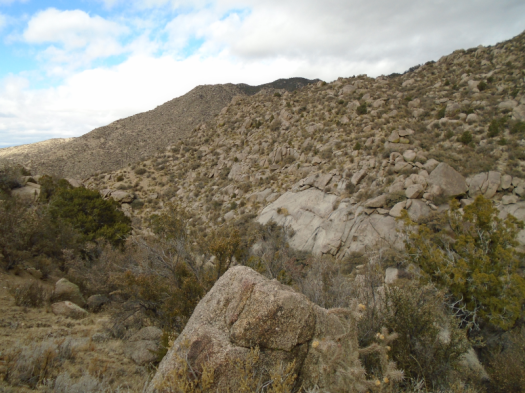
Winter and the end of fall played silent tug-of-war. Clouds blanketed the foothills, cast cool light on granite and cholla. Sun bathed the valley and mesa below.

Sturdy pines, a flash of bluebird appeared in the yucca, cacti and stone.

DSC03070.JPGDSC03072.JPG

DSC03081.JPG
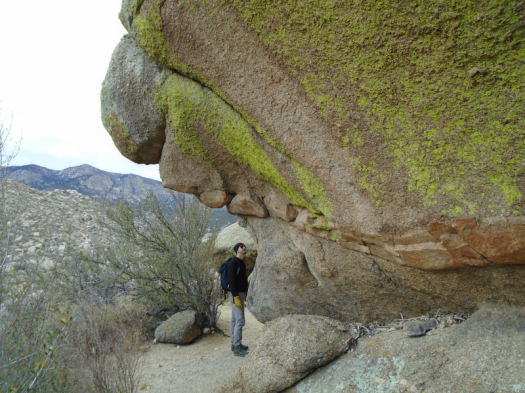
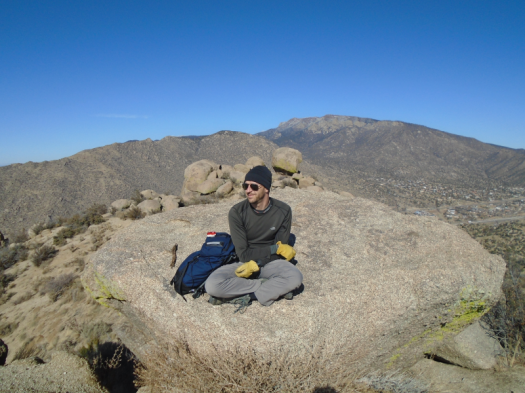
The boulder that ate my husband

DSC03082.JPGDSC03088.JPGDSC03090.JPG

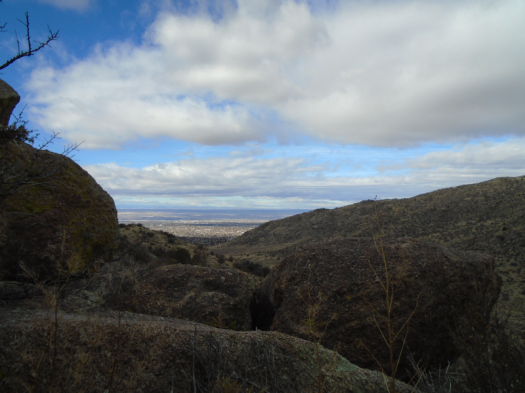
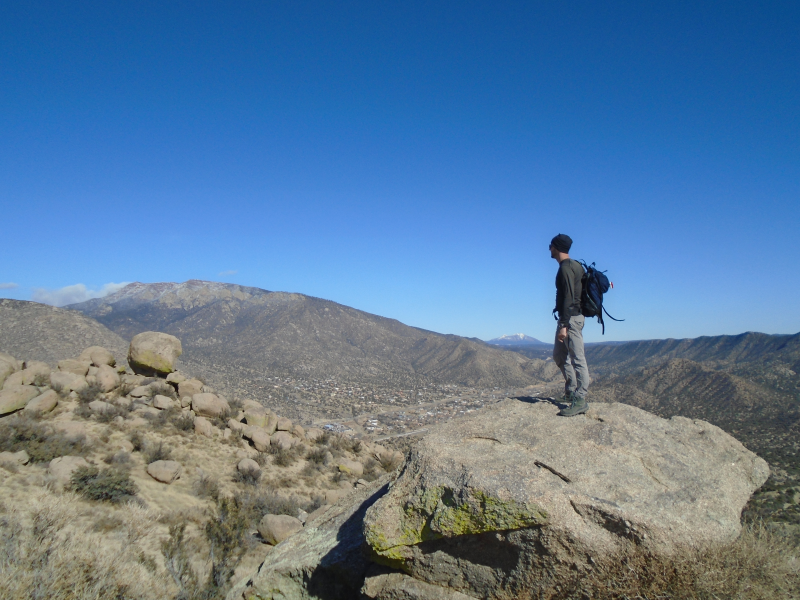
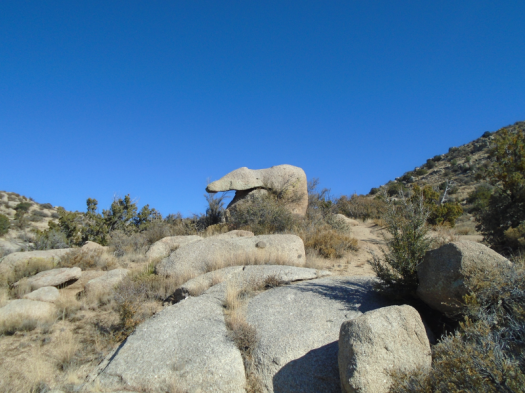
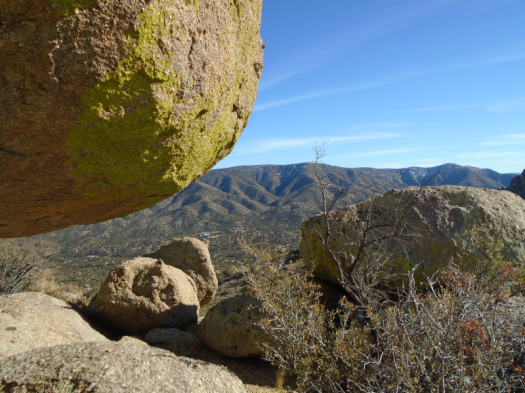
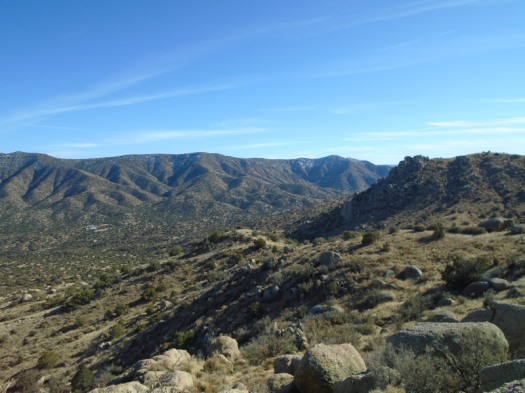
Paths wrapped around gigantic boulders. From the ridge’s edge, we peered down on the canyon walls, stacked slabs of stone.

DSC03094.JPGDSC03096.JPGDSC03101.JPG

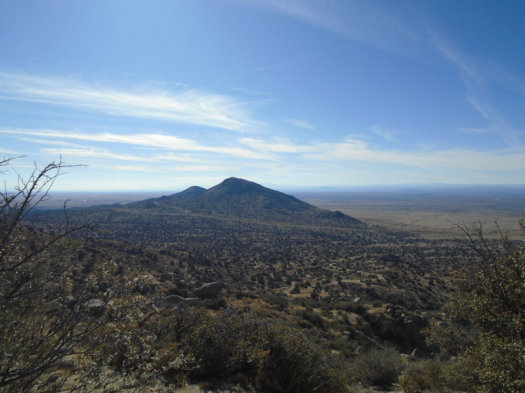
We took a side path up a steep ridge, gazed all the way to the Magdalena Mountains, 100 miles south. Cold wind whipped our faces. We retraced our steps and followed the bypass down to the canyon’s shelter.

I came to this trail today seeking winter’s endless sun.

But in the cool cloud light, I could see much more.

Hike length: 4.4 miles

Difficulty: moderate

Wildlife spotted/heard: bluebird, bluejay, crows, flycatchers, juniper titmice

Trail traffic: moderate (very light on the horse bypass)

Juan Tabo Canyon from the bottom up

I’ve climbed steep paths for a dramatic view into Juan Tabo Canyon.

But I’d never seen its rugged rock walls rise hundreds of feet above me.

Until yesterday.
You can get a good gander at the Sandias’ Shield, Prow and Needle from many spots near the canyon. Yesterday’s hike took us through the canyon’s less-traveled northern sections.
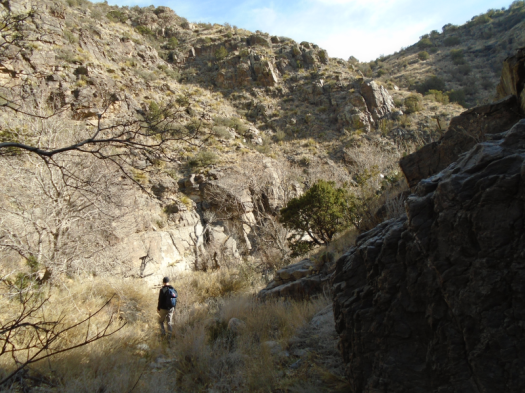
Down arroyos, following footprints and deer tracks. Through stands of bare trees and brush. Over damp rocks where a stream had recently flowed.
The sun and a light breeze warmed us. Still, our feet crunched snow in shady spots.
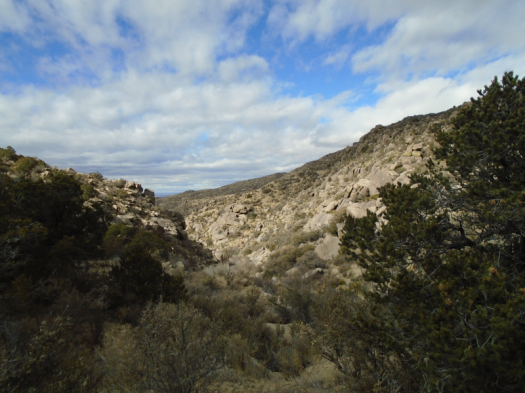
We squeezed against jagged slate canyon walls. The further south we went, the higher the rock rose above. Mountain chickadees and towhees darted from juniper to juniper.
It made me wonder if this canyon bottom would flourish green in a wet spring and summer.
DSC03057.JPGDSC03060.JPG

DSC03061.JPG
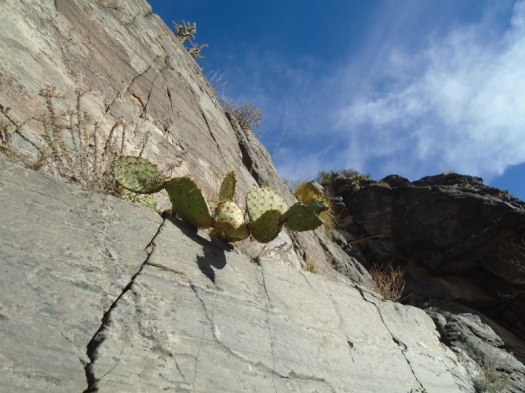
Tenacious.
DSC03062.JPG
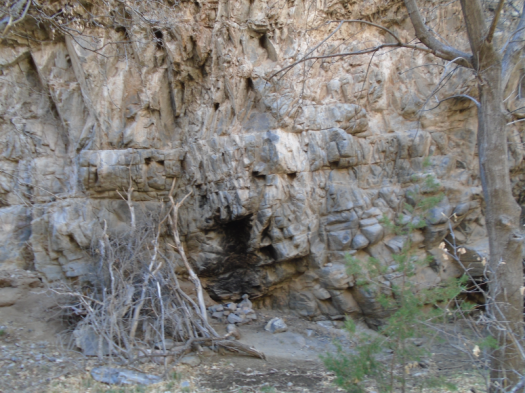
A cavelike hole in the rock

DSC03064.JPG

Our first view into the canyon looked verdant even today, blanketed with evergreens.
DSC03051.JPG
The light and warmth shortened with the afternoon. Winter cloud cover built.
DSC03065.JPG
DSC03066.JPG
Time to go, taking a new view of the canyon with us.
Hike length: 6 miles
Difficulty: moderate
Trail traffic: very light
Wildlife spotted/heard: hawk, blue jays, spotted towhees, mountain chickadees, Jerusalem cricket
TIPS:
-I recommend this hike, like my other recent ones, November-March. It’s very sunny.
-This barbell-shaped route comes from Mike Coltrin’s Sandia Mountain Hiking Guide.

Giving thanks for 8 inches of snow and borrowed waterproof pants

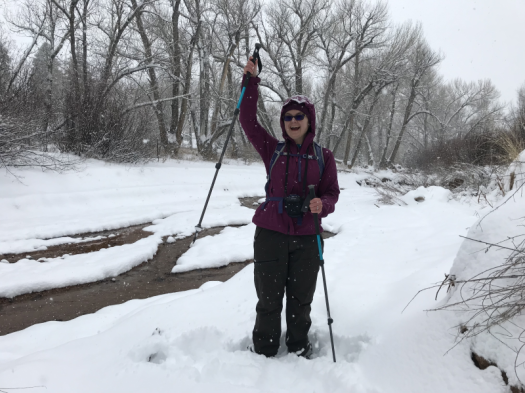
We make the first human tracks in the arroyo just before noon on Thanksgiving.

DSC03028.JPG

I wear my husband’s waterproof pants, with two pairs of pants under them. My husband wears his dad’s waterproof pants. Combined with his windbreaker, they remind me of an astronaut suit. I guffawed when he put it on – not my smartest move, since this hike in a snowstorm was my idea.

DSC03019.JPGDSC03021.JPG

We walk beneath a road overpass. The shift from tromping through eight inches of fresh snow to walking on dry concrete leaves my legs slicing through air.

The Rio Tesuque has mostly frozen over. A few channels bubble through the ice.

DSC03023.JPG

IMG_3321.JPG

I’m almost warm when we climb out of the arroyo. Cold air greets our faces.

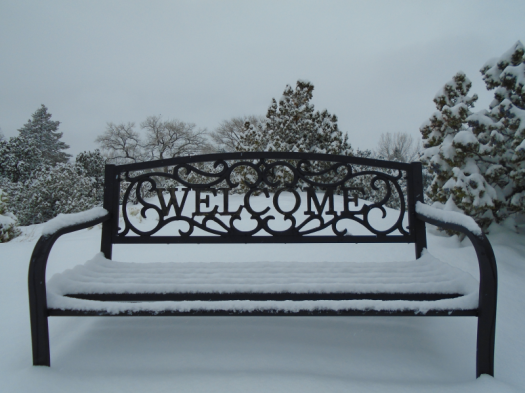
We climb a hill where my in-laws’ neighbors have a bench with a great view. My shins and hip flexors burn from moving through deep snow.

I expect the usual blue and beige and green of these hills, only with white.

Instead we step into a black-and-white photograph.

DSC03033.JPGDSC03035.JPGDSC03039.JPGDSC03043.JPGDSC03045.JPG

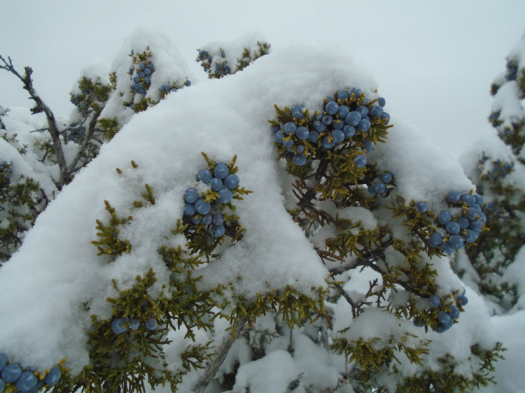
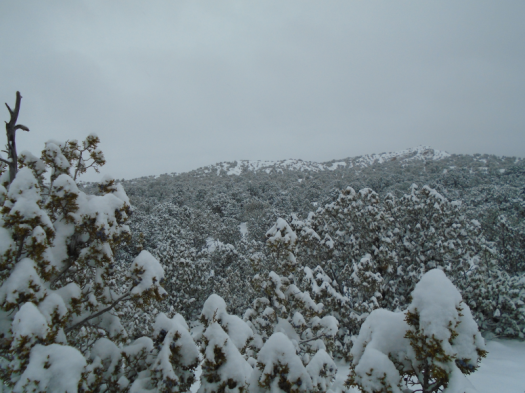
The sky presses low and gray, the junipers almost black under their white blanket. The barest line of beige peeks through the snow on the hills.

I’ve hiked on snow, but never in a snowstorm.

There’s nothing like it.

Hike length: 2 miles

Difficulty: moderate today, easy any other

Trail traffic: none

Wildlife spotted/heard: blue jays, towhee

Everything shows its true colors at Manzano Open Space

South Sandia Peak stands rust red, dusted with white.

I’ve stared up at the South Peak so many times, from so many places. I would never have described it as red.

To see that requires being in the right place at the right time.

Early afternoon, late fall, atop an unnamed peak in Manzano Open Space.

DSC02994.JPG
Red ridge on the Sandias at 10 o’clock; snowy San Pedro Mountains on horizon

Rugged paths ramble through Tijeras Canyon, overlapping with Route 66 Open Space. I-40’s white noise rumbles by.

The steep climb up to the peak delivers a 360-degree view: the south Sandias, the rumpled canyon, the high plains rolling south, Mount Taylor with a solid cap of snow on the distant horizon.

DSC02991.JPG
From different vantage points this rock looks like an anvil, a bear, a bike helmet and Trump’s hairdo.

DSC02995.JPGDSC03002.JPG

Wind blows stronger up there. Snow covered the canyon two days ago, but it’s clear and dry below 8,000 feet. I soak up sun on a shielded boulder.

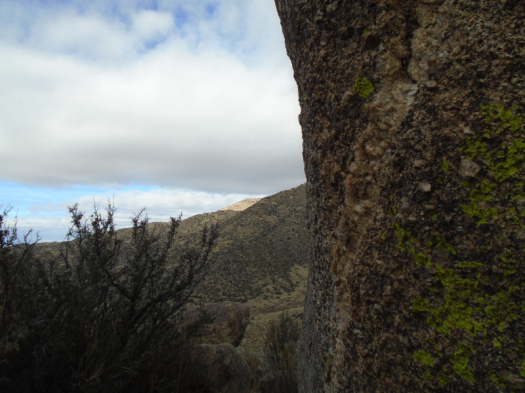
The boulders balance enormous against enormous. We climb down to get a closer look at one, covered with lime-green lichen, that must weigh three tons.

DSC03005.JPG
A mere corner of the boulder that ate Tijeras Canyon

We hike out to a knoll to look over the canyon. Mountain bluebirds spring brilliant from the junipers.

DSC03008.JPGDSC03011.JPG

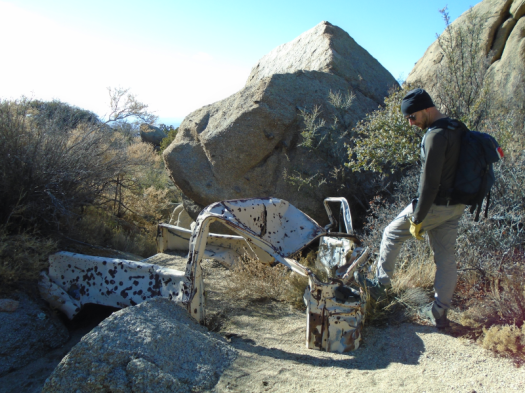
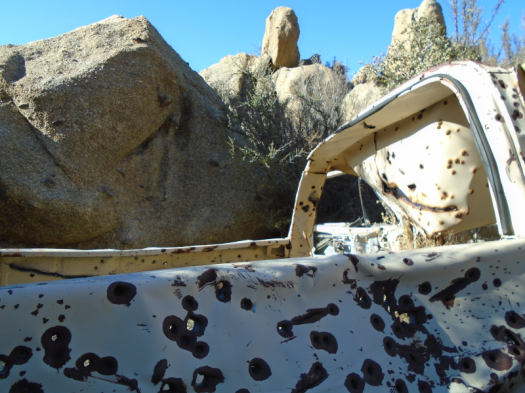
A wrong turn on the way down dead-ends at a rusted, bullet-riddled truck chassis buried in the sand. Stumps of seatbelt remain.

DSC03014.JPGDSC03016.JPG

Both man and nature have shaped this rugged land on Albuquerque’s eastern flank.

Hike length: 5.5 miles

Difficulty: moderate

Trail traffic: light

Wildlife spotted/heard: blue jays, robins, mountain bluebirds, crows, grasshoppers

TIPS: Like last week’s hike, I recommend this one for November-March. It’s shadeless and looks very rattlesnake-friendly.

People have clearly partied out here; a few trails had quite a bit of broken glass. Watch where you step or ride.

Thanks to the Albuquerque Senior Center for posting a great description of this route!

Cañada del Ojo: An eyeful of hoodoos

We fly as only a wide, smooth dirt road allows a vehicle to do, then stop short.
Before us, more than a dozen horses trot across a junction.
When we park and open the car doors, silence engulfs us. Ravens break it to trade caws across the valley.
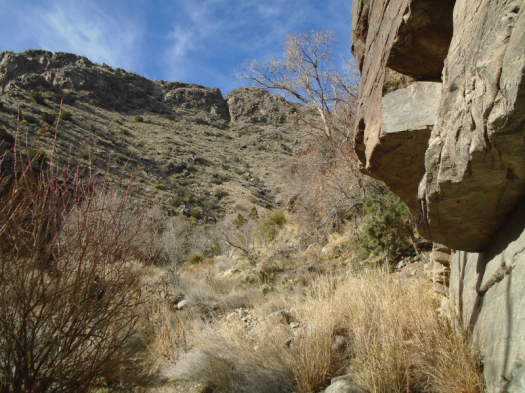
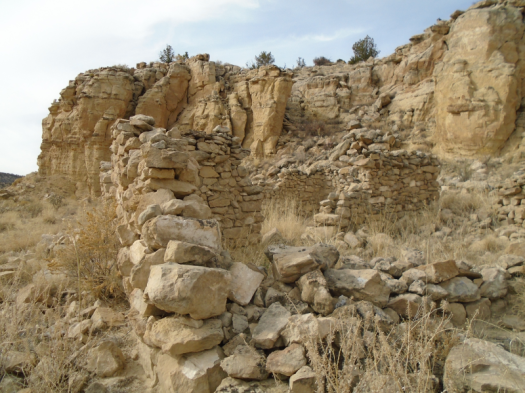
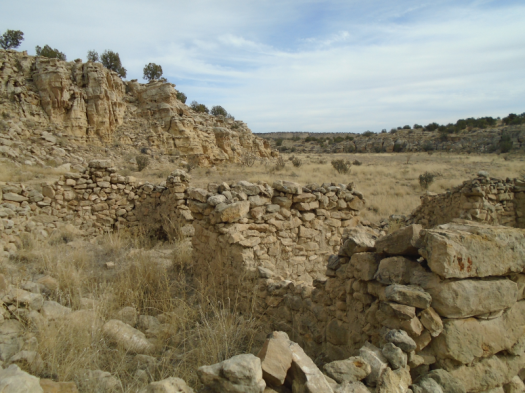
We hike to the ruins of two small stone houses. We have to strain our eyes to distinguish the foundations from the rock landscape as we approach.
DSC02918.JPGDSC02921.JPG
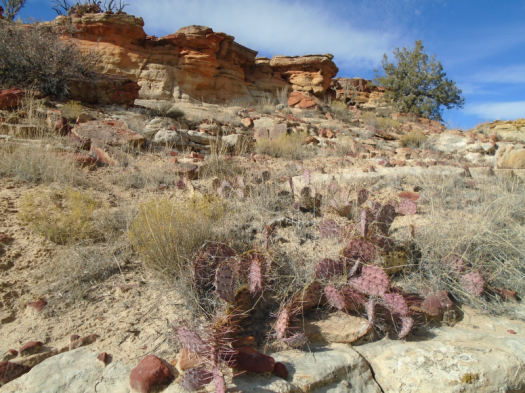
We walk a cow path through cholla cactus taller than most humans and sun brighter than most places on earth.
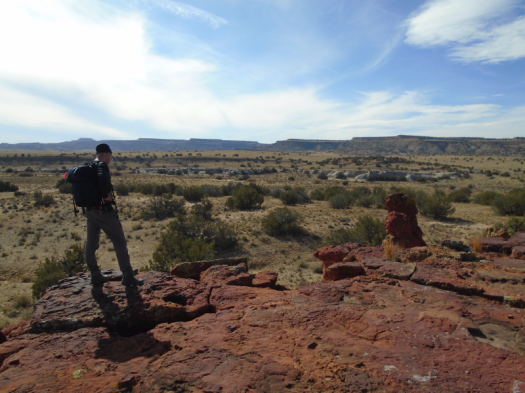
A short, steep track deposits us on a mesa. With the 100-foot elevation gain, wind emerges from the stillness. Juniper replaces cholla.
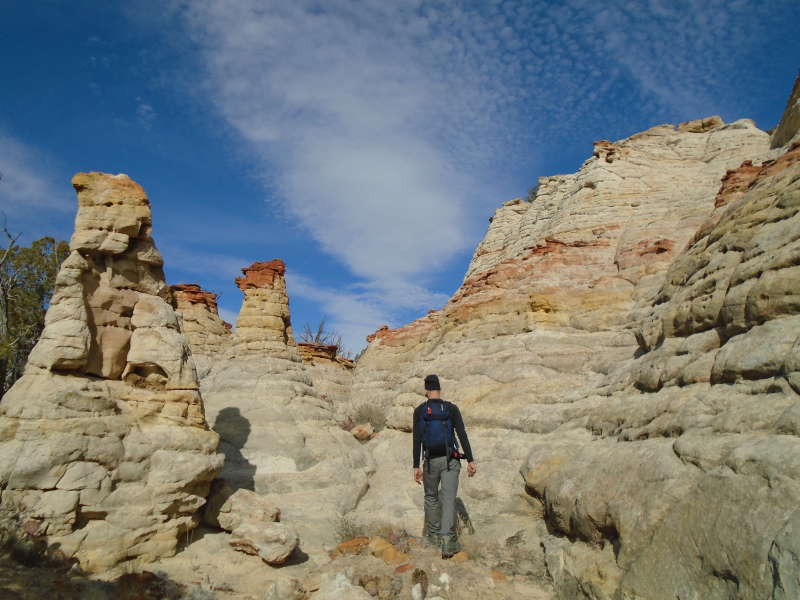
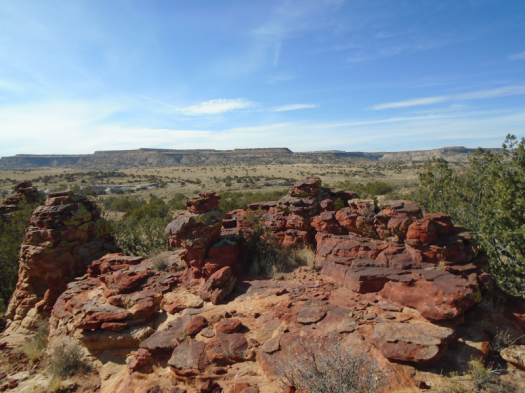
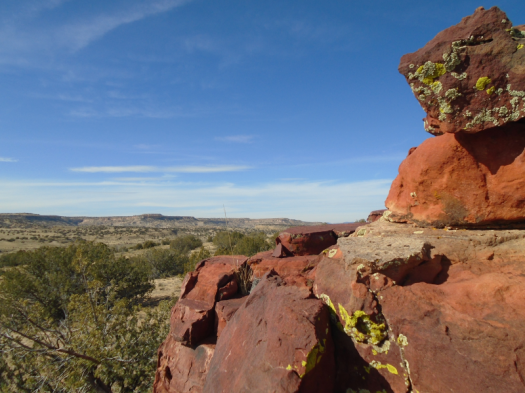
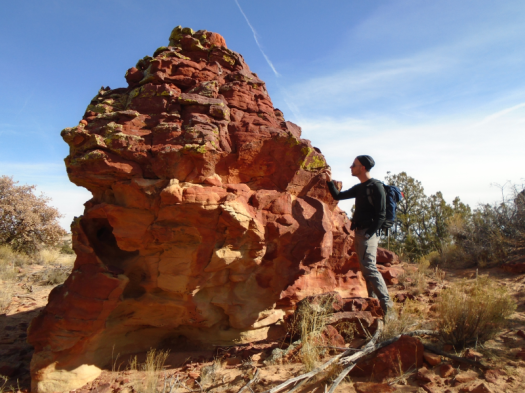
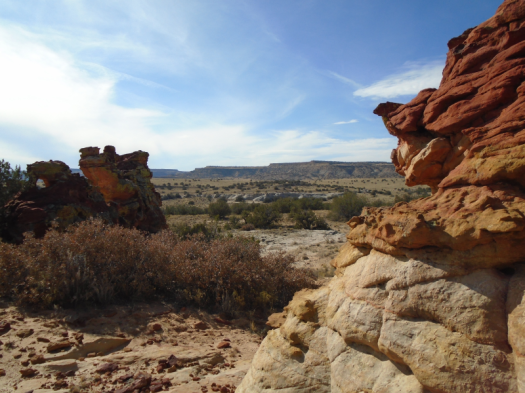
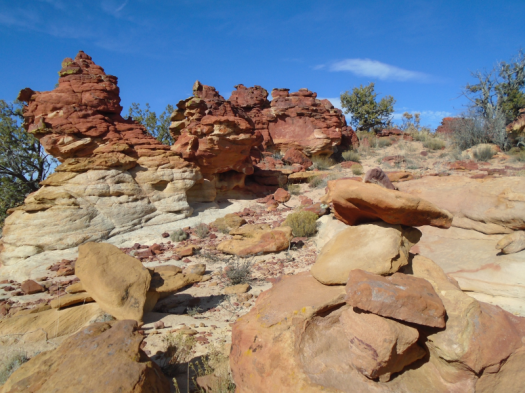
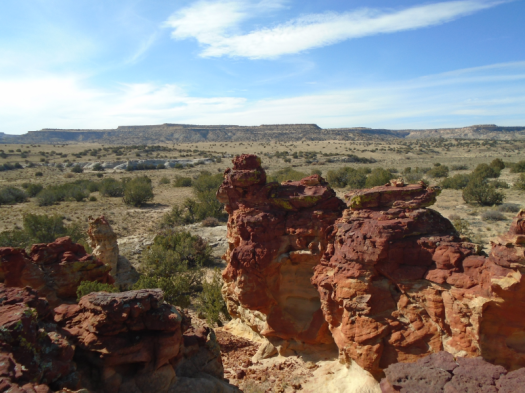
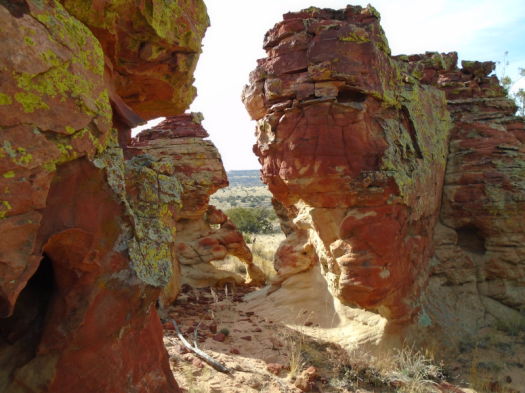
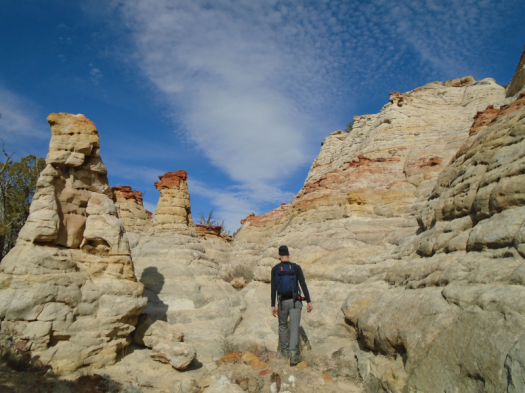
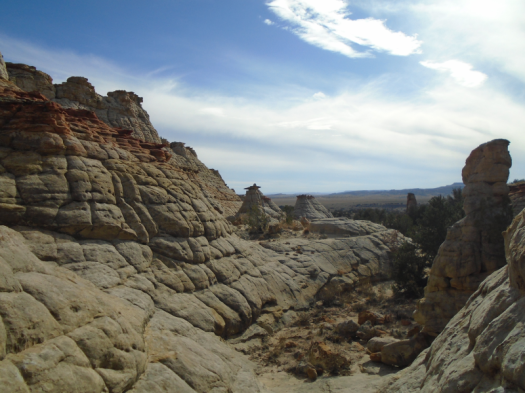
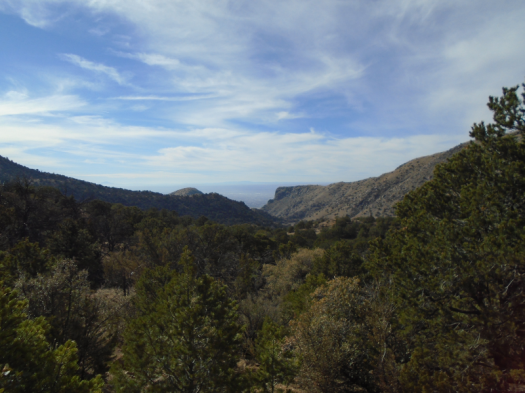
Rock twists red and rust and burgundy around us. We haven’t reached our destination, but I stop to clamber among the towers and peer through windows in the rock. Herrera Mesa looms tall and flat across the valley.
DSC02929.JPGDSC02931.JPGDSC02938.JPGDSC02941.JPGDSC02945.JPGDSC02946.JPGDSC02952.JPG
DSC02983.JPG
Beyond the red land, the arroyo we seek: sand, rock shelves, juniper branches.
We’re in it before we see it: Cañada del Ojo, a hoodoo garden on BLM-designated land near the To’Hajiilee Navajo Chapter.
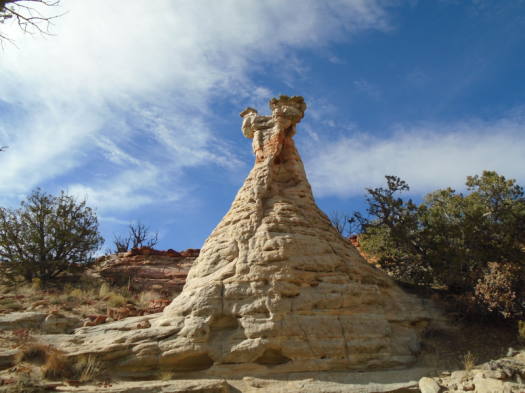
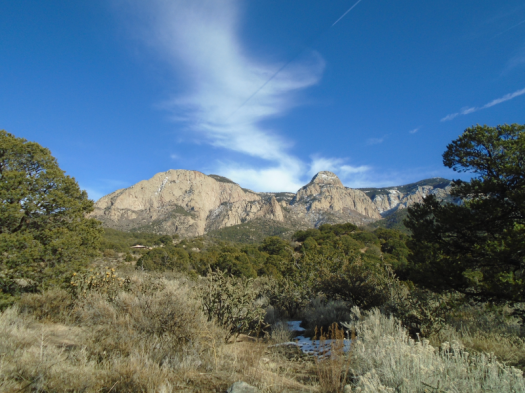
The hoodoos rise bulbous, chalky, topped with the rich red we saw earlier. Balanced rocks. Moqui marbles. An arrowhead, chipped and discarded in the arroyo.
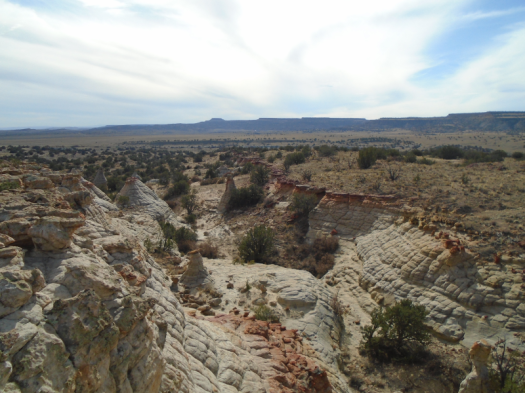
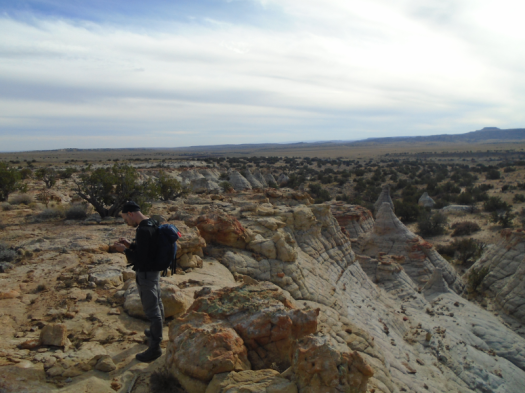
The drainage begins to resemble a slot canyon. We climb to a ridge, walk its edge to gaze down on the hoodoos and over the valley.
DSC02959.JPGDSC02961.JPGDSC02962.JPGDSC02964.JPGDSC02973.JPGDSC02980.JPG
The ridge holds numerous tinajas, rock depressions in the desert that can hold water, sometimes for weeks. All are bone-dry. The animals whose scat and sign dots this corridor must seek succor elsewhere.
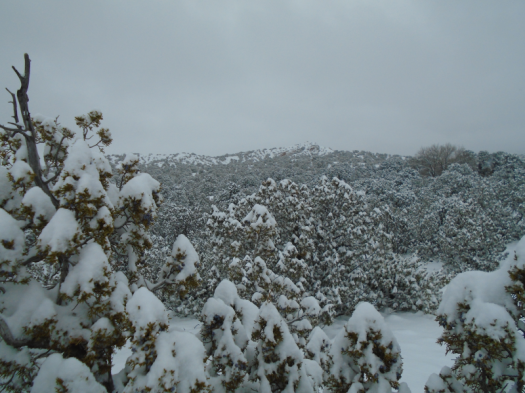
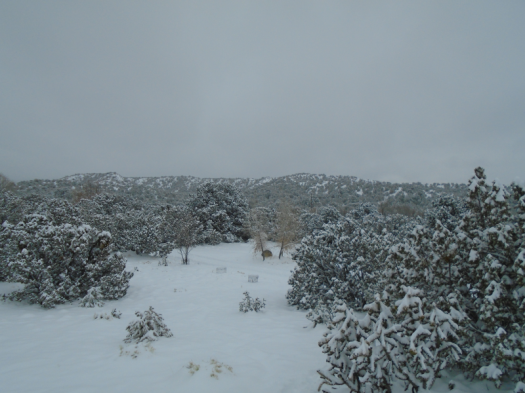
Rather than retrace our steps, we descend the ridge’s stone shoulder, long and sideways.
Cloud wisps stretch across the sky. The sun’s blast becomes a glow. The ground beneath our feet reveals a chunk of chalcedony, a bobcat print.
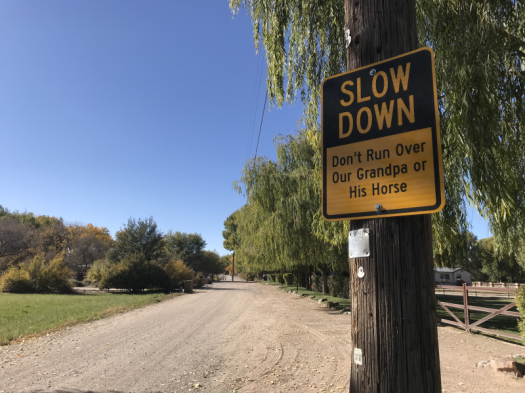
We follow a long fenceline through cactus and sky to our car.
The horses run beside us as we drive away.
Hike length: 6 miles
Difficulty: moderate
Wildlife spotted/heard: crows, ravens, cottontail, chipmunk, butterflies, grasshoppers
Trail traffic: none
Tips: This route is from the latest edition of “60 Hikes Within 60 Miles of Albuquerque.” I recommend this hike November-March. There’s no shade and the terrain looks like prime rattlesnake habitat. As noted, the dirt roads to get here are mostly good in dry weather, but the last couple miles could get dicey quick with any rain or snow.

The golden hour lasts for weeks at Valle de Oro

Honk honk honk honk HONK HONK HONK honkhonkhonkhonkhonk.

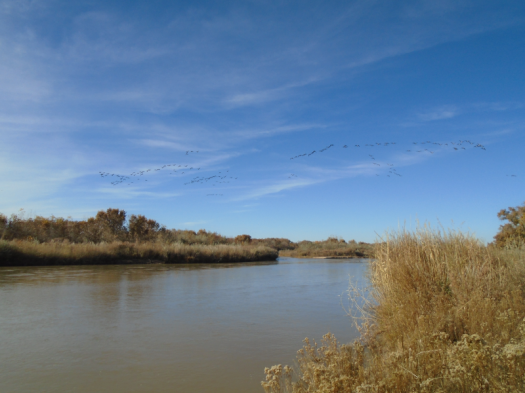
We hear the ruckus just in time to see what might be 100 geese fly over.

We’re standing on the east bank of the Rio Grande at Valle de Oro National Wildlife Refuge.

DSC02854.JPG
Incoming

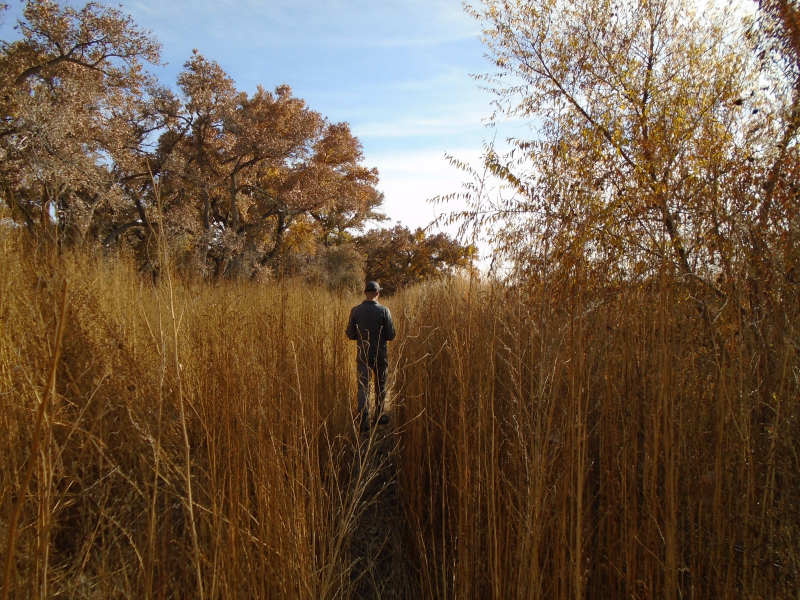
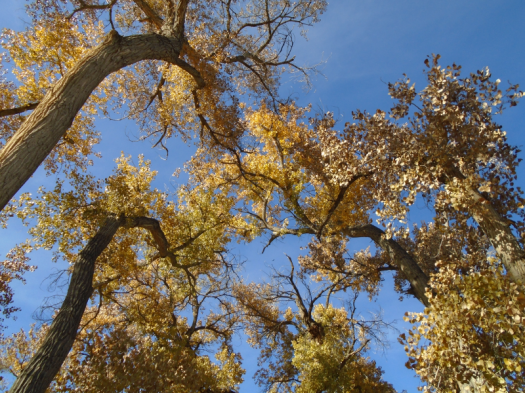
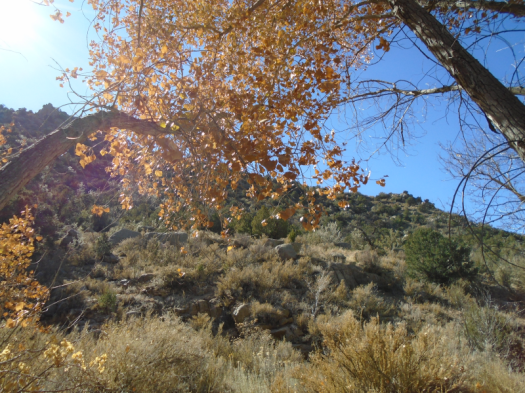
Valle de Oro has arguably the best cottonwood fall color show in Albuquerque proper. The cottonwoods peaked at least a week ago. I thought to come here only because a trip to Jemez Springs yesterday reminded me how beautiful cottonwoods are when they turn past peak yellow to gold.

The colors at Valle de Oro today pulse instead of blaze, but they still command attention. So do the gaggles of birds.

DSC02834.JPGDSC02838.JPGDSC02888.JPGDSC02908.JPGDSC02909.JPG

DSC02860.JPGDSC02865.JPGDSC02881.JPG

We hear sandhill cranes’ rusty call from the other side of the river as we wander the east bank. Traffic noise rises. I guess that it’s from NM 47, the highway from Albuquerque to Isleta Pueblo and Bosque Farms.

The bosque path meets an acequia, and we can see the intersection of NM 47 and I-25. Isleta Casino rises up before us, the Manzano Mountains behind it. Between us and the highway, a field full of geese, with a good dozen more arriving every few minutes. A roadrunner darts across the acequia’s dirt track.

DSC02890.JPG
Coming in for a landing
DSC02896.JPG
Looking back over the field of geese toward the Sandias

DSC02897.JPG

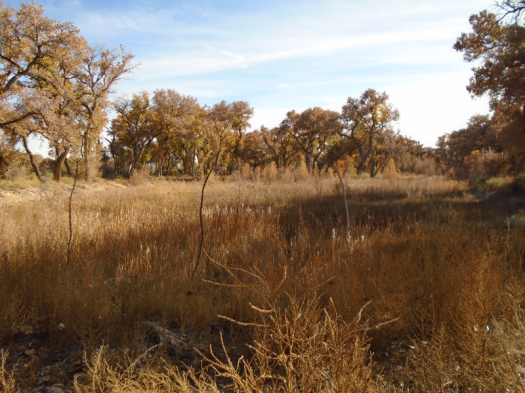
We turn around at the NM 47 overpass and walk back south on the acequia. Gold glints from a bosque receding to brown. Birds move over in waves.

The vibrant colors have flamed out, but fall in New Mexico still has more to give.

Hike length: 5.5 miles

Difficulty: easiest

Wildlife spotted/heard: dragonflies, crows, hawks, kestrel, sandhill cranes, geese, ducks, sparrows, downy woodpecker, great blue heron

Trail traffic: light

DSC02912.JPG

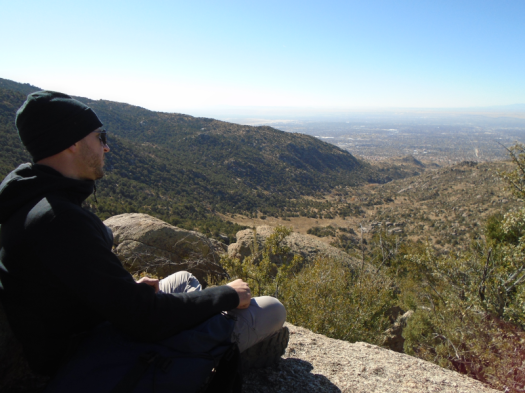
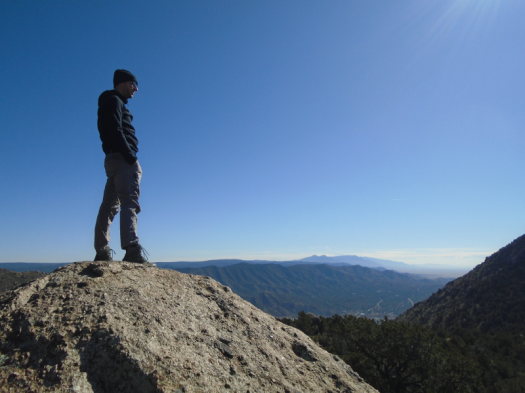
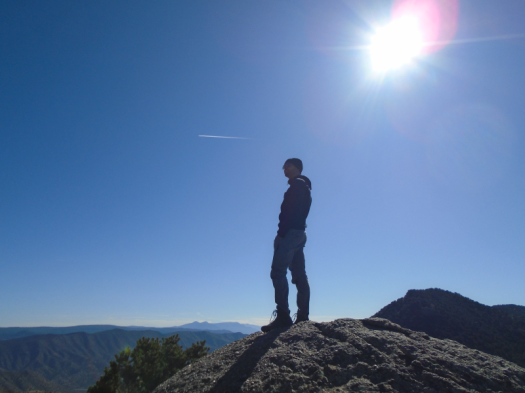
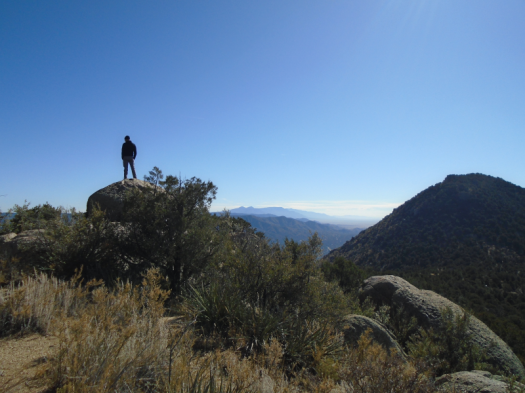
The view from the top of Embudo Canyon astounds no matter how you get there

The trail runner leapt onto the rock wall and raced up. His feet met every indentation like magnets.

This is not how I tackle the challenges of Embudo Canyon.

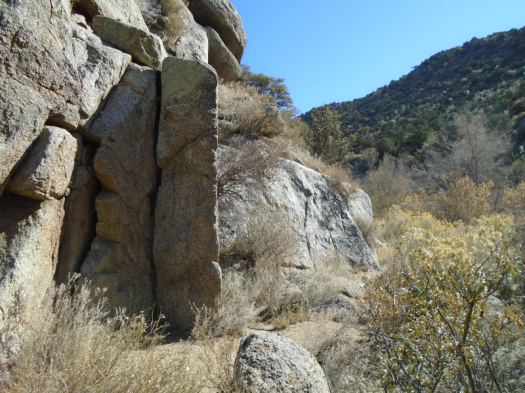
To climb its sloping boulder-shelves, I requested my husband’s assistance from above. To descend them, I scooted down on my butt.


When we got to a black diamond section of very steep switchbacks, I stopped frequently, laboring to push myself up to the next rock. Later, I moved down the switchbacks only slightly faster than a glacier, crouching to keep my center of gravity low, contorting myself into any position that would put a foot in contact with something semi-flat.

I did this even though I’ve been hiking long enough to know that climbing or descending a steep grade slowly taxes your muscles way more than walking briskly down it, planting confident heels into the earth.

Sure enough, after I descended the switchbacks, my legs quaked like aspens and I still had two more miles to hike, including the boulder descent.

But.

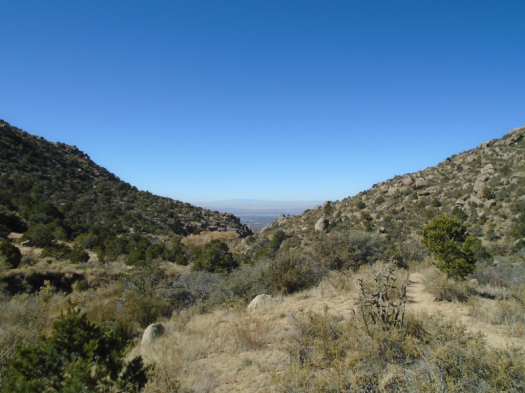
I reached my destination, a ridge steeped in sun and wind at nearly 8,000 feet. One mountain range after another rippled blue in the distance: Manzanitas, Manzanos, Los Pinos. I’ve hiked them all and seen them from many vantages. But I would never have guessed you could see them all from so far north and west.

DSC02819.JPG

DSC02820.JPG
Looking west over Albuquerque

DSC02822.JPGDSC02825.JPGDSC02830.JPG

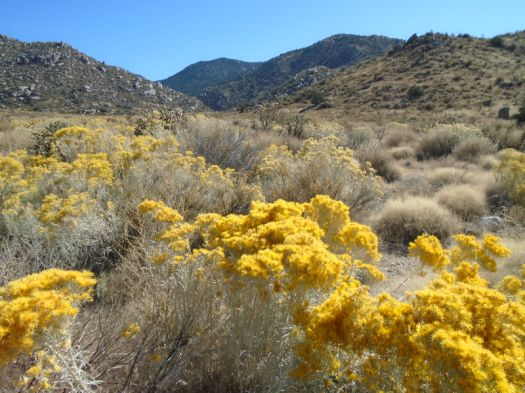
Below us, a sunbaked valley alight with chamisa. A brown stand of cottonwoods’ final show of the year.

DSC02801.JPG

DSC02812.JPGDSC02816.JPG

DSC02808.JPG

I will keep working to build more confidence on steep trails, since many of the best places are at the top of them.

I will also celebrate when I get to the top my own way and at my own pace.

Hike length: 6.2 miles

Difficulty: moderate except for the black diamond section near the top

Trail traffic: moderate

Wildlife spotted: sparrows, blue jays, robins, crows, butterfly, beetles

How Albuquerque’s acequias welcome you home in the fall

No hiking poles necessary, no backpack.
No planes or cars or shuttles after a week of them.
Just feet in dirt piled into powder from weeks without rain.
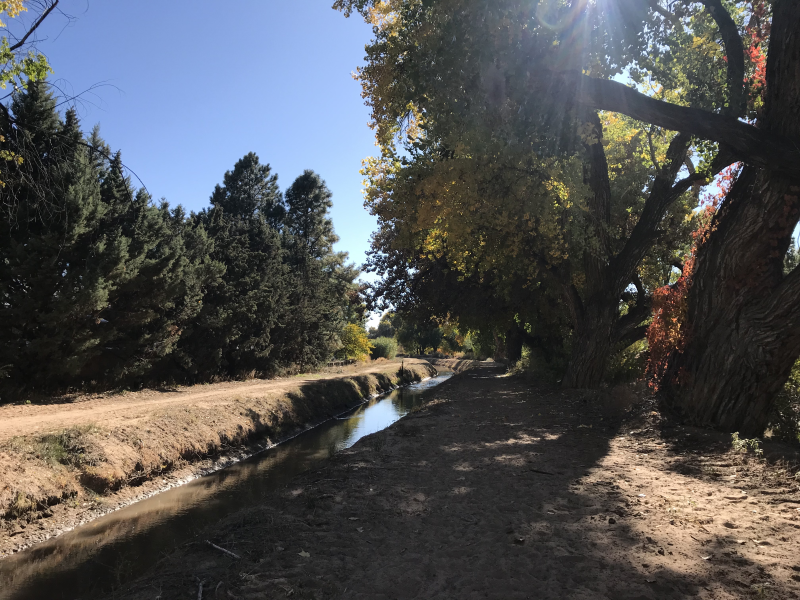
Just sun and color, blue and gold. Horses and dog-walkers. Smoke curls from chimneys, though it’s 60 degrees and hot in the sun.
IMG_3171.JPGIMG_3172.JPGIMG_3174.JPGIMG_3178.JPG
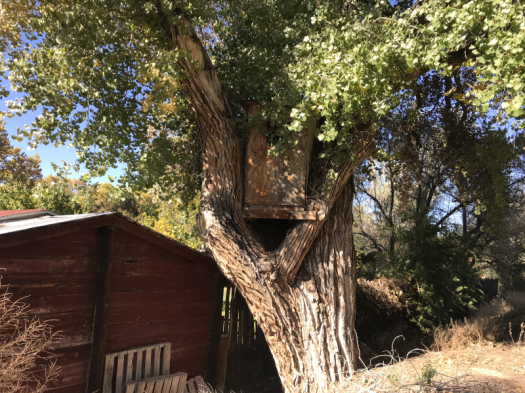
Chicken coops yield to full outdoor kitchens and hot tubs.
Four sandhill cranes, newly migrated for winter, munch grass at the end of a driveway.
Water gurgles in the acequias for a few last weeks before they go dry.
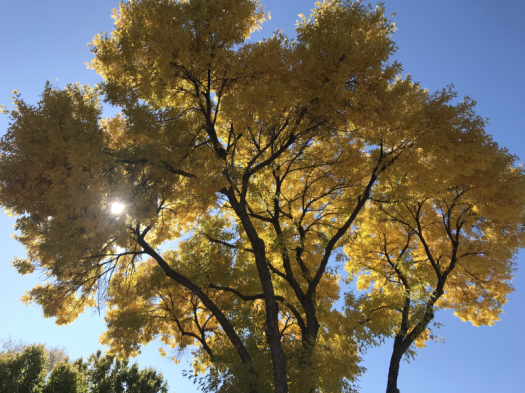
Light glints through the leaves, off the water.
The slant of it, low and warm, what you’ve waited for all year.
Home.
Hike length: 5.5 miles
Difficulty: easiest
Trail traffic: moderate
Wildlife spotted: roadrunners, sparrows, goat, horses, grasshoppers, butterfly, sandhill cranes, ducks