What Day Is It?

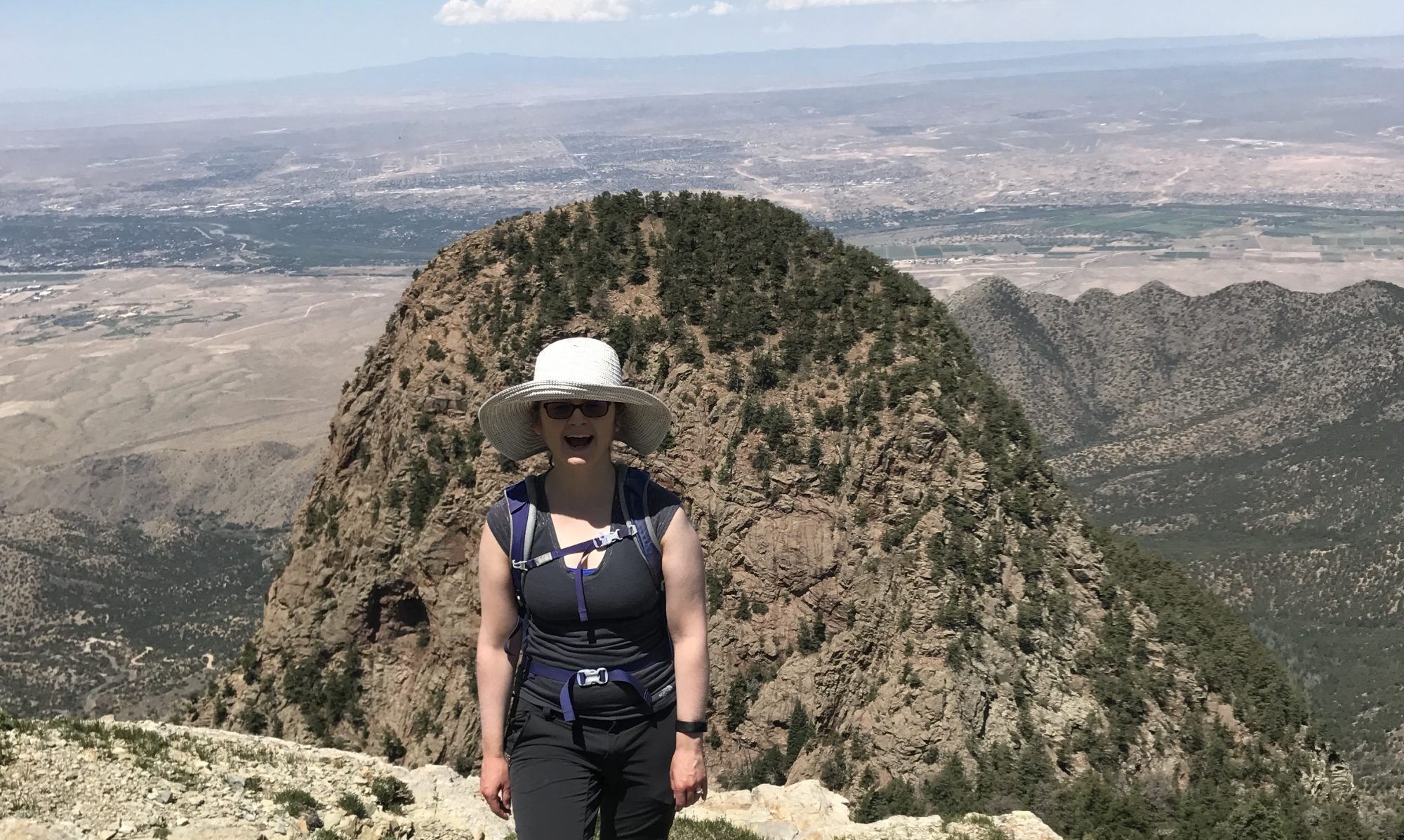
IMG_3842.JPG

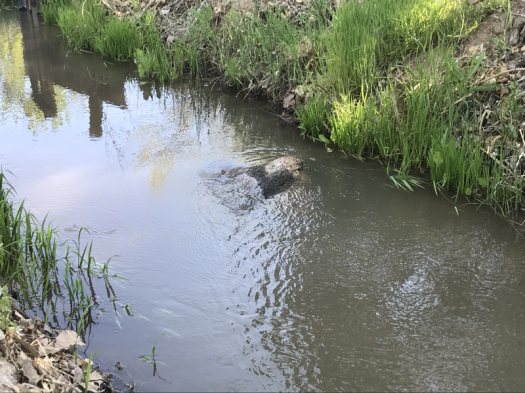
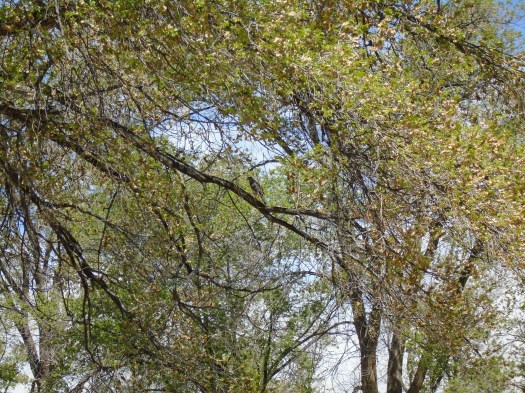
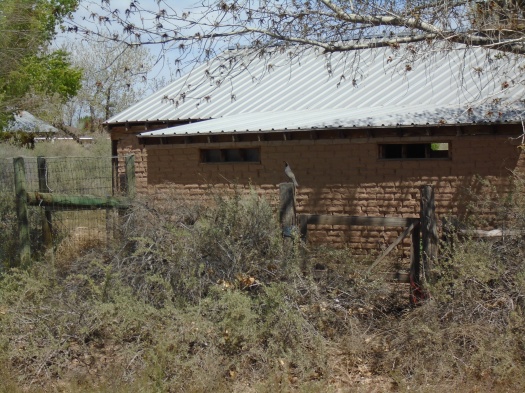
Water eddies an object.

Duck becomes deer

becomes volcanic rock.

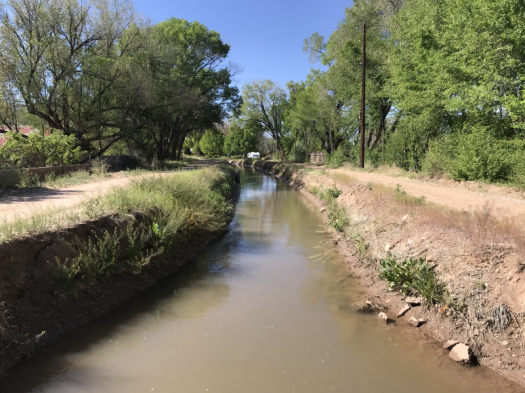
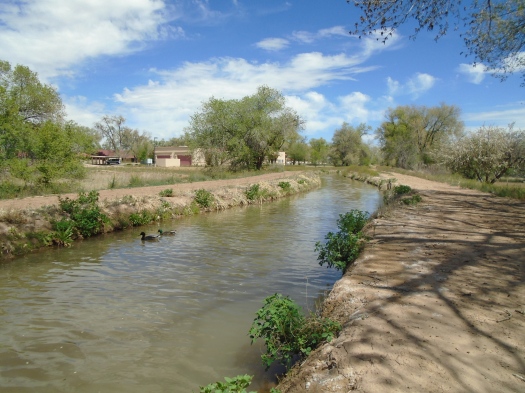
Here in this ditch,

a chunk of

the West Mesa.

Things I don’t know when

I’ll see again

flash before me:

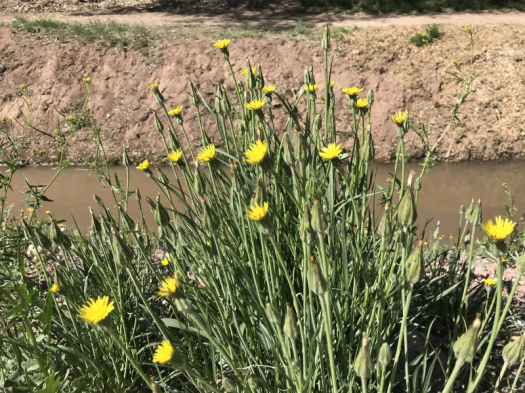
meadow,

overlook,

aspen grove.

They meet

what I’ve just seen:

dragonfly,

rabbit,

roadrunner,

hummingbird.

Where?

What day?

How long?


Goodbye to the trails, for now

I knew it was the last time.

Knew it as I rolled past the first trailhead. Eight cars already.

But there’s so much space once you get out there – 

A ninth car pulled up.

No.

Knew it when I arrived at the second trailhead.

Empty.

Had I missed a closure order? I searched the Internet. Nothing.

Knew it as I watched and listened to bluebirds and robins at the overlook.

Knew it as I counted the people I passed.

26.

They had reached the trail from other access points, or started after me.

The trail was wide. I could see who was coming and move aside, give us both six feet of distance.

But I knew the calculations would cease to add up.

The longer this lasts, the more people will be out here, unless trails are closed. It will become harder to keep distance, avoid putting myself and others at risk.

The beautiful 20-mile drive from my house to the mountains had become an ethical minefield, my body a potential vector for the spread of disease into a different community.

Of course, I knew places so far out the risk of meeting anyone would be low.

But the other risks of a remote trek right now are too great.

One misstep by a backcountry skier last week touched off a search and rescue that put more than 50 members of a rural community at risk of COVID-19 exposure.

So I knew it was the last hike, until social distancing ends.

Goodbye mountains.

Goodbye bluebirds.

Goodbye pinon and juniper.

Goodbye, euphoria of a long solo hike.

Goodbye to one more outlet for the stress of leading a newsroom covering the hardest, most important story of our lives.

I said all those goodbyes.

Yet all week, I grasped for any way I could keep hiking.

I unraveled my decision, made it again.

But maybe – 

Who am I if I don’t go to the mountains every weekend?

I need to keep my mountain conditioning, so I can jump right back in when this ends. Like it never happened.

But there will come a point when clinicians have to decide who will get lifesaving measures and who will not. I do not want to put myself or anyone else on either side of that equation.

There will never be a time when it is like this never happened.

Friday morning, the city sent a press release, urging residents to use lesser-known hiking trails instead of the jam-packed bosque and foothills.

Could I find a miracle in this list, a place where I could ethically go?

One trail listed was the quiet place with the empty parking lot where I’d seen 26 people.

One was the remote trail where, a week earlier, I’d seen 40 people.

I had to assume all would see their traffic at least double.

I could not in good conscience increase that number by one more.

I would walk only places I could reach on foot from my home until social distancing ends.

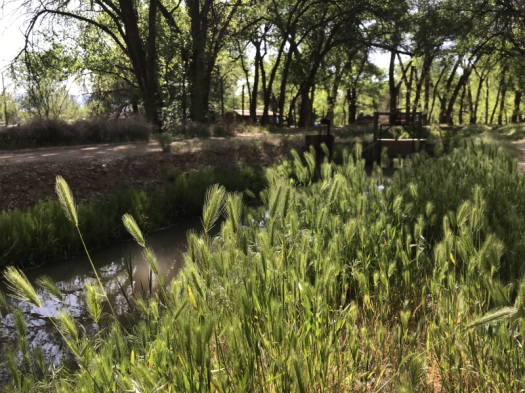
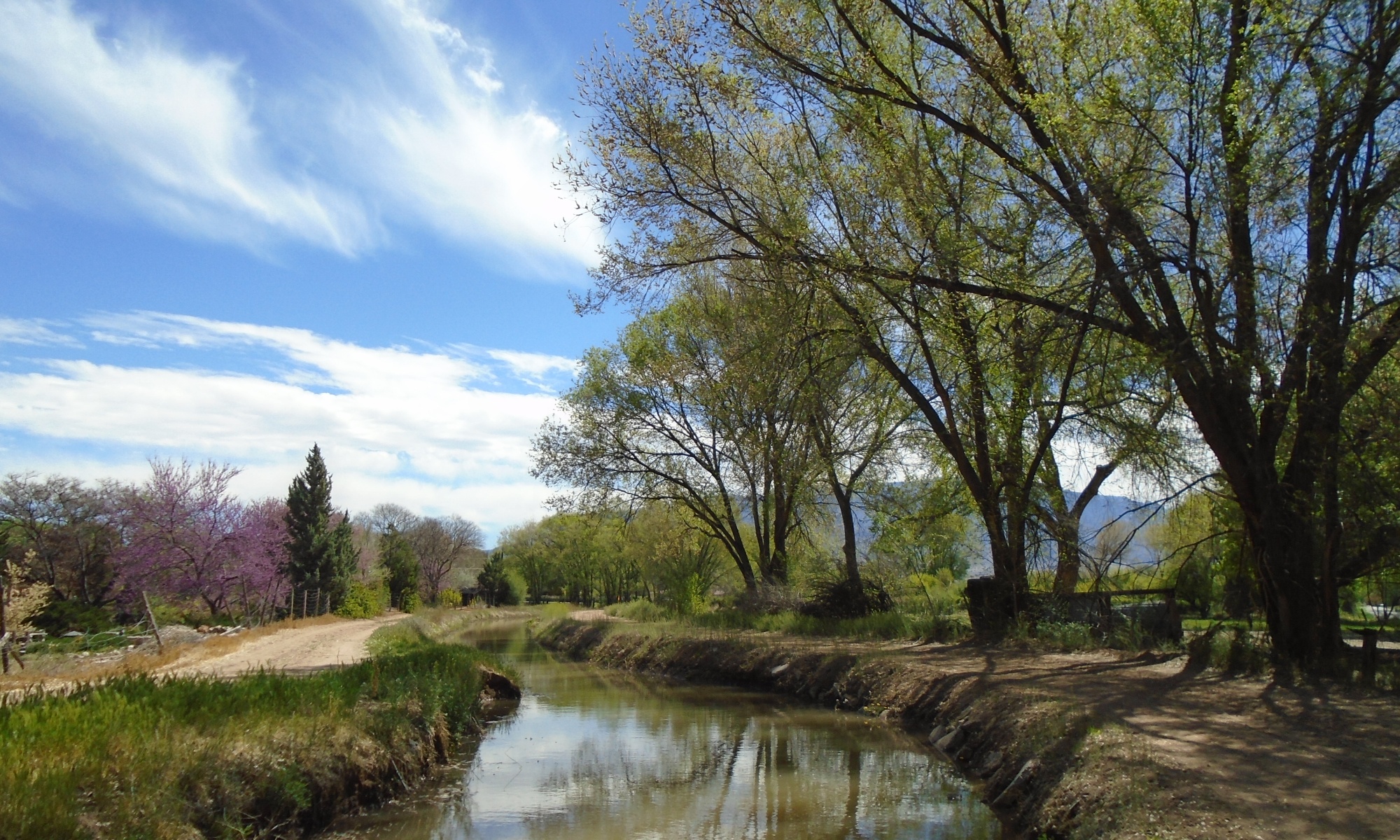
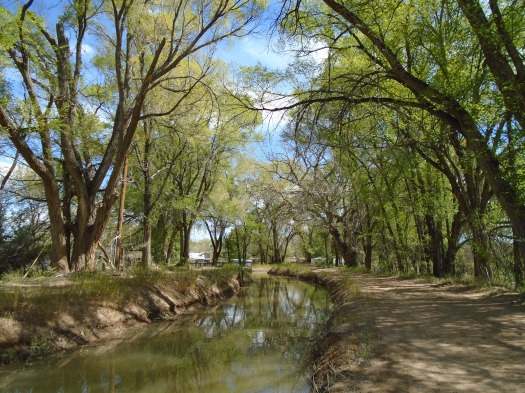
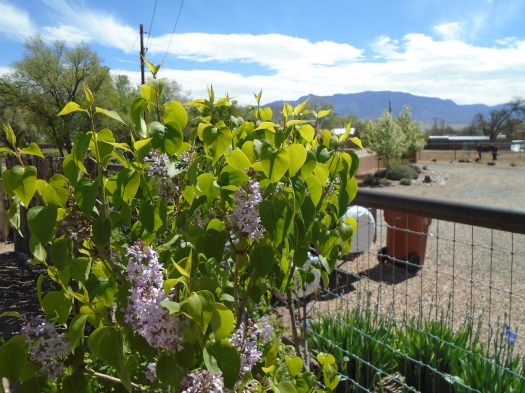
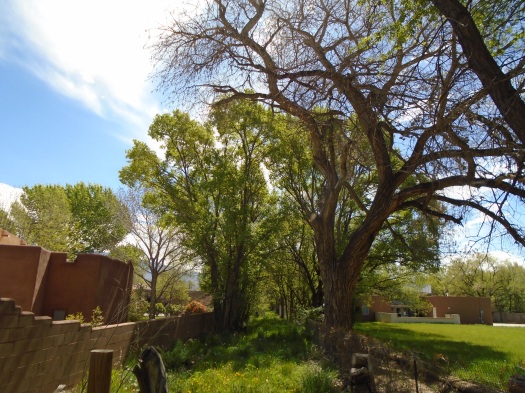
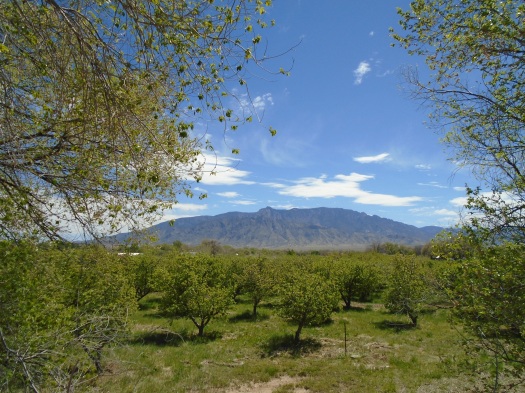
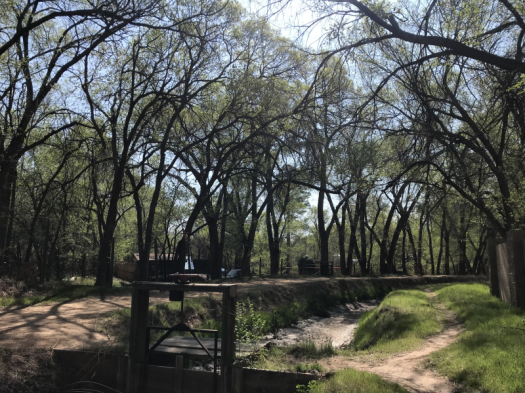
I live in the Rio Grande valley, bursting green with spring. I can choose paths with relatively low risk of crime. I can travel wide acequias with plenty of room to distance.

I wish I could tell you it didn’t feel like loss.

All my worries about walking in the city came true Saturday. Everyone was on the acequias. I pinballed like a video-game character to keep six feet of distance.

Runners appalled me.

I veered onto the lip of a ditch to avoid a runner coming from behind who wouldn’t yield six feet.

“I was looking at that wisteria!” she chirped.

That will be such comfort when we’re fighting over the last ventilator in New Mexico.

I spent most of the walk spitting fury, near tears, wondering if leaving my house for outdoor exercise could ever be safe or ethical during this time.

Sunday morning I woke thinking of a small open space in the East Mountains that hadn’t been mentioned by name in the city press release.

Wouldn’t it be safer…quieter…less crowded…

A column by the director of New Mexico Wild in the morning paper gave me the same answer, the only answer.

Stay hyperlocal. Walk in your neighborhood. Now is not the time for a mountain trek.

Sunday morning the acequias felt like church. Traffic on the paths had dropped 60 percent from the day before. Maybe everyone was streaming a religious service, or at Costco fighting over toilet paper.

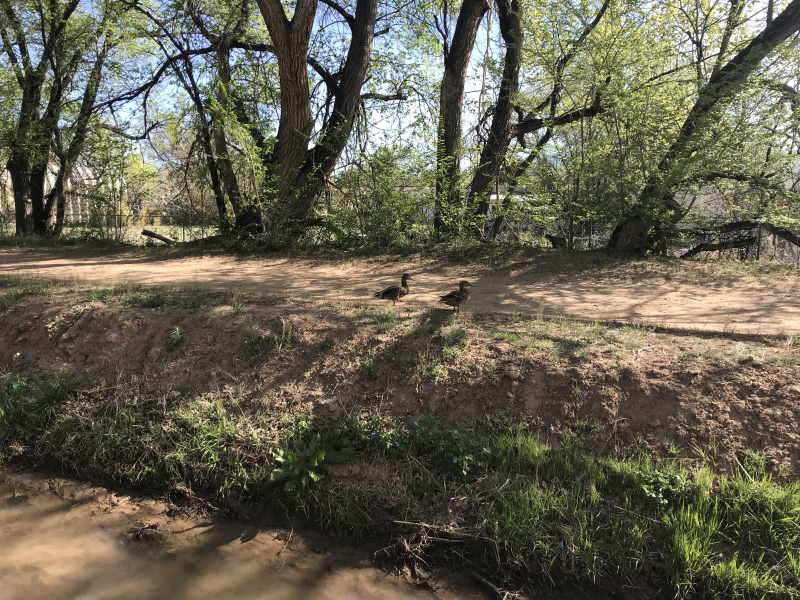
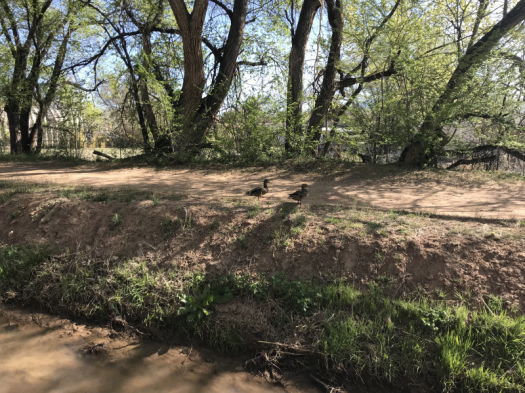
On a quiet, green path, a splash. Two ducks emerged from the water, clambered onto the ditch bank, waddled around the new world.
IMG_3746.JPGIMG_3750.JPG

I’ll be tempted, again, by the illusion that there’s another choice.

At some point, I’ll give out, take a day off midweek.

It’s Wednesday morning. Maybe no one will be out there – 

No.

It couldn’t hurt to just drive out and see – 

No.

Goodbye, mountains.

Goodbye, bluebirds.

Goodbye, pinon.

Goodbye, juniper.

Goodbye, long solo hikes.

Goodbye.

Goodbye.

Goodbye.
DSC03623.JPG

The golden hour lasts for weeks at Valle de Oro

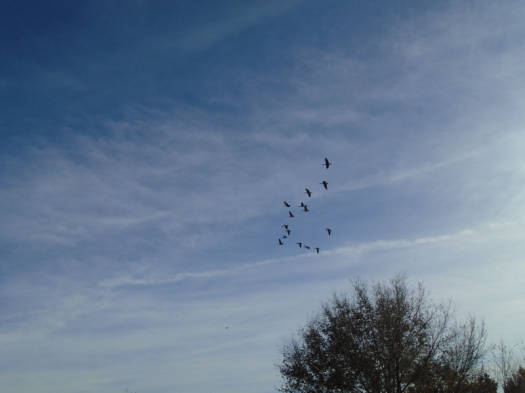
Honk honk honk honk HONK HONK HONK honkhonkhonkhonkhonk.

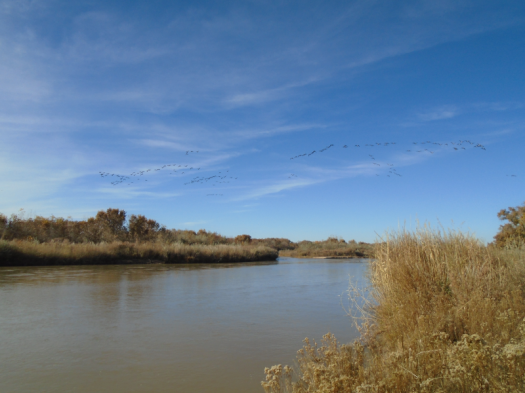
We hear the ruckus just in time to see what might be 100 geese fly over.

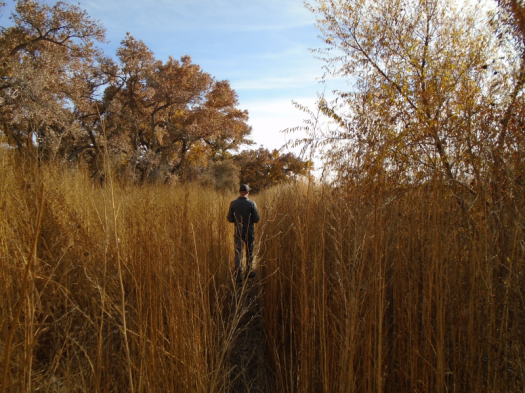
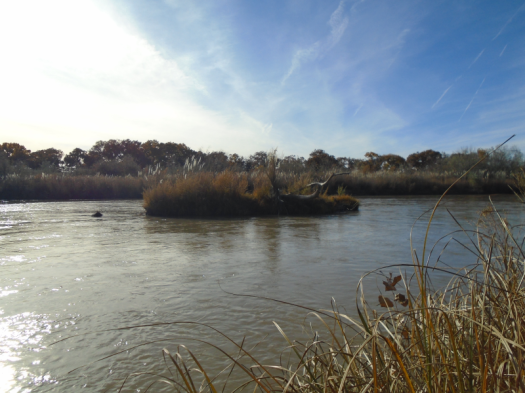
We’re standing on the east bank of the Rio Grande at Valle de Oro National Wildlife Refuge.
DSC02854.JPG
Incoming

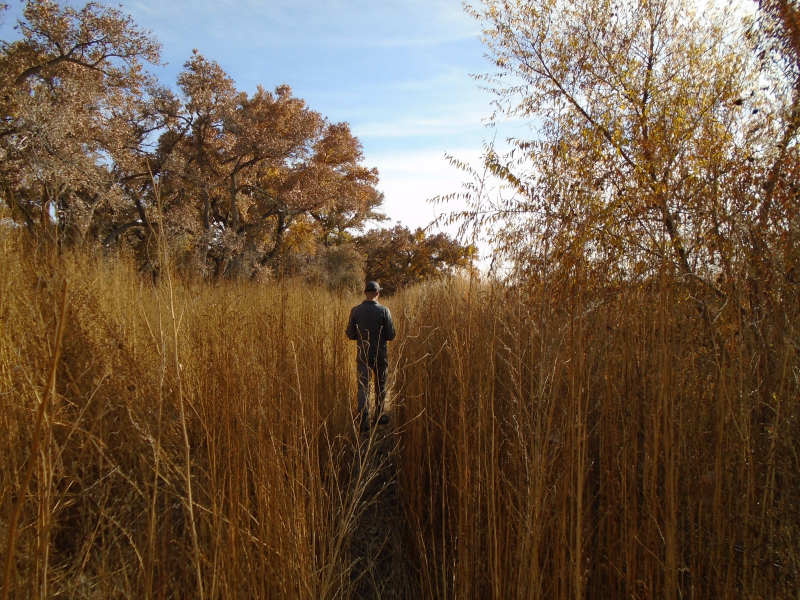
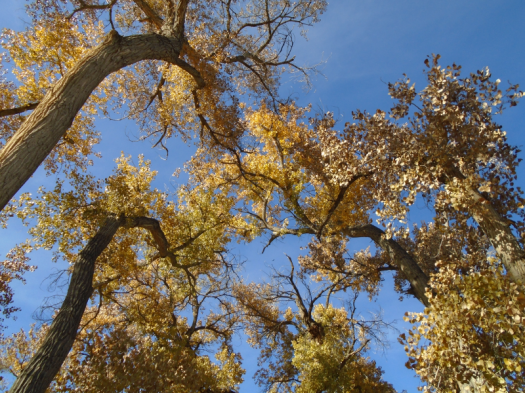
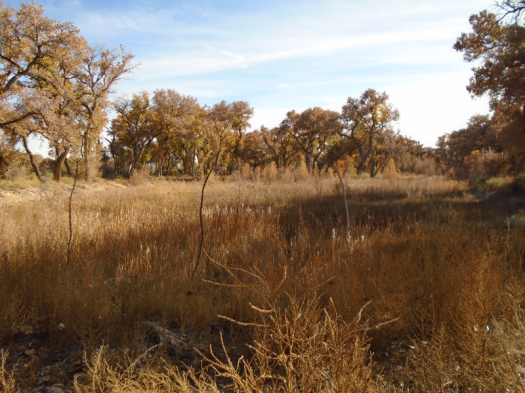
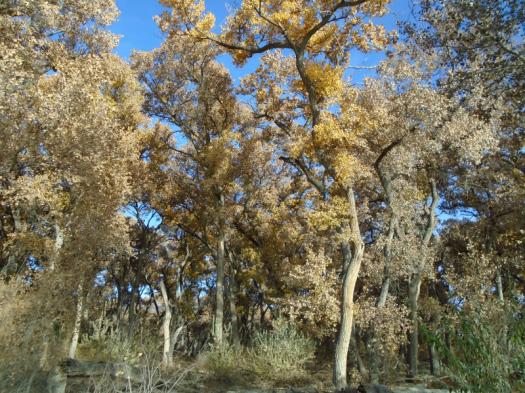
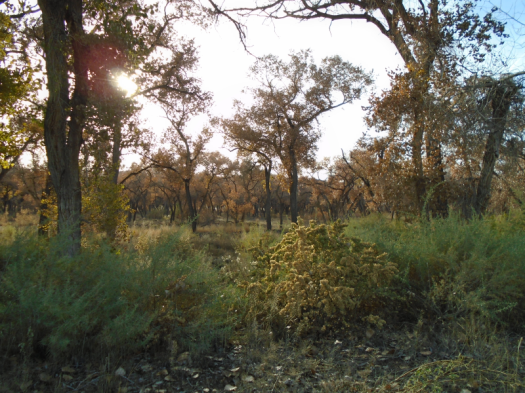
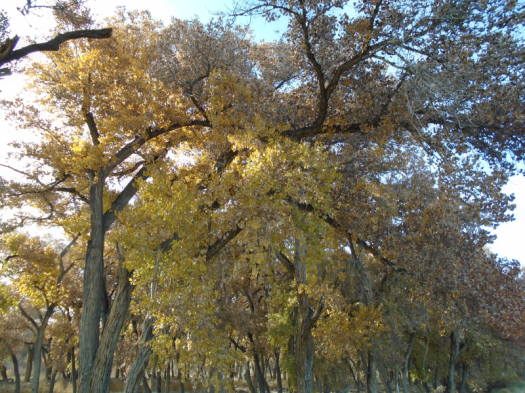
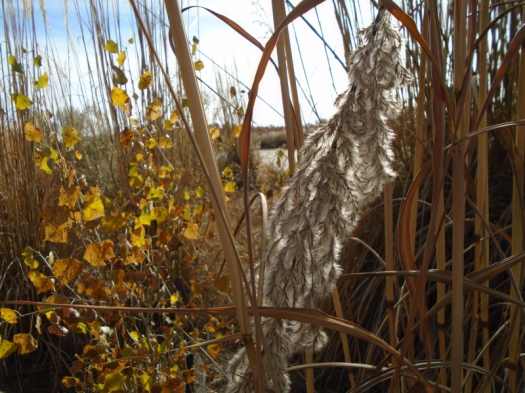
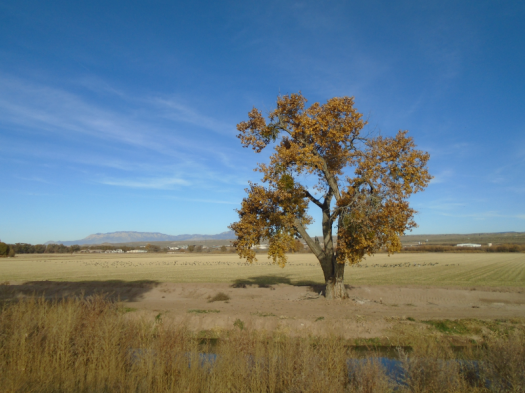
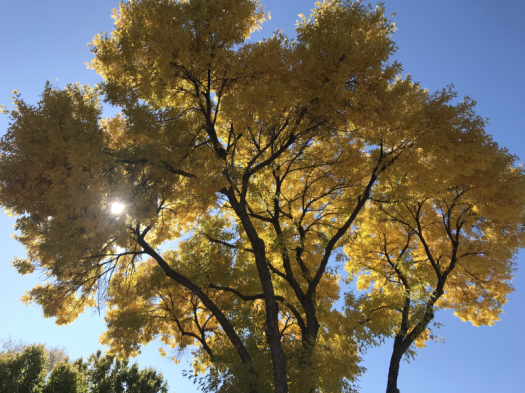
Valle de Oro has arguably the best cottonwood fall color show in Albuquerque proper. The cottonwoods peaked at least a week ago. I thought to come here only because a trip to Jemez Springs yesterday reminded me how beautiful cottonwoods are when they turn past peak yellow to gold.
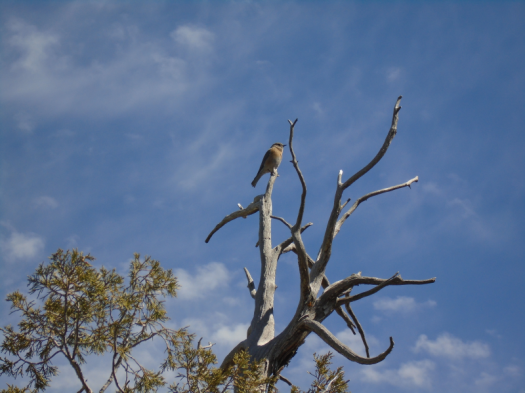
The colors at Valle de Oro today pulse instead of blaze, but they still command attention. So do the gaggles of birds.

DSC02834.JPGDSC02838.JPGDSC02888.JPGDSC02908.JPGDSC02909.JPG

DSC02860.JPGDSC02865.JPGDSC02881.JPG

We hear sandhill cranes’ rusty call from the other side of the river as we wander the east bank. Traffic noise rises. I guess that it’s from NM 47, the highway from Albuquerque to Isleta Pueblo and Bosque Farms.

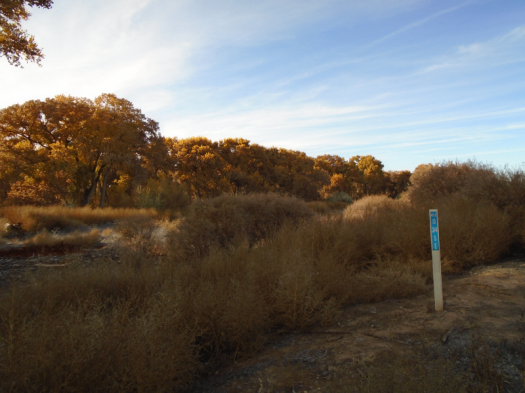
The bosque path meets an acequia, and we can see the intersection of NM 47 and I-25. Isleta Casino rises up before us, the Manzano Mountains behind it. Between us and the highway, a field full of geese, with a good dozen more arriving every few minutes. A roadrunner darts across the acequia’s dirt track.

DSC02890.JPG
Coming in for a landing
DSC02896.JPG
Looking back over the field of geese toward the Sandias

DSC02897.JPG

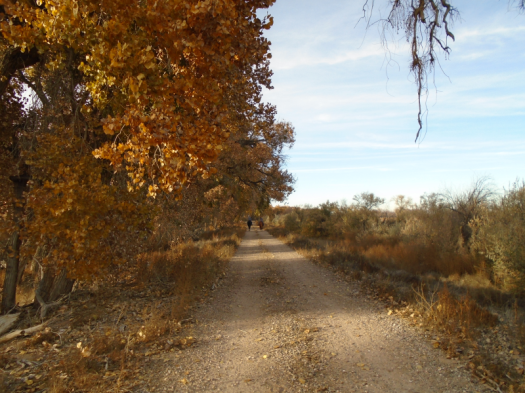
We turn around at the NM 47 overpass and walk back south on the acequia. Gold glints from a bosque receding to brown. Birds move over in waves.

The vibrant colors have flamed out, but fall in New Mexico still has more to give.

Hike length: 5.5 miles

Difficulty: easiest

Wildlife spotted/heard: dragonflies, crows, hawks, kestrel, sandhill cranes, geese, ducks, sparrows, downy woodpecker, great blue heron

Trail traffic: light

DSC02912.JPG

How Albuquerque’s acequias welcome you home in the fall

No hiking poles necessary, no backpack.
No planes or cars or shuttles after a week of them.
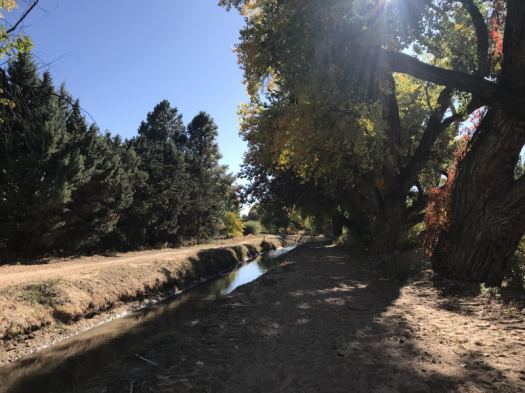
Just feet in dirt piled into powder from weeks without rain.
Just sun and color, blue and gold. Horses and dog-walkers. Smoke curls from chimneys, though it’s 60 degrees and hot in the sun.
IMG_3171.JPGIMG_3172.JPGIMG_3174.JPGIMG_3178.JPG
Chicken coops yield to full outdoor kitchens and hot tubs.
Four sandhill cranes, newly migrated for winter, munch grass at the end of a driveway.
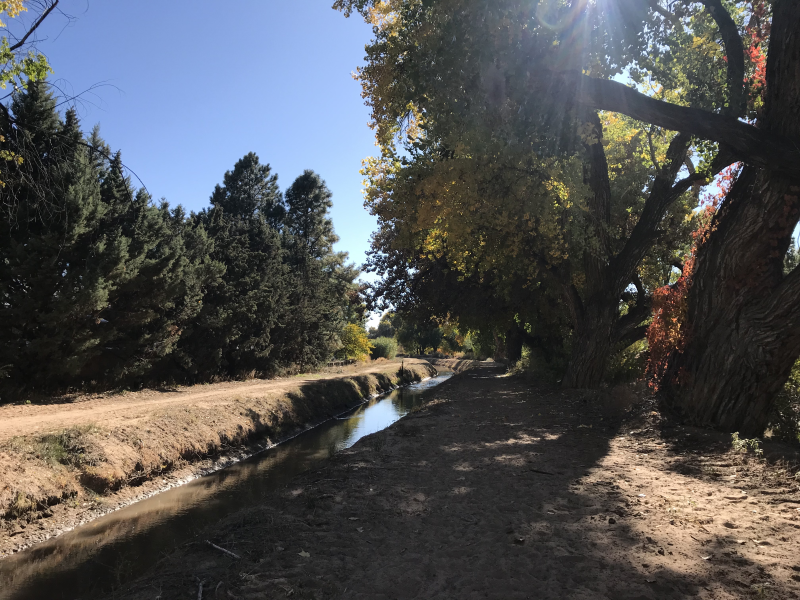
Water gurgles in the acequias for a few last weeks before they go dry.
Light glints through the leaves, off the water.
The slant of it, low and warm, what you’ve waited for all year.
Home.
Hike length: 5.5 miles
Difficulty: easiest
Trail traffic: moderate
Wildlife spotted: roadrunners, sparrows, goat, horses, grasshoppers, butterfly, sandhill cranes, ducks

Ojito de San Antonio: small but mighty (plus, fruit)

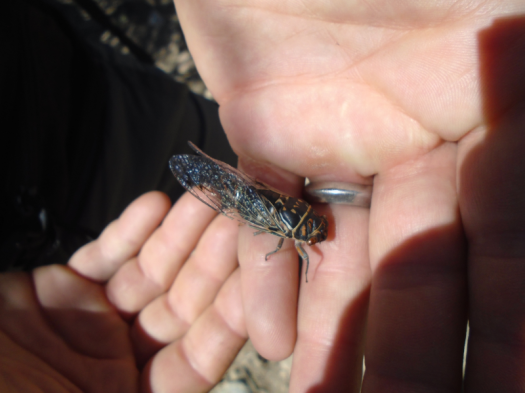
The whine intensifies, as if someone were drilling nearby.

It’s a cicada, half a note higher than the drone of his brothers and sisters all around us.

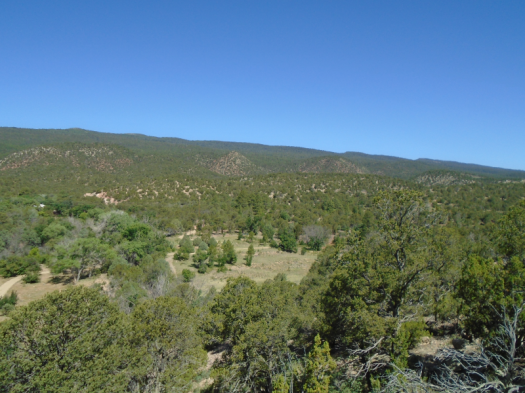
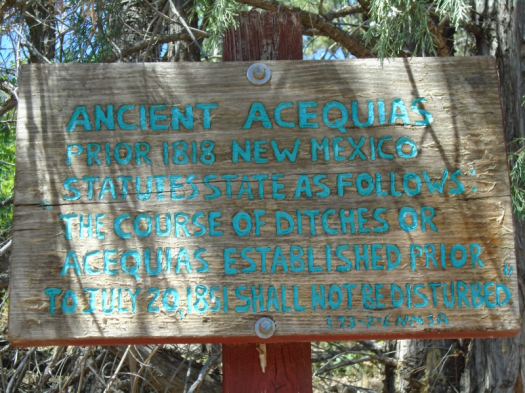
It’s a hot morning at Ojito de San Antonio, a small Bernalillo County open space near the East Mountains. The trail begins in a meadow where a historic acequia feeds an orchard, and the orchard feeds birds. Then the trail climbs through rocky juniper, and, this time of year, cicadas.

DSC02001.JPG
This lovely fellow was lying on the trail, recently deceased.

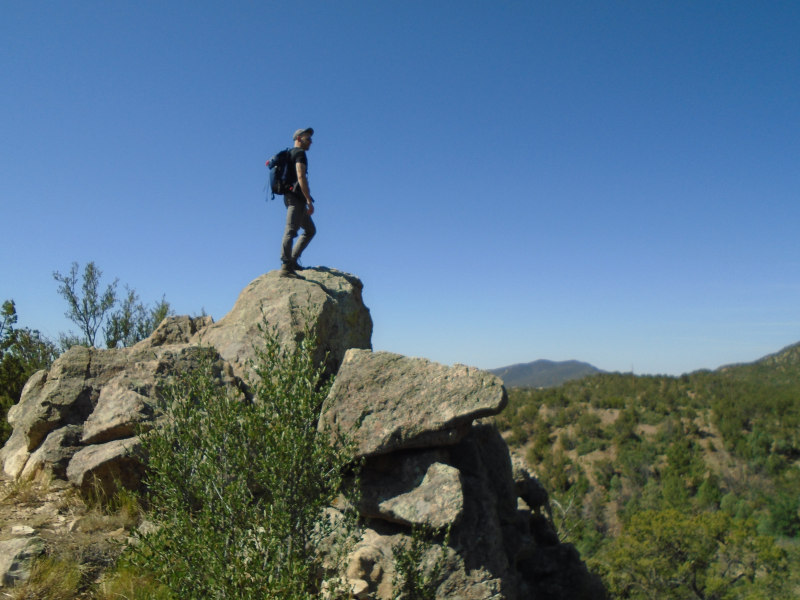
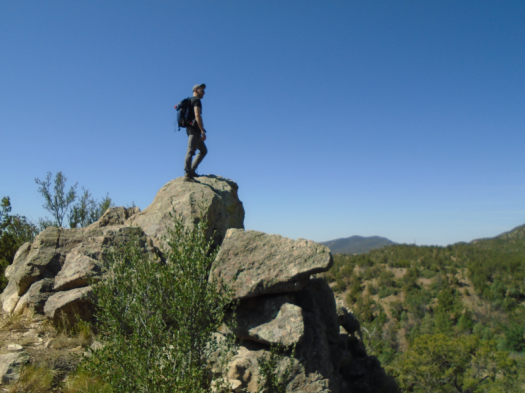
At the top, stacks of boulders look down on the meadow tucked into evergreen hills, and down on Highway 14 (conveniently located is, well, conveniently located). A single violet-green swallow swoops above us.

DSC02004.JPG

DSC02005.JPG

DSC02006.JPG

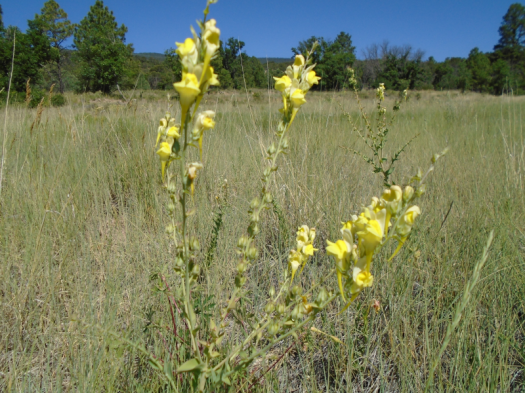
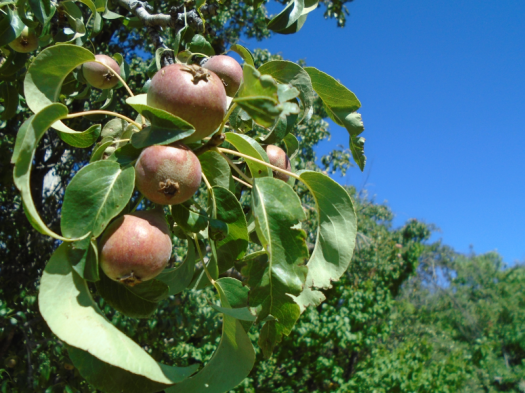
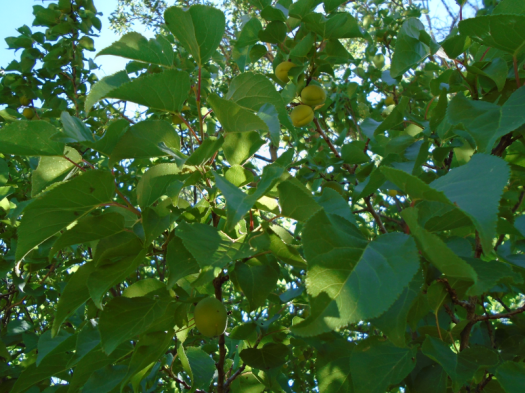
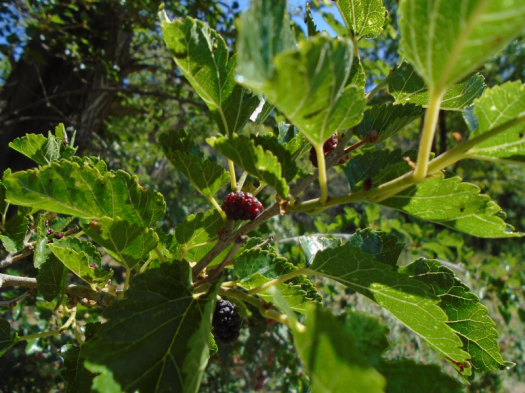
We emerge back into the meadow, counting wildflowers, butterflies and fruits. We spot apples, pears, apricots and mulberries.

DSC02017.JPG

DSC01994.JPG

DSC02022.JPG

DSC02023.JPG

Those who want to see the bounty this year have exactly one month to do so. Ojito de San Antonio reportedly closes from August to November so the East Mountains’ bears can have the fruit all to themselves before hibernation.

Hike length: 2 miles

Difficulty: easy

Trail traffic: very light

Wildlife spotted/heard: sparrows, bluejays, bluebird, violet-green swallows, nuthatches, butterflies, beetles, cicadas

DSC02025.JPG

All creatures go with the (prolific) flow on Corrales’ acequias

DSC01558

Have you ever seen a Gambel’s quail run? They really haul ass.

We watched two dart, synchronized, across a dirt road off an acequia in Corrales. They looked like smaller, less gangly roadrunners. With headwear.

We knew with the week’s latest round of prolific rain, the acequias would be flowing. And they were – at times the water rose nearly to the top of the ditches.

We saw a wilderness’ worth of wildlife, though we were frequently within sight of at least one of the village’s main roads.

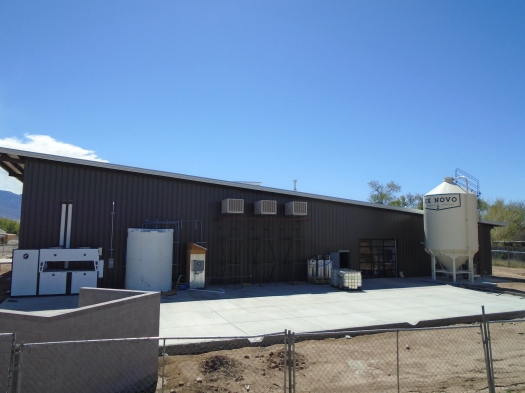
We picked up the acequia behind the village recreation center, soon passing a Portland brewery’s New Mexico outpost, under construction.

DSC01562

Butterflies appeared as soon as the shouts of children at the skate park began to fade. Small white butterflies danced along the ditches, and an occasional yellow or black one fluttered by.

DSC01557

A Cooper’s hawk swooped to the water’s edge. It sat still and quiet, taking sips and sniffing the air for several minutes, then launching itself up to a green branch.

DSC01566

Quail called to each other and flew between fenceposts before taking off at a run. All About Birds describes their flight accurately as “explosive, powerful and short.”

DSC01579
Quail readies for launch.

More hawks. Ducks coasting in the high water.

DSC01570

Adobe bed-and-breakfasts cohabitated with simple homes stacked with wood and old machinery.

DSC01560

DSC01554

As we walked north, we came to a deep green apple orchard on the east of the ditch, a sunbleached field of cacti and yucca on the west.

DSC01576

Goats and horses peered from barns and yards at us.

We pulled into Corrales Bistro Brewery for a bite after the hike. The only spot left in the parking lot was next to two horses. As we left the brewery, we saw the horses transporting their owners south on another acequia. Equine designated drivers.

Folks in Corrales know how to live, and the village has life in abundance this spring.

Hike length: 4.4 miles

Difficulty: easiest

Wildlife spotted: Gambel’s quail, Cooper’s hawks, unidentified hawk, sparrows, swallows, butterflies, grasshoppers, kingbirds

Trail traffic: moderate