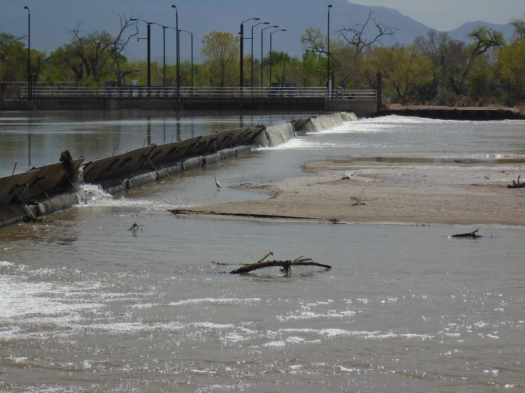
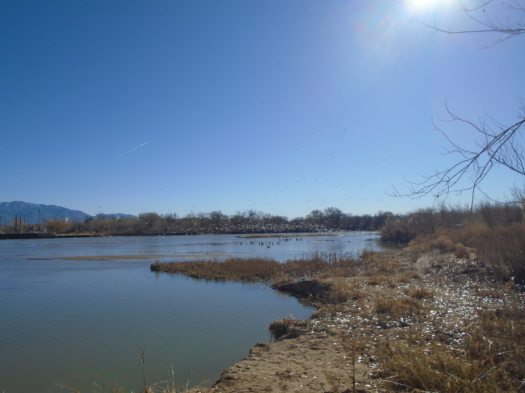
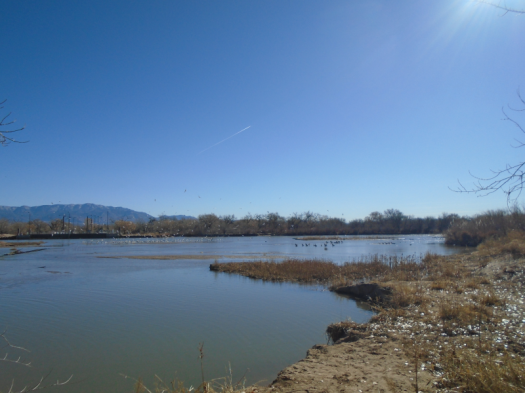
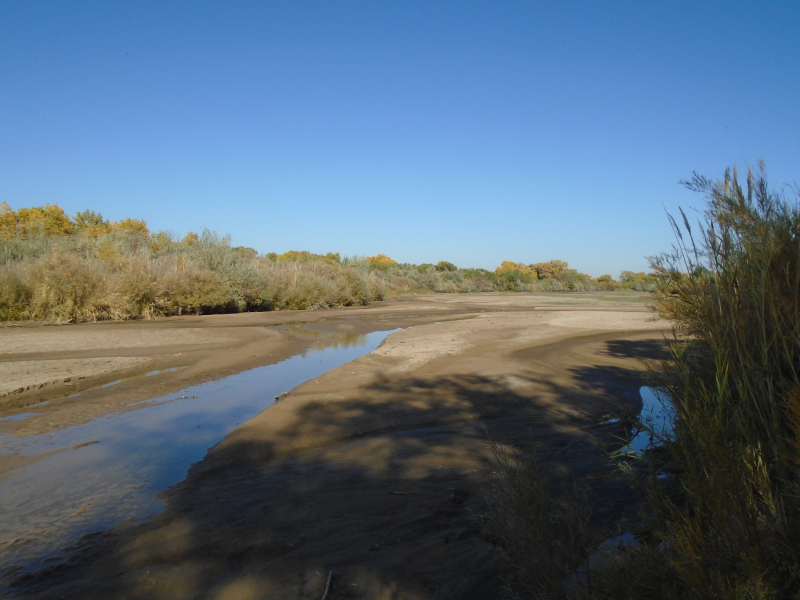
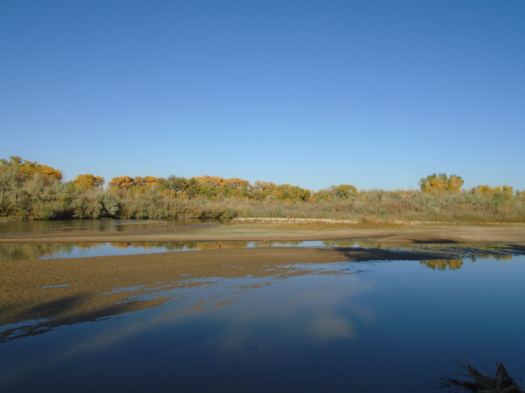
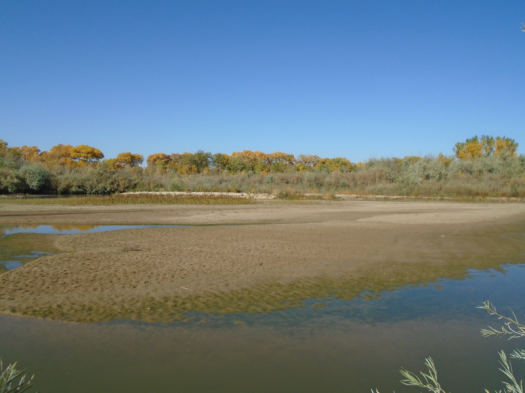
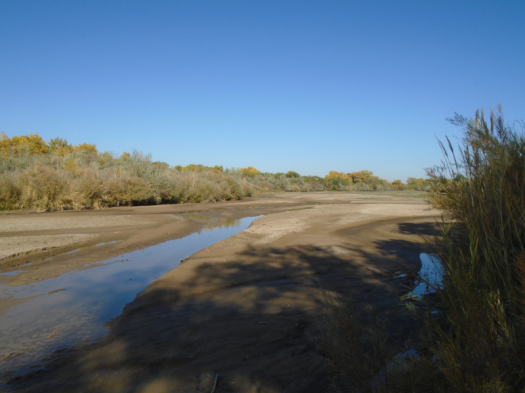
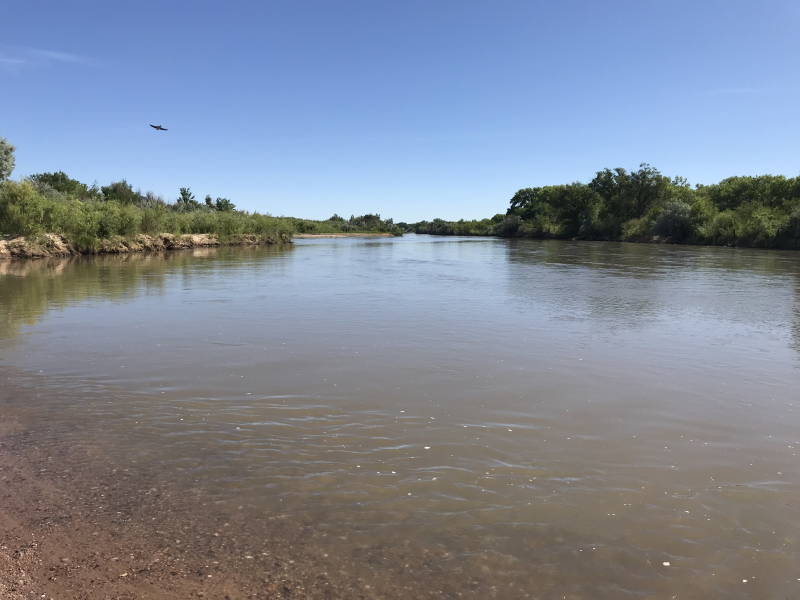
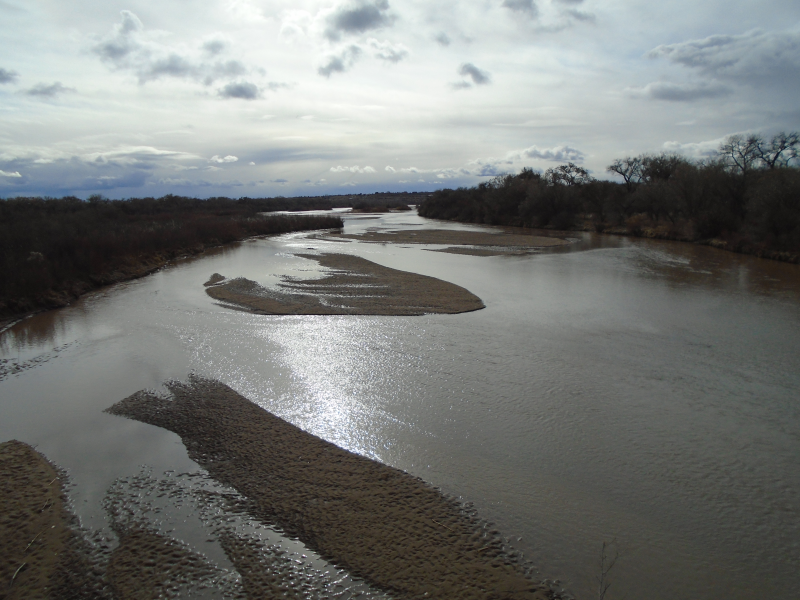
I could cross the Rio Grande here and not get wet.
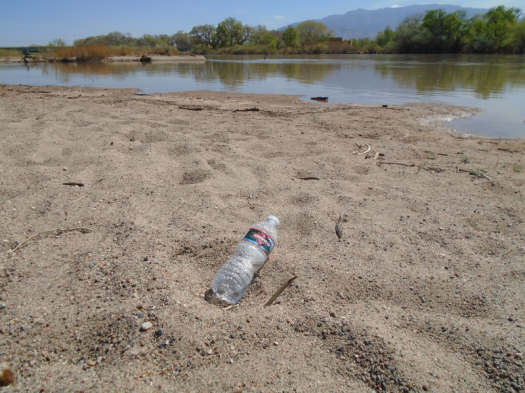
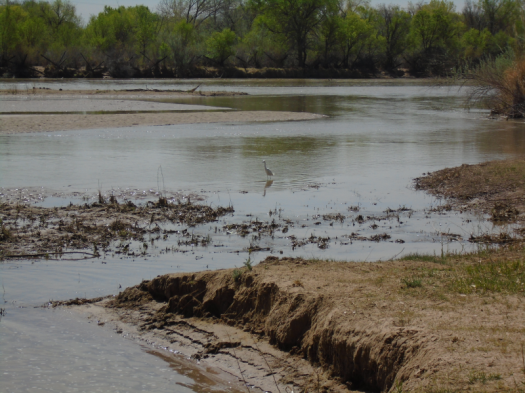
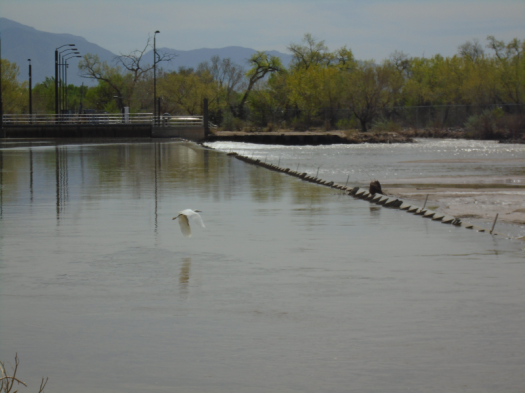
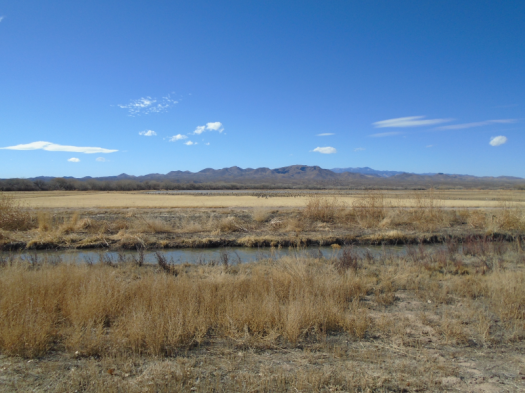
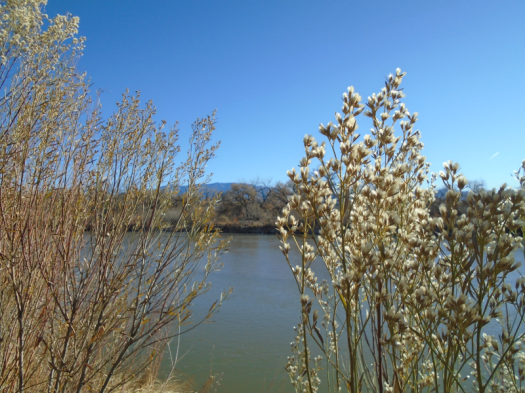
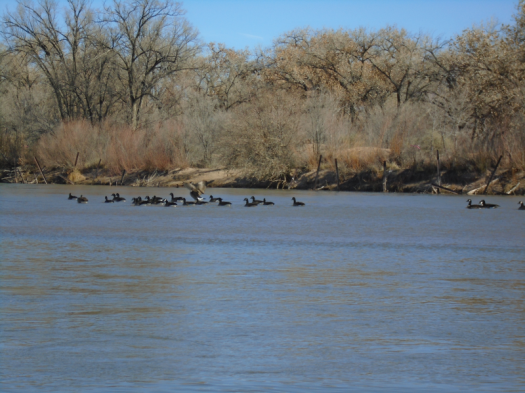
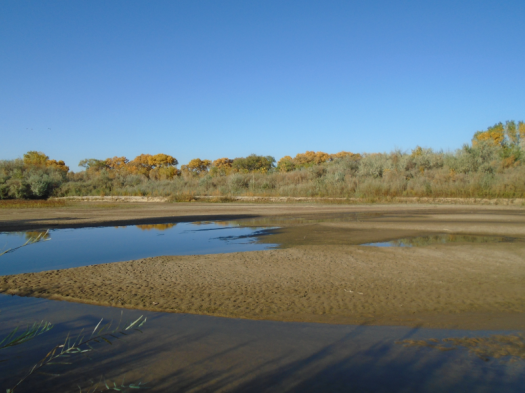
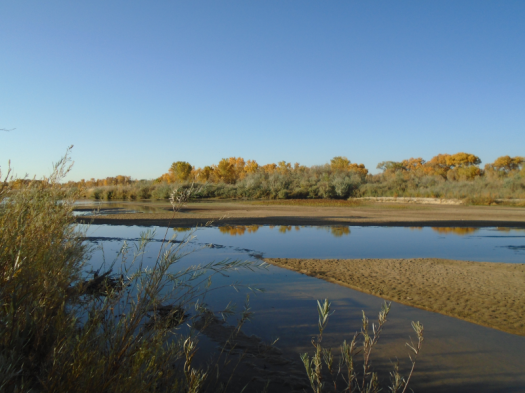
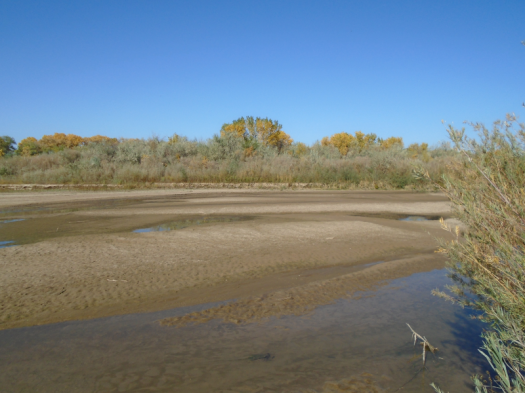
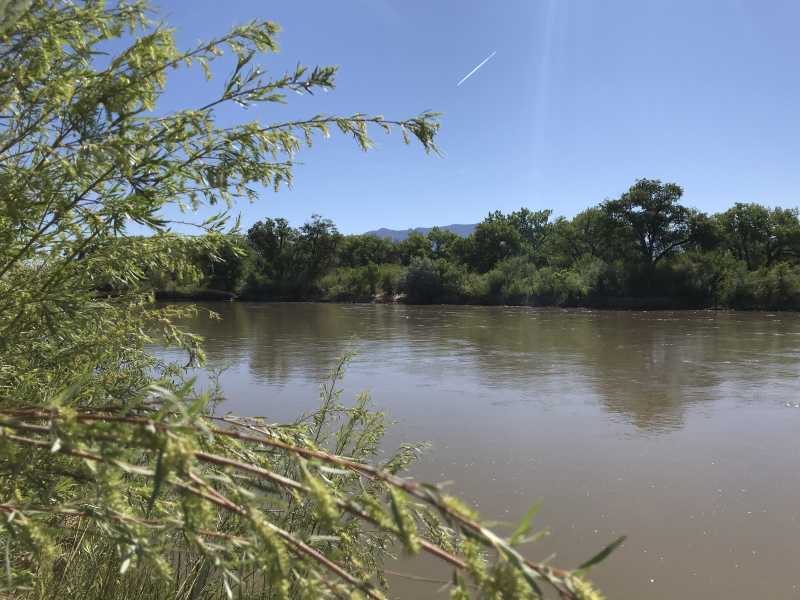
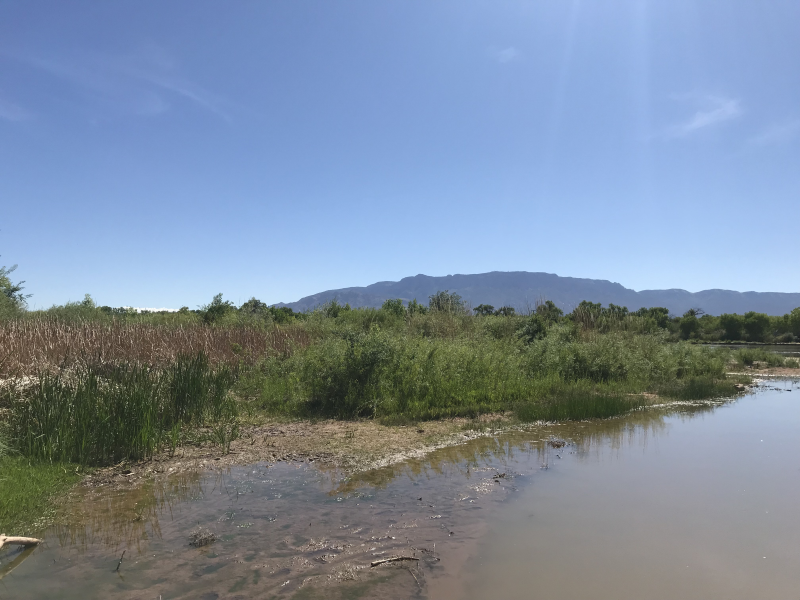
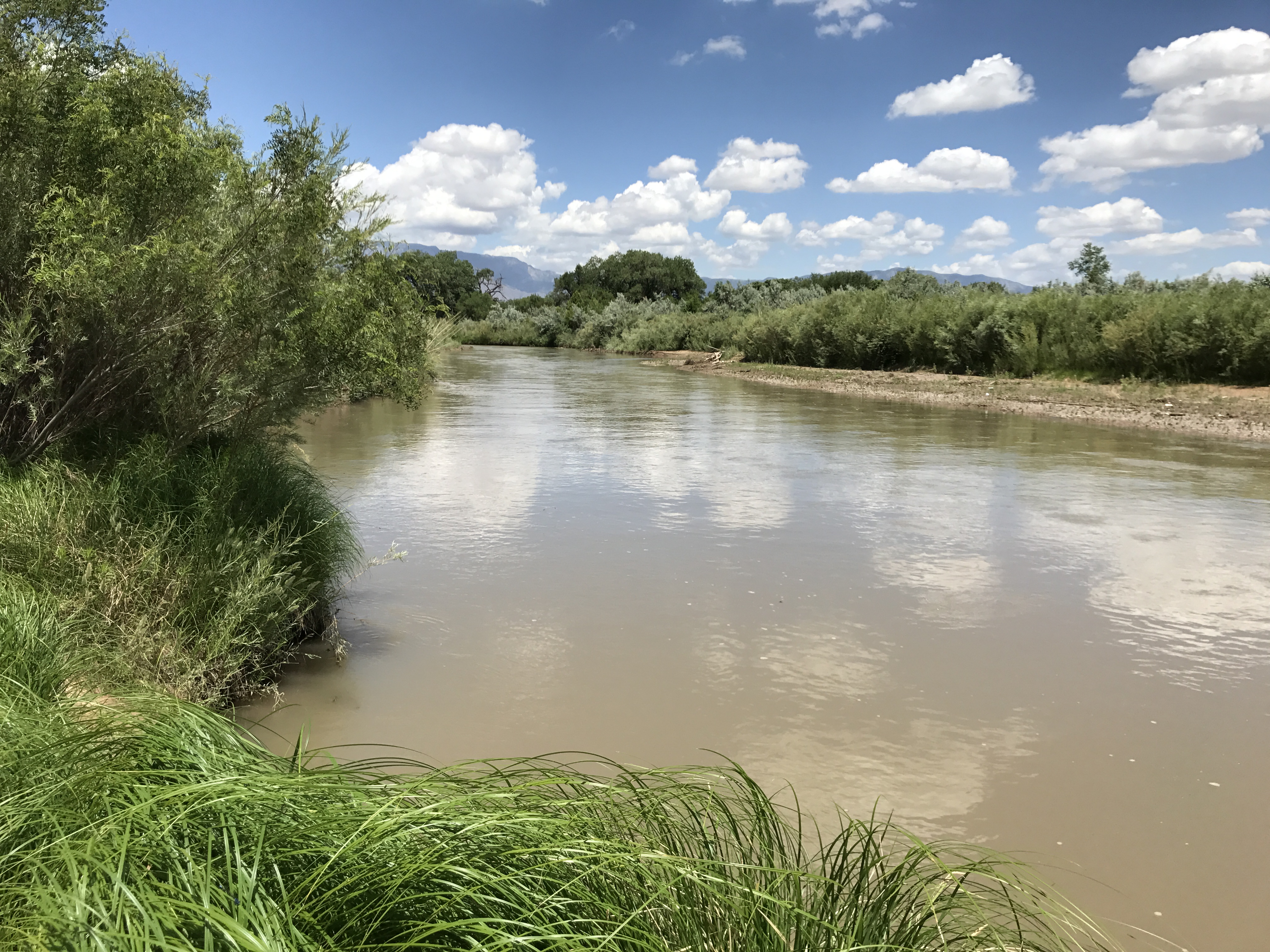
I stand on the riverbank at Valle de Oro National Wildlife Refuge. The river’s all but dry in this spot. One small channel of water courses through it.
Water flows further south, but in places it’s only an inch deep.
And still, constant bird music.
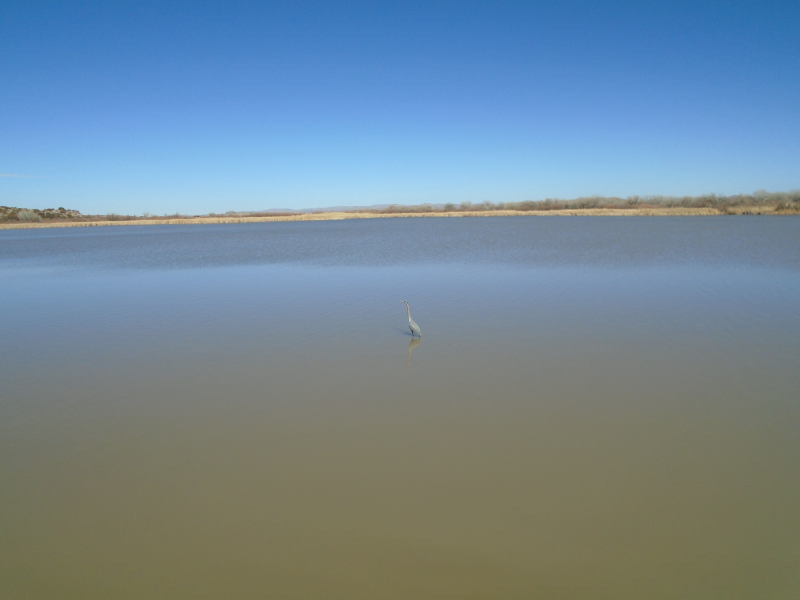
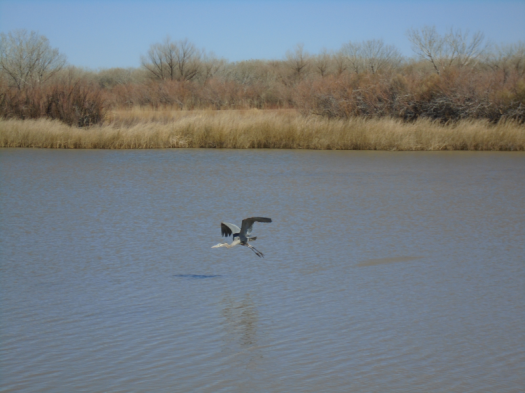
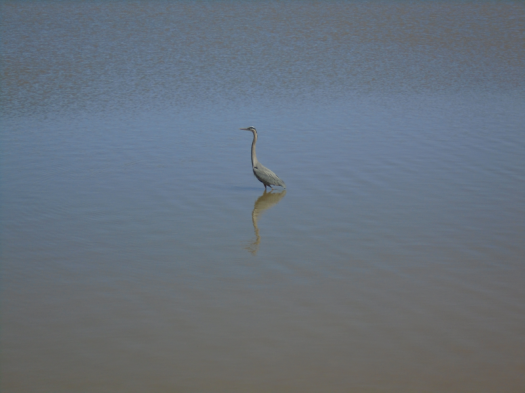
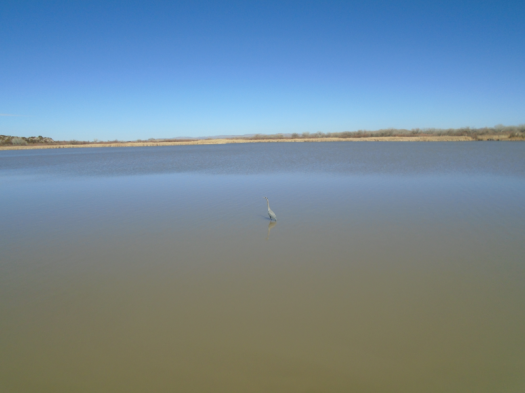
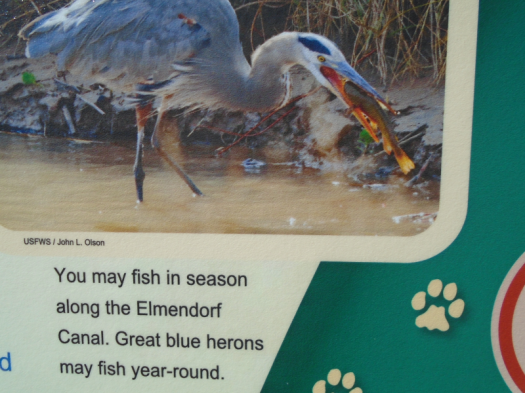
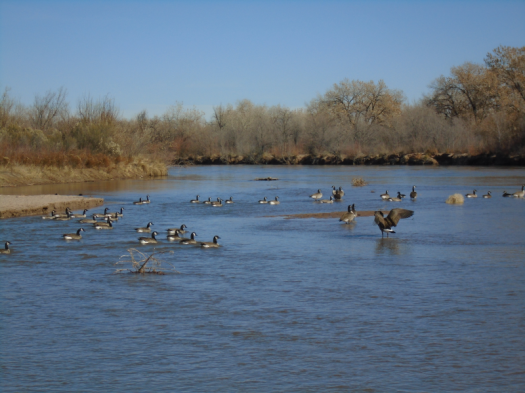
A great blue heron stands on a sandbar, then lifts off.
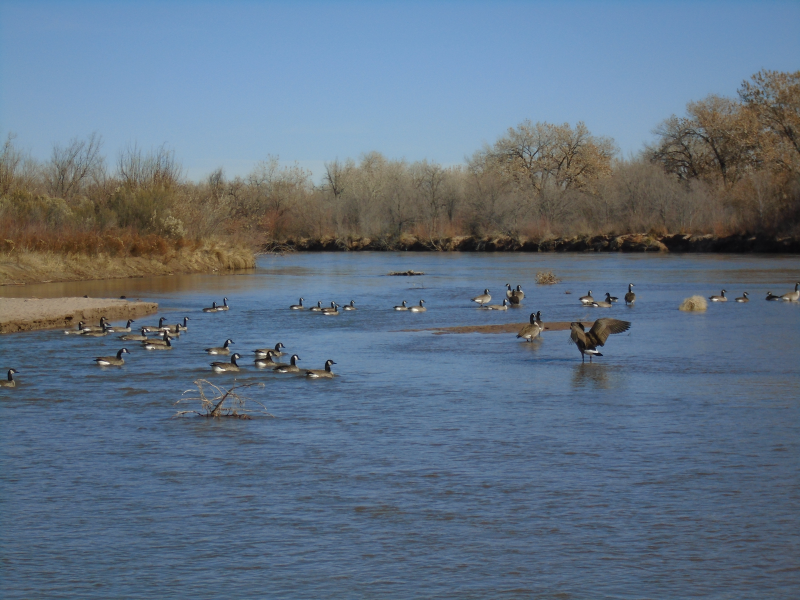
Ducks spring from the bank, honking.
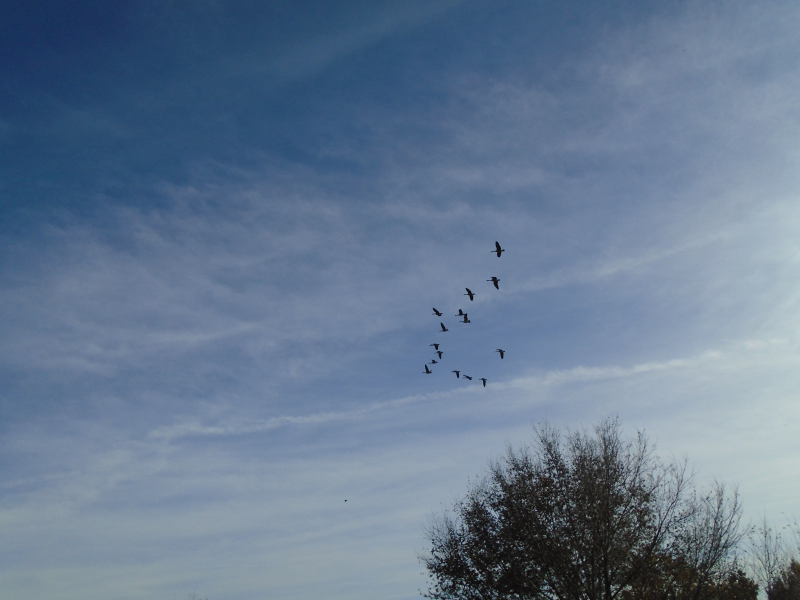
Sandhill cranes coast above, creaking like a rusty hinge in the wind.
Creatures upon creatures trace the river’s drying veins, find nourishment.
We have made this hot, dry world with our thirsty vehicles, our plastic packaging.
Here in Albuquerque’s South Valley, air quality can reach unhealthy levels. Dust and dirt from the area’s industrial operations often hang in the air, while my neighbors and I breathe freely further north.
But a river refuge, even a drying one, gives all of us creatures a space to breathe.
Hike length: 5.6 miles
Difficulty: easy
Trail traffic: very light
Wildlife spotted/heard: great blue herons, sandhill cranes, geese, ducks, butterflies, grasshoppers, coyote, American dipper, swallows
Around us, mountains stand in states and shapes of erosion.
The Chupadera Mountains got tired of mountaining and relaxed into rock waves.
The San Andreas Mountains got tired of mountaining and let a giant creature take jagged bites off the top.
Unfamiliar mountains in every direction.
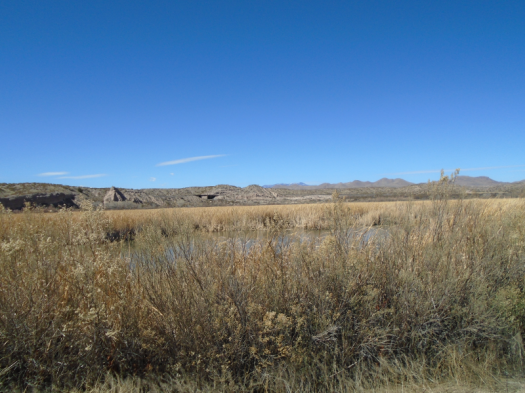
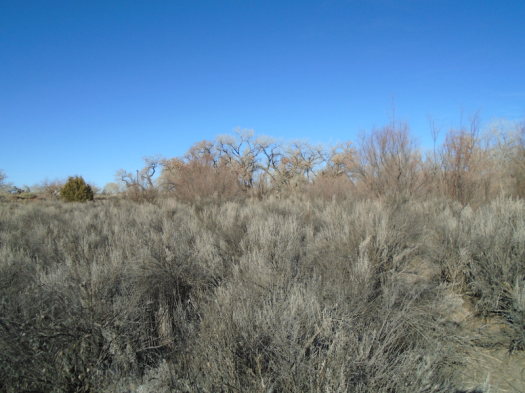
Sage plain pastels. Blue marsh.
360 degrees of stimulation.
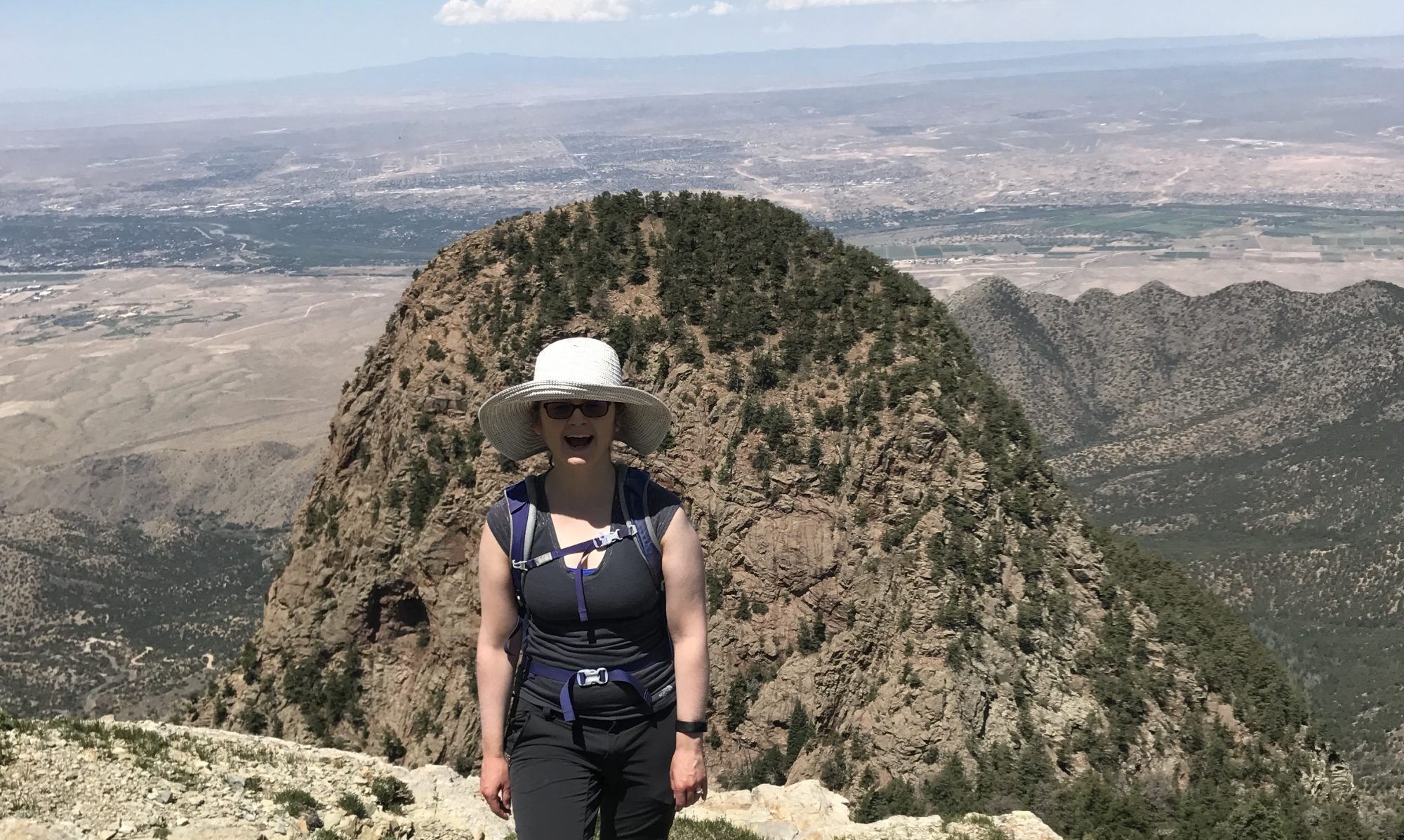
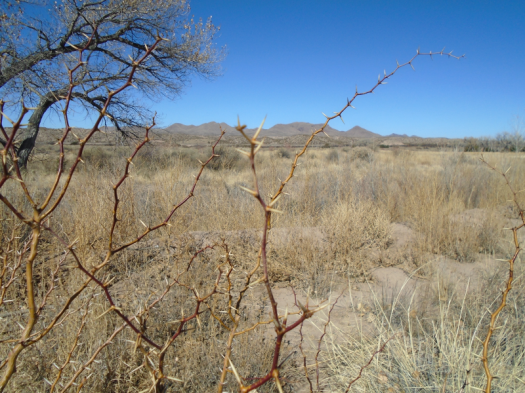
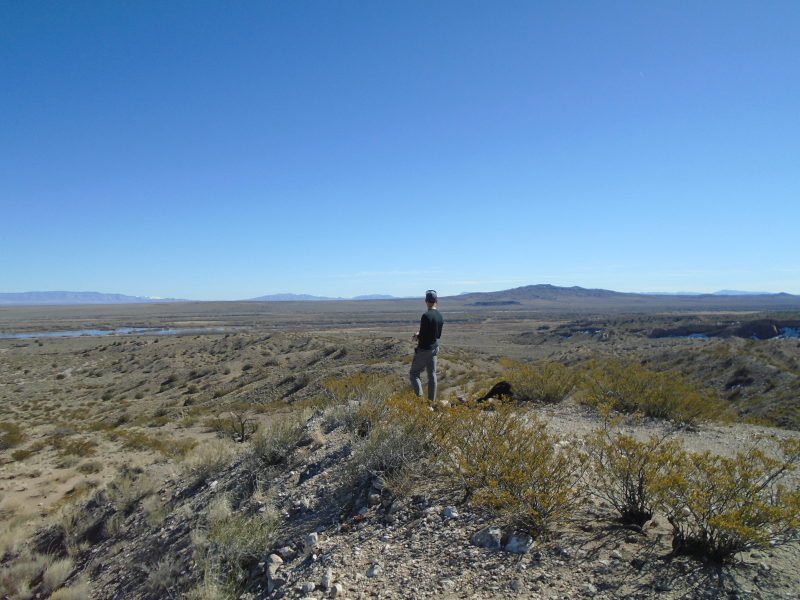
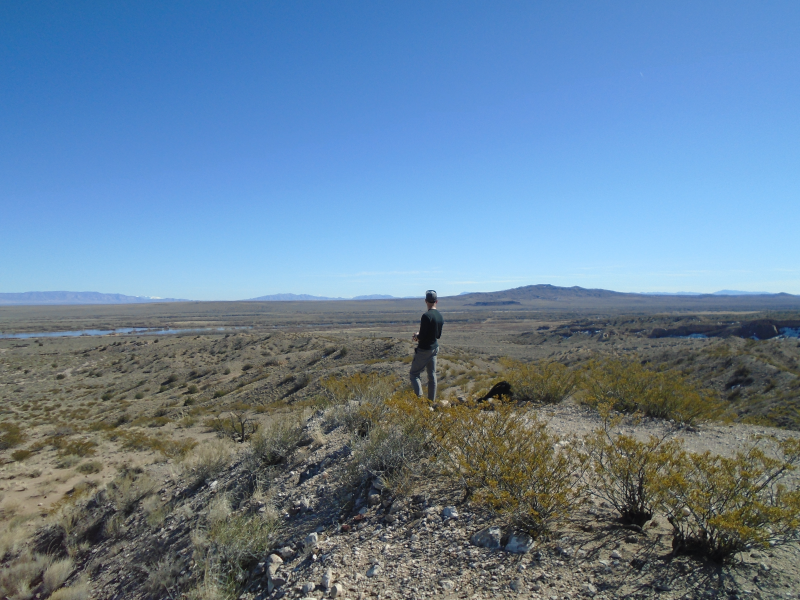
We’re at the highest point of Canyon National Recreation Trail. Creosote and sand stretch back to the Chupaderas.
The Chupadera Mountains
The marsh is at left
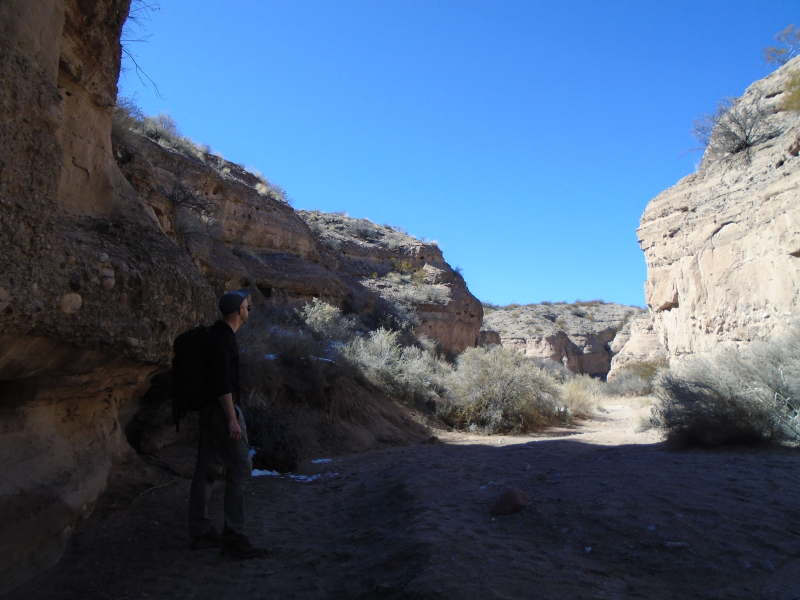
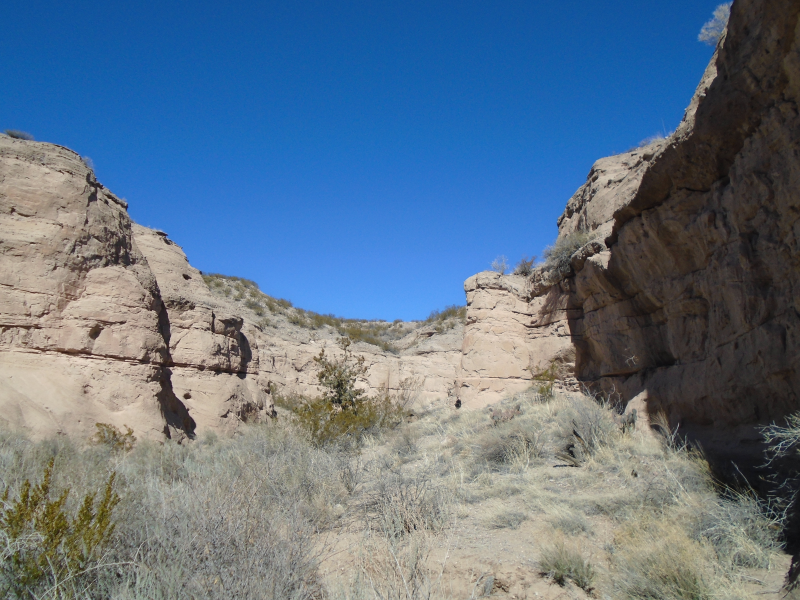
Solitude Canyon brought us here. Nests, burrows, bird droppings lined the ravine’s rocky walls.
It’s a holiday weekend, but the canyon earned its name.
Short, efficient switchbacks lifted us to a panorama that looks like it should have required way more than 30 feet of climbing.
Blue finds new gradients, unbroken by cloud.
Silence. A few cranes call from the marsh. The end. In November there were thousands.
Later, at the marsh, two harriers wheel higher until we can’t separate them from the blue.
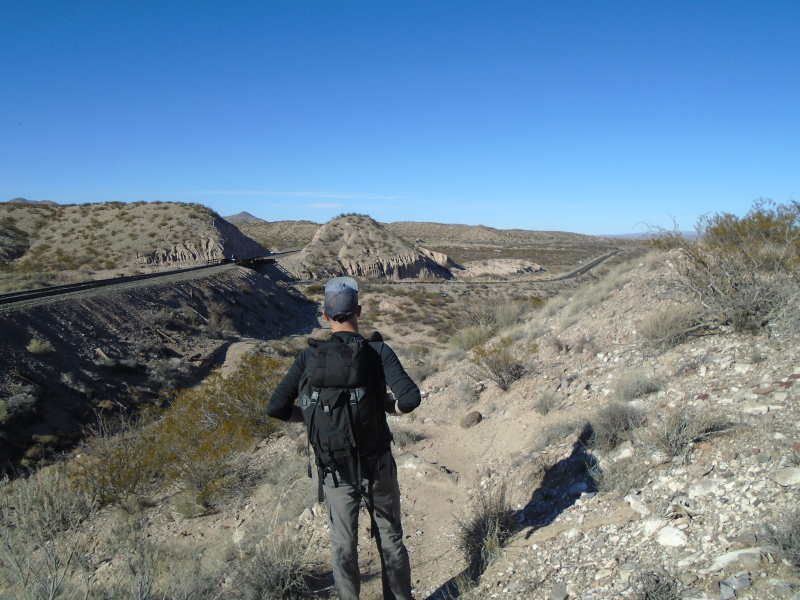
Coming down from the Marsh Overlook Trail; railroad tracks and Highway 1
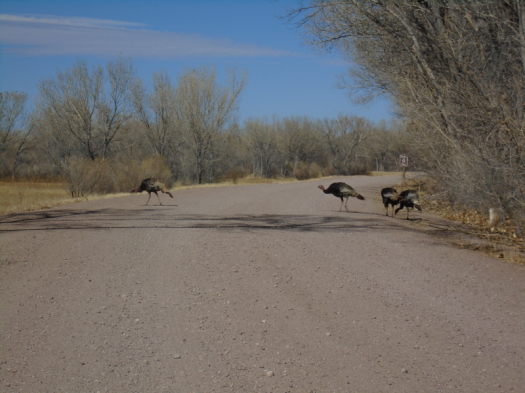
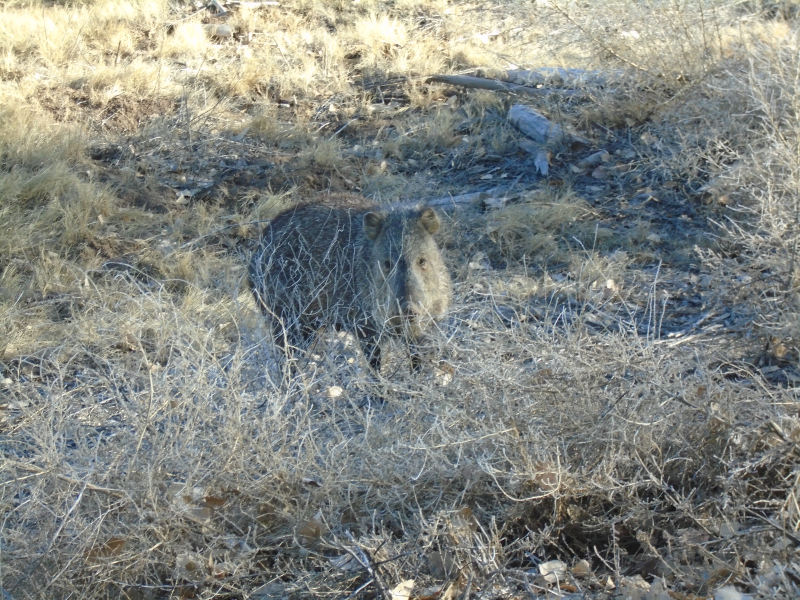
The first javelina we’ve ever seen trundles across the road in front of our car. He munches leaves on the shoulder, stares at us. We hear him snuffle as he walks away.
Why did the javelina cross the road?
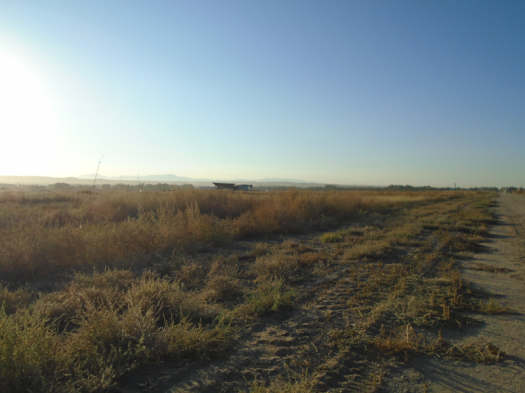
The refuge is so vast, the land so open, you forget cities and towns and mountains that are tall. The entire world becomes creosote, rock, water and creatures.
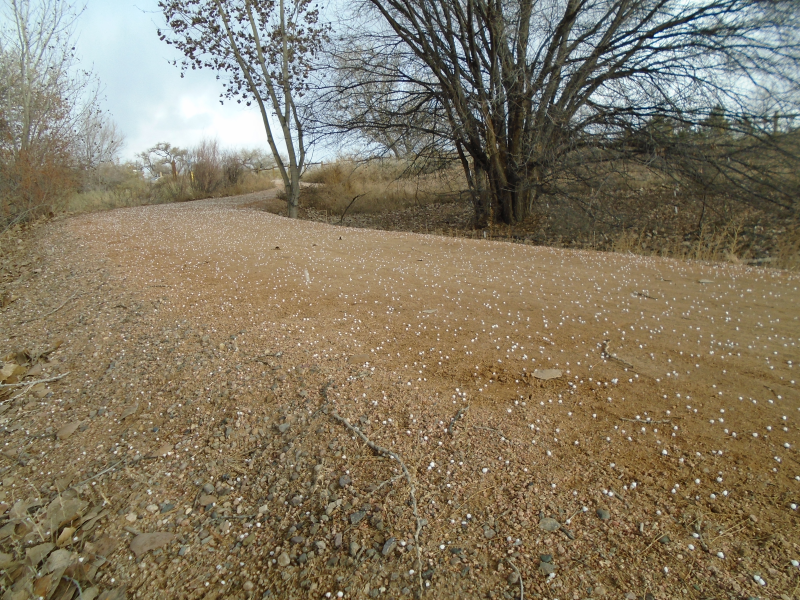
We’re less than a quarter mile from the trailhead in the Rio Grande river bosque. Little white pellets pelt us.
Sleet and sun will trade places for this entire hike. The precipitation cycles from little white blasting caps to light droplets barely touched with ice, and back again.
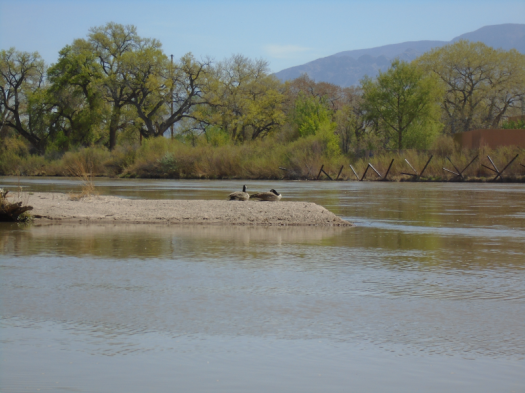
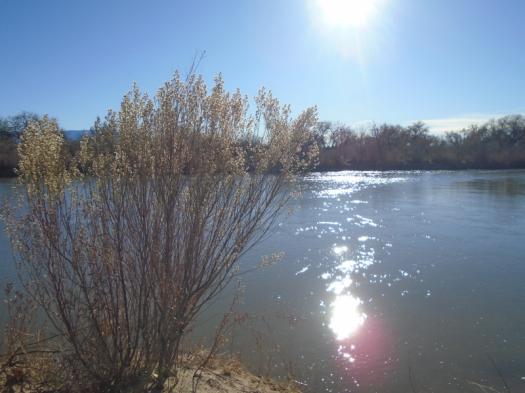
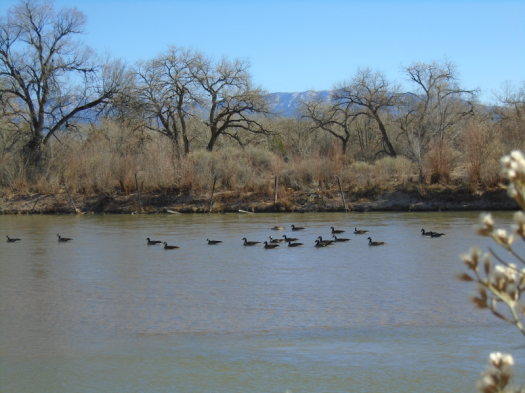
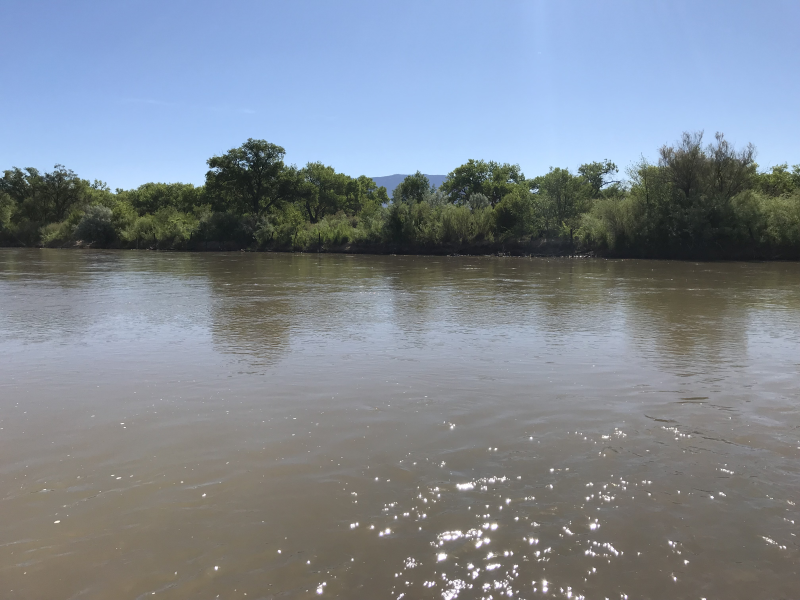
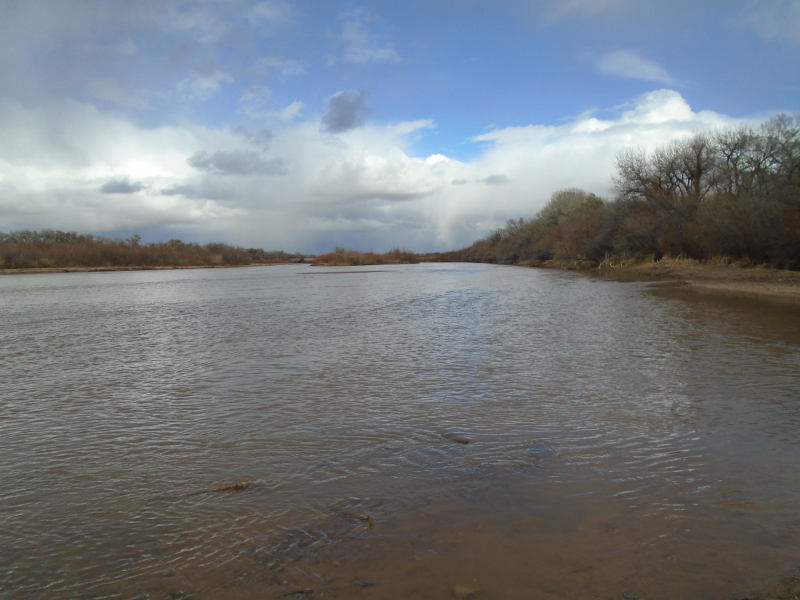
We walk out on a sandy landing. The river flows fast at its edge, wind-ruffled, bolstered by snowmelt or rain further north.
Sun peeks at the trail, melts the pellets. The leaves beneath glisten.
Look closely and you can see the sleet falling!
Sleet on the trail
Blasting cap of sleet on my husband’s glove
We walk up to the Montano Bridge, right into a biting west wind, for a better view of the storm. The sky’s a bruise above Rio Rancho and the Jemez. Snow blurs our view of Corrales. The curtain has dropped over the Sandias from Embudo Canyon to Placitas.
We retrace our steps to the car. It’s 45 degrees there. No precipitation has fallen.
At our house this morning, outside looked and felt uninviting on this cold, cloudy winter day. I just barely dragged myself off the couch. My husband vowed to stay inside, changing his mind at the very last minute.
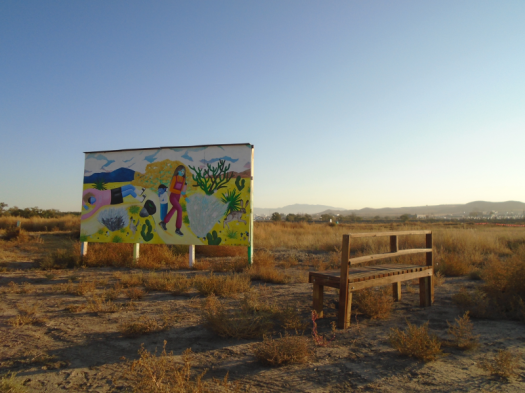
Postscript: I went straight from this hike to 516 Arts’ “Species in Peril Along the Rio Grande.” I hadn’t planned it that way, but today was the last day of this stunning, sobering exhibit. I’d been to several of its events and talks, including one in the gallery, and vowed to go back when I could spend some time and really take in all the works. I probably even tracked in a little red clay and sand today, which seems appropriate. Pictured is Ruben Olguin’s “Evaporation,” a mural that depicts more than 150 endangered species in the Rio Grande Valley using earth pigments from the valley.
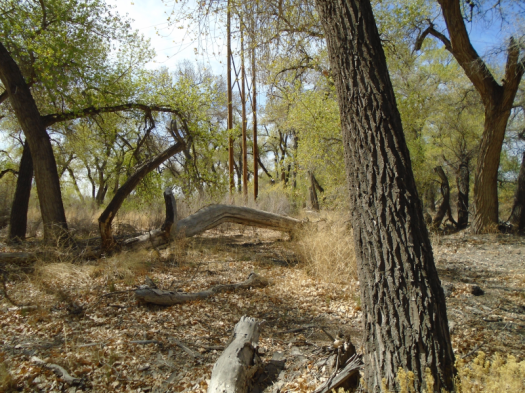
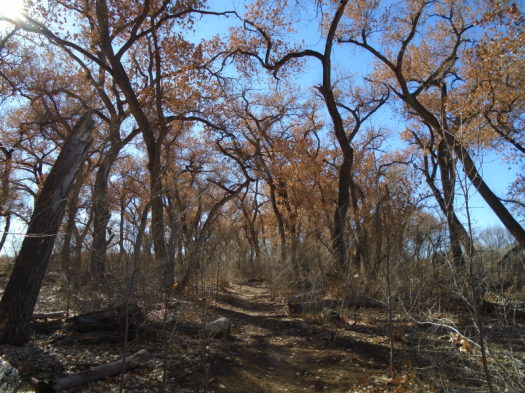
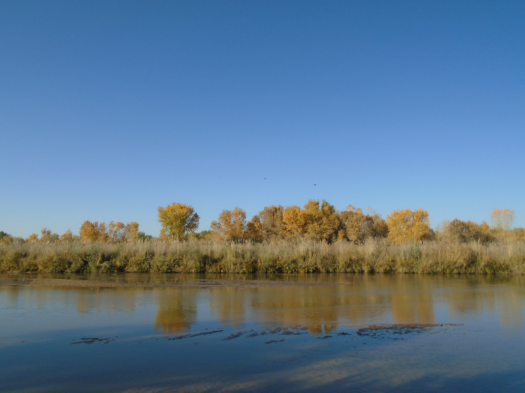
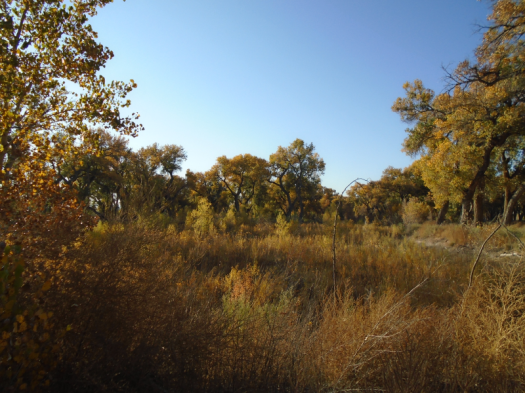
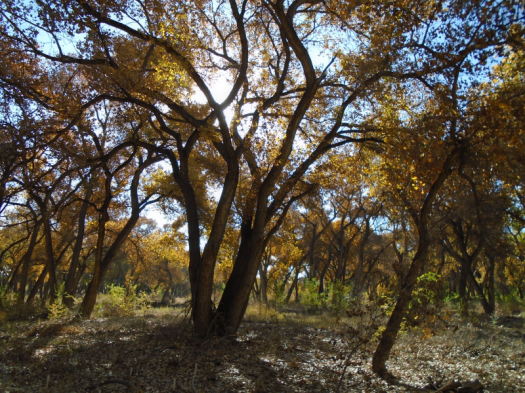
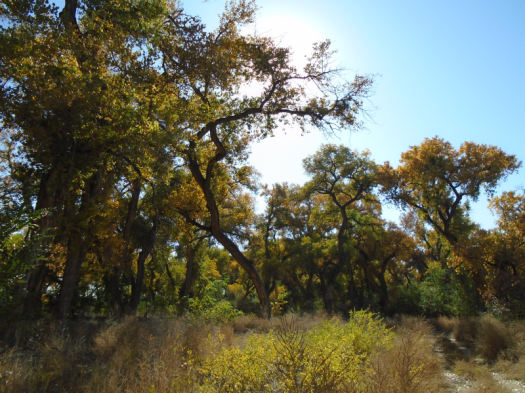
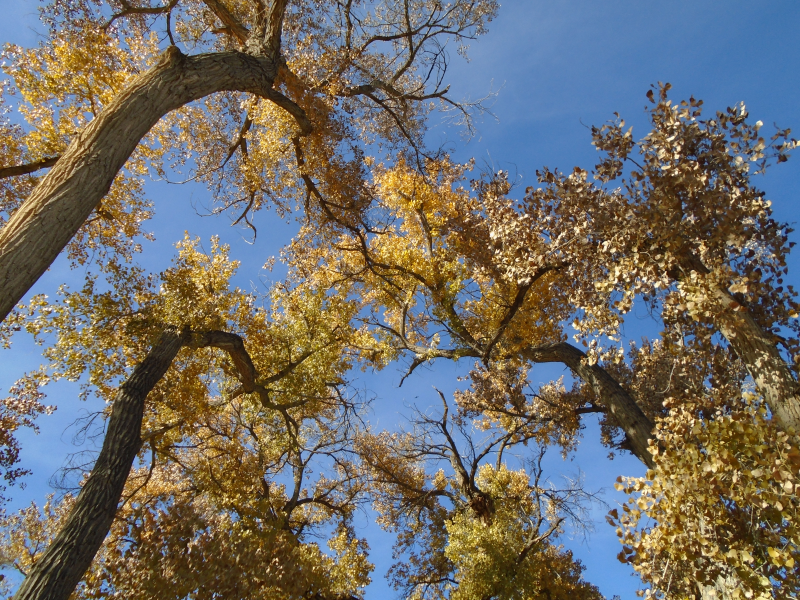
Valle de Oro has arguably the best cottonwood fall color show in Albuquerque proper. The cottonwoods peaked at least a week ago. I thought to come here only because a trip to Jemez Springs yesterday reminded me how beautiful cottonwoods are when they turn past peak yellow to gold.
The colors at Valle de Oro today pulse instead of blaze, but they still command attention. So do the gaggles of birds.
We hear sandhill cranes’ rusty call from the other side of the river as we wander the east bank. Traffic noise rises. I guess that it’s from NM 47, the highway from Albuquerque to Isleta Pueblo and Bosque Farms.
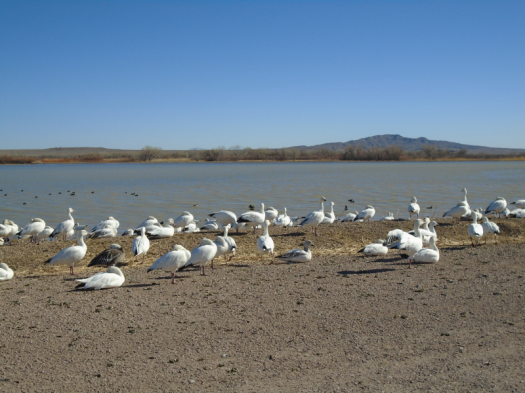
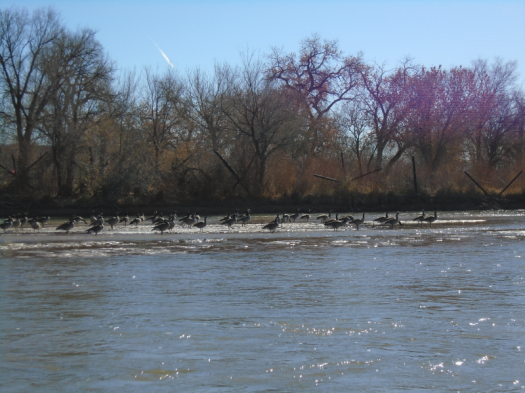
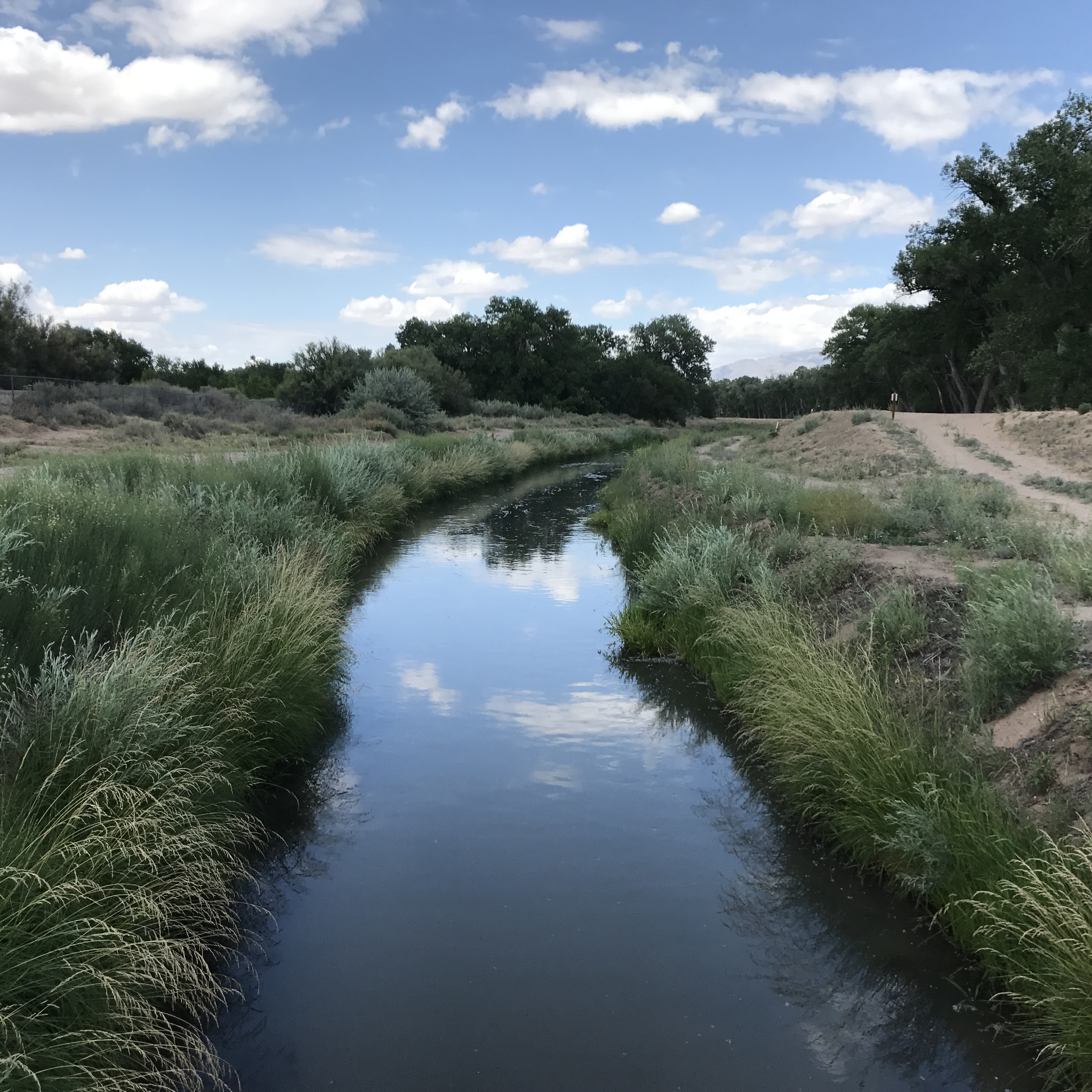
The bosque path meets an acequia, and we can see the intersection of NM 47 and I-25. Isleta Casino rises up before us, the Manzano Mountains behind it. Between us and the highway, a field full of geese, with a good dozen more arriving every few minutes. A roadrunner darts across the acequia’s dirt track.
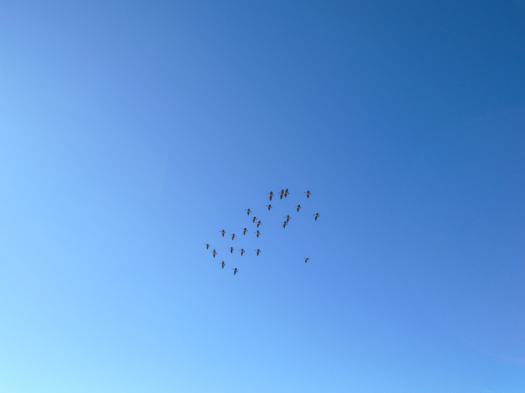
Coming in for a landing
Looking back over the field of geese toward the Sandias
We turn around at the NM 47 overpass and walk back south on the acequia. Gold glints from a bosque receding to brown. Birds move over in waves.
The vibrant colors have flamed out, but fall in New Mexico still has more to give.
Hike length: 5.5 miles
Difficulty: easiest
Wildlife spotted/heard: dragonflies, crows, hawks, kestrel, sandhill cranes, geese, ducks, sparrows, downy woodpecker, great blue heron
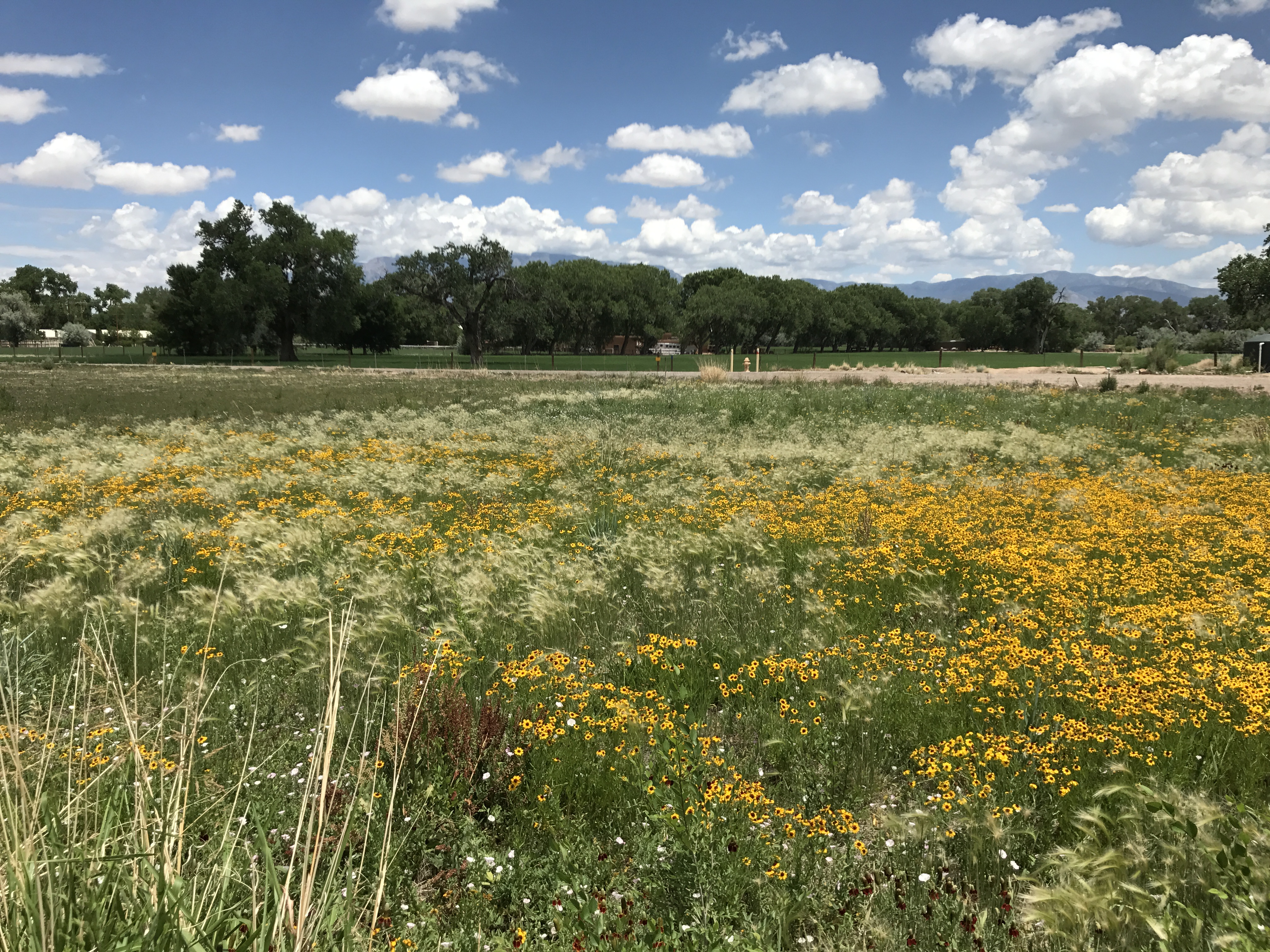
Agriculture and permaculture fields pulsed deep green, a scattering of yellow wildflowers breaking the monochrome.
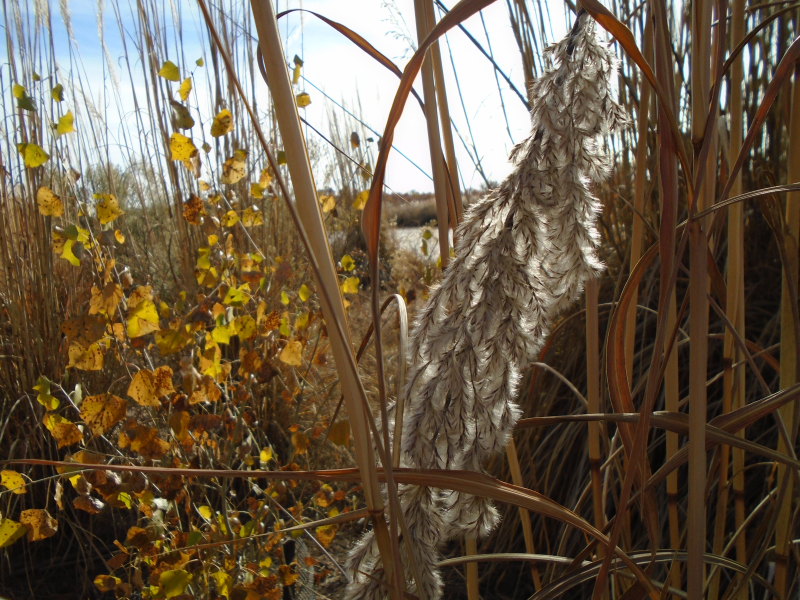
We walked into the bosque, squeaked through a path of rushes and cattails, and came to the fast-flowing river. On a sandbar, barn swallows bum-rushed a Cooper’s hawk till he fled the scene.
Hawks were everywhere today – bouncing from branch to branch at a fancy house along the ditch, chasing each other up into the evergreens.
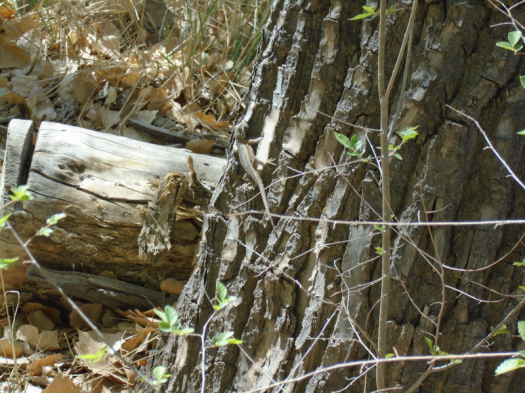
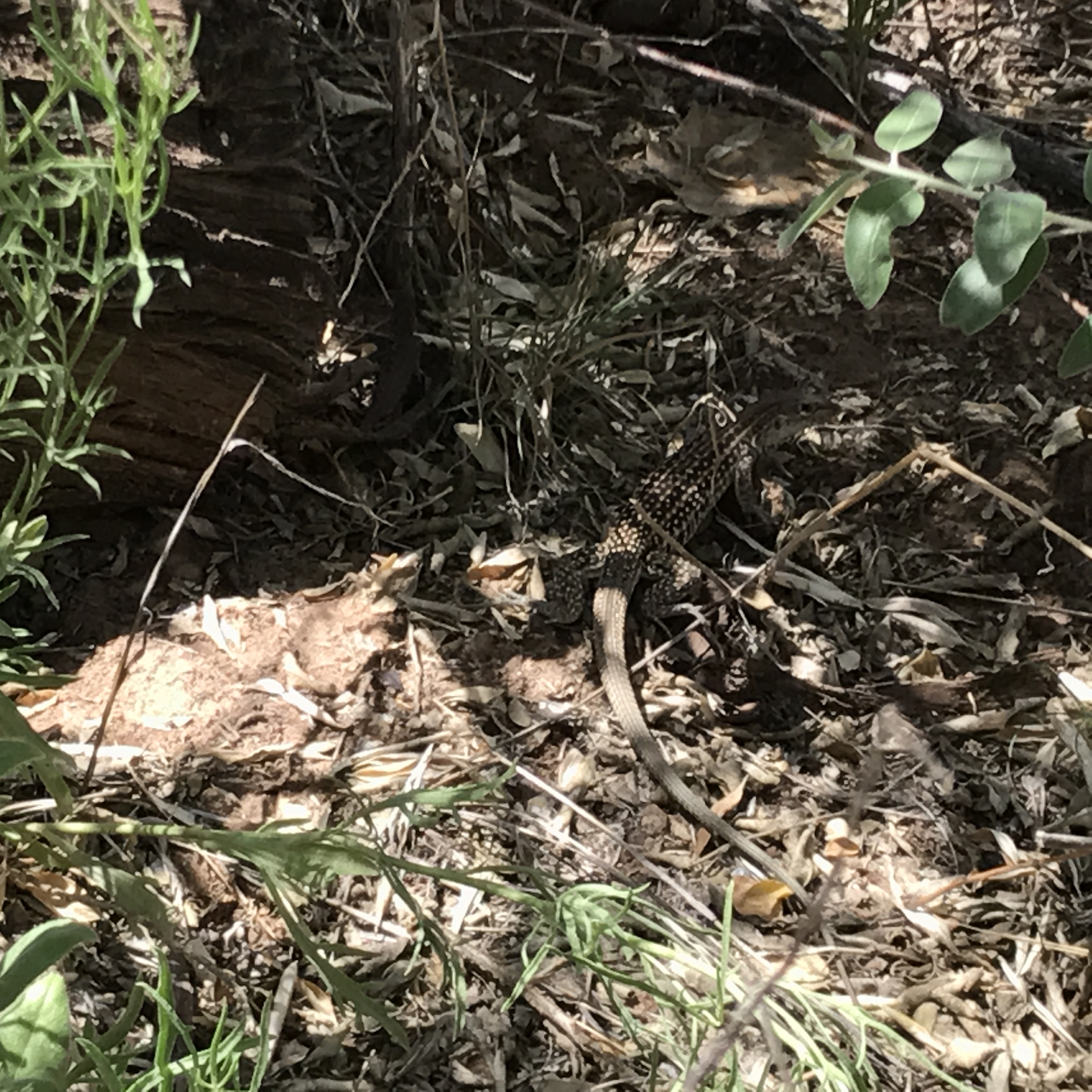
Butterflies cavorted. A striped lizard climbed up a cottonwood trunk and did push-ups.
We had the bosque almost to ourselves this afternoon. The sun beamed down and humidity (humidity!) still hung in the air.
As we walked back to the visitor center, the same hawk bounced from branch to branch at the same fancy house.
We climbed the observation tower to see the color show from a slightly higher elevation and watch wind ripple the grass.
The desert is a miracle in all seasons, but I have spent so much of this dry year longing for color. I’m grateful that I got to soak it in today.
I wasn’t the only one.
Hike length: 3 miles
Difficulty: easy
Trail traffic: light
Wildlife spotted: Cooper’s hawks, herons, spotted and striped lizards, butterflies, dragonflies, grasshoppers, barn swallows, hummingbirds
Eerie squeals nearby filled the air. At first I thought a family with toddlers was on the trail nearby. Nope. Coyotes.
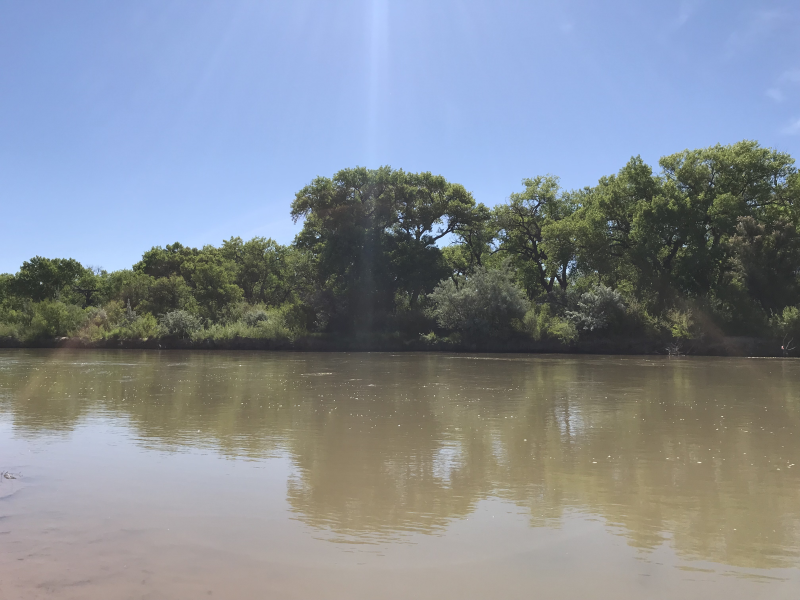
We’d entered the thicket on the hunt for a lightly-trod trail hugging the west bank of the Rio Grande, about half a mile north of the Montano bridge.
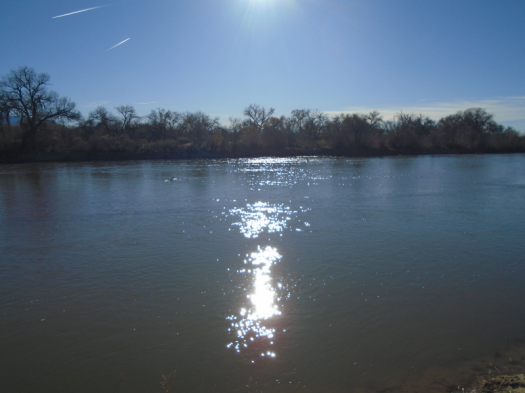
Two weeks ago, we’d walked that trail as it glowed with yellow Russian olive blooms, sparkling against the reflection off the river.
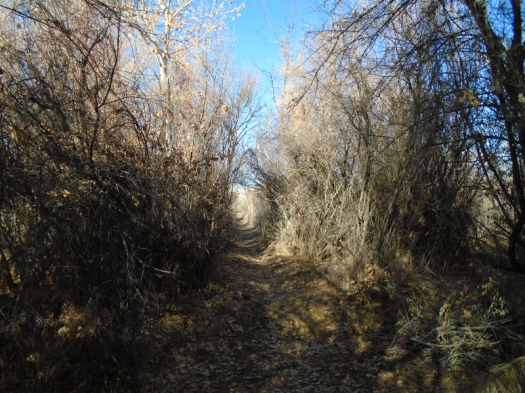
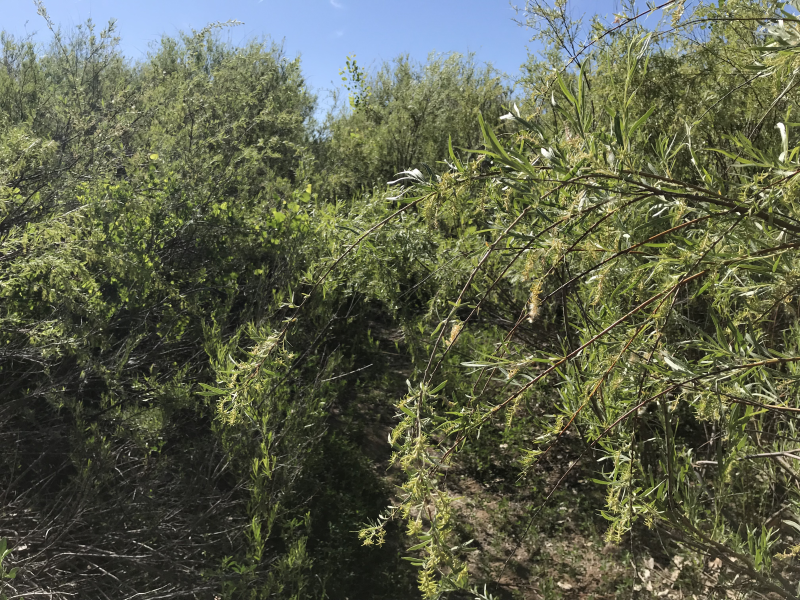
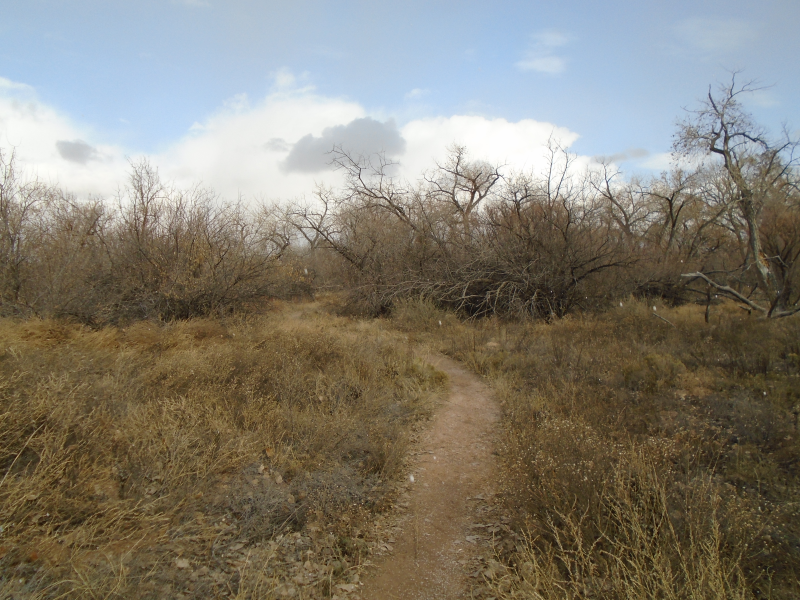
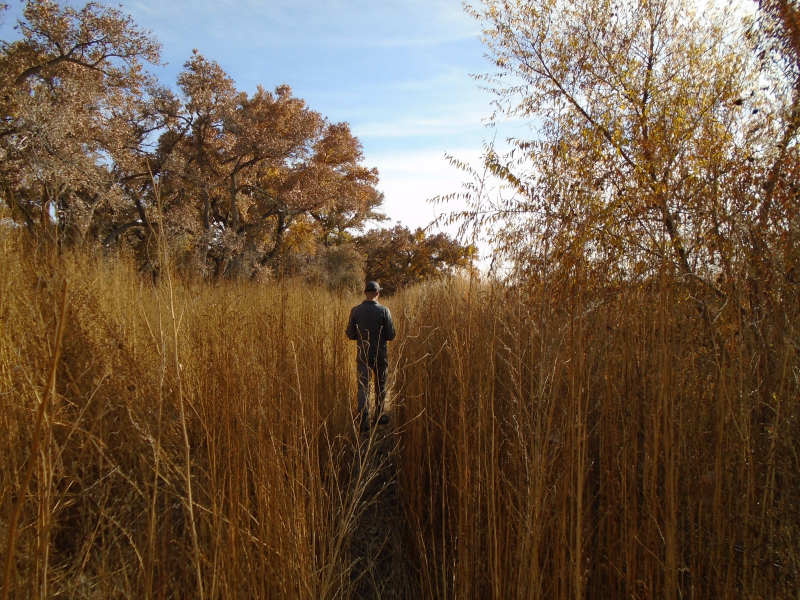
Today we started on a doubletrack baking in the sun. One faint path headed toward the river – and straight into the thicket. We were mere yards from the river, but as we went deeper into the growth, the path faded and the brush closed in, becoming impassable without seriously trampling vegetation (a bad idea anywhere, but especially in the desert.)
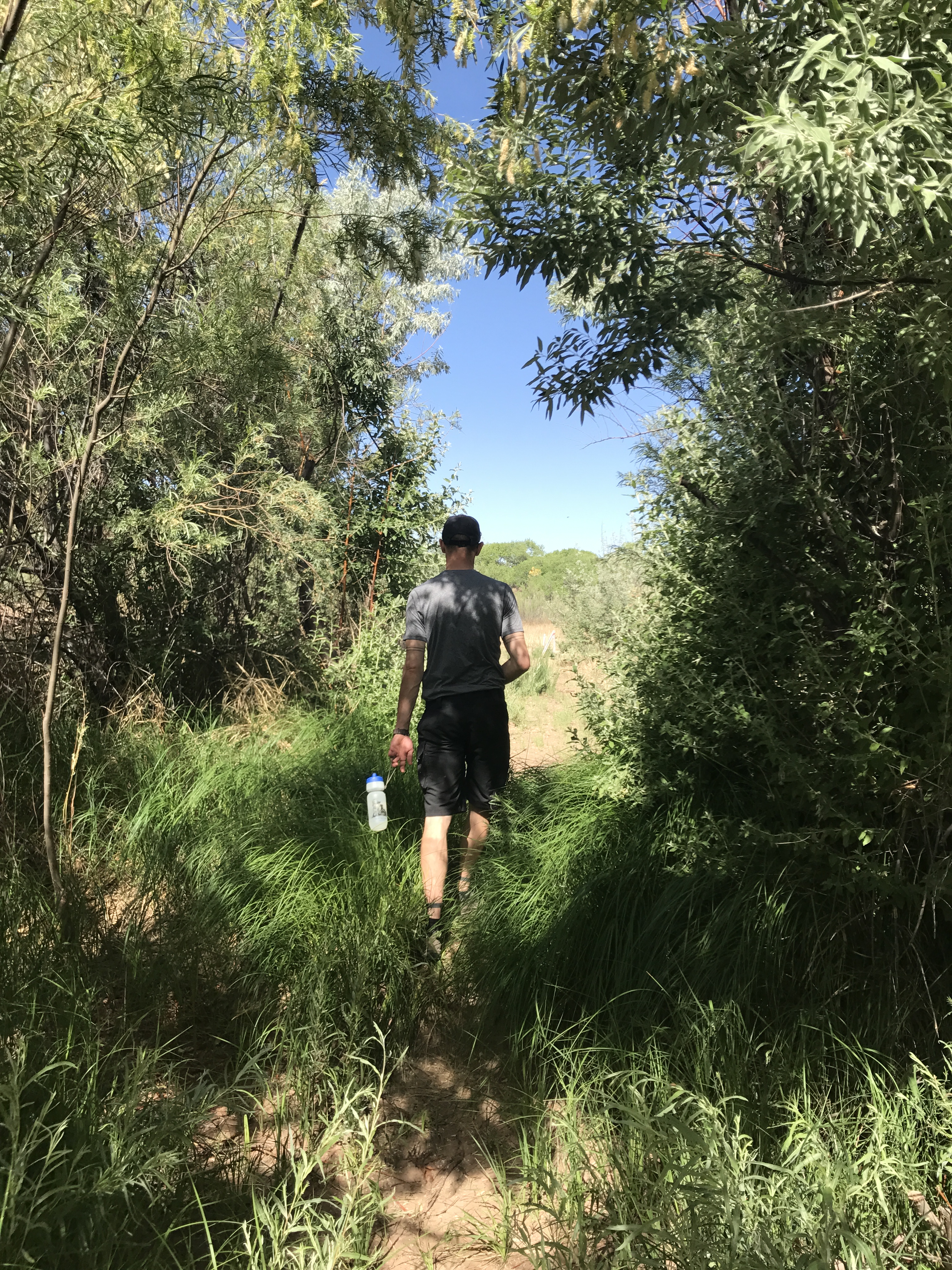
It was incredible to realize you could be swallowed up by nature, until your entire vision was blue and green, so very close to one of the most high-traffic roads in town. It was a thing worth celebrating.
But the sun was already beating down at 9:30 a.m., and I wanted to see more than the thicket before the heat became unbearable.
And we did. A cottontail bounded away from us. We heard dozens of lizards skittering in the leaves lining the trail. We saw at least 10 lizards, several striped or spotted, one at the edge of an irrigation ditch, so brown and gray he was barely visible.
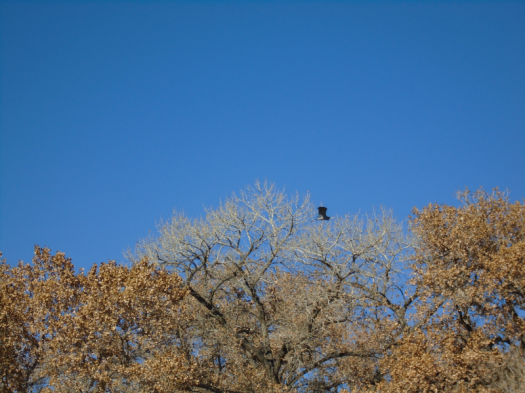
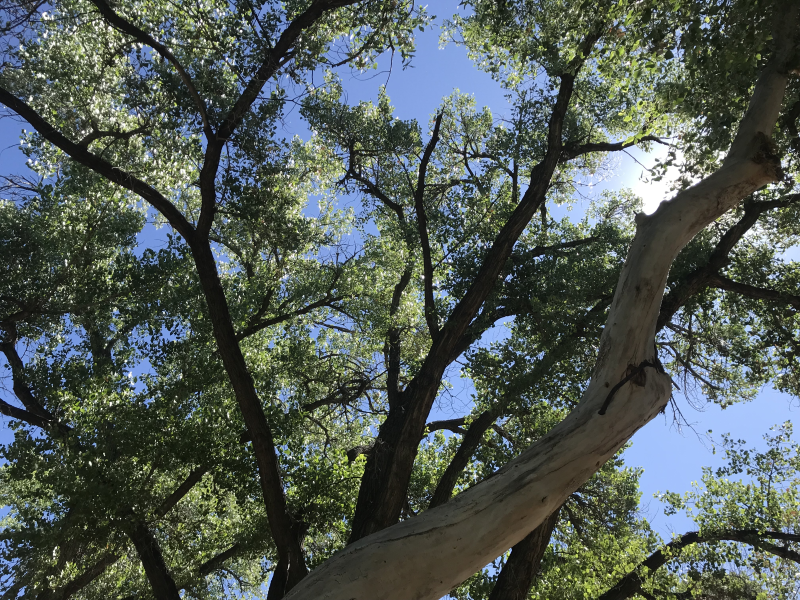
We saw a hawk sitting on a cottonwood limb that bent all the way to the ground, then watched it fly away.
We watched a water bird flap over the river.
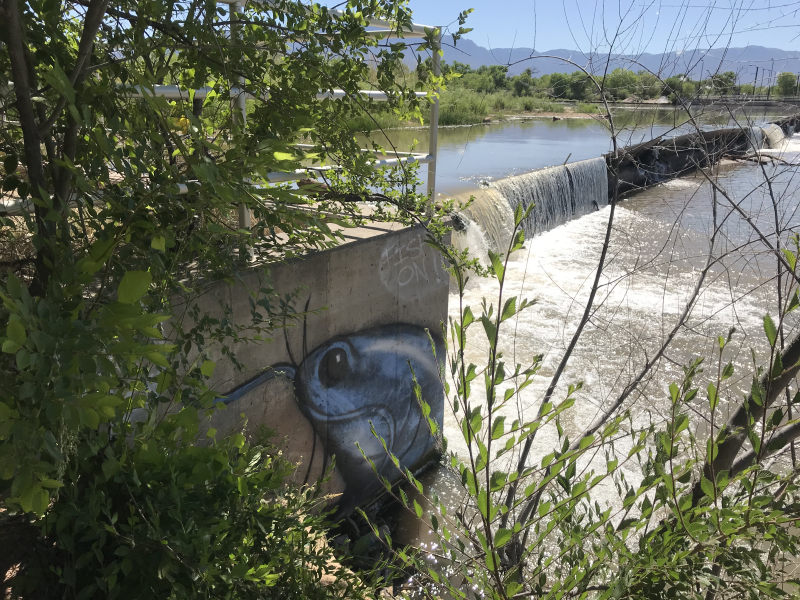
We saw two turtles basking in the detritus at a spillway, soaking up the sun.
I’ve heard the Rio Grande is likely to run dry through Albuquerque this summer. I’ve also heard water managers are likely to release just enough water that it won’t, in order to keep residents from wigging out at the sight of a dry riverbed.
I wonder how long there will be vegetation in which someone could disappear completely, if the river is allowed to go where nature seems to be taking it this year.
Hike length: 3.5 miles
Difficulty: easy
Trail traffic: light
Wildlife spotted/heard: rabbit, coyotes, dragonflies, grasshoppers, butterflies, hummingbirds, lizards, water bird (heron?), hawk, black phoebe























 Woman Seeks Elevation