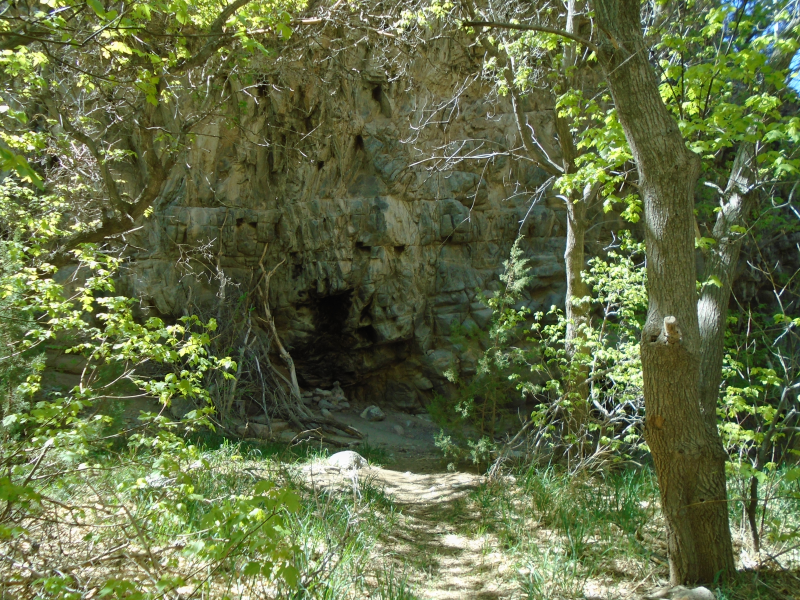
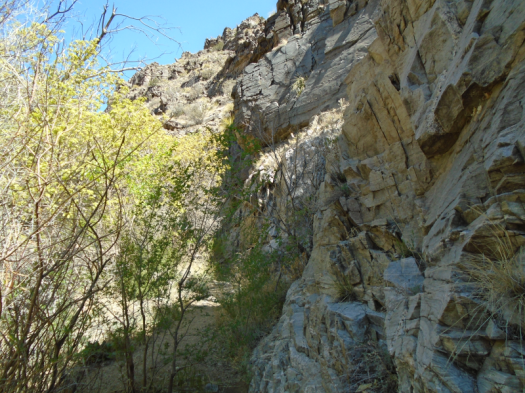
I visited Juan Tabo Canyon Monday in hopes of seeing its spring in action. Somehow, I thought the weekend dab of snow in the high elevations of the Sandias would be enough.
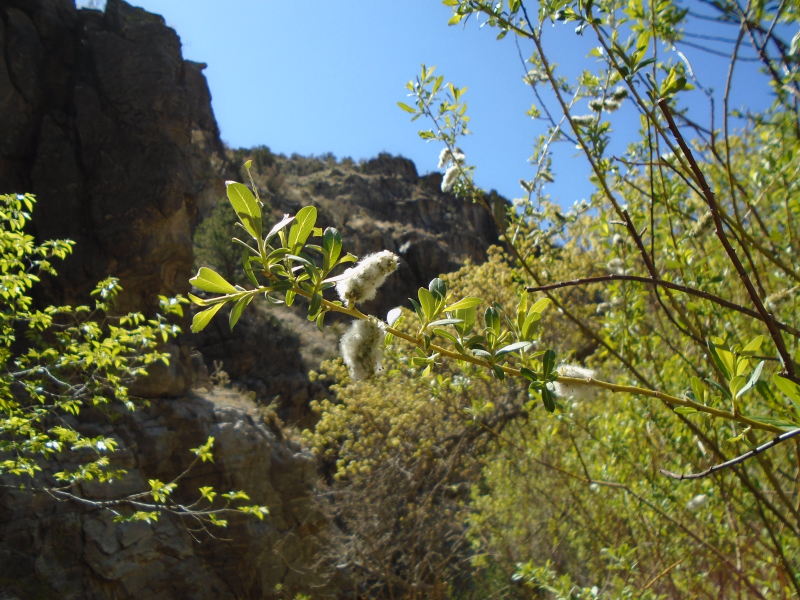
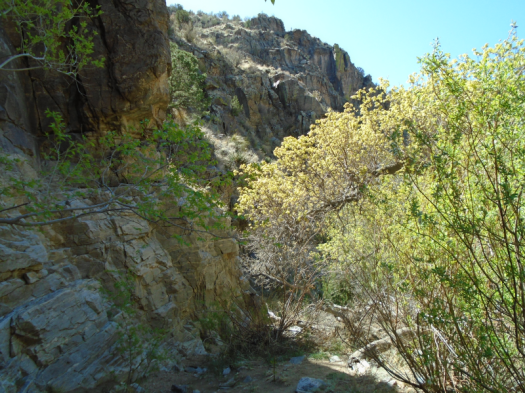
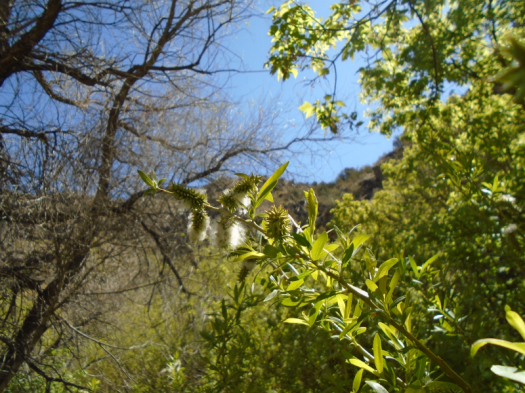
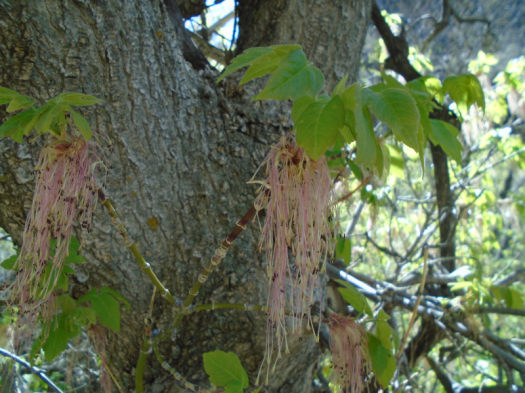
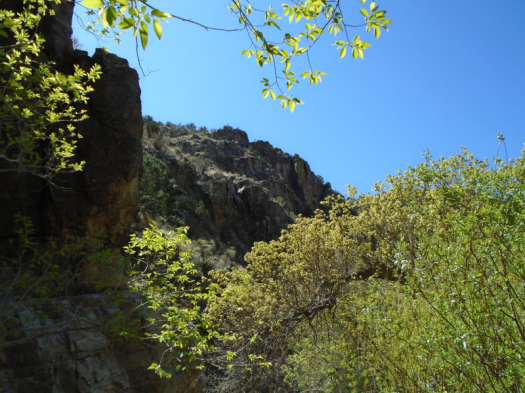
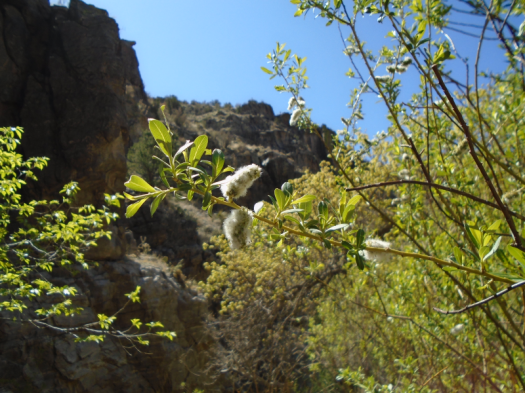
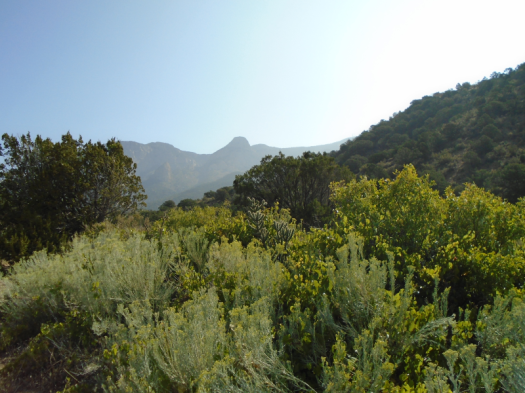
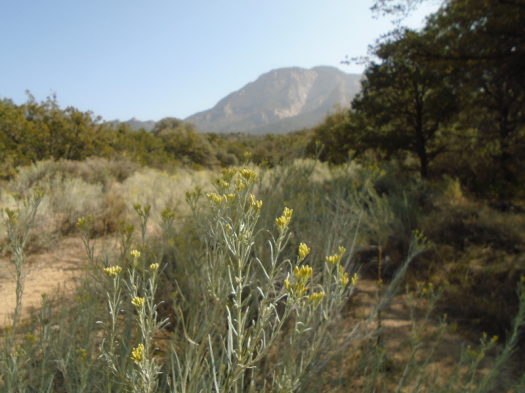
It wasn’t. But foliage and flowers burst forth all over the lower canyon. Birds hovered in and above the branch tunnels that shape where a stream would be.
That canyon will pull me back like a magnet until I see that stream run, or just forever if I don’t.
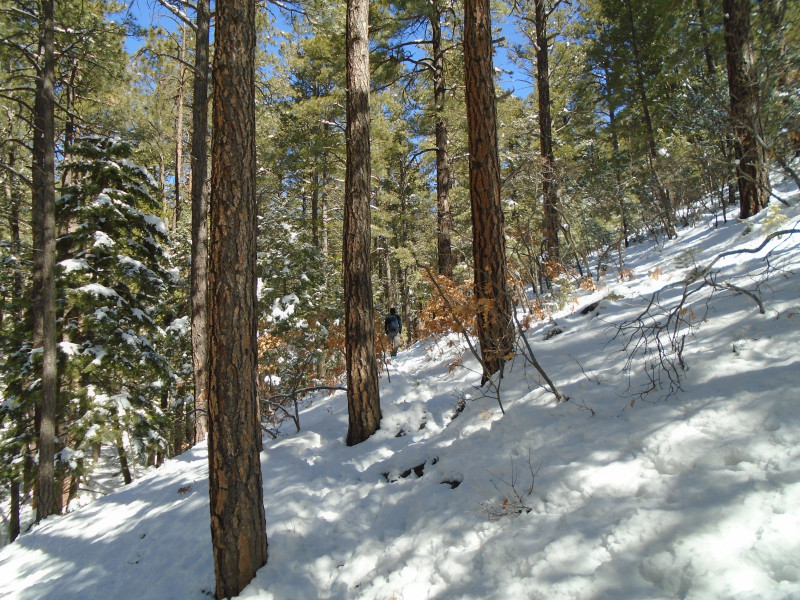
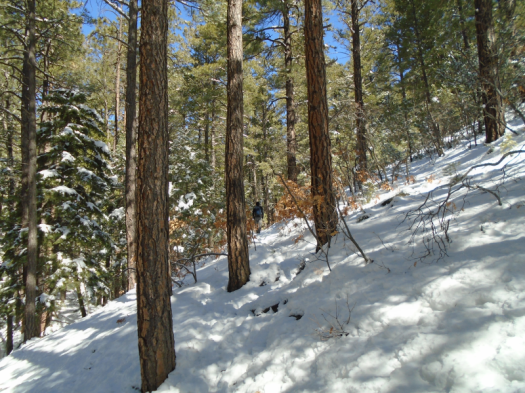
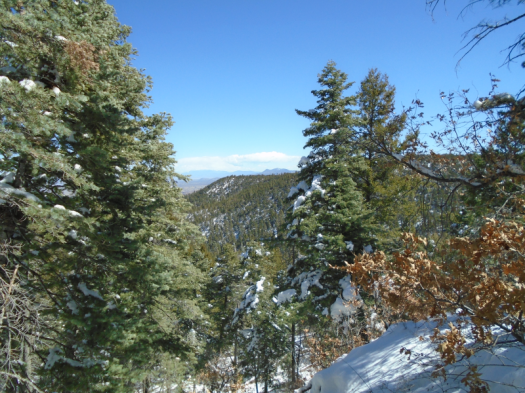
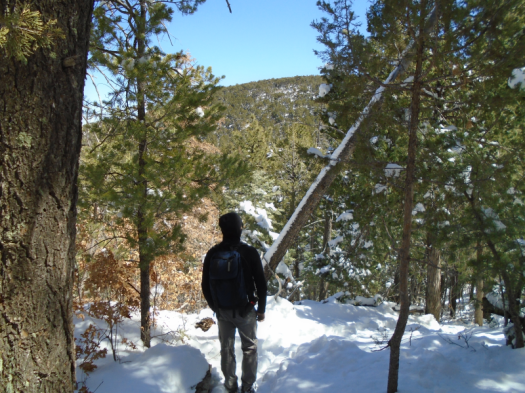
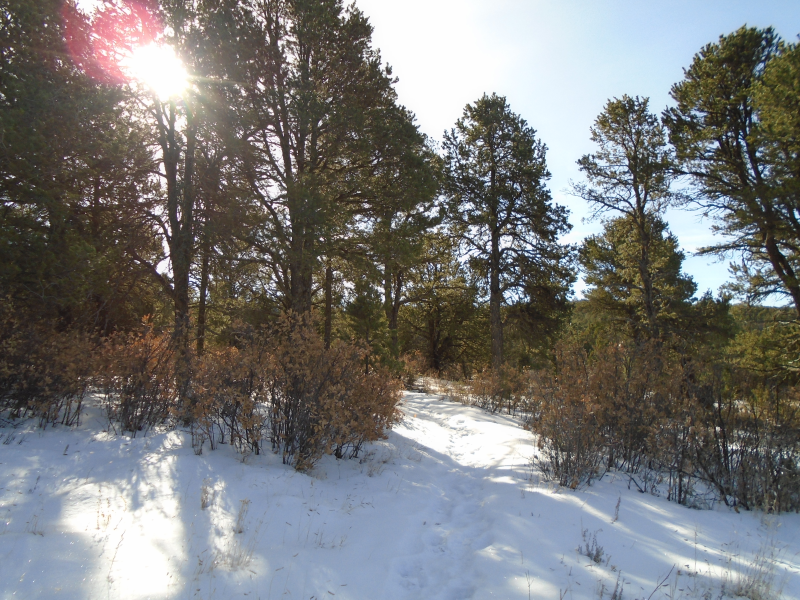
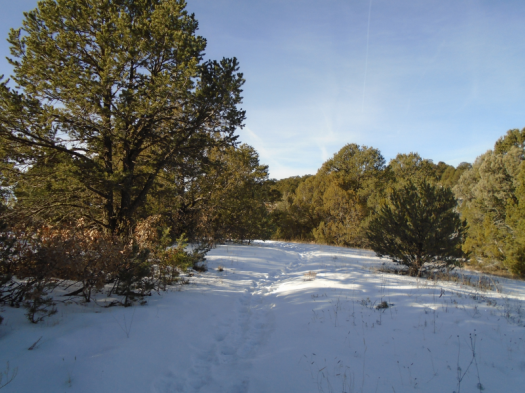
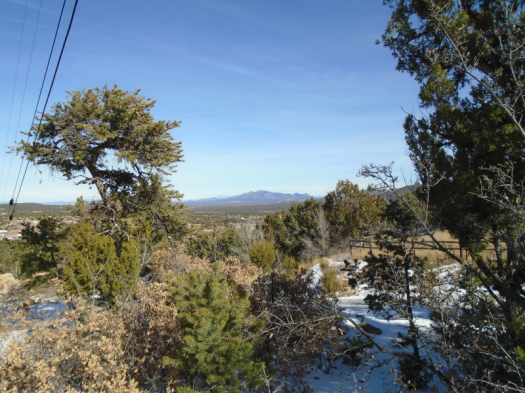
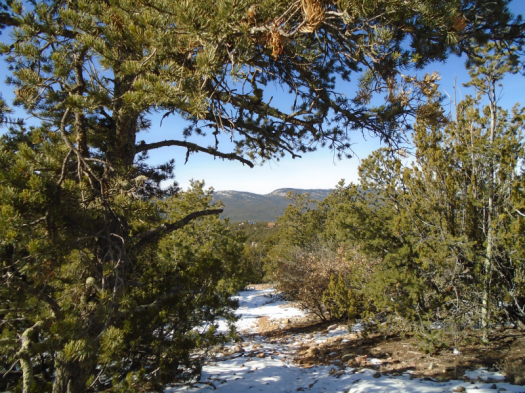
For the first time, on a quiet morning at Sabino Canyon, I can see it. Maybe it’s the sun’s angle, the snow’s consistency. Several inches blanket the ground.
An interpretive sign informs me that I stand on the Manzano Mountains’ northern plateau. I would have told you I was in the Manzanita Mountains, but I accept the serendipity of my first winter visit to my favorite mountain range.
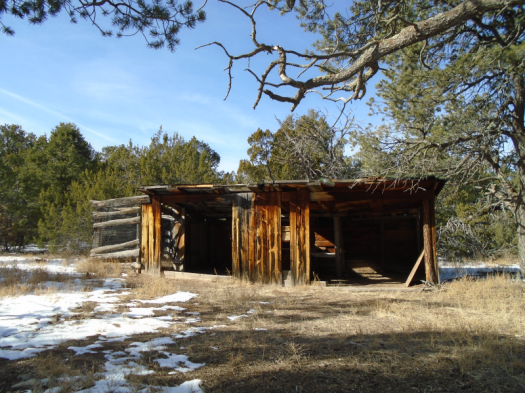
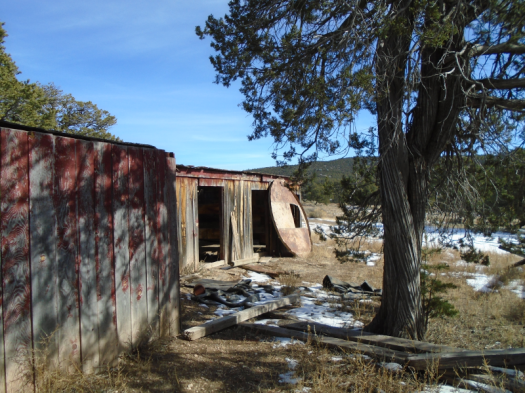
The trail passes the ruins of an old fur farm. Spotted towhees flit where foxes and minks once were caged.
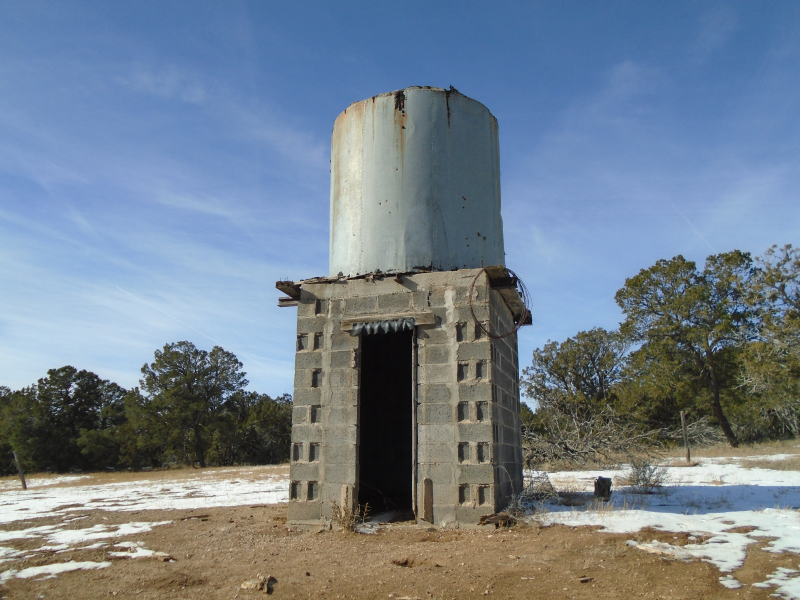
The old fur farm’s water tower
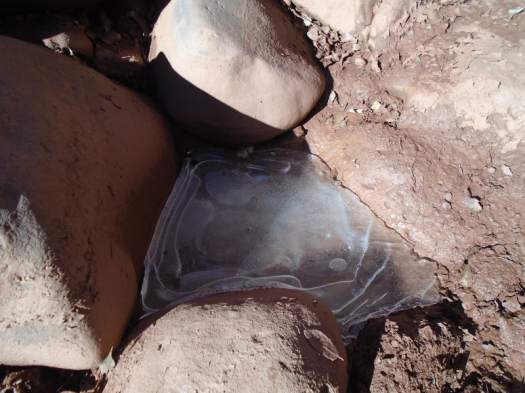
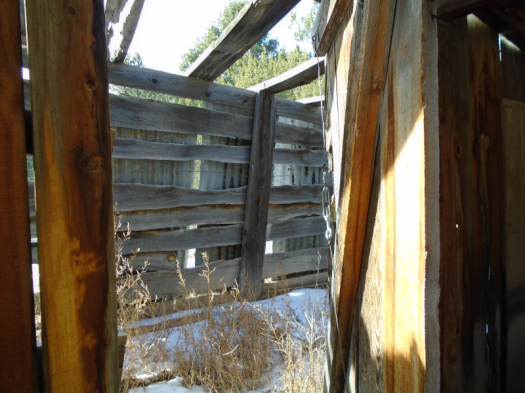
An icicle in a corner of a farm building makes me shiver. Something about the corner’s green patina from age and lack of use.
Still, I feel safe alone out here.
An enormous hawk swoops toward me. I think it’s an owl before I register its raptor-face staring into mine. It banks twice. Striped wings glow in sun.
I consider hiking the whole loop again, but I couldn’t improve on it.
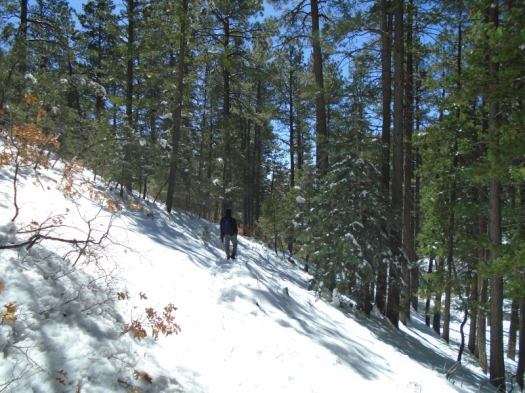
I’ve denied it for a very long, cold half-mile since the last junction. Followed footprints into deeper snow, steeper terrain. Postholed. Slid on the occasional sunny slope of pure mud.
But the footsteps I followed have ended.
I retrace the steps, this time uphill, sweat through my fleece.
I knew the score as soon as I looked at the map of San Antonito Open Space.
These open spaces are compact enough that I’ve never been close to getting truly lost, but my reality often has not matched the maps.
That’s why I’d passed up a perfectly good trail that would take me back south, the general direction of my car. I sought a different trail on the map that would take me directly back to my car.
But that trail was somewhere under snow on a north-facing slope. And I’d left my poles in the trunk because this would just be a short outing.
I reach the perfectly good trail again and take it. At the bottom, little trails cherry-stem out to the road.
None of the first little trails I try are the right one. But I’m close. I hear the dog that barked its head off when I got out of the car.
After at least six wrong turns, I reach my vehicle.
I drive away, and a worry that’s chewed at me for a week pokes its head up. Then I realize: this worry surfaced earlier, during Sabino Canyon bliss.
But I didn’t spare it a single thought as I slipped, slid, postholed and backtracked across one of those confounding East Mountain open spaces.
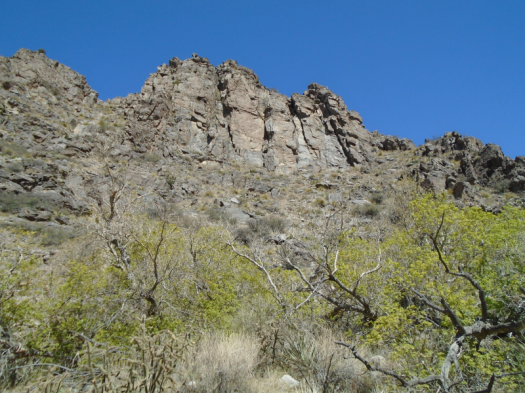
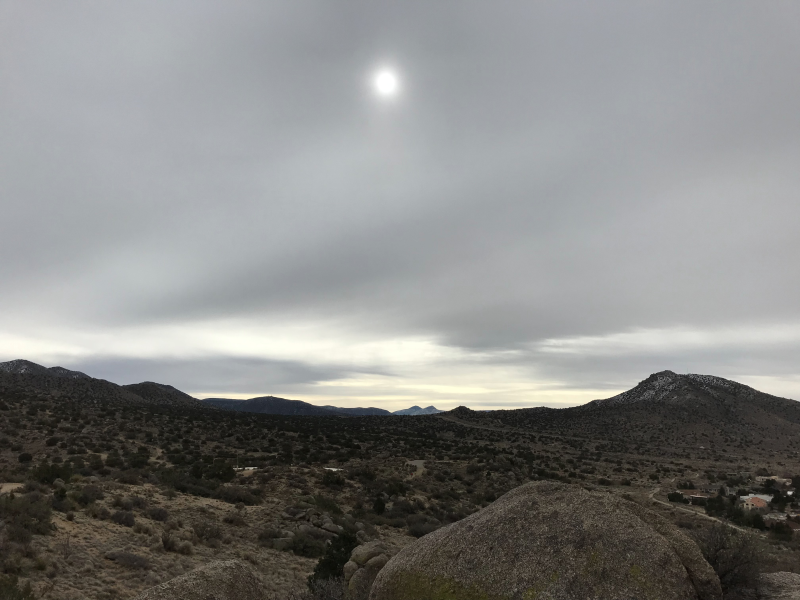
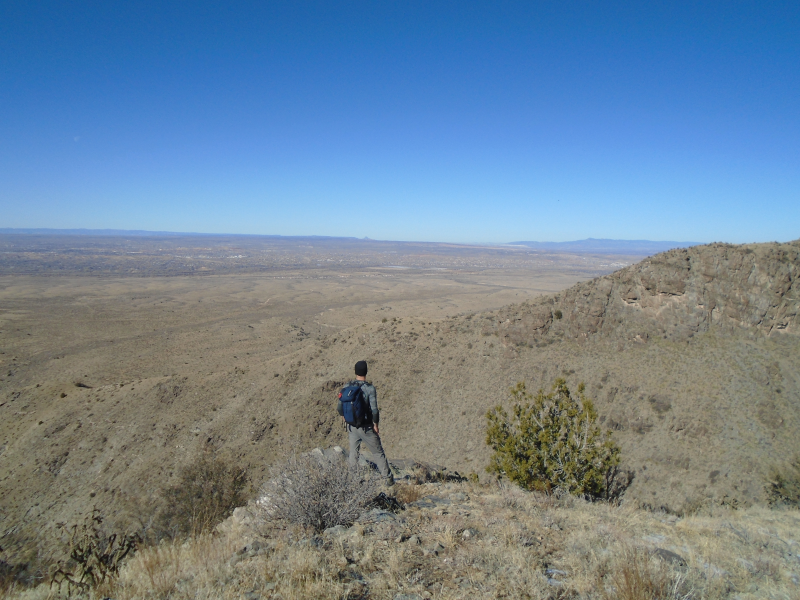
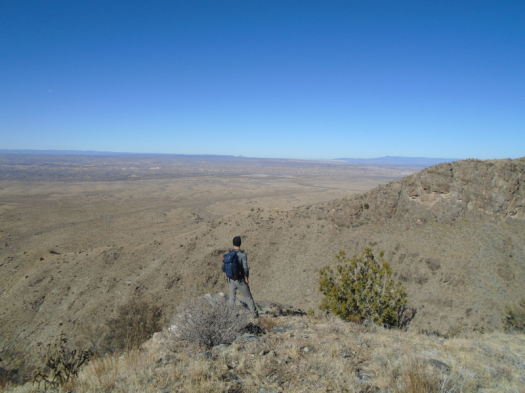
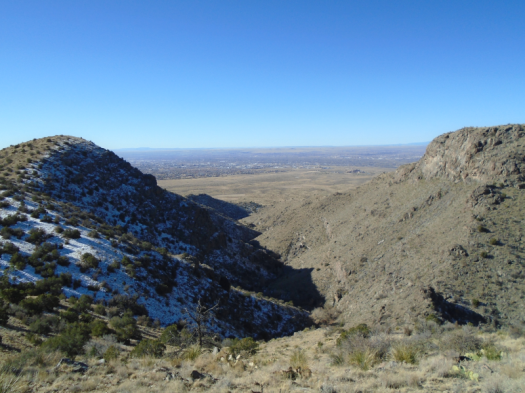
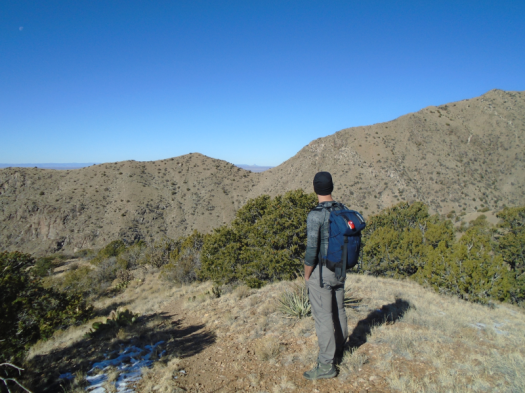
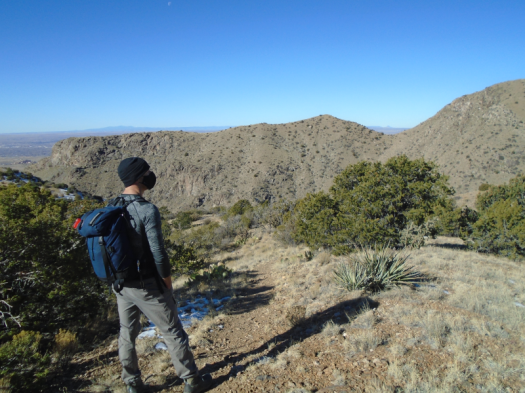
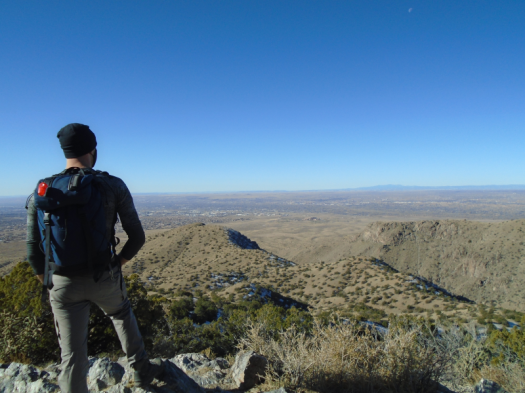
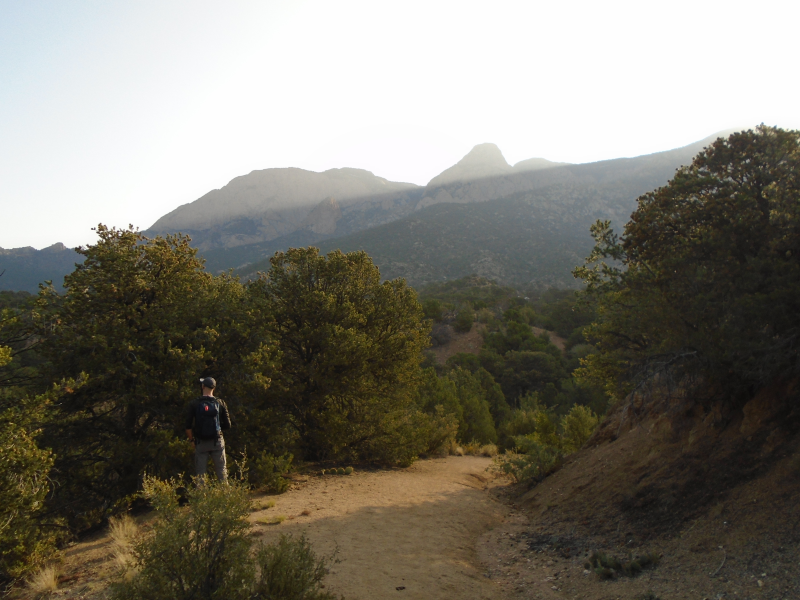
Long exposure of beige hills, crest to mountains, frame. Look right, deep into Juan Tabo Canyon’s gullet, frame.
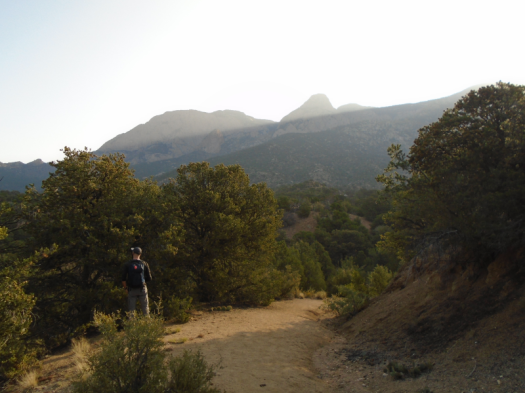
Cabezon Peak is framed by the notch in Juan Tabo Canyon’s wall.
One human, a trail runner cresting a saddle below.
We can’t see them from the southwest corner of Jaral Canyon, but humans and their structures surround us. Sandia Casino. Subdivisions. The crowded trailhead for this hike, where Tramway meets the forest road.
We bypassed that busy spot. Drove north on the forest road to the quiet Juan Tabo trailhead. Hiked into Jaral Canyon from there. Met only one other person, the trail runner.
The route: doable, but steep and rugged up-and-down, starting with a 45-degree leg-burner.
Well, it will be. Now, cool east wind brushes canyon walls’ shadow.
The predator sun lurks like the hawks above, the bobcats whose scat dots this arroyo.
The temperature will climb above 80 here, in the hills at 6,000 feet elevation, on October 17.
The wind will shift to the west, whip into a gale. Red flag warning. So dry any spark would kindle and spread instantly.
But we have a few hours before all of that. And we’ll see very few humans here at Cañada de la Cueva. That was the deciding factor, with 812 new cases of the virus in the state yesterday. A record that broke a record that broke a record.
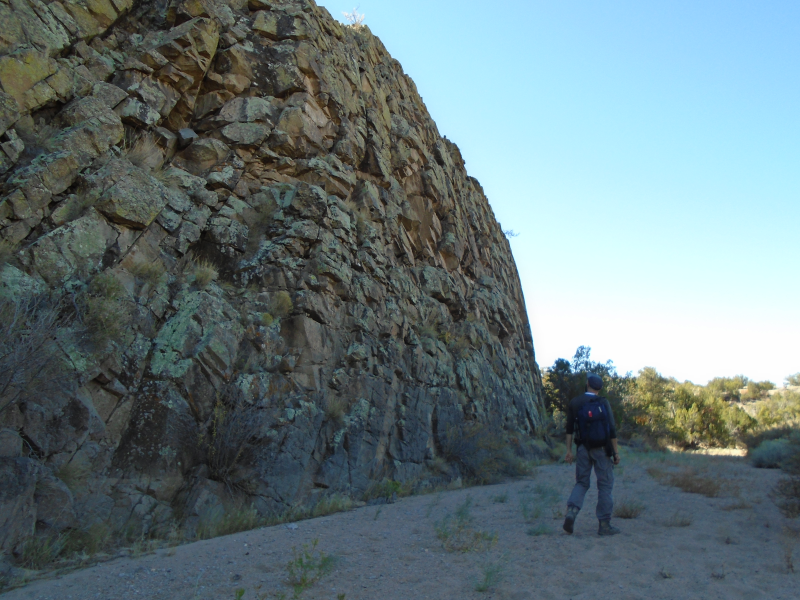
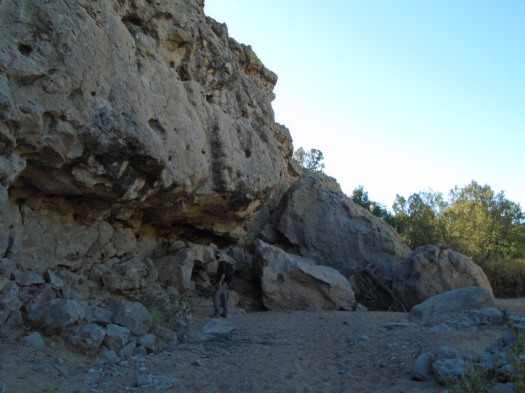
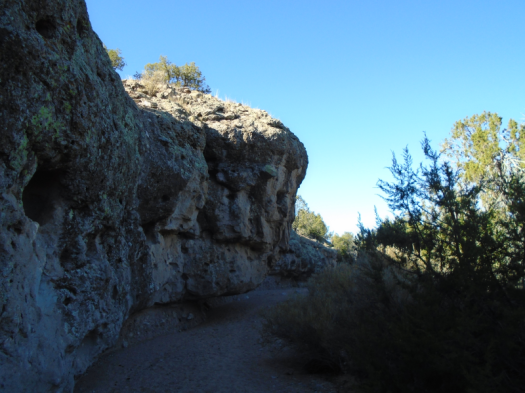
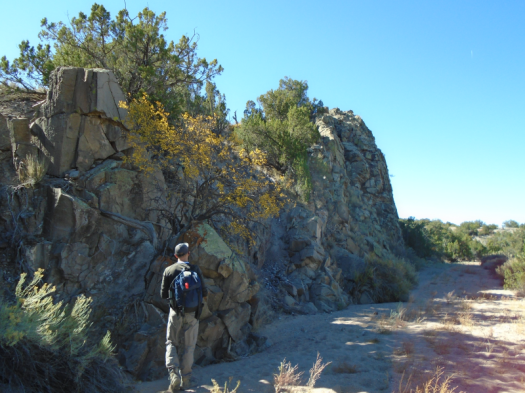
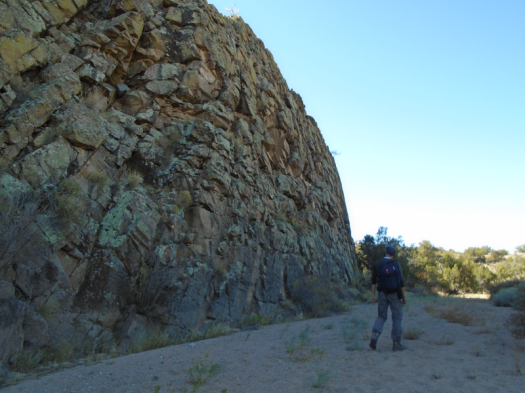
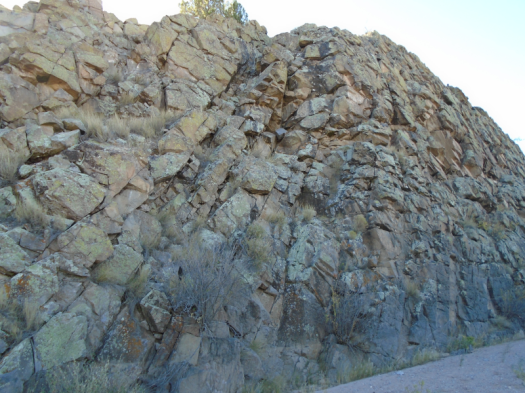
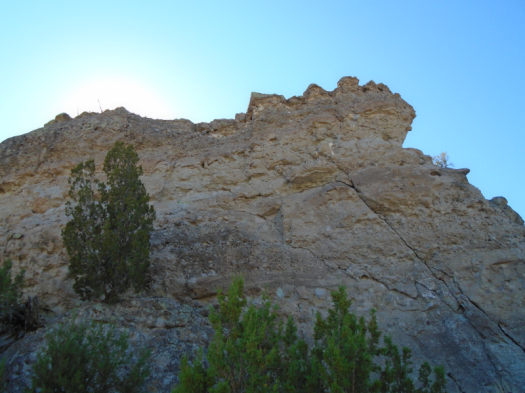
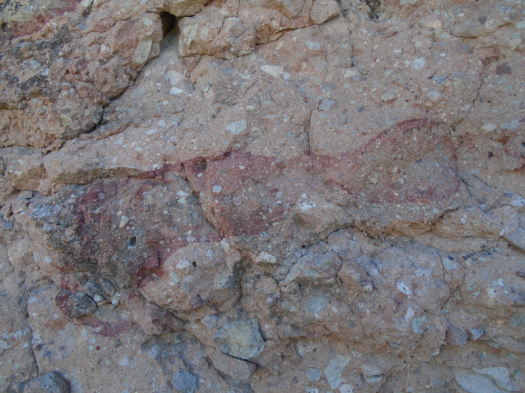
The canyon squeezes and opens. Rock walls emerge: lichen-stitched basalt blocks, pebbles embedded in stone. The Ortiz Mountains prairie-dog above the canyon.
Miles downstream, we see one, then another and another horseback rider descend from the hills to the canyon.
Even this far in, all are masked, as we are. I silently thank them.
“Did you come from the dump?” one rider asks. (Yes, this trailhead is at a dump.)*
We tell him we did.
“That’s a long walk!” he says.
“Yes, and it’ll feel longer going uphill on the way back,” I laugh.
Uphill. In sand. And heat.
The return a two-hour trudge. I knew it would be.
But the big, dark rock walls cover us with coolness as we pass.
The sky glows incandescent blue, a shade that appears only in fall here, that appears even when it feels like summer.
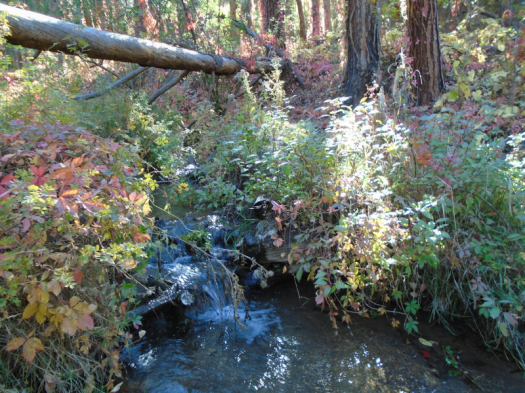
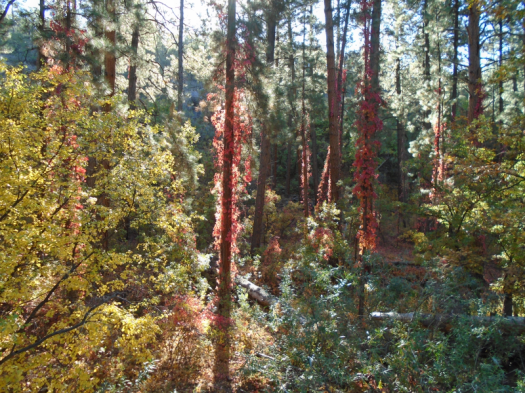
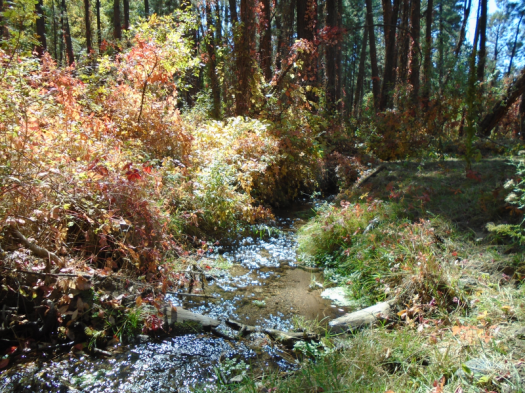
Morning sun crawls over the canyon wall, lights a creekside tangle of leaves red and yellow.
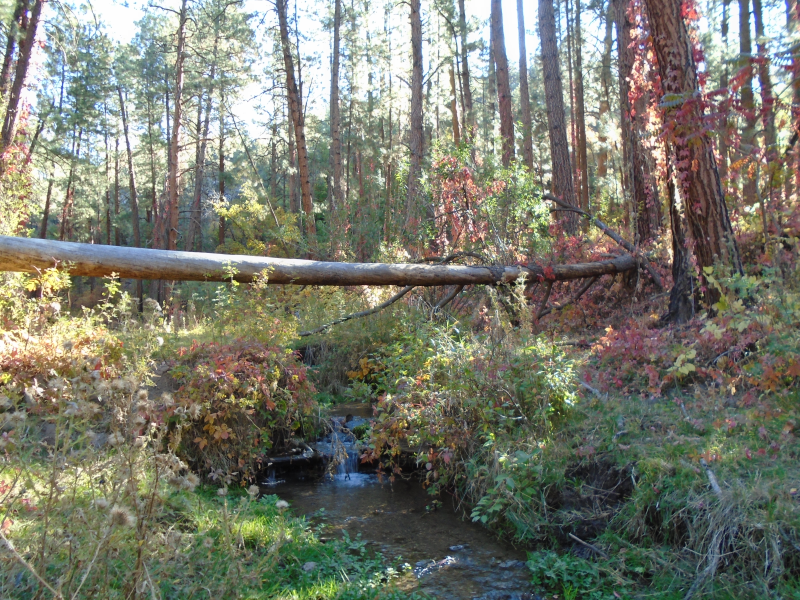
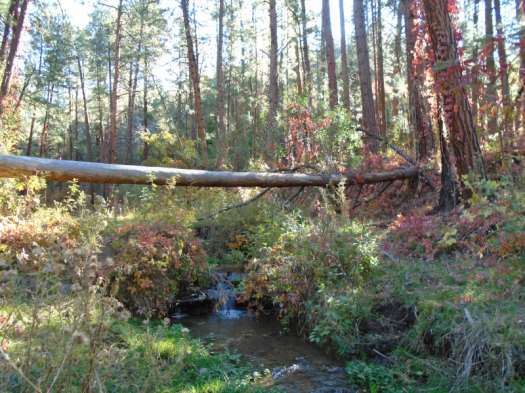
A child could step across Vallecito Creek, the trickle of water that powers this ecosystem.
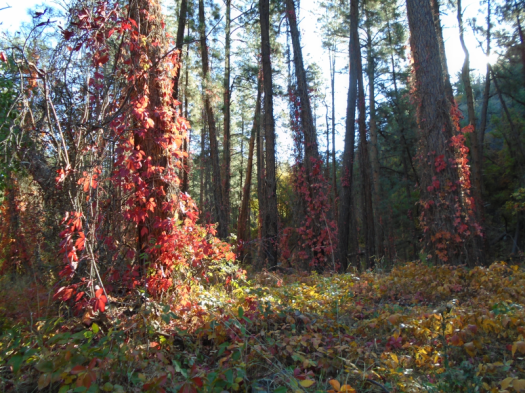
Fall falls right in front of us, breeze gliding red Virginia creeper leaves to the ground.
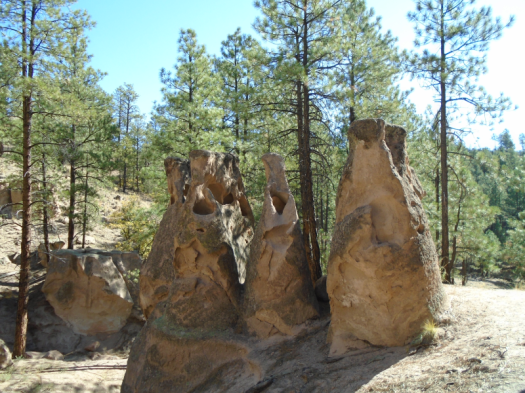
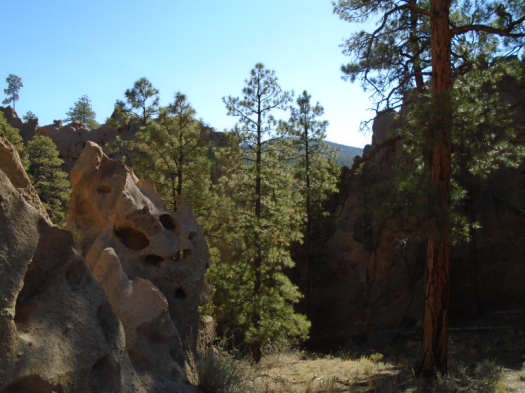
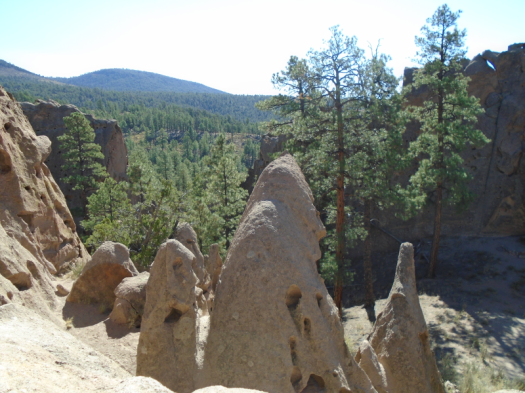
The creek bed runs dry before we reach our destination: Paliza Canyon Goblin Colony, a canyon wall’s worth of hoodoos and tent rocks, thumbs and OK signs and bawdier shapes.
The goblins bake. Do they remember water? Two inches of dust and sand coat our boots.
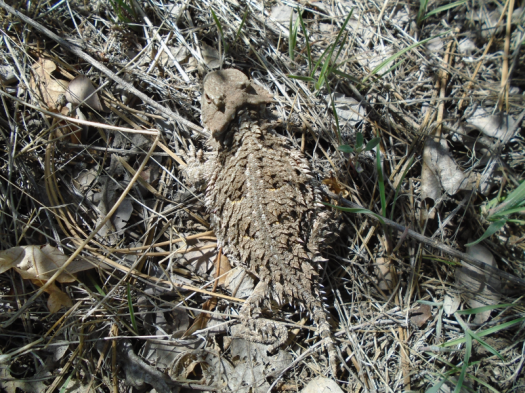
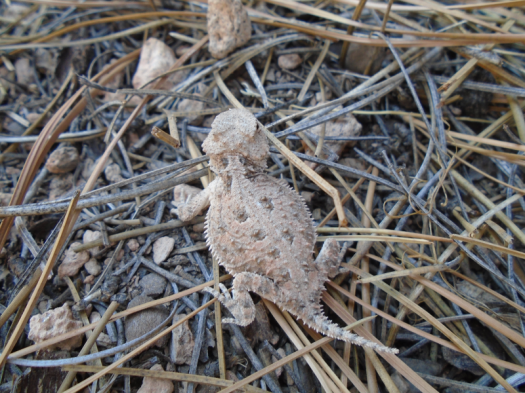
My husband climbs steep ridges while I peer over hills and mesas through towers of tuff. A thumb-sized horned lizard enjoys shadow.
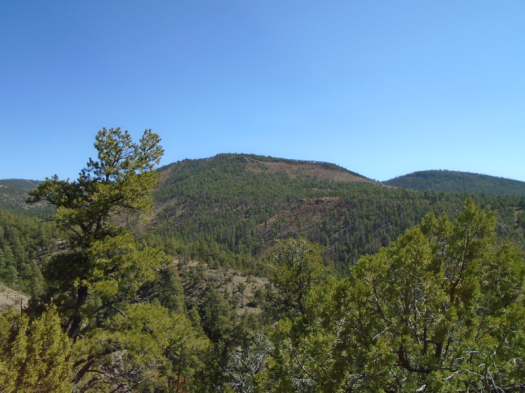
We walk a steep mesa road. The burn scar we found two years ago is mostly healed. But bark peels brittle from the trees, their sap crusty and dry. And the dust – every step stirs it.
The creekside forest, brighter now, cools us as we descend.
On our drive out of the canyon, a red-tailed hawk swoops over the road, a small snake in her mouth.
A braid of golden cottonwoods winds through the valley. At the place where the braid crosses the road, a dry wash, and a sign: Vallecito Creek.
This hardworking little stream, stretched thin as it is, nourishes the whole valley.
Wildfire smoke all the way from the West Coast shapes our view of Juan Tabo Canyon today.
But air quality readings are acceptable.
And just past the trailhead, a couple shakes piñon nuts from tree into basket.
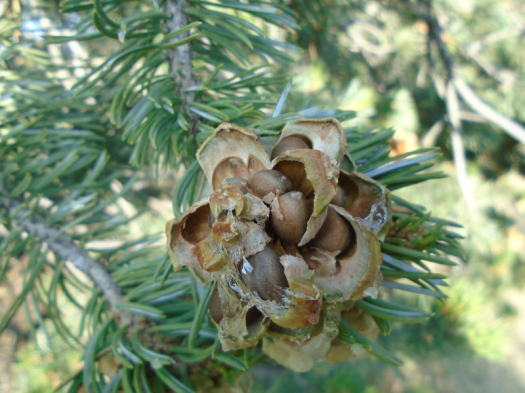
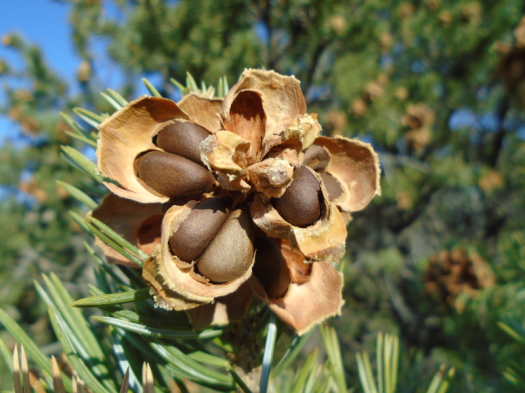
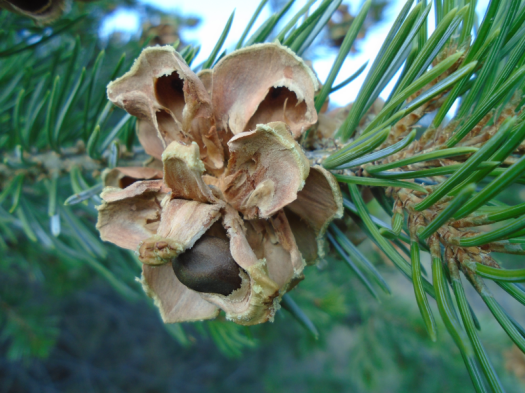
I’ve never seen anyone do that in person. And in all these years of wandering piñon-juniper hills, inhaling pine sap, I’d never spotted a cone bursting with nuts.
But once I do, they’re everywhere.
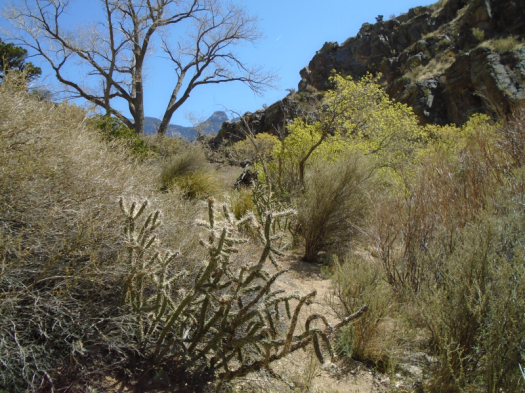
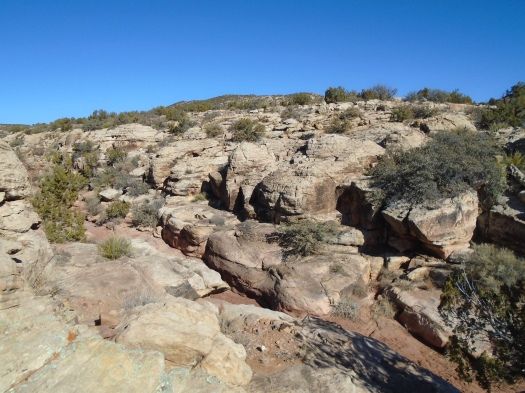
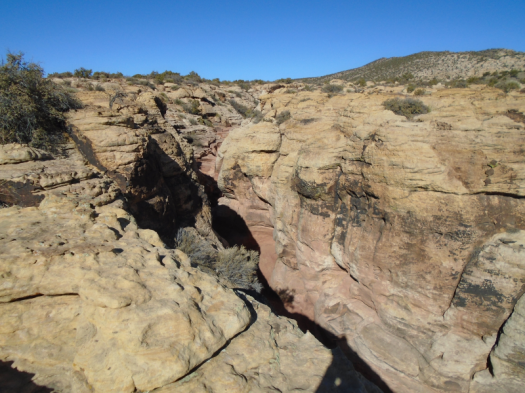
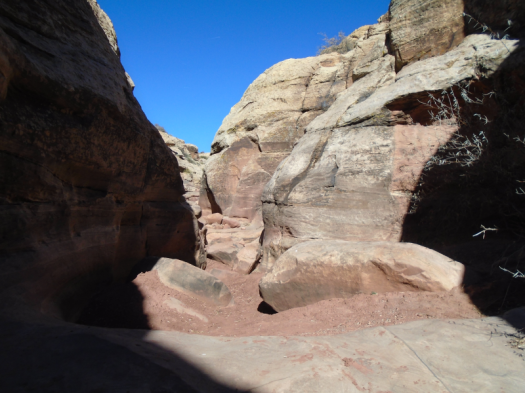
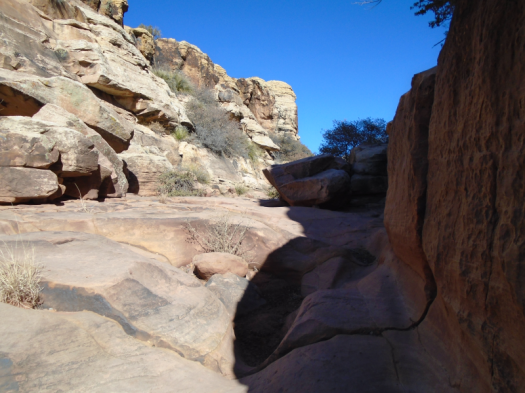
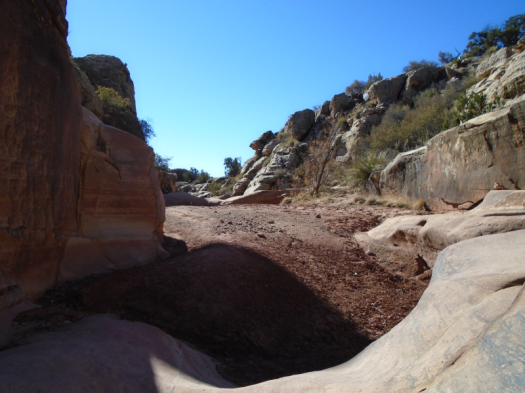
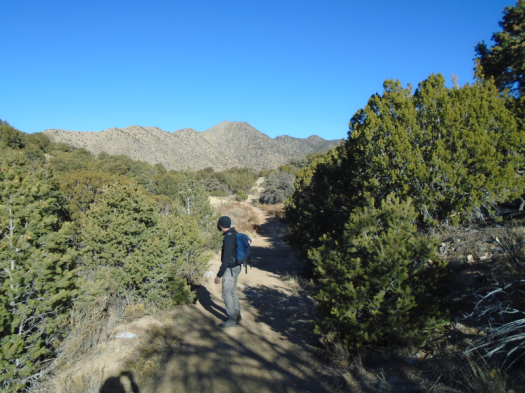
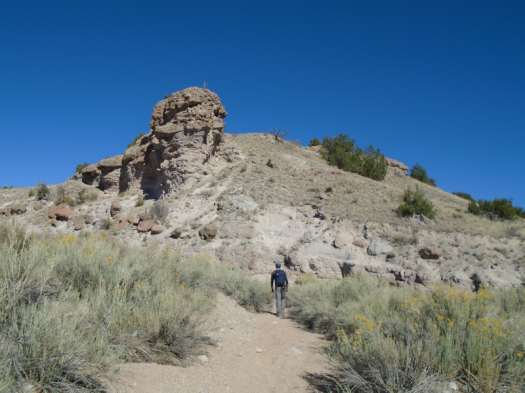
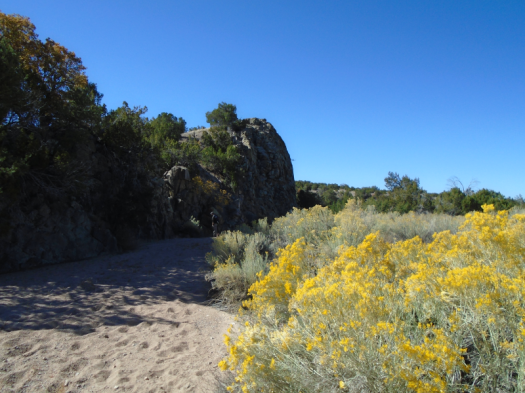
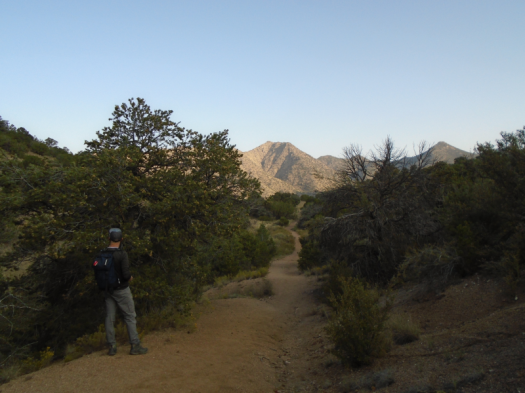
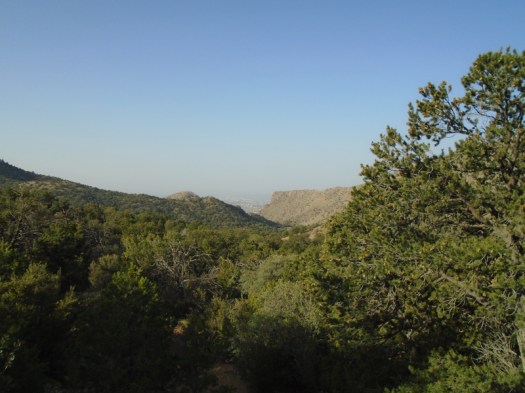
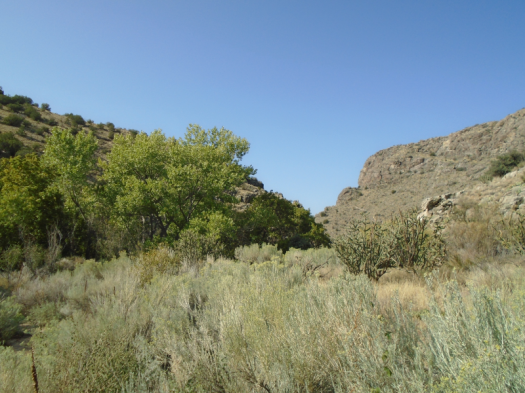
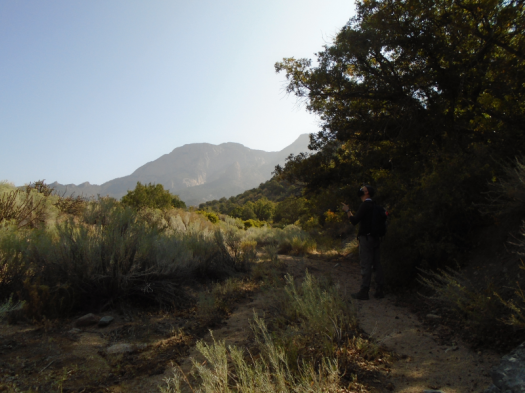
High desert and forest formed a truce in this canyon. Sandy arroyos underfoot (literally: we’re on the Sandy Arroyo Trail.) Chamisa, cacti. Oak, juniper and cone-heavy piñon line the arroyo.
Almost no humans. Mostly flying things.
A hawk haunts the notch atop the canyon wall, hundreds of feet above. Pinyon jays crisscross the drainages. A flash of yellow, maybe a warbler, in an oak. Tarantula hawk above.
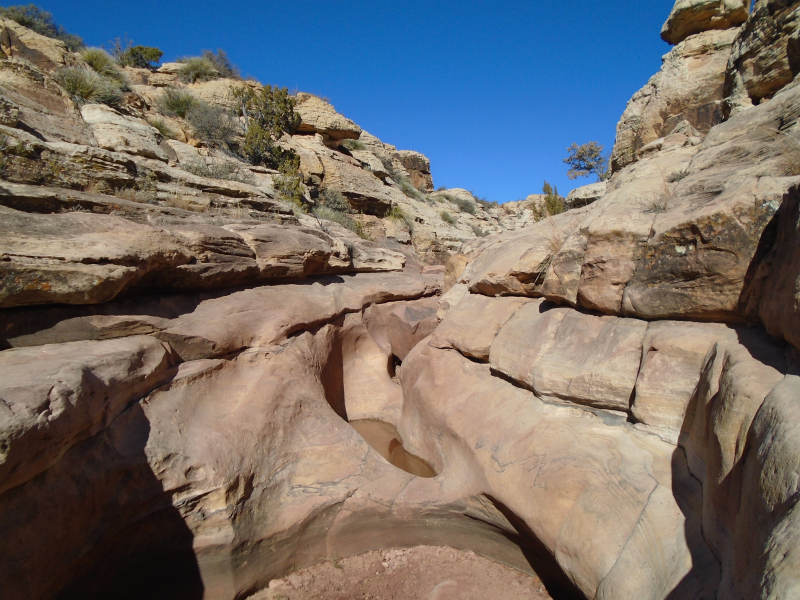
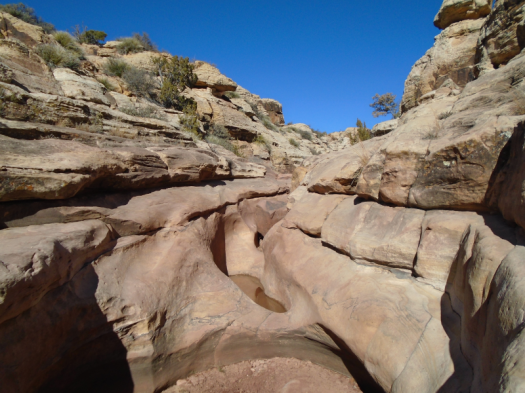
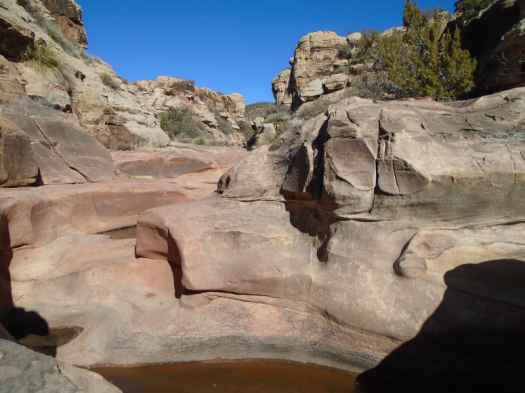
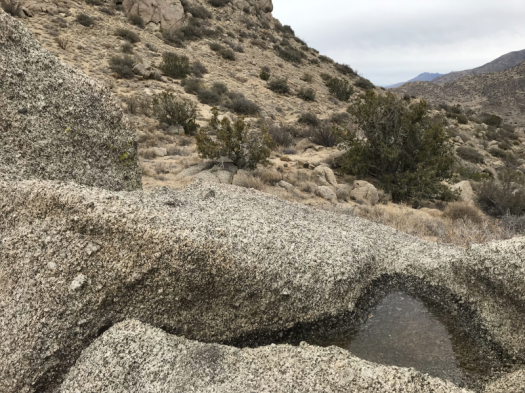
The canyon bottom has water, sometimes. Not today. But a small cottonwood thicket stands strong. Patches of dark soil remember being mud.
Haze persists over the mountain, but the sky right above us is now blue.
The midday uphill trek in sand reminds us it’s still summer. The last ridge back up to the car, still in cool shadow this morning, punishes in full sun.
Now, several piñon-seekers line the path to the trailhead.
It’s still summer in the canyon, but it’s fall in the trees.
 Woman Seeks Elevation