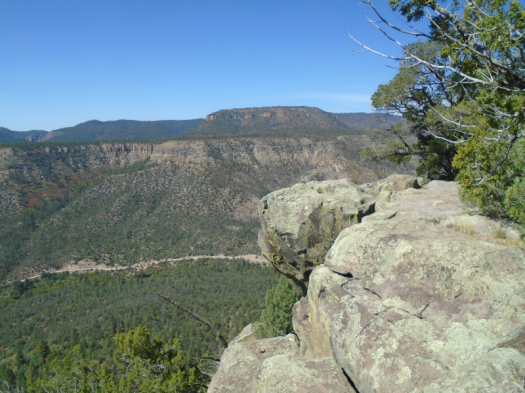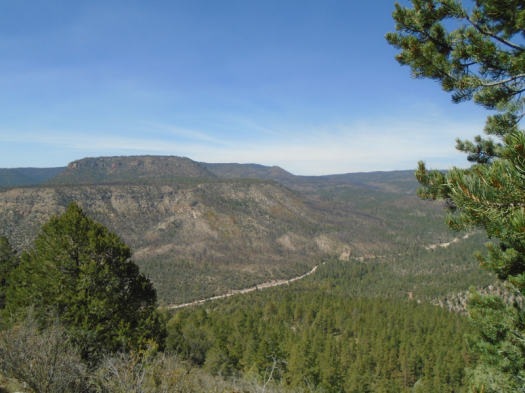
From atop Holiday Mesa, a changing Jemez

Icy water shocks my toes.

I scramble up the bank of the Rio Guadalupe to a boulder. The morning sun dries my still-tingling feet in minutes.

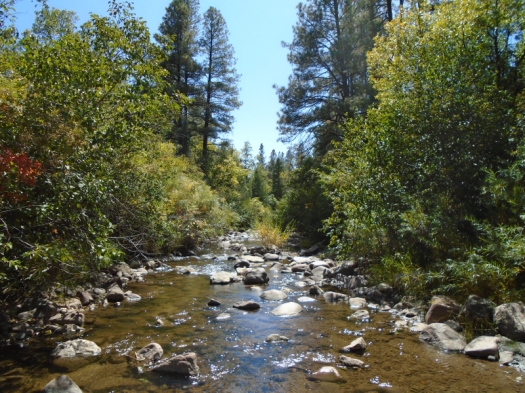
We weren’t sure we’d see a river at all in this dry year. The Rio Guadalupe doesn’t reach mid-calf today, but you have to get wet to cross it.

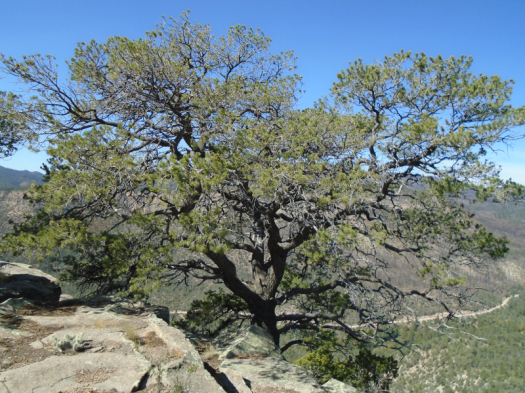
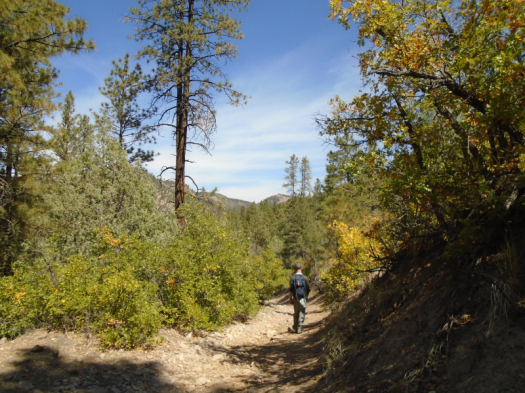
Up Holiday Mesa. Gnarled old forest road, steep and rocky. Hundred-foot ponderosas part for brilliant blue. Yellow and red leaves light the slopes.
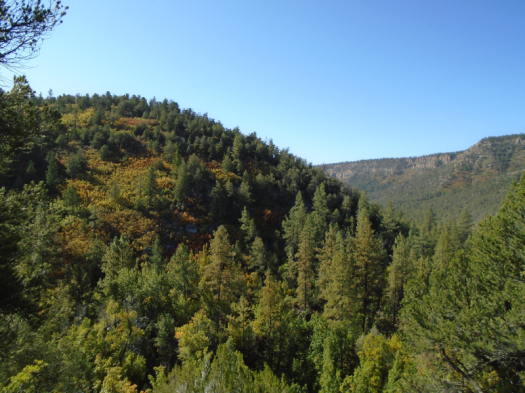
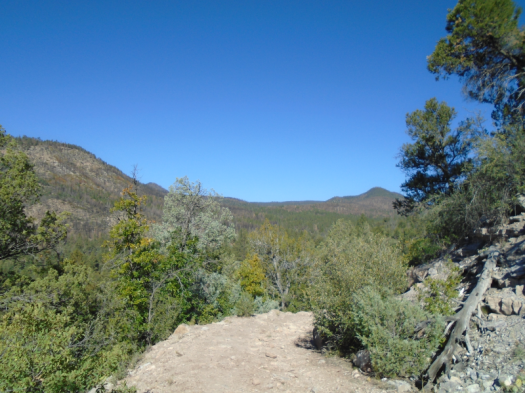
Our guidebook promises another little stream if it’s been a good water year. It hasn’t, but still we hear a gurgle, spot a tiny, terraced waterfall notched into a hill.
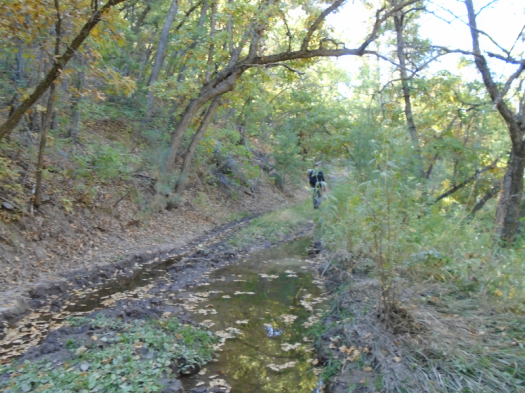
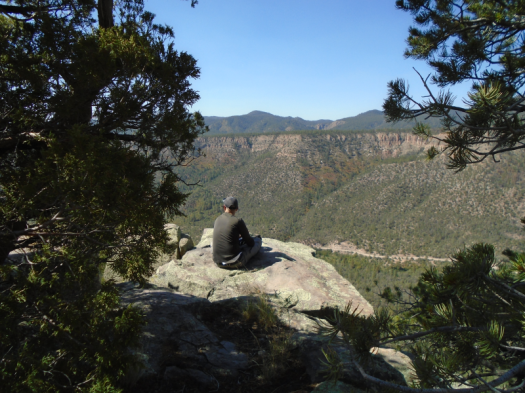
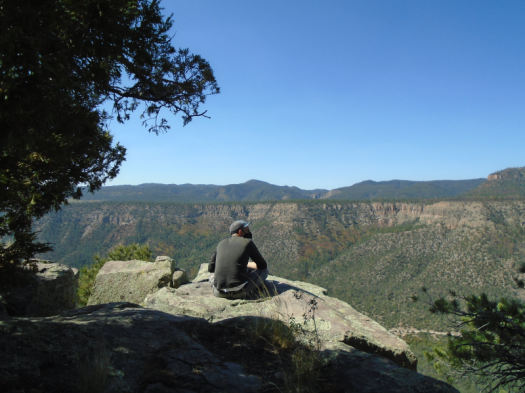
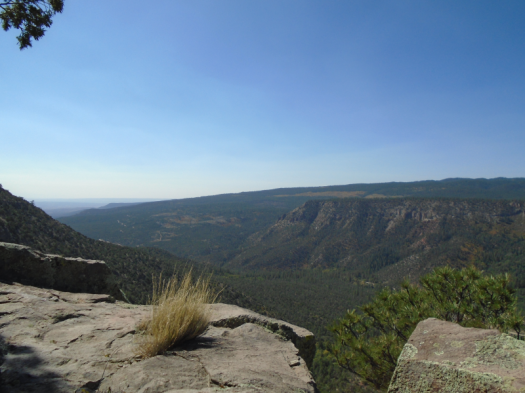
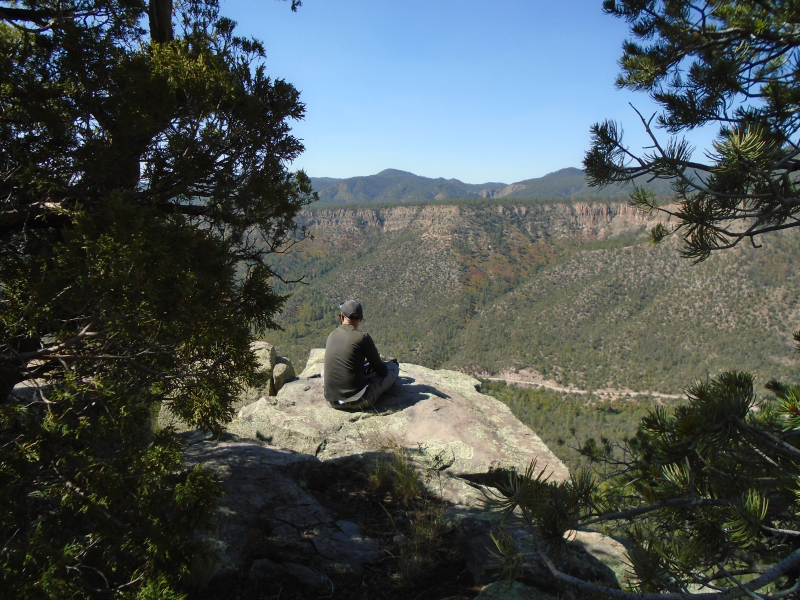
The road twists. The canyon falls away. The layer cakes of Jemez mesas emerge.

The people of Walatowa loved these mesas first, undoubtedly will love them last.

In between, land grants. Tunnels blasted through rock three miles away, to log this land. The Forest Service, claiming roads like the one we walk, Ryan and Ausherman write.
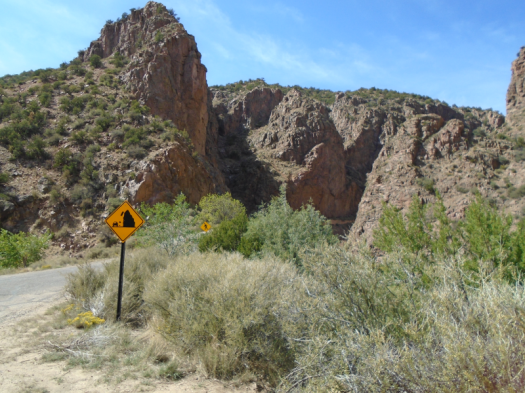
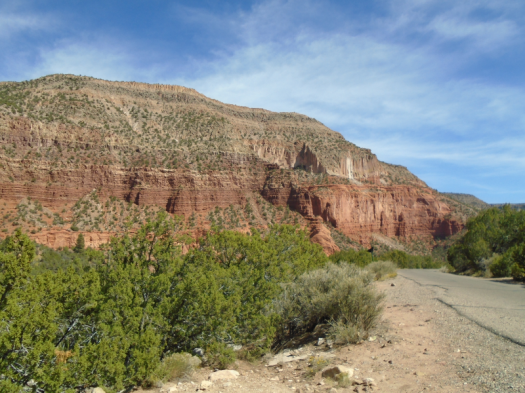
Approaching the Gilman Tunnels, blasted through rock to log the Jemez
Guadalupe Canyon near the Gilman Tunnels

And now, the knowing that what we see will disappear.

The Jemez as it looks today operates on borrowed time. Its thick blanket of pinon, juniper and ponderosa could cease to exist here, amid the stressors the Jemez faces: warming, drought, catastrophic fire. So journalist Laura Paskus reports in her new book, “At the Precipice: New Mexico’s Changing Climate.”
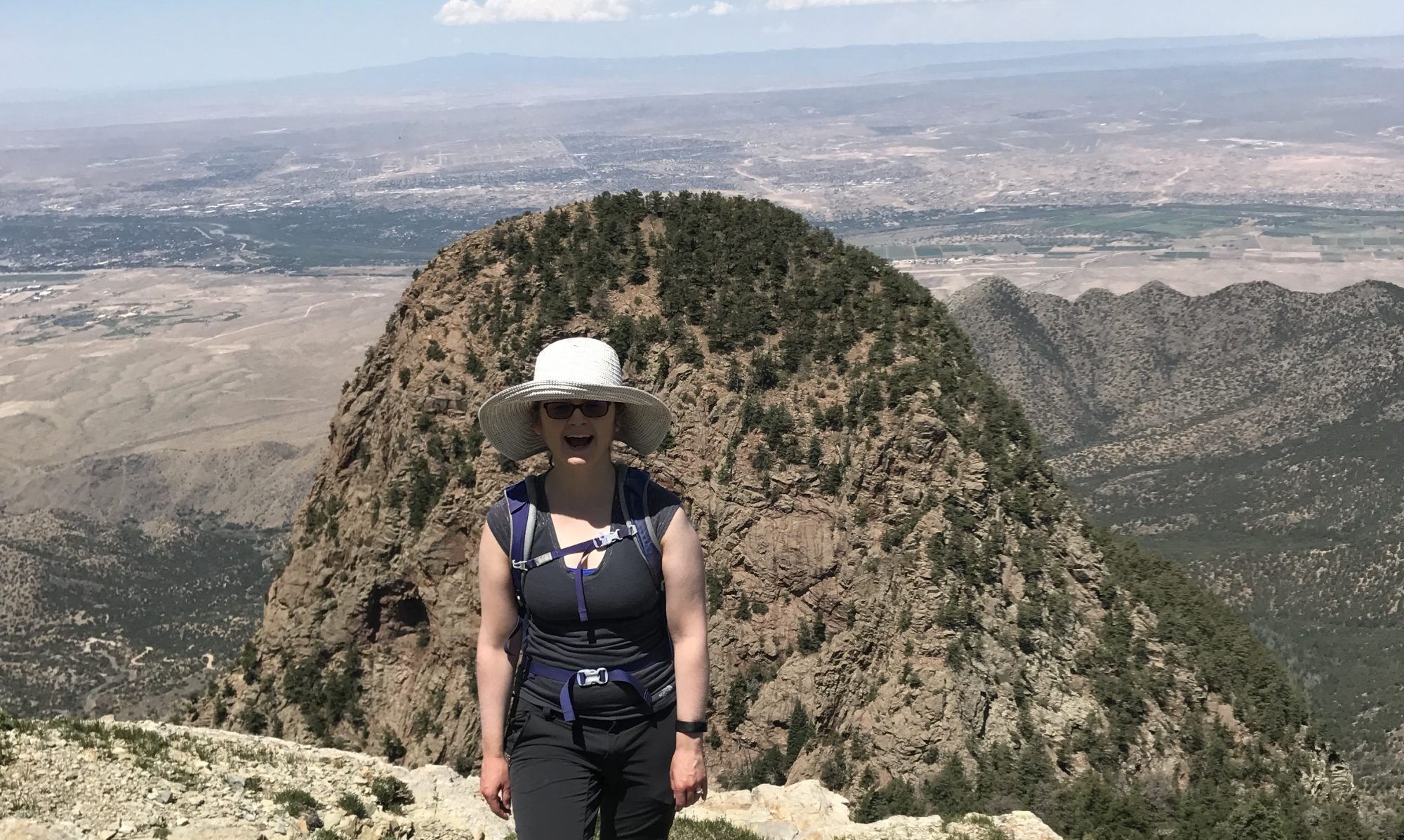
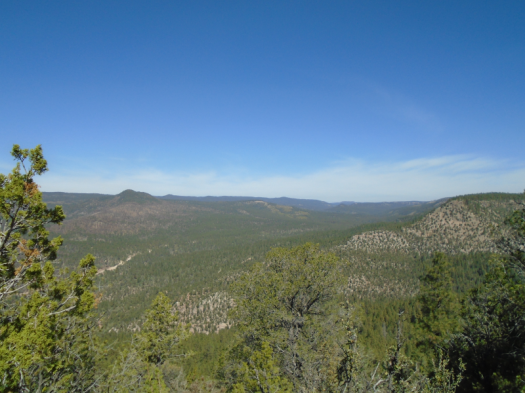
Looking out from the top of Holiday Mesa, I see the marks of a fire I can’t name.

Black sticks dot the slopes, a very familiar sight after more than a decade in New Mexico. Under the sticks, purple-gray watercolor appears to wash the mesa. Maybe the colors left behind when a storm pushed torrents of mud down the naked land.

Far below snakes the dirt road that brought us to this forest.
The road becomes volcanic tuff on top of the mesa. It feels and sounds like rubber under my hiking poles. Cows side-eye us, moos like gravel.

Oak leaves blaze almost-October orange against blue sky.

But the temperature’s above 80, even at 7,000 feet elevation. Northwest wind whips the mesa. In the mountains near Albuquerque, this wind, plus low humidity, has prompted a red flag warning. Nearly anything could spark a fire.

I’m hot and dusty and as thirsty as I’ve been on a hike in a very long time.

When the cold Rio Guadalupe swirls around my feet again, it feels like a blessing.
Hike length: 6 miles

Difficulty: moderate (sections of the climb up the mesa are strenuous)

Trail traffic: one guy and his hunting dogs at the river

Wildlife spotted/heard: rabbits, chipmunks, bluebirds (on road to trailhead); pigeon, hummingbird, Abert’s squirrel, nuthatches, pinyon jays
East Fork Trail: A river runs (and ambles, and gushes) through it

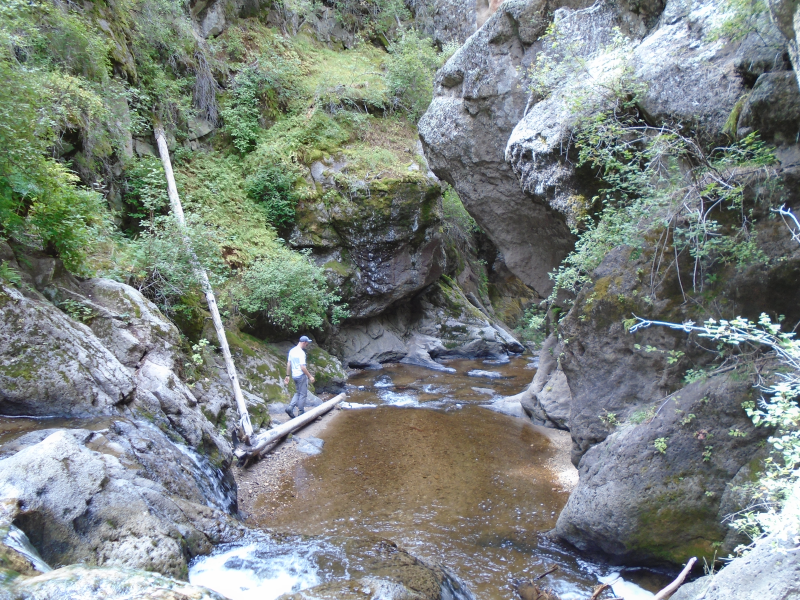
A waterfall rushes beneath my feet.

As you can imagine, balance is challenging.

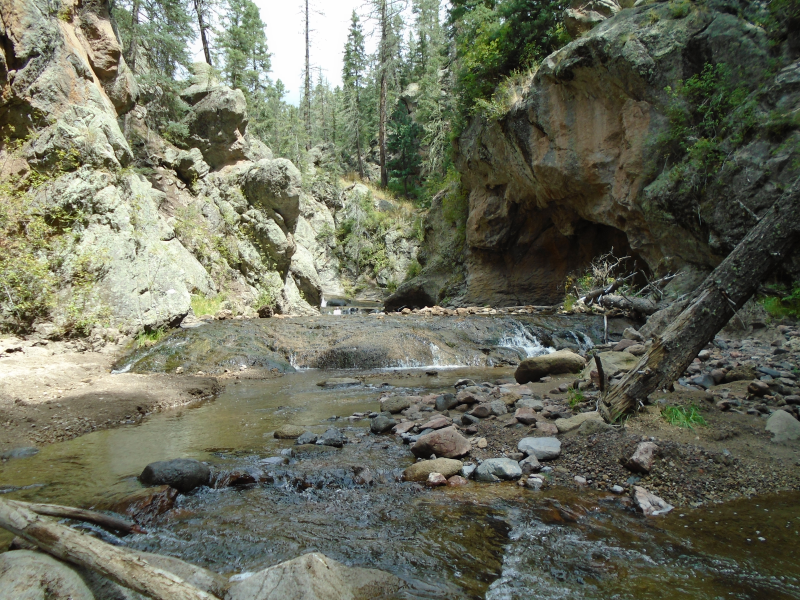
This shallow section of the East Fork Box of the Jemez River doesn’t boast any 20-foot cascades. But the water I walk through gurgles with power over the rocks.

DSC02458.JPG
Don’t go chasin’ waterfalls? Too late.

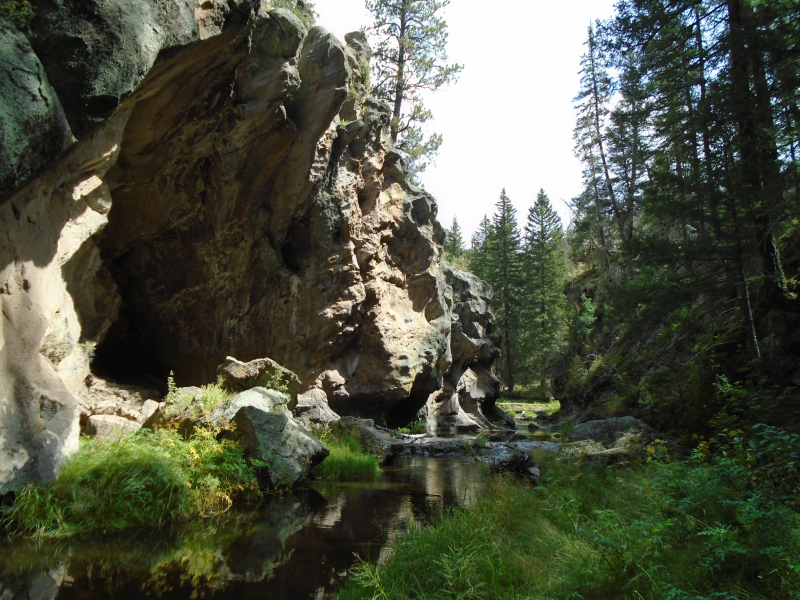
The river’s motion has sculpted canyon walls, arches, hollows and caves. Moss, grasses and trees wrap around rock.

DSC02444.JPG

DSC02415.JPGDSC02425.JPGDSC02429.JPG

The first real waterfall has only a couple feet drop, but it’s enough to stop my forward progress. My husband, part gazelle, scrambles and glissades between rock and water until he nearly disappears around a bend. Then he, too, reaches a point where he can’t go further without going under.

We reverse direction and reach the point where we left the bank in minutes, though we spent nearly half an hour in the water.

Birds and blue dragonflies swoop over the river. American dippers seem to hop for joy in the water, which I can understand.

DSC02437.JPG

DSC02471.JPG

Thunder booms as we reach the end of the box. It’s a steep scramble back to the trail. The water in my boots sloshes as I heave myself up the slope.

The first time we hiked this beautiful trail, we reached a fence, turned around and hiked back, not realizing a gate led into the box canyon.

The trail alone could inspire one to burst into song.

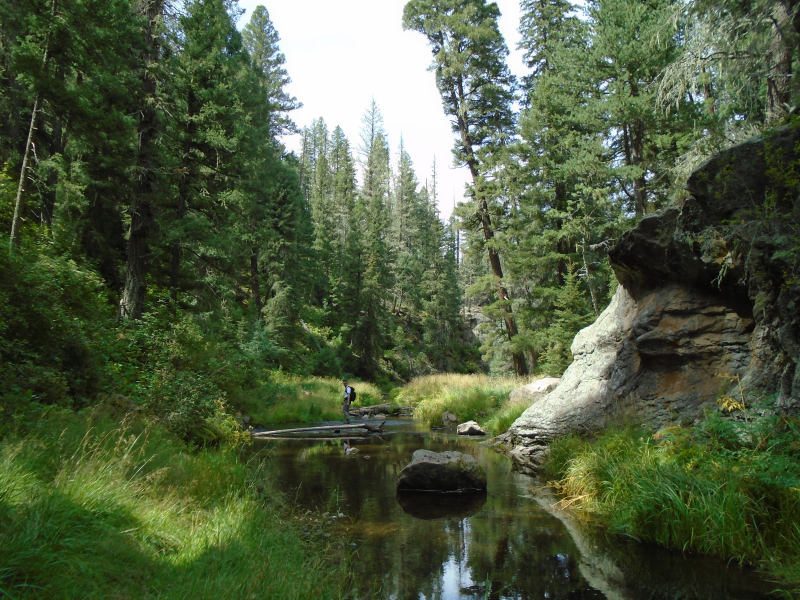
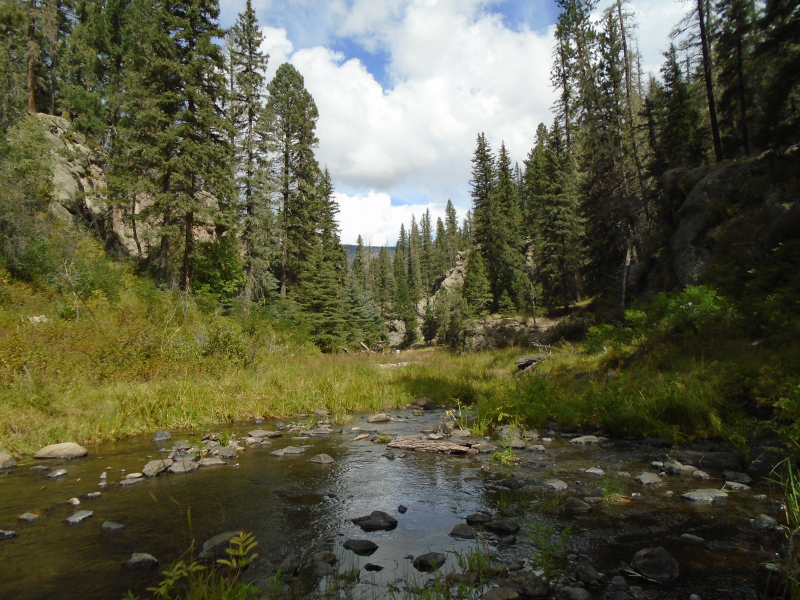
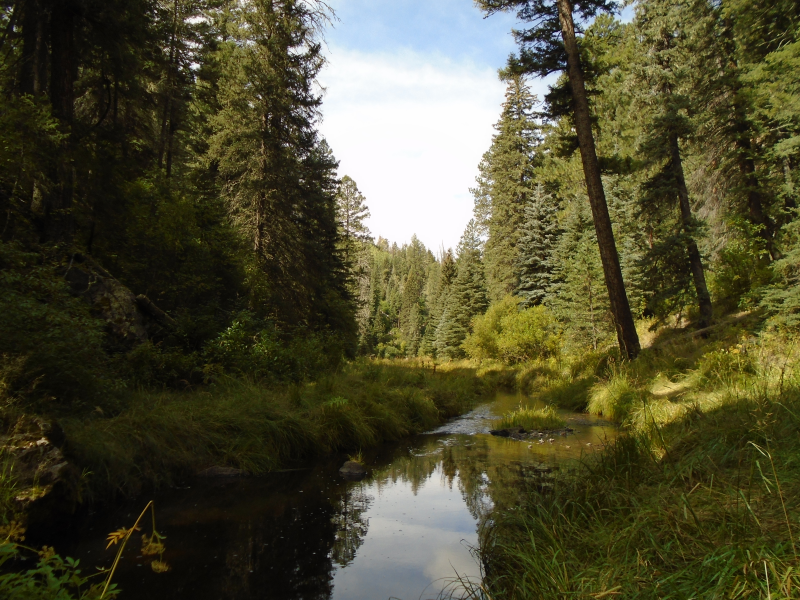
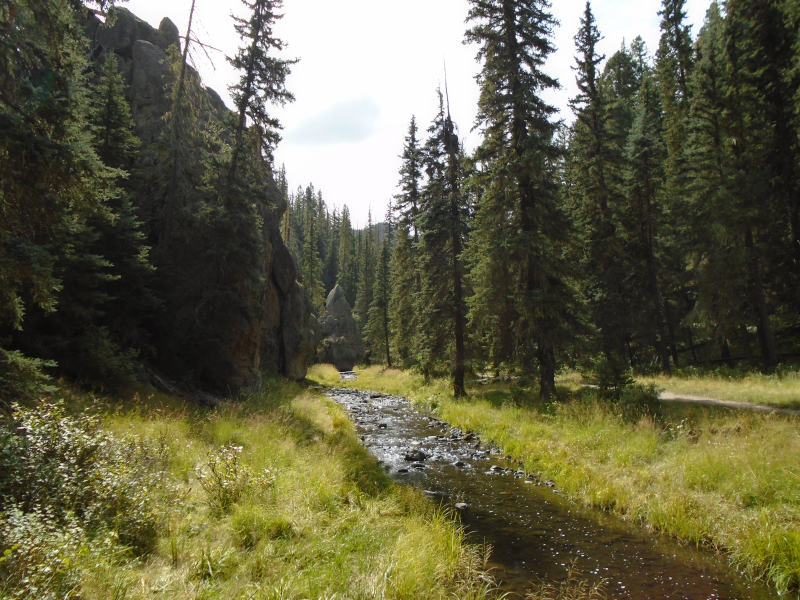
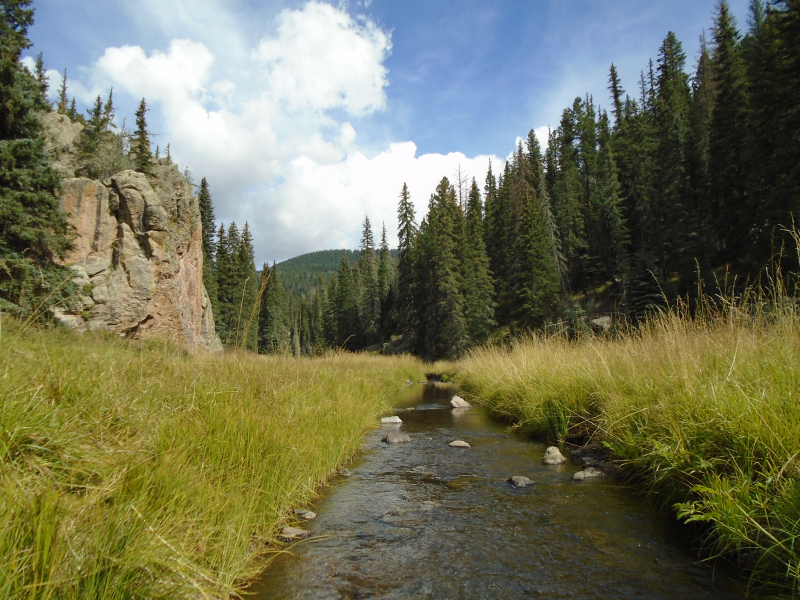
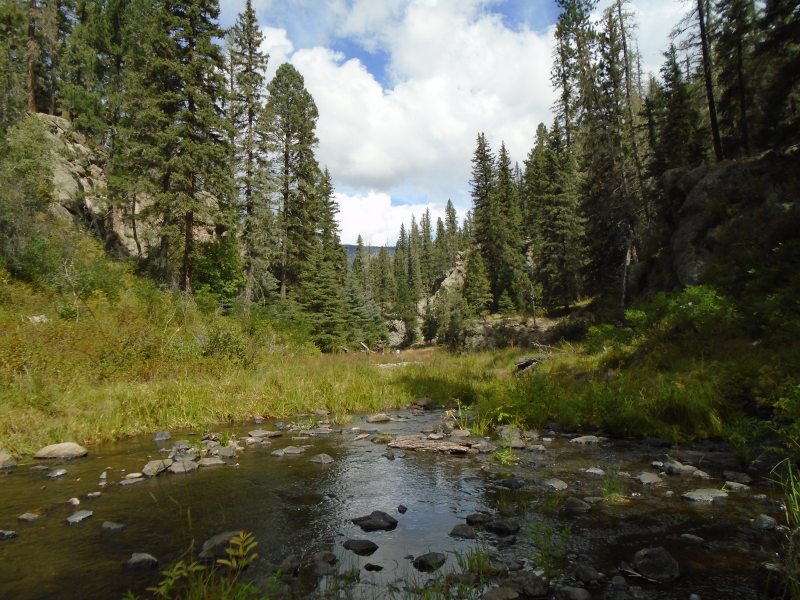
The East Fork here babbles small and sinuous through high mountain meadows, through spruce and ponderosa, between 50-foot walls of black and orange rock. The river leashes its power; at times you can step across in one stride.

DSC02408.JPGDSC02405.JPGDSC02397.JPG

DSC02393.JPG

Rock climbers belay, fishermen angle, kids giggle, dogs pant.

And, oh yeah, thunder rumbles.

After driving 60 miles to our chosen hike today, we found the road closed until spring due to a plugged culvert, then drove another hour to the East Fork Trail. Meaning we started hiking an hour later than we intended. And even though it will be fall in six days, it’s thunderstorm o’clock.

The sun blinks off. The wind rises. The temperature falls. The canyon turns green and gray.

DSC02475.JPG
Time to clear out.

DSC02476.JPG

We’re close enough to the trailhead that we get damp, not soaked. When we reach our car, it’s 55 degrees and pouring.

The rain follows us for most of our drive back through the Jemez. The roads and the river run red with mud in Jemez Springs. Just when I think I’ll have a chance to practice “turn around, don’t drown,” it lets up enough that we can proceed.

I had no intention of spending four hours in the car today, but this hike is worth it.

Hike length: 5 miles

Difficulty: From the Las Conchas Trailhead to the box is easy; the scramble and the box are challenging

Trail traffic: popular

Wildlife spotted: vultures, crow, American dippers, robins, mountain chickadee, blue jay, dragonflies, grasshoppers, butterflies, fish (maybe a longnose dace)