I scramble up the bank of the Rio Guadalupe to a boulder. The morning sun dries my still-tingling feet in minutes.
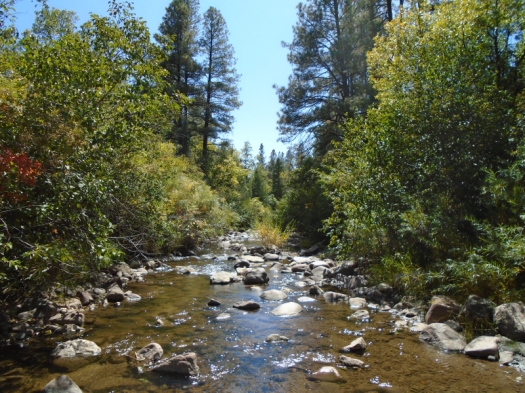
We weren’t sure we’d see a river at all in this dry year. The Rio Guadalupe doesn’t reach mid-calf today, but you have to get wet to cross it.
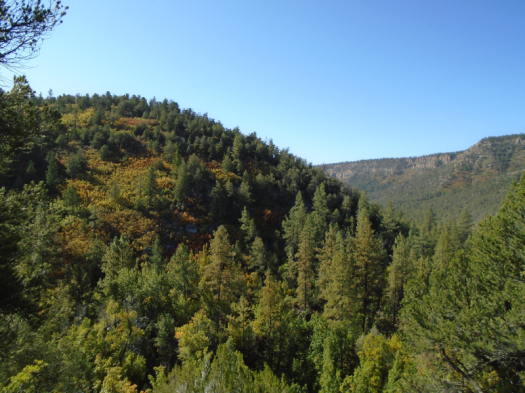
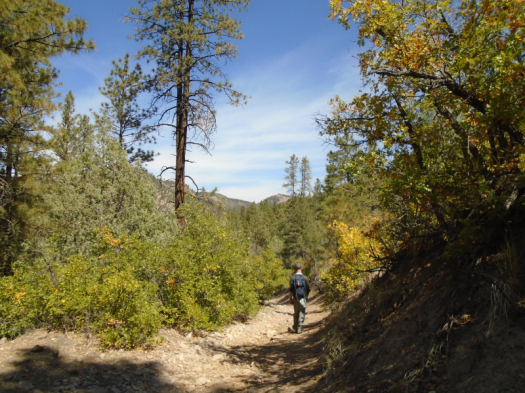
Up Holiday Mesa. Gnarled old forest road, steep and rocky. Hundred-foot ponderosas part for brilliant blue. Yellow and red leaves light the slopes.
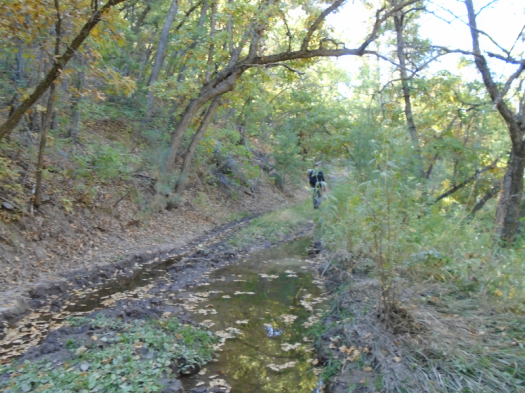
Our guidebook promises another little stream if it’s been a good water year. It hasn’t, but still we hear a gurgle, spot a tiny, terraced waterfall notched into a hill.
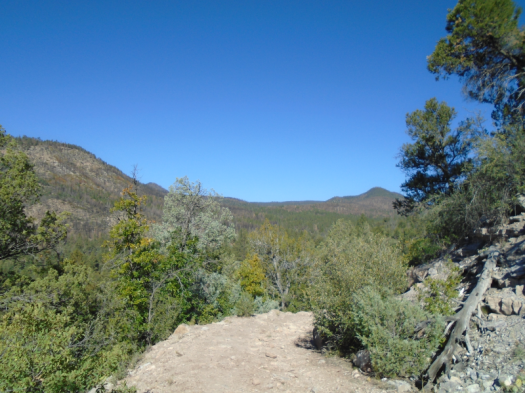
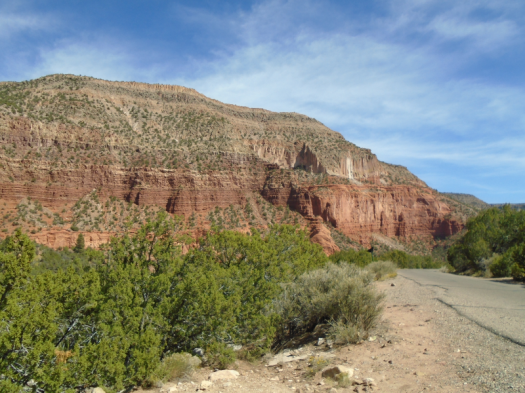
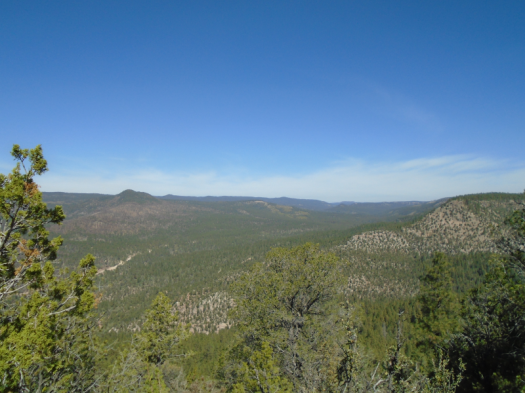
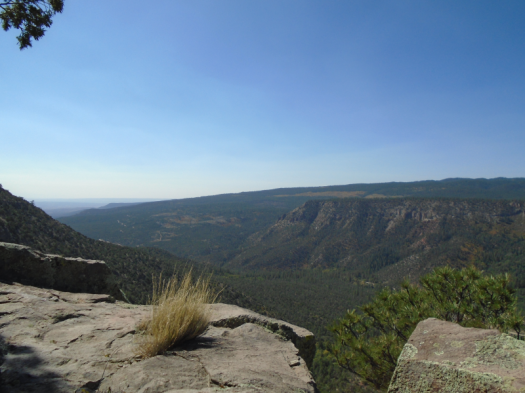
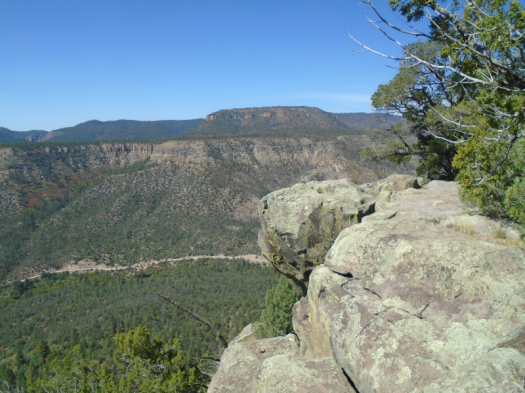
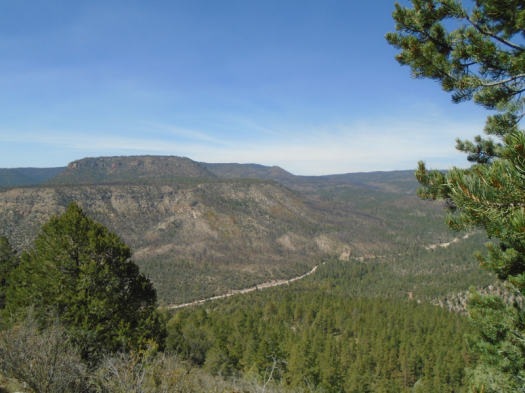
The road twists. The canyon falls away. The layer cakes of Jemez mesas emerge.
In between, land grants. Tunnels blasted through rock three miles away, to log this land. The Forest Service, claiming roads like the one we walk, Ryan and Ausherman write.
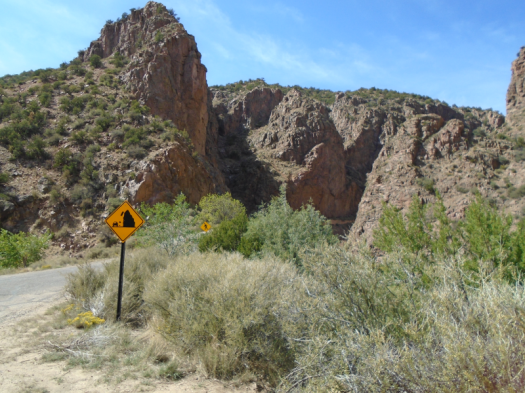
Approaching the Gilman Tunnels, blasted through rock to log the JemezGuadalupe Canyon near the Gilman Tunnels
And now, the knowing that what we see will disappear.
The Jemez as it looks today operates on borrowed time. Its thick blanket of pinon, juniper and ponderosa could cease to exist here, amid the stressors the Jemez faces: warming, drought, catastrophic fire. So journalist Laura Paskus reports in her new book, “At the Precipice: New Mexico’s Changing Climate.”
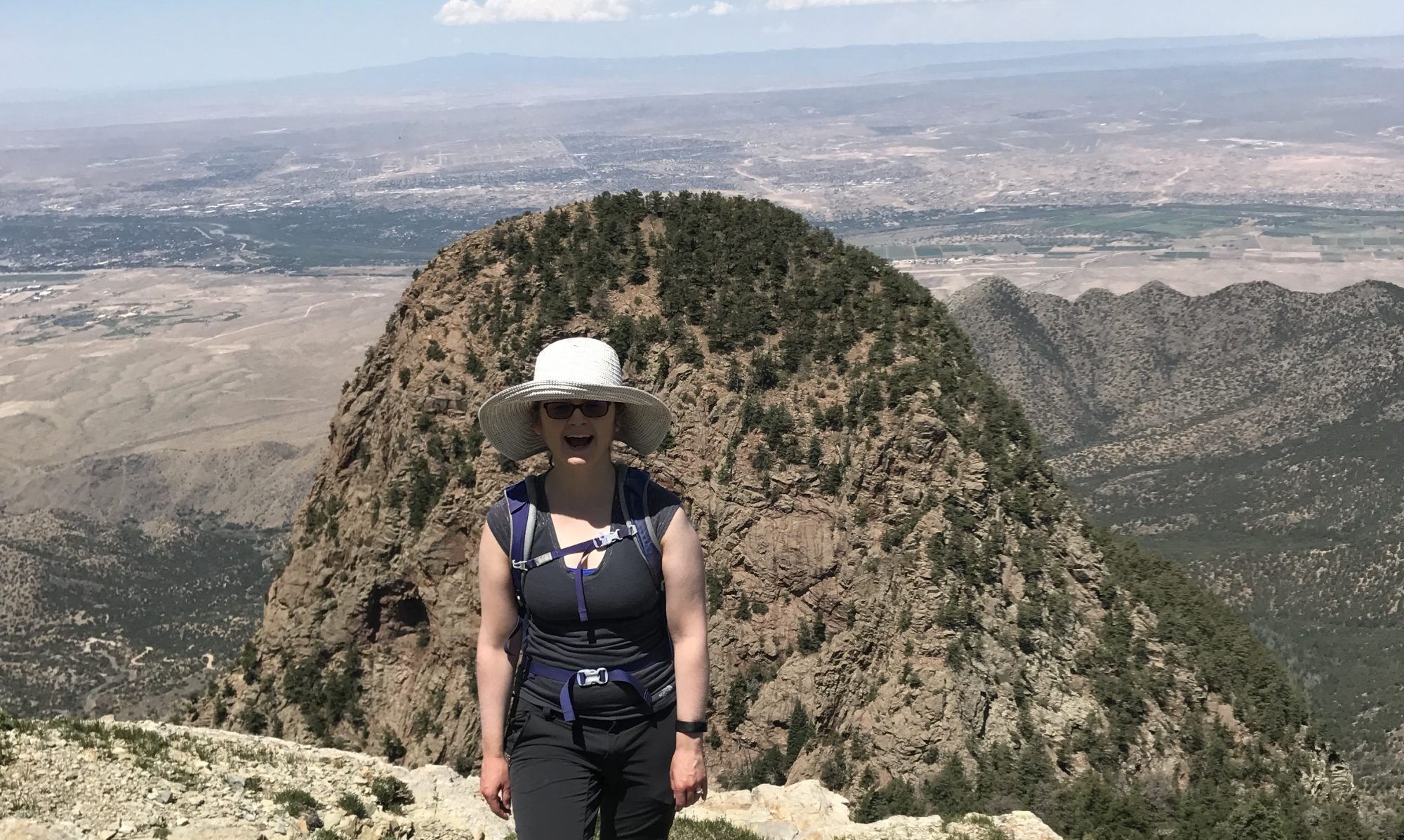
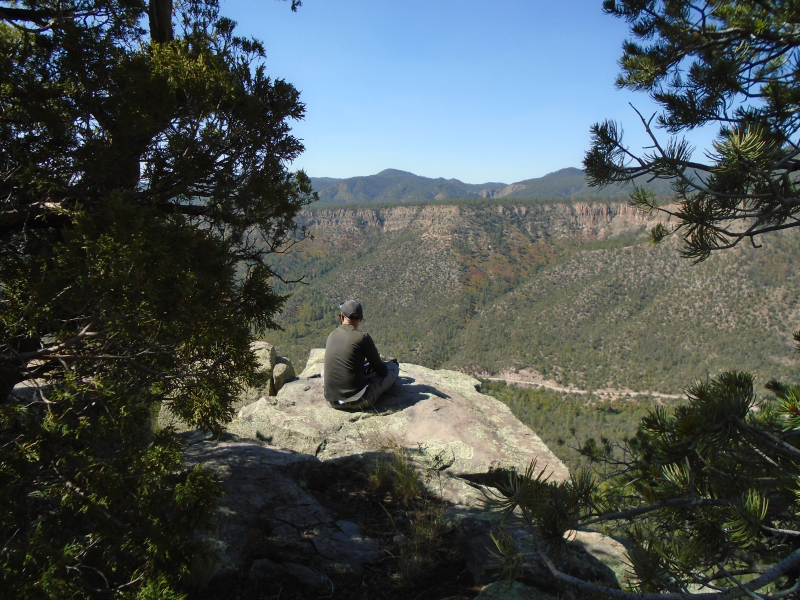
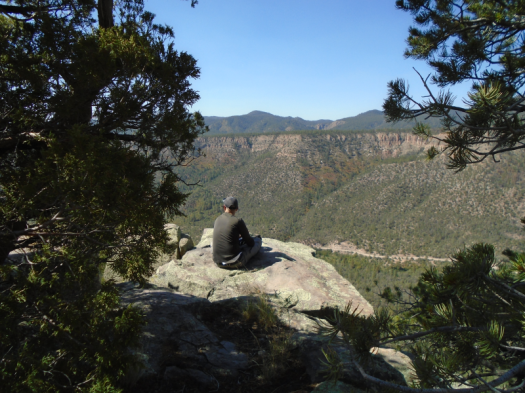
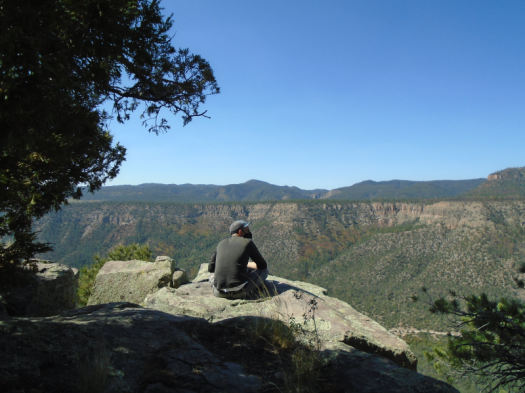
Looking out from the top of Holiday Mesa, I see the marks of a fire I can’t name.
Black sticks dot the slopes, a very familiar sight after more than a decade in New Mexico. Under the sticks, purple-gray watercolor appears to wash the mesa. Maybe the colors left behind when a storm pushed torrents of mud down the naked land.
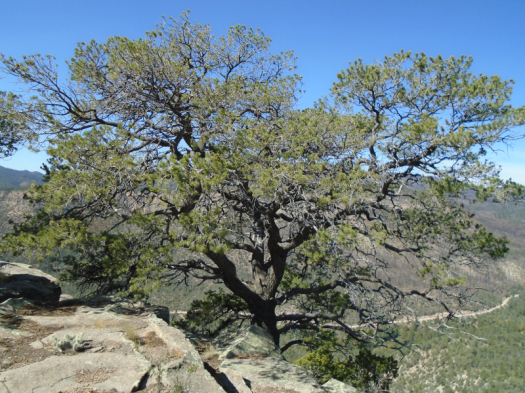
Far below snakes the dirt road that brought us to this forest.
The road becomes volcanic tuff on top of the mesa. It feels and sounds like rubber under my hiking poles. Cows side-eye us, moos like gravel.
Oak leaves blaze almost-October orange against blue sky.
But the temperature’s above 80, even at 7,000 feet elevation. Northwest wind whips the mesa. In the mountains near Albuquerque, this wind, plus low humidity, has prompted a red flag warning. Nearly anything could spark a fire.
I’m hot and dusty and as thirsty as I’ve been on a hike in a very long time.
When the cold Rio Guadalupe swirls around my feet again, it feels like a blessing.
Hike length: 6 miles
Difficulty: moderate (sections of the climb up the mesa are strenuous)
Trail traffic: one guy and his hunting dogs at the river
Wildlife spotted/heard: rabbits, chipmunks, bluebirds (on road to trailhead); pigeon, hummingbird, Abert’s squirrel, nuthatches, pinyon jays
This is not the rim of a canyon, despite what it looks like.
To the east, volcanic humps everywhere, relentless sun. We head west, intersect trails, follow some with cautious hope.
Then we’re back at the parking lot where we started.
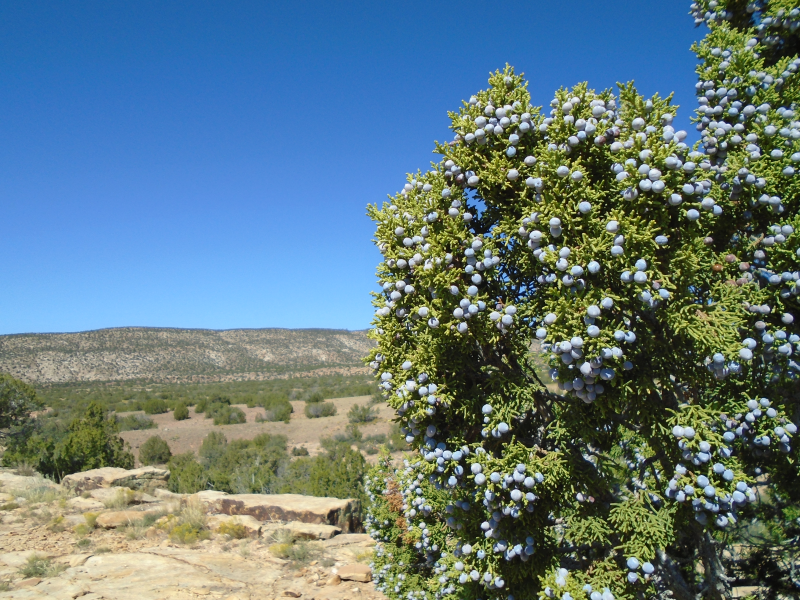
I sit under a rare and precious tree.
Hiking San Ysidro Trials Area can feel like staring down middle age. Your experience ceases to resemble what’s on the map. Things you know how to do, have done before, elude you.
We do know this: Just to the east runs a smaller slot canyon, the one that would have completed our loop, if we’d made it.
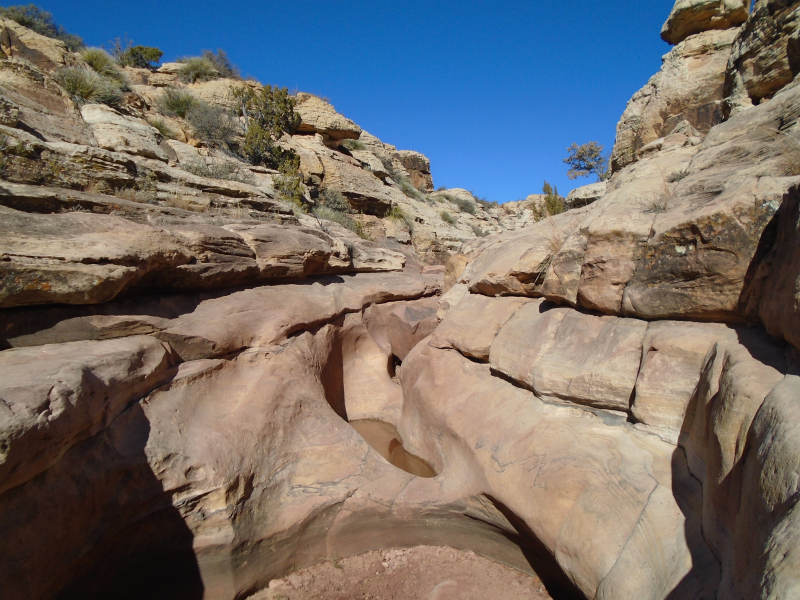
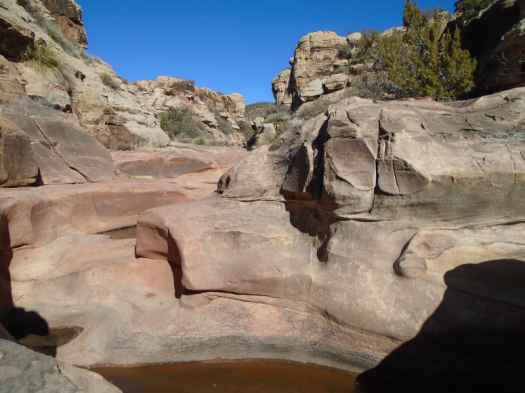
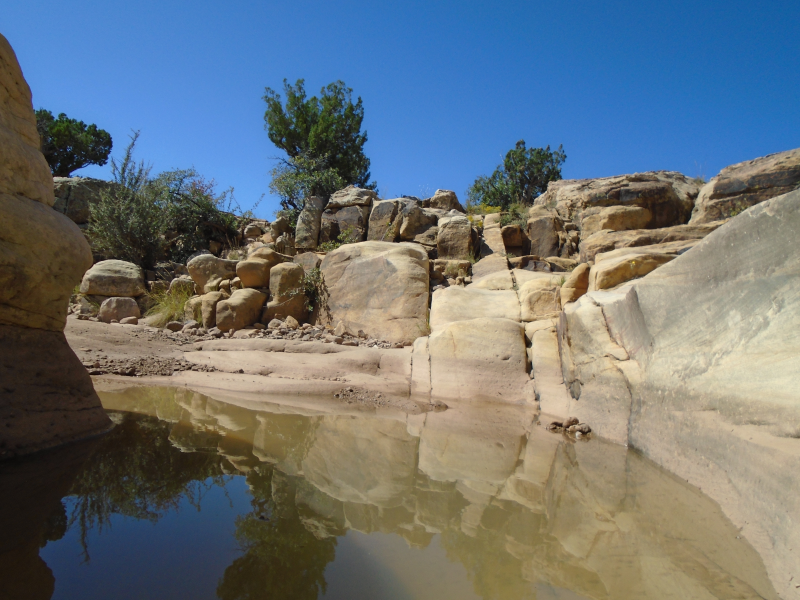
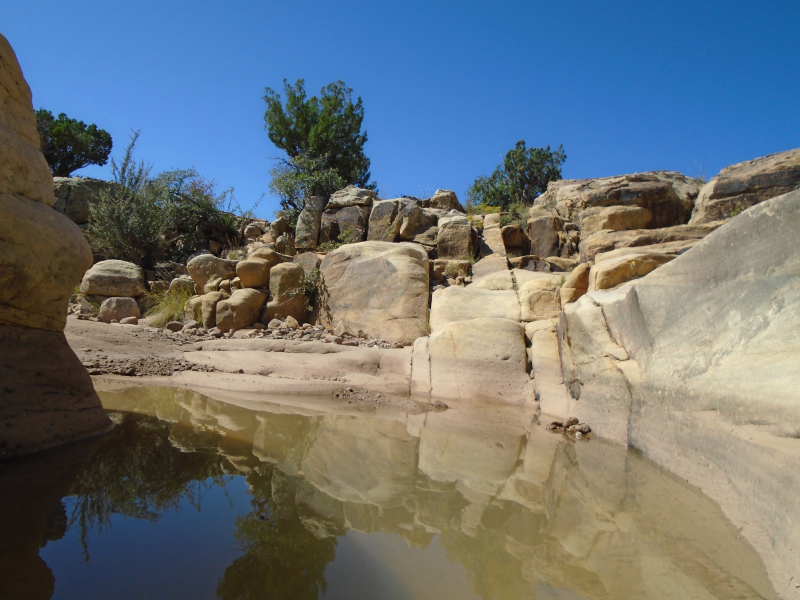
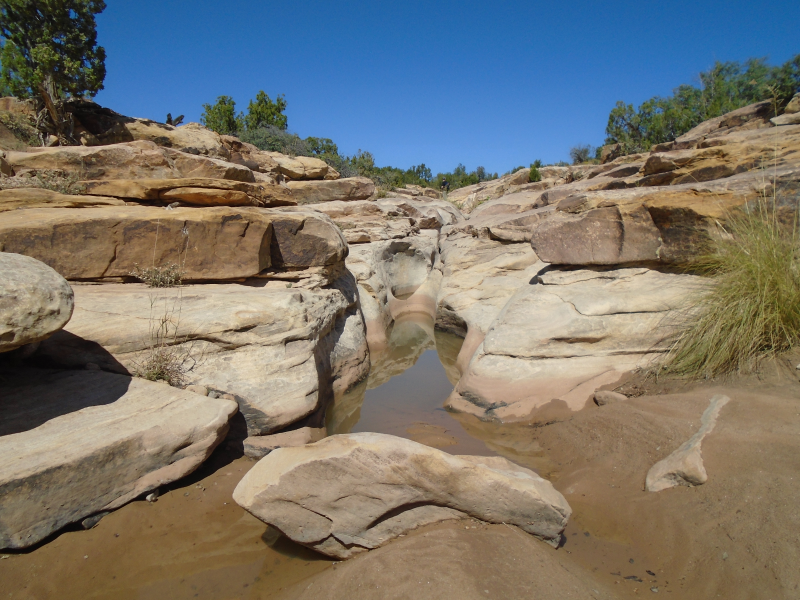
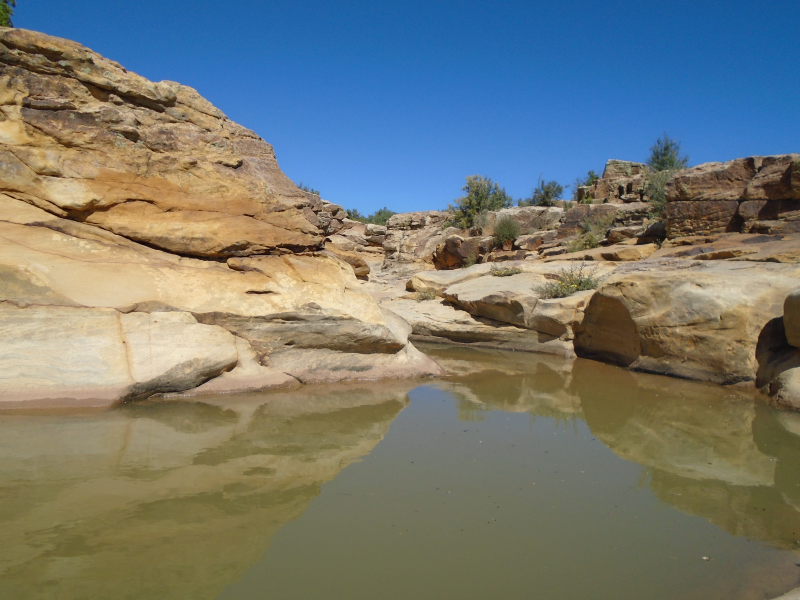
We find water there in rock pools, rippling blue-green. Six months ago, the slot canyon pools were deep reddish-brown, silt and clay stirred from snowmelt.
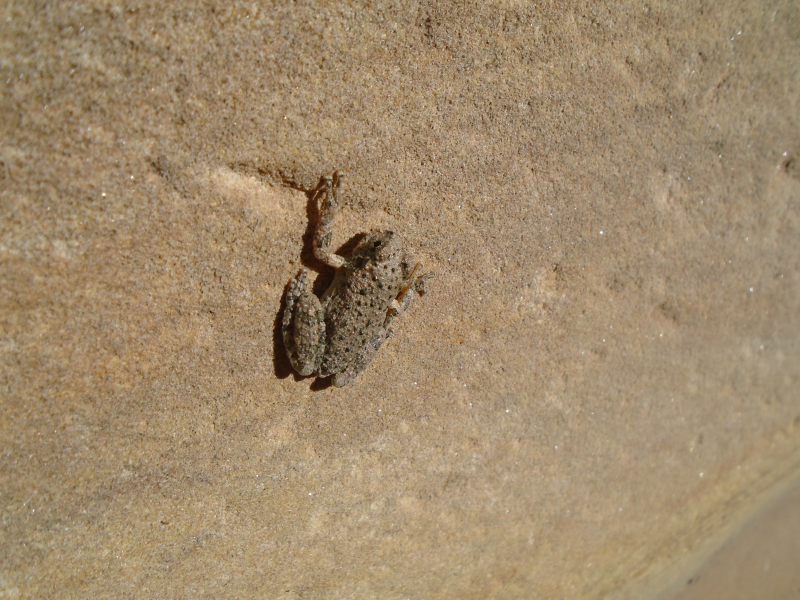
Tadpoles wiggle toward mosquito larvae. A small gray frog catapults himself into the curve of a slot. A blue-eyed dragonfly buzzes the water.
We clamber, photograph, watch creatures, reorient.
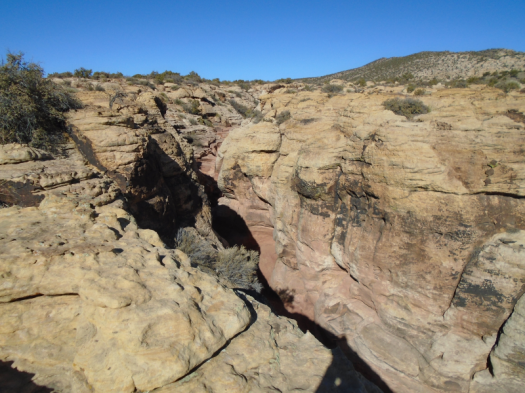
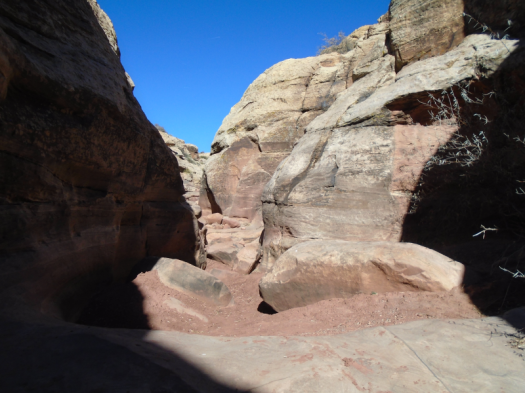
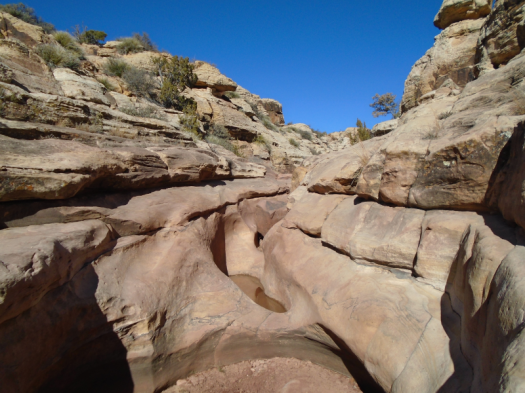
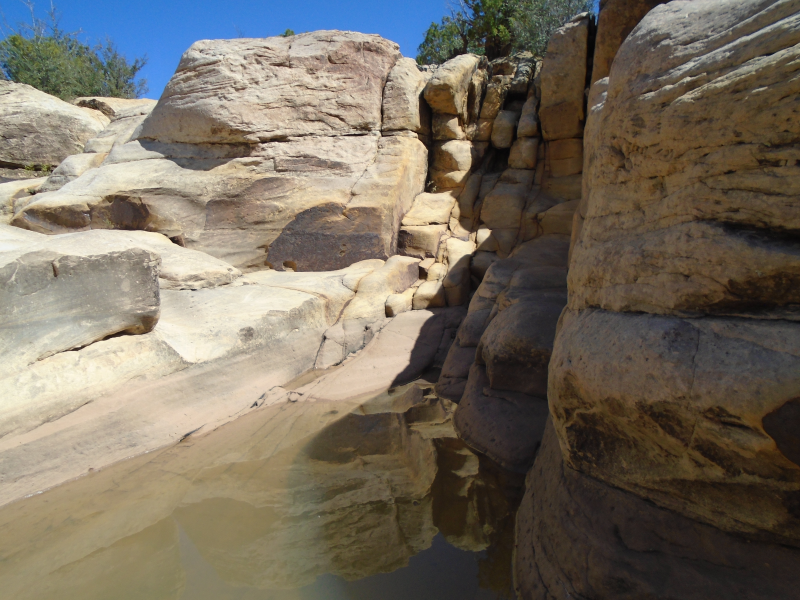
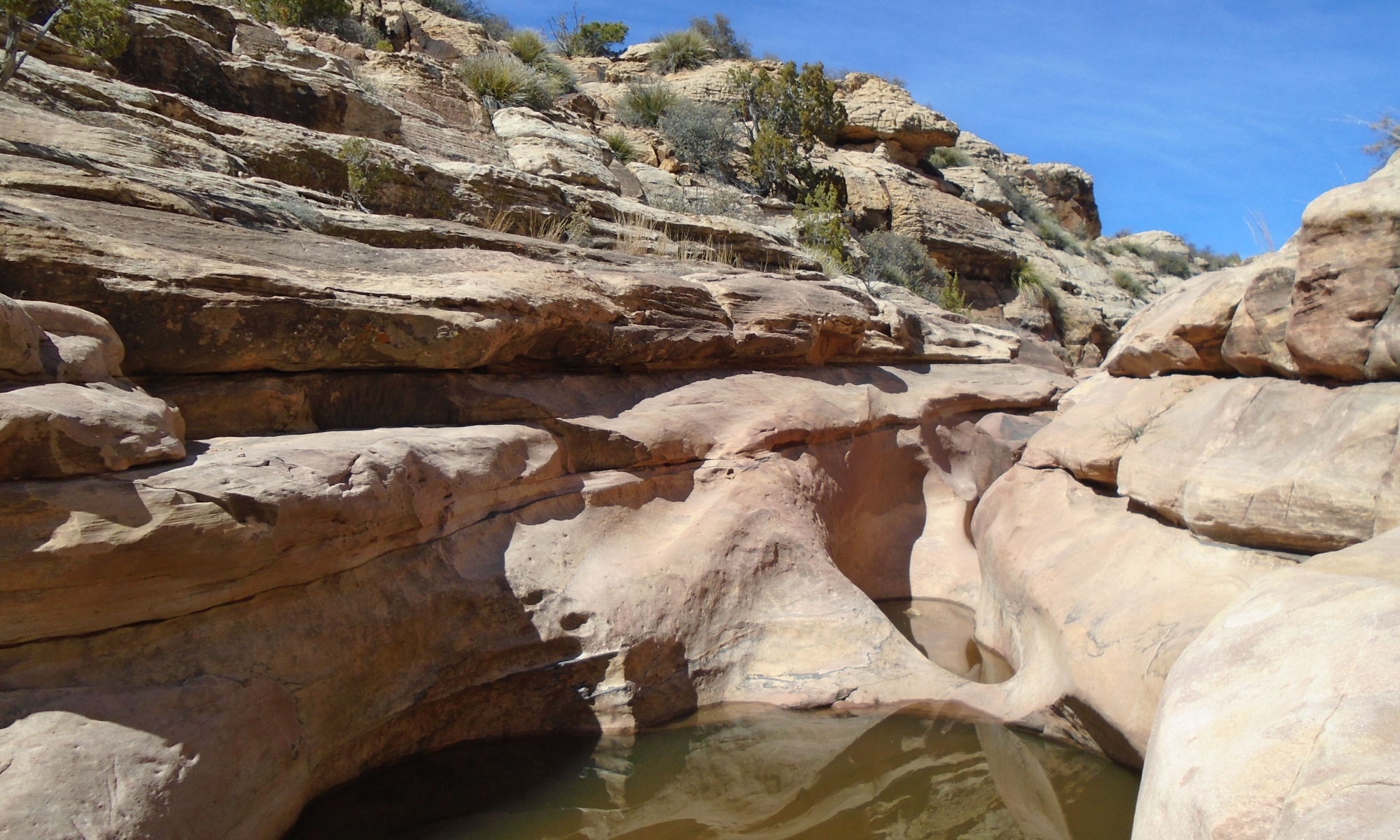
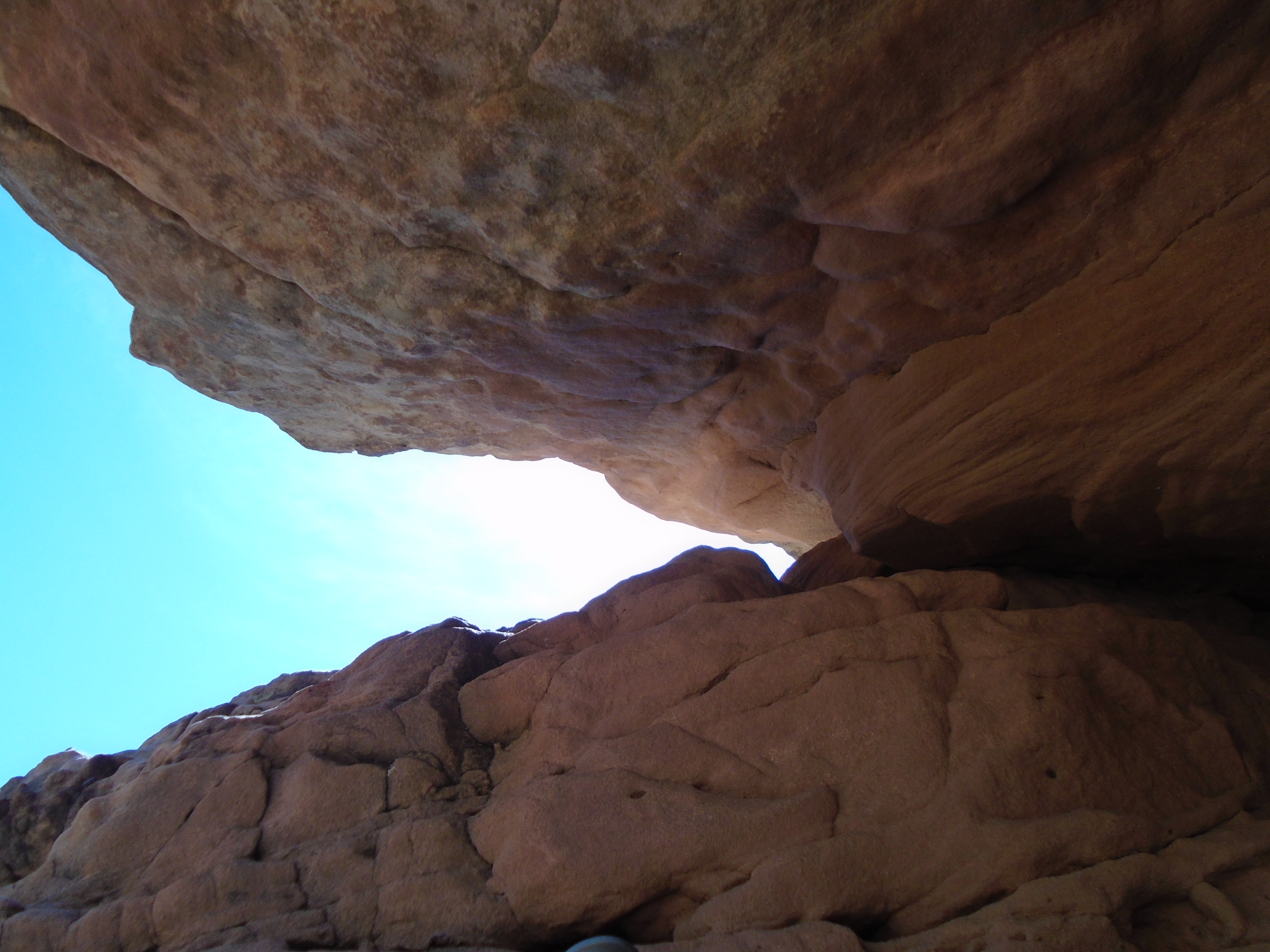
I place my feet carefully in the thin crescent of stone at the base of a narrow slot canyon.
The rock slopes down, deposits me on a landing. Red sediment ripples over the sandstone, shows the path water took down this canyon days ago. Everything around us curves.
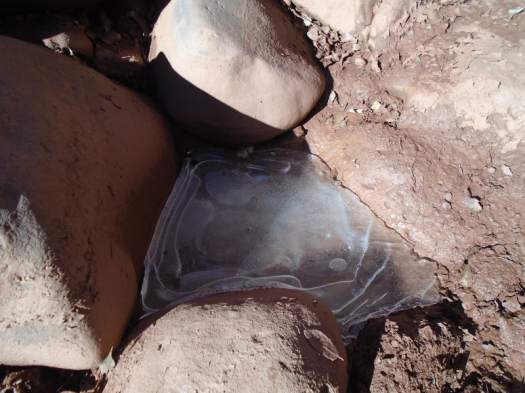
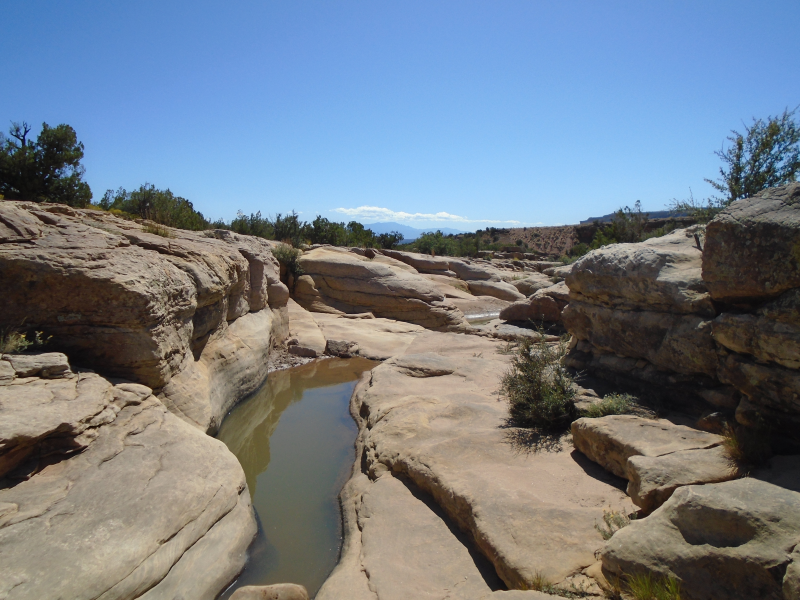
Water still rests in the stone. Some of the pools stretch several feet across. We skirt some, step through others on rocks.
After half a mile, we reach a pool too wide to safely cross. We backtrack, covering the same ground in minutes that had taken us a half hour as we explored every detail.
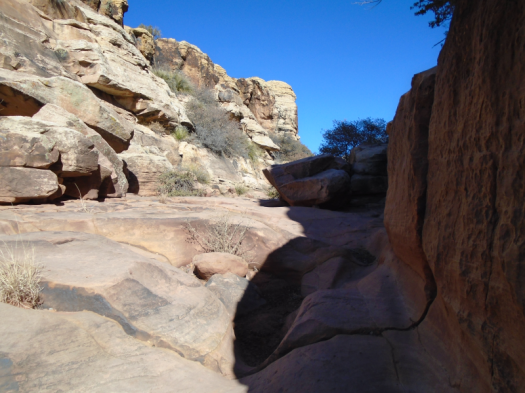
We climb out of the canyon where we climbed in, a series of rock ledges guiding our way up.
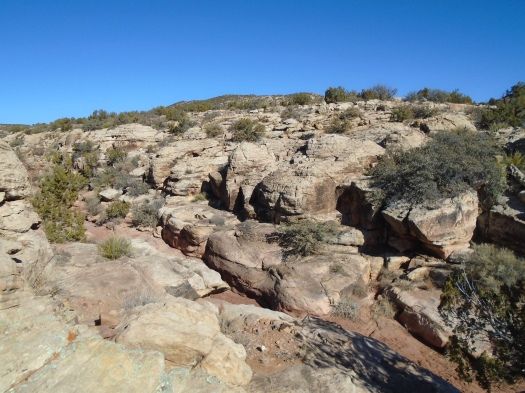
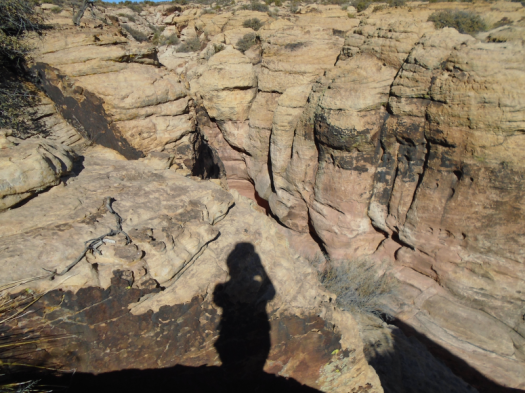
On the rim above, the land is corrugated, tan rock oxidized, rust and brown and black. It perfectly suits what this place, the San Ysidro Trials Area, is primarily used for – motorcycle trials, bikes ripping turns and tricks on the rock. Yet we’ve never seen a bike here, except in the parking lot, and hardly any other hikers.
We gaze into the canyon’s womb far below. We see more and bigger pools. The storm that grazed the Jemez and Sierra Nacimiento mountains with fresh snow this week left its mark here too.
The floor of the canyon begins to rise, the rim to descend.
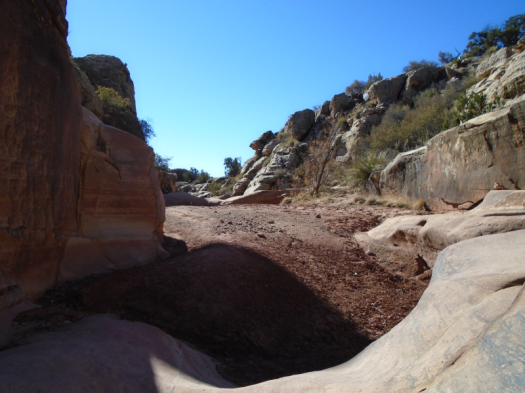
Where the rock ends, we follow a motorcycle path across red and purple dirt, occasionally marked with white, like chalk.
The meadow leads us to another wide swath of wavy rock, a few small pools dotting the sandstone. We look behind us at the Sandia Mountains. In Albuquerque they appear monolithic. From this angle, craggy and snow-covered, they look more like pictures of the Alps.
We found this strange and incredible loop hike in Stephen Ausherman’s “60 Hikes Within 60 Miles of Albuquerque.” This was our third try at it.
The first time, we accidentally did the whole thing backward and missed the slot canyon entirely, though we didn’t realize it. The wide swath of wavy rock itself is pretty rad, and we thought its little pools were the ones described in the book.






 Woman Seeks Elevation