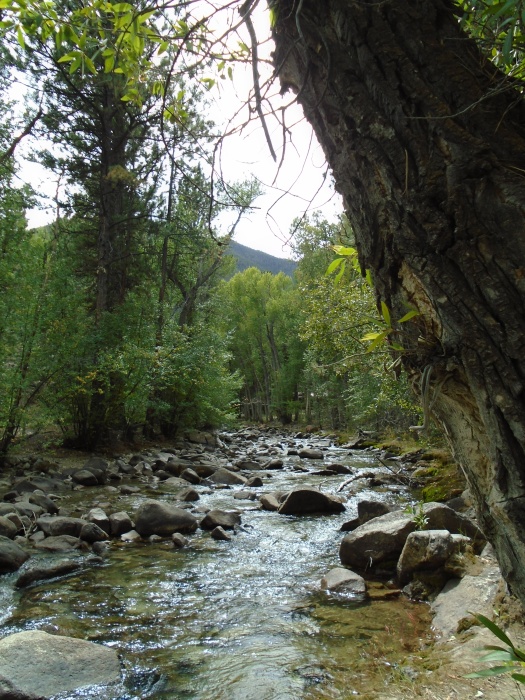
When your hike begins at a creek – a rolling, tumbling creek – you know you are in for something good.
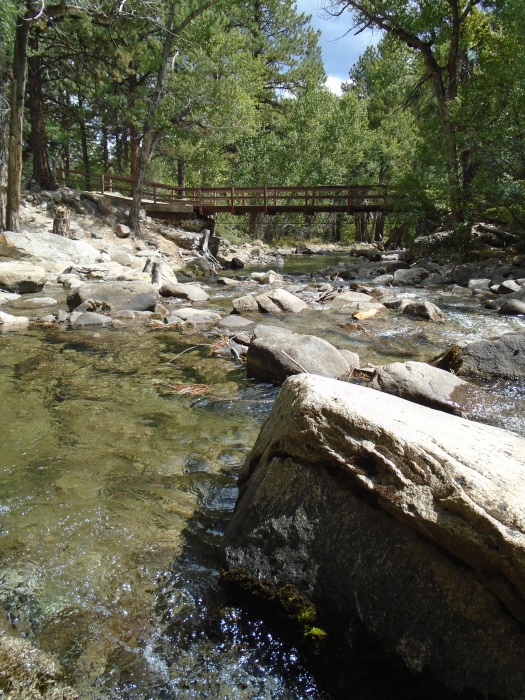
Bonus: Chalk Creek, where segment 14 of the Colorado Trail begins, is larger than any body of water I’ve encountered on a New Mexico Trail, excepting the Gila River.
Chalk Creek tumbles cold and clear through a grove of aspens. A few were already beginning to turn, and as we climbed, small patches of yellow dotted the hillside.
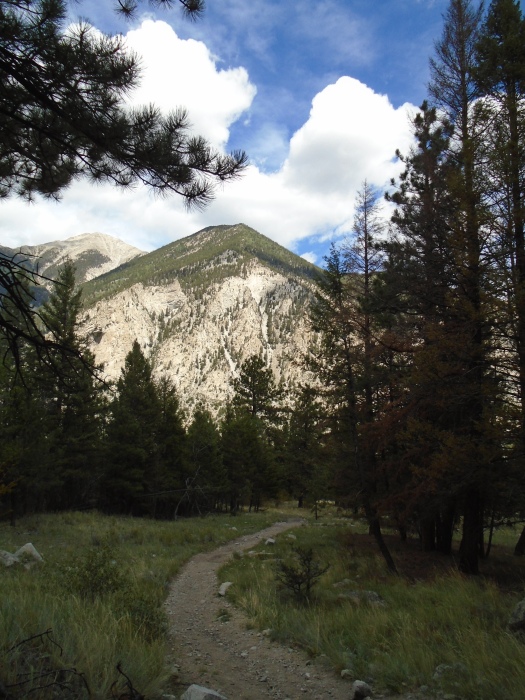
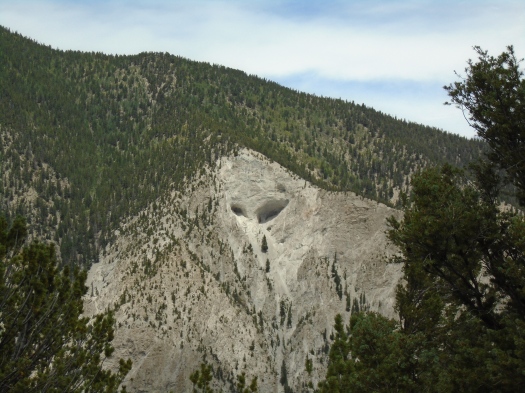
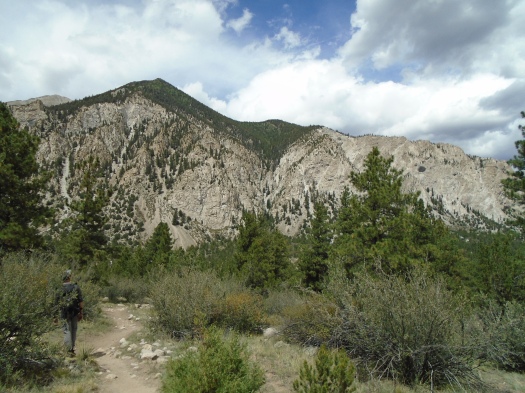
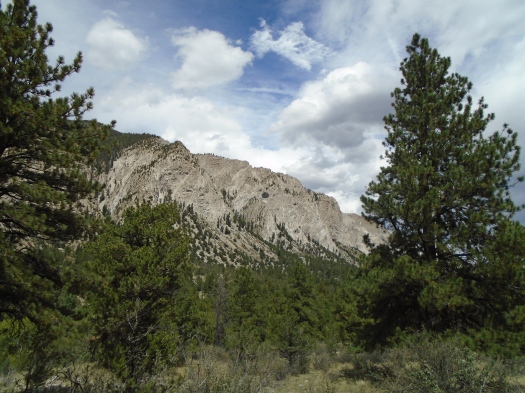
Behind us, the Chalk Cliffs soared white.
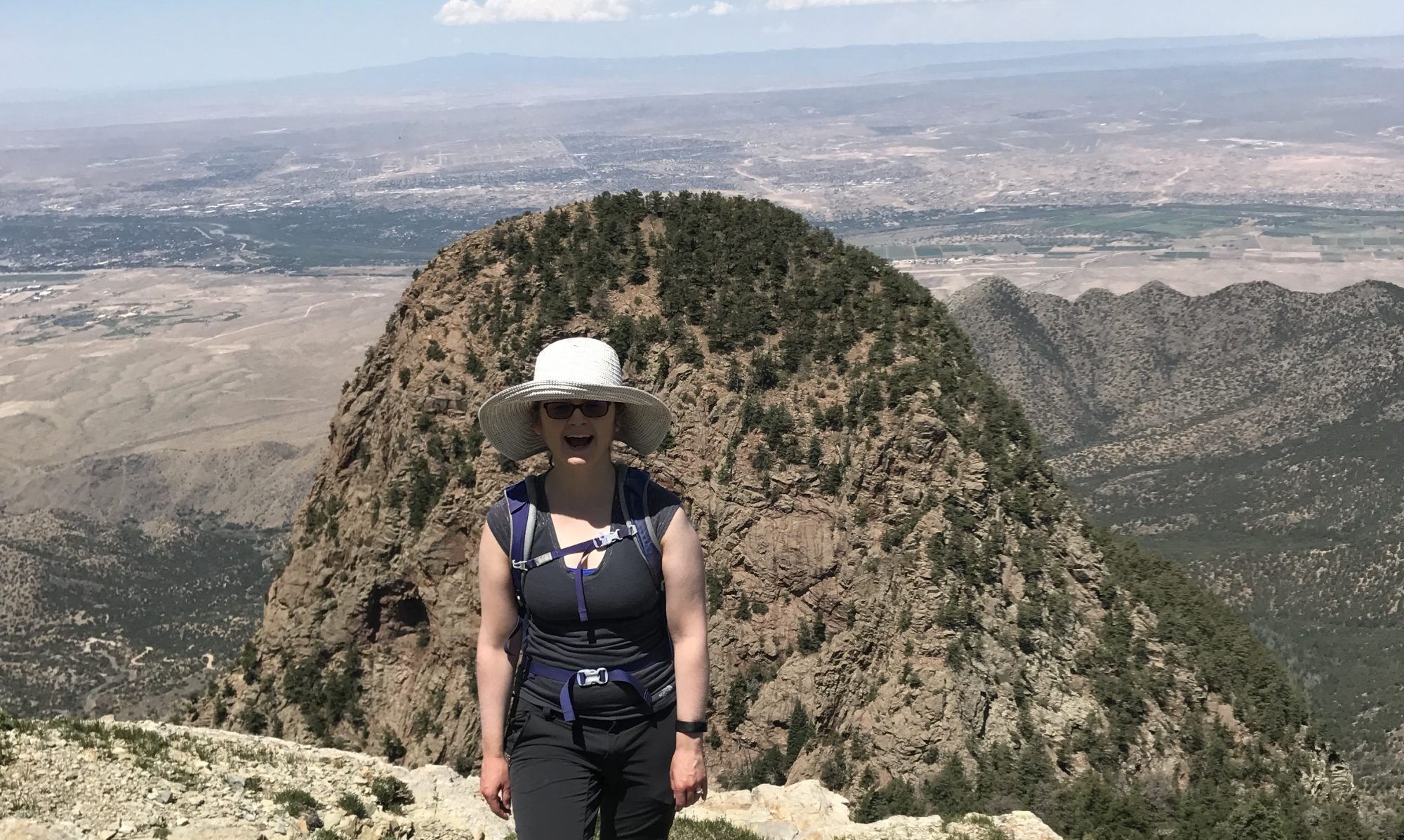
When we reached the highest point of the hike, we could see caves in the cliffs – even a pair of caves that looked like a face.
It always feels like…somebody’s watching me…
The task at hand, though: a parade of switchbacks rising 1,000 feet in a mile and change. I was panting the whole time. Impressively, a woman from sea level arrived at the top just after we did.
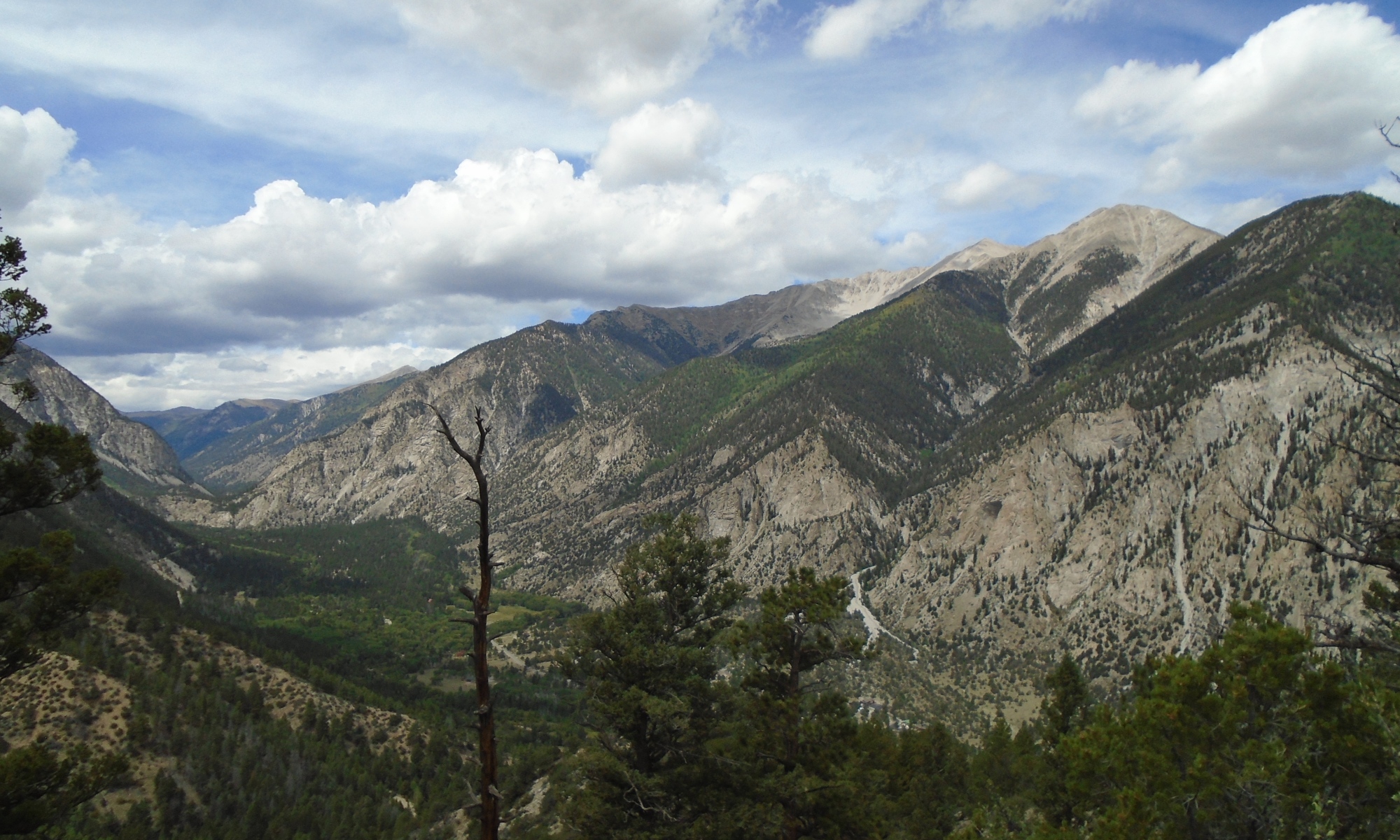
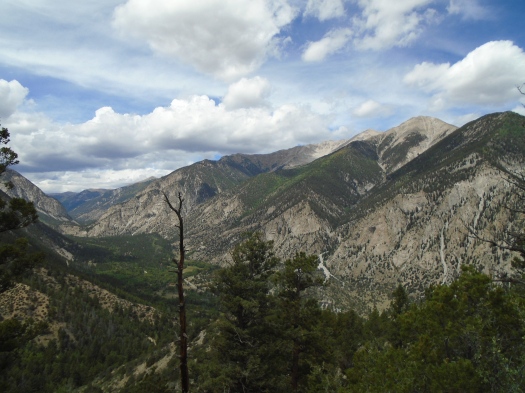
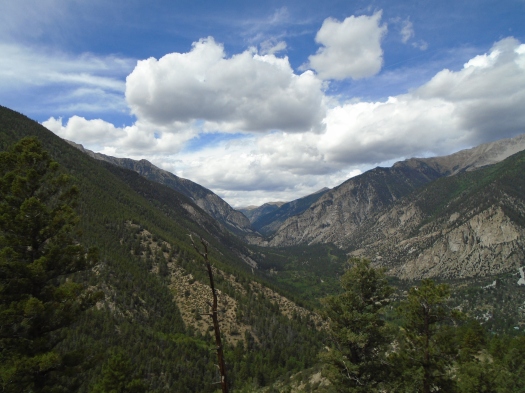
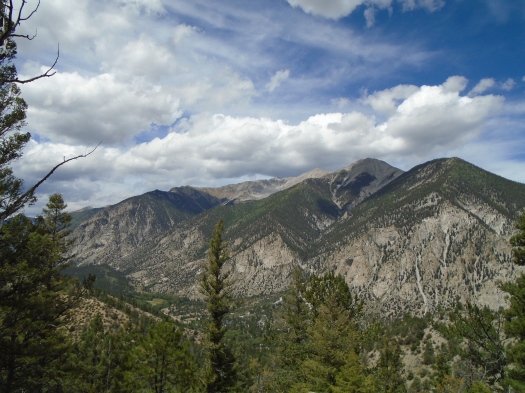
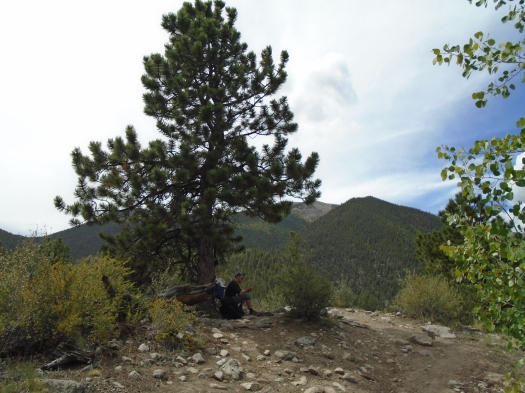
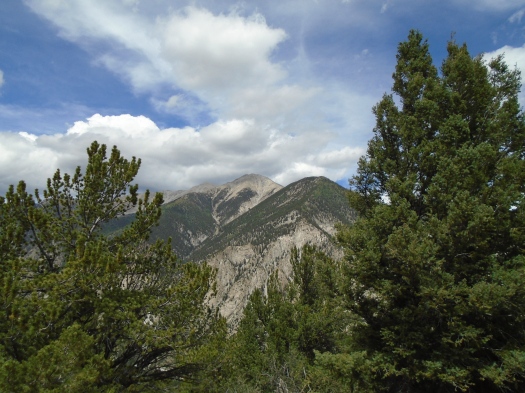
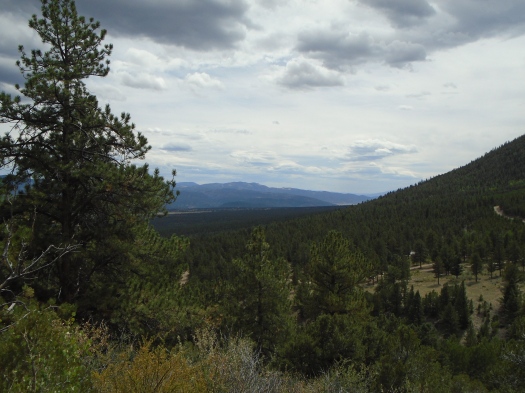
The most dramatic view I’ve seen on a hike awaited us there, at 9,500 feet. The Collegiate Peaks towered above, green and gray, sloping into a deep crevasse below. One level down from those peaks, the Chalk Cliffs. Behind us, blue and green rolling back to the Arkansas River Valley.
We lingered there for nearly an hour, then navigated the steep way down.
We relaxed at the creek for another 45 minutes, dipping sweaty hands and feet into its cool, mossy flow.
With the robust creek and commanding views, this was easily one of the most spectacular hikes I’ve taken so far. It’s challenging (I respectfully disagree with the Mellow Mountain Hikes guidebook’s “easy” rating), but it’s doable and enjoyable for a visitor to the area.
We left as faraway thunder echoed down the creek. Storms drenched the peaks above us as we drove back to Salida.
Hike length: 4 miles
Difficulty: a solid moderate in my book
Trail traffic: light
Wildlife spotted: Abert’s squirrels and black Abert’s squirrels on the road, chipmunks, vulture, nuthatch, bluebirds, Stellar’s jay, mockingbird
TIP: Mount Princeton Hot Springs is just a few miles from this hike. We passed it up on a hot day at high elevation, but it would sure feel good to soak after tackling those switchbacks.
I was navigating a mile-plus of extremely steep switchbacks up West Circle Trail in Hyde Memorial State Park.
There are strategically placed benches at a quarter-mile up the trail and a quarter-mile from the top. I took advantage of both, plus a rest on the ground.
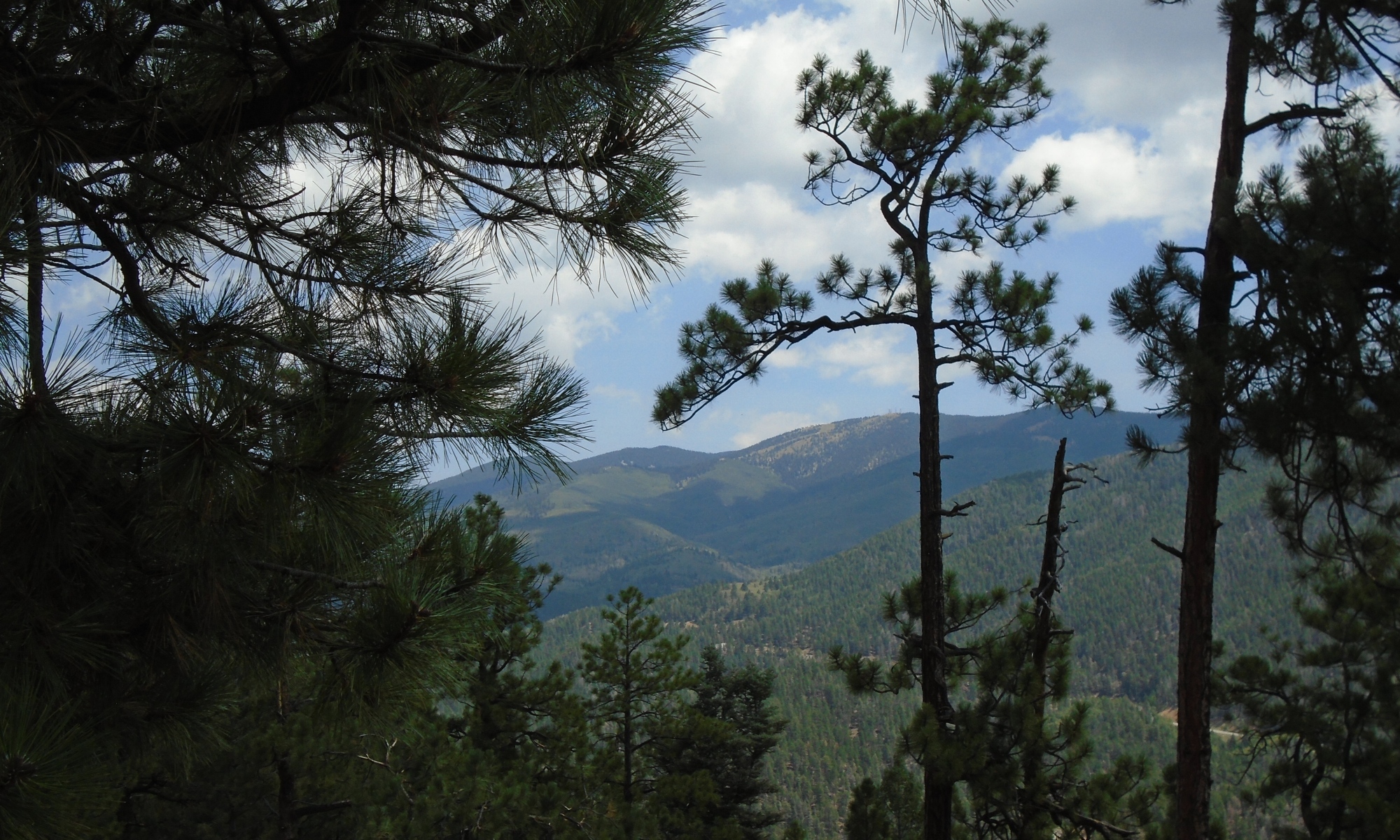
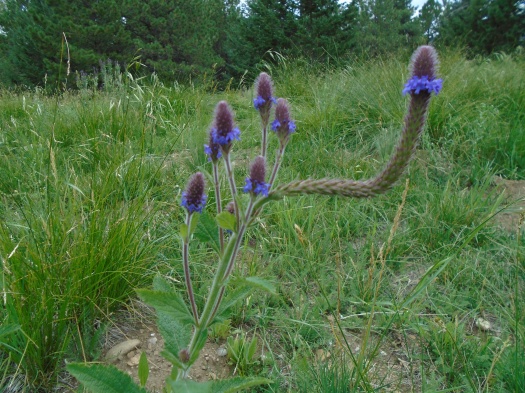
As I pushed and pulled myself up the trail, yellow and purple wildflowers flashed by. Rolling green ridges stretched above and below. Glimpses of Santa Fe and the Rio Grande Valley began to appear.
My husband spotted nine horny toads. One was the big-fellow-in-shades-of-gray type we’ve seen so often around Albuquerque. The rest were thumb-sized, rust-red, barely distinguishable from the mica-flecked rocks around them.
The switchbacks mellowed slightly as we got closer to the top. A sign marked the 9,440-foot high point of the trail. A little further, two picnic tables and a jaw-dropping view into the Jemez Mountains, complete with its drainage network of ridges and canyons. We could see the Santa Fe Opera, Los Alamos and the brown snake of the Rio Grande. A raven ripped through the air just above us, cawing, wind whistling through its talons.
White structure at center of photo is the Santa Fe Opera.
My husband broke out the binoculars, sure he’d be able to spot his parents’ house, but a ridge blocked the view.
It’s been two years since we got rained on during a hike, and that one wasn’t even in New Mexico. This is momentous.
It’s a light, steady rain, stirring the smells of fir and pine from the forest floor.
And it pisses me off.
Where the hell is Red Canyon, anyway? It’s been at least a mile since the junction and everything looks just like it did before.
And no overlook on the last part of the Crest Trail? After climbing 2000 feet, I want a damn 50-mile view.
I want to cry. I want to chuck my hiking poles into the canyon below us.
It’s not about the hike, of course. It’s this godforsaken year that just keeps knocking me on my ass and there’s nowhere to hide from your feelings in the damn Manzanos and –
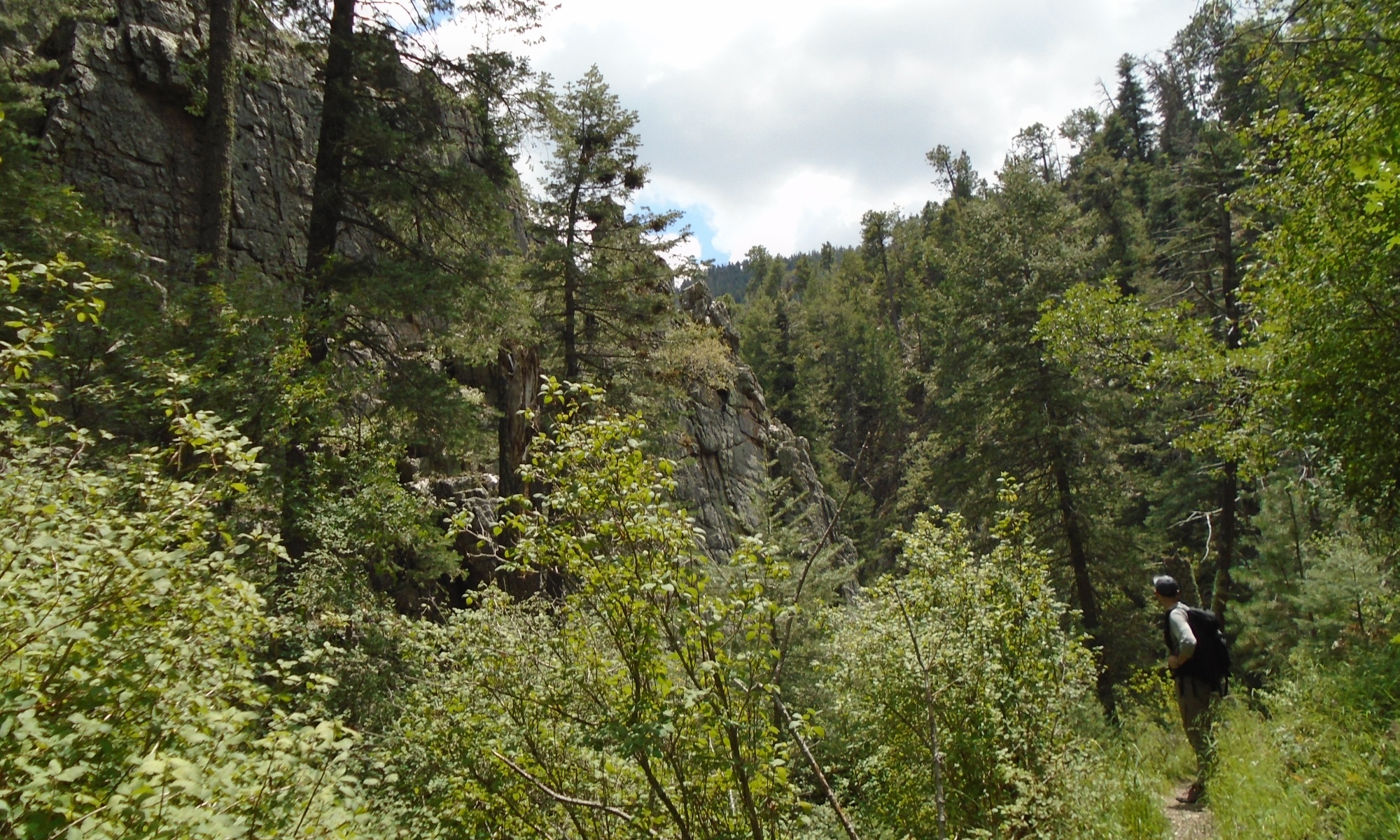
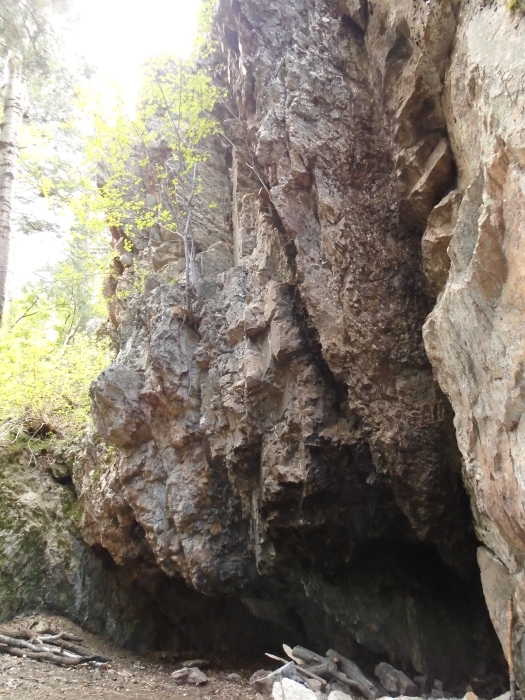
Suddenly the rock under my feet, soaring above me is purple. Or is it pink?
I had remembered this stretch of the Manzanos as one of the most beautiful places I’d ever hiked. But I didn’t know why it was called Red Canyon. I remembered the grottolike stone as a deep, rich gray, and my old photos back me up.
But the sun peeking in and out from layers of clouds, the moisture in the air, show the rock’s true colors – for the moment, at least.
The scale of the rock towering above can’t be conveyed. I even brought a real camera, albeit small. I lie down, cool stone under me, and aim skyward. What I capture looks tiny.
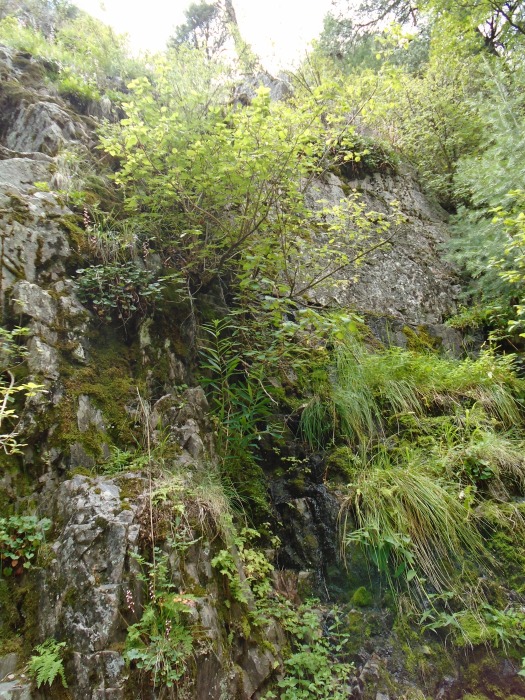
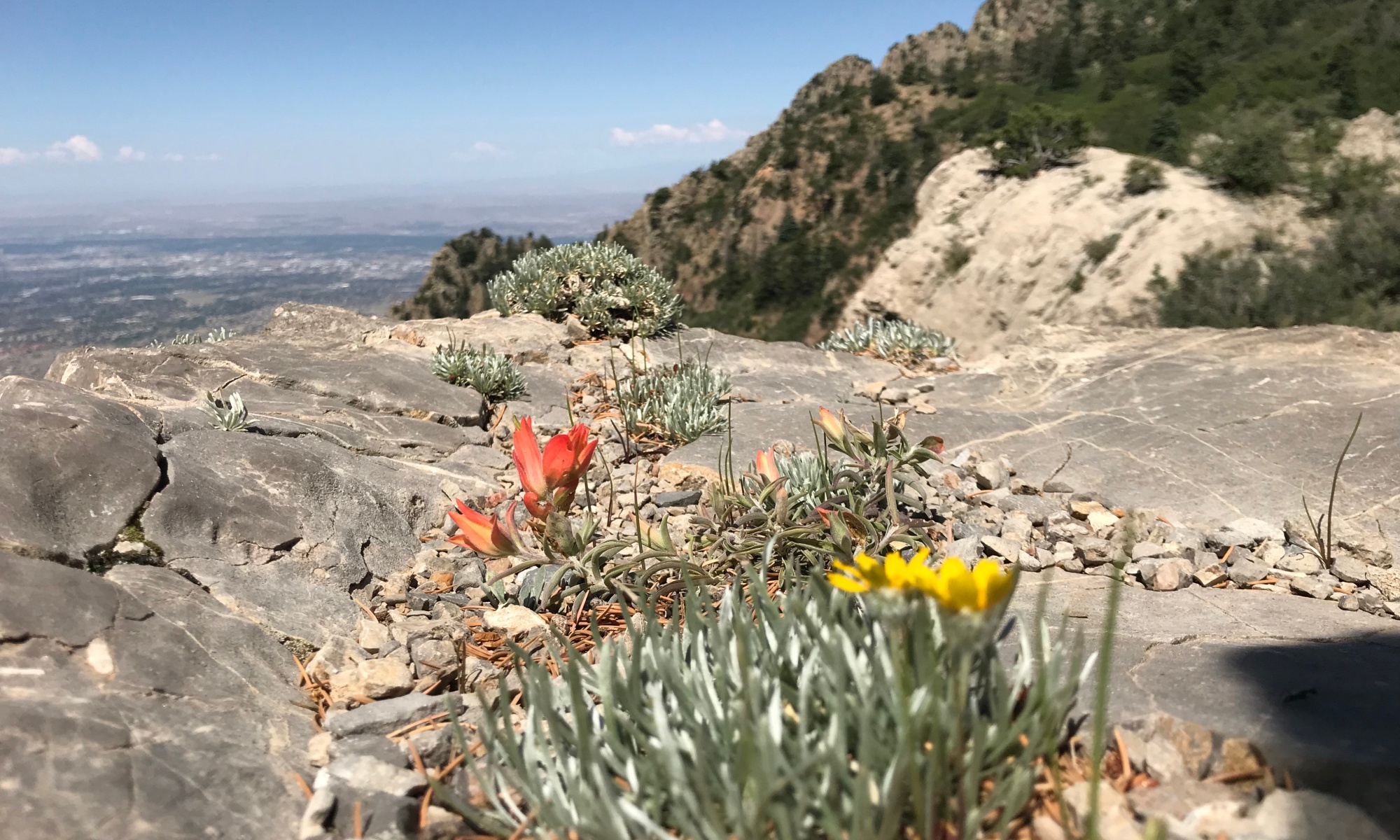
We slowly make our way down the trail, a steep chute of pink rock. A cornucopia of things grow in the rock – moss, ferns, many kinds of wildflowers; it’s the Hanging Gardens of Babylon up there. Sometimes the rocks stack neatly, cubes on cubes, sometimes jagged fingertips jut into the sky.
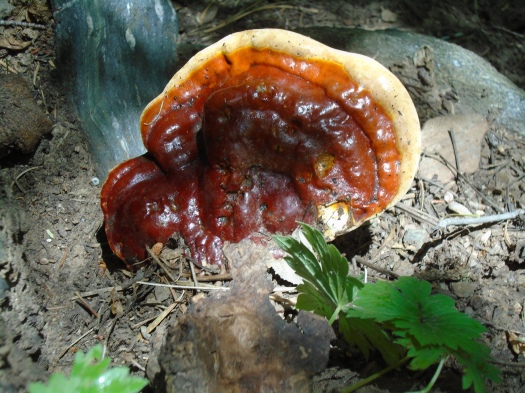
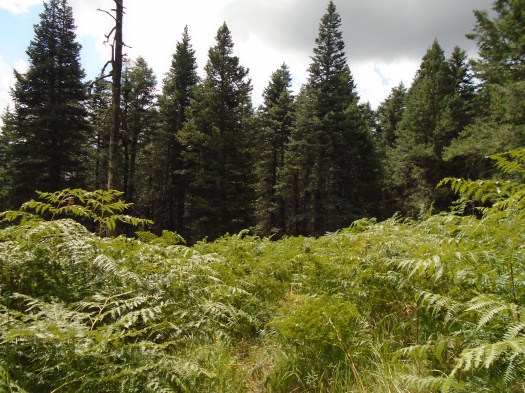
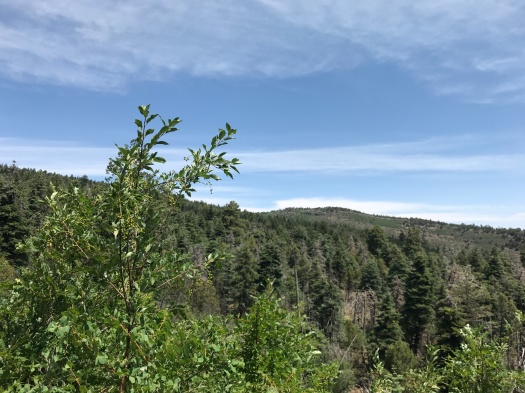
Before we reached the rock, there was only forest. Bright spruce and aspen commingled, sunlight pouring through. Ponderosa so thick on the north side of a ridge the temperature dropped 10 degrees and it began to look like dusk. Deadfall, giant trunks to climb over and under and around. Mushrooms making homes among the living and dead. And, as we emerged at the top of Spruce Spring Trail, a grove of ferns as tall as my shoulder.
Land of the Ferns
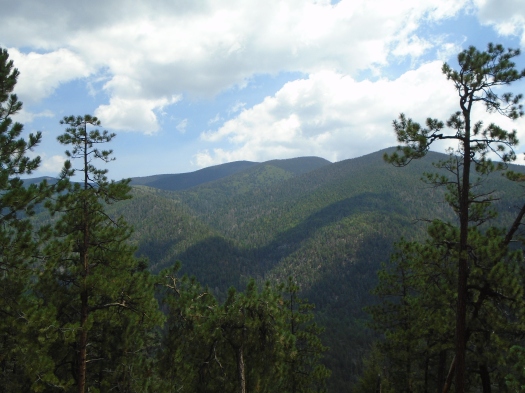
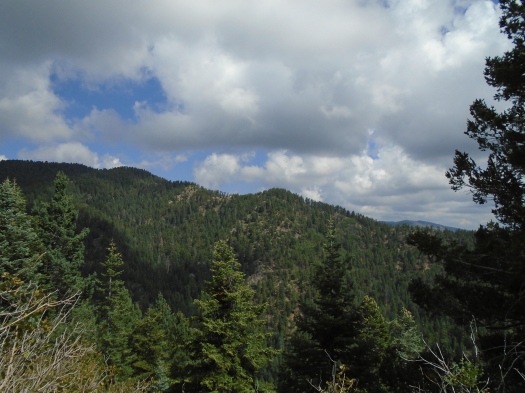
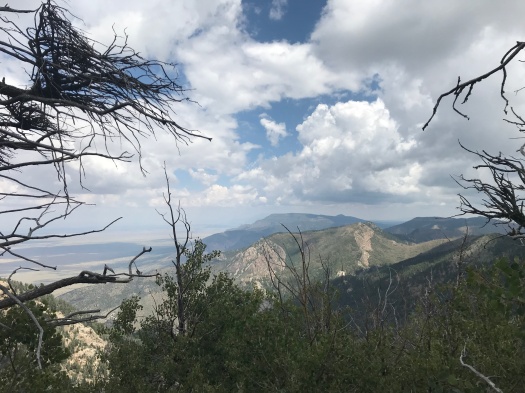
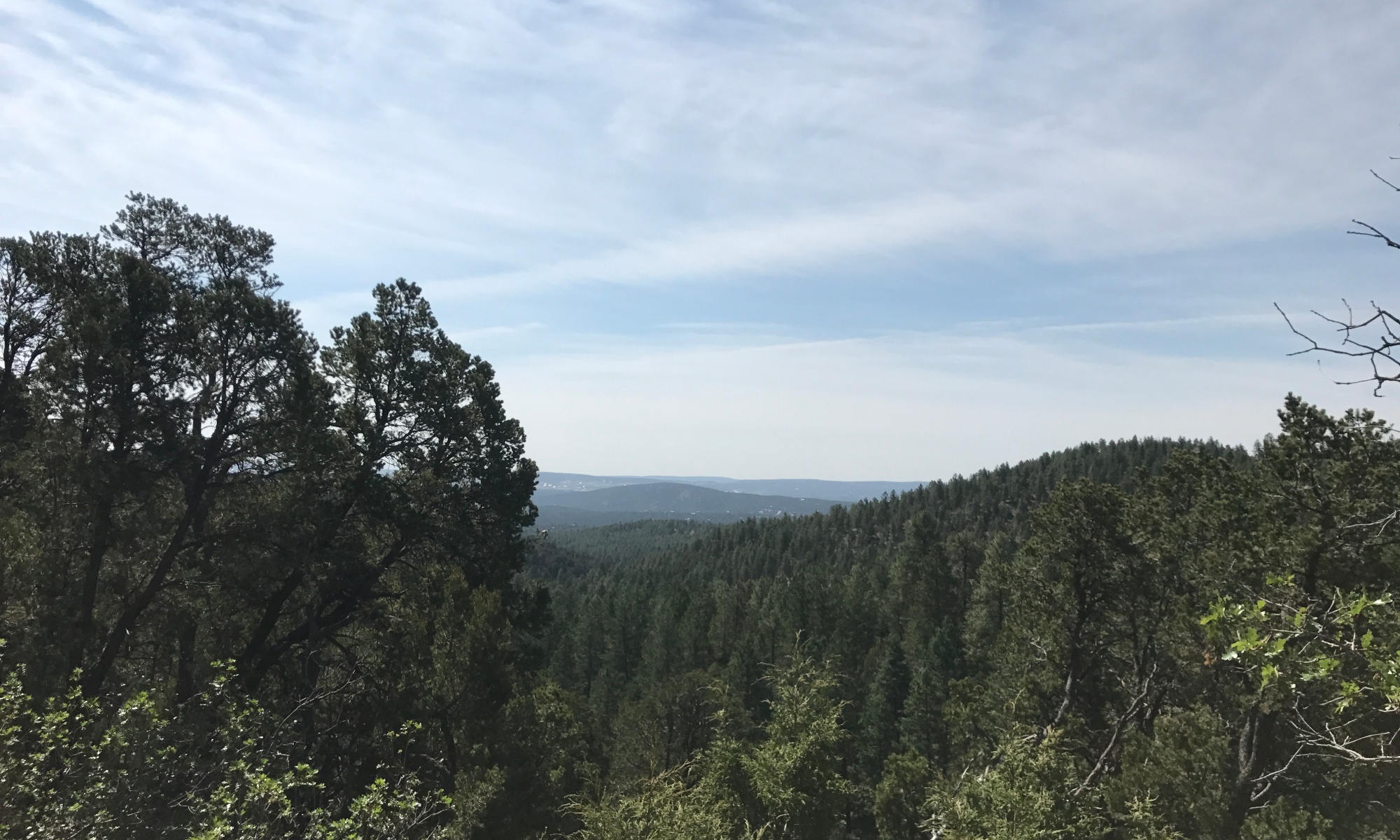
And yes, truth be told, there were views. Through trees and of trees. The Estancia Basin’s salt lakes glimmering in the distance. The pyramid of Mosca Peak. Ridges saturated with multiple shades of green.
The Manzanos demand commitment. You want to summit by noon starting from Albuquerque, you will get up very early. You will drive winding roads, many of them unpaved. You will hike a long way; trailheads are few and far apart. You will be self-sufficient, as you rarely pass other hikers on the trail.
And when the experience gets emotional, you will be grateful for it, even if you didn’t start out that way.
The tang of evergreen needles fills my nostrils, mixed with a hint of dampness, the packed trail below redolent of mud from a monsoon storm now forgotten. As we climb, the evergreens get taller and fatter, and copses of aspen appear.
I knew as soon as I got out here, I’d want to go all the way to the upper tram terminal, a more than 7-mile roundtrip hike with 2,000 feet elevation gain. I also knew we’d started too late, it was too hot and too humid.
I make it about a mile up the Crest Trail – let’s just see how far I can get! – before assenting to the conditions, to my thigh and ankle muscles, and heading back.
On the return, we take a side trail to revisit the overlook, seeking a promontory that was occupied by lunchers earlier. The trail’s so thick with Gambel oak that I hold my hiking poles in front of my face to keep branches at bay.
My husband tells me later that as I crashed through the undergrowth, a small white butterfly with black-pepper spots danced circles behind me.
Some things are graceful, even when others are not.
Hike length: 6 miles
Difficulty: moderate
Traffic: moderate
Wildlife spotted or heard: Abert’s squirrel darting across the Crest Highway, woodpecker, butterflies, blue dragonflies, dove, chickadee, coyotes (heard in the distance), horny toad
Two nights of thunderstorms that meant business have left their mark. The air’s heavy and cool, the trail oozing smells of soil and pine.
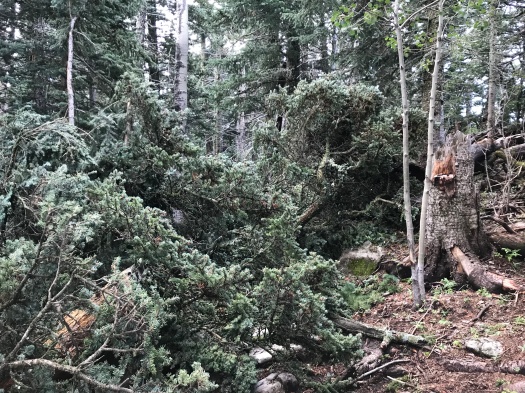
We descend carefully over muddy tree roots. A big evergreen, blown down by one of the storms, blocks our path; we climb around it.
We bypass Del Agua Overlook, the world’s greatest overlook, which we discovered here last week, and spent our lunch hour watching the light and shadow play across the top of the Needle.
As spectacular as it was, we know there’s more, and we want to see it.
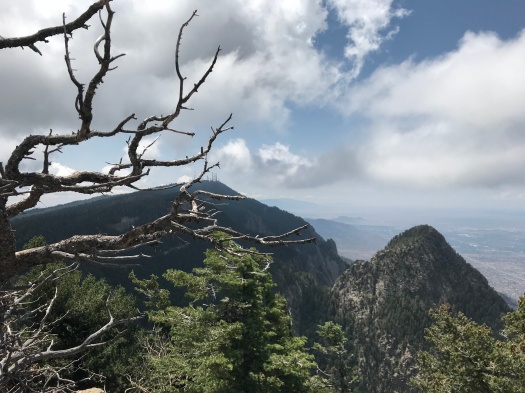
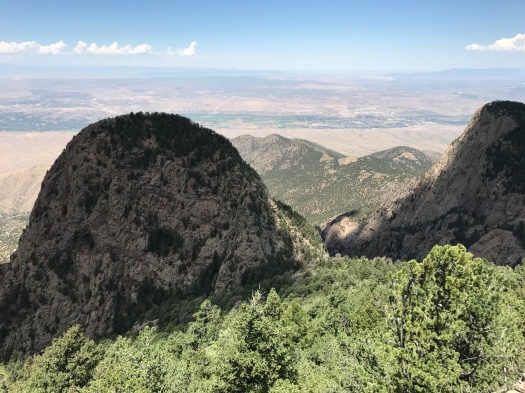
Mini-overlooks abound. The Needle’s shoulder comes into view.
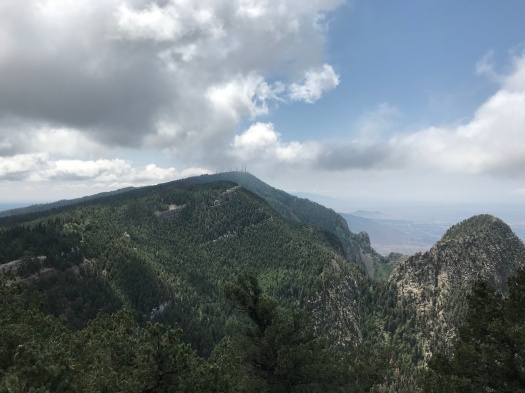
We see more and more of the limestone ridge stretching back to the crest.
The Del Agua Overlook is the green spot just below the highest point visible in this image.
The trail begins ascending, fossil-rich limestone poking more frequently into the path. The sun ascends, too, and when we emerge from dense stands of aspen and spruce, it quickly warms us.
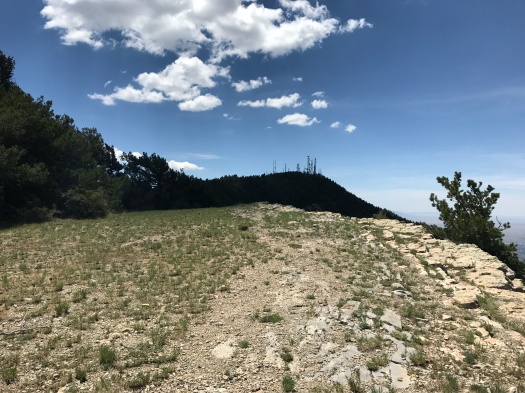
We turn. We’re now headed for a ridge higher than everything around it, one we’d spotted from last week’s overlook. The vantage point from there will be one we’ve never seen.
But first, a clamber over steep limestone. I stop to eat lunch on a ledge before the last push.
Before we even reach the top, I look back and see the Del Agua Overlook, its limestone shelf carpeted in golf-course green.
Gray wisps coalesce in front of us. My husband thinks a building far below must be on fire. It’s a good guess – everything’s on fire right now – but what we’re seeing are wisps of cloud playing across the green slope we’ve just traveled.
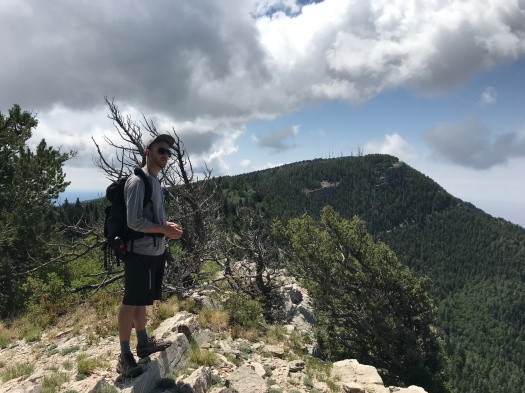
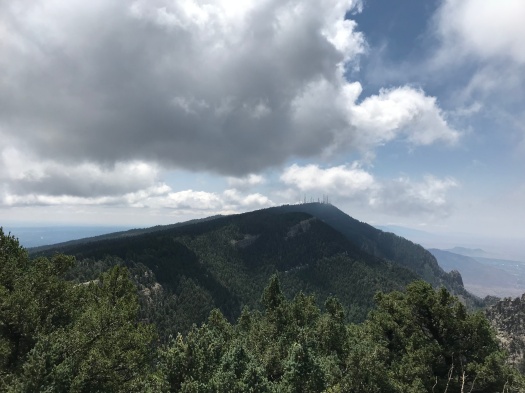
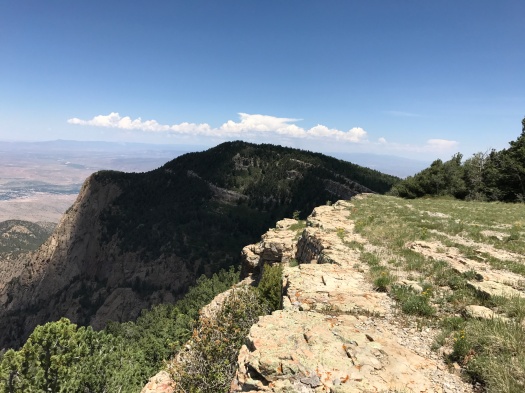
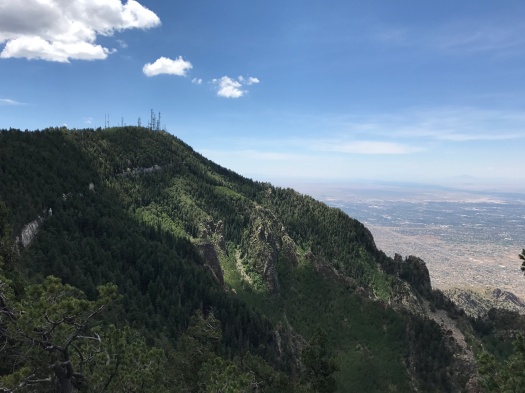
At the top of the ridge, a commanding view of Juan Tabo Canyon, glimpses of the San Pedro Mountains and Ortiz Mountains in the valley behind us.
For just a second, I think about the next ridge, and the next, and the next.
But we’ve gone nearly three miles, and my ankles and knees are talking to me from all the clambering. The return route is a 700-foot elevation gain.
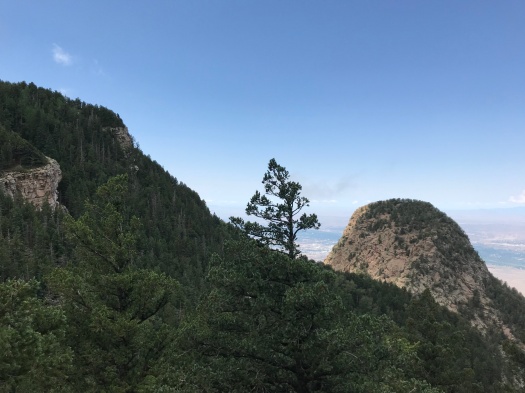
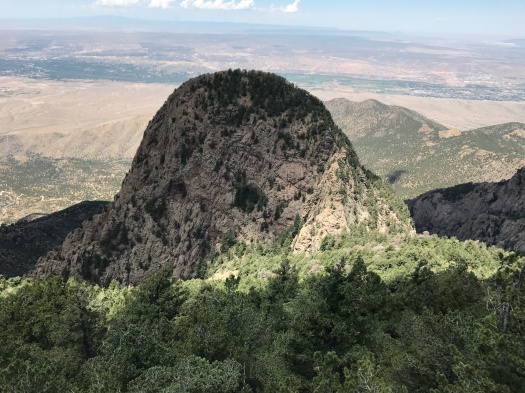
I snap a sideways view of the top and clavicle of the Needle as we return.
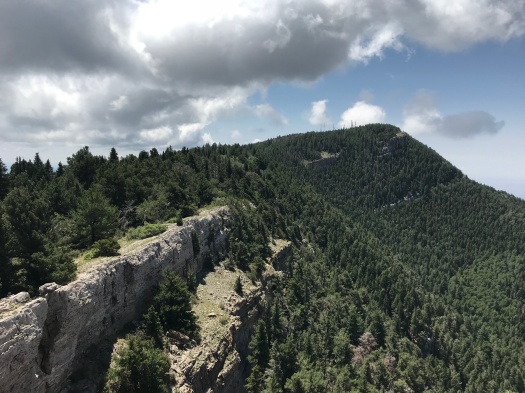
This is the Sandia Crest I know, a place where you’re always one ridge away from seeing something you’ve never seen before.
Hike length: 5.6 miles
Difficulty: moderate
Trail traffic: moderate
Wildlife spotted or heard: swifts, brown creepers, chipmunk, butterflies, vulture, crow, squirrel, mule deer on the Crest Highway
I can stop taking pictures of the top of the Needle anytime I want to. Really…OH MY GOD, I CAN’T STOP
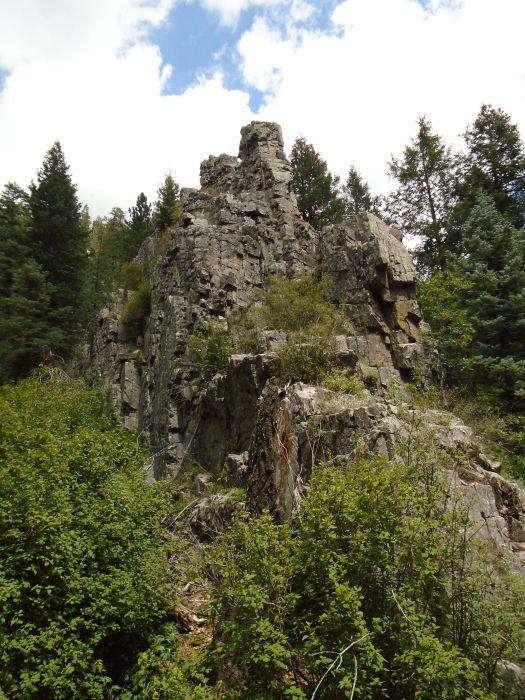
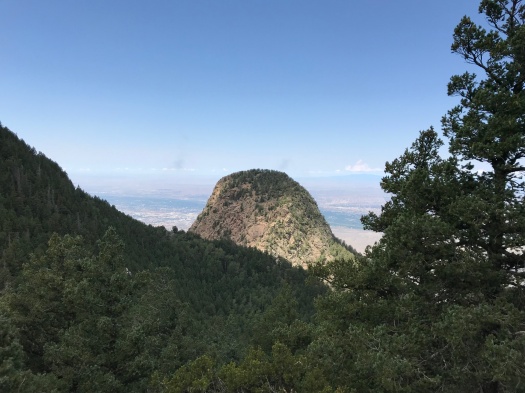
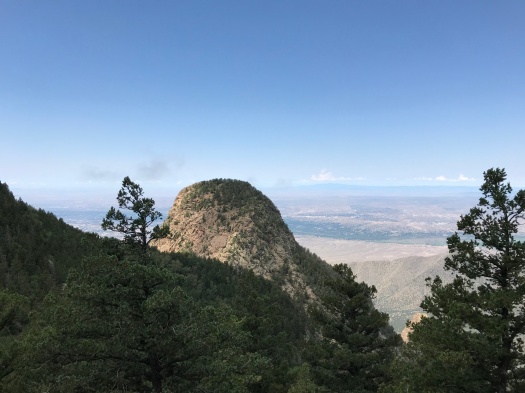
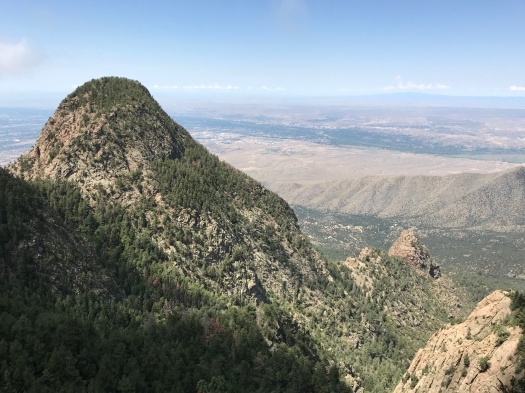
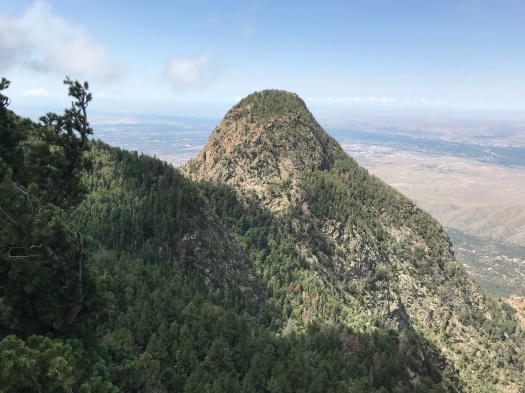
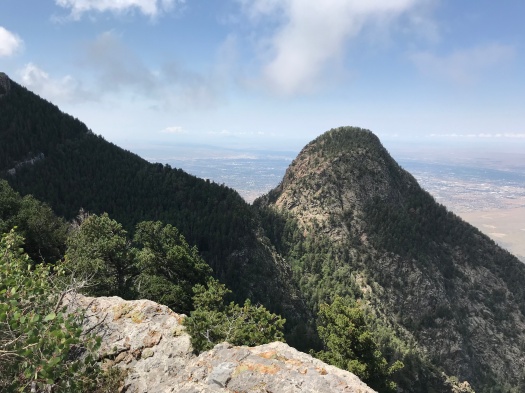
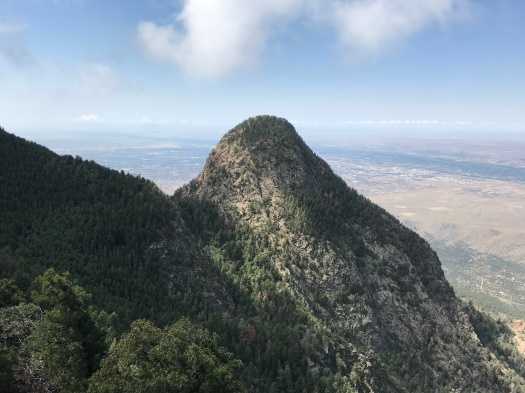
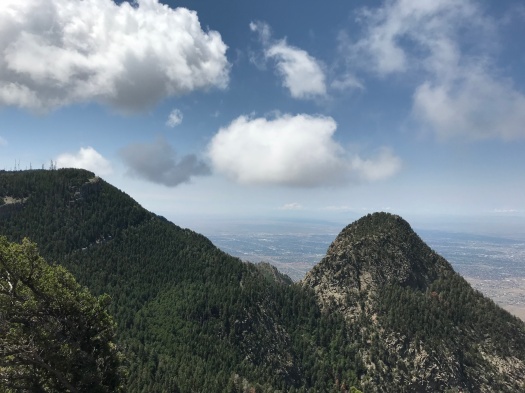
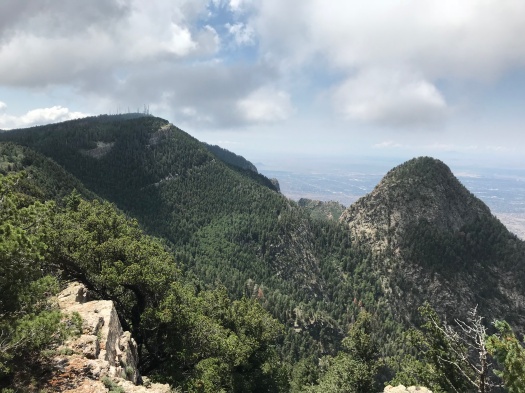
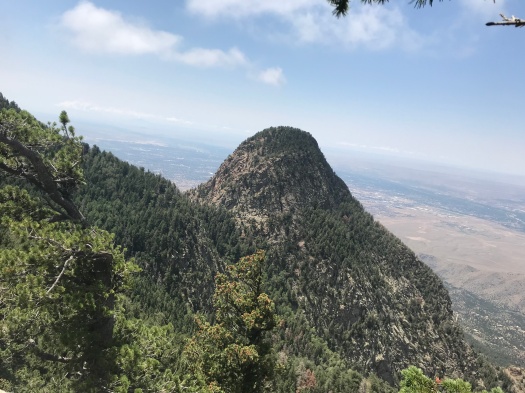
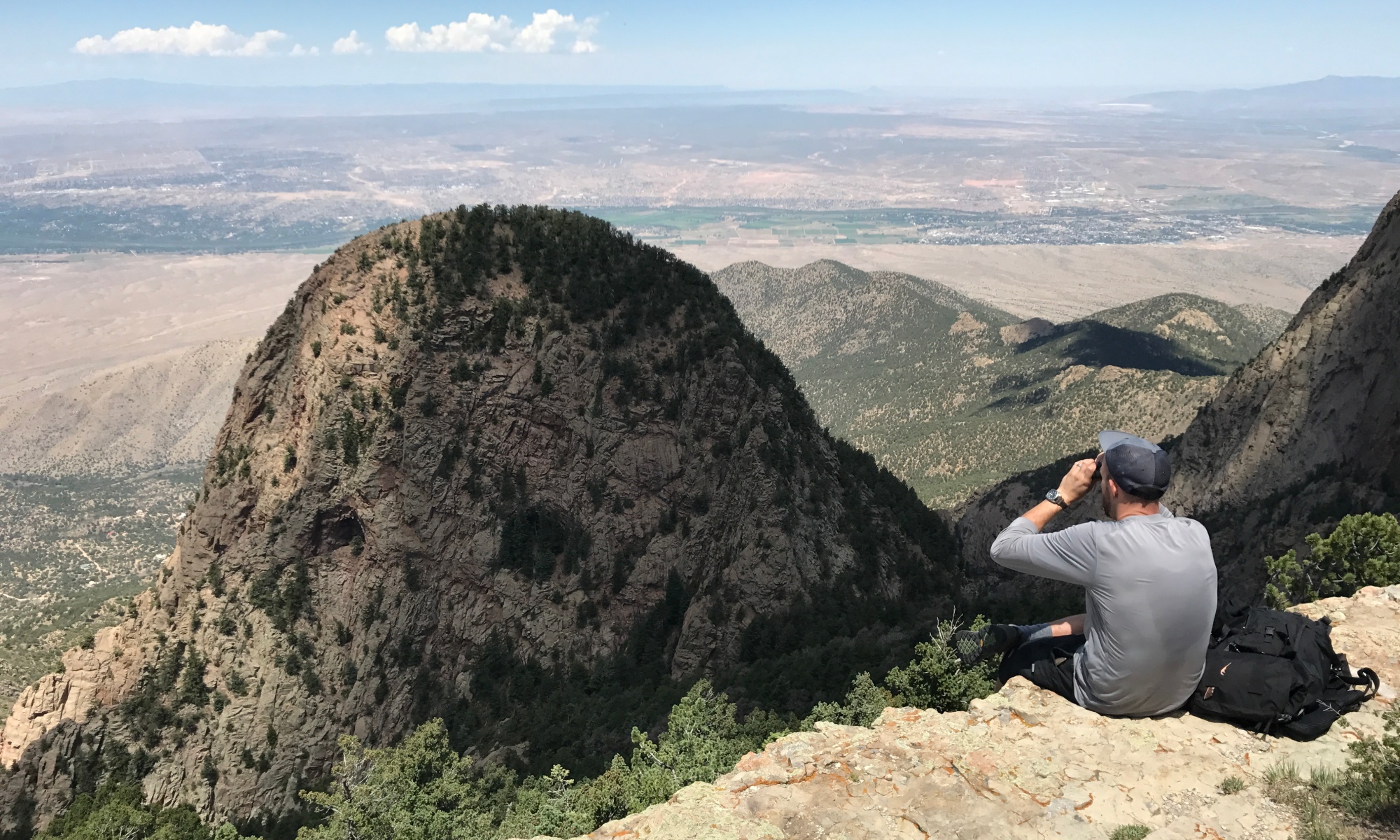
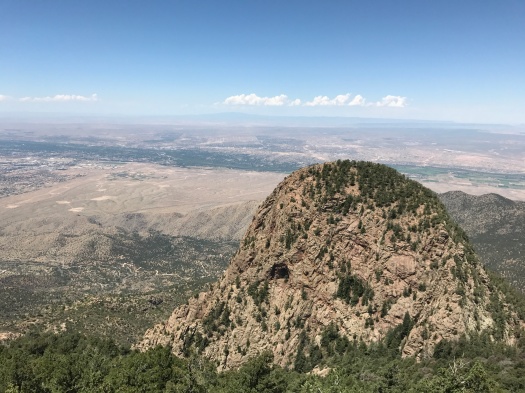
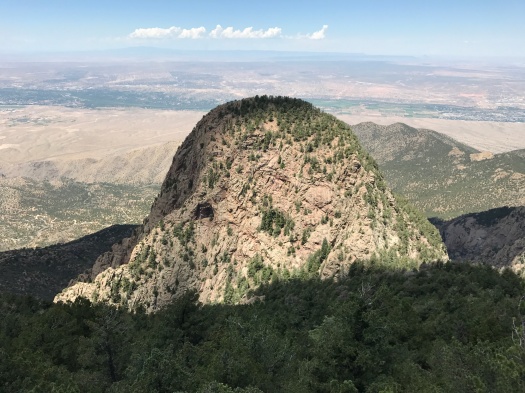
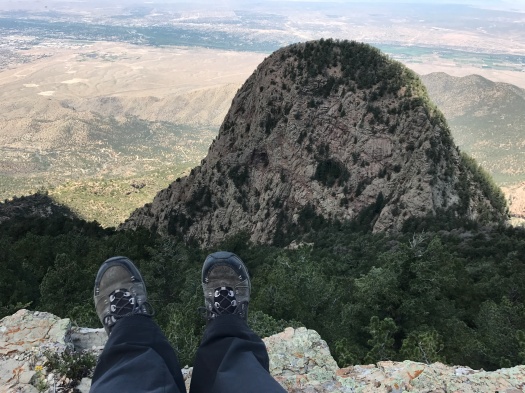
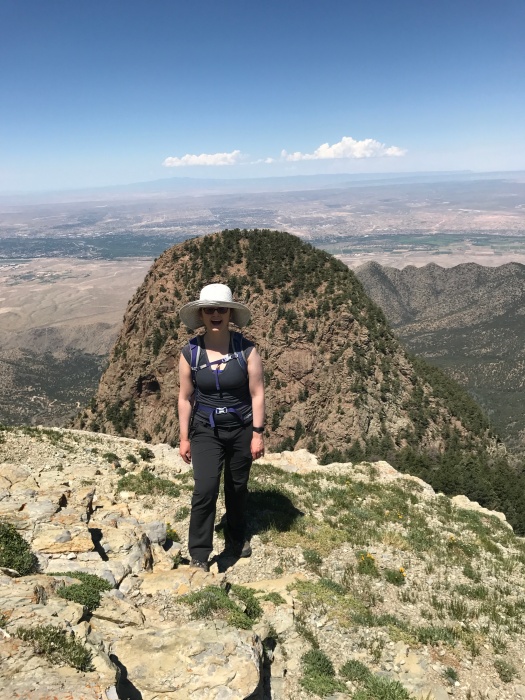
The structure rose thumblike, enormous, in front of us. It looked like it topped out nearly as high as our trail – 10,000 feet. Evergreens dotted the dome. We spotted a cave in it, then another partly obscured behind trees.
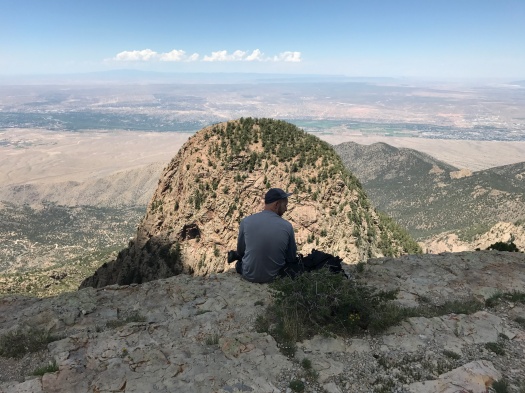
We took one of many narrow paths pulling us off the Crest Trail, closer to the mountain’s edge. A broad limestone shelf, the Del Agua Overlook, opened up. From it, an unobstructed view of the dome.
We must have sat there for half an hour, watching light and shadow play across the dome as clouds scuttled across the sun.
I thought I saw a person standing very precariously on the dome’s pitched face, a person with a white hat and black clothing. My husband busted out the binoculars and observed that the white item was a giant bird shit.
“What shat that?! A pterodactyl?”
“Maybe an eagle,” he said. “Or a vulture.”
There was plenty more to look at – swifts hurtling by us, butterflies alighting on limestone, shadows on the mountain’s green peaks. We could see other things we’d never seen from the top of the Sandias, too: the water in the Rio Grande caught my naked eye. Through the binoculars, my husband saw the Los Poblanos Fields open space.
But no matter where I looked, the dome always lured my gaze back.
I couldn’t believe after nine years of living in Albuquerque and three years of hiking here, I had never seen this incredible sight.
Just 90 minutes earlier, I’d thought the day was a wash. The Ellis Trail, where we’d started out, was in full sun. Even at 10,000 feet, it was unbearable, and I quickly turned back. I’d had no idea what direct midsummer sunlight felt like at that altitude; most of my trips to 10,000 feet, even in summer, had been cold enough to need a hoodie.
I was irked that I’d burned time and energy there before switching to the shade of the Crest Trail. I thought I’d be lucky to see anything new today.
Little did I know a magical mystery dome awaited.
After looking it up, I think the dome has to be the top of the Sandias’ famous Needle rock formation – if so, seeing its giant base from below is a completely different experience from seeing the top of it from above.
Hike length: 5 miles
Difficulty: moderate
Trail traffic: moderate
Wildlife spotted: swifts, vulture, many kinds of butterflies, brown creepers, a mule deer on the Crest Highway
If it weren’t for the illusion that you were almost at the top, many of us would probably never make it to the top.
I’d been under that illusion for the past hour. Every time I swung my left foot into the 45-degree angle needed for the next step, my ankle, aching from that action, protested. I’d sent my husband ahead twice to get a sense of how much further it was to the top. At least a quarter mile, he said.
I thought hard about turning back.
But dude, the forest had just reopened after more than a month, and I knew a spectacular view awaited, and it would suck so hard to turn back so close to the top.
At last the jungle of the Cienega Trail disgorged us onto an overlook at the junction with the Crest Trail, the mark that we’d gained 2,000 feet in elevation. It was the hike we intended to take weeks ago, but took a wrong turn.
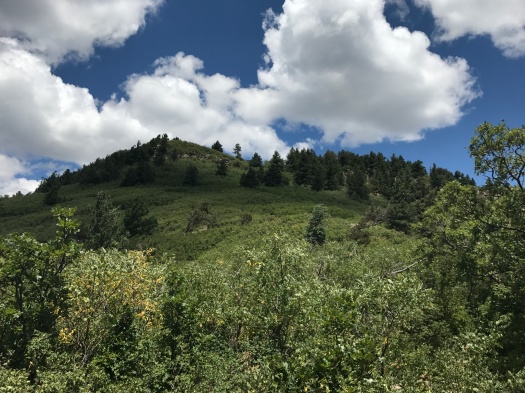
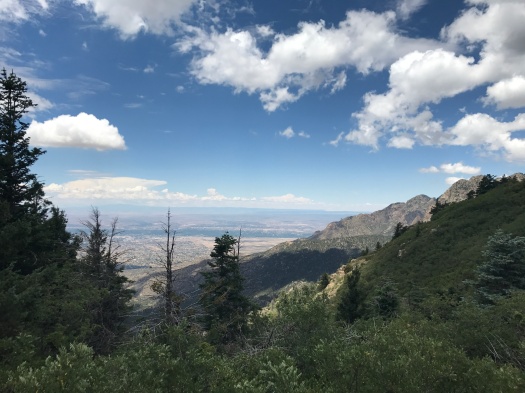
A brilliant green peak towered over us. The blue-gray San Pedro Mountains loomed on the horizon. Puffy clouds floated above.
Loud conversations and crunching greeted us. Two groups of lunchers who’d come up the Pino Trail had commandeered the spot. The Pino Trail is even harder, so they’d earned it. One of them talked about the wreckage of a plane crash nearby (not the famous one.) Two hikers on the way up had offered to show us the crash site, too. It was the first I’d ever heard of it. It sounded incredible, but I knew if I took any detour I would not reach the top, so we’d kept going.
I ate my peanut butter and honey sandwich under a shady ledge, waiting there till the friendly lunch groups moved on. Stepping into their spot, I could see the jagged ridge of the Sandias stretching away and clouds above Mount Taylor 80 miles west.
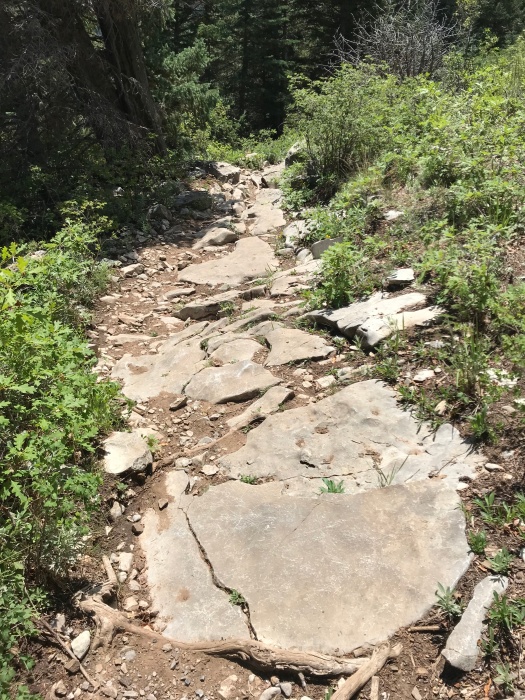
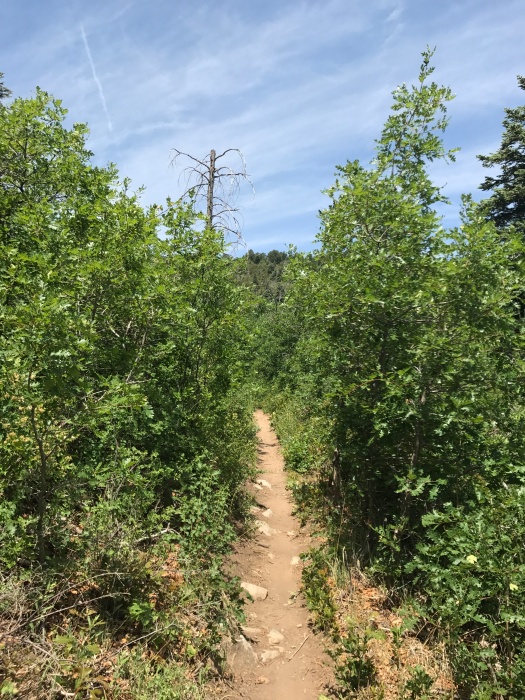
I’d seen very little of the scenery coming up, focused on keeping my footing on the steep trail beneath me and navigating the wild rose and other vegetation that pressed in on both sides of the trail. On the way down I noticed the towering aspens and spruces, the spots where glimpses of the mountain peeked through, the wildflowers.
Down took less exertion than up, but was almost as slow going, because it was so steep. The arrival of the monsoon season had increased the humidity, so the afternoon was very warm.
At last we reached the Cienega trailhead and walked back to our car along the campground road. I was glad we’d explored the nature trail and marshy meadow on the way in, because I was spent.
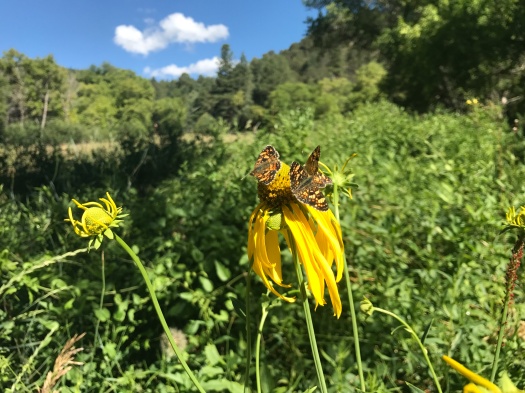
Three-butterfly pileup on the nature trail.
As we approached the nature trailhead, I noticed a black dog galloping along the trail.
“That dog is really bounding,” I said.
“That’s a bear,” my husband said.
My brain had registered it just as he said it: the stocky but fast creature leaping over the nature trail fence and running across the road in front of us was a black bear. Drought summer notwithstanding, it looked spectacularly robust and healthy. Its coat shone.
Though the animal had to be 200 pounds, my startled brain misidentified it as a cub. I looked around frantically for a mother, knowing it was imperative not to be between the two. I asked my husband to take the bear spray, which he’d recently stowed, out of his backpack.
He did as he looked to see where the bear had gone. In seemingly no time, it had bounded up to a ridgetop high above us. It paused near the top and looked back, making eye contact with us. My husband waved, which is actually one of the things you’re supposed to do if you encounter a bear.
The Cienega picnic area has had its share of bear sightings; it was closed all of last fall for bear activity. But we had no expectation of seeing a bear in the middle of a summer afternoon with hikers and campers all about.
But all of us were in his house, not the other way around.
I’m grateful that I got to see him, and even more grateful that he didn’t take offense.
I have no photos of the encounter; I was focused on staying alert to his actions, rather than taking his picture.
Hike length: 7 miles
Difficulty: on the high side of moderate
Trail traffic: moderate
Wildlife spotted/heard: Western kingbird, green-tailed towhee, northern mockingbird, lizards, nuthatches, grasshoppers, Abert’s squirrel, chipmunk, many kinds of butterflies, many broad-tailed hummingbirds, BEAR!!!
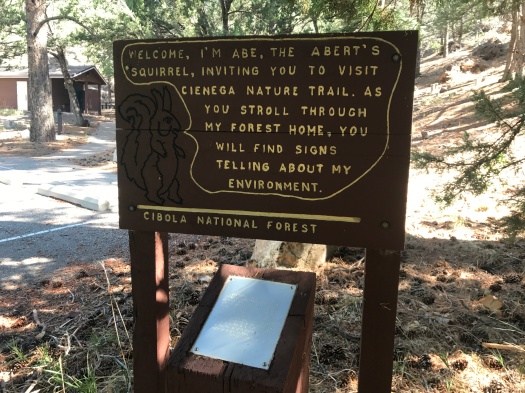
Abe the Abert’s squirrel welcomes you. (Sign below Abe is in Braille.)
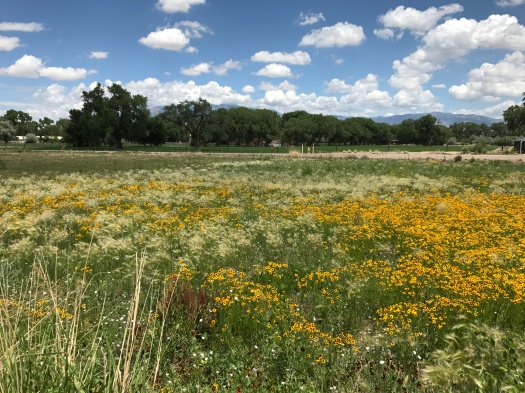
Agriculture and permaculture fields pulsed deep green, a scattering of yellow wildflowers breaking the monochrome.
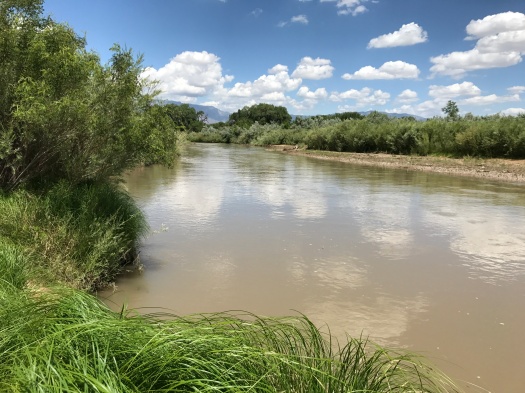
We walked into the bosque, squeaked through a path of rushes and cattails, and came to the fast-flowing river. On a sandbar, barn swallows bum-rushed a Cooper’s hawk till he fled the scene.
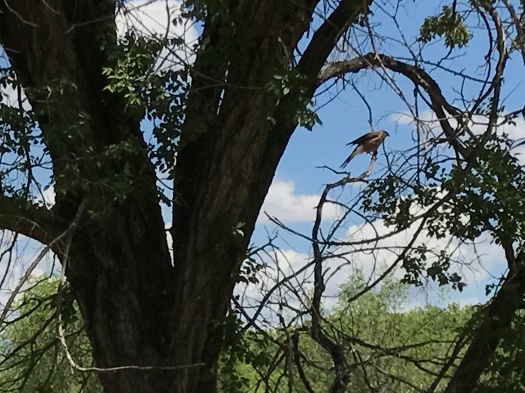
Hawks were everywhere today – bouncing from branch to branch at a fancy house along the ditch, chasing each other up into the evergreens.
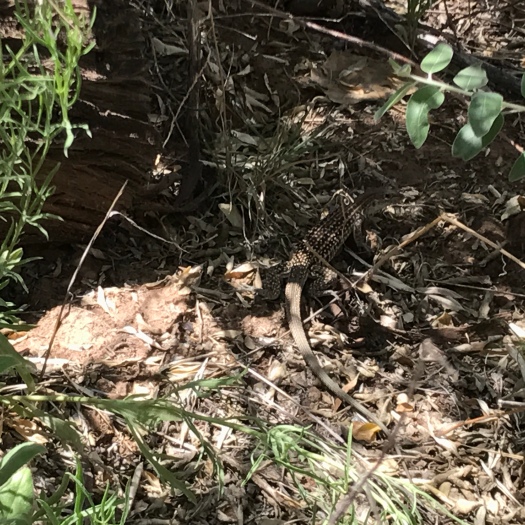
Butterflies cavorted. A striped lizard climbed up a cottonwood trunk and did push-ups.
We had the bosque almost to ourselves this afternoon. The sun beamed down and humidity (humidity!) still hung in the air.
As we walked back to the visitor center, the same hawk bounced from branch to branch at the same fancy house.
We climbed the observation tower to see the color show from a slightly higher elevation and watch wind ripple the grass.
The desert is a miracle in all seasons, but I have spent so much of this dry year longing for color. I’m grateful that I got to soak it in today.
I wasn’t the only one.
Hike length: 3 miles
Difficulty: easy
Trail traffic: light
Wildlife spotted: Cooper’s hawks, herons, spotted and striped lizards, butterflies, dragonflies, grasshoppers, barn swallows, hummingbirds
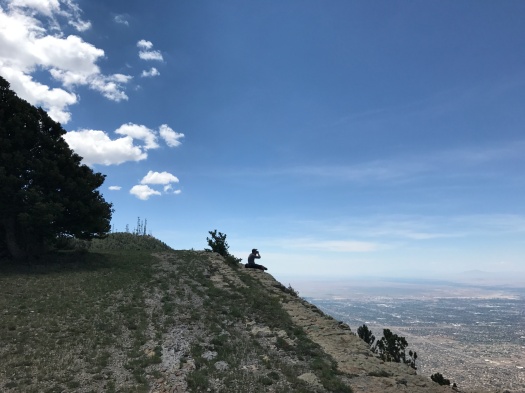
I see a glimpse of clear, open blue through the trees, and I just know there’s a vista spreading out in all directions a few steps ahead. No matter how tired I am, I push on.
A quarter-mile later, I’m still in the trees. My body’s more than ready to turn around and head back. My mind? Please. I see another glimpse of blue, seemingly just ahead, and the cycle repeats itself.
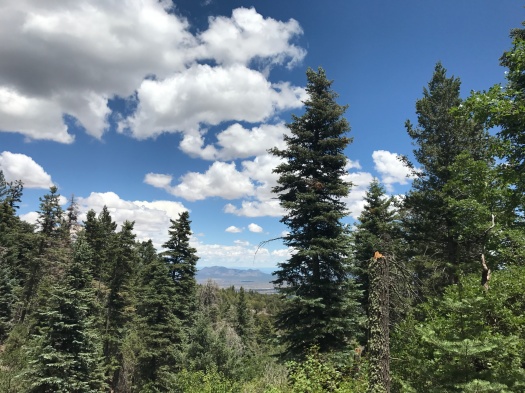
Today this game played out in the delicious-smelling spruce-fir forest at the top of Oso Corredor Trail (that really is an “e” in “corredor,” believe it or not.) I finally gave out at a semi-clearing, right where brilliant green trees crowded close against the trail.
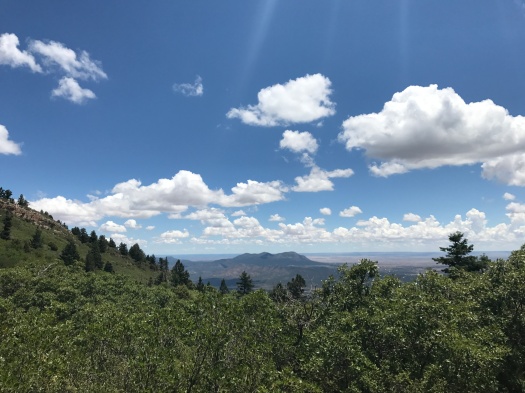
I would have liked to explore that, but the partial view from where I sat was pretty darn good. The grass-green, limestone-capped, rounded peaks that remind me of castles were in view. The birds were singing, a giant ponderosa offered tons of shade, and none of the other hikers and bikers out today had made it this far up this side trail.
As we walked back, we saw two tanagers, brilliant in orange, yellow, black and white, flitting from branch to branch. A fat Abert’s squirrel hustled down the trail in front of us, brandishing its bushy tail.
From Oso Corredor we headed back toward our car on Faulty Trail, which runs practically from I-40 to the Sandia Crest Byway. This stretch of Faulty boasts views of the San Pedro Mountains, Ortiz Mountains and the Estancia Valley below.
We hadn’t meant to wander around this bend in the Sandias today. I had in mind a 2,000-foot climb straight up Cienega Trail to the Crest Trail. But at the junction at the trailhead, we never located Cienega. We couldn’t figure out our mistake, even with the map, but perusing the map later, I think we just should have gone left on Faulty instead of right.
But our mistake was serendipitous. As we walked the last half-mile to our car, I ran into an old friend with her family. We hadn’t seen each other in years, and they told us all about raising two little kids in the East Mountains.
We wondered how many other people we knew were scattered around the Sandias’ 140 miles of trails on a Saturday morning.
You’d probably have to get lost to find out.
Hike length: 6 miles
Difficulty: moderate
Trail traffic: moderate
Wildlife spotted: caterpillar, butterflies, Western tanagers, crow, vulture, dark-eyed junco, Abert’s squirrels, carpenter ants at work
Eerie squeals nearby filled the air. At first I thought a family with toddlers was on the trail nearby. Nope. Coyotes.
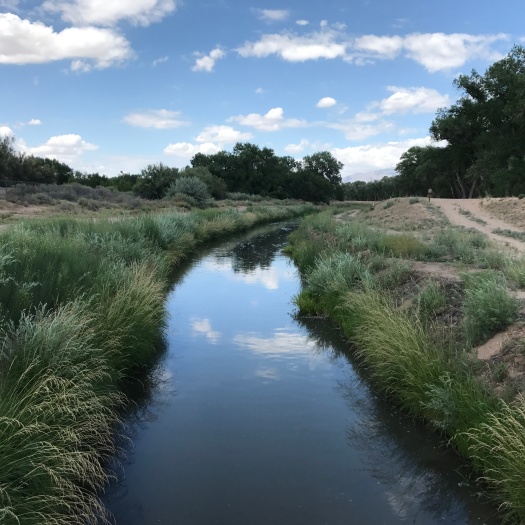
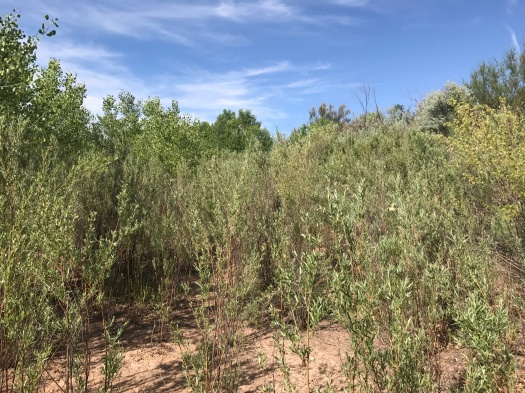
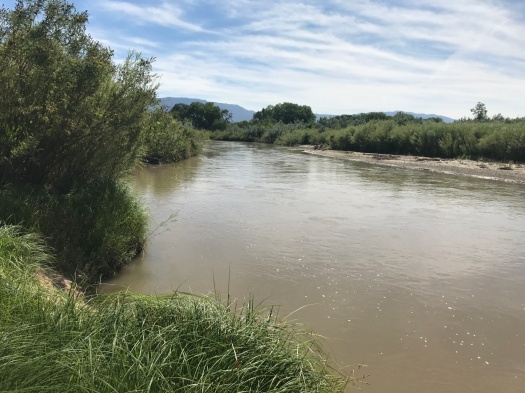
We’d entered the thicket on the hunt for a lightly-trod trail hugging the west bank of the Rio Grande, about half a mile north of the Montano bridge.
Two weeks ago, we’d walked that trail as it glowed with yellow Russian olive blooms, sparkling against the reflection off the river.
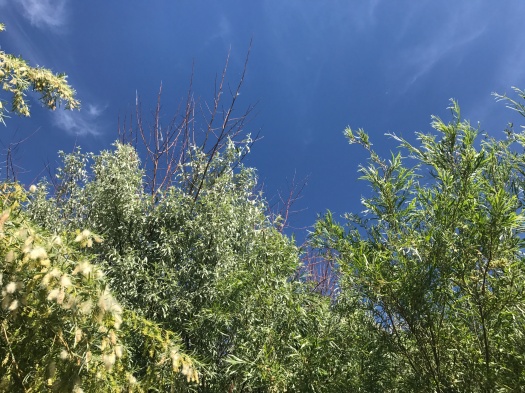
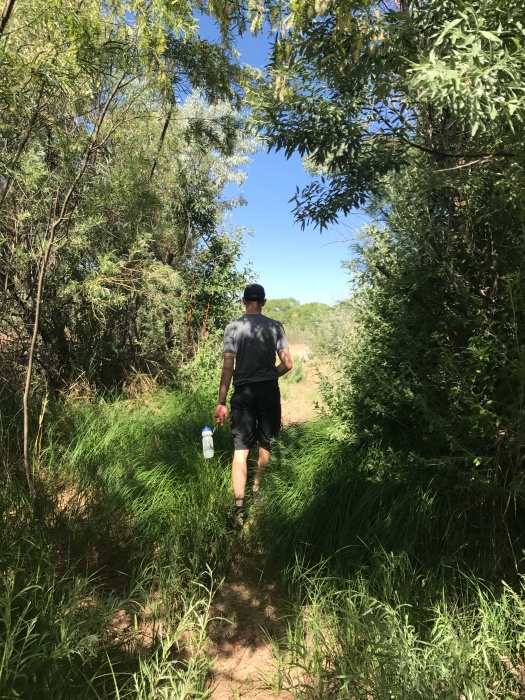
Today we started on a doubletrack baking in the sun. One faint path headed toward the river – and straight into the thicket. We were mere yards from the river, but as we went deeper into the growth, the path faded and the brush closed in, becoming impassable without seriously trampling vegetation (a bad idea anywhere, but especially in the desert.)
It was incredible to realize you could be swallowed up by nature, until your entire vision was blue and green, so very close to one of the most high-traffic roads in town. It was a thing worth celebrating.
But the sun was already beating down at 9:30 a.m., and I wanted to see more than the thicket before the heat became unbearable.
And we did. A cottontail bounded away from us. We heard dozens of lizards skittering in the leaves lining the trail. We saw at least 10 lizards, several striped or spotted, one at the edge of an irrigation ditch, so brown and gray he was barely visible.
We saw a hawk sitting on a cottonwood limb that bent all the way to the ground, then watched it fly away.
We watched a water bird flap over the river.
We saw two turtles basking in the detritus at a spillway, soaking up the sun.
I’ve heard the Rio Grande is likely to run dry through Albuquerque this summer. I’ve also heard water managers are likely to release just enough water that it won’t, in order to keep residents from wigging out at the sight of a dry riverbed.
I wonder how long there will be vegetation in which someone could disappear completely, if the river is allowed to go where nature seems to be taking it this year.
Hike length: 3.5 miles
Difficulty: easy
Trail traffic: light
Wildlife spotted/heard: rabbit, coyotes, dragonflies, grasshoppers, butterflies, hummingbirds, lizards, water bird (heron?), hawk, black phoebe
 Woman Seeks Elevation