There’s still a river in the middle, even now

We drove the steep and winding road even though we thought the falls would certainly be dry.

But as soon as we stepped onto the trail, we heard it: the sound of abundance.

Water. Rushing, gurgling, bubbling water.

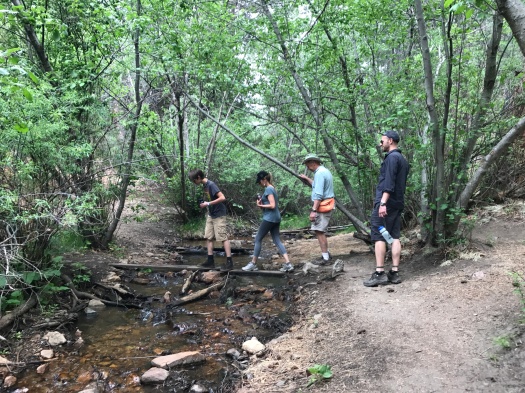
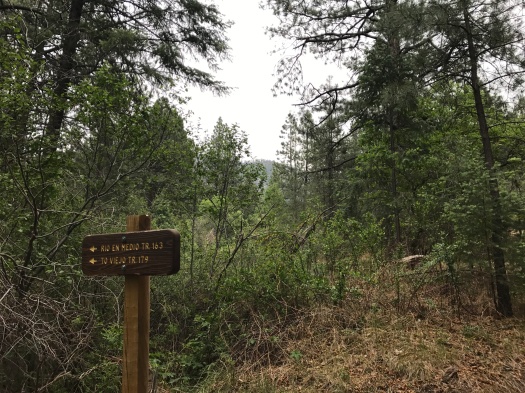
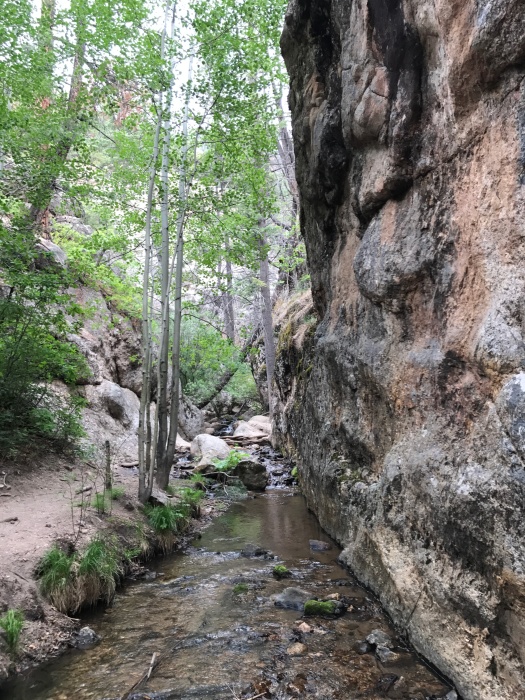
It was a rare cloudy day at Rio en Medio, near Tesuque. The trail wound along a mountain stream, bridged at times by slippery rocks or boards.
IMG_0654

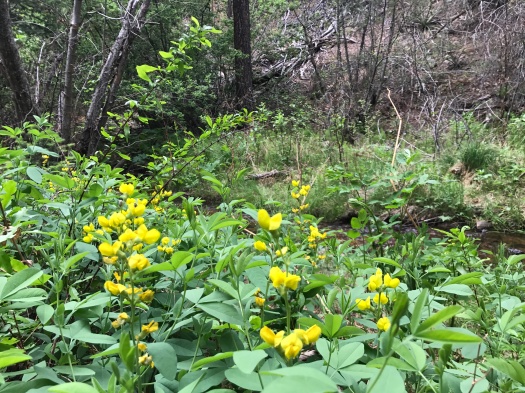
Wildflowers and wild roses, just beginning to bloom at the end of spring, lined the path.
IMG_0648
This field of wild rose will be off the chain in about three weeks.
IMG_0657
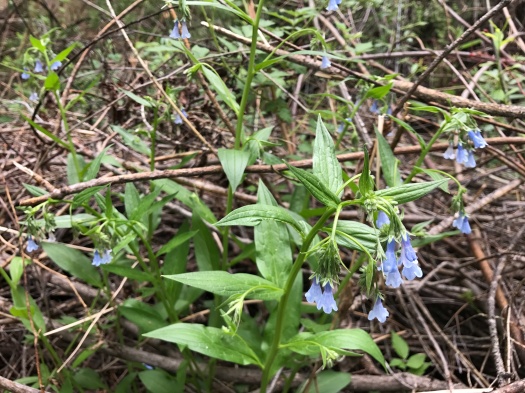
Bluebells?

IMG_0658

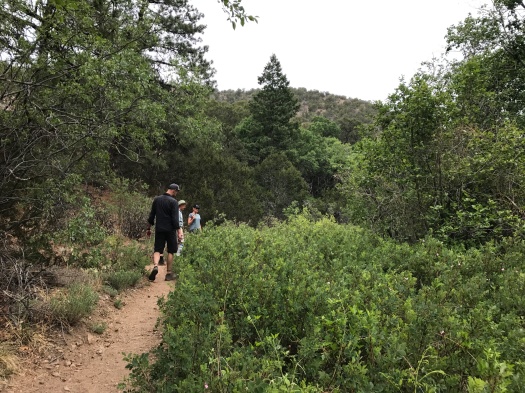
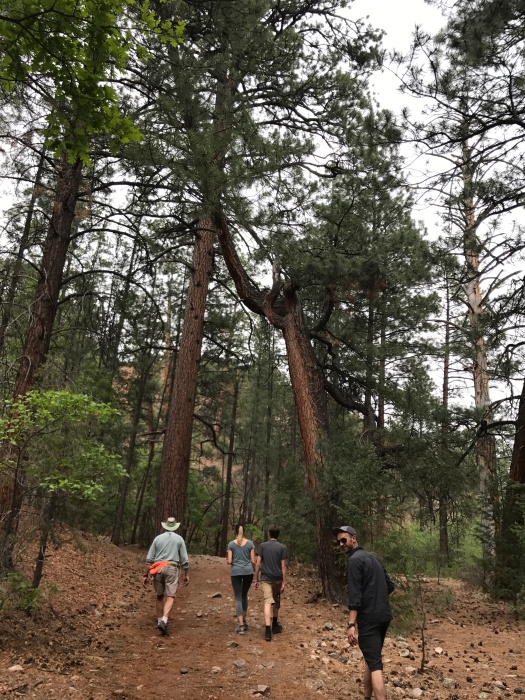
The trail headed gently but steadily up. Five members of our family ranging in age by more than 50 years climbed it. At times we all came to a halt in succession, without discussing it, to look at each other and take a breather, yet we set the fastest pace I’ve done on a hike in a very long time (I’m a slow hiker.)
IMG_0656

IMG_0660

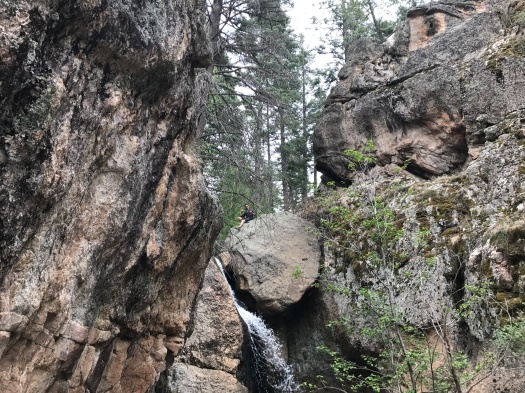
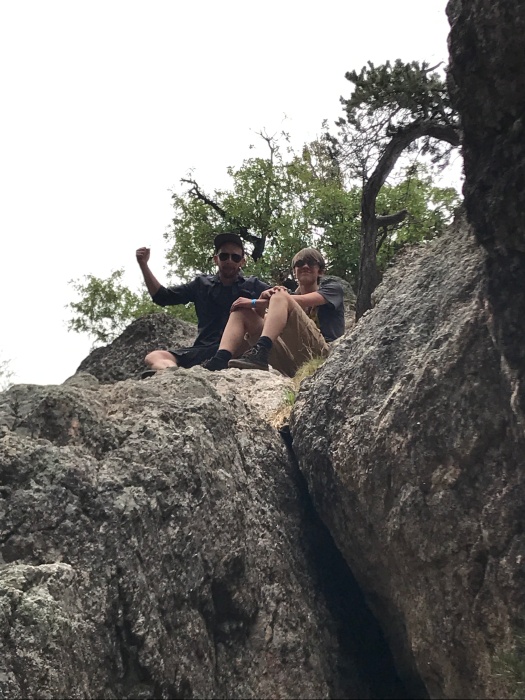
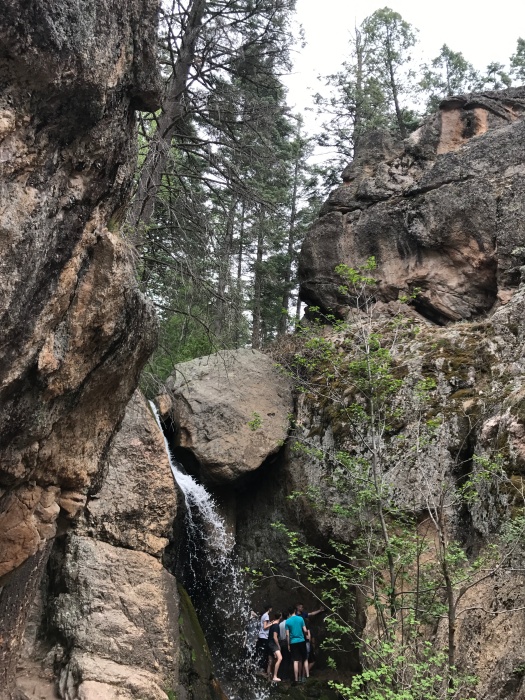
About two miles in, we reached the little canyon leading to the waterfall. We gave each other a hand up and down rocks and tree roots, finding a comfortable seat to watch the falls. It roared down between towering rock faces. We waited out a large group of young people splashing in it while my husband and nephew scrambled to the top of the falls.
IMG_0663
Mid-scramble.

IMG_0665

IMG_0668
Husband offers scale
IMG_0673
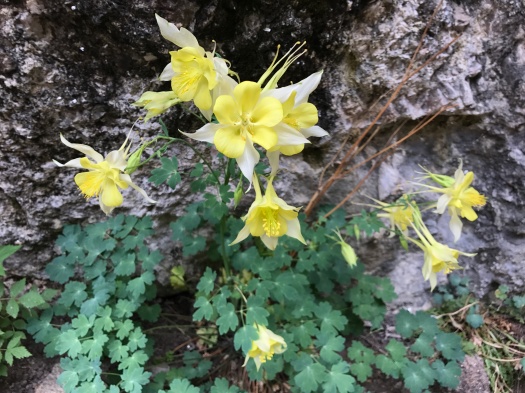
There was a single patch of columbine at the waterfall.

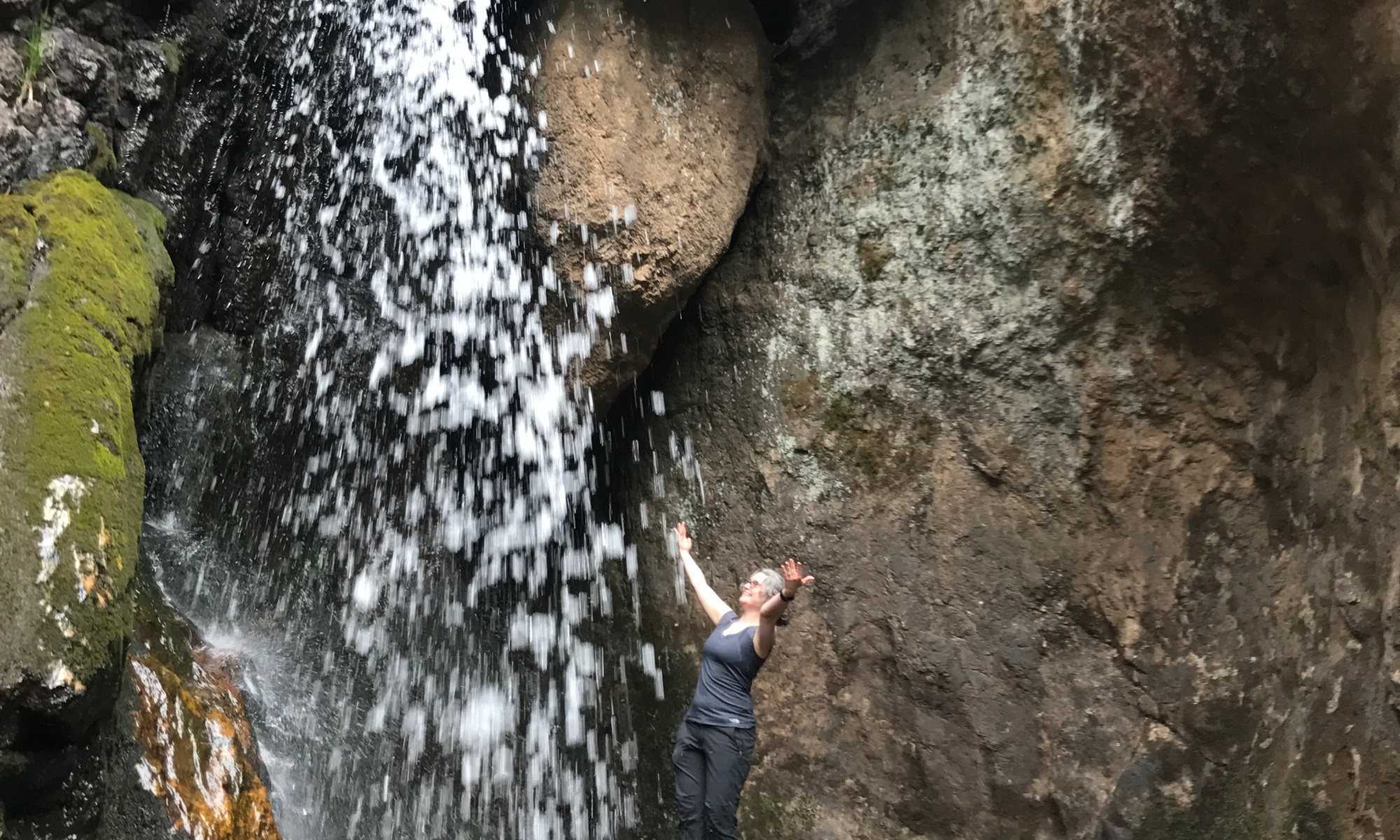
When the traffic cleared, I waded ankle-deep over moss-covered rocks to get behind the waterfall. The water shot out in an intense spray and pooled over my feet, absolutely frigid, despite the 80-degree air temperature.
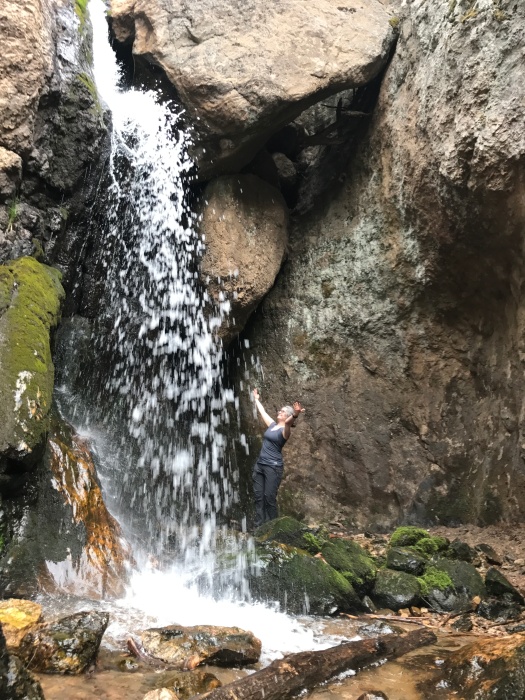
IMG_0680

IMG_0688

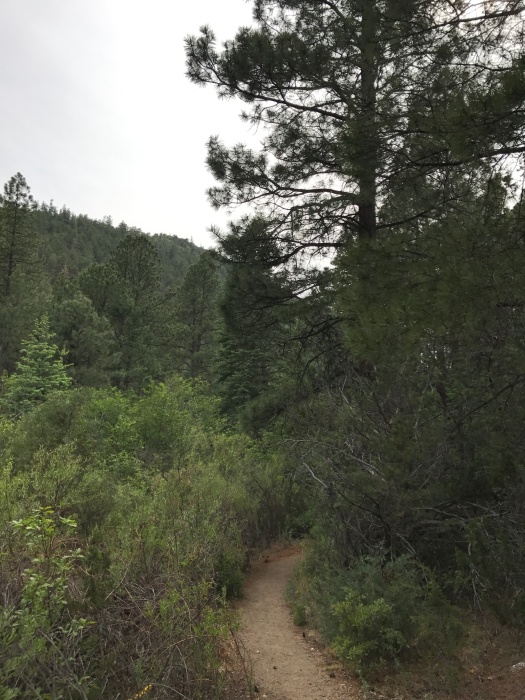
We spent a good 30 minutes exploring at the waterfall, then walked back down the trail. We didn’t stop, but our pace left room to breathe in the blooming trees and bushes around us, to watch black-and-white butterflies and a mountain bluebird.
IMG_0690

I just finished this book. What I learned, combined with the desire to get a picture for this blog, pushed me into the cold water behind the falls, where I didn’t even consider going the last time I visited Rio en Medio.

There with our family yesterday, I marveled at how cold the water was on a warm day. But it wasn’t until last night that I started to wonder what made it so cold, and long to go back, so I could climb to the top of the falls and explore its origin. My husband reported that the stream narrowed as the rocks funneled it over the lip of the cliff, amplifying its power. That helped me understand its force, but not its temperature.

We all know water in the desert is a miraculous thing.

Each time we see it in action, we learn a little more about why that is so.

Hike length: 4 miles

Difficulty: moderate

Trail traffic: moderate

Wildlife spotted: butterflies, Western bluebird, Say’s phoebe (?), crow, lizard or small fish in the stream

TIP! This isn’t an issue many places in New Mexico, but there are mosquitoes at Rio en Medio. I have long used a natural sunscreen that reeks of lemongrass and claims to be mosquito repellent. After returning unbitten while my hiking companions did not, I have to believe it.
 

You have probably never been here in the summer. But you should.

I.
It was because I was going slow that I saw her.
It was a steep section of trail and I was huffing and puffing, lifting one foot in front of the other. I looked to my right and saw something tawny above a rock outcropping fifty feet away. My first thought was “oh shit, bobcat.” Fear began.
Then I looked into gentle eyes and saw a doe, staring right back at me.
We stared for what felt like several minutes, but probably wasn’t. She also looked at my husband, who was about five feet ahead of me on the trail. She slowly began chewing, as if she’d frozen midbite when she saw us. I saw her blink several times.
Then she turned and walked calmly away into the forest.
II.
“These are the mountains everyone knows about and few people really know.”
The New Mexico Wilderness Alliance’s Wild Guide entry for these mountains is mournful, lamenting how far away they are from Albuquerque and how much effort it takes to get to them.
Those are the exact things I love most about them.
I will tell you how to get there.
Get off I-40 at the Tijeras exit and drive south on Highway 337. Squeeze and wind your way up through narrow canyon walls, passing bicycles on your right. It’s dramatic and lovely, but also familiar. You’ve done this before, maybe for a picnic, maybe to reach trailheads in the Manzanitas. Maybe you’ve gotten lost on the trails in the Manzanitas. A lot.
Once the road’s steep climb levels out, you leave behind all that is familiar.
You are in a place densely forested with evergreens, but it is also a high, rolling green valley. Its settlements are named Yrisarri, Escobosa and Chilili.
No one hikes here. Signs along the road say things like “Land Grant Hiers’ Property! Not For Sale!” and “There is nothing beyond this fence worth risking your life for.”
You pass burn scars from the Dog Head Fire last year. Officials came to Chilili to evacuate it. But many people stayed. Those residents of this two-centuries-old land grant would rather risk fire than leave.
This morning, the entire populace of Chilili stands under the back awning of a small church, where the dance of Los Matachines is taking place. The dancers wear tall, dark headdresses and scarves.
South of the villages, the salt lakes in the Estancia Basin glimmer into view on the horizon. White wind turbines turn on a faraway mesa as you turn onto NM 55. You’re almost there.
If you had land here, you’d face off with a fire to keep it, too.
III.
The last time our car climbed the seven-mile dirt road to the trailhead, it was one of a line of dozens of cars doing so. The overflow from the hiker parking lot at the campground spilled onto the road.
As soon as we arrived, it was obvious that it was worth it.
Fourth of July Canyon in the Manzano Mountains is the site of New Mexico’s most spectacular display of fall foliage. We were there several days past its peak, and it was still astonishing. We hiked seven miles and every step was a fresh riot of reds, yellows and oranges.
We didn’t mind the crowds; all the people were happy, nice New Mexican leaf-peeping families, and the crowd thinned after about a mile and a half.
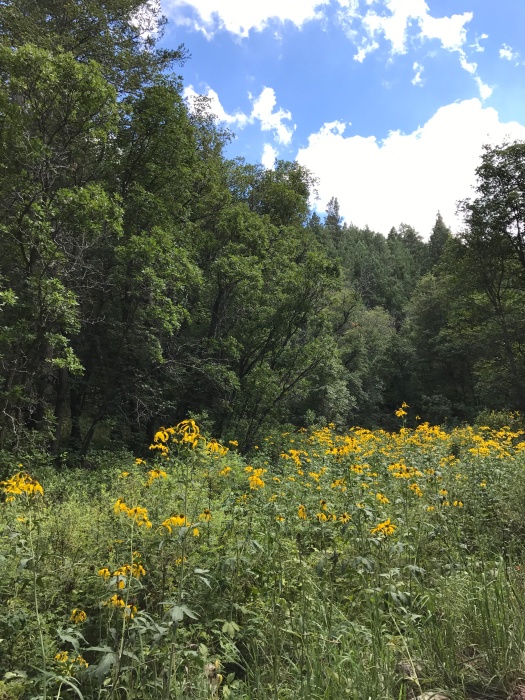
But to be there today, the forest a riot of sunflowers and wildflowers and foliage, and have it all to ourselves was exquisite.
The campgrounds were nearly deserted. My husband said it looked like someone had sent out a memo and we were the only ones that hadn’t gotten it. In four hours of hiking, we didn’t see another soul on the trail. The silence was a living thing. Even with a trickling spring, and later a creek, and pines sighing, and birds and squirrels chirping, the silence was a sound right there among the rest.
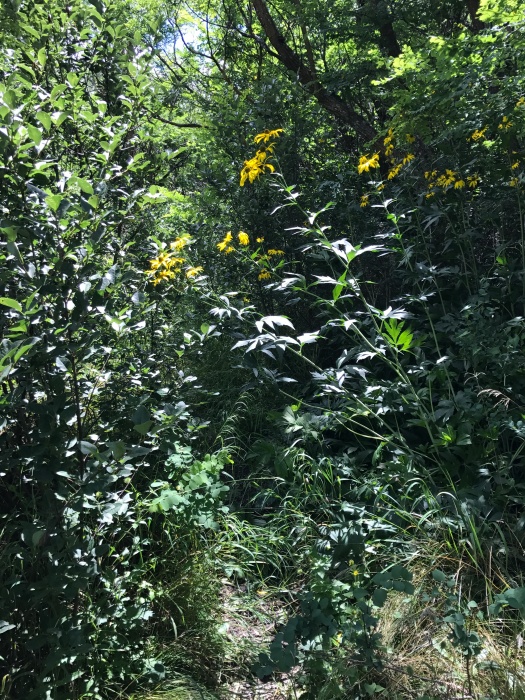
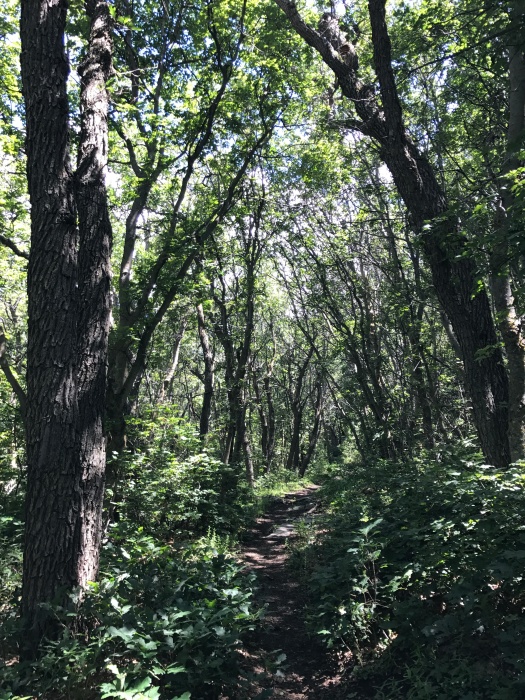
The forest is so lush – especially today, fresh off a rain last night, parts of the trail still damp – that at times it’s like you’re in the jungle, and daylight is far away. At one point, near the top, the trail is so overgrown with spiky honey locust that you can’t see your feet beneath you as you push through it.
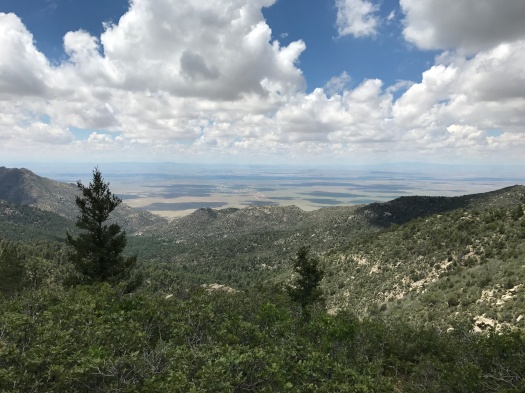
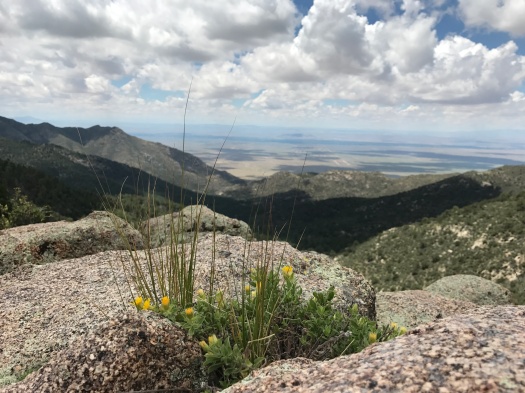
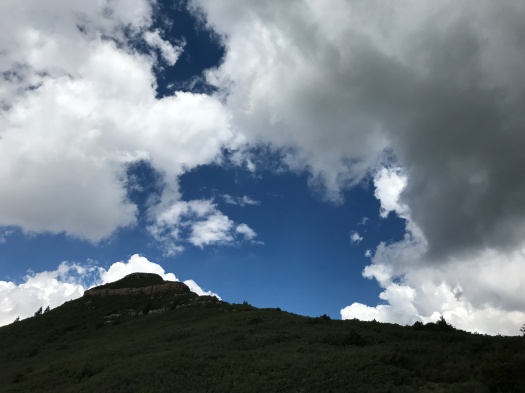
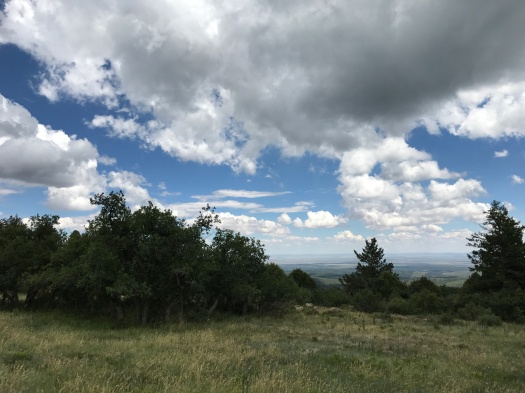
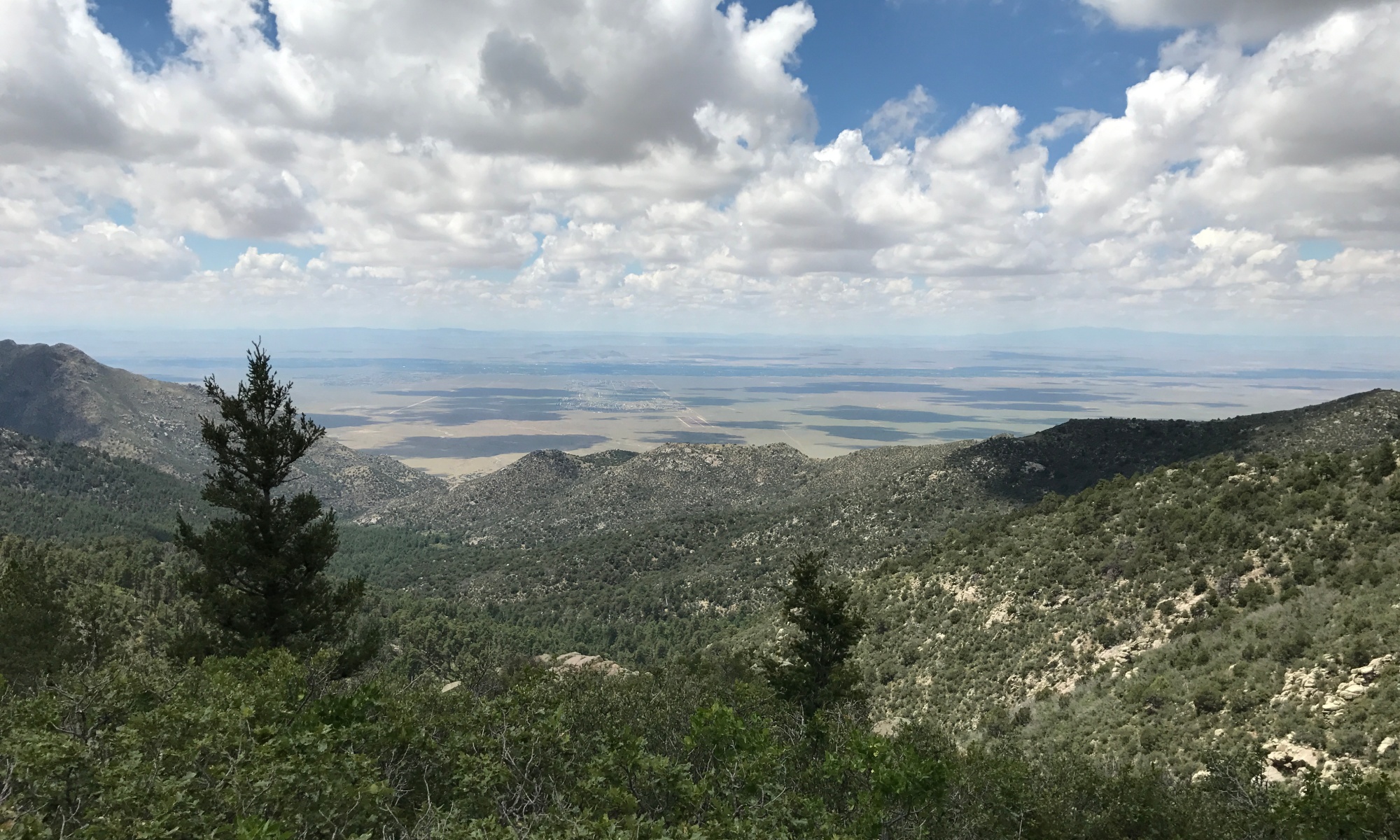
Then glimpses of the very tops of the peaks above, or the brilliant blue sky, or the fluffy clouds, or the salt lakes, or the rolling valleys, remind you where you are and how you got there.
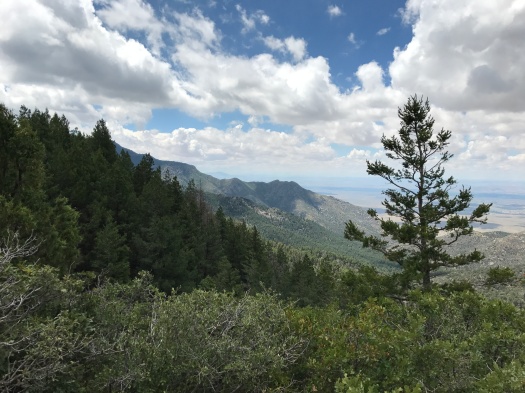
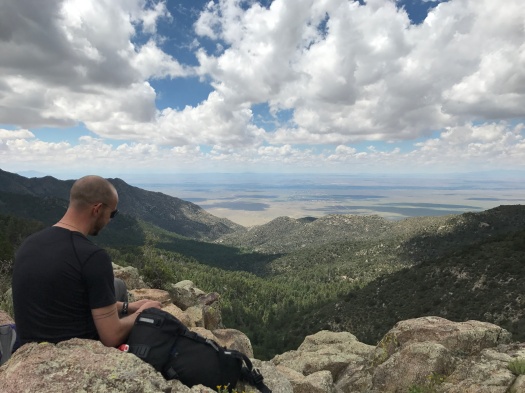
At the overlook at the top, a cool wind blew with ferocity and the clouds scuttled by fast, their shadows dotting the plain of Los Lunas and Belen far below.
A thousand feet below that, we closed the loop of this hike by walking along the forest road we drove in on. That’s where my husband spotted another deer and pointed. He was an adolescent, with small antlers, still growing. He watched us for a moment from a ridge across the creek.
We’d never been that close to a deer on the trail. The solitude of Fourth of July Canyon in August allowed us to experience it – twice.
All this hike has to offer could be yours and yours alone, for the day, or the night, if you go in the summer.
Do it.
Hike length: 6.5 miles (this spectacular route, and the tip to do it in summer, came from “60 Hikes Within 60 Miles of Albuquerque” by Stephen Ausherman)
Difficulty: moderate
Trail traffic: none
Wildlife spotted: doe and buck, woodpecker, jay, bluebird, vulture, crow, eagle (we think), squirrels, prairie dog (we think)
IMG_8280
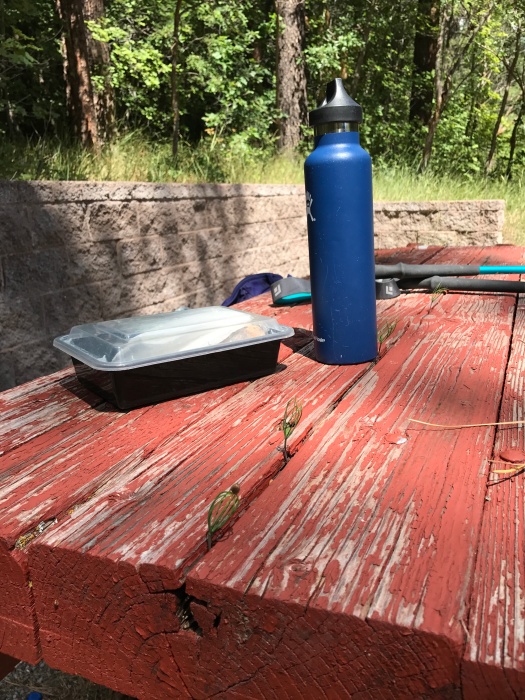
Even the picnic tables are green…check out the sprigs growing out of them!
IMG_8281
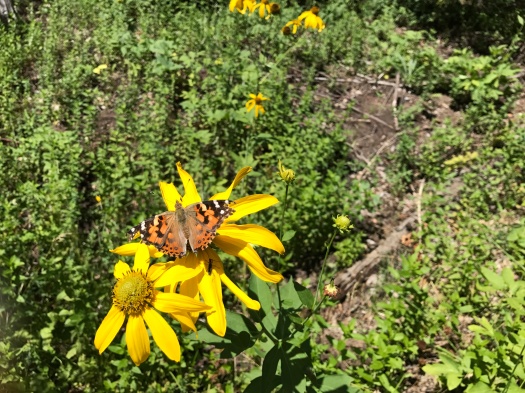
You weren’t gonna get out of a hiking blog about the Manzanos without a picture of a butterfly on a sunflower.

IMG_8297IMG_8306IMG_8307

IMG_8310
Dead center below: Los Lunas, home of a Facebook data center under construction.

IMG_8316IMG_8320IMG_8323

IMG_8325
High mountain meadow
IMG_8327
Welcome to the jungle…

IMG_8328

IMG_8329
Field of sunflowers along Forest Road 55