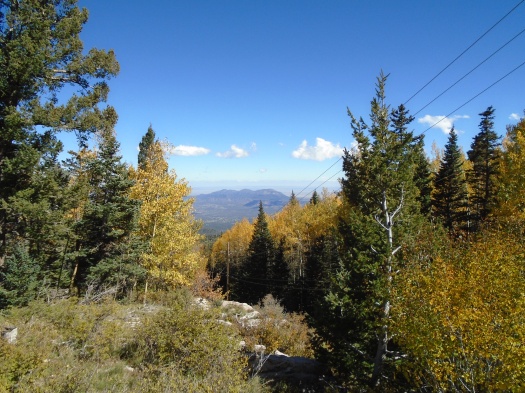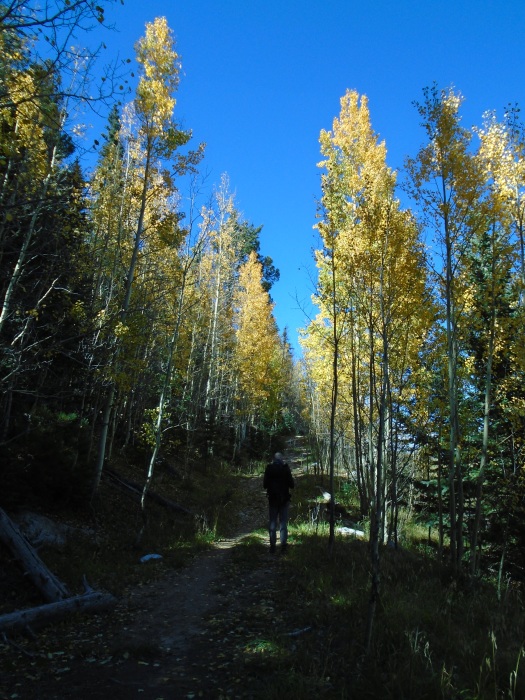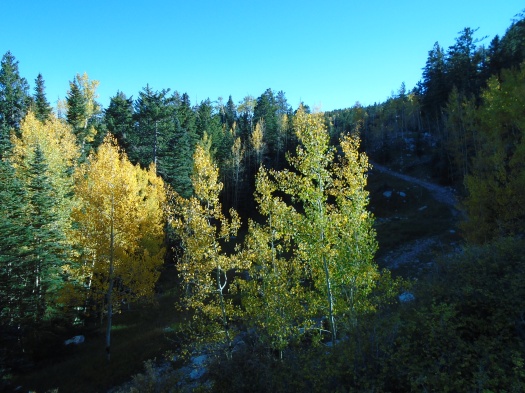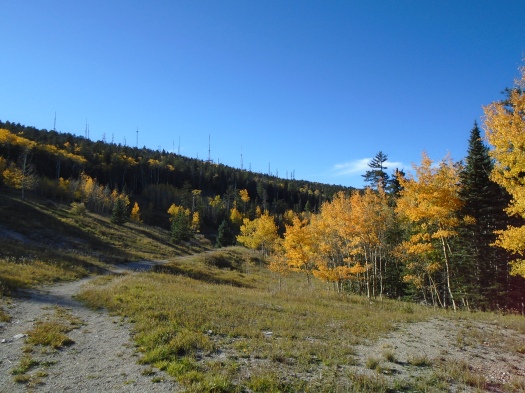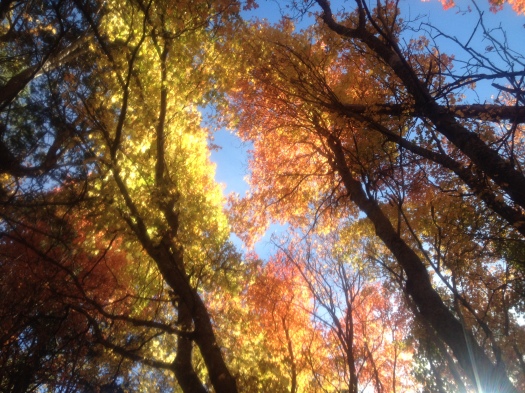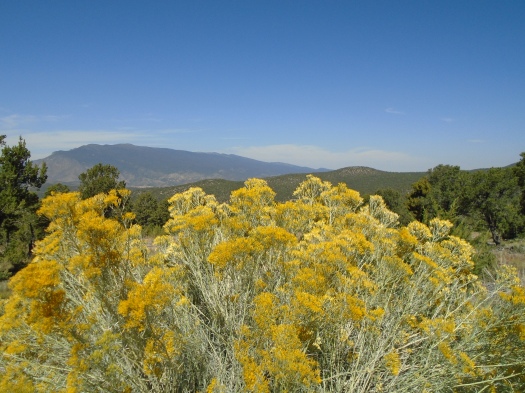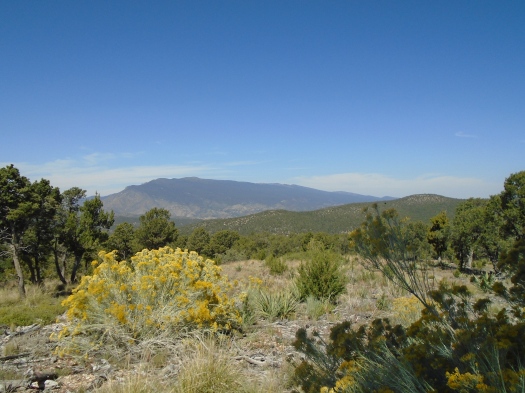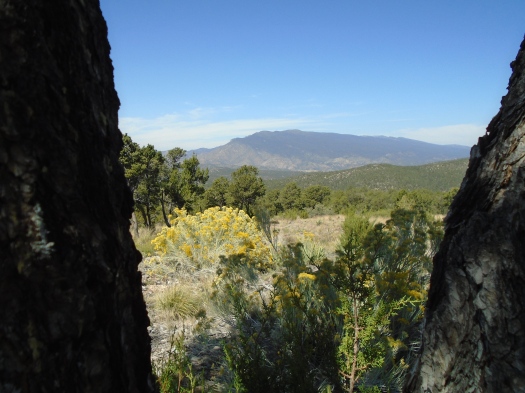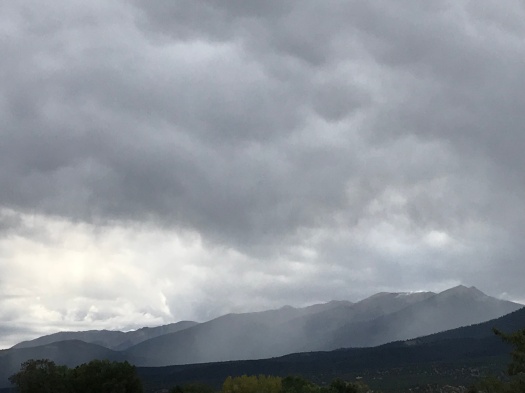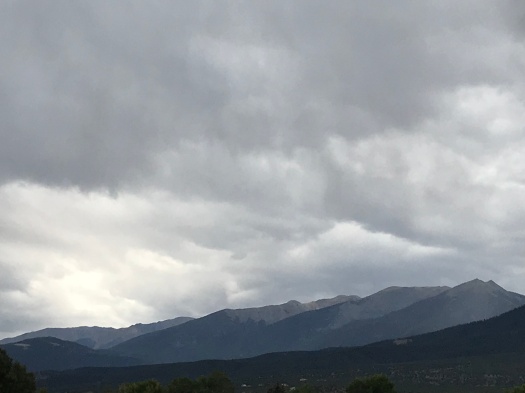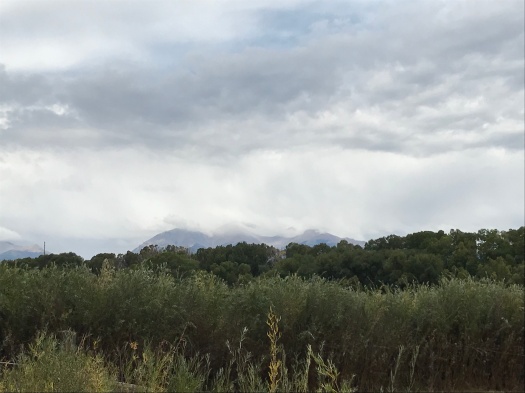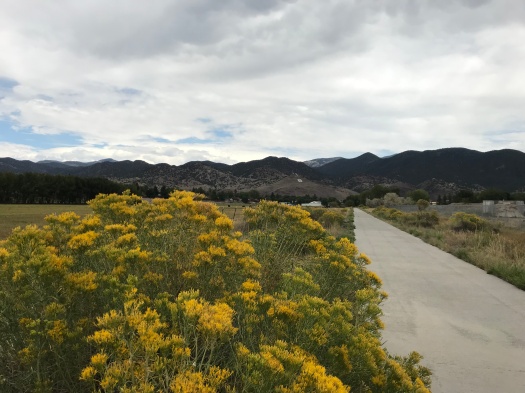
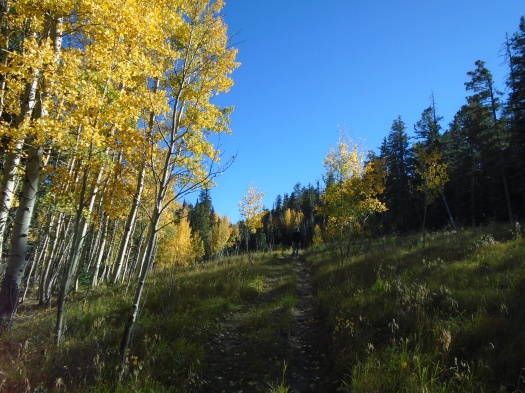
Fall is fully deployed above 10,000 feet

DSC00470

We got a running start on this hike.

In the parking lot, we ran after first my husband’s hat, then mine, then our parking pass, as a fierce, cold wind tore them away.

I wondered if we should just walk up the forest road behind us, if it would be more sheltered from the wind.

But the blue sky and golden leaves beckoned, and the scent of spruce enticed us. We crossed the highway to the Ellis Trail.

We were last here, briefly, three months ago, when it was 25 degrees hotter.

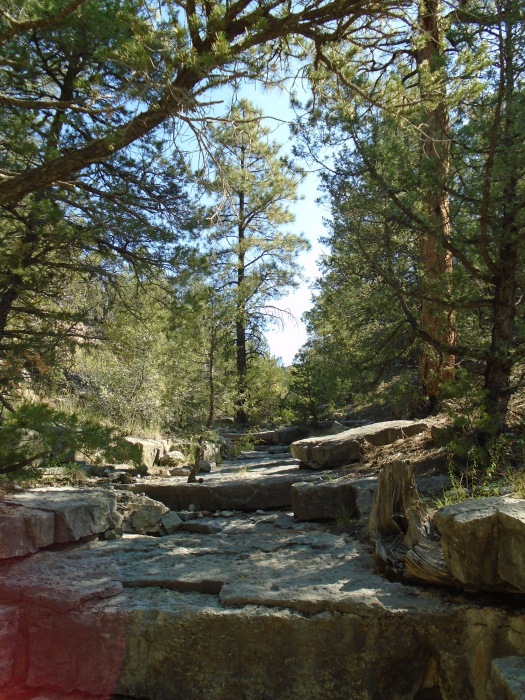
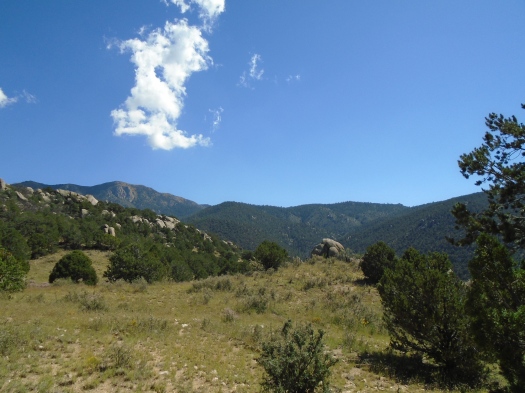
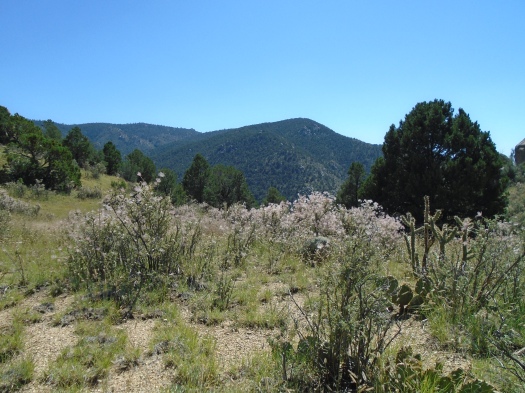
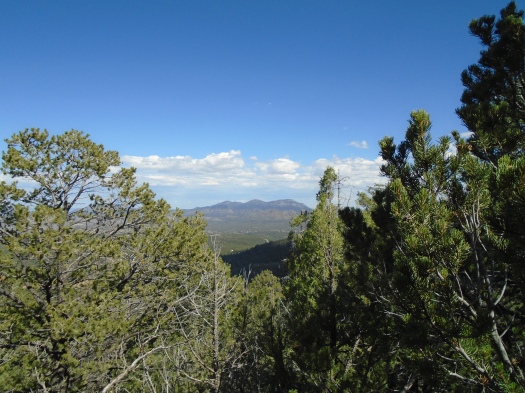
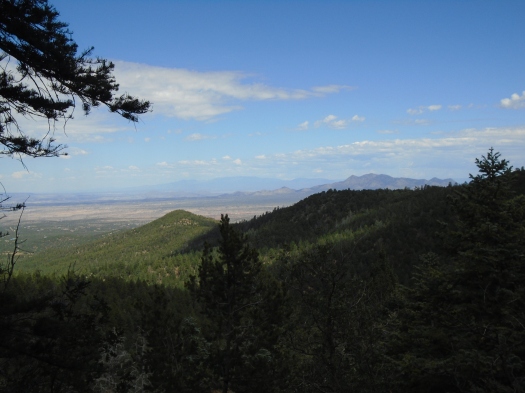
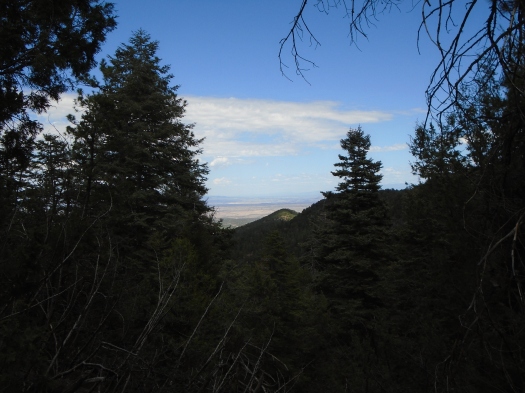
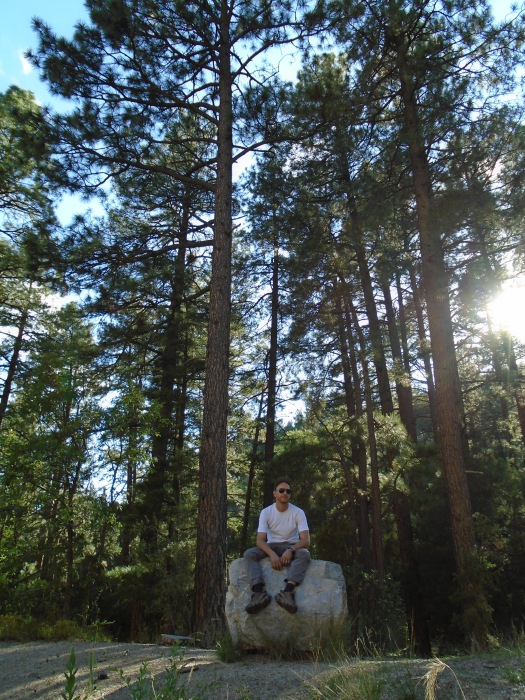
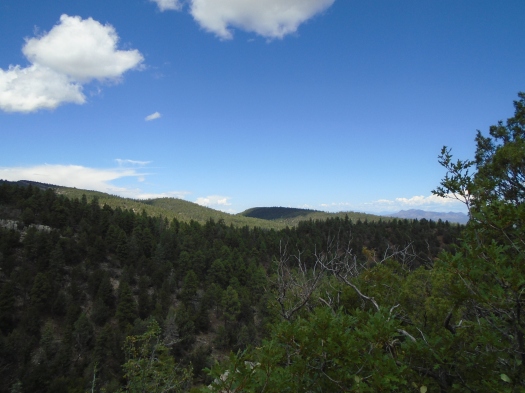
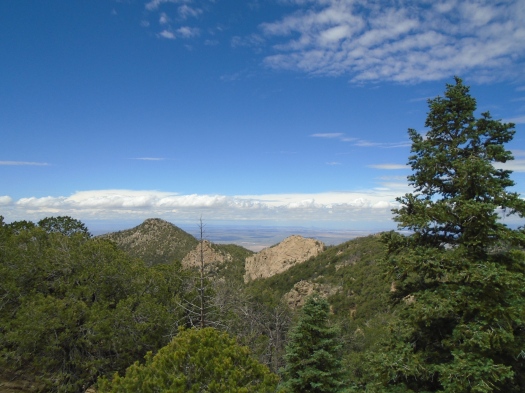
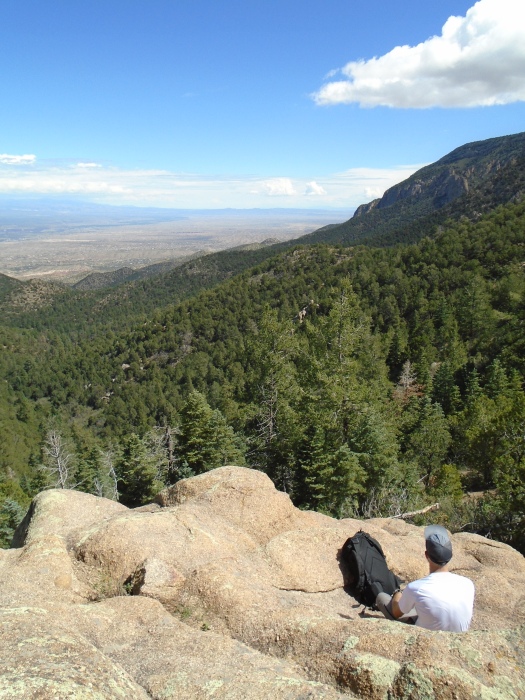
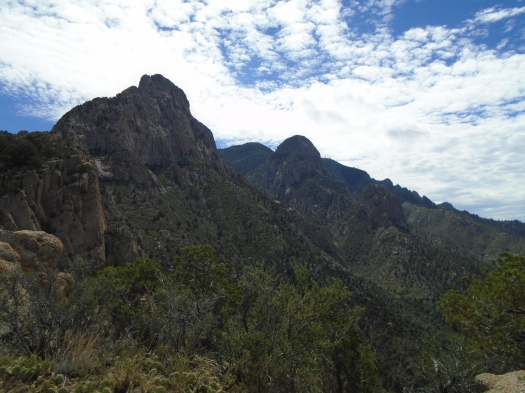
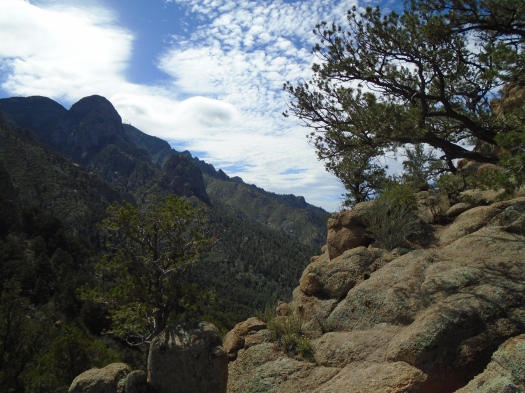
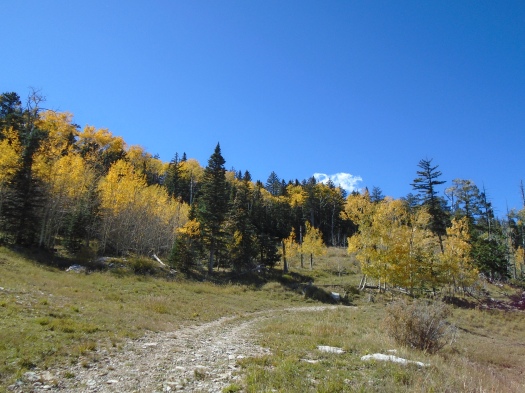
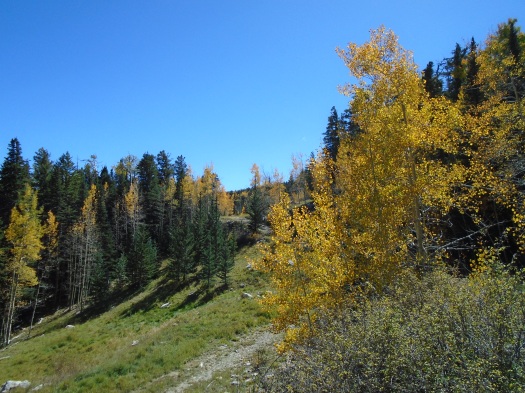
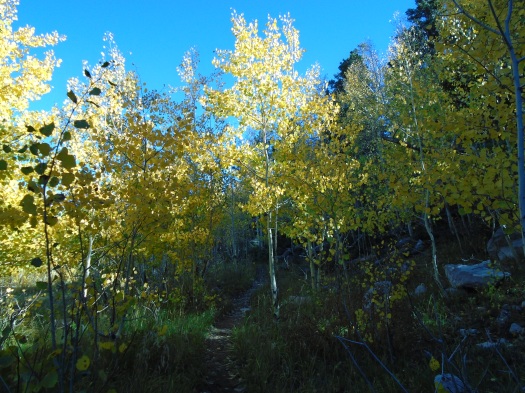
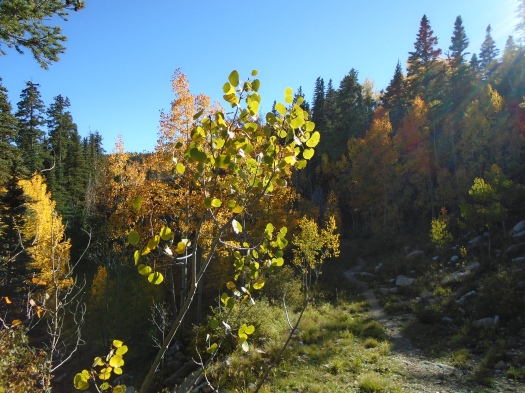
The rocky old jeep road wound over steep hills at 10,000 feet elevation. Crisp fall sun spilled through aspens and evergreens, ridges stretched away green and yellow. The rock underfoot went from limestone shelves to travertine crumbles and back again.
DSC00449

DSC00451

DSC00454

DSC00455

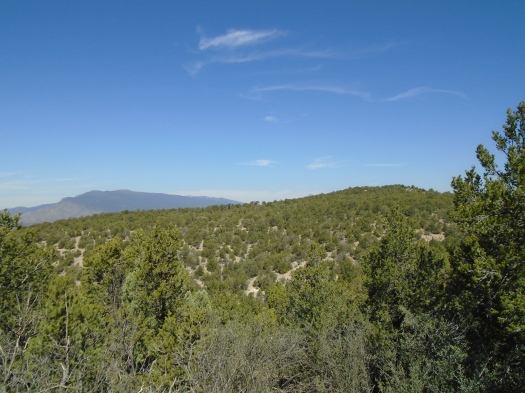
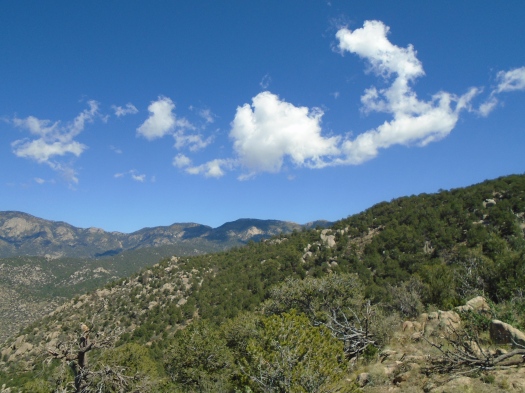
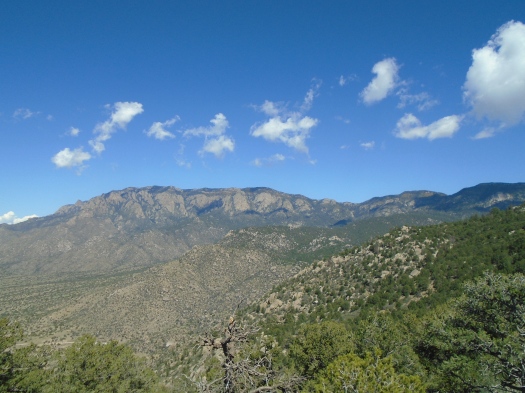
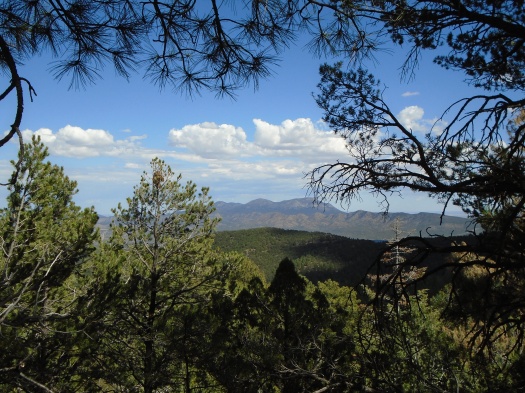
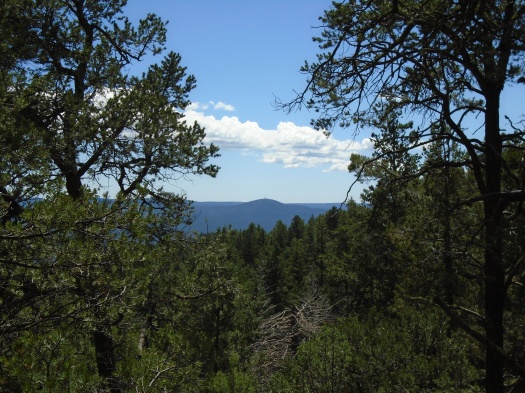
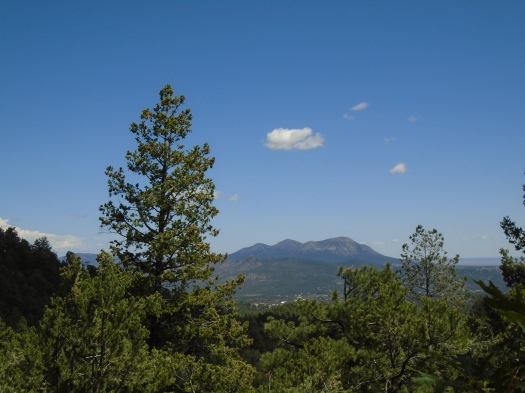
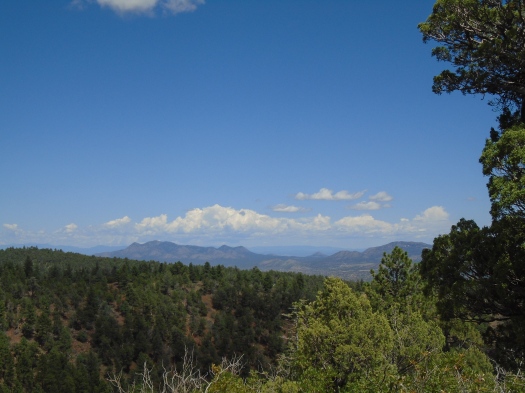
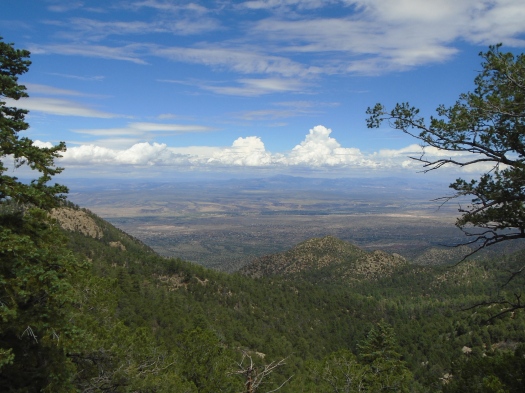
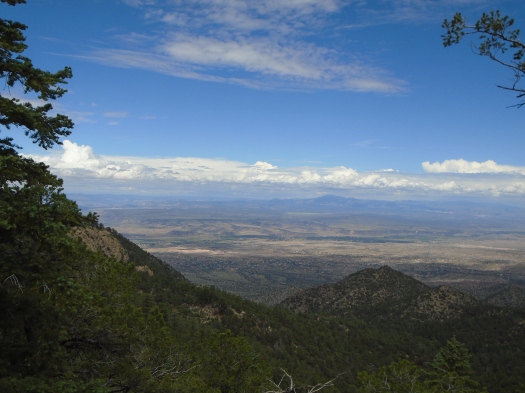
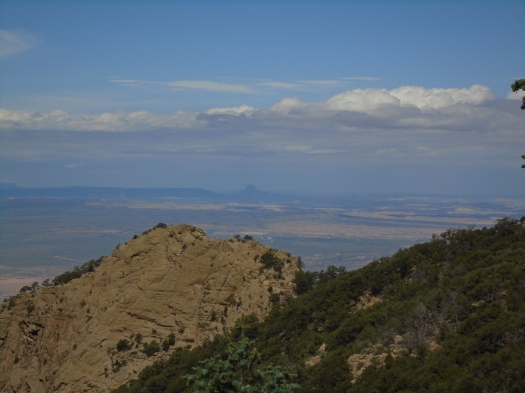
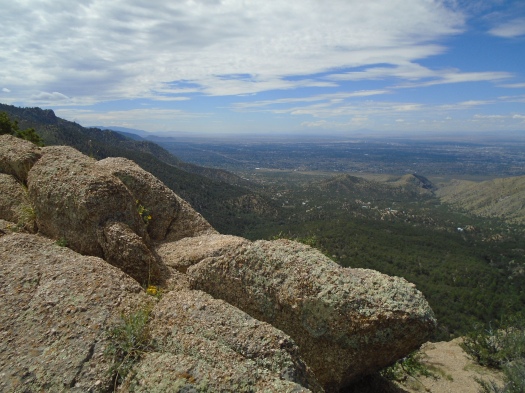
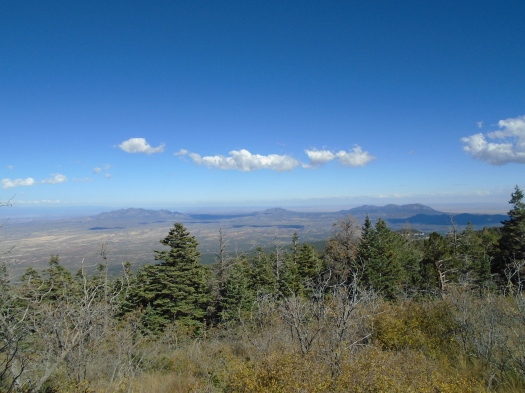
Sometimes the trees dropped away to reveal the San Pedro Mountains, the Ortiz, the Sangre de Cristos, even the Jemez, looking like it was right in front of us. The air was the clearest I’d ever seen it on the crest after two storms this week cleared out some dust.
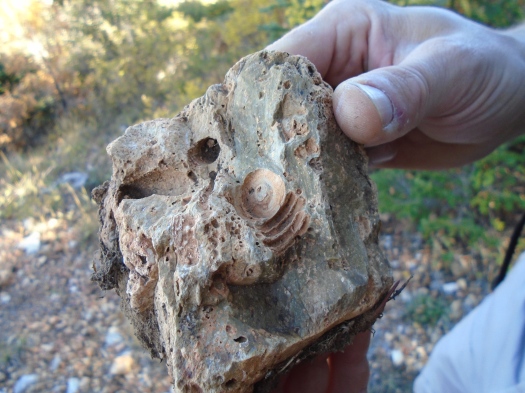
DSC00463

DSC00464
Fossil in travertine

The day changed constantly, moving as we did. In the sun, even below 60 degrees with a brisk wind, sweat came quickly. In shade, I gave thanks for my hoodie. Lemon-yellow butterflies danced along the trail, not yet ready to accept the season’s change.
DSC00466

DSC00473

DSC00478

DSC00480

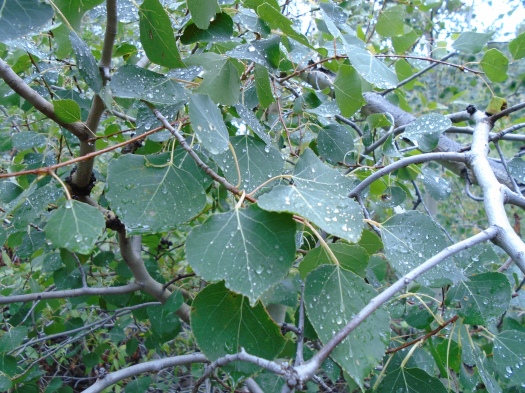
Fall in New Mexico sharpens all the colors to a blade. The sky deepens to a seemingly impossible blue, bringing out the blue cast in the spruce needles. Aspen leaves pulse golden.

The air is clean and clear, perfect against your skin. The sun’s rays, so brutal I avoid hiking in direct sun for half the year, slant and soften. They become something to seek, not hide from.

Ellis Trail in October is an exquisite place to seek them.

Hike length: 7 miles

Difficulty: moderate

Trail traffic: light to moderate

Wildlife spotted: towhee, kingbird, hawk, vulture, caterpillars, butterflies; three mule deer on a ridge on the Sandia Crest Highway
If you want to see the leaves changing color around Albuquerque

IMG_9089
Valle de Oro
Here are some great places to do that.
Albuquerque isn’t regionally famous for its fall colors like Santa Fe is for its aspens, but we have some exquisite fall colors well worth the hike to see them.
I’m only including here places I haven’t seen on other local lists yet this year.
If you have two hours
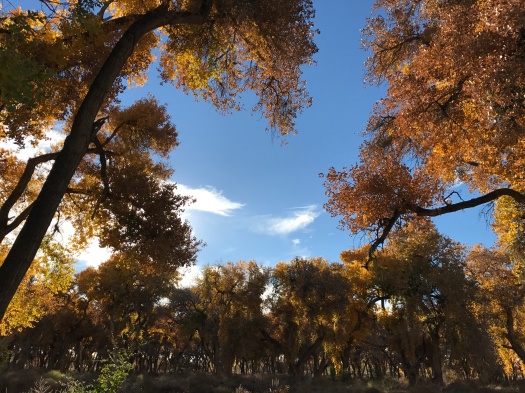
Anywhere with cottonwoods is going to be lovely in mid-fall, but for one of the best leaf shows in town, head south on Second Street to Valle de Oro, the Southwest’s first urban wildlife refuge, in early November. Towering cottonwoods glint yellow and gold along the Rio Grande, and sandhill cranes burble in the fields. Last year we ran into a visitor from San Antonio exploring the trails who said Valle de Oro was cooler than anything she’d seen in Santa Fe. Score.
If you have half a day
The Sandias have aspens too, guys. Lots of them; we could already see them beginning to turn from far below in Embudito Canyon late last month. Drive up the Sandia Crest Highway and hop out above 8,000 feet for a hike in our own aspen glades. I was planning to head to the Ellis Trail to see the aspens, but then I saw a Forest Service post helpfully noting that the area around Del Agua Overlook on the Sandia Crest has the largest aspen stand in the range. And, as we know, Del Agua Overlook also overlooks another compelling sight: the dome topping The Needle. You can’t lose.
IMG_8454
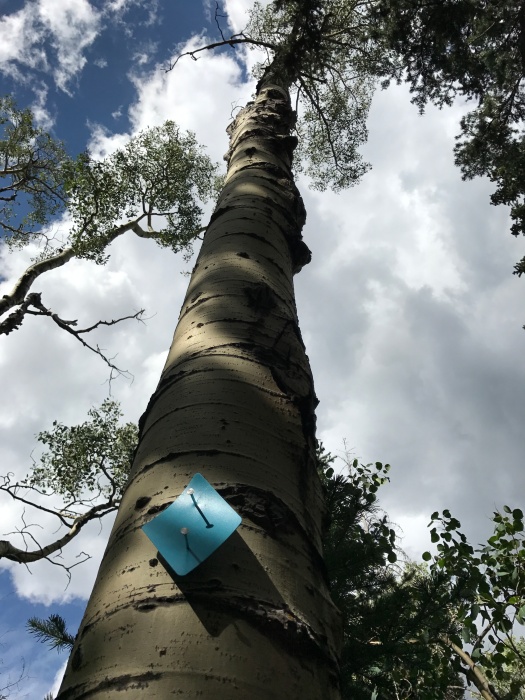
10K Trail blaze on an aspen
If you have the better part of a day
The drive from I-40 to the Manzano Mountains has some of the best scenery in the area. And when you get there, you’re in the Manzanos, which is about as good as it gets. If it’s mid-October, you’re probably in Fourth of July Canyon, named for the fall fireworks show put on by an impressive stand of sawtooth maples. This is every imaginable shade of red, yellow and orange (I swear I even saw pink) in one of the most beautiful mountain settings in the region. Even if you only make it a quarter-mile, you’ll see eye-popping colors. But if you’re up for a six-to-eight-mile hike, Stephen Ausherman’s “60 Hikes Within 60 Miles of Albuquerque” has the route you want. You’ll navigate four trails and a forest road, a spring, Mosca Peak, canyons and a grotto. If that’s still not enough, come back in the summer, when you’ll have it all to yourself.
IMG_6375

The clearing that gave me another view on the Manzanitas

DSC00440

Sometimes you find the spot, sometimes you don’t.

I wasn’t sure it was a clearing. It looked like one, but so often something does, through the trees, and isn’t.

Before I realized it, my husband had scrambled off-trail to check it out.

“I think you’ll like it up here,” he said from above.

He was right.

The first thing I saw when I emerged from the trees was a single aspen sapling, brilliant green and yellow, leaves tossing in the breeze.

Next, a waist-high chamisa bush glowing yellow, butterflies and bees gamboling around it.

Then I turned around. The east side of the Sandias loomed blocklike in front of me, the ridges we’d just traversed rolling away before them.

DSC00442

DSC00437

If you can find a high enough ridge in the Manzanita Mountains, you’ll see that view. But it’s rare to see as much of it as we did in that clearing, one of the most open and angled spots we’ve found in the range.


Before we reached that spot, we solved a mystery.

We’d started in the rock garden and mountain-bike haunt of Otero Canyon.

DSC00422

DSC00423

As before, we hit Department of Defense signs less than two miles in, warning us not to go any further.

This befuddled us, since the Forest Service labels that trail as nearly four miles in length. Then I realized the Forest Service mileage must reflect taking the trail out and back, though it isn’t marked that way.

There was only one thing to do: proceed up the trail called “Gnasty with a G.” It was the first time we’ve experienced this trail’s full steep and rugged length, and it lived up to its name.

A left turn on a sunbaked ridgetop put us on a loop back to our car via the Blue Ribbon Trail. The Blue Ribbon Trail is clearly one of the less-traveled in the Manzanitas; the frequent cyclist traffic stopped.

That’s where we found the clearing that gave us a new view on the Manzanitas.

DSC00433

Hike length: 6 miles

Difficulty: moderate

Trail traffic: moderate, none on Blue Ribbon Trail

Wildlife spotted: hawk, crows, butterflies, dragonflies, jays, lizards

Embudito Canyon: Judgment Day

DSC00413

“SHE doesn’t have any kids!” the child across the parking lot exclaims.

Et tu, kiddo?

I’m judged daily by adults for my choice not to have kids, but this is the first time I’ve heard it from a 4-year-old.

“Maybe she has kids,” the child’s dad says. “Maybe they’re just not here.”

Um, I CAN HEAR YOU.

How would you feel, single dad, if I hollered “Maybe HE has a (husband/wife), THEY’RE just not HERE.”

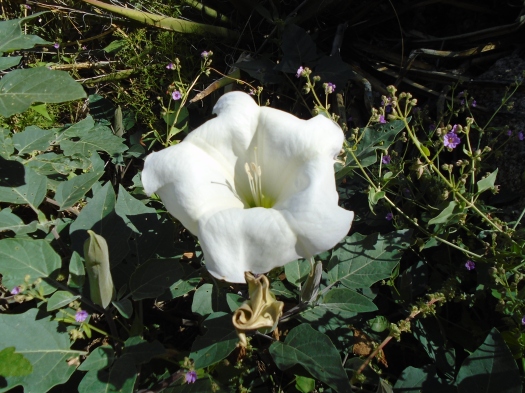
We step onto Embudito Trail behind the family. The 4-year-old immediately begins yanking datura flowers off their vines.

I see teaching your children Leave No Trace ethics isn’t part of your repertoire, Pops.

DSC00394
Datura (before the kid got there)

We quickly pass the family as an illegal drone buzzes overhead. I can’t wait to leave the voices behind.

Of course I know the kid and the dad were just blurting out the first observations that came to mind, nothing more than that.

But the last place I want to hear a comment about my reproductive choices is on the trail.

That’s why I’m here. If I can go far enough up, or out, all the voices offering unsolicited comments about my being fall away.


Embudito Canyon begins wide and sunbaked, green ridges rising steeply away on either side, blue sky pulsing above.

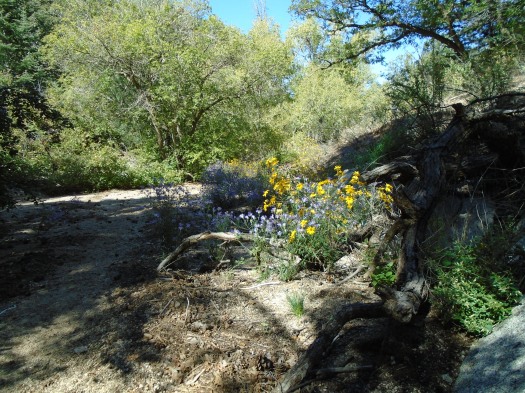
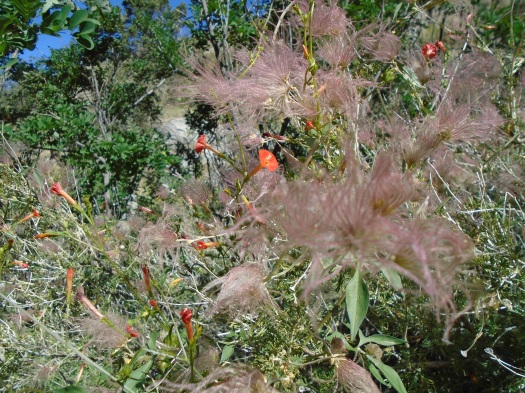
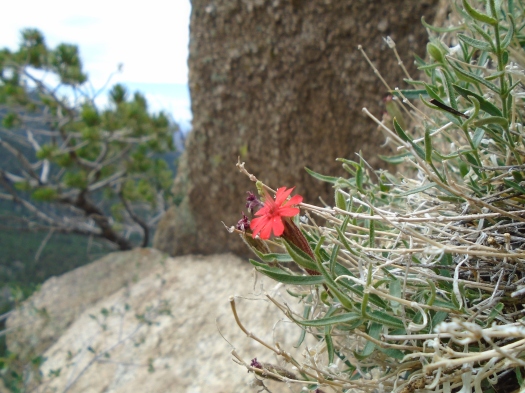
Wildflowers riot: sunflowers, aster, Apache plume. All fed by Oso Spring, a trickle we cross over and over as we ascend the canyon’s throat.

DSC00400DSC00397

DSC00391
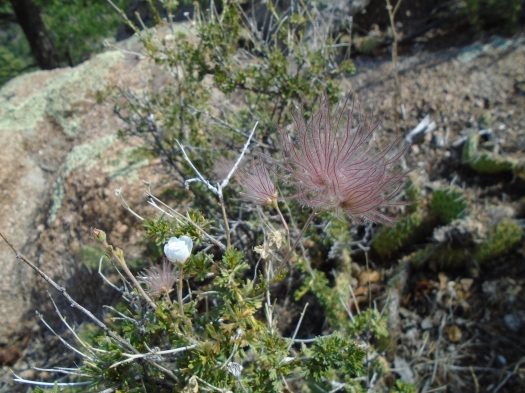
Apache plume+ trumpet vine (?)

Layers of limestone mount under our feet, pushing us up to the next ledge, the next sand landing. Lots of spots require some upper-body work or a lift from above. It’s a difficult hike.

As the canyon narrows, cool stone and vines surround us. Evergreens begin to appear. Boulders become more frequent.

We ascend a very long arroyo through thick pines. After what seems like forever, we spot endless blue sky through the branches ahead. A ridge.

As we eat lunch, two giant hawks cross overhead, keeping close to each other. The trail leads us higher on the ridge, opening up views of the Sandia Crest, where the aspens are beginning to turn yellow. We glimpse a perfect view of White Mesa across the Rio Grande Valley.

Enormous boulders abound. We detour off-trail for some bouldering. My husband’s more comfortable with that than I am, but I make it two-thirds of the way to the top of one boulder cluster.

DSC00406

When we rejoin the trail, we realize it’s heading down. We surmise that we accidentally left the trail when we climbed that arroyo, and rejoined it heading back the way we came, but on a side path, one of the many that crisscross the canyon walls.

Though we’re below 8,000 feet, it looks almost subalpine up here; high meadows of wildflowers surrounded by mountains, more boulder thickets.


DSC00421DSC00420

DSC00415

I’m enjoying the views when I notice that the tree cover has ended, the cacti have multiplied and the grade of the trail has tilted.

Rather than rejoining the canyon, we’ve ended up on a path that will take us down those steep, sunbaked ridges we saw from the canyon’s mouth.

It’s a long trip. The sun’s relentless. I stumble constantly. I fall several times. Once, when I get back up, I realize every careful step is causing me pain.

I have a cactus needle embedded in the back of my thigh.

I try to pull it out through the fabric of my pants. Not happening.

Looking around to make sure the coast is clear, I lower my pants just enough to reach for the needle. Still not happening.

As we carefully balance on the steep slope, me half-pantless, my husband pulls the needle, plus five more, out of my leg.

And there wasn’t a soul around to judge us.

Hike length: 6 miles

Difficulty: difficult

Trail traffic: moderate (light above midcanyon)

Wildlife spotted: lizards, butterflies, hawks, blue jays, Bewick’s wren, canyon wren, black-chinned hummingbird


The North Faulty Trail cairn fairy takes us on an unexpected detour

DSC00375

“There’s probably a witch at the end of this,” my husband said. “And she’s going to eat us.”

A maze of cairns had caught our eye and led us further into the forest, away from North Faulty Trail. We’d gone at least a quarter mile, following cairns placed every 50 feet or so. Spotting the cairns in the rocky terrain became a game. Someone had put a whole lot of effort into setting them up.

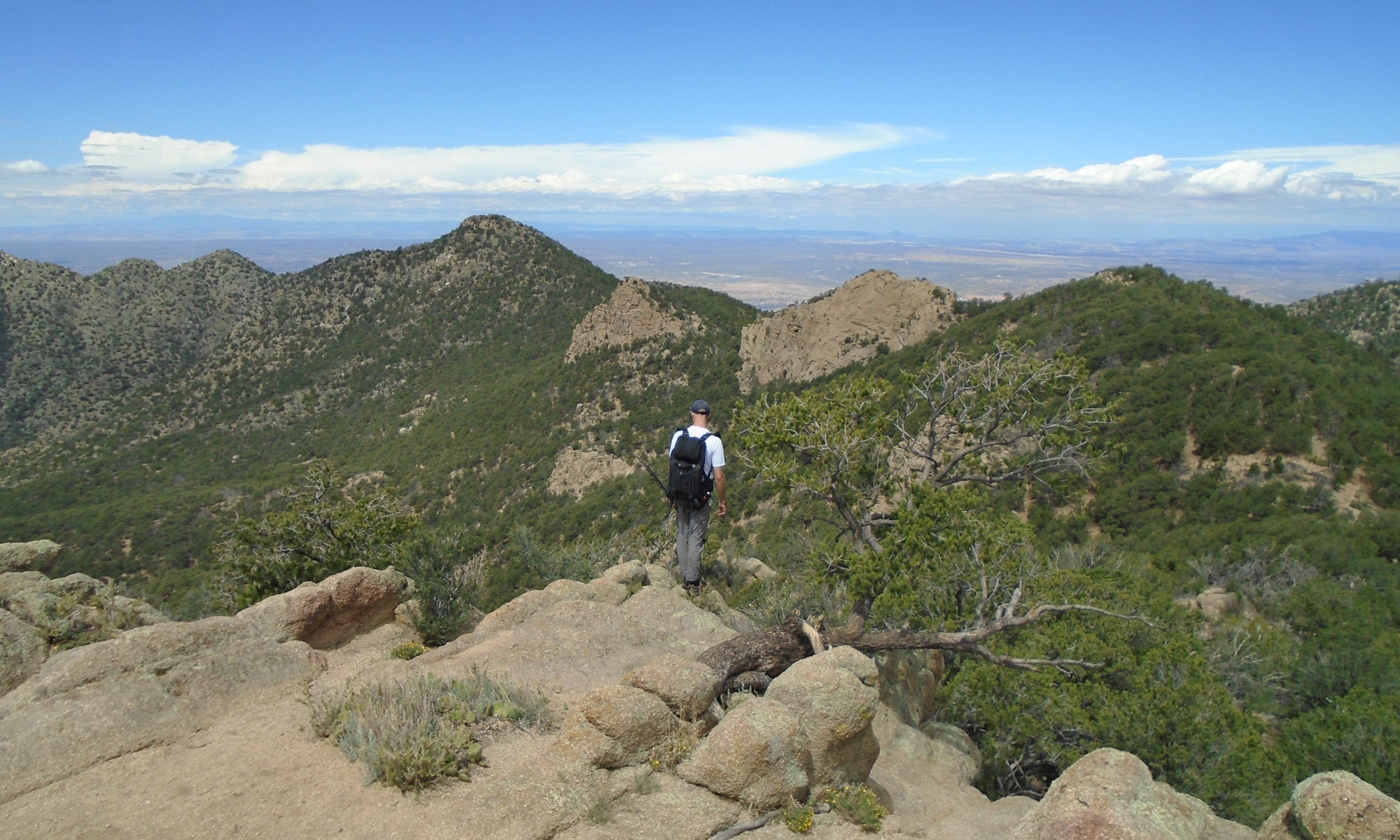
The cairns took us to an overlook with a good view of the San Pedro Mountains, where we sat on a boulder and plotted our next move.

DSC00379

The cairns continued. Another overlook? (I really wanted one.) A boiling cauldron? (Not so much.) We followed them a little longer, but grew worried that if we went any further, we’d end up lost, so we retraced our cairned steps back to the trail.

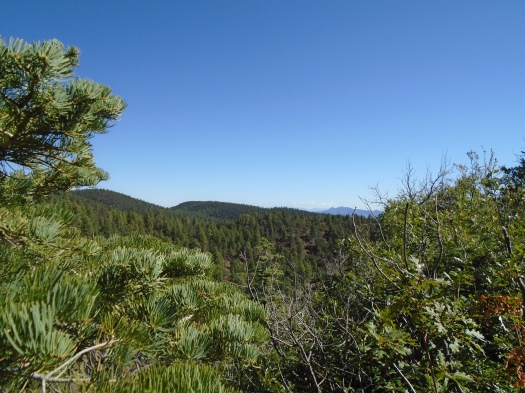
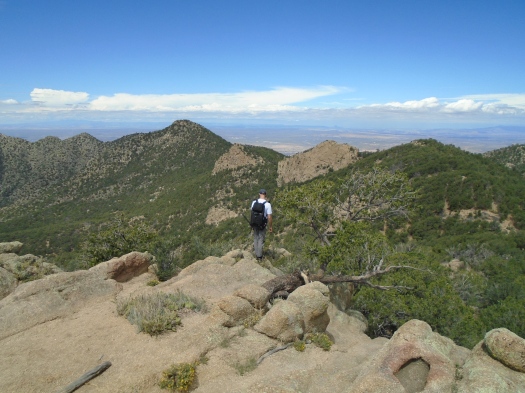
The little rock piles weren’t the only surprise on North Faulty. Yep, I said North Faulty, not Faulty, or Upper Faulty, or even Lower Faulty. North Faulty is an unofficial route that sine-waves along the 8,000-foot contour line north from the Sandia Crest Highway. It’s one of those ridgeline routes that constantly teases you with glimpses of mountains and valleys, then whisks you back into the forest.

DSC00370
It’s a three-mountain-range situation

DSC00364

Along with the cairns, we found three huge brown-and-white hawk feathers along the path, one stuck in a tree stump.

I wonder how many more surprises await those who go all the way to Palomas Peak, a good 10 miles roundtrip from the North Faulty trailhead.

DSC00381

Hike length: 5.5 miles

Difficulty: moderate

Trail traffic: light

Wildlife spotted/heard: horny toads, lizards, jays, butterflies, swift, gray catbird

Hot on the trail of two special springs in the Sandias

DSC00357

I was excited. I had realized that by hiking south on the Faulty Trail from the Sandia Crest Highway, I had a shot at seeing two springs.

Both were much-touted springs that I’d passed on separate hikes in the area, but couldn’t access, because they were closed for rehabilitation.

That was two years ago. It’s been monsooning. I thought I had a good shot.

It had rained on the trail overnight. Mud and wet pine permeated our nostrils.

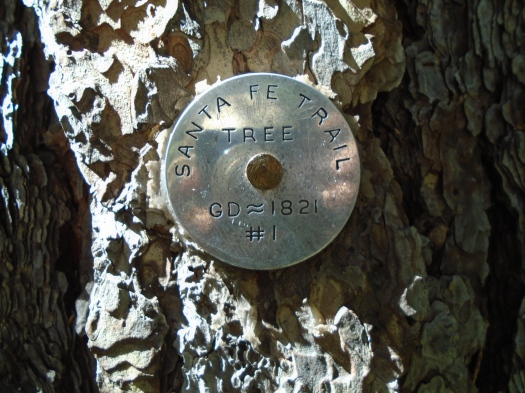
At the junction of Armijo and Faulty Trails, a dogleg of Armijo once led to Torro Spring. Now, Armijo dead-ends at Faulty. A tiny spur trail leads to a”medallion tree,” which displays a medallion allegedly noting the age of the tree, but branches block any travel beyond it.

DSC00340

DSC00341

We persevered on Faulty. I’d forgotten our Sandias topo map, and we wandered around on an unmarked trail with a fallen sign nearby, thinking it might be Canoncito Trail, home of Canoncito Spring. Though the trail had great views of the San Pedro Mountains, it was springless. We retraced our steps and pressed south.

Canoncito! The maps had shown a flowing travertine spring just east of the trail’s junction with Faulty. We hiked down to a beautiful canyon lush with wildflowers. It looked just like a canyon fed by a flowing spring would look. But…nada.

Through this stretch Faulty Trail rises and descends through canyon after canyon. Many look like spring territory. But none are – at least not today, that I could see.

There’s no shortage of scenery, from an outstanding overlook of Cienega Canyon to little  horny toads scuttling among the red rock and limestone.

DSC00330

DSC00323
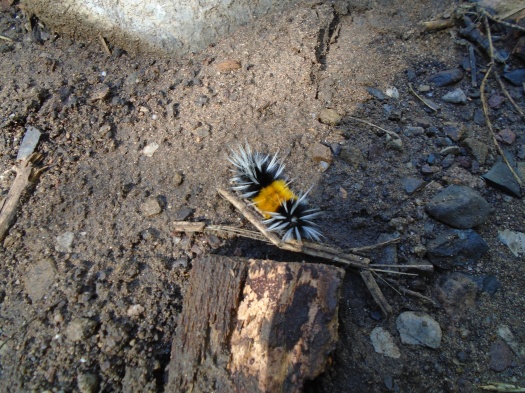
Very hairy caterpillar

DSC00345

DSC00348

DSC00353

At the trailhead, Cienega Spring gurgled past the parking lot.

But if you know what happened to the other two springs, for goodness’ sake, please tell me.

Hike length: 6.5 miles

Difficulty: moderate

Trail traffic: light

Wildlife spotted/heard: Abert’s squirrel, caterpillar, butterflies, crested jay, nuthatch


One hour at Great Sand Dunes National Park

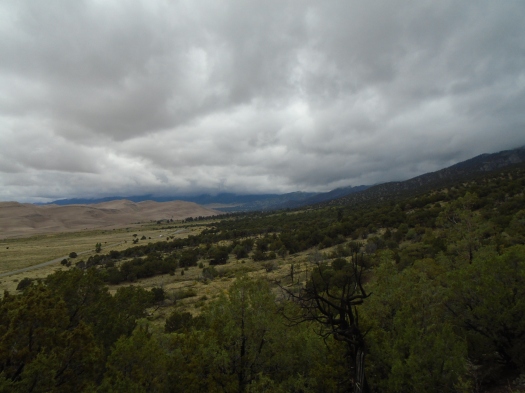
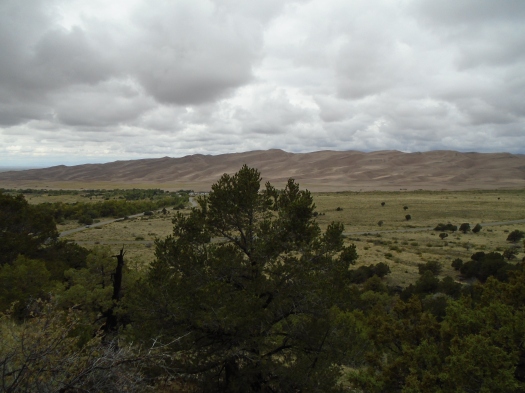
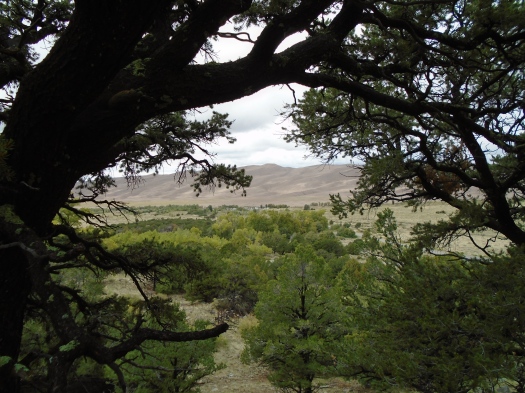
The smell: damp earth and rock, wet pinon and juniper.

Above, jagged stone, overlaid with green, swallowed in cloud.

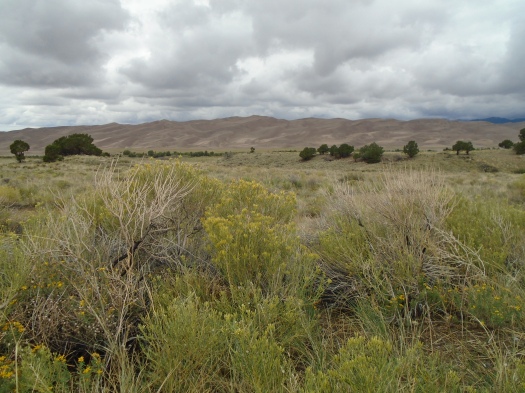
Below, massive sand dunes, people and trees dotting them like ants.

We cross a tiny creek amid the aspens. It gurgles over rocks with the gusto of a much bigger body of water.

DSC00291

We’re in the trees instead of on the dunes because I thought it would be the only comfortable place in the park at noon. Noon summer temperatures on the surface of the dunes can hit 150 degrees.

But a morning frontal system that’s still hanging around has the air temperature at 55 degrees at midday.

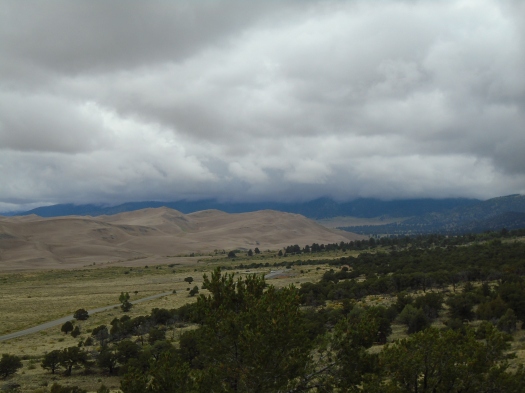
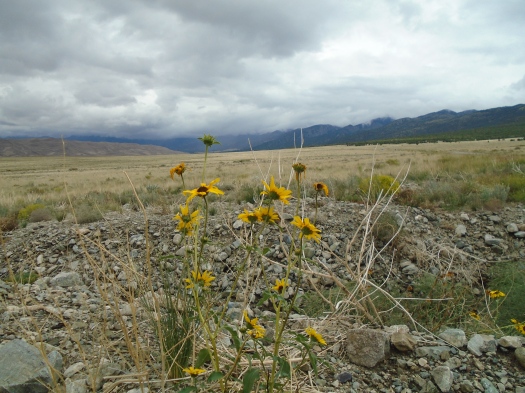
On any other day, we’d see 13,000-foot peaks soaring above us.

But on any other day, we wouldn’t see fog, wouldn’t see the muted tan of the dunes meet blue stone and green trees as if through a filter.

DSC00282

DSC00281

DSC00279

DSC00277

DSC00294

DSC00298

DSC00303

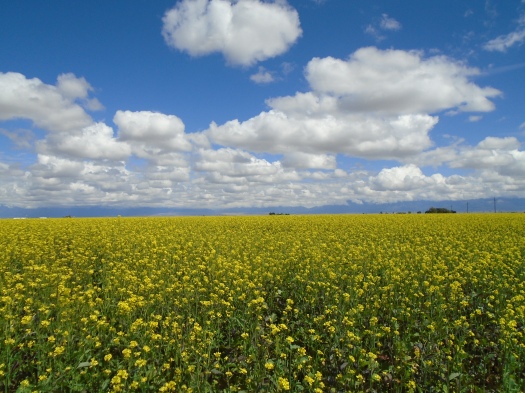
The light on the huge field of flowers at the highway wouldn’t be as dramatic.
DSC00321DSC00319

The weather is always in control, but Colorado’s swings in temperature and precipitation really bring that home.

Show up. Prepare for temperatures somewhere between freezing and boiling, and any or all levels of precipitation.

Let nature do the rest.

Hike length: 1.5 miles

Difficulty: easy

Trail traffic: light

Wildlife spotted: three hawks and a rabbit on the highway into the park
A lazy, rainy, mountain-town Sunday hike

The day started with a bolt of lightning splitting the air above the mountains.

The view definitely heightened the drama of the Salida Safeway parking lot.
A soft rain began. It didn’t look like it was falling nearly as softly on the peaks around us, where we’d planned to spend another day.

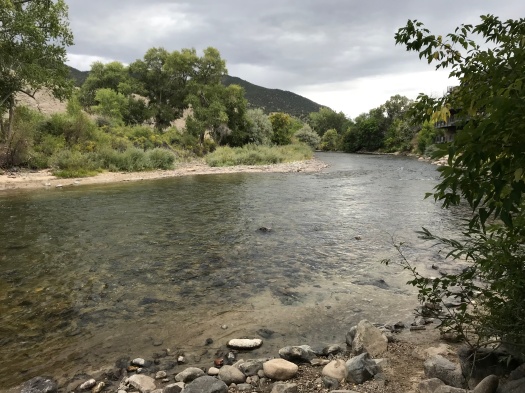
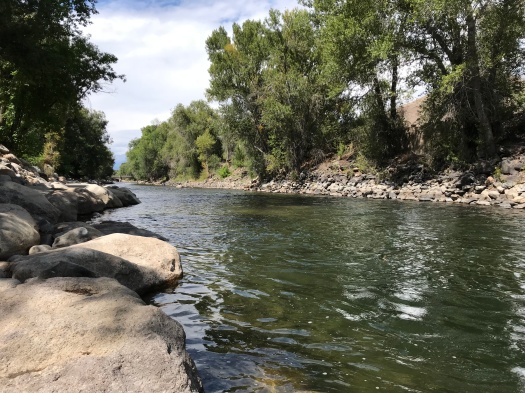
Plan B. Setting out from our Airbnb, we headed for the riverwalk along the Arkansas River.

IMG_1536

We shared the day with families and kayakers, tubers and stand-up paddleboarders (those did take five while it rained, mostly), and happy dogs playing fetch in the river.
We passed restaurants, a park, an amphitheater where a band was setting up for later.

As we crossed under a bridge, the rain began in earnest.

It was the second time I’d felt rain on a desert hike in three weeks. I was grateful, for the land and for me: the rain washed away enough pollen that the death-rattle chest cough I’d had for a day subsided.

Like the last time I’d been rained on, I was grouchy, too. It was chilly and the wind was picking up. But we sought out the Monarch Spur Trail, leading away from downtown along an old railroad corridor. The trail snaked among lumberyards and condos, fields and parks.

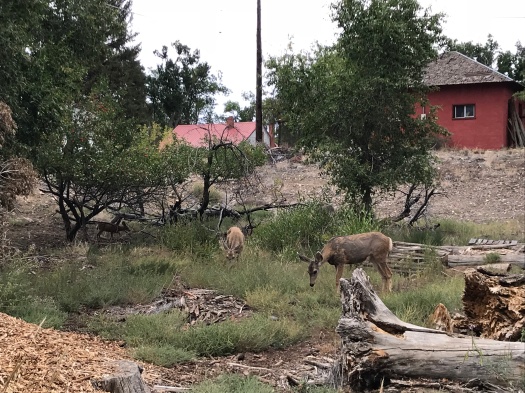
Five mule deer noshed along the trail, a frequent sight in a town that’s teeming with deer.

IMG_1546

As we walked, curtains of rain fell, intensified, then parted on the peaks all around us.

IMG_1557

IMG_1561

The trail opened up to cows and fields. The rain stopped. At Loyal Duke’s Dog Park, we turned around.

IMG_1559


IMG_1562

The sun returned to town, and we soaked it up on the patio of a restaurant overlooking the water.

We stopped to sit on river rocks on the walk back. As we neared the house, it warmed up enough to ditch the hoodies.

IMG_1565

But the low, bruise-gray sky over S Mountain promised more action ahead for this lazy mountain-town Sunday.

Hike length: 4 miles

Difficulty: easiest

Trail traffic: moderate

Wildlife spotted: deer, magpies, bluebird, vultures, dragonflies

TIP: The riverwalk and the entire 2.5-mile length of the Monarch Spur Trail are paved, making it accessible to those in wheelchairs.

Go to the top of Piedra Lisa Trail. Turn right. Commence scramble.

I stopped on Rincon Ridge to eat my sandwich. But the real feast was in front of me.

I could see deep into the Jemez, all the way to Redondo Peak. Between me and it, the Jemez’s drainages cut deep clefts through the Santa Ana Pueblo, the tops of its mesas glowing green.

A glimmer of the Rio Grande on Santa Ana came into view as clouds, then sun, then clouds bathed the valley.

DSC00188

DSC00180

DSC00189

DSC00145

A couple of steps to my left, and the volcanic neck of Cabezon Peak came into view.

DSC00152

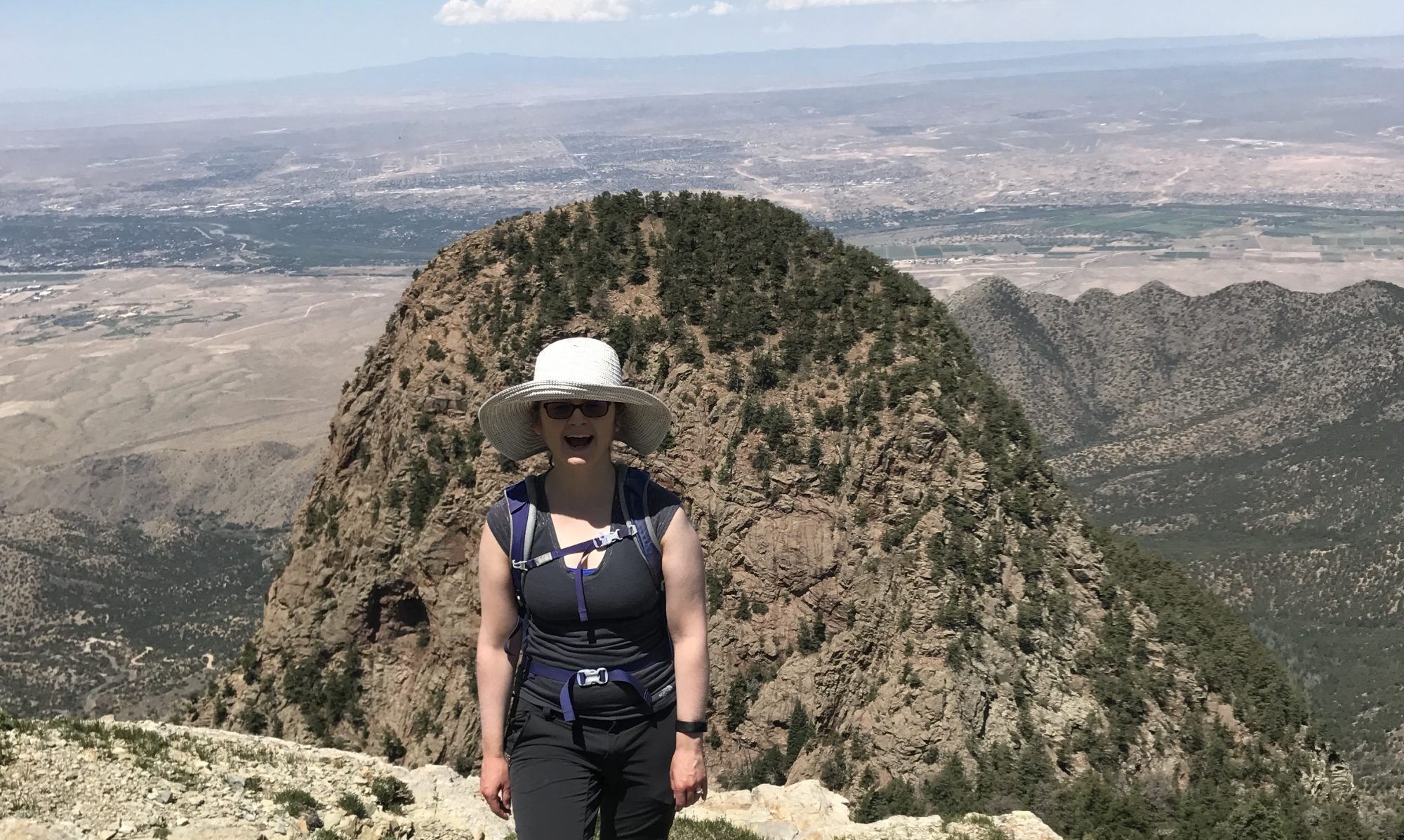
Over my right shoulder, the Knife Edge of the Shield, one of the Sandias’ most famous rock formations. And, yes, the Needle – the rock dome I’d become smitten with at the top of the mountain earlier this summer.

DSC00159

We watched a raptor soar impossibly high above, so high we couldn’t be sure what we were looking at even with binoculars, but guessed a red-tailed hawk or golden eagle.

We’d reached this spot with a 1,500-foot climb up Piedra Lisa Trail, one of the most popular in the Sandias. But we’d had the ridge to ourselves since another pair of lunchers left half an hour earlier.

A short, faint trail and a little scrambling had brought us here. I warily eyed the steep, trailless slope between us and the highest rocks on the ridge. A brief stalemate ensued in which I repeated that I knew I could get up, but I didn’t know how I would get down. But ultimately I couldn’t resist checking out the top, and I did, after all, know how I could get down (I’ll scoot down a short slope on my butt if I think it’s too steep for me to stay upright on.) The green slopes of Juan Tabo Canyon came into view.

DSC00169

DSC00174

DSC00166

DSC00154

DSC00143

My husband found us a more challenging but less steep way down, and within minutes, we were back at the busy Piedra Lisa juncture.

When we last hiked Piedra Lisa, two years ago, we skipped this ridge. We were doing the whole six-mile trail with a car at each end, and I didn’t think I had the leg power for a side trip. I was probably right; the back side of the mountain is even steeper than the front, and I slipped and gashed my leg on the way down.

But I missed the best part.

Hike length: 6 miles

Difficulty: moderate

Traffic: popular on Piedra Lisa, light on Rincon Spur

Wildlife spotted: dragonflies, butterflies, lizard, blue jays, black-capped chickadee, raptor, swifts

Just us and a 5K on the second-most enticing ditch in the North Valley

The first surprise came when we pulled up to the parking lot at the Los Poblanos Fields Open Space.

The usually quiet lot overflowed with hundreds of cars. It was serving as overflow parking for the Los Ranchos Lavender Festival today.

The festival is fantastic. But it’s hot, crowded and costs money, and we had a shaded, free and wide-open plan in mind: using the open space to get to the North Valley’s second-most enticing ditch.

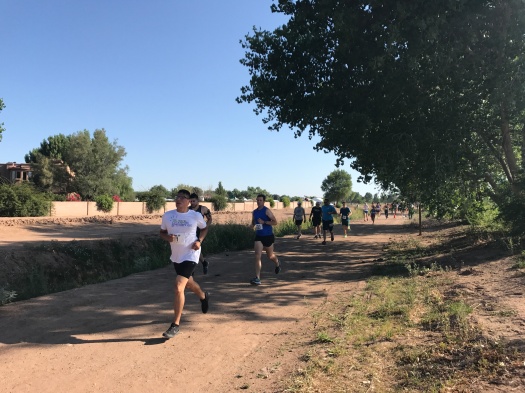
As we embarked on that goal, Western kingbirds chattering on power lines above us, the second surprise: a 5K run, part of the Lavender Festival, coming right for us, and sharing much of our route.

We had to step aside a few times to let crowds of runners pass, but there was room for all of us.

We lived near the Los Poblanos Fields for two years, and I was there almost daily. In  winter, it’s sandhill crane migration central. In spring, ring-necked pheasants cavort in the clover. In summer, the fields used to dance with sunflowers.

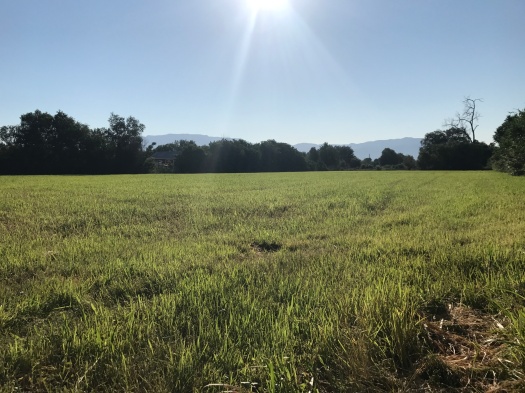
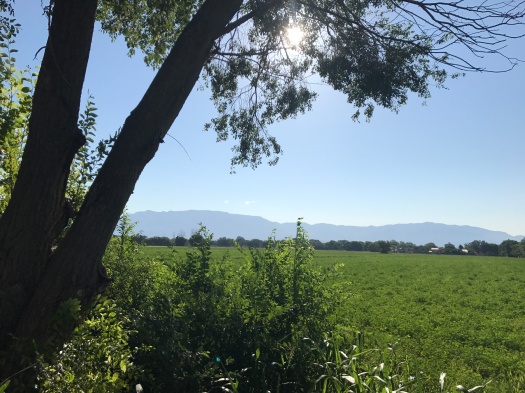
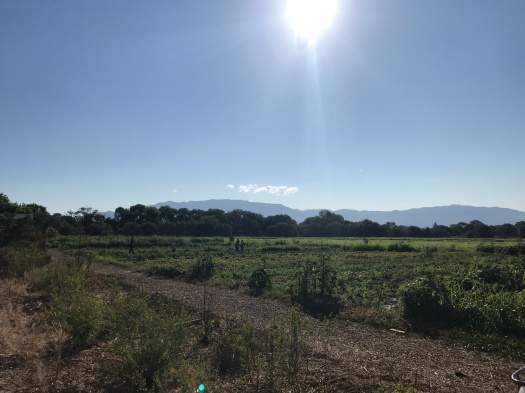
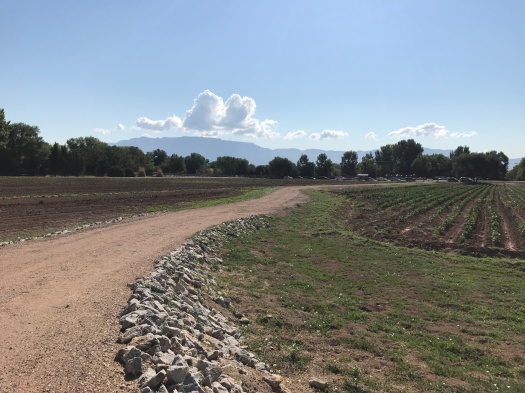
I saw no sign of those today, but the open space is still hard to beat. It has killer views of both mountains and mesas, which few flat plots of land in the city can boast.

IMG_0969

IMG_0970

IMG_0978

IMG_0977
Here they come!
IMG_0979
One corner of the open space houses the Rio Grande Community Farm.

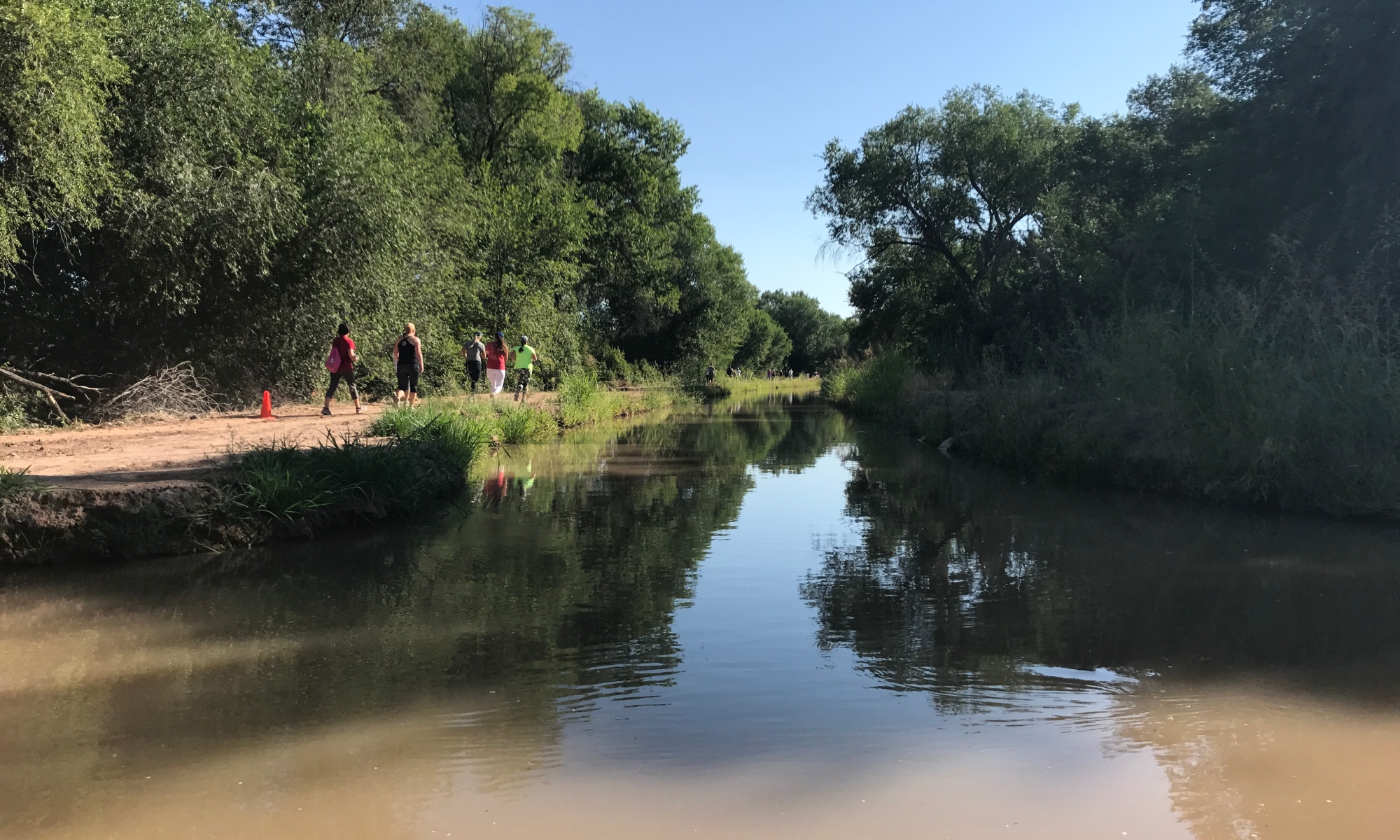
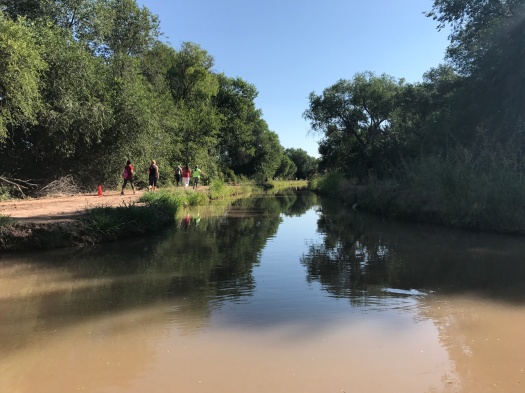
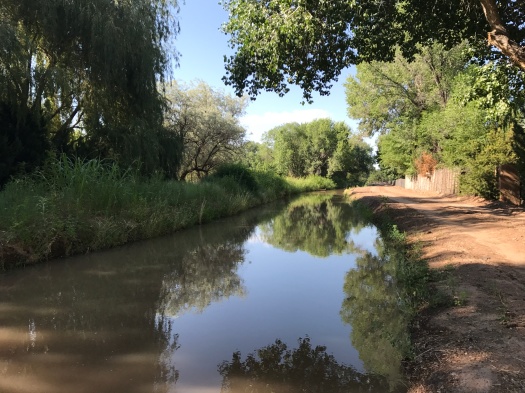
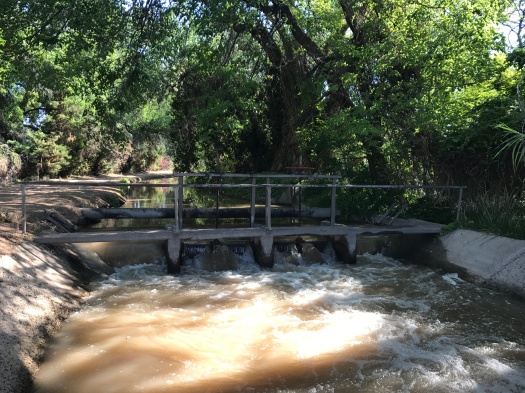
As we turned onto the ditch, the crowd thinned and the water just kept widening.

IMG_0981
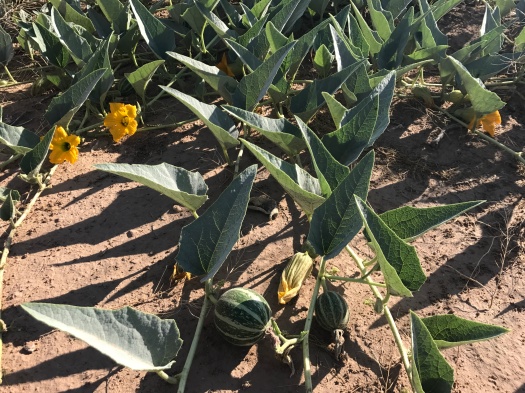
Squash growing right on the ditch.
IMG_0982
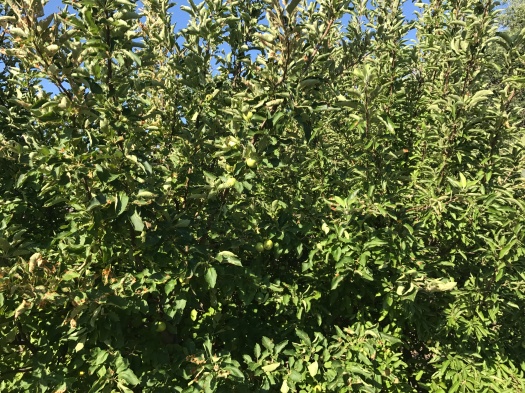
And apples.

IMG_0989

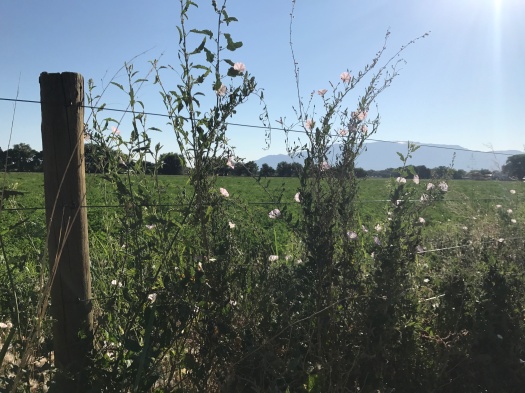
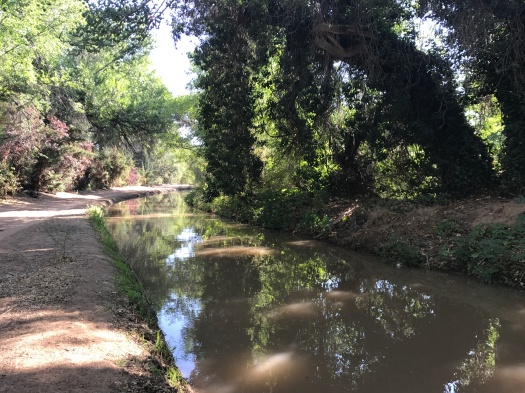
By the time we came near the back side of the Los Poblanos Inn, the 5K route had diverged from ours, and all was quiet but the water and the birds. Tangles of wildflowers and foliage engulfed the ditch. A red flash soared by overhead, leaving us wondering if it was a cardinal or pyrrhuloxia.

IMG_0991

IMG_0993

IMG_1001

IMG_1003

Our route took us near the crossroads with the North Valley’s most-enticing ditch, which we explored earlier this week.

How many more ditches throughout Albuquerque have just as much to offer?

Depending how long the forests stay closed, we might find out this summer.

Hike length: 2.9 miles

Difficulty: easy

Trail traffic: busy at the open space, moderate to light on the ditch

Wildlife spotted: hawk, pyrrhuloxia/cardinal (?), dragonflies, butterflies, velvet ant, goat, ducks

IMG_1005