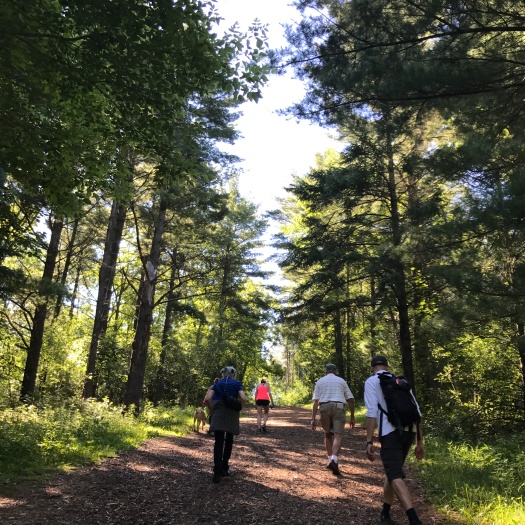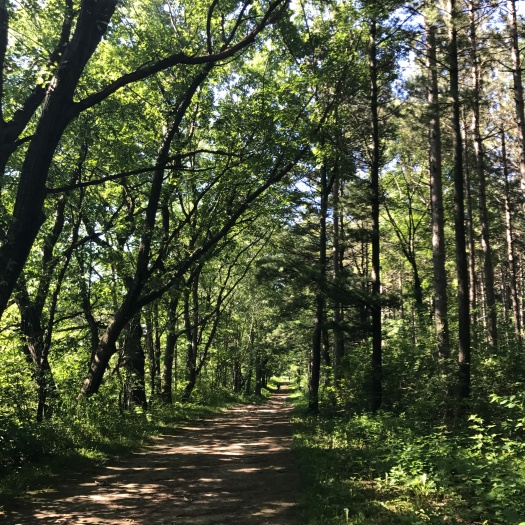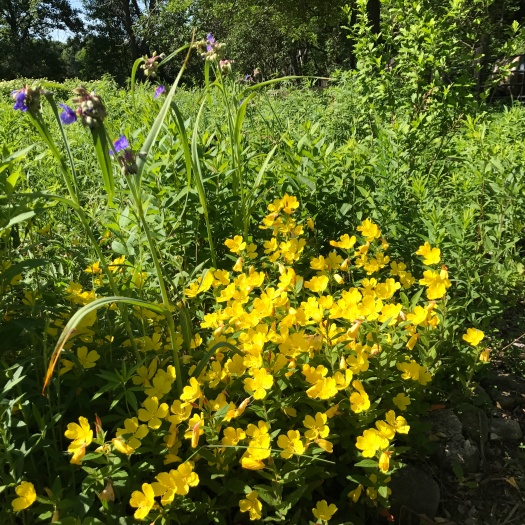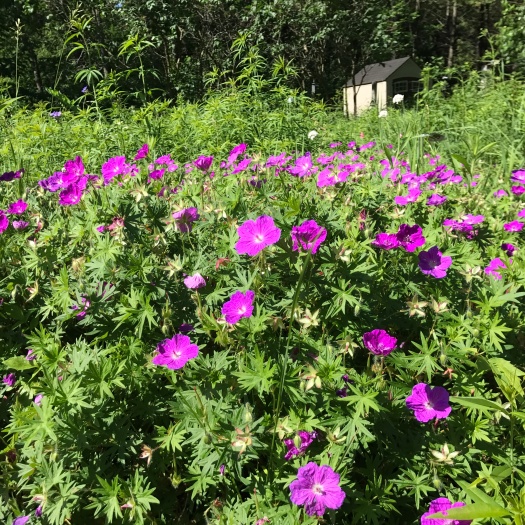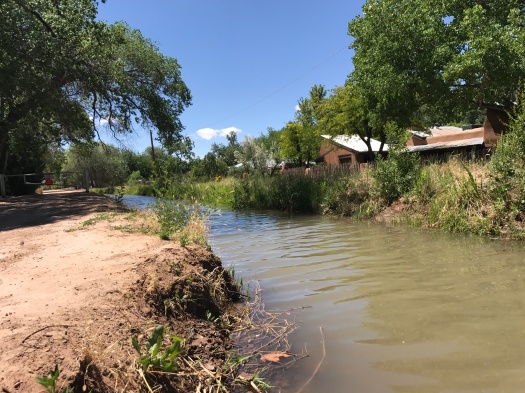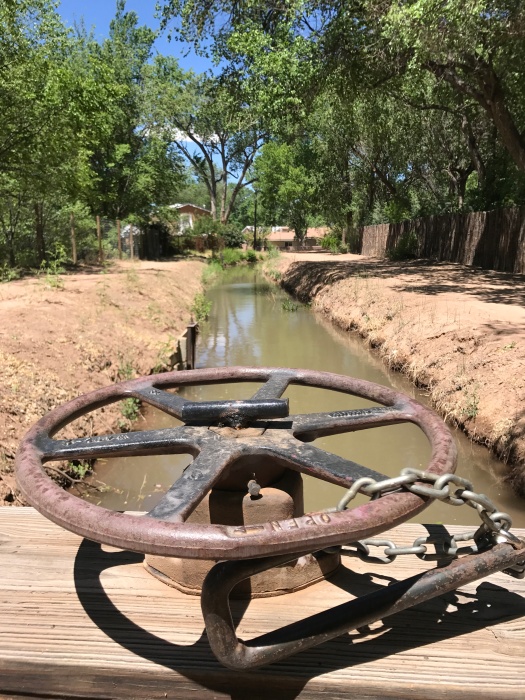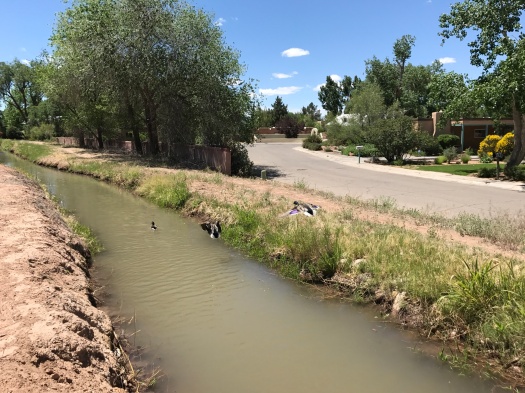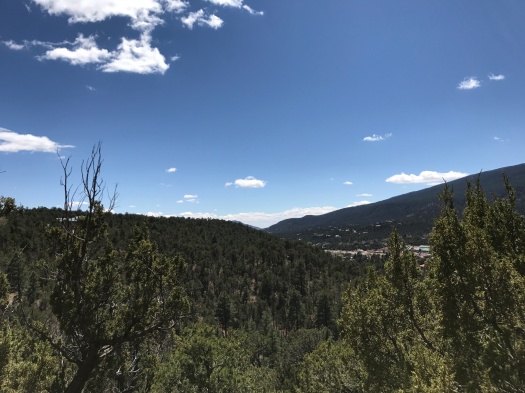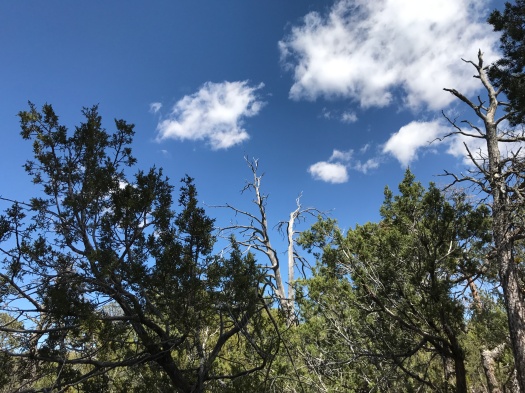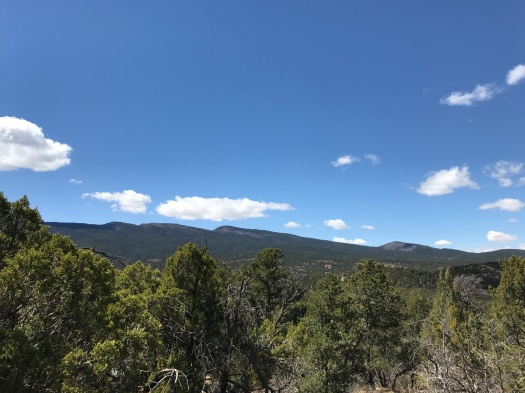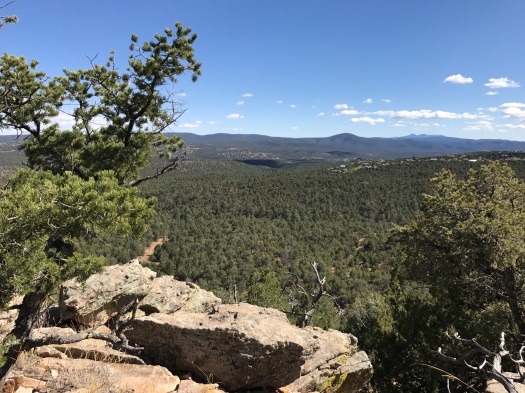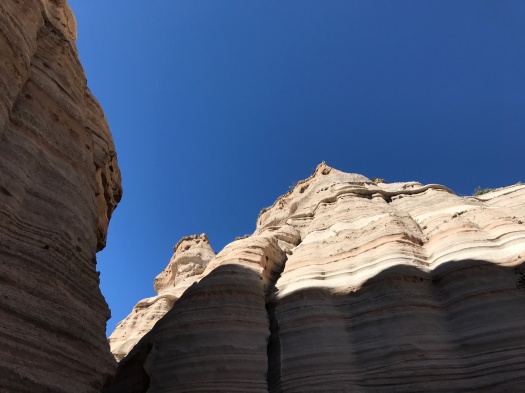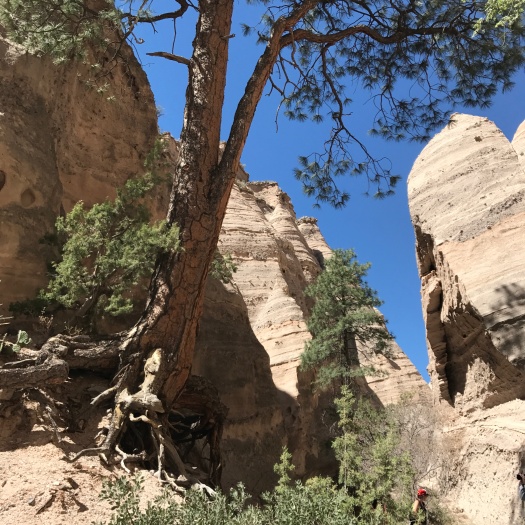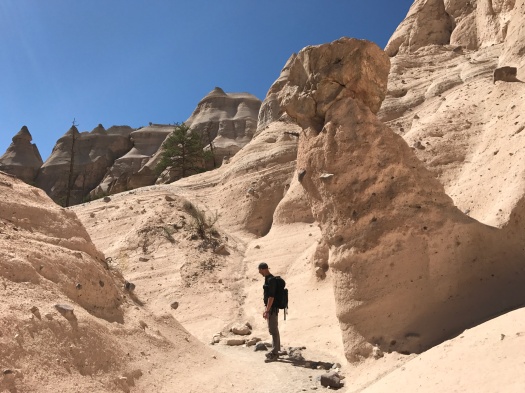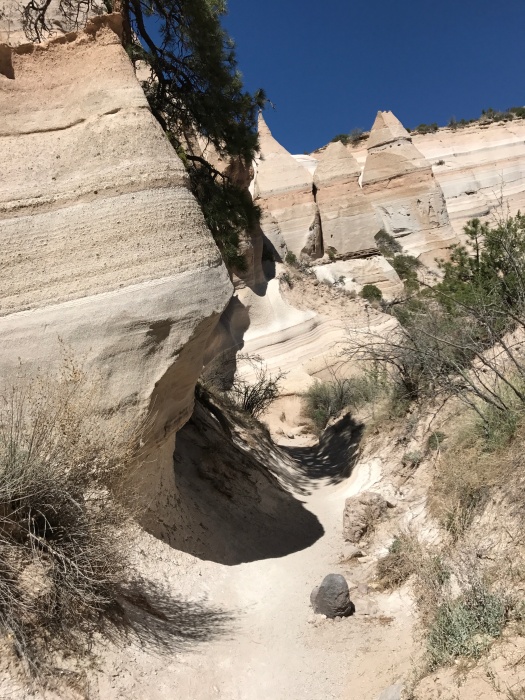
This is the most enticing ditch in the North Valley (and that’s saying something)

This ditch’s siren song has called to me for years.

I first noticed the ditch along Guadalupe Trail when we were buying a house. We looked at a home nearby. All these years later, I have no memory of the house, but I never forgot that ditch.

Forest closures have reduced our hiking options to the bosque and the ditches, and after reading David Ryan’s book “The Gentle Art of Wandering,” I was inspired to make the Guadalupe Trail ditch’s acquaintance.

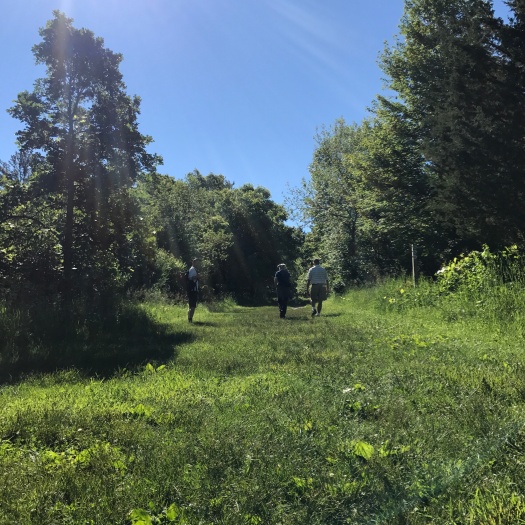
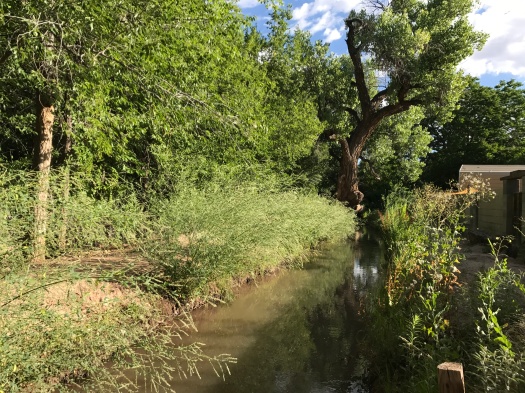
When we stepped onto the ditch at its crossing with Griegos, only one side offered a narrow path.
IMG_0897

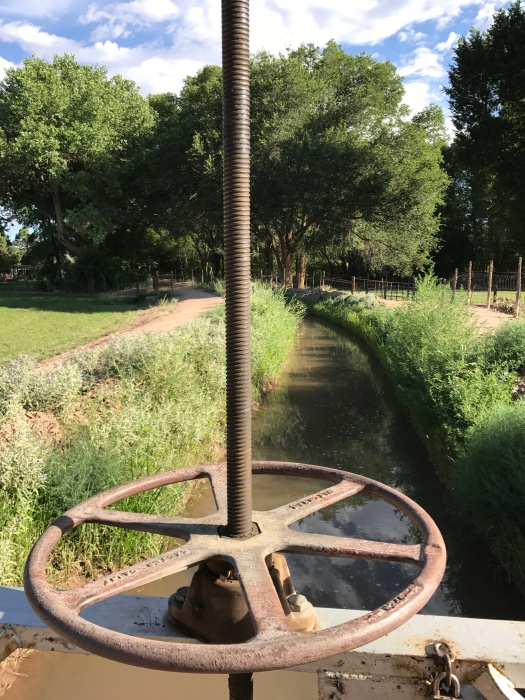
As the ditch widened, it wound by funky old houses and soaring modernist cathedrals of light.
IMG_0902

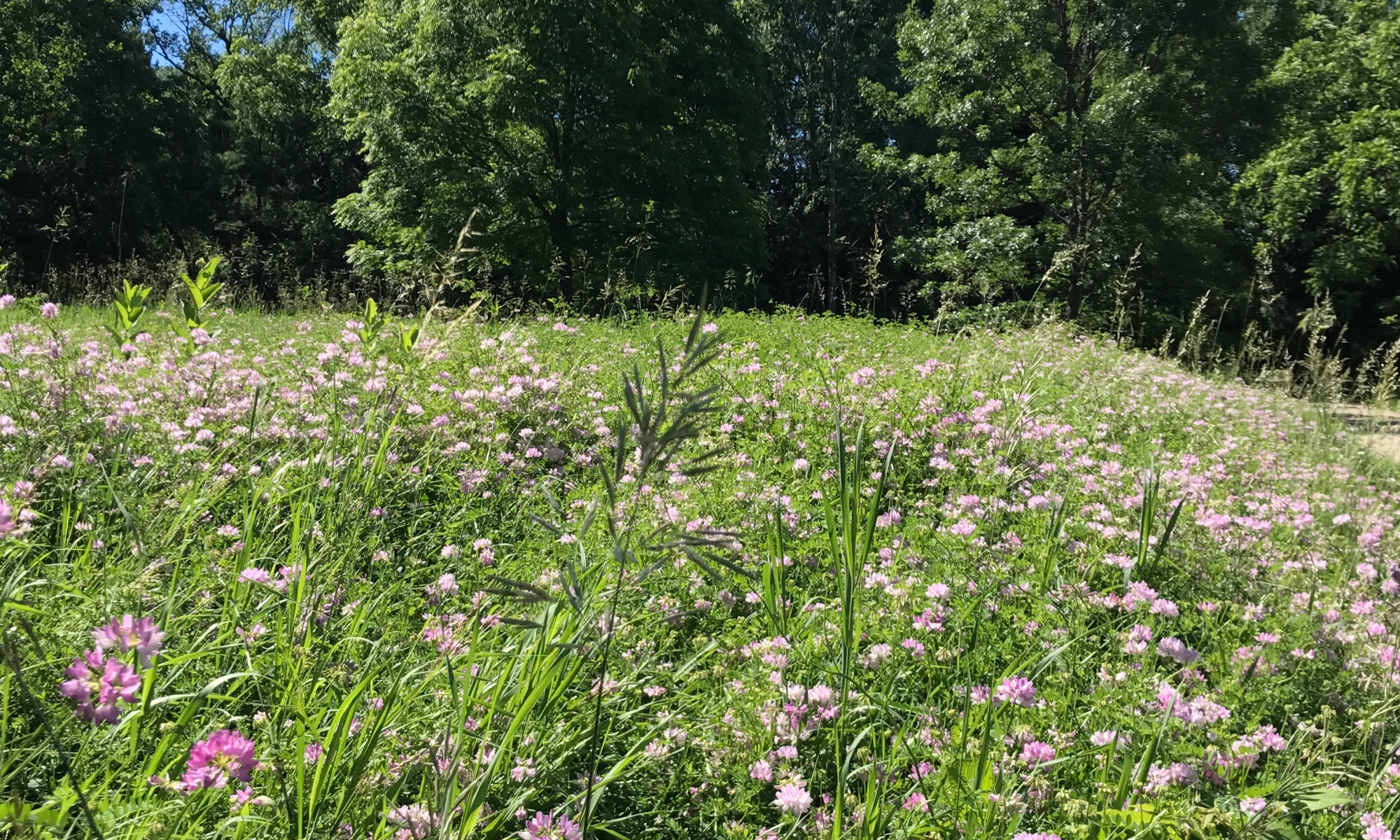
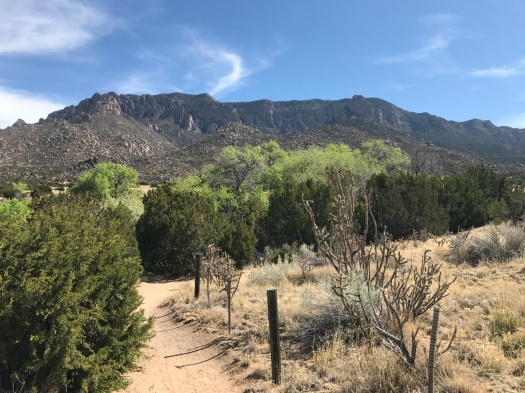
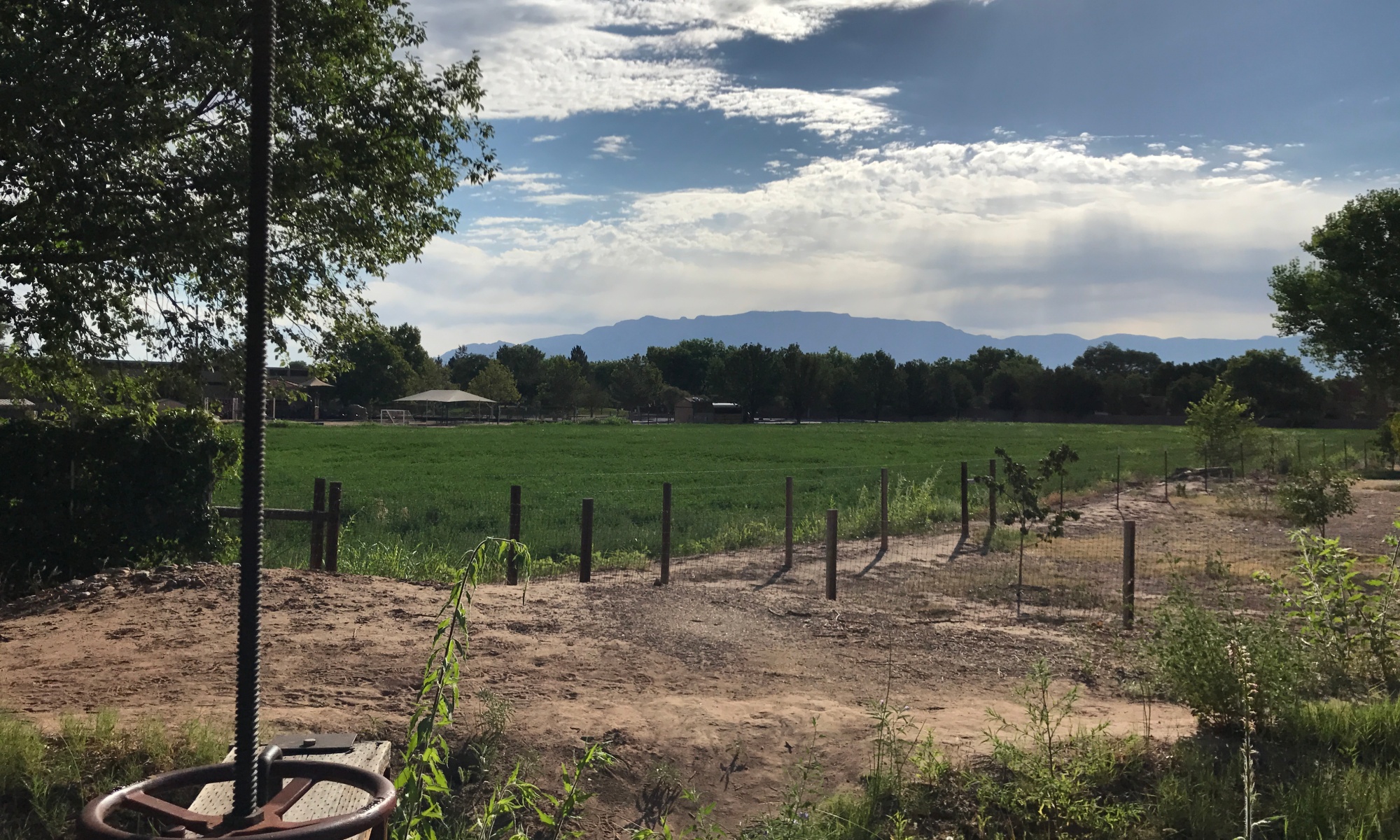
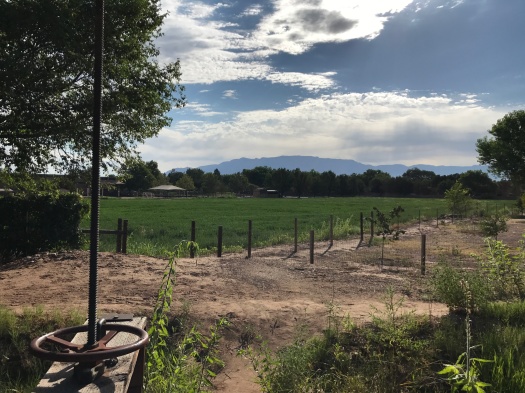
Irrigated fields opened up, offering glimpses of the mesa and mountains.
IMG_0913

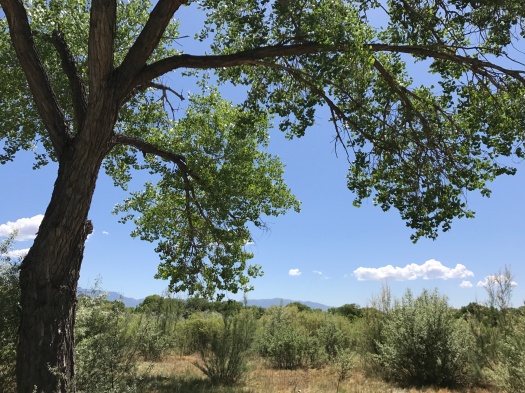
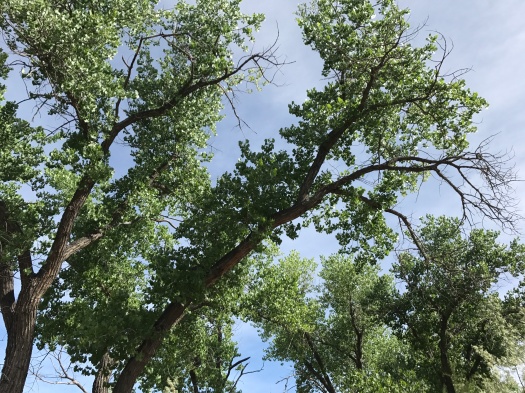
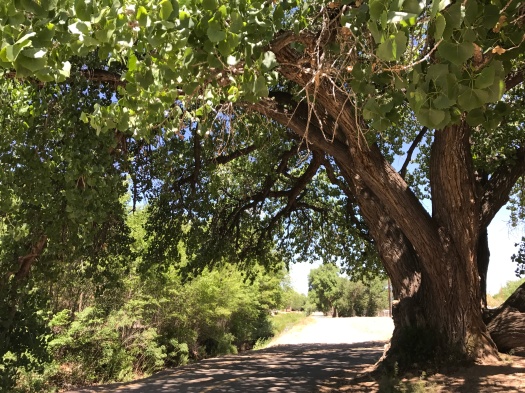
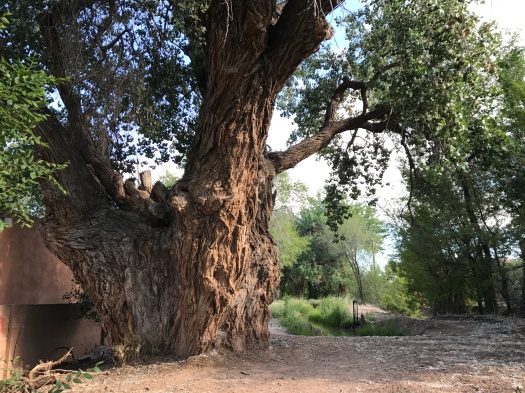
This ditch boasts one of the biggest cottonwoods I have ever encountered. Its trunk had to be 15 feet in diameter.
IMG_0907

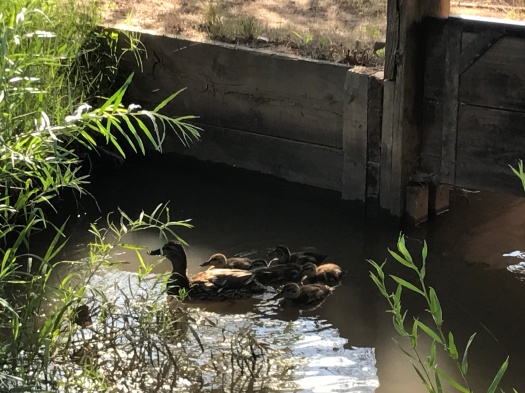
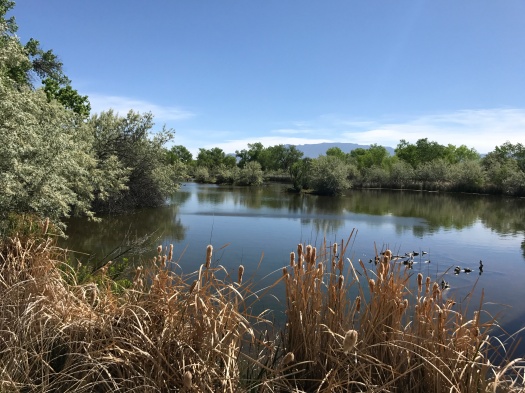
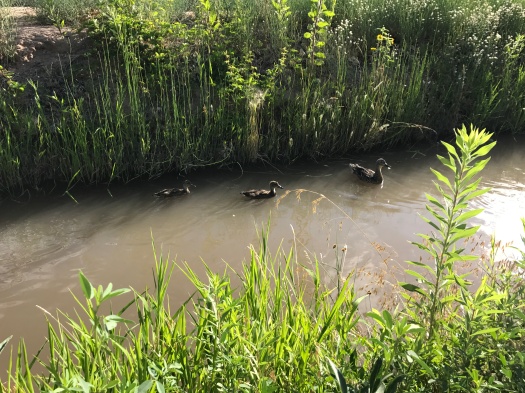
This ditch also boasts the most ducklings I have ever encountered. We saw three duck families. One family huddled together on the ditch’s concrete lip; the two bravestĀ  ducklings tiptoed down the slope into the water, and the rest followed.
IMG_0915

IMG_0951

We came to a crossroads behind the Unser Museum, only to discover that the magical mystery ditch ran smack into a large ditch we’d used weekly for years to access the Flying Star Cafe from our old house.

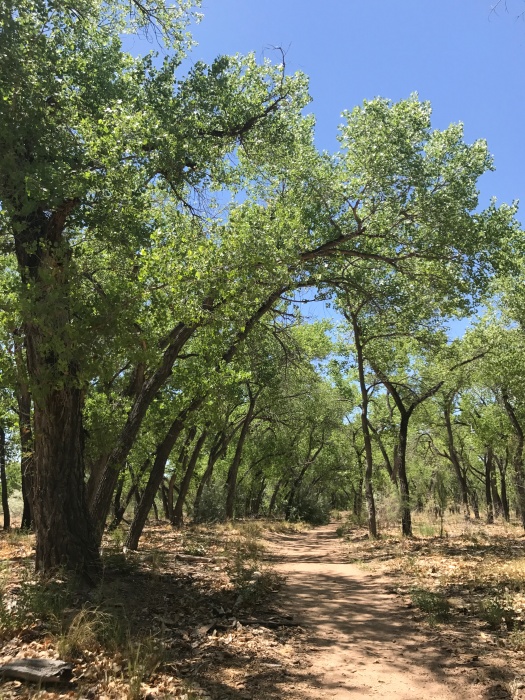
We crossed the familiar ditch and kept going. The chatter of ducks and the breeze gave way to the sounds of traffic. Our new ditch route was as wide and tree-lined as the main boulevard in my Southern hometown, running right next to Montano.

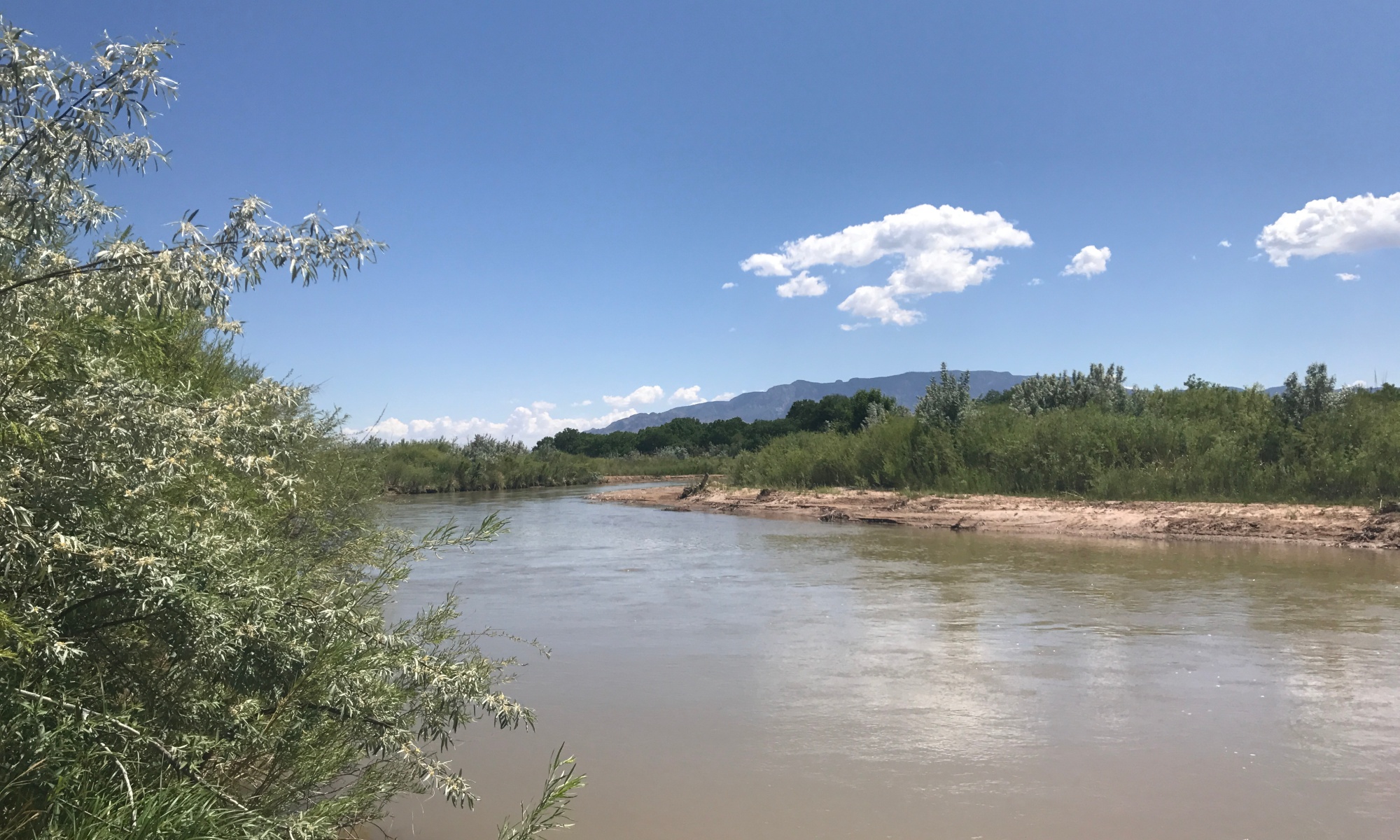
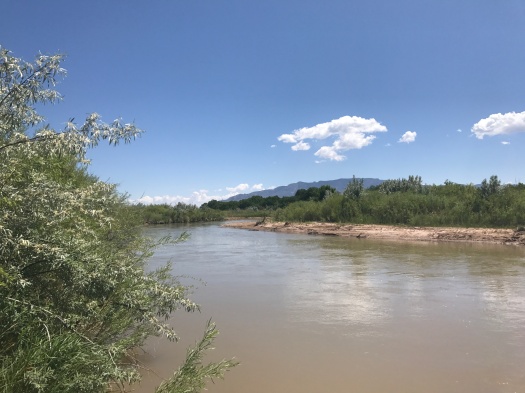
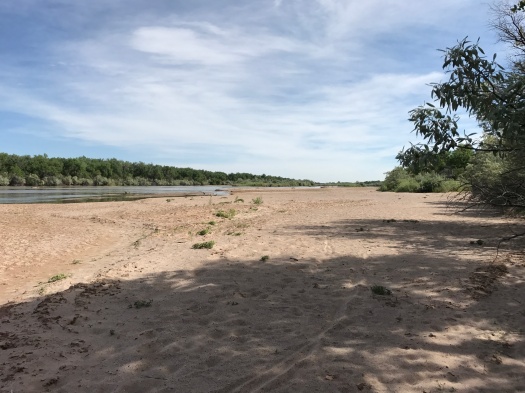
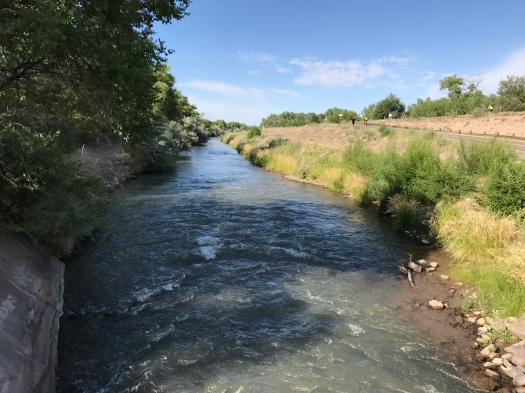
The path led us right to the river. A roaring ditch gave the illusion of abundant water.
IMG_0952

We walked out to the overlooks on the Montano Bridge, which I’d never crossed on foot. Swallows swarmed overhead.

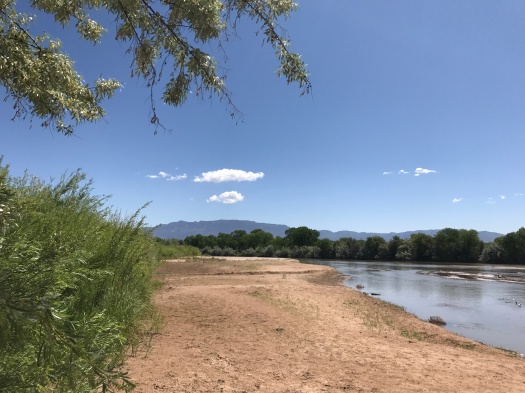
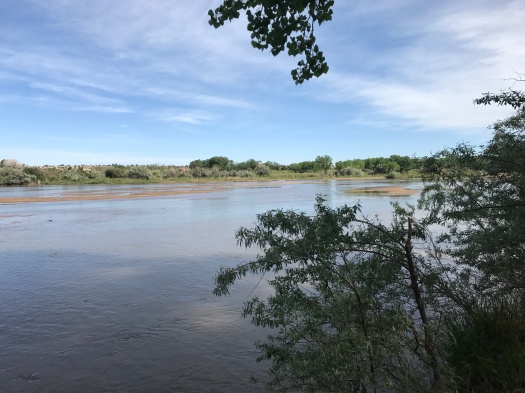
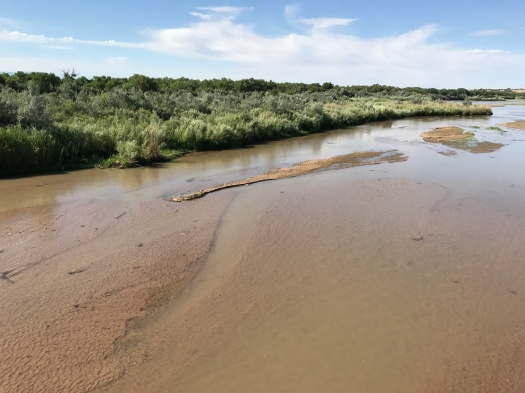
As we walked back east on the bridge, we saw that no more than a few inches of water covered the sandbar below. The Rio Grande could run dry through the city as soon as this month.
IMG_0966

In the bosque, we spotted a mountain bluebird at 5,000 feet.

Maybe the dry conditions on the mountain exiled her, too.

Hike length: 3.2 miles

Difficulty: easy

Trail traffic: heavy at the bridge, light to moderate elsewhere

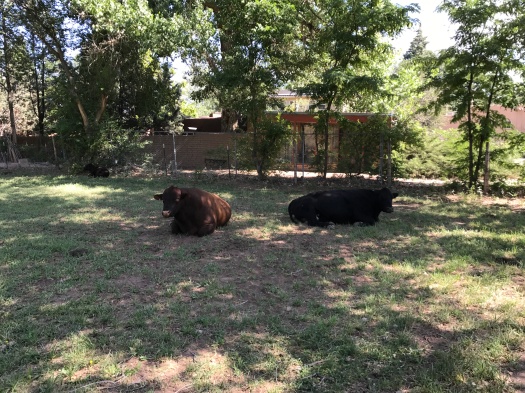
Wildlife spotted and/or heard: starling, mountain bluebird, ducks, violet-green swallows, barn swallows, cows, roosters, chickens, butterflies, dragonflies, nuthatches, spotted towhee
IMG_0964IMG_0962IMG_0968

These are the days when Wisconsin can only give you everything

Sometimes it’s too much.

As beautiful as southern Wisconsin is, I remember a visit when the trees pressed in on me too closely, the sliver of sky frustratingly small. I knew how much bigger the sky was, and it troubled me not to see it.
But on this day, when we stepped onto the trail at Lapham Peak, a trail whose primary material is grass – grass! – I was ready to be swallowed by green.
IMG_0815IMG_0819IMG_0821

At home it was 102 degrees, forests closed for fire danger, all living things parched.

We arrived at Lapham Peak, part of the Kettle Moraine State Forest, on a brilliant, sun-drenched morning after days on end of rain. The wide green trails gleamed in the morning light. Waist-high grasses and wildflowers surrounded us, and the tree canopy overhead sheltered us.
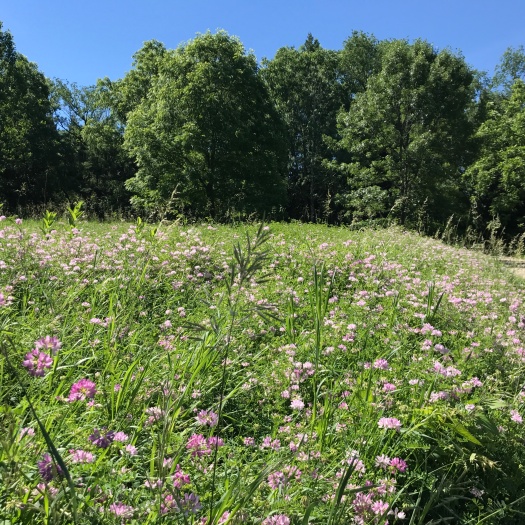
Our destination was the Butterfly Garden, a riot of wildflowers that 12 of Wisconsin’s butterfly species call home. We spotted five of those species, from the small cabbage white to the great spangled fritillary.
IMG_0827IMG_0831IMG_0836

IMG_0840
Found a familiar sight at an unexpected latitude!
IMG_0841
Don’t know this one, but seems like it could come in handy back home.

We dawdled there, my husband watching a garter snake slither through the flowers, plants and butterflies dancing on the breeze.

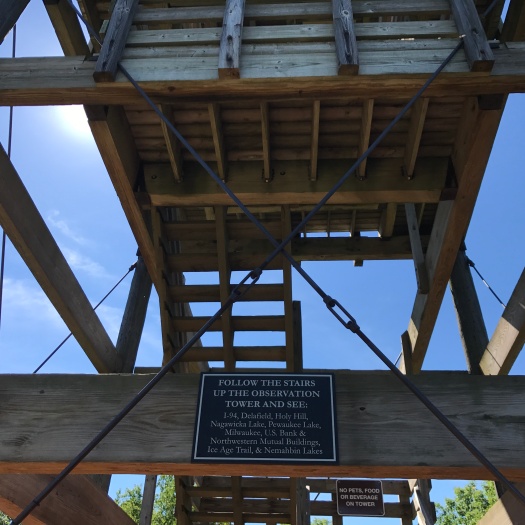
A narrower trail through what appeared to be fields of wild spinach and rhubarb led us to an observation tower, our original primary destination. The tower was founded as a National Weather Service station that transmitted data from the weather station on Pikes Peak to Chicago, and it boasts views of many surrounding lakes. But it’s closed indefinitely for repairs.

IMG_0850IMG_0851IMG_0852

We walked back to our car on a path sprinkled with some of the wildflowers we’d seen labeled in the butterfly garden, allowing us to name them. An Eastern bluebird darted from tree to tree as we returned to the trailhead.

You could wander the extensive network of trails at Lapham Peak all day. We spent 90 minutes there before a busy day of family activities began. Even that short time in the forest’s embrace made a difference.

Wisconsin bestowed abundance on us all weekend: its sparkling waters, its lake breezes, the land and its growth pulsing green and blue and fuchsia.

Family and food washed over us in waves, too, as we gathered to mourn one we lost suddenly in January.

At one point, a long-lost relative kayaked up to my husband’s aunt’s house, strode into the back door and was embraced as if it had been days instead of decades.

All weekend, people said this was what they lived for, why they called Wisconsin home, what carried them through the darkness: these short weeks into which nature pours all its riches at once.

It’s a shock to the eyes, and the heart, what land and love can deliver.

Hike length: 2 miles

Trail traffic: moderate

Difficulty: easy

Wildlife spotted: butterflies, dragonflies, Eastern bluebird, chipmunk, squirrels, garter snake

How do you process grief? One foot at a time

Yesterday morning, we put our 16-year-old cat to sleep.

After lots of crying, my husband wanted to take a walk, so we did, wandering new and old paths in our neighborhood and sitting in the park for a long time.

I don’t know exactly what it is about a hike or a walk that’s most healing: the physical motion, the time to think, the reminder that there’s a whole world going on around you.

But I’ve found solace in hiking before, and so have the two of us together, and certainly plenty of famous people have too.

It was tempting to sit in the house and stare at the walls today. But it was empty in here, too. We knew being outside again would be good for us.

We ended up right back where we were last weekend, in the bosque, this time on the west side of the Rio Grande.

When we got out of our car midmorning, the parking lot was mobbed, and it was loud. But after we passed under the Montano Bridge and began walking north, we saw only a few people.

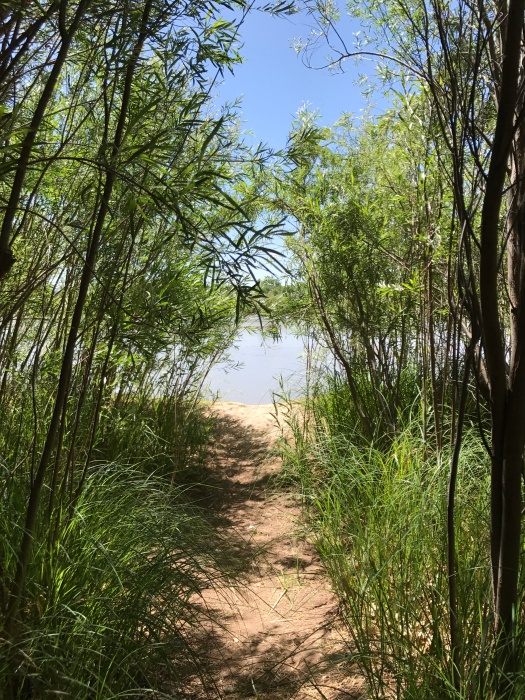
The narrow path flirted with the river’s shore, gaps in reeds leading to a grassy spot on the bank, or to a sandbar.

IMG_0606

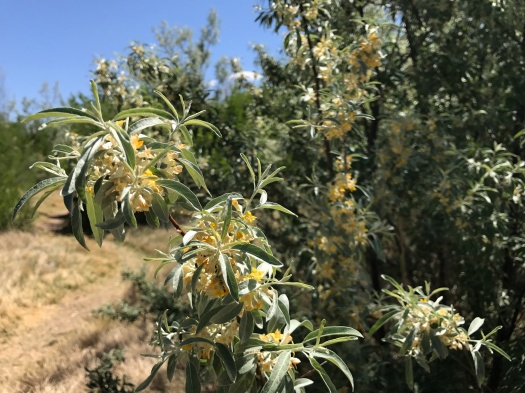
The leaves of the sweet-smelling, invasive Russian olives glinted in the sun.

IMG_0609

Mountain views opened up as we passed through meadows.

IMG_0619

IMG_0605
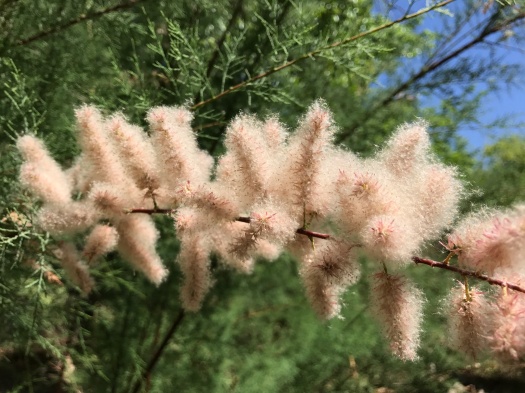
Is this salt cedar? (Cotton candy would be my next guess.)

IMG_0616

IMG_0627

We saw a dog chasing a coyote. (This will probably betray the gaps in my animal behavior knowledge, but I thought that would work the other way around.)

A few minutes later, we watched a coyote (maybe the same one?) run, then swim across the shallow Rio. Two orange-and-black butterflies danced across our path.

We saw two egrets wing across the water and above the trees. They’re the only water birds I can remember actually seeing on the water in New Mexico.

We watched a bluebird, a bright flash amid the green cottonwood leaves.

After about a mile, a side channel of the river blocked our progress along the trail on the bank, at least momentarily. We headed back on a shadier path through the cottonwoods.

IMG_0634

Our cat loved being outside. As sick as he was, he insisted on stumbling outside Thursday night and again Friday morning before we took him to the vet for the last time.

When he was young, he was a fierce predator who once killed two hummingbirds in one day and severed more than one lizard’s tail.

At the end, he spent much of his outdoor time sitting in the grass, watching his fellow creatures instead of trying to devour them.

Always, he loved the world around him.

Our walk this morning reminded us how much there is to love.

Hike length: 2.4 miles

Difficulty: easy

Trail traffic: light north of Montano Bridge, heavy elsewhere

Wildlife spotted/heard: lizards, egrets, Western bluebird, coyote, butterflies, dragonflies, bees (some REALLY HUGE bees), nuthatches, sparrows, Cooper’s hawk


Three hikes with someone I love reminded me why ABQ is home

It’s been a rough year already, Albuquerque, in a lot of ways. Like many places, the issues we face here are deep, and they can feel insurmountable.

This week I got the chance to see my city through fresh eyes, and to remember why I fell in love with it and why I stay.

My sister visited from New Orleans this week. She wanted to experience Albuquerque the way my husband and I do. That meant hikes.

That meant getting up as early as we could to visit Elena Gallegos Open Space in the Sandia foothills before the sun pouring down on it grew too hot to enjoy.

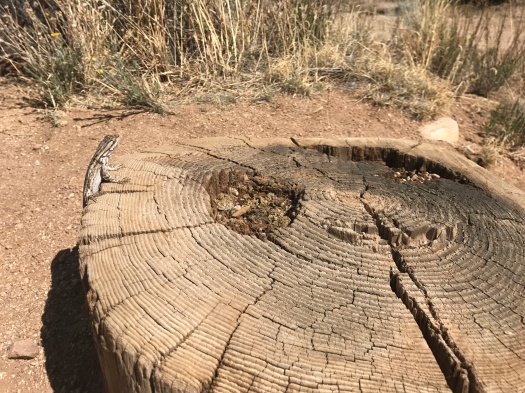
That meant watching a frog bask in the tiny wetland on Cottonwood Springs Trail, interrupting a lizard doing his daily push-ups on a stump, crossing bone-dry arroyos and talking about what it looks like when they flood.

IMG_0484

IMG_0489

IMG_0490

IMG_0493

That meant getting up as early as we could again the next day to visit the bosque. It meant watching blue dragonflies dart by. It meant stopping in our tracks to watch three robust-looking coyotes lope toward the jetty jacks, and talking with people on horseback who’d been close enough to see a fourth. It meant walking out onto a drying riverbed to see the Rio Grande. It meant stopping by the visitor center to see 17 turtles chilling in a wetland.

IMG_0500

IMG_0507

IMG_0509

IMG_0523
Turtles at 4 o’clock

After we took my sister to the airport this morning, my husband and I squeezed in a North Valley ditch walk before the afternoon heat settled in.

IMG_0530

IMG_0548

IMG_0579

I stalked ducks with my camera; every time I got close to them, they flapped out of the ditch to put some distance between us, showering me with water. I texted my sister a picture of the ducks.

IMG_0561

We’ve made our home in a hard place. All the local landscape and food and art and architecture and culture and history we soaked up this week doesn’t change that.

It reconnected me to why we do it.

IMG_0498

Hike 1: Elena Gallegos loop

Distance: 1.2 miles

Wildlife spotted: lizards, frog, bluejays, butterflies

Trail traffic: moderate

Difficulty: easy


Hike 2: Bosque loop (Bosque Loop Trail + River Loop Trail)

Distance: 2.3 miles

Wildlife spotted: coyotes, lizards, dragonflies, butterflies, turtles, hummingbirds, geese

Trail traffic: popular

Difficulty: easy


Hike 3: North Valley ditch loop

Distance: 2.2 miles

Wildlife seen or heard: donkeys, peacocks, ducks, lizards, butterflies, grackle, doves, horses

Trail traffic: light

Difficulty: easy

This spot is crispy as a potato chip, yet it’s still overflowing with life

When we pulled into the parking lot of today’s hike, our first sight was a Forest Service hotshot firefighting crew.

Thankfully, they were just patrolling. This time.

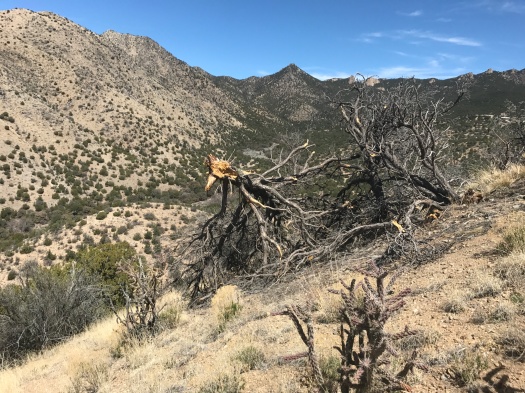
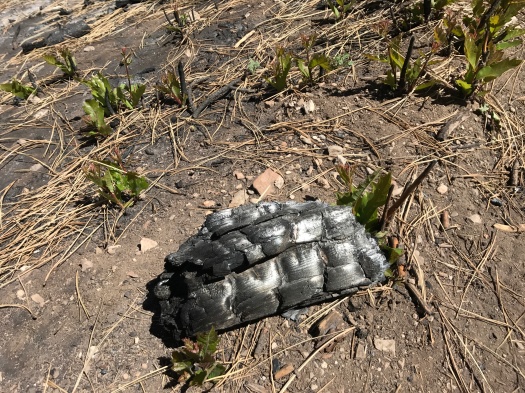
The last fire in David Canyon was three weeks ago. We walked through embers so fresh we could still smell them, and blackened tree limbs that glowed silver in the sun.

IMG_0449

One canyon wall resembled an eyebrow, fire-stripped trees like sticks from an older blaze.

Yet we saw and heard more birds there than almost anywhere we’ve ever hiked. Every time we stopped to rest under a tree, we heard only two things: the wind and birds chattering to each other and us.

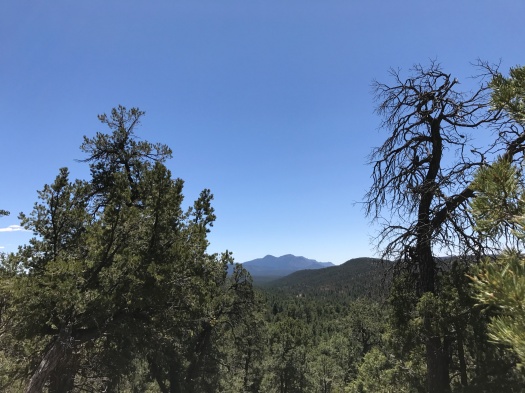
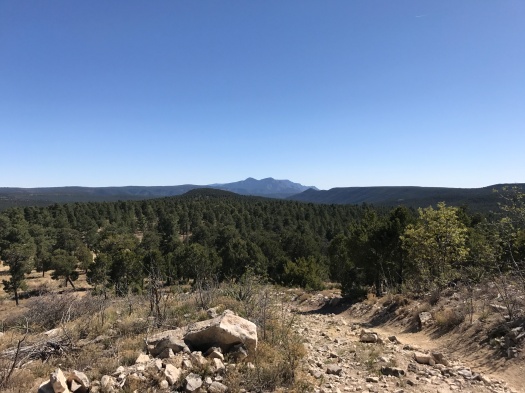
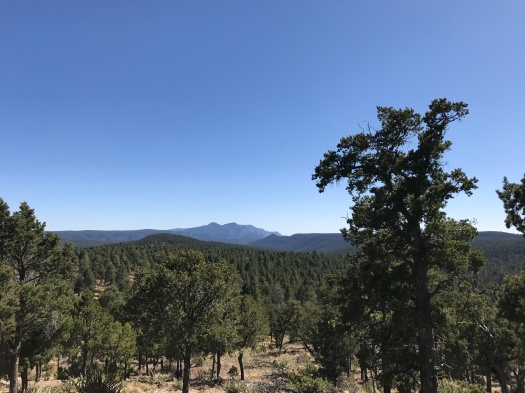
David Canyon sits on the edge of a residential area in the Manzanita Mountains. A couple of lucky souls live in houses perched atop the high canyon walls. As you wind your way down through the forest, killer views of the Guadalupe and Mosca peaks in the Manzanos appear. Those mountains are just 12 miles away, according to our guidebook.

IMG_0442

The steep descent put us exactly at eye level with a pair of nuthatches as they looped around a tree trunk, chattering.

We stopped to rest when we reached the canyon floor, a meadow running both north and south.

IMG_0447

Then a climb up through thick forest eerily spotted with burn scars. Rocky ledges crossed the trail. Two large lizards with distinctive gray stripes darted along the rock.

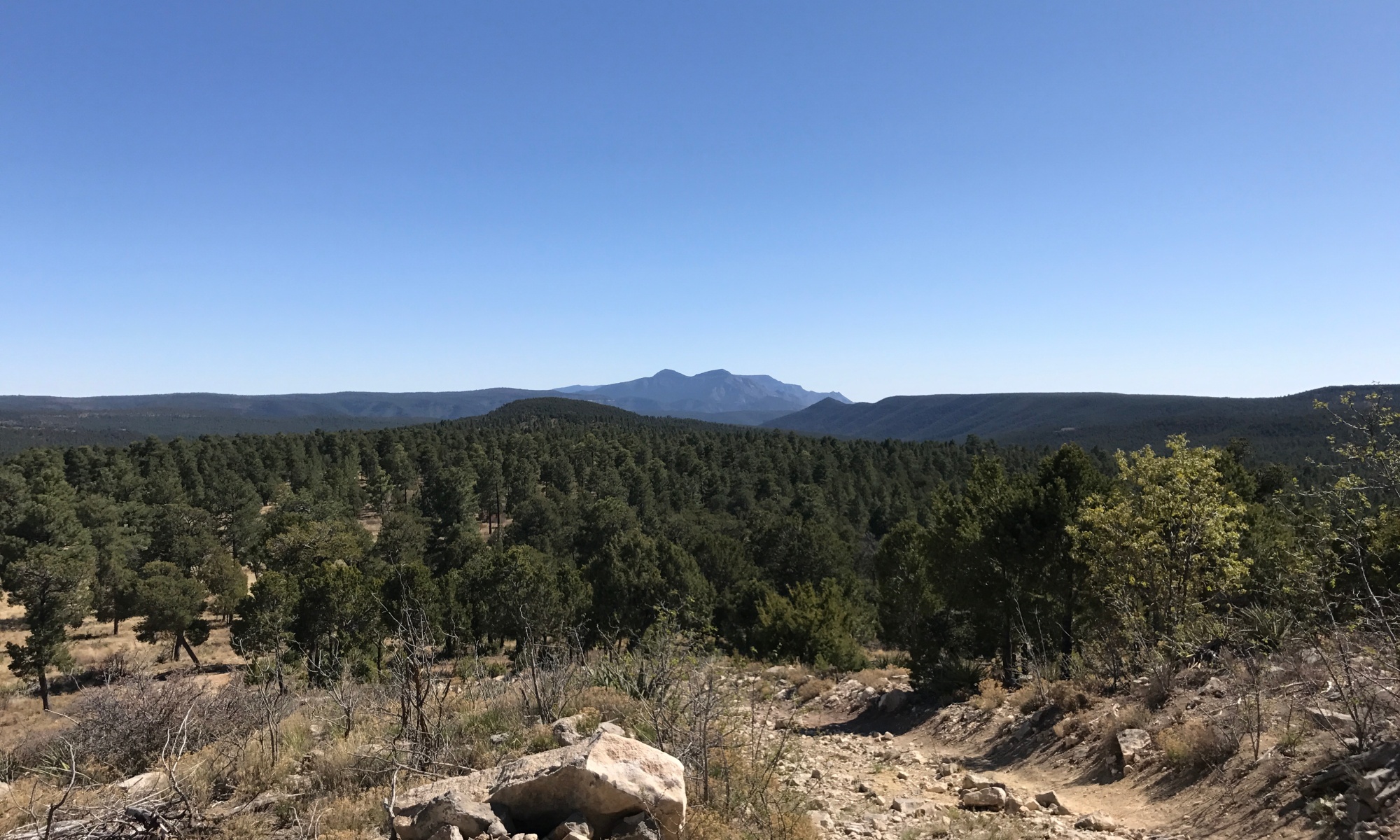
The climb took us to a forest road winding along the ridge. We could see the top of the opposite canyon wall. As the road grew steep and rocky, we gained an unobstructed view of the Manzanos behind us, and the Sandia foothills peeked into view in front.

IMG_0454

IMG_0461

The final section of this hike took us down into David Canyon again, following two rugged forest roads. Ponderosa pines towered overhead, late-afternoon light slanting through them, bird cacophony cascading down.

IMG_0464

If you look at your feet on this hike, it’s pretty monochromatic. Dry grass lines the path; in some spots, the pine needles we sat on to rest were so dried out they were gray.

But if you look up, color saturates your vision: deep green pines wave in the wind, blue sky above, a violet-green swallow flashing overhead.

Hike length: 8 miles

Difficulty: moderate

Trail traffic: minimal

Wildlife spotted and/or heard: lizards, crows, hawk, raven, violet-green swallows, black-capped chickadees, vesper sparrows, nuthatches, hummingbirds, woodpeckers

TIP! One of the best things about this hike is that, with the extensive network of trails and well-marked forest roads in and surrounding David Canyon, you could easily change your mind en route about what you wanted to do here. This excellent route, which I would never have found otherwise, comes from Stephen Ausherman’s “60 Hikes Within 60 Miles of Albuquerque.”

The many moods of the Manzanitas

IMG_0372IMG_0374IMG_0382IMG_0385IMG_0391IMG_0402IMG_0412IMG_0422IMG_0435

Trails hiked: Birdhouse Ridge-Tunnel Canyon loop, plus a little bit of West Ridge

Hike length: 6.4 miles

Difficulty: moderate

Trail traffic: moderate

Wildlife spotted: many kinds of butterflies, vulture, crow, lizard

This is what awaits you behind the Cedar Crest post office

I wasn’t sure where to begin today.

Like all of Albuquerque, I was grieving the loss of a beloved woman, a mother, wife, businesswoman and community service leader, in an unspeakable accident. With my colleagues, I’d written an obituary and created a tribute to her this week.

My spirits low, I dawdled getting to the trail. But when I got there, I could see that what this place had was good for me.

IMG_0286

IMG_0290

IMG_0295

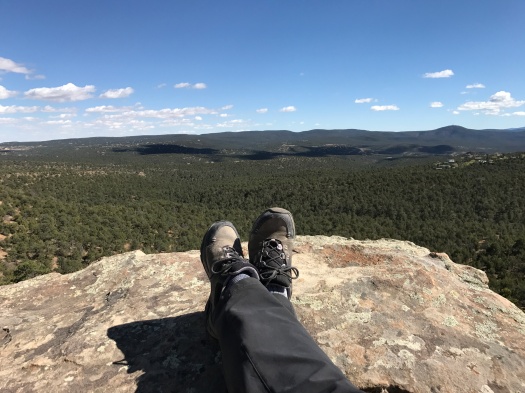
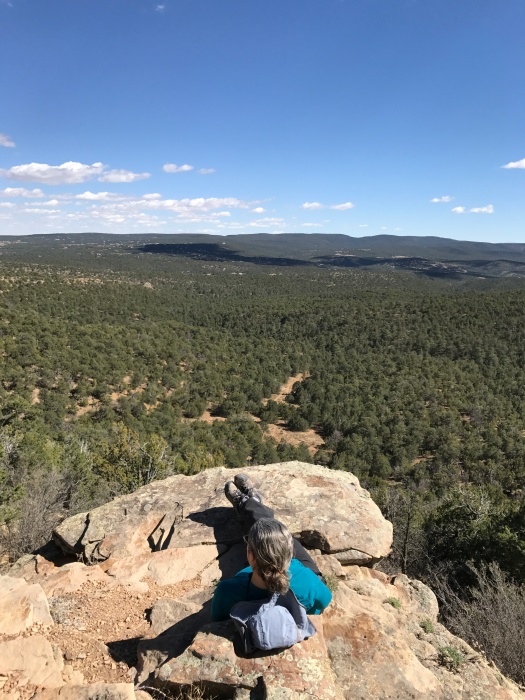
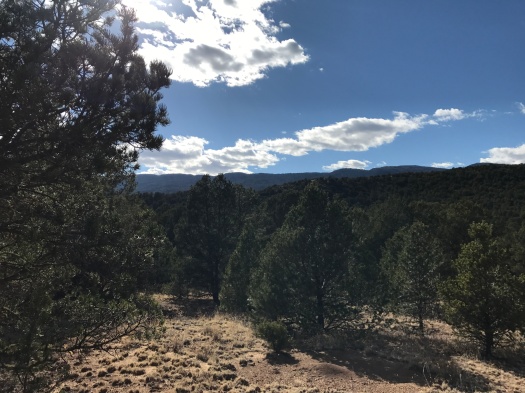
A fragrant green tangle of pinon and juniper. Blue sky and clouds sliding by. A gradual but steep climb to a rock shelf with a sweeping view of the deeply forested East Mountains and faraway Guadalupe and Mosca peaks.

IMG_0317

IMG_0331

IMG_0337

This place is the Milne/Gutierrez Canyon Open Space, accessed behind the Cedar Crest post office. It’s close enough to Highway 14 that you can hear some level of highway traffic throughout most of the space. But the higher you climb, the more that’s overtaken by bird song, the wind and the squeaking of branches. The trail network is well-marked and lightly traveled, especially on the upper trails. We found no map of the full trail network online or at the information board, but it was easy to choose your own adventure.

A little brewery sits right next to the open space entrance. And a barbecue joint is close enough that the smell of smoked meat tantalized us as the sun fell and we meandered along an arroyo. You could stop at either or both to cap off an afternoon spent wandering high above the valley.

Or you could just head back to reality, feet aching, fortified with sunlight and gratitude.

IMG_0345

Hike length: 6.8 miles

Trail traffic: light

Difficulty: moderate

Wildlife spotted: jays, caterpillar, beetles, rabbit, hawk, lizard


It’s one of the most beautiful and famous hikes in New Mexico. And it’s harder than you think.

Getting down that is going to suck.

I’d just scrambled up one level on the side of a cliff with the assistance of my husband and some rocks. I’d scrambled up worse, but never with such a steep dropoff on one side. I knew I could get back down it, but I also knew doing so would trigger my fear of heights.

Once I was up, looking down wasn’t easy, but it was productive.

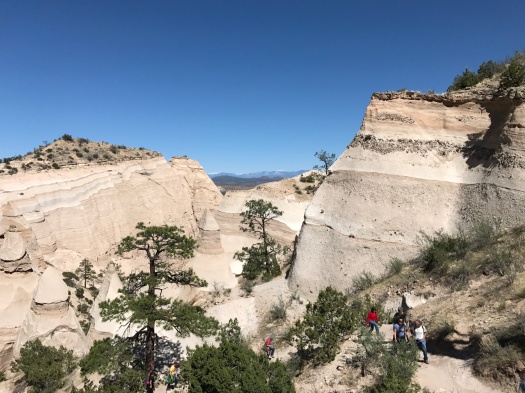
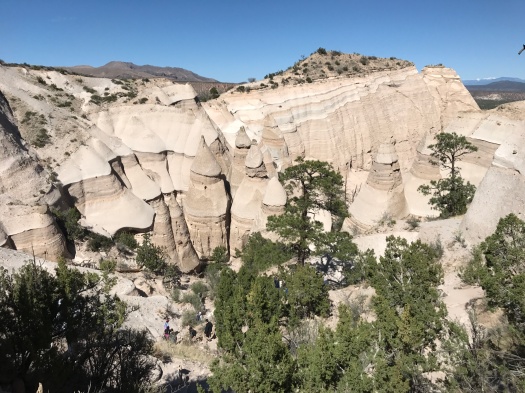
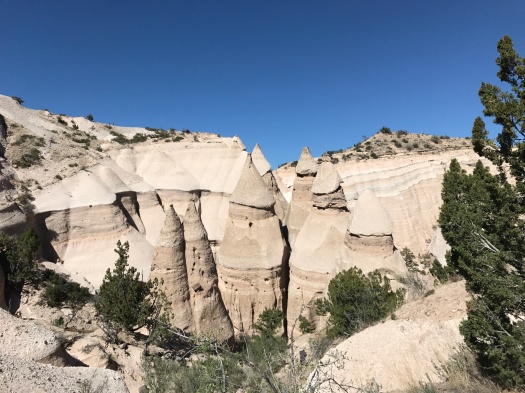
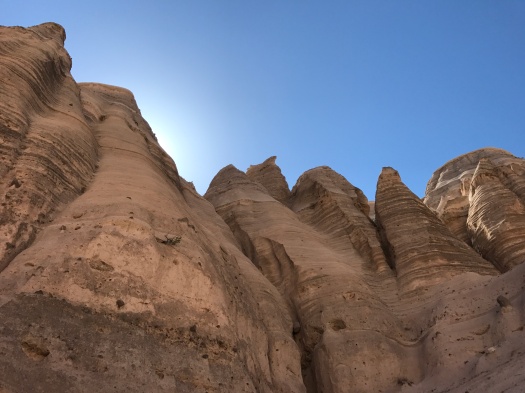
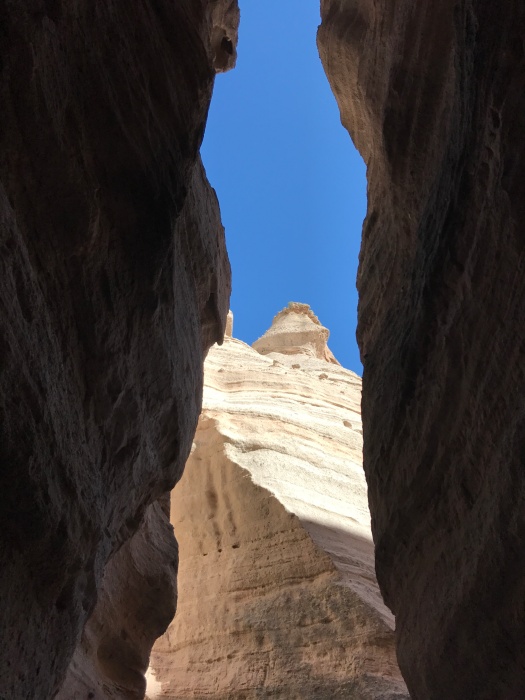
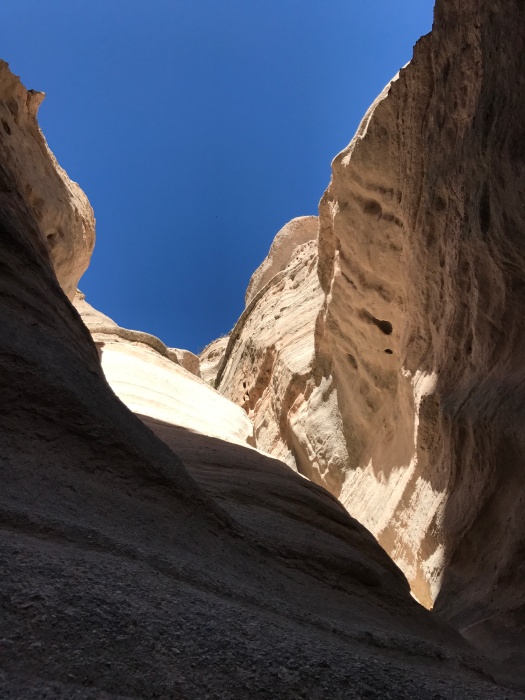
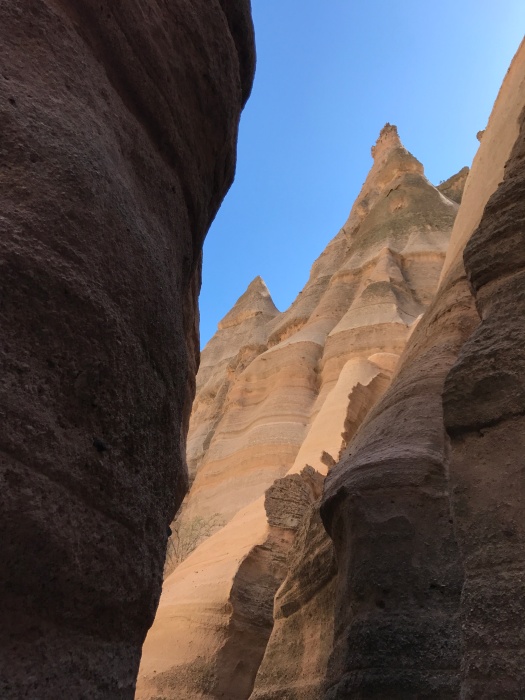
I was staring down at 90-foot-tall hoodoos sprinkled with ponderosa pines. We’d traveled through a 1,000-foot-long slot canyon before we began the climb.

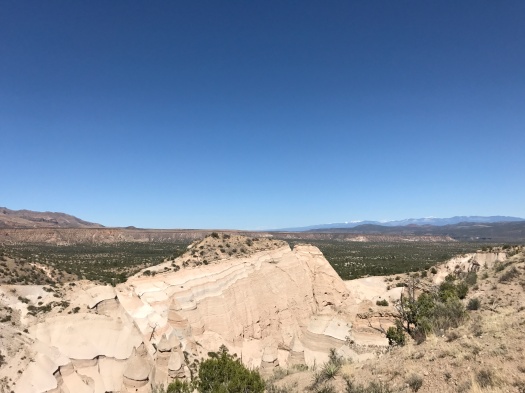
My legs were rubbery, but as the trail switchbacked further up, the snowcapped Sangre de Cristo Mountains came into view behind the hoodoo field.

IMG_0206

And at the top, I could see into the Jemez Mountains, the Dome Wilderness, Tetilla Peak and back to the Sandias, too.

IMG_0208

IMG_0215IMG_0216

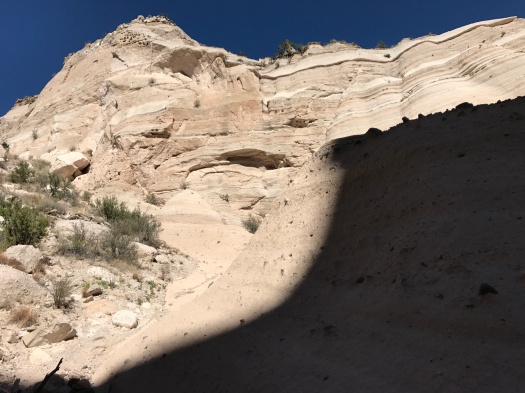
I was standing at the highest point of Tent Rocks National Monument (Kasha-Katuwe in the Keresan language, and a place of great significance to the people of Cochiti Pueblo). We have a six-million-year-old volcanic eruption in the Jemez to thank for the existence of the hoodoos, formed of soft volcanic tuff that’s eroded over millennia.

On a clear and brilliant blue day, Tent Rocks also provided a spectacle we rarely see while hiking in New Mexico: crowds. It’s one of the most-photographed destinations in the state, and over 130,000 people visit every year. On summer days, you might have to wait up to 90 minutes until a parking space opens up. We had no wait to get in, but at one point, we waited as a group of seven peopleĀ  squeezed through a particularly tight spot in the slot canyon one at a time.

Given how popular this hike is with tourists, I was surprised by how challenging it is in spots. The slot canyon and the path through the hoodoos rise gradually, but the trail up the cliff rises 200 feet in 0.3 mile.

Oh yeah, scrambling down that cliff. I tried to back down; I thought it would be physically easier, but I could not make myself do it. We regrouped and let some less acrophobic people by. When I saw one go down facing forward, I did the same, finding enough footholds and handholds to land solidly.

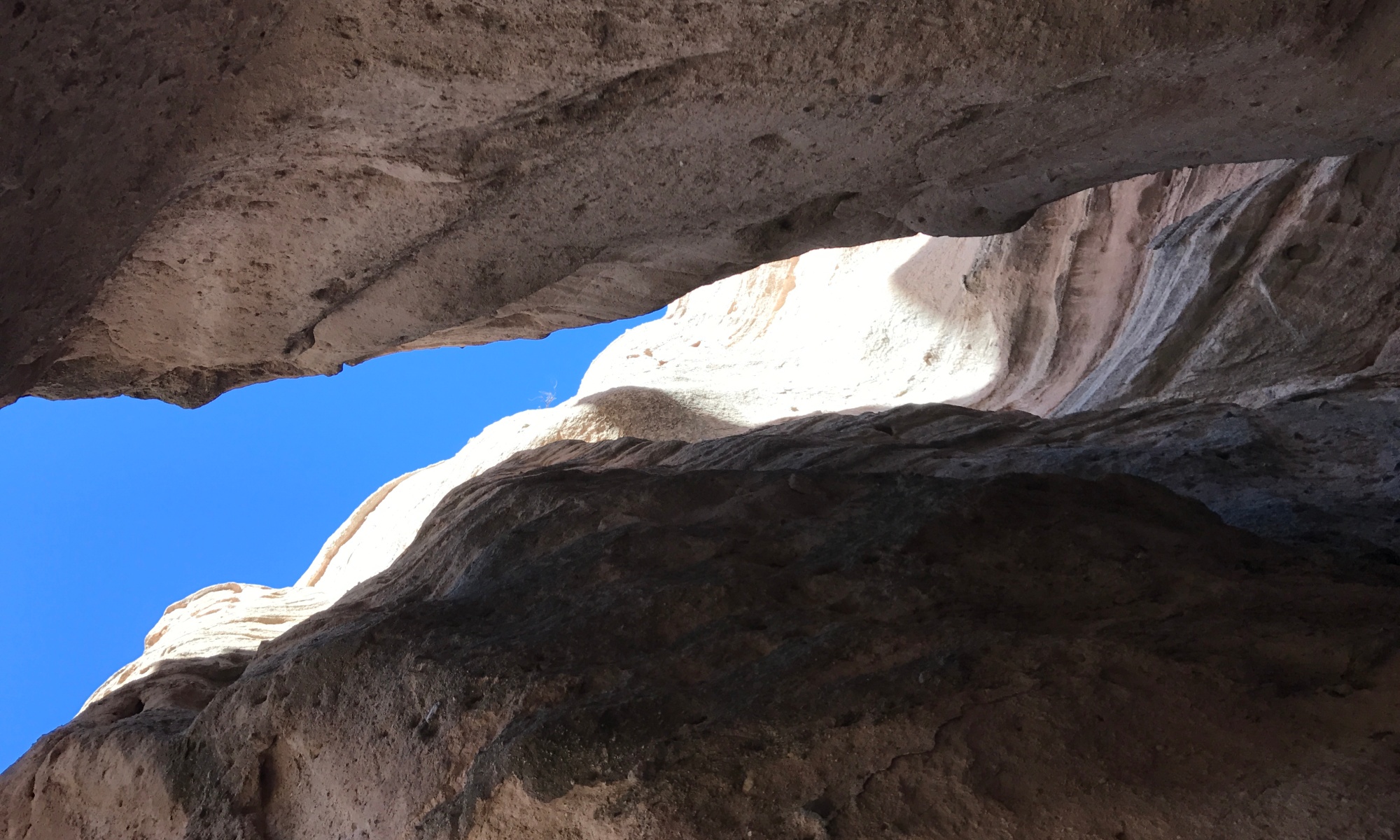
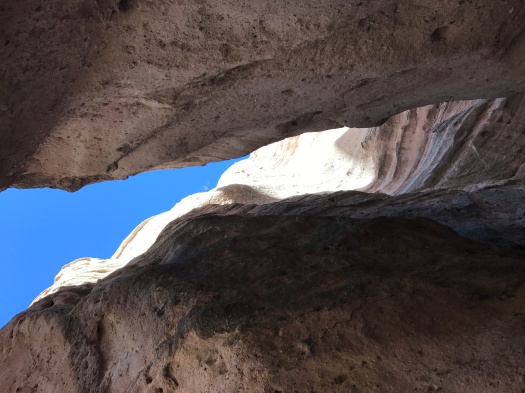
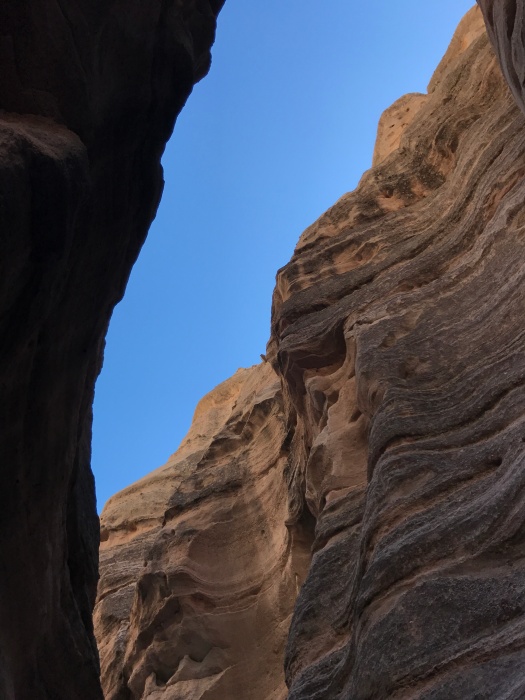
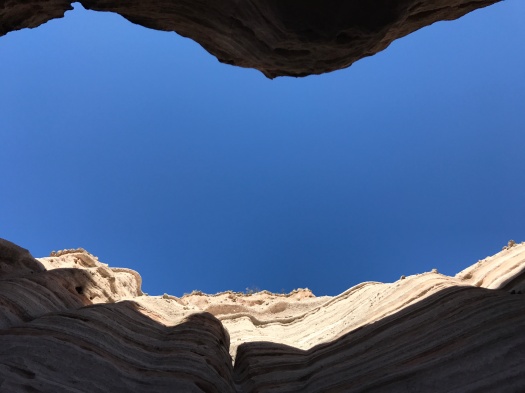
From there, a passage back down and through the slot canyon, all cool rock, light, shadow and sky.

IMG_0230

IMG_0235

IMG_0245

IMG_0250IMG_0251

IMG_0260

IMG_0252

IMG_0263

IMG_0266

IMG_0190

IMG_0201

IMG_0203

Hike length: 4 miles (including the Cave Loop)

IMG_0186
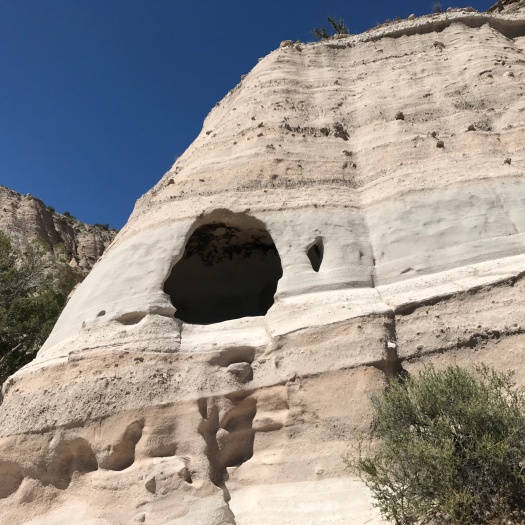
Can you see the smoke on the roof of the cave from long-ago wildfires?

Difficulty: moderate

Trail traffic: busy

Wildlife spotted: bluejay, white-throated swift, crow, bald eagle?!? (sitting on a power line above the Rio Grande just outside the monument boundary)

Thanks: I’m grateful to the people of Cochiti Pueblo for allowing the public to use its land to access this amazing place.

Want more hoodoos? I got more hoodoos.

*Note: The Veterans’ Memorial Overlook loop, which we’d also hoped to hike today, is closed until Tent Rocks can hire another ranger to patrol it. There were only two working the busy park today.


The struggle is real: This trail pushed my boundaries

“GAAAAAAAAHHHHHHH!”

Lift foot a little higher up the 50-degree slope. Brace pole. Push body up trail, husband assisting by pulling my arm upward.

Pant.

Make that noise again.

Repeat.

We’re on a side path of the Boundary Loop Trail in the Sandia foothills.

I use the term “path” in the loosest sense. There is one. But it’s insanely steep, and twisty, and rocky, and fades out a lot. Like a game path, better suited to light-footed deer than humans.

When we’d reached the far point of the loop we were familiar with, splinter trails branched off all around us, rising up to steep ridges and down into steeper canyons. I couldn’t resist exploring them, but I knew it would be hard.

Even amid all the grunting, our rugged route provided stupendous views of the Sandias’ Shield, Prow and Needle and Juan Tabo Canyon. A notch in the canyon wall, from our steep angle on the trail, yielded a perfect view of Mount Taylor.

IMG_0159

IMG_0161
Author Ruben Martinez calls this “flying pinon.” I’d just read his description of it the night before seeing this one.

IMG_0163

IMG_0165

A few houses nestled low in the canyon.

“If I lived here,” my husband said, “I’d climb up to the top of that canyon wall every day.”

“No you wouldn’t,” I said. “That’s gotta be pueblo land.”

As we staggered down into the canyon, the pueblo fence came into view, stretching up toward the notch in the wall. I savored being right; it doesn’t happen often on the trail, since my husband’s been hiking New Mexico mountains and arroyos for decades longer than I have.

But being right didn’t make my legs any less shaky. It was 80 degrees, this hike had precious little shade, and the energy I’d expended climbing and descending repeatedly had heated me up further. I couldn’t wait for the moment when I’d get into the car and blast the air conditioner.

Luckily, we found a gentle, rolling path back to the trailhead that we’d missed our first time out here.

The car felt like heaven. As we drove away, all the things I’d experienced before the taxing climb came back to me: the cool breeze, the black and white and yellow butterflies darting around, the jay that flapped by squawking, the red-tailed hawk gliding high above a ridge.

IMG_0166
Mystery plant in arroyo

IMG_0170

IMG_0148

The moments when I’d longed for the hike to be over swapped places with the beauty of it in my memory, and the wish that it was still happening.

IMG_0151

I remembered the words of a yoga teacher, when we were all pretzeled into a thigh-burning, off-center shape: “What happens for you when things get challenging?”

And another yoga teacher: “If you practice struggle, struggle is what you’ll learn.”

What would a really rugged trail be like with just burning legs and lungs and feet scrabbling on rocks, minus the struggle?

I don’t think I know yet.

But I’d really like to.

Hike length: 5 miles

Difficulty: moderate, strenuous beyond the end of the loop

Wildlife spotted: butterflies, caterpillar, Say’s phoebe, bluejay, red-tailed hawk, chipmunks

Trail traffic: moderate

This is what it feels like to hike on top of a volcano

Everything is the sun.

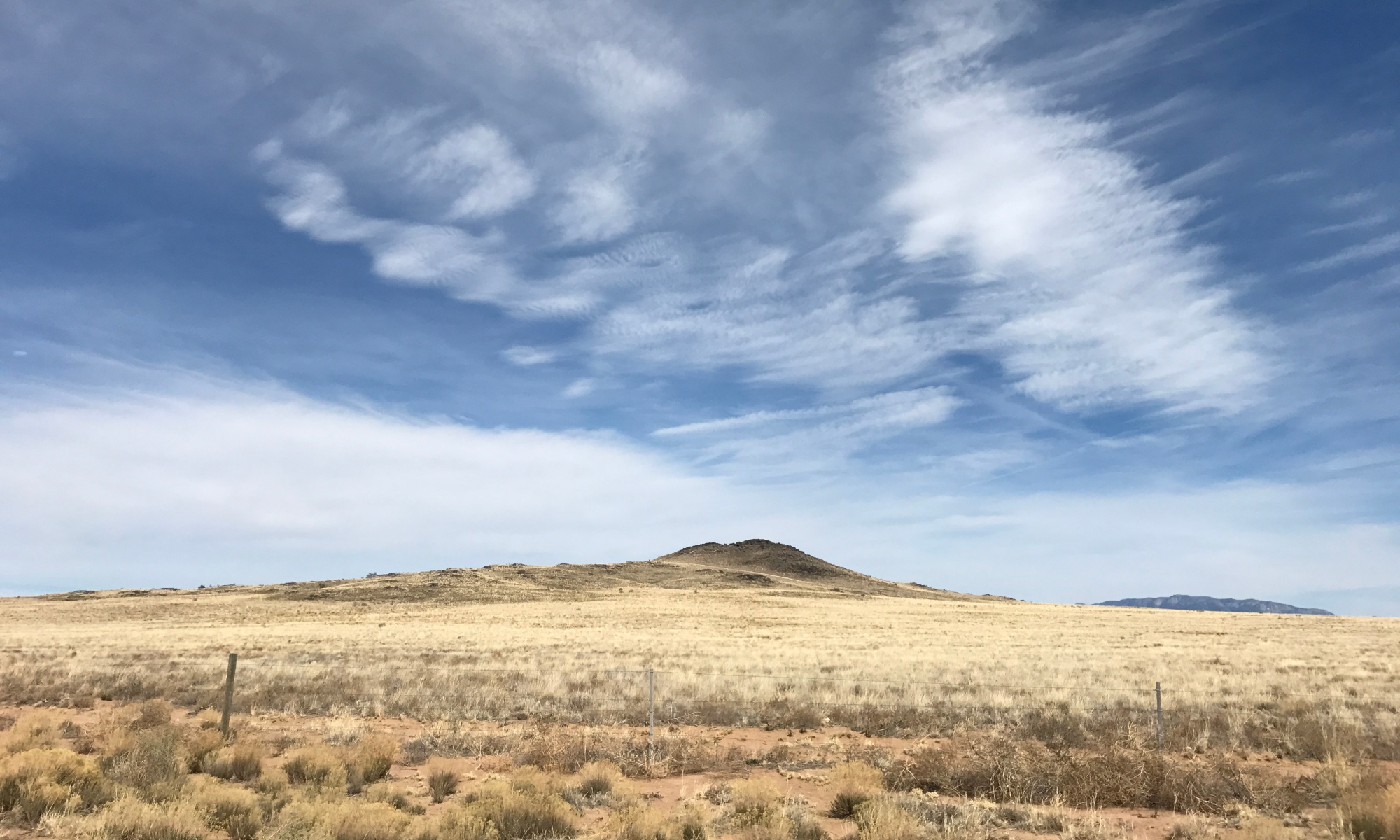
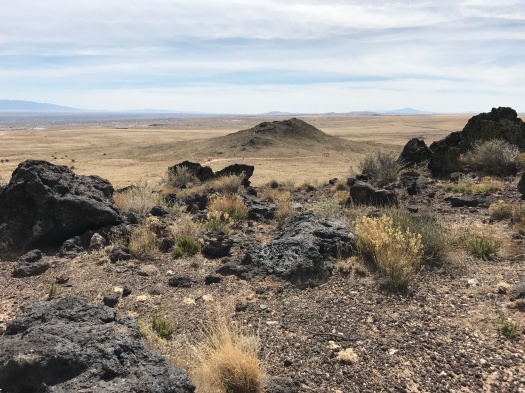
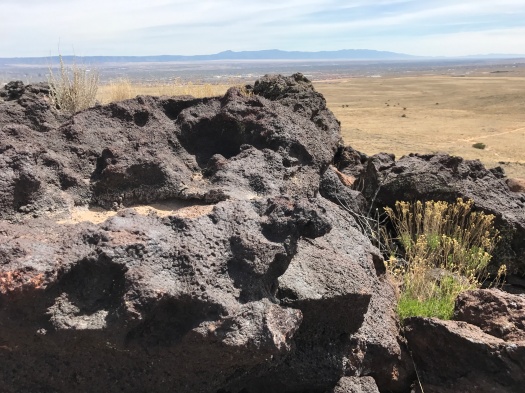
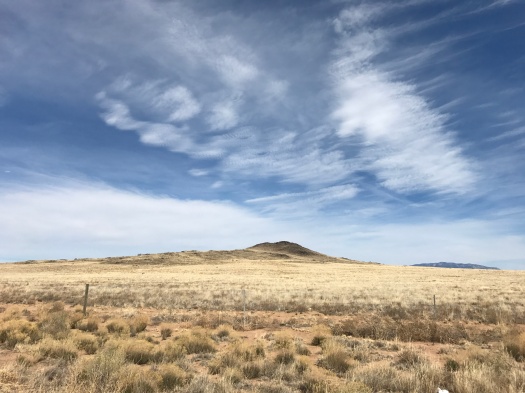
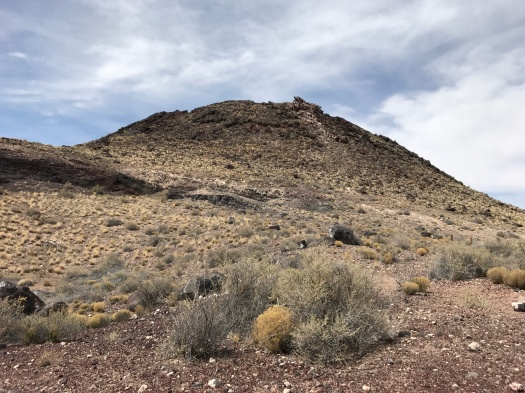
The sweet soaking rain that bathed the city last week must have stopped at the West Mesa escarpment. The prevailing colors are buff (the grasses), blue (the sky) and black (the hole-riddled chunks of basalt.)

IMG_0087

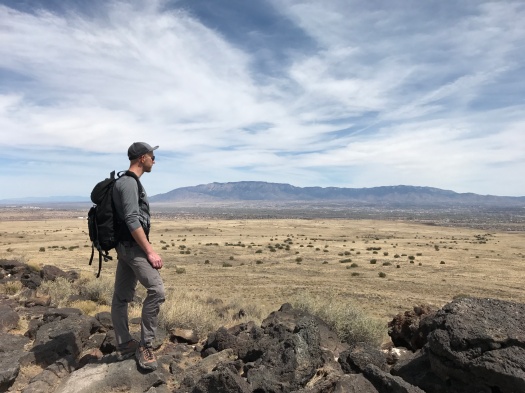
Rocky paths circle the flanks of the volcanoes, climb to ridges. Calves burn. Feet seek stable purchase on the ever-changing terrain.

IMG_0094

IMG_0098IMG_0099IMG_0104

Red, gray and white pebbles surround an old quarry. I pull the brim of my hat to its rarely-used lowest setting.

IMG_0110

The west wind blows, the only coolness to be found here. A crow rolls along buoyantly on it, cawing. We look down at small planes that lift off the runway at Double Eagle Airport and climb into the cloud bank.

A lizard’s yellow-and-white chevron stripes flash through the dry grass. He stops, does a few pushups, repeats and disappears under a bush.

A shade shelter we passed earlier looms before us on the return. All I can think about is how good it will feel to rest beneath it. But when we get there, theĀ  benches are baking in full sun. We keep walking and find another shelter, this one in actual shade.

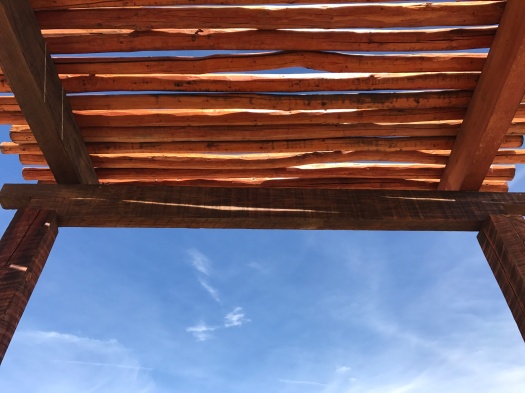
It’s cool under the portal, staring out at one of the cinder cones.

IMG_0122

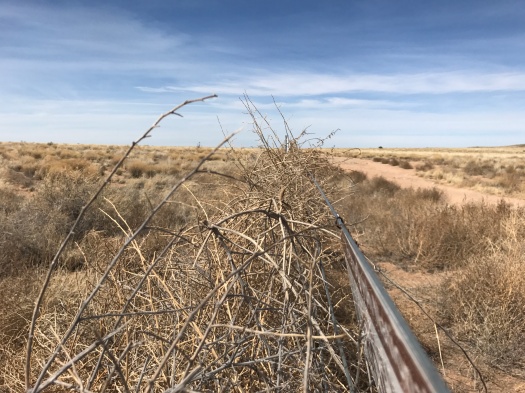
I think of walking along the tumbleweed-lined jeep road now that I’ve had a chance to cool down.

But when we emerge again into the sunlight, it’s clear the trail will end just as we’ve received the maximum amount of sun possible before it becomes too much.

P.S. It was partly cloudy today.

IMG_0126

Hike length: 4 miles

Difficulty: moderate

Trail traffic: low to moderate

Wildlife spotted: crow, lizard, grasshoppers, dark-eyed juncos

IMG_0135