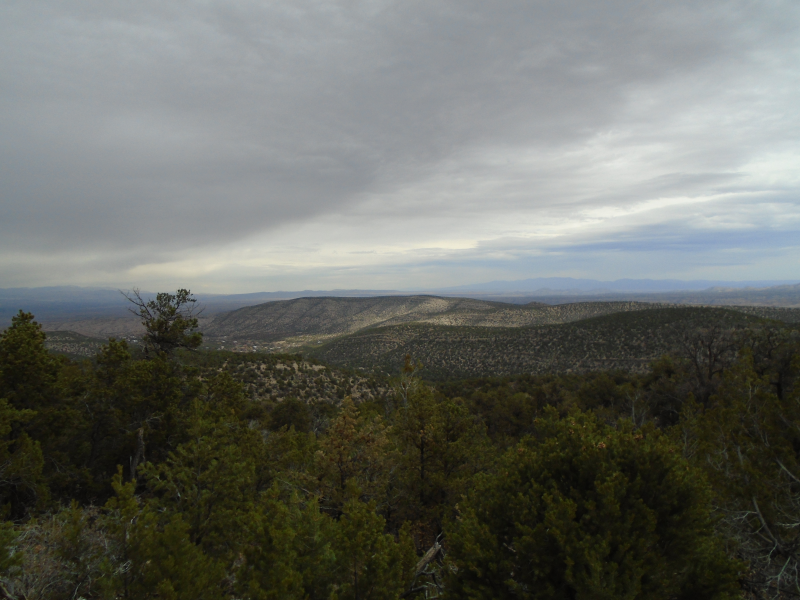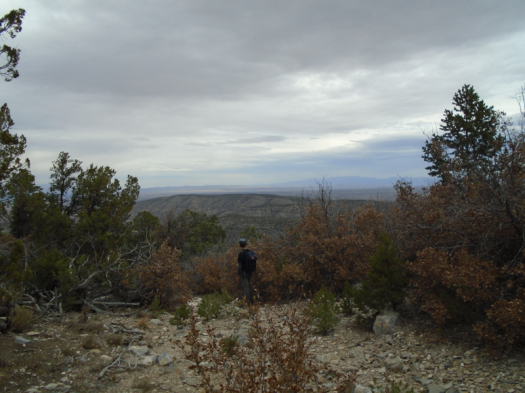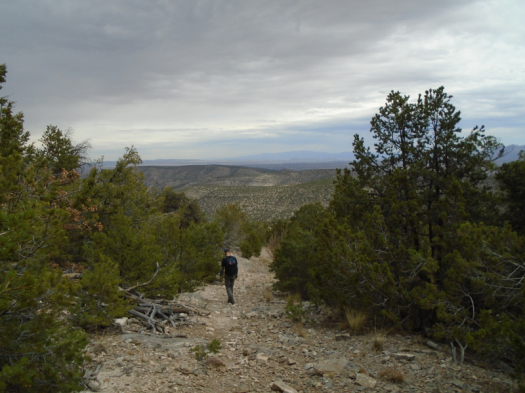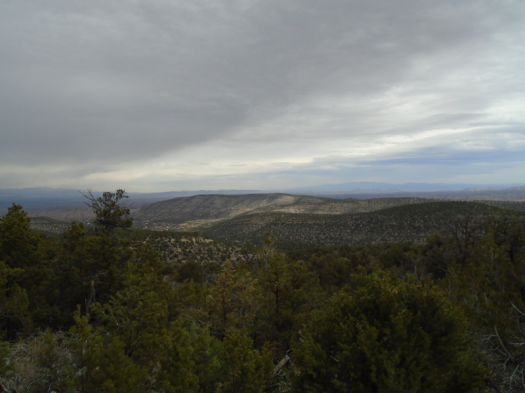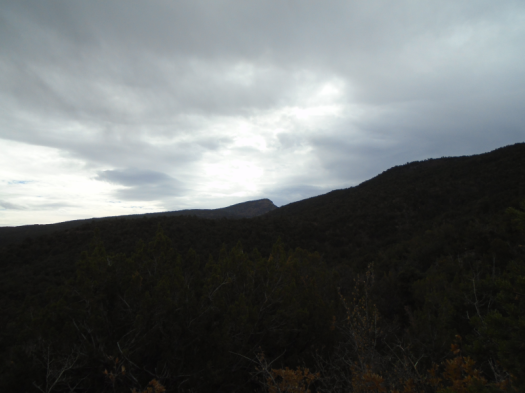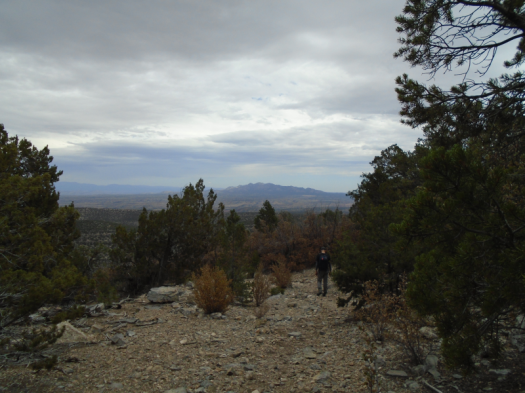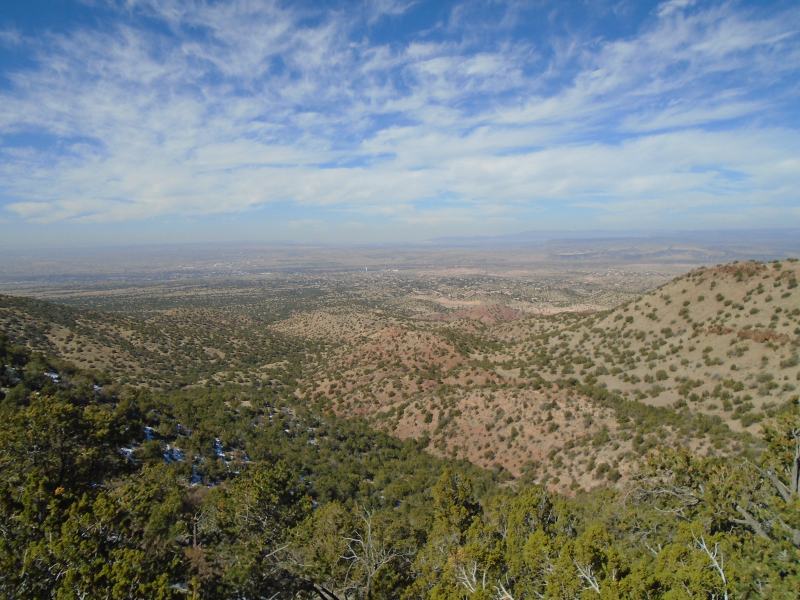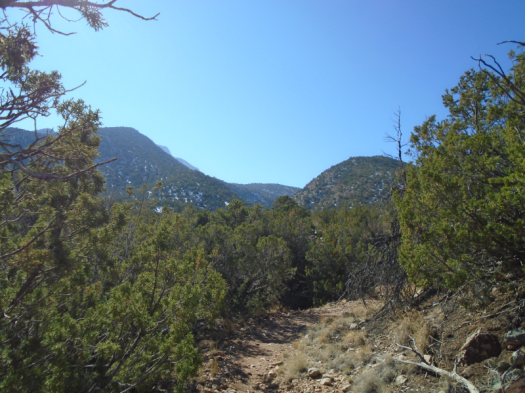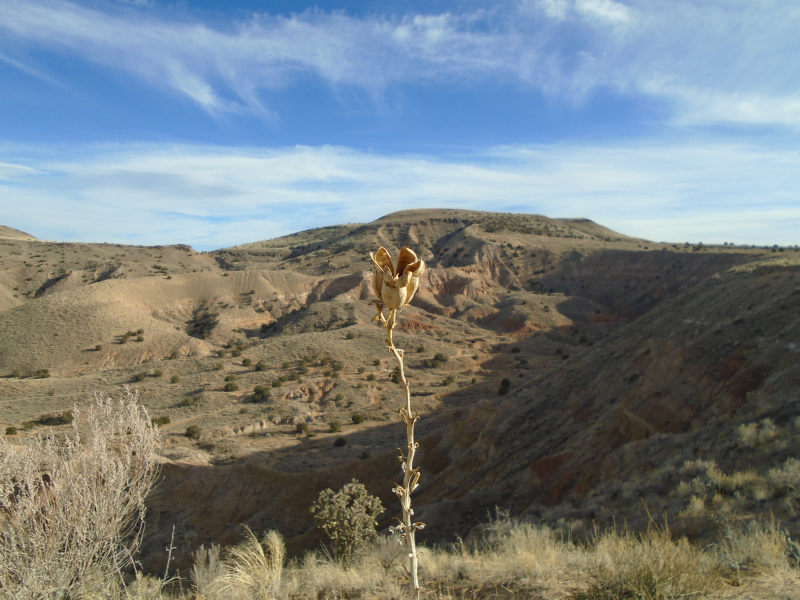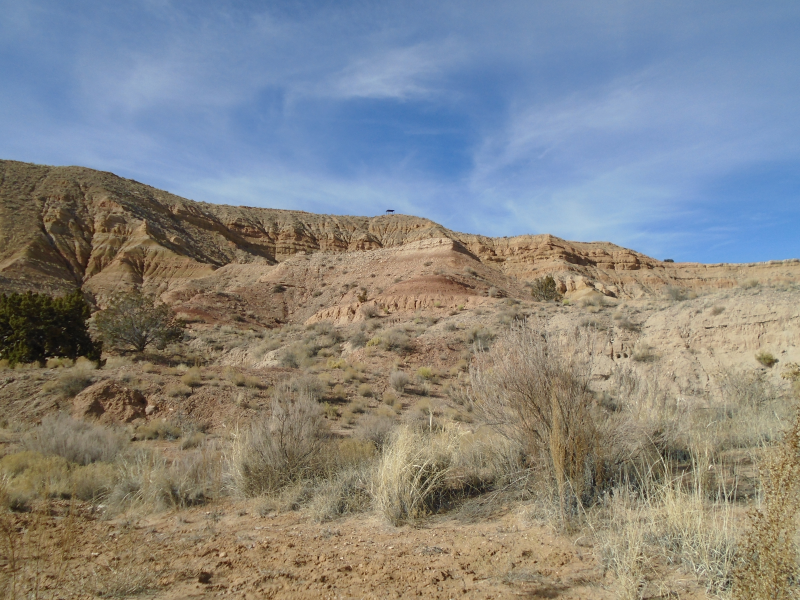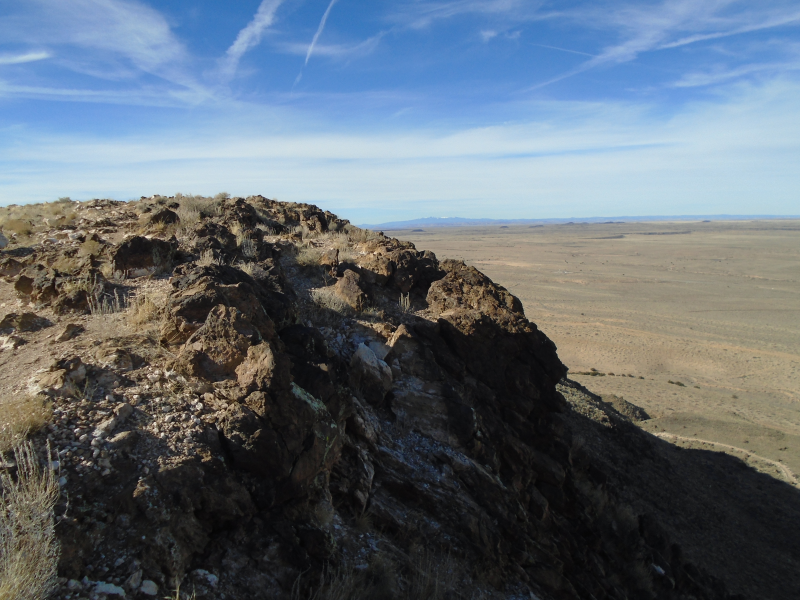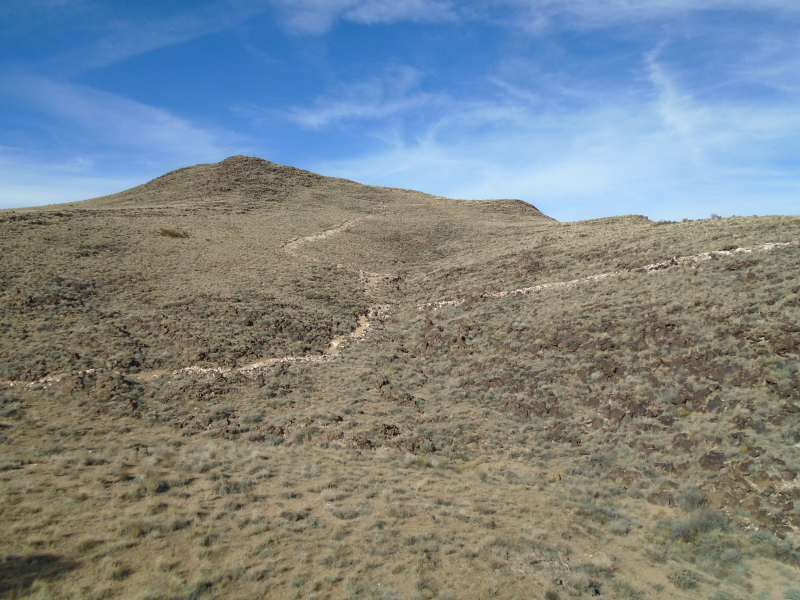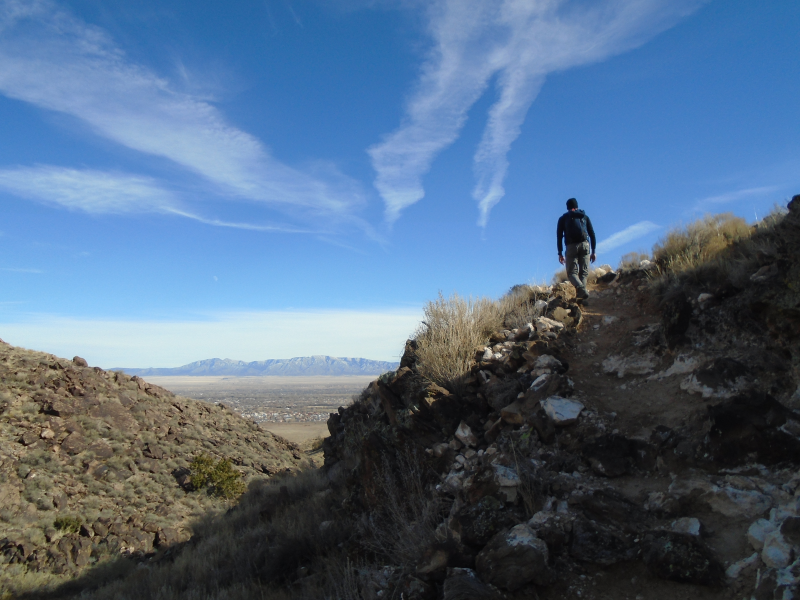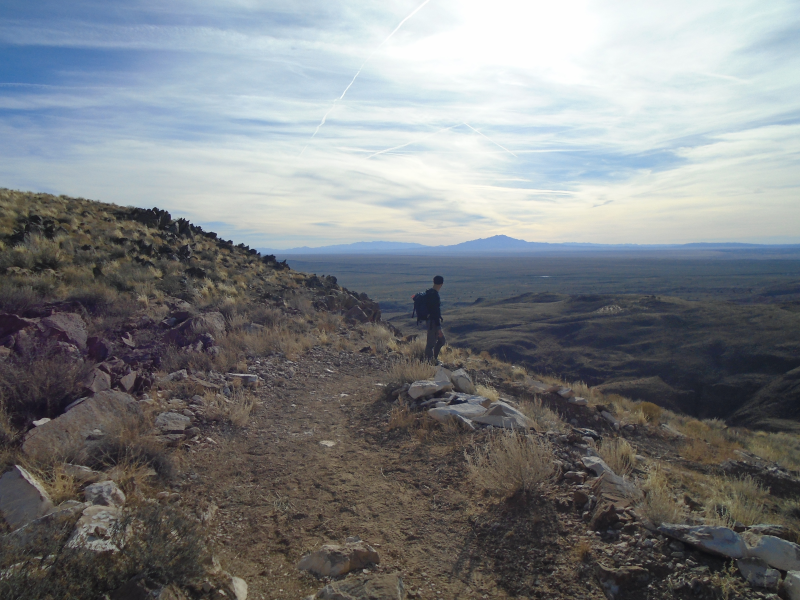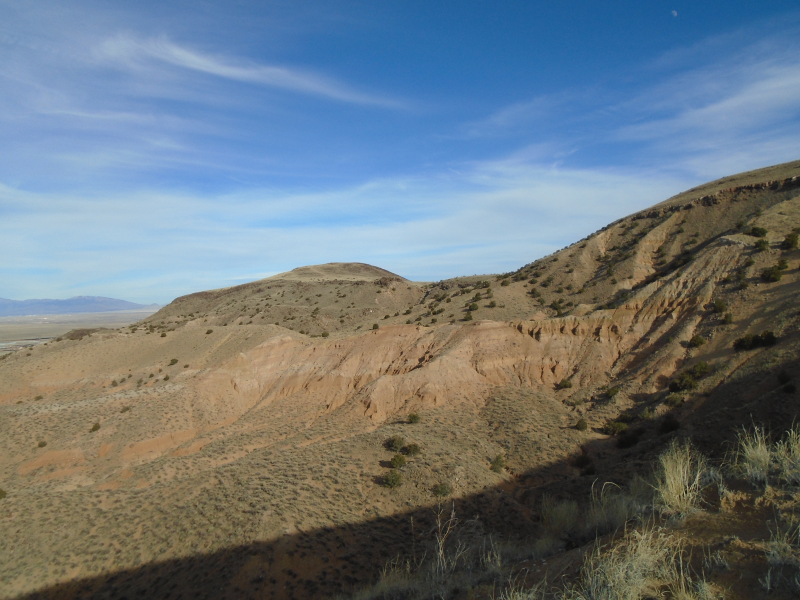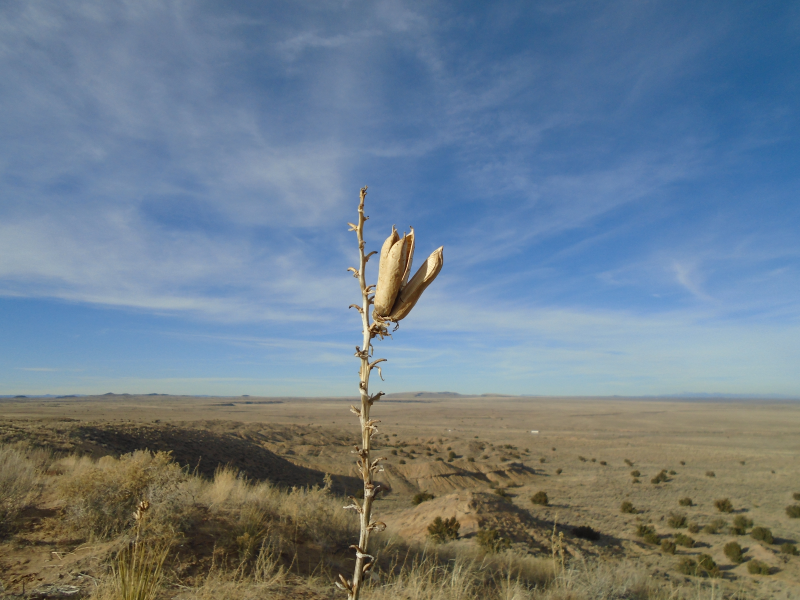
An East Mountain snow day in two acts

I.

Snow is glistening.

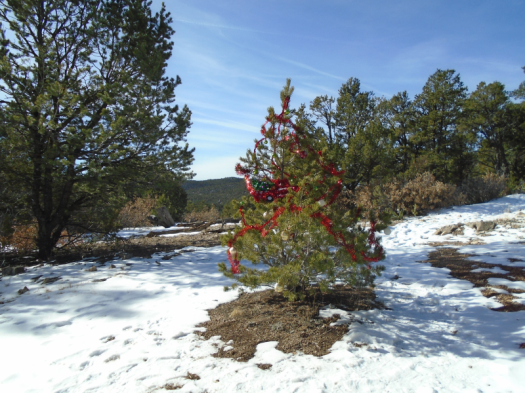
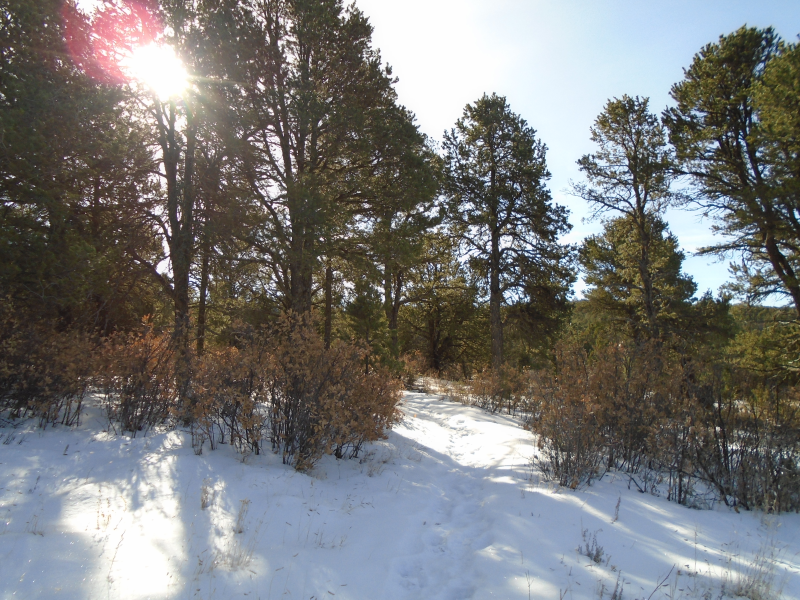
For the first time, on a quiet morning at Sabino Canyon, I can see it. Maybe it’s the sun’s angle, the snow’s consistency. Several inches blanket the ground.
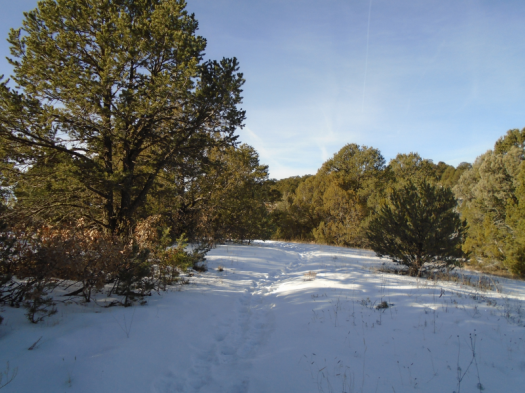
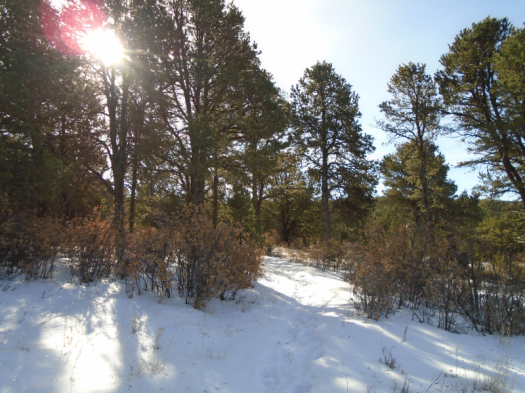
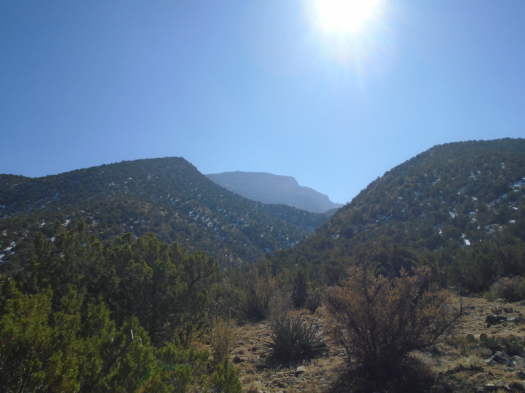
An interpretive sign informs me that I stand on the Manzano Mountains’ northern plateau. I would have told you I was in the Manzanita Mountains, but I accept the serendipity of my first winter visit to my favorite mountain range.

The trail passes the ruins of an old fur farm. Spotted towhees flit where foxes and minks once were caged.
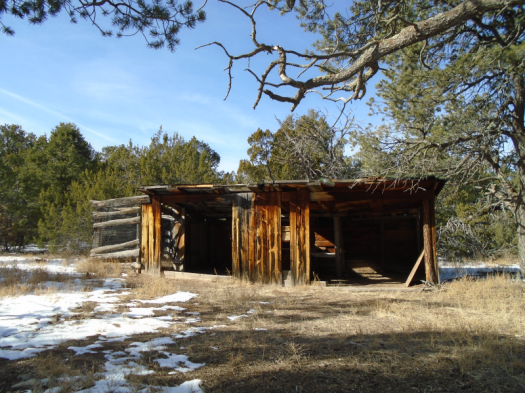
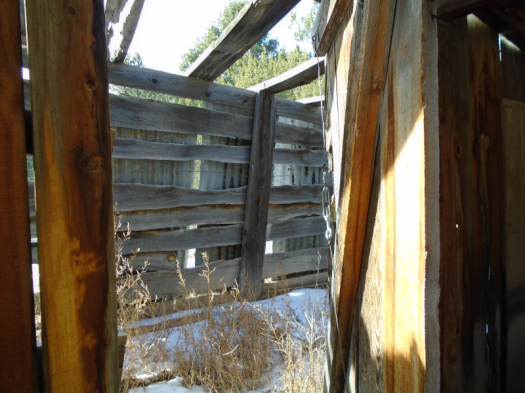
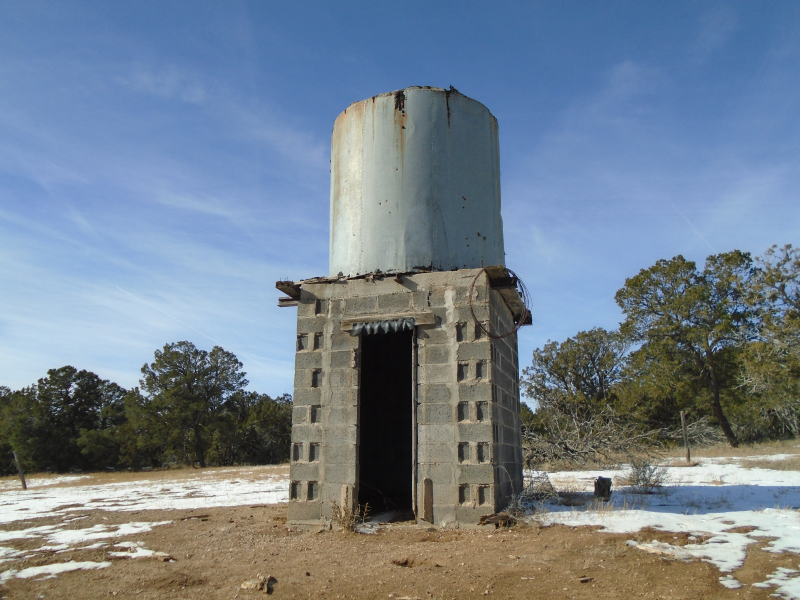
The old fur farm’s water tower

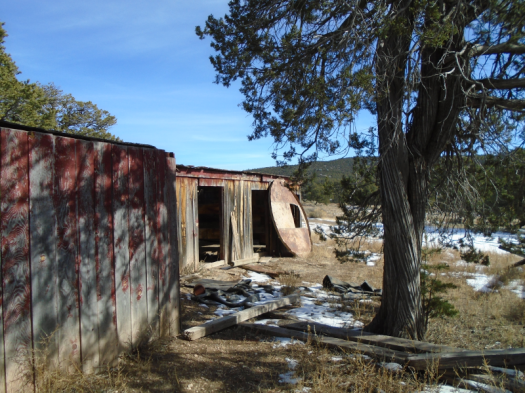
An icicle in a corner of a farm building makes me shiver. Something about the corner’s green patina from age and lack of use.

Still, I feel safe alone out here.

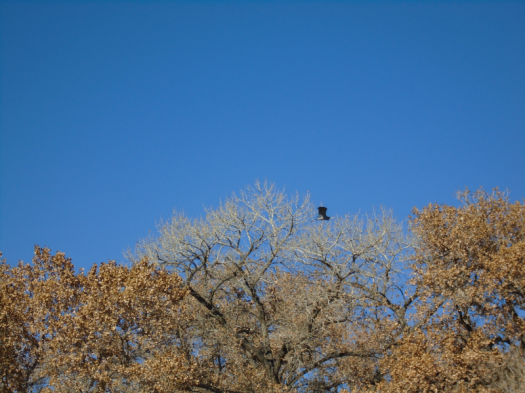
An enormous hawk swoops toward me. I think it’s an owl before I register its raptor-face staring into mine. It banks twice. Striped wings glow in sun.

I consider hiking the whole loop again, but I couldn’t improve on it.

Hike length: 2 miles

Difficulty: easy

Trail traffic: none

Creatures seen/heard: dark-eyed juncos, spotted towhees, crows, hawk, woodpecker

II.

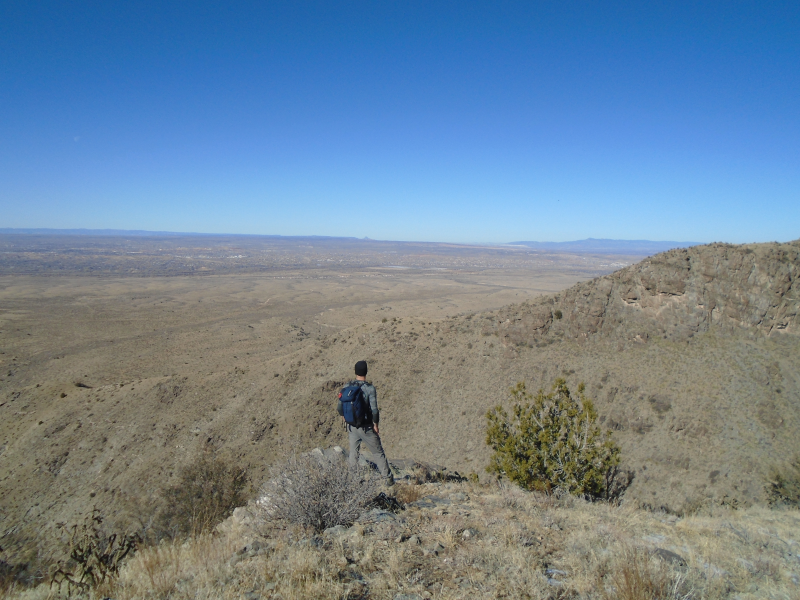
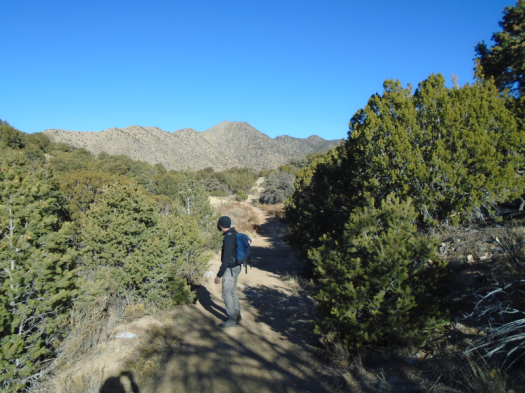
I can no longer deny that I’m not on a trail.

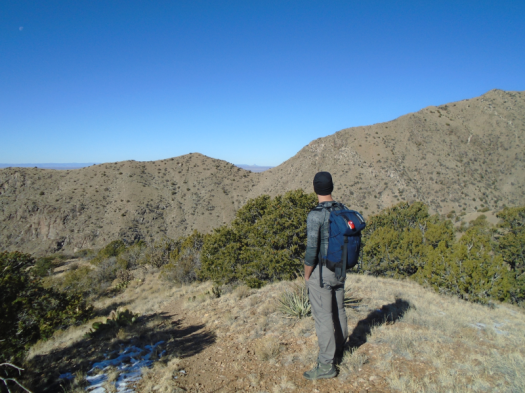
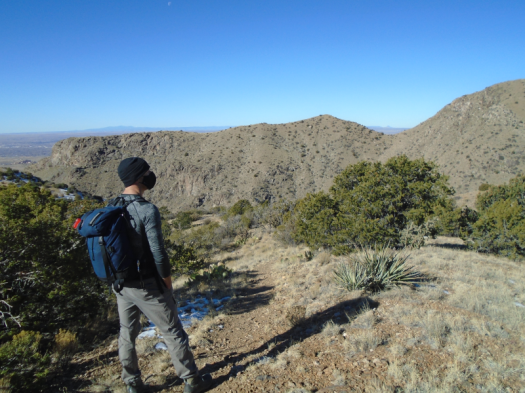
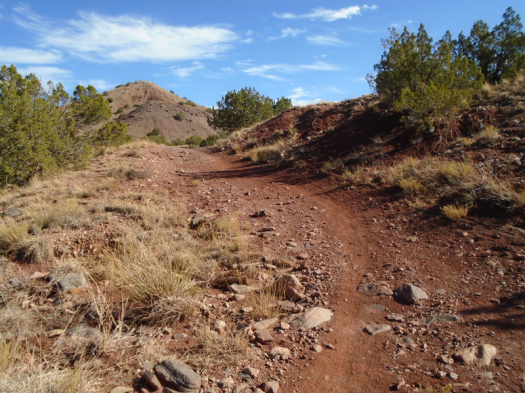
I’ve denied it for a very long, cold half-mile since the last junction. Followed footprints into deeper snow, steeper terrain. Postholed. Slid on the occasional sunny slope of pure mud.

But the footsteps I followed have ended.

I retrace the steps, this time uphill, sweat through my fleece.

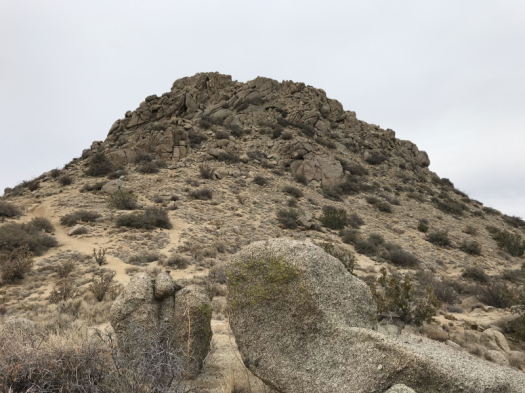
I knew the score as soon as I looked at the map of San Antonito Open Space.

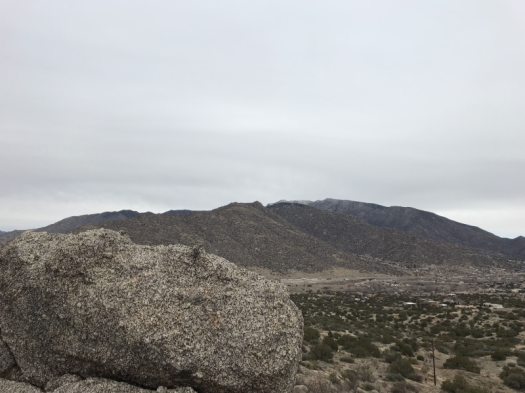
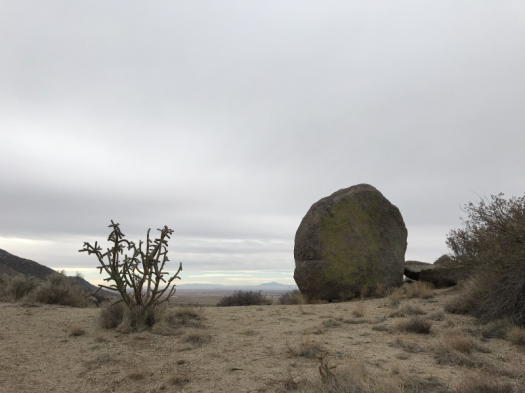
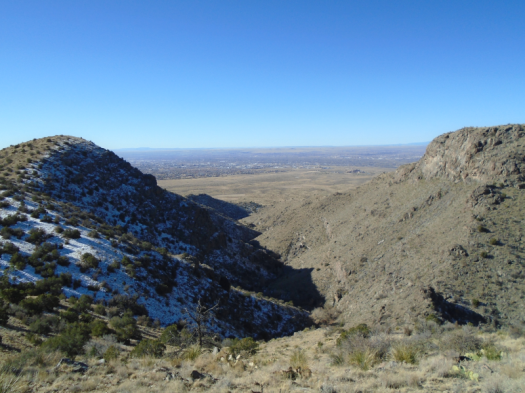
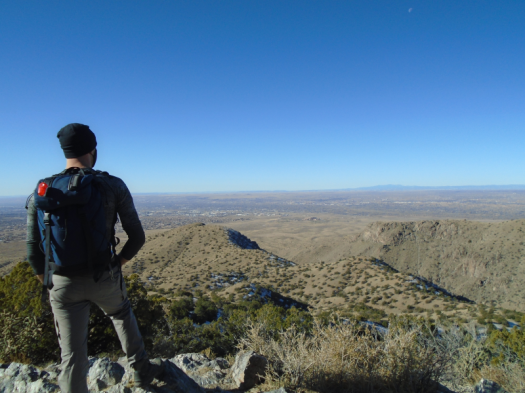
The city owns several more open spaces like it in the East Mountains. Places where mountain vistas and overlooks of the plains butt up against big houses and bigger yards. Places with many ways in and out. With unsigned trails, and a lot of them.
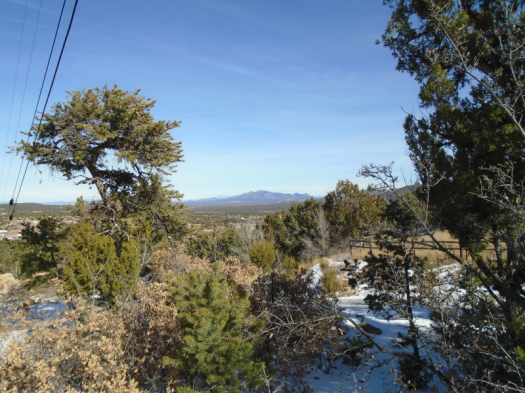
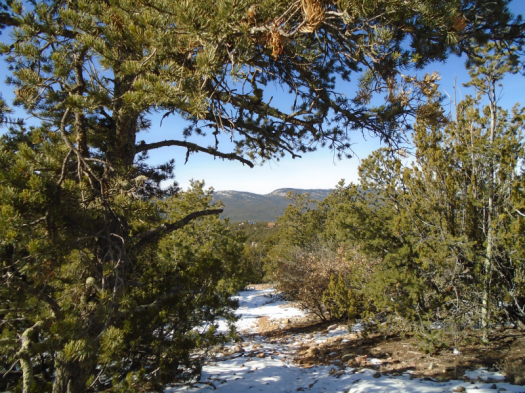
These open spaces are compact enough that I’ve never been close to getting truly lost, but my reality often has not matched the maps.

That’s why I’d passed up a perfectly good trail that would take me back south, the general direction of my car. I sought a different trail on the map that would take me directly back to my car.

But that trail was somewhere under snow on a north-facing slope. And I’d left my poles in the trunk because this would just be a short outing.

I reach the perfectly good trail again and take it. At the bottom, little trails cherry-stem out to the road.

None of the first little trails I try are the right one. But I’m close. I hear the dog that barked its head off when I got out of the car.

After at least six wrong turns, I reach my vehicle.

I drive away, and a worry that’s chewed at me for a week pokes its head up. Then I realize: this worry surfaced earlier, during Sabino Canyon bliss.

But I didn’t spare it a single thought as I slipped, slid, postholed and backtracked across one of those confounding East Mountain open spaces.

Hike length: 2.5 miles

Difficulty: moderate, without the detour

Trail traffic: almost none

Creatures spotted/heard: crows, Northern flickers, woodpeckers, dark-eyed juncos
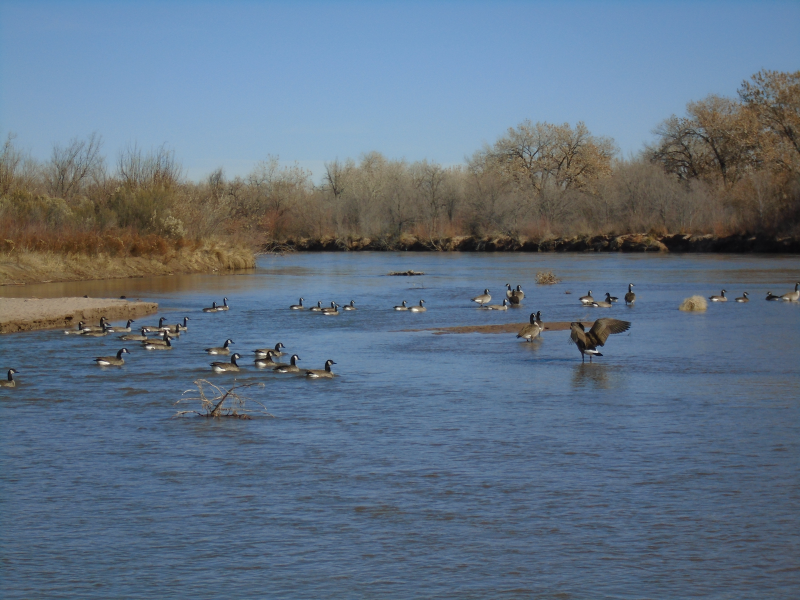
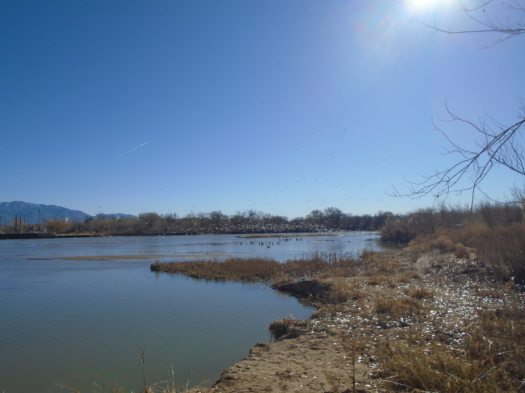
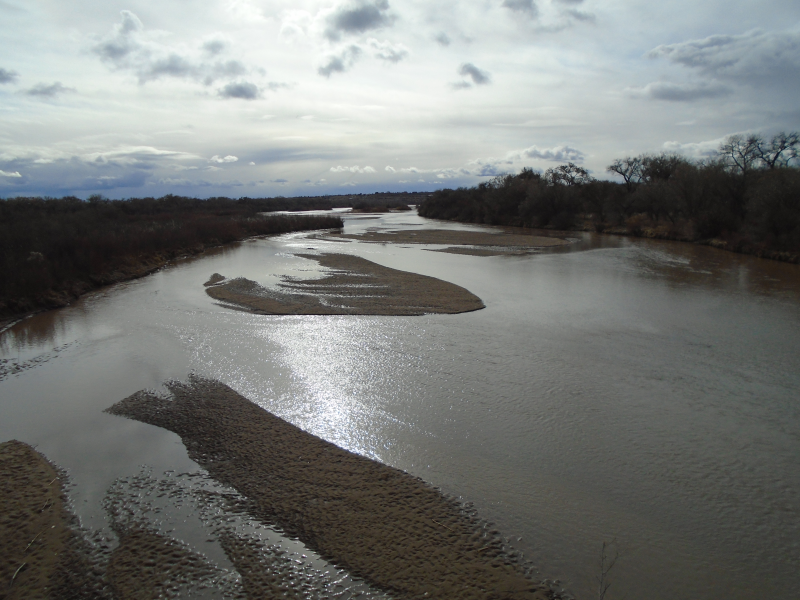
A river can

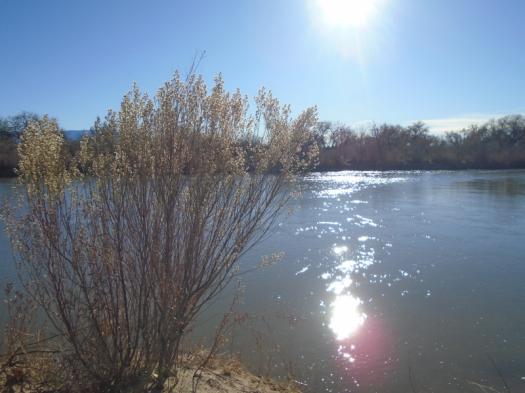
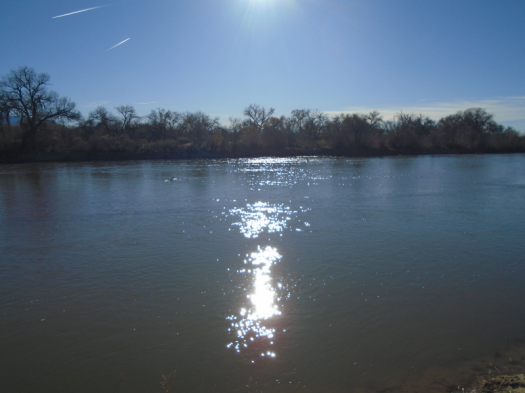
A river can shine

in winter sun

reflect it

to warm you

A river can shiver

in winter wind

A river can sustain

multitudes

with a trickle

A river can comfort

even

as it suffers

A river can spin

a tornado

of ring-billed gulls

glide them

back to splashdown

A river can defy

all known color palettes

charcoal?

in the desert?

A river can teach you

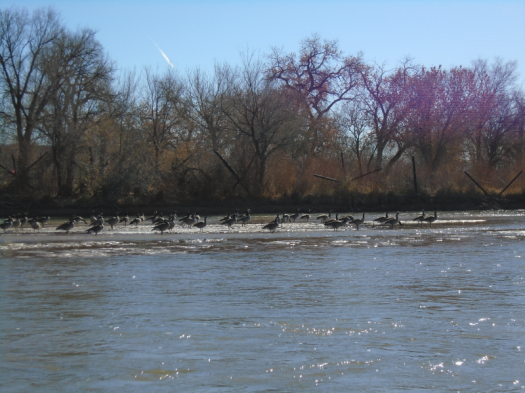
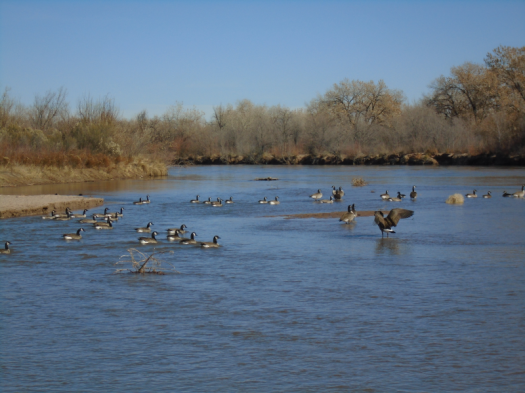
one squawking, flapping species

from another

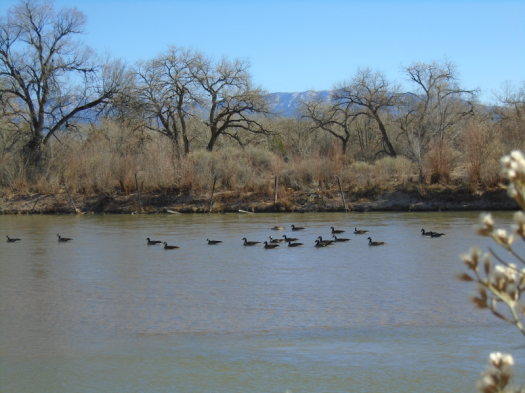
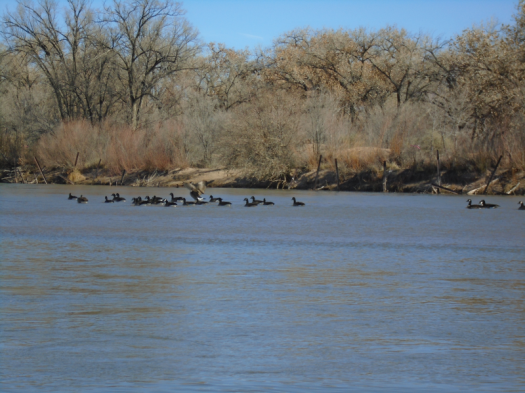
Canada goose

from wood duck

from great blue heron

A river can do all this

in sight of

in spite of

heavy machinery

an inflatable car wash dinosaur

three-car pileups

belching fumes

record heat that breaks

record heat

A river can show you

how cheap

you’ve made the word resilience

A river can show you

how deep

you’d have to go

to begin to begin

in mere inches of water

a river can

The hike: The Rio Grande from Calabacillas Arroyo to the Alameda Bridge

Trail traffic: none

Difficulty: easy

Length: 4 miles

Creatures seen/heard: sandhill cranes, ducks, geese, doves, finches, starlings, crows, great blue heron, ring-billed gulls

Go play in traffic (and broken glass, and rocky cliffs, and a riparian ecosystem): Route 66 Open Space

Semi truck rattle. Airplane roar.

Beer bottle shards. Discarded masks. Spent shell casings.

Cottonwood. Tamarisk. Smell of water.

Juniper. Jay squawk. Bluebird swoosh.

Manzano diamonds frosted with snow.

Boulder field, cactus forest.

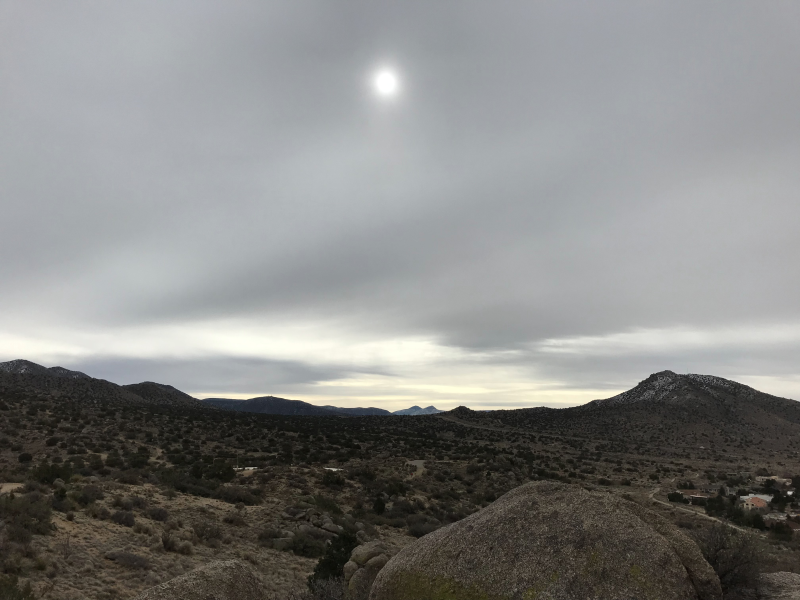
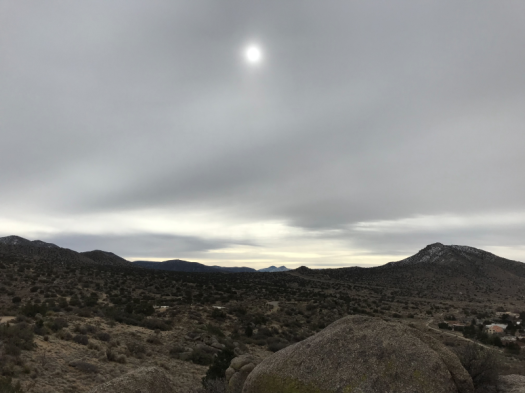
Gray sun ball.

Trucks and logs.

Acorn innards bleached by sun.

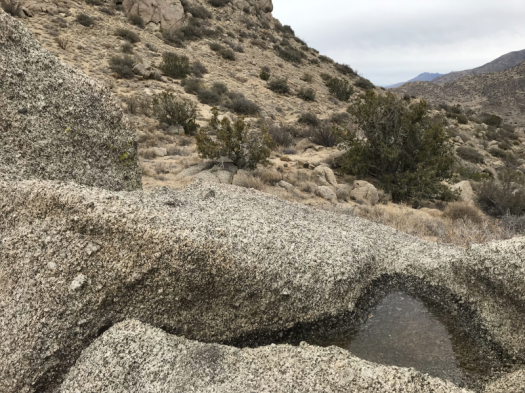
Icy rock pools.

There is nothing quite like a City of Albuquerque open space.

Hike length: 5 miles

Difficulty: moderate

Trail traffic: light

Creatures seen/heard: crows, blue jays, bluebirds, northern flickers

If this sounds like fun, here are the only directions I know of to this place.

The other Jaral Canyon (the one without people)

Looks like forever’s rolling away from us.

Long exposure of beige hills, crest to mountains, frame. Look right, deep into Juan Tabo Canyon’s gullet, frame.

Cabezon Peak is framed by the notch in Juan Tabo Canyon’s wall.

One human, a trail runner cresting a saddle below.

We can’t see them from the southwest corner of Jaral Canyon, but humans and their structures surround us. Sandia Casino. Subdivisions. The crowded trailhead for this hike, where Tramway meets the forest road.

We bypassed that busy spot. Drove north on the forest road to the quiet Juan Tabo trailhead. Hiked into Jaral Canyon from there. Met only one other person, the trail runner.

The route: doable, but steep and rugged up-and-down, starting with a 45-degree leg-burner.

We did not want to hike down that. And with all the trails that crisscross these canyons, some not on any map, there had to be an easier way back.

Right?

Riiiiiiiiiiiighht.

False starts. Turnarounds.

We get most of the way back on a rough path, but it dumps us into a brush-choked arroyo.

We backtrack to the forest road. My husband huffs up the road half a mile to the car.

I look up at the Shield, Prow and Needle rock formations. Snow clutches north-facing slopes. Jays rustle in the pinons.

We reached our goal: finding a socially distanced route into Jaral Canyon.

And after all the detours, I think I’ve actually satiated my appetite for this canyon for a while.

Hike length: 5 miles

Difficulty: moderate

Trail traffic: light

Wildlife spotted/heard: blue jays, doves, crows, spotted towhees, nuthatch

Weathermaker, Osha Spring Trail

11-7-2020

Look out over the valley, the seasons, the centuries.

Cloud blanket, gray light, stillness. Dark slips down into day.

The special weather statement said an unsettled pattern comes.

In my next life, I want to be a special weather statement.

Oak leaves flame out, crisp and ready, like toast.

The valley, the world, you and I must change.

What will we take with us? What will we cast off?

Rocks shift under my boots. My feet scramble for new angles.

I want safe footing.

But there is only footing.

Hike length: 5 miles

Difficulty: difficult

Creatures spotted/heard: ravens, crows, nuthatch, flickers, robins, pinyon jays

Trail traffic: none

The crow reveals the sky on Strip Mine Trail

10-30-2020

A soaring crow taps the brakes, plummets, like a plane losing altitude. I’ve never seen that before.

The sky behind the crow comes into new focus, and I see what separates me from the horizon’s familiar landmarks.

A light brown blanket covers Albuquerque, blurs Mount Taylor, White Mesa, Cabezon Peak.

I noticed earlier that something hovered between me and the mountains. But I couldn’t quite make it out. It popped out as I stared at the crow.

Chimney smoke’s likely coating the valley after four cold days.

The air is clear and the sky blue here at 6,500 feet, near the Strip Mine Trail in Placitas.

The peaks above me look misty, too. That’s probably water vapor; I can almost hear the snow melt.

All that I see is real.

I couldn’t accept that a month ago. Hiking in Juan Tabo Canyon, wildfire smoke from the West Coast hung above us. I spent four hours convincing myself that couldn’t be smoke, the day was too bright, the air smelled clean.

But at home, when I downloaded my photos, I could not deny the visible layer of smoke in almost every image.

A layer of smoke or dust has been visible in nearly every photo I’ve taken on a hike since.

Smoke and dust don’t discriminate. But we do, in where we welcome and shut out people or industry. I don’t risk my health when I walk in my neighborhood or hike in Placitas. But in Albuquerque’s South Valley, where the population is mostly Hispanic or Latino, a walk might trigger an asthma attack or worse. In recent months, the South Valley’s air pollution levels have frequently been at least twice as high as those further north in the Albuquerque metro.

Once I might have thought of hiking as an escape from things like that.

But no place, no matter how lovely, exists separate from climate change and environmental racism.

The author Pam Houston walks at least five miles a day, wherever in the world she is, seeing all that persists.

By the end of this century, journalist Laura Paskus writes, Albuquerque’s climate will look more like that of El Paso. The pinon-juniper forest where I sit, inhaling the scents released by snow, will likely be a distant memory.

I leave the overlook after 50 minutes, grateful for its sun and snow.

This place is a blessing, but it’s not an escape – and even if it was, I’d be wrong to take it.

I have ground to cover, and work to do.

Hike length: 5.8 miles

Difficulty: moderate

Trail traffic: very light

Creatures spotted/heard: pinyon jays, lizard, crows, ravens, hawks, flycatchers, velvet ant, Northern flickers, Townsend’s solitaire

This route – Strip Mine Trail to the prosaically named and unsigned Trail 246 – is from Mike Coltrin’s Sandia Mountain Hiking Guide.

Hot on the trail of Elephant Butte’s elusive West Lakeshore Trail

We reach the trailhead an hour after we begin our search.
We’ve backtracked by car and foot on the back roads of Elephant Butte Lake State Park.
We hiked nearly half a mile from a campground to a cliff overlooking the Fra Cristobal Mountains. Lovely, but not the trail.

DSC03422.JPG
Near the visitors’ center

DSC03426.JPG
Nope, not the trail

We get back in the car yet again to start looking for a different trailhead. My even-tempered husband’s level of grouchiness is now approaching mine. Then he spots our destination: West Lakeshore Trail’s northern terminus, tucked in the opposite corner of the campground from where we were searching.
The trail snakes a neat, pristine rock line over mesas bushy with creosote. Except for the footsteps in the sand, it looks like the trail builders just finished yesterday.
DSC03438.JPGDSC03445.JPG
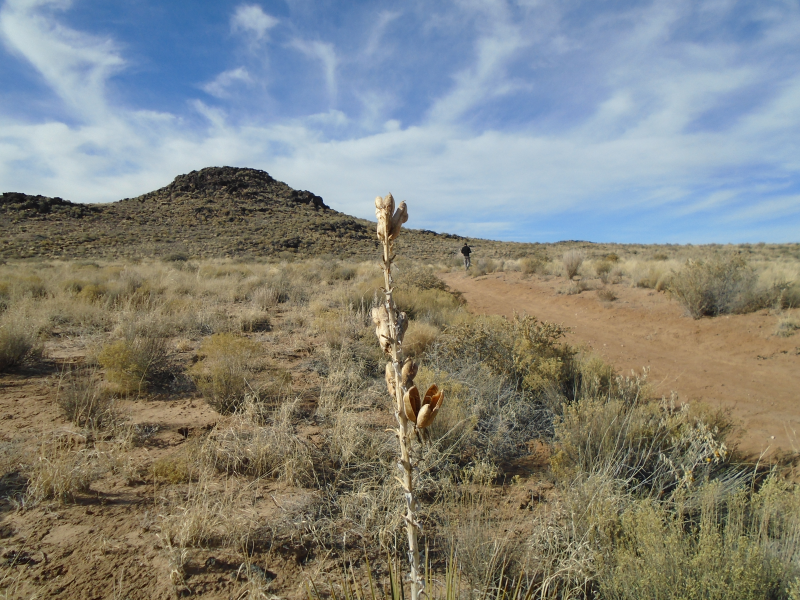
We round a bend. The lake’s turquoise glints through a notch in the cliff. The trail winds over a ridge, then drops us into an arroyo. The creosote stands as tall as we do. Eight-foot yucca stalks loom.
We make the only visible creature movements on this treeless landscape. All others lie burrowed in the cool and dark. Sun rules the land. Occasionally, a lizard scrambles from one bush to another.
The sky hangs bright and cloudless. The air is so clear I’m sure I could reach out and touch the Fra Cristobals.
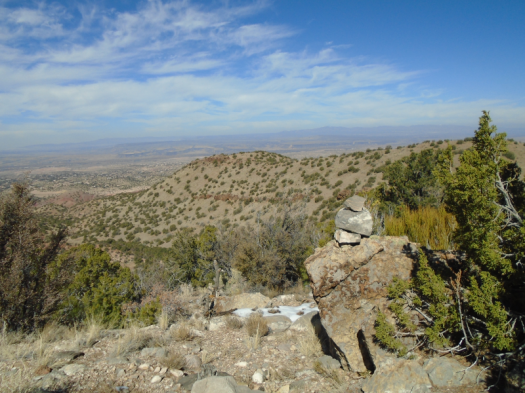
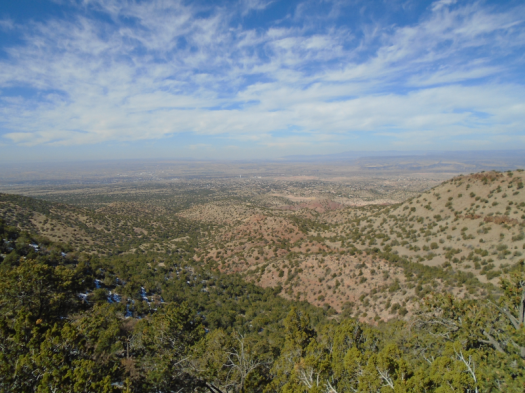
As we hike back, the other mountain ranges on the horizon slot themselves into my mental map. The San Mateos with their thumb of rock. The jagged Magdalenas, last week’s snow dusting the peaks.
Back at the trailhead, my husband cools off with a Santa Fe Pale Ale from the trunk.
I take a picture of a sign honoring the unseen occupant who rules this landscape.
DSC03449.JPG
Hike length: 3 miles, plus .75 miles out to the cliff
Difficulty: easy
Trail traffic: only one other human
Wildlife spotted/heard: lizards, raven
TIP: The South Monticello campground is gorgeous, quiet and clean and would be a great base for doing this hike at sunrise or sunset when it’s cooler. You could go as far as you wanted – the trail is 12 miles.

One hill yields many desert landscapes at El Cerro de Los Lunas

This climb appears to end in the blazing blue sky.

That’s OK with me, as long as it ends.

We began in the “sherbet bowl” at El Cerro de Los Lunas preserve. The trail there weaves drunkenly through stripes of peach, cream and pink sand, changing course to avoid erosion.

DSC03208.JPG
Inside the sherbet bowl; overlook shade structure on horizon

The trail meanders up some hills, then forces your body to downshift for what feels like an endless section of 45-degree slope. On sand.

Finally, solid rock appears underfoot, the grade lessens and the climb ends in the sky. At the preserve’s northern summit, a jaw of volcanic basalt, a view straight down into a chunk o’subdivision. From here, four separate mountain ranges look like one unbroken chain: SandiaManzanitaManzanoLosPinos.

DSC03217.JPG
From the northern summit; Mount Taylor on horizon

The trail plunges into a valley inside El Cerro’s volcanic cone. This means – you got it – another climb out.

DSC03222.JPG
Trail we just descended from the northern summit is in the middle of this photo.

DSC03220.JPG
Climbing out of the valley with a view of the Manzanos

The landscape’s changes take my mind off my thigh muscles. Creosote waves break all the way down to the ribbon of I-25.

DSC03223.JPG

We crest and descend again. More basalt teeth, undulating gray hills, freight train whistles from the BNSF switching station in Belen.

DSC03226.JPG
Sierra Ladrones on horizon, Magdalena Mountains behind them

DSC03230.JPGDSC03232.JPG

We make a long loop around the far edge of the sherbet bowl, hear laughter from inside it. Two women on horseback navigate the bowl’s curves.

DSC03244.JPGDSC03256.JPGDSC03260.JPG

The steep descent goes quickly, helped by wooden steps pressed into the sand.

My husband dawdles on the long hike out of the preserve, volcanic rocks constantly catching his eye.

I keep looking back up at the northern summit and thinking, “I was up there.”

Hike length: 7.7 miles

Difficulty: moderate

Trail traffic: moderate, light on upper slopes

Wildlife spotted: jackrabbit, flicker, crows

TIPS: One of the first things you see when you enter the preserve is a sign warning you to stay on the trail because of rattlesnakes. And it’s not labeled on the trail itself, but the steep connector we took to the northern summit is called Rattlesnake Trail. This hike is best in the cold months when rattlers aren’t out. Unless it is actively snowing, it will be hot.

Bond Volcano: Gateway to the underworld

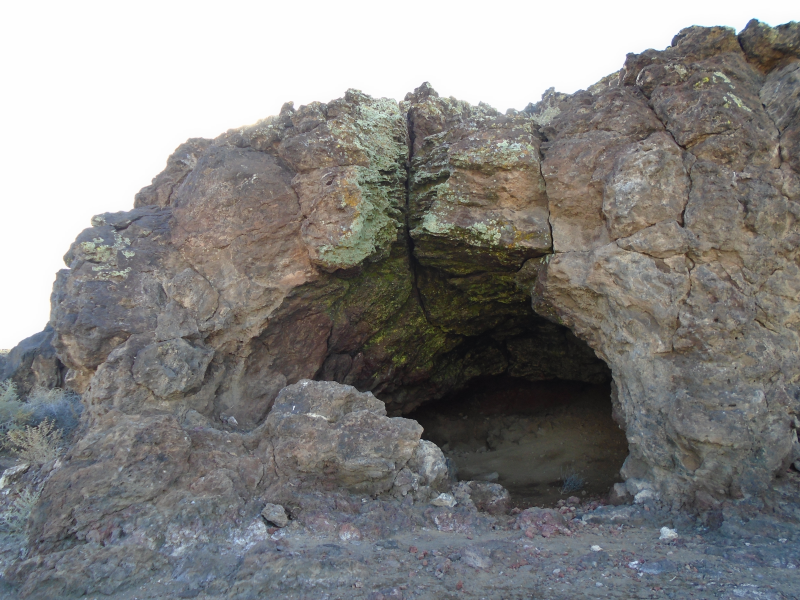
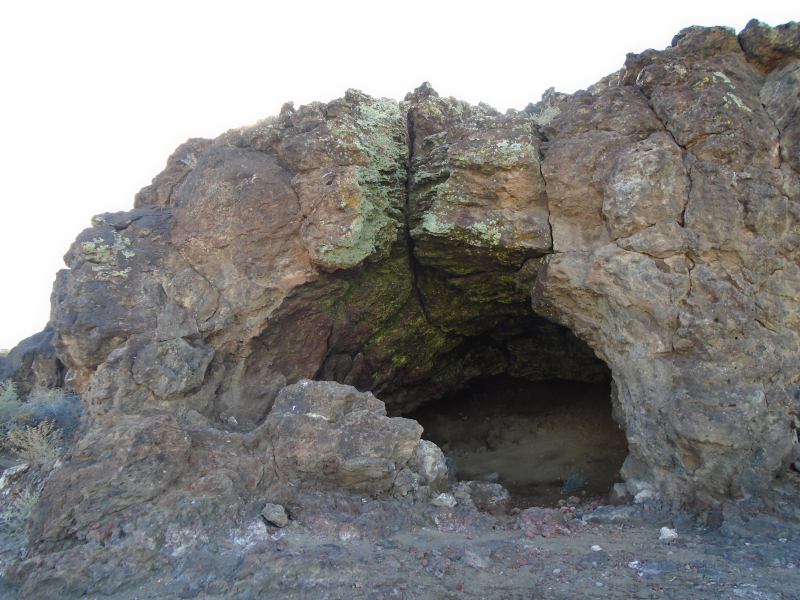
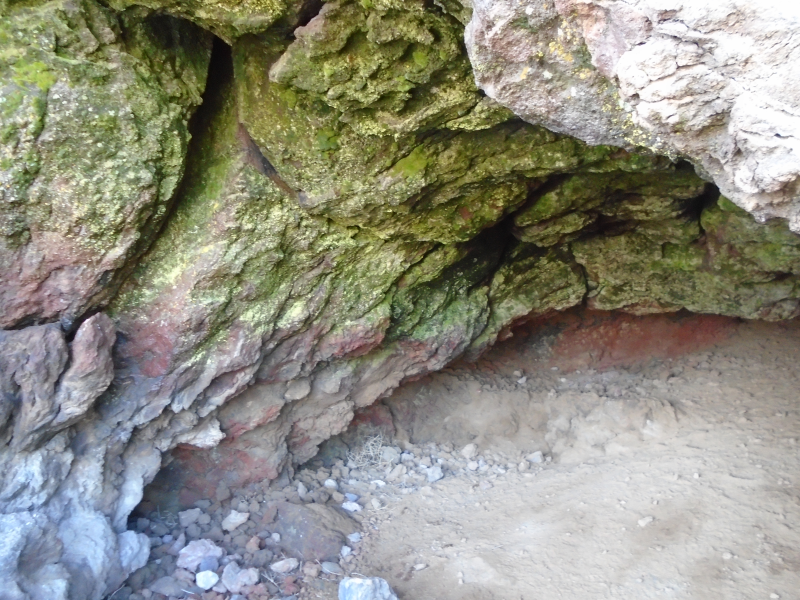
My husband feels warm air puff through the cave, sees condensation form on the barnacled green ceiling. He thinks it all stems from a volcanic vent.

I’m standing outside the cave. I don’t feel anything.

I’m standing outside the cave because I fear caves.

Its stacked black basalt entrance looks plenty dramatic enough for me.

But I’ve come all the way out here, and I’ve always wanted to experience a volcanic vent … oh, for God’s sake, I should just step inside the cave.

I do. Barely.

Warm air brushes my face. I move, and cool dampness drifts from the ceiling. My husband points out an opening, gaping red, that goes further back than we can see.

DSC03192.JPG

DSC03201.JPG
Green stuff and red rock

It’s a natural wonder to marvel at. But I’m way too creeped out to marvel.

I step back into the world, where sun, rock and air do the things I associate with sun, rock and air.

We’ve encountered the cave at Bond Volcano at Petroglyph National Monument. If you go to the Volcanoes Day Use Area, hit all the dormant volcanoes everyone else goes to and keep going, Bond stands about three miles from the entrance gate.

We tried to hike out here last year, but took the wrong dirt track. Today, we knew we’d found the right path.

DSC03190.JPG
On the road to Bond Volcano

DSC03193.JPGDSC03197.JPG

We did not know it would put us on a collision course with the underworld.

“That’s one of the coolest caves I’ve ever seen,” my husband says. He’s always found hiking at the volcanoes boring, until today.

I have always found everything I needed here on bright winter days: warmth, sun-bleached grass, rock and views.

This cave encounter, though, has me so confused.

Is this an omen? Will my 2020 be marked by dark, scary things?

Will it be a year full of marvels my own mind couldn’t have conjured up?

Nature created this place with no thought of me, yet here I am, scrambling to locate myself in relationship to it.

Hike length: 6.5 miles

Difficulty: moderate

Trail traffic: moderate to Vulcan Volcano, very light thereafter

Wildlife spotted: crow, loggerhead shrike, sparrows, lizard scrambling into a burrow

The winter bosque unleashes a micro-sleet storm

Yep, it’s definitely sleeting.

We’re less than a quarter mile from the trailhead in the Rio Grande river bosque. Little white pellets pelt us.

Sleet and sun will trade places for this entire hike. The precipitation cycles from little white blasting caps to light droplets barely touched with ice, and back again.

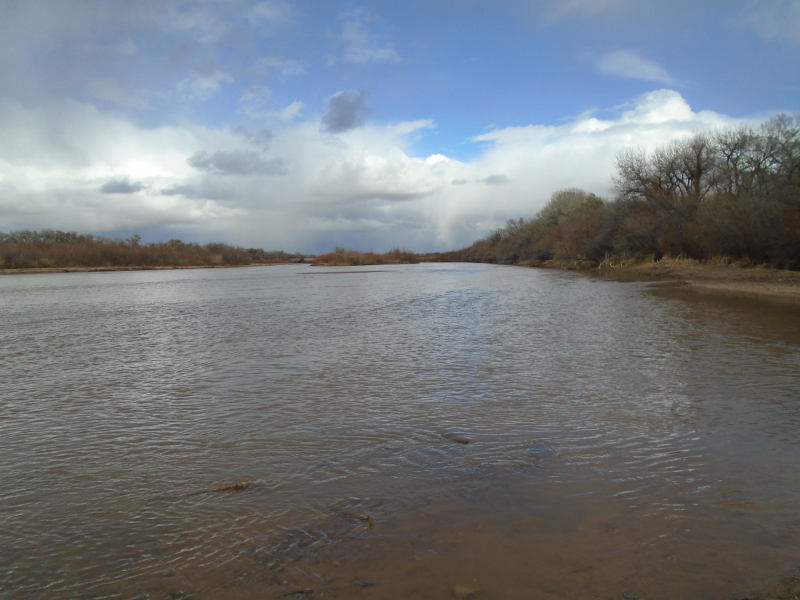
We walk out on a sandy landing. The river flows fast at its edge, wind-ruffled, bolstered by snowmelt or rain further north.

DSC03157.JPGDSC03162.JPG

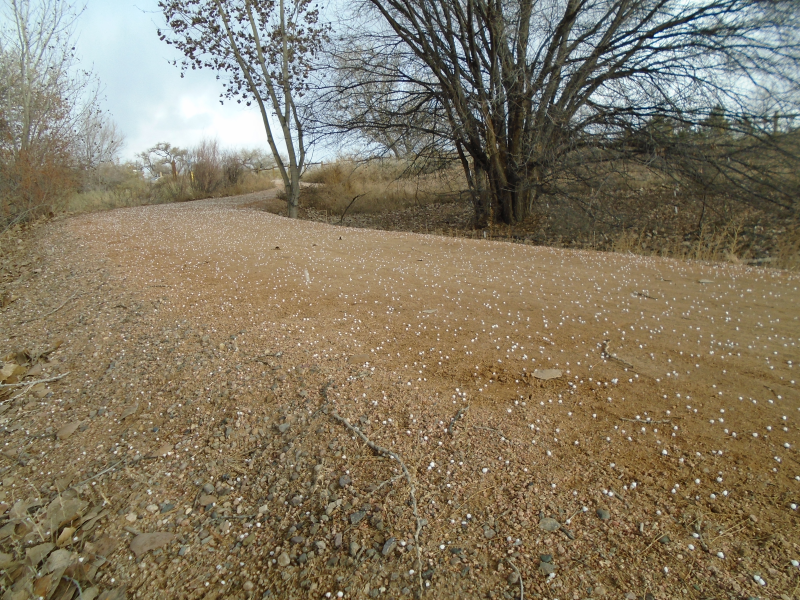
Sun peeks at the trail, melts the pellets. The leaves beneath glisten.

DSC03151.JPG
Look closely and you can see the sleet falling!

DSC03165.JPG
Sleet on the trail

DSC03167.JPG
Blasting cap of sleet on my husband’s glove

We walk up to the Montano Bridge, right into a biting west wind, for a better view of the storm. The sky’s a bruise above Rio Rancho and the Jemez. Snow blurs our view of Corrales. The curtain has dropped over the Sandias from Embudo Canyon to Placitas.

DSC03168.JPGDSC03170.JPG

We retrace our steps to the car. It’s 45 degrees there. No precipitation has fallen.

At our house this morning, outside looked and felt uninviting on this cold, cloudy winter day. I just barely dragged myself off the couch. My husband vowed to stay inside, changing his mind at the very last minute.

We almost missed quite a show.

Hike length: 3.8 miles

Difficulty: easiest

Trail traffic: moderate

Wildlife spotted/heard: sandhill cranes, ducks, geese, sparrows, crows

Postscript: I went straight from this hike to 516 Arts’ “Species in Peril Along the Rio Grande.” I hadn’t planned it that way, but today was the last day of this stunning, sobering exhibit. I’d been to several of its events and talks, including one in the gallery, and vowed to go back when I could spend some time and really take in all the works. I probably even tracked in a little red clay and sand today, which seems appropriate. Pictured is Ruben Olguin’s “Evaporation,” a mural that depicts more than 150 endangered species in the Rio Grande Valley using earth pigments from the valley.

IMG_3388.JPG