Burque, here is your ultimate winter hike

There’s always that moment when what you fear becomes what you love.

Hey, don’t leave. I’m not psychoanalyzing you. I’m talking about hiking, man.

I’m talking about that moment – right around the time of the first freeze (anticipated tonight in Albuquerque) – when I go from avoiding the sun to seeking it.

There are some people (my husband included) who would do a full-sun high-desert hike 365 days a year. I am not one of them. From April to October, you will find me at as high elevation as possible, under tree cover.

But at some point in November, when Daylight Savings Time ends and the darkness descends and the cold finally arrives, and my cells crave light, everything changes.

This is the time to go to Three Gun Springs.

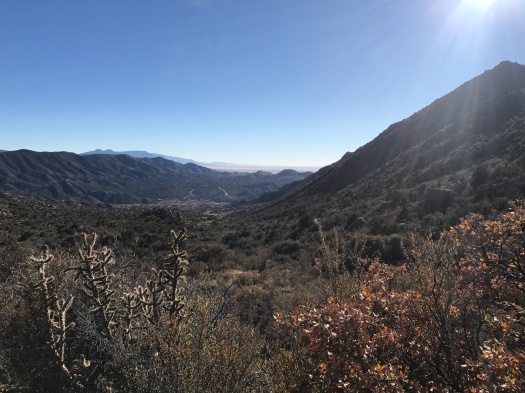
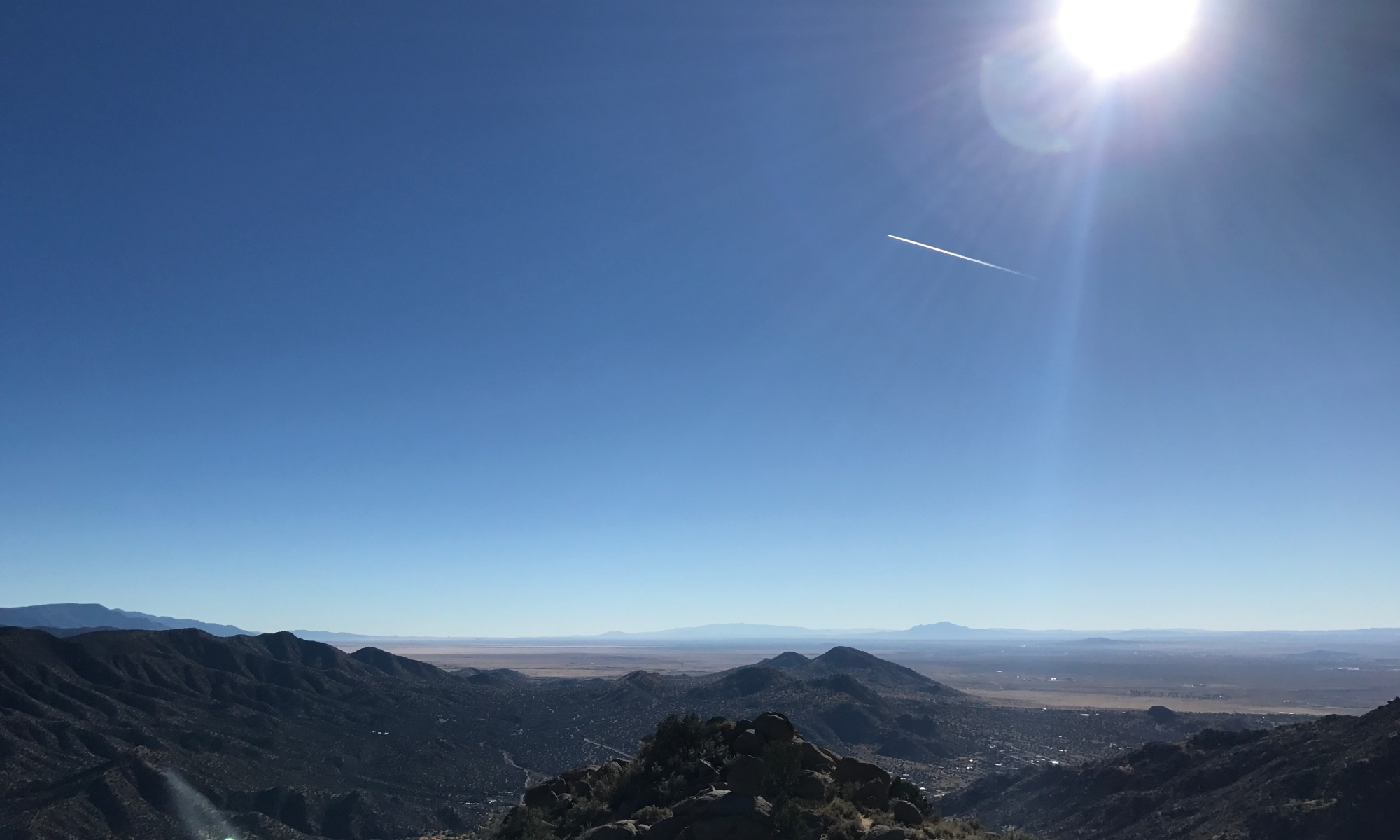
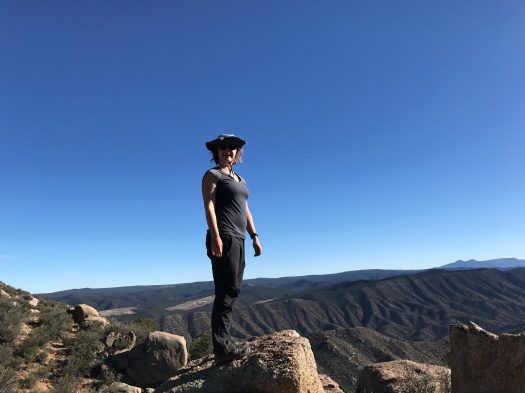
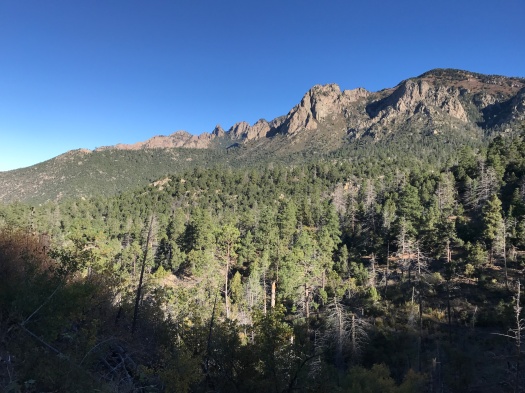
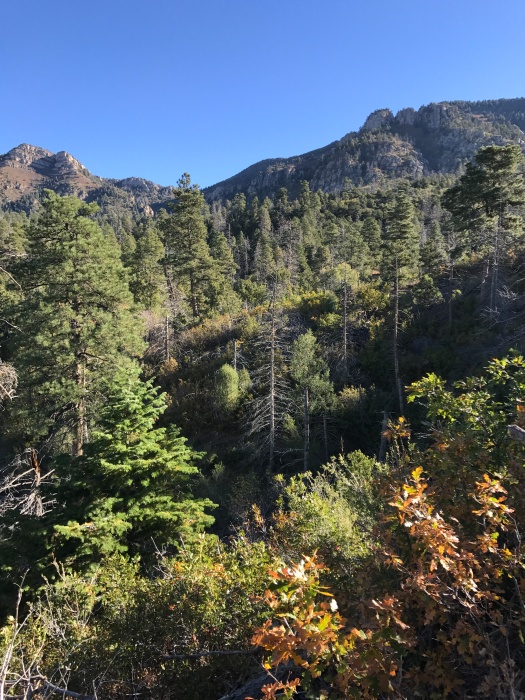
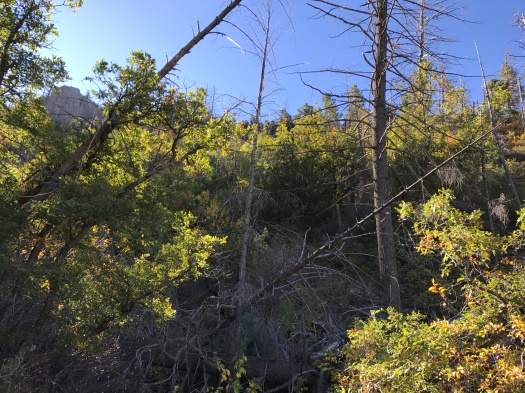
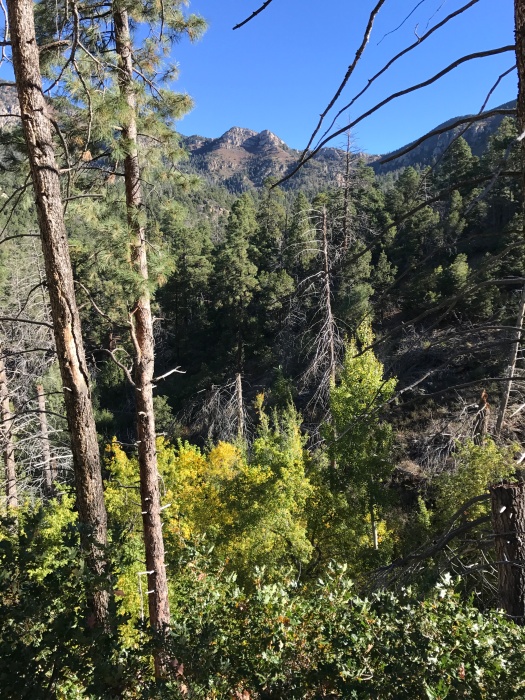
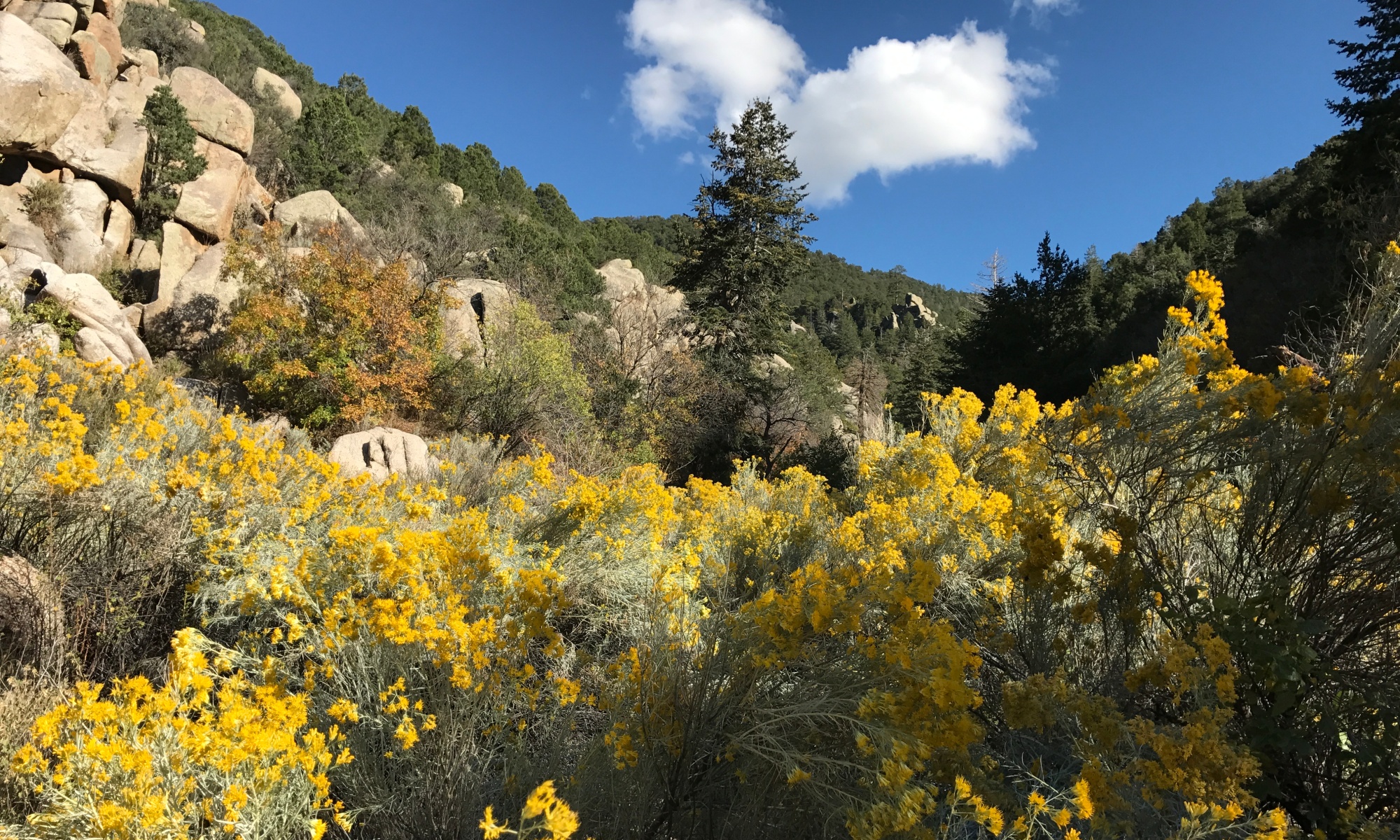
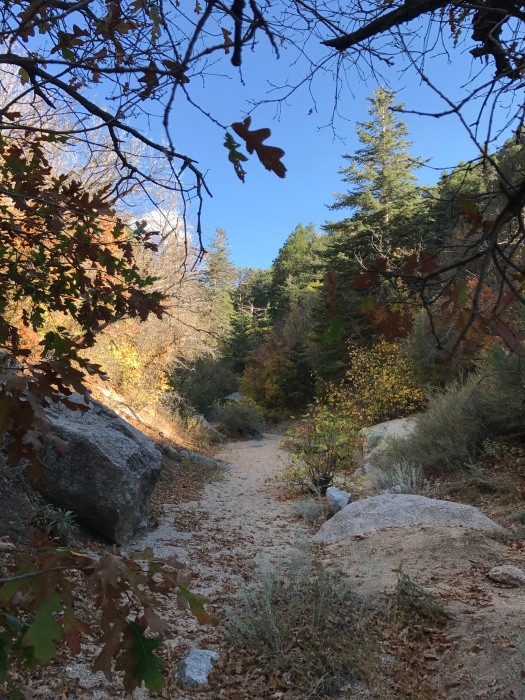
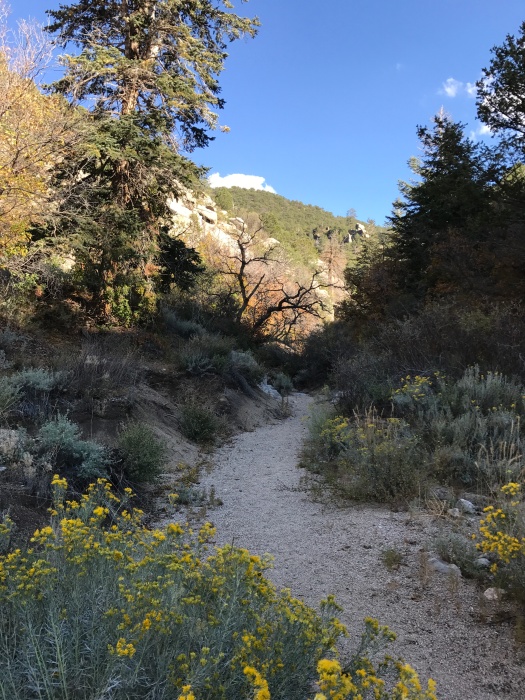
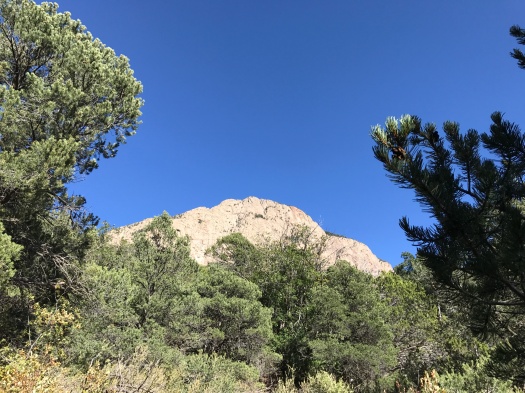
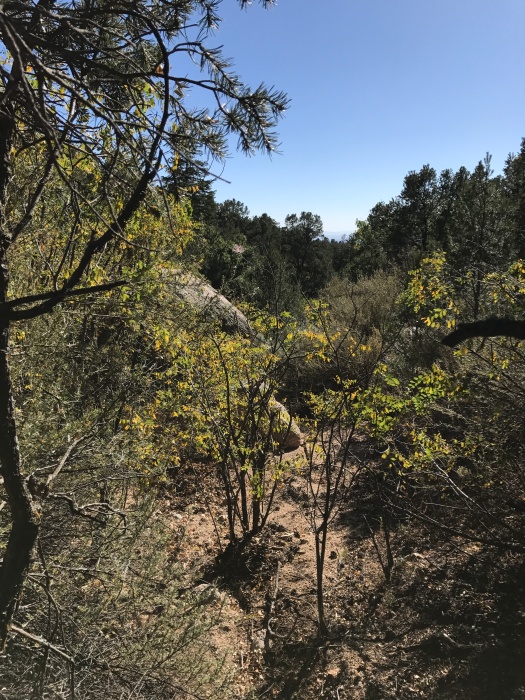
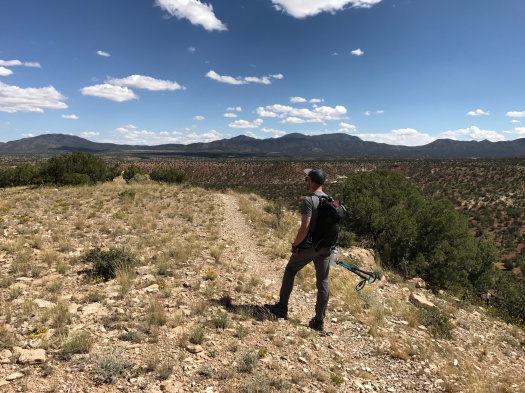
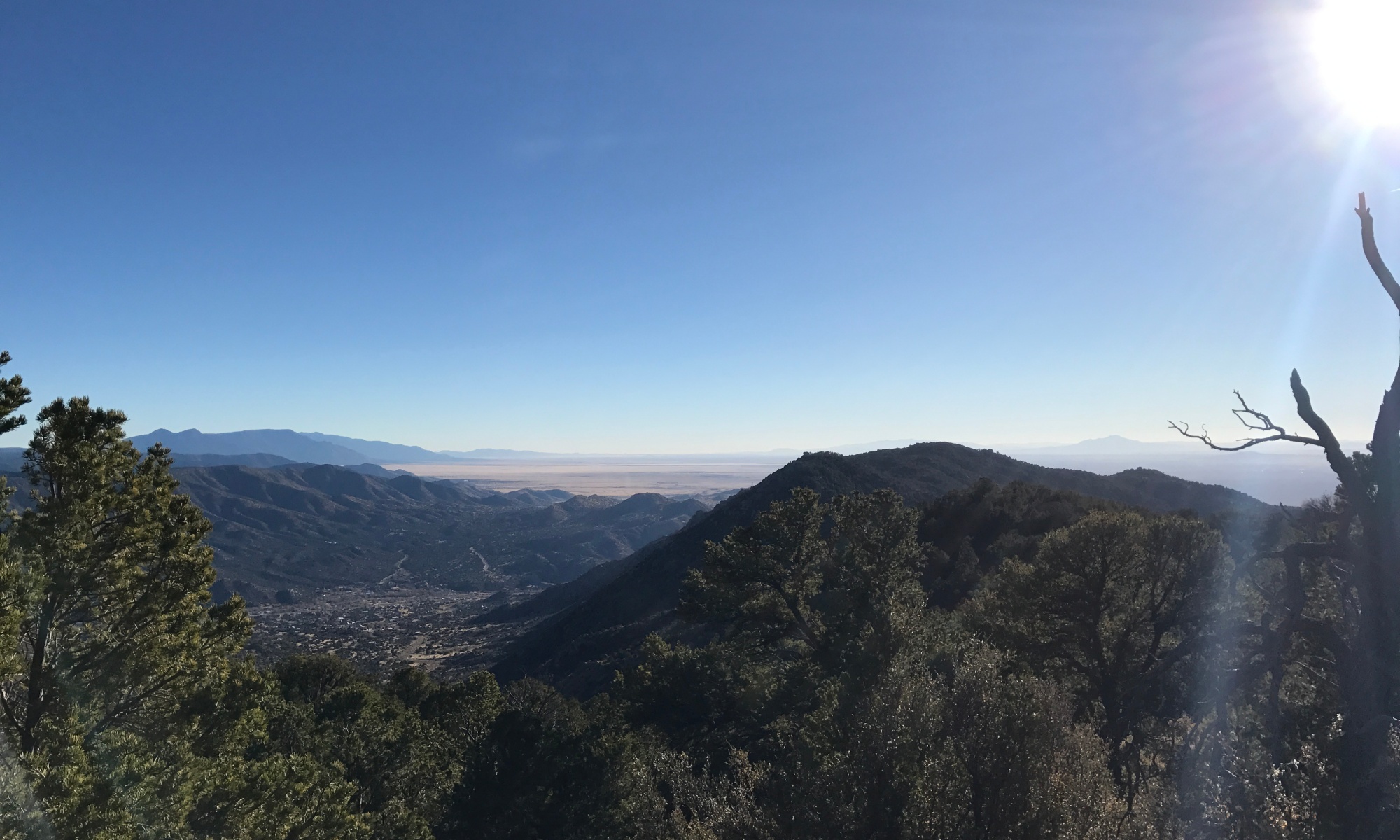
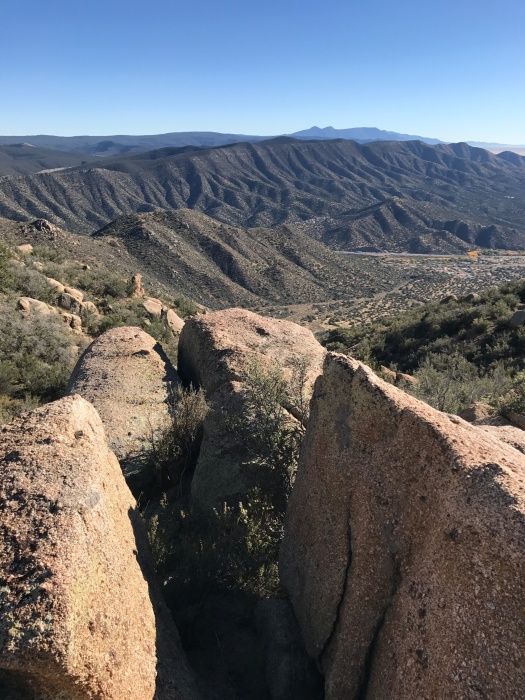
This trail tucked into the East Mountain foothills climbs from a residential neighborhood through steep, rugged rock to a saddle with views of a good five mountain ranges. It faces south, so it’s heavenly in the winter (and probably hellish all summer, save for dawn and dusk).

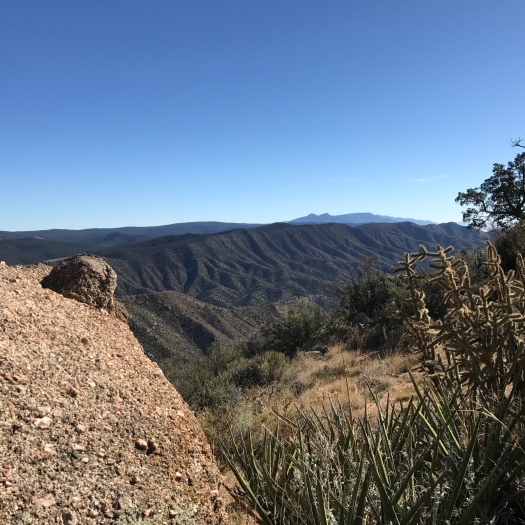
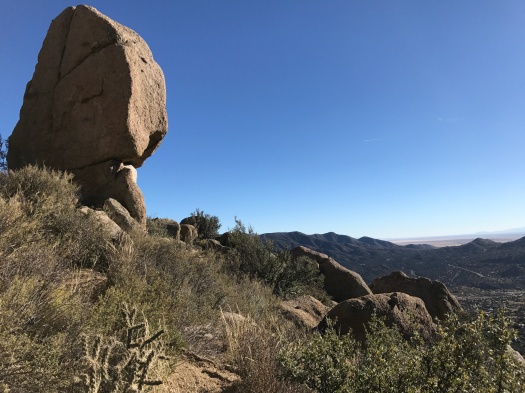
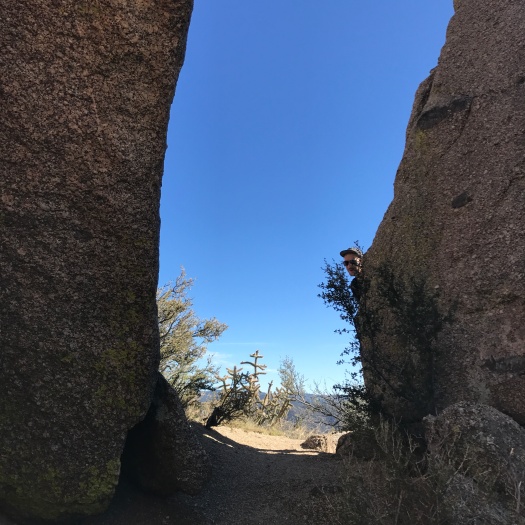
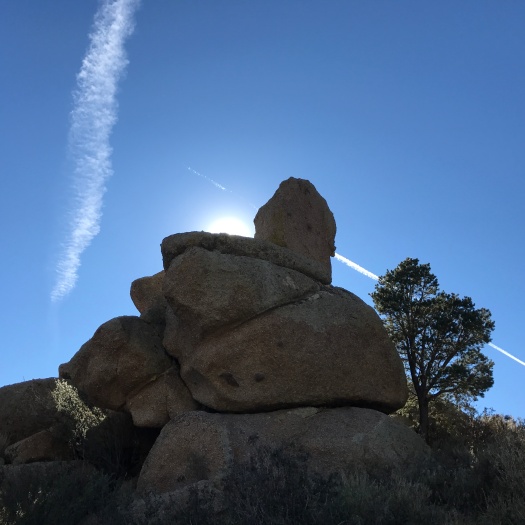
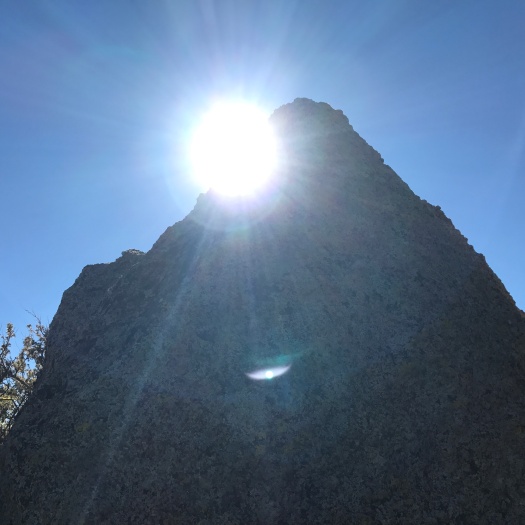
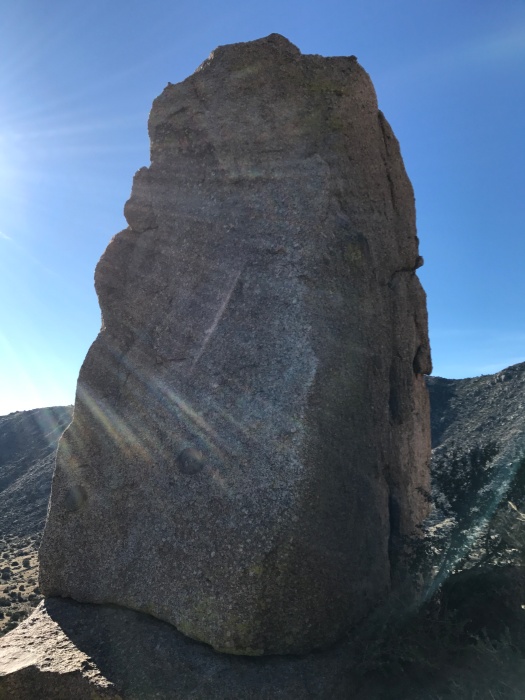
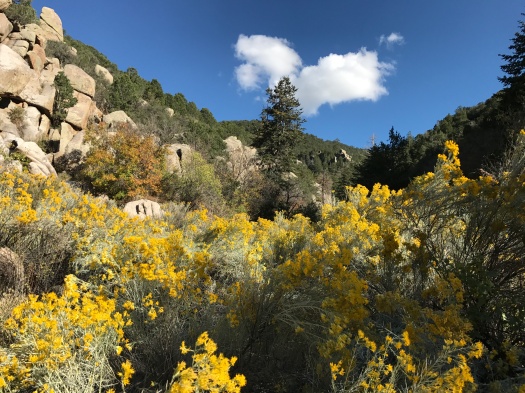
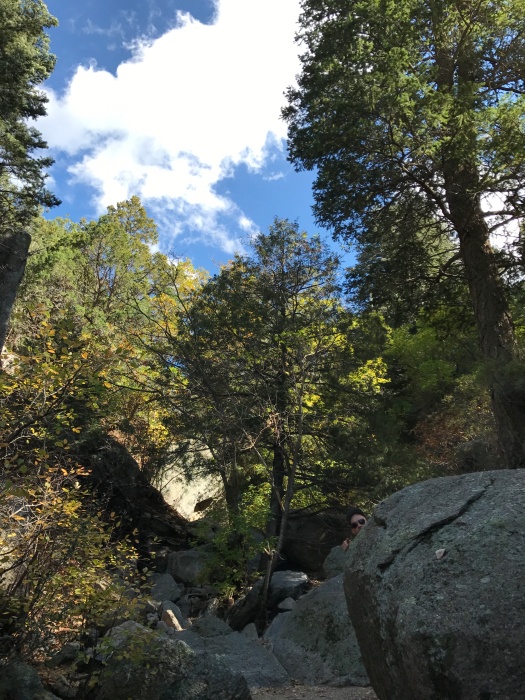
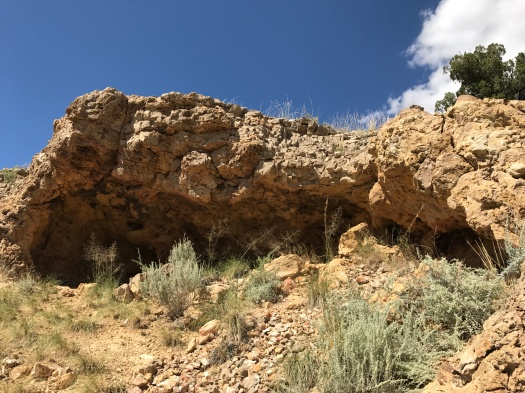
The rock formations – slabs piled high, some covered with lichen – hit me first. Then my eyes drank in the views.
IMG_9204

IMG_9209

IMG_9224

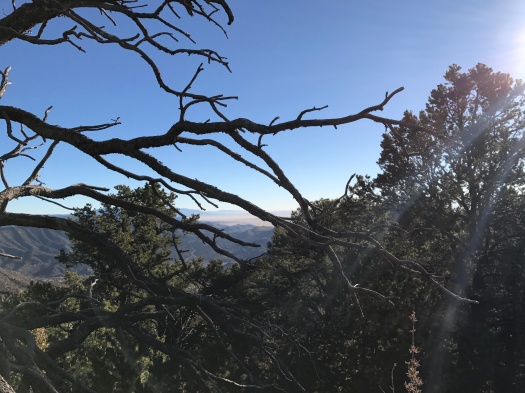
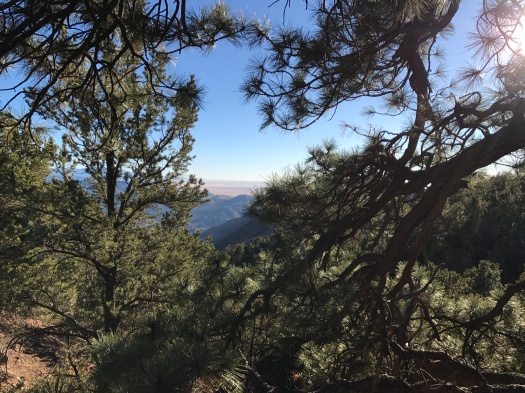
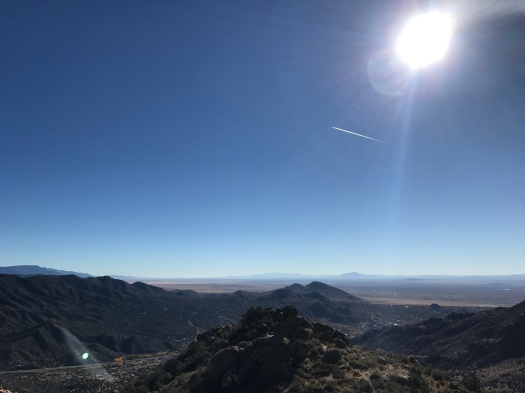
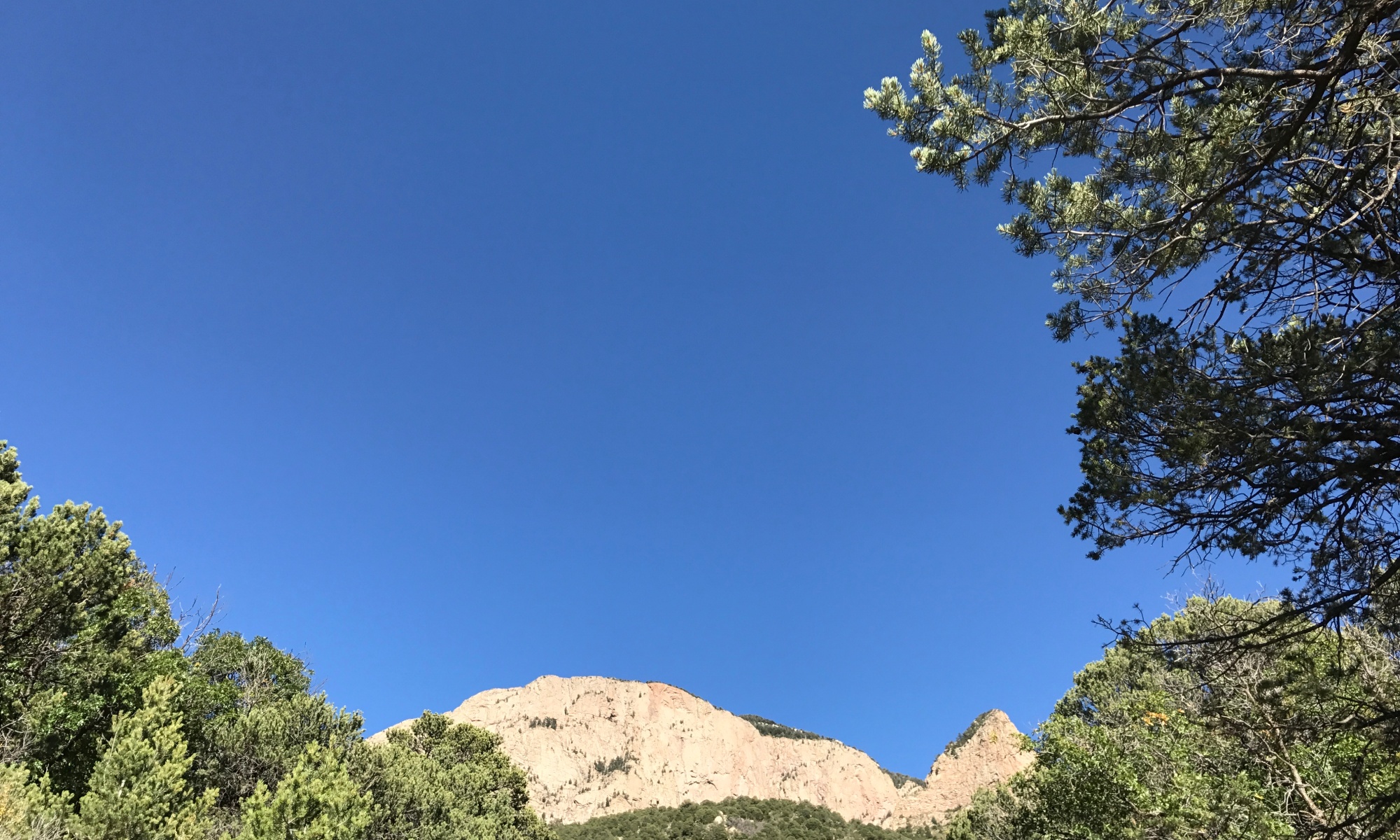
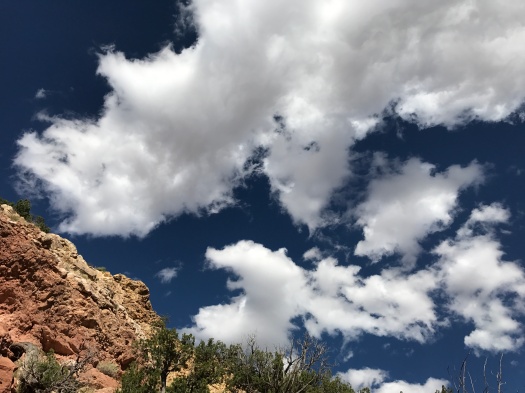
The day was cloudless; the higher we climbed, the bluer the sky. At the saddle it was so intense I almost felt like I was doing something wrong by looking at it.

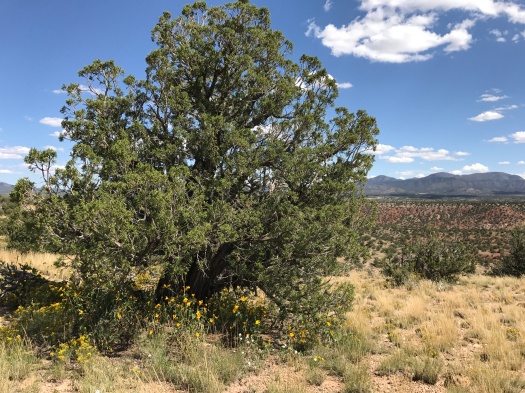
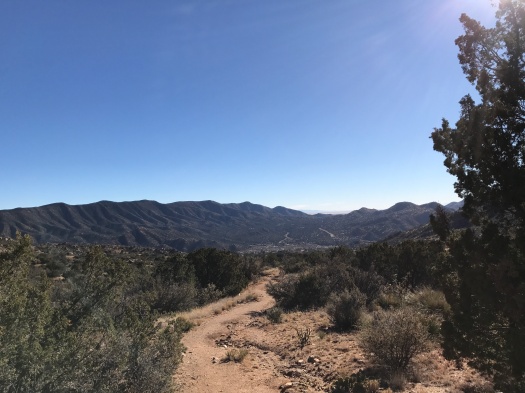
The sandy arroyo trail rises steadily, lined by cactus, juniper, deep blue berries underfoot. Chunks of Sandia granite glitter gray and pink beneath my feet.

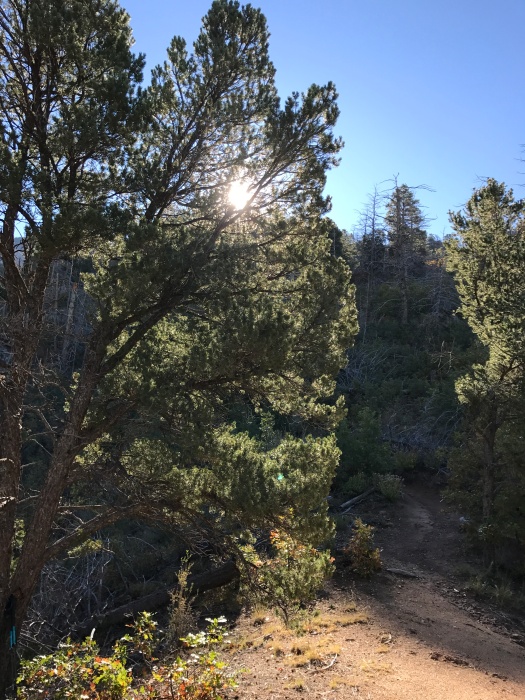
The switchbacks begin. The temperature’s in the 40s, but the entire trail is in the sun. A single layer is plenty. I soak in the light my body’s craving. The grade steepens; my pace slows. I enter that zone where my body’s sole focus is moving legs and poles a little further, where my mind repeats, “If it’s not around the next bend, I’m done.”

This trail was the first long climb I did. The Forest Service measures Three Gun Spring as eight miles round-trip. The first time I did this hike I was so sore I was positive I’d done all eight. It was only recently that I realized there’s significantly more trail after the saddle.

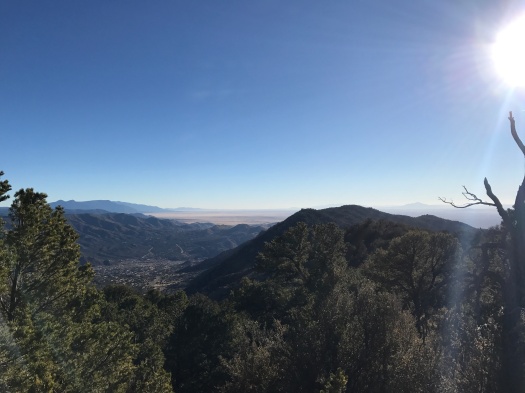
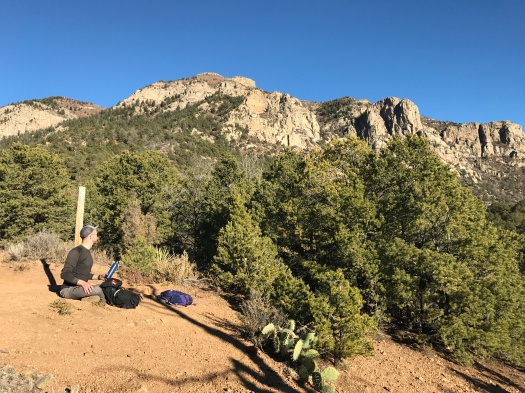
We reached the saddle 90 minutes after leaving the trailhead, enjoyed snacks and views of mountain ranges.
IMG_9229
On horizon at left, front to back: Sandia, Manzanita, Manzano, Los Pinos mountains. On horizon at right: Sierra Ladrones.

IMG_9232

IMG_9236IMG_9243

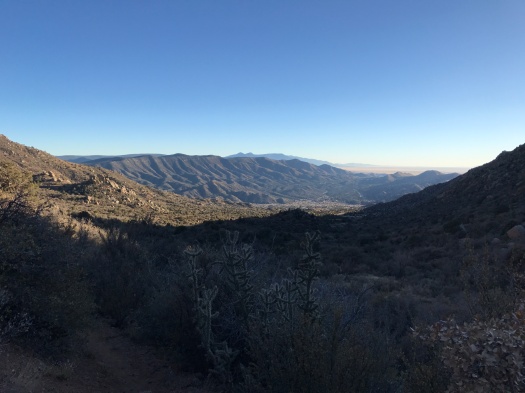
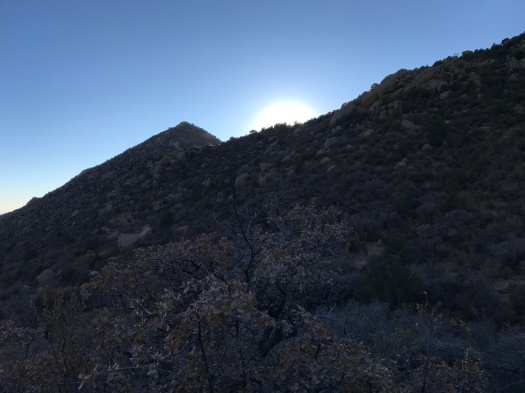
We could feel that the sun’s heat was already ebbing, so we headed down, keeping a brisk pace, chasing the warmth. About 60 percent of the way down, the sun dropped behind canyon walls, outpacing us.
IMG_9247IMG_9248

We moved even quicker to stay warm.

Jays and robins darted among the junipers. A man walked three dogs in the open space beyond the trail. The dogs engaged coyotes, which we couldn’t see, but their yips echoed through the canyon. We could hear the dogs’ owner warning them away. Finally, they trotted off, and they – and we – left the coyotes to enjoy their warm winter canyon.

Hike length: 5.5 miles

Difficulty: moderate

Trail traffic: moderate

Wildlife spotted: jays, robins, coyotes (heard only)

TIP! For maximum sunlight this time of year, if you’re going to the saddle, leave by 12:30. If you’re going further, leave earlier.
Things birds taught you at Los Poblanos Open Space

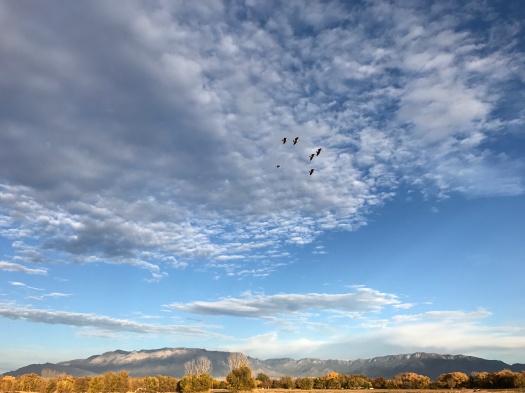
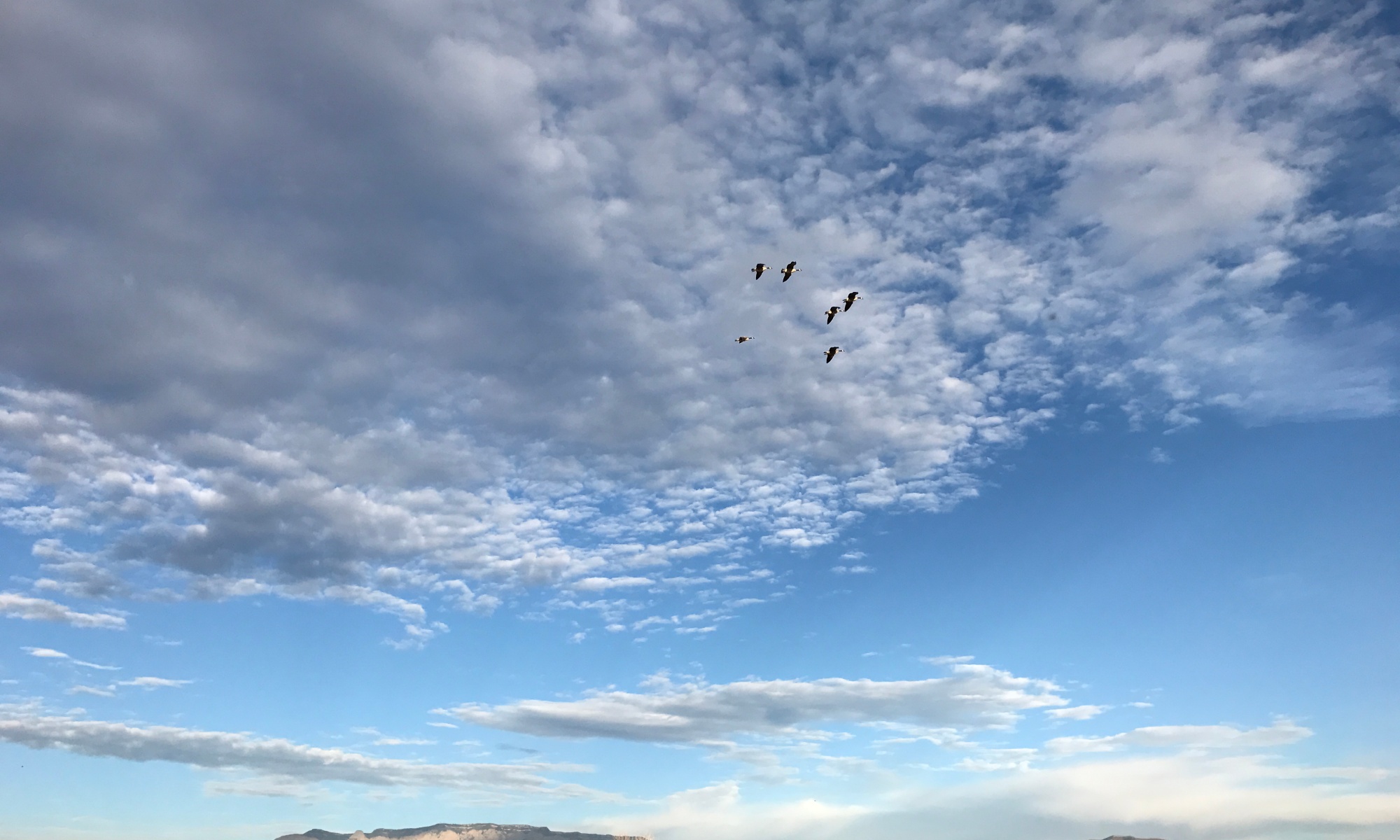
You’ve been hearing sandhill cranes fly over your house for three weeks, burbling all the way. All day they flew overhead in Vs.

You need to see them up close again.

You head straight for the Los Poblanos Open Space, near your old house. Your first year in New Mexico you were there every day at dawn and dusk, just to hear the cranes, see them springing up from the field into flight, see them extend to their full wingspan and glide in for a landing.

You remember waves of them launching and landing, their sound, their wings filling the sky.

When you arrive, there are dozens of geese in the field, occasionally squawking, rising and resettling. You count maybe 10 sandhill cranes.

Even with so few among so many, they stand out. They’re big, tall, a prehistoric-looking sand-gray. Something sets a few off, and they talk loudly to each other. The sound is like if a kid really got going on a porch swing whose chains hadn’t been oiled in a while. It’s a strangely comforting sound.
You never give up on a crane-photo fest somehow materializing, but with so few cranes, there are times on your walk when you notice other things instead.

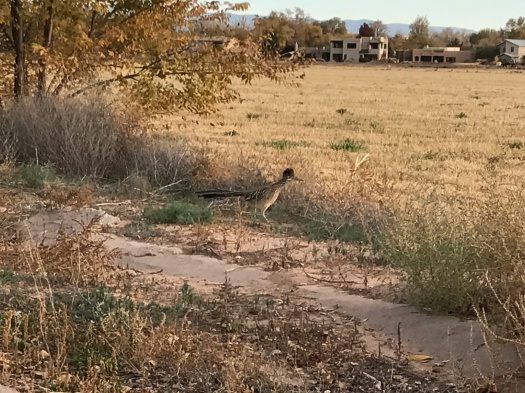
You turn down a side path where you’ve had serious dusk cranespotting luck. The first thing you see: a fat roadrunner, feathers slightly disarrayed, hustling toward you, then realizing your presence and changing course.

IMG_9130

You spot several kestrels, seeing the flash of their patterned underside and burnt orange back as they settle into trees high above you, hearing their insistent klee-klee-klee-klee-klee.

You wander until the sun sets, unable to let go of the 1 percent chance of crane liftoff. You see the Sandia Mountains turn the watermelon of their name, fade out, then turn watermelon again.

IMG_9159

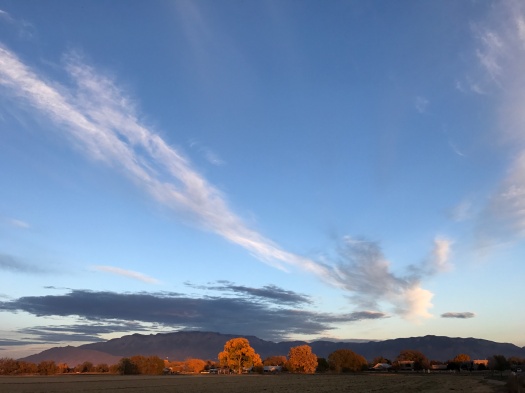
You see the golden cottonwoods glow when the light hits them just right, fade out, then glow again.

IMG_9132

IMG_9136

IMG_9167

IMG_9185

You see a flash of fading sunlight over the West Mesa that looks like it’s 10 seconds from becoming a rainbow, watch it till it fades.

You recall the bald eagle you saw there years ago, circling hundreds of feet overhead. And the spring day you walked out there after a soul-crushing two-week period of work, seeking a little respite that would help you continue. Two pheasants did a five-minute leaping faceoff in the field that you could only surmise was related to a lady pheasant.

Maybe the cranes aren’t all in Albuquerque for the winter yet. Maybe it will be another light year for cranes. Or maybe it just wasn’t your day to hang out with them.

But anytime you come here, you will be blessed by something you were not looking for, something that was also not looking for you.

Hike length: 2.5 miles

Difficulty: easy

Trail traffic: moderate

Wildlife spotted: sandhill cranes, geese, kestrels, roadrunner, crows, sparrows, flicker

Last call for fall at the Southwest’s first urban wildlife refuge

I didn’t make it to Fourth of July Canyon for its spectacular fall foliage show this year.
I’d planned to hike in the golden aspens above Santa Fe in September, but that day was Day 5 of a record-setting cold and rainy spell.
Luckily, when I look up in November and realize I need an eyeful of fall color before it’s too late, my city provides.

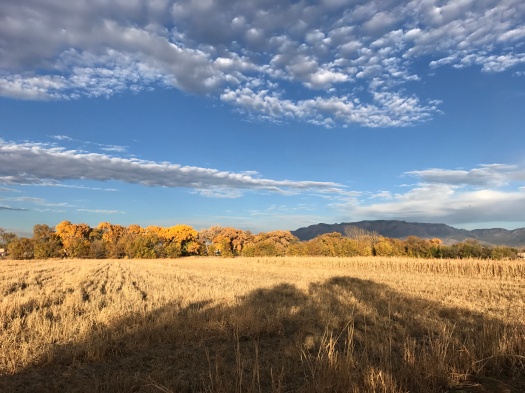
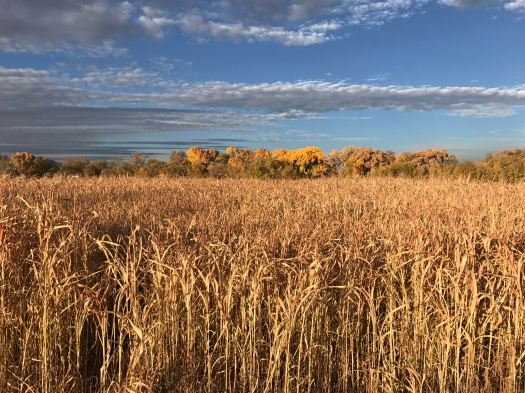
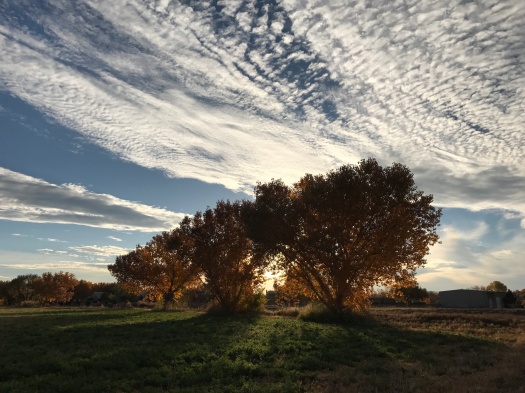
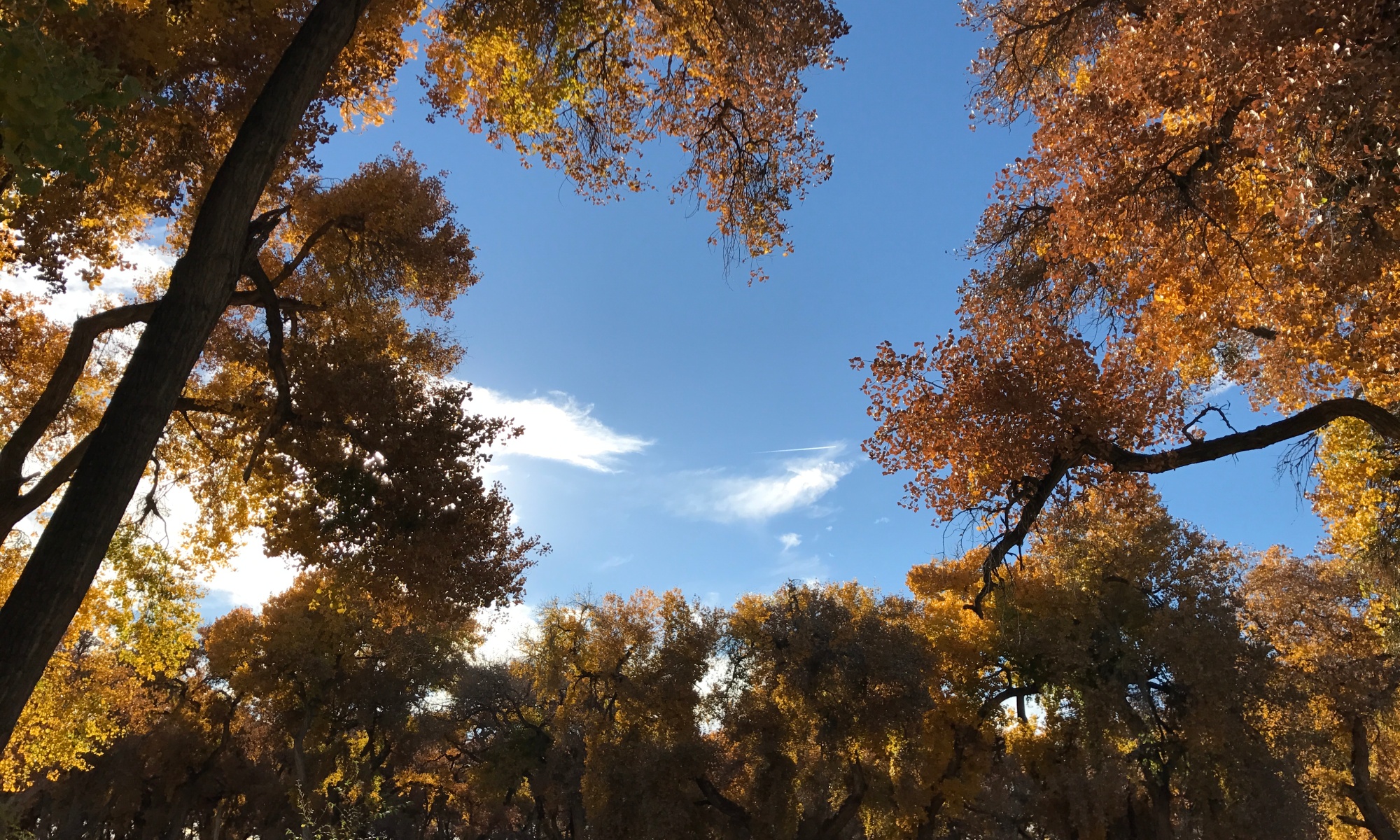
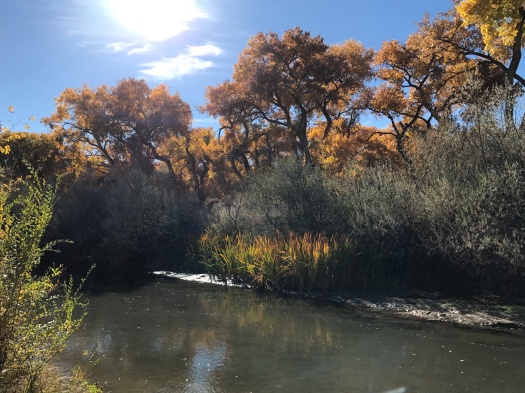
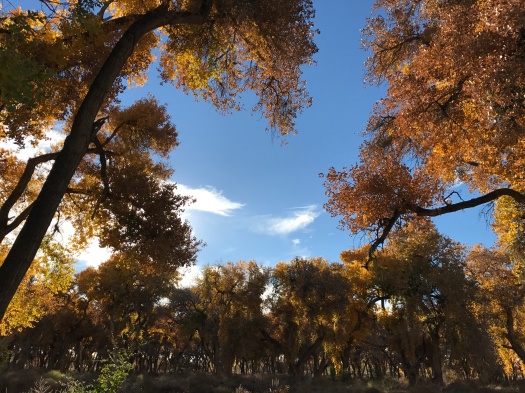
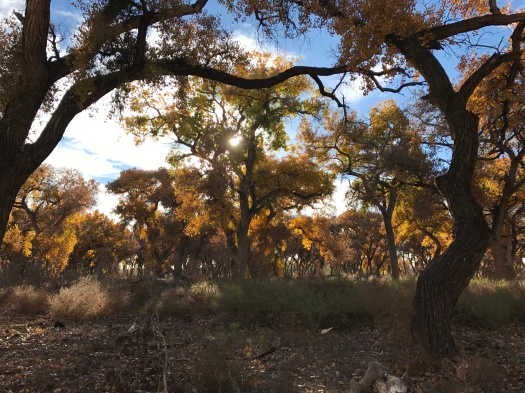
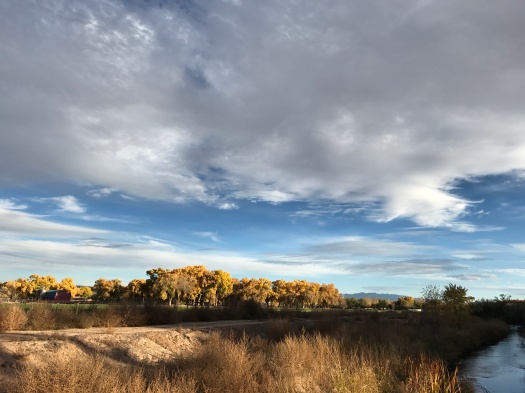
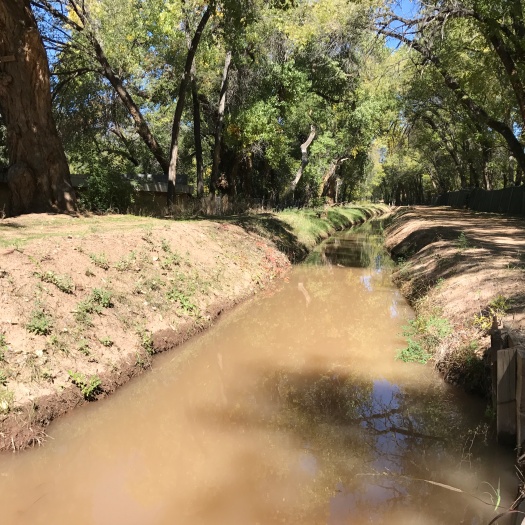
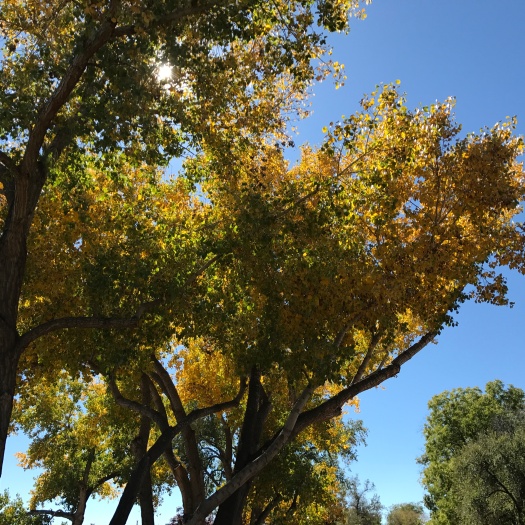
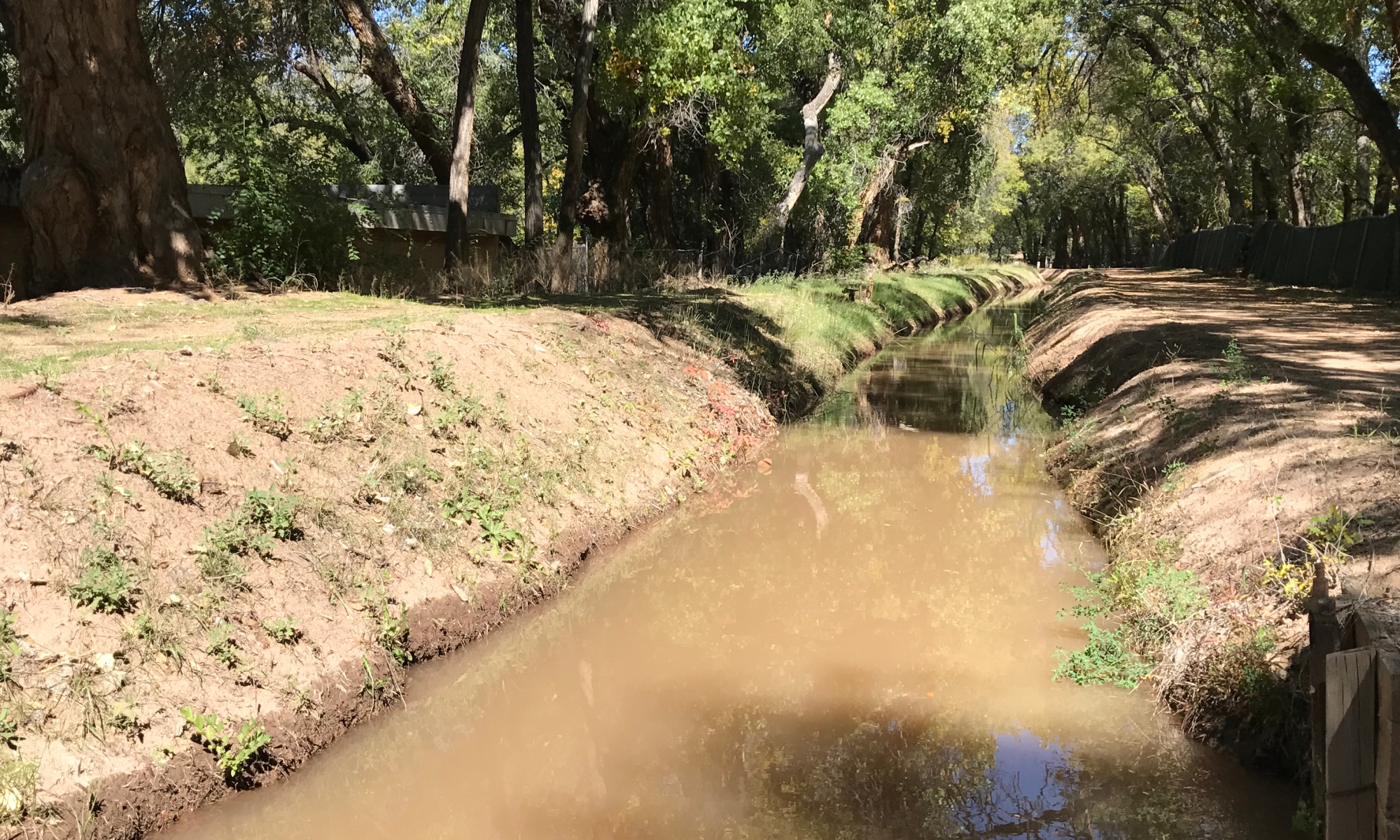
Albuquerque’s amazing irrigation ditches are guarded by huge, stately cottonwoods whose leaves blaze yellow each October and November before meeting their end.

On Sunday, we drove south down Second Street to Valle de Oro, the first urban wildlife refuge in the Southwest. It’s just a few years old; our previous visits here had to be timed to the one day it was open per month. Now the gates are open daily.

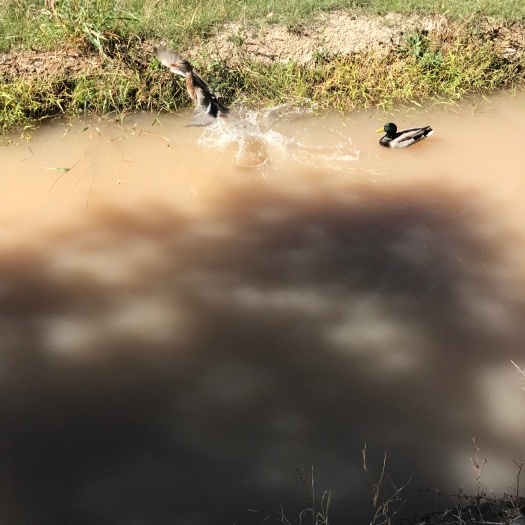
Valle de Oro was a dairy farm before it was a wildlife refuge. Its green fields attract geese and sandhill cranes, while the ditches steering Rio Grande water through the property beckon ducks.

From the moment we stepped onto the ditch, the cottonwoods’ dancing yellow leaves filled our eyes. But we wanted to be among them, not just looking at them. So at the first opportunity to cross the ditch into the Rio Grande bosque, we peeled off.

IMG_9063

A strong breeze blew through the cottonwoods, and they hummed in the wind. Golden light met golden leaves and multiplied.

IMG_9089IMG_9094

A sandy jeep trail led us through waving marsh grasses and reeds to the river, then looped around the bosque.

IMG_9077IMG_9078

A woman from San Antonio walking her dog could not believe her eyes. She asked us lots of questions about the ecosystem that produced this place, and the irrigation ditches. She was staying in Santa Fe, but Valle de Oro had made the biggest impression on her so far. Score one for Burque.

We walked around and over giant cottonwood limbs that still had living leaves on them, and must have crashed to the ground just weeks ago, maybe even days.

IMG_9085IMG_9100

Crows swung overhead. Then geese began to wing across the river toward us, squawking like banshees. The burbles of sandhill cranes in the field drifted on the wind.

The sun fell lower, temporarily muting the vivid colors. The Sandia and Manzano mountains glowed in the distance as we walked back along the ditch.

IMG_9106IMG_9111

As Robert Frost so aptly put it, nothing gold can stay. If you want to see this sight in 2017, you’d better hustle.

Or, if you’re still dragging your feet, Socorro probably has a couple more weeks of yellow in the bosque.

Hike length: 4.5 miles

Difficulty: easy

Trail traffic: moderate

Wildlife spotted: sandhill cranes, geese, hawk, duck, bluejay, sparrows, grasshoppers, butterflies, dragonflies

IMG_9082
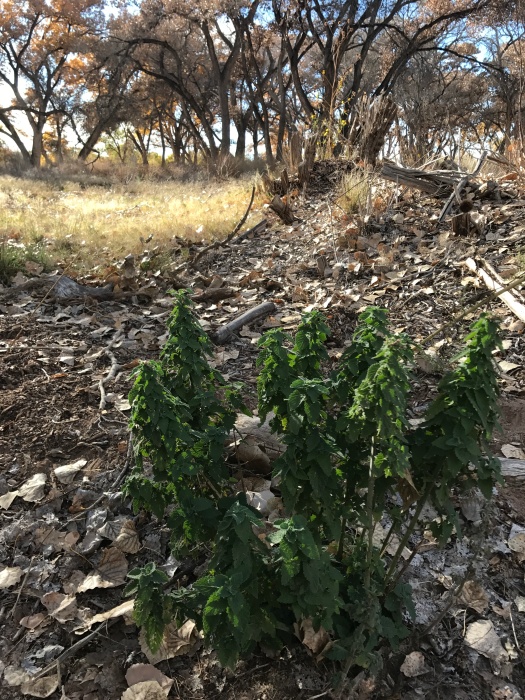
Bonus shot: world’s largest naturally occurring catnip plant.

The most important conference sessions take place on mountains

My butt had acquired the shape of my chair, and my hiking window was rapidly closing.

It was the last day of the conference, and the first meeting of the newly elected board was winding down in hour three. The other board members were rapidly dispersing.

“Anyone want to go for a short hike with me?” I blurted.

“YES,” two friends sitting nearby said without hesitation.

Whew.

This intrepid group of women journalists started as a gathering off the beaten path, so my odds were good, but you never know.

We didn’t have much time before the light faded and the evening activities started. Luckily for us, our hotel was right across the street from Hot Springs National Park.

The park is almost exclusively a network of short trails in the middle of downtown Hot Springs, Arkansas. We passed 147-degree hot springs bubbling from the ground, an angry squirrel barking, a couple getting engagement photos taken. A fellow conference attendee joined our group, then split off on her own path.

A steep paved trail through trees led us to a brick promenade. We climbed a set of steps to a gravel path, where an extremely steep but short section awaited.

Late-afternoon sunlight poured through the leaves. It had been many years since I’d been in the Deep South in fall. It’s not a riot of red and orange and yellow leaves, but a show of how many shades of green and brown there are.

IMG_9045IMG_9049IMG_9050

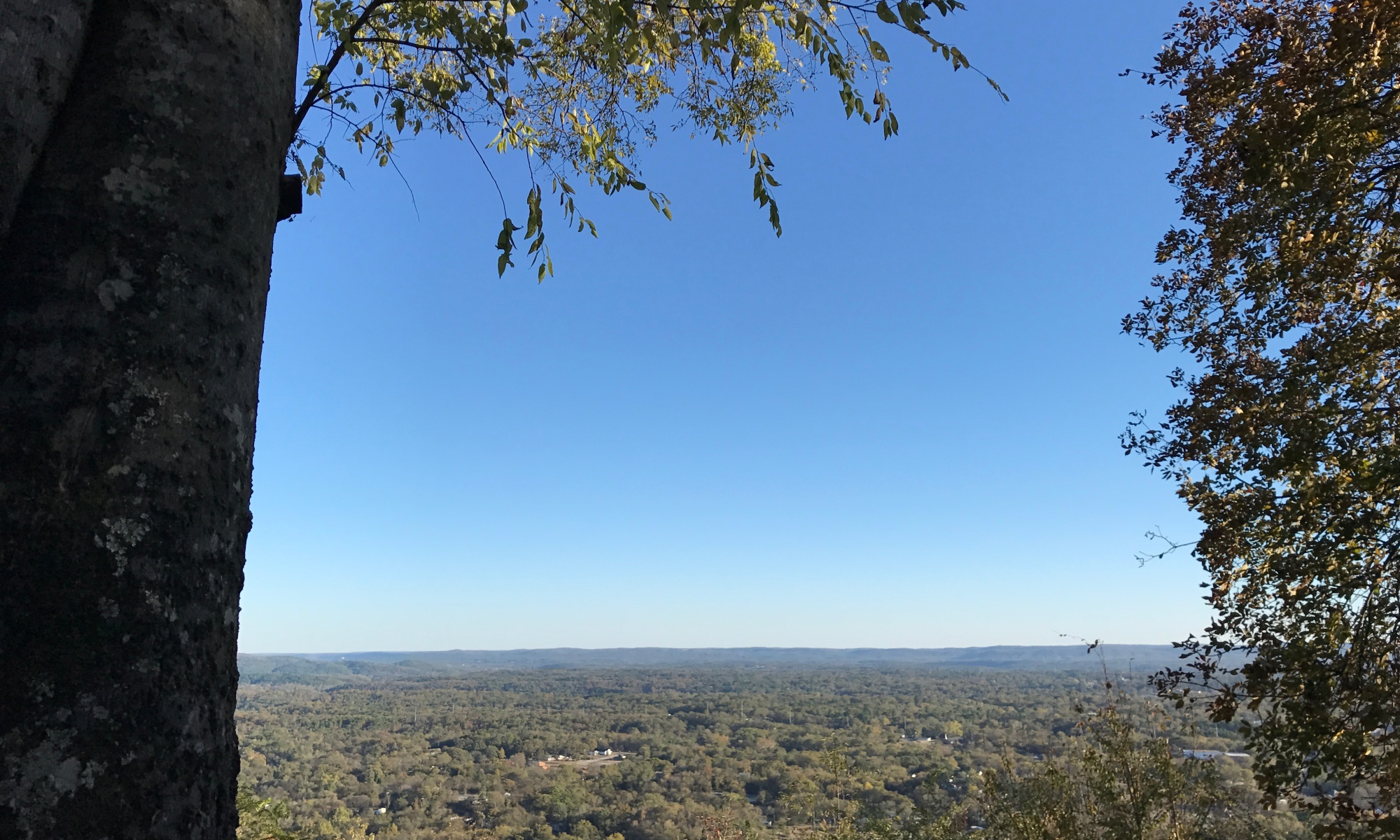
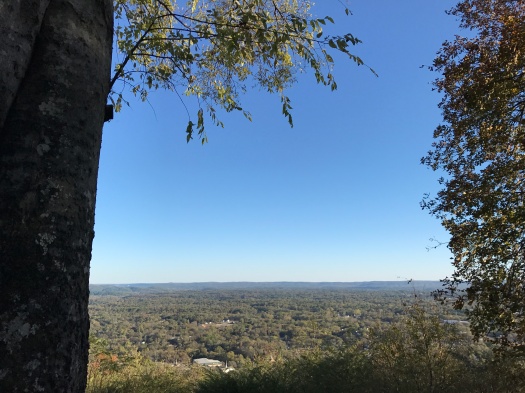
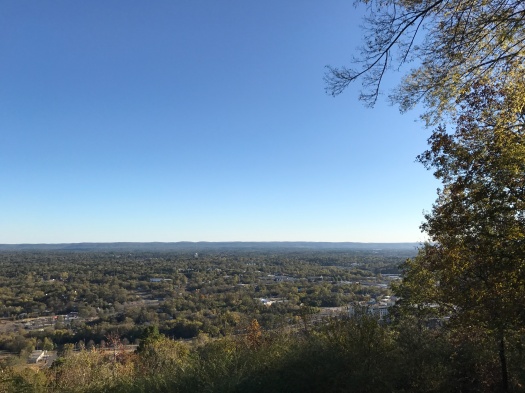
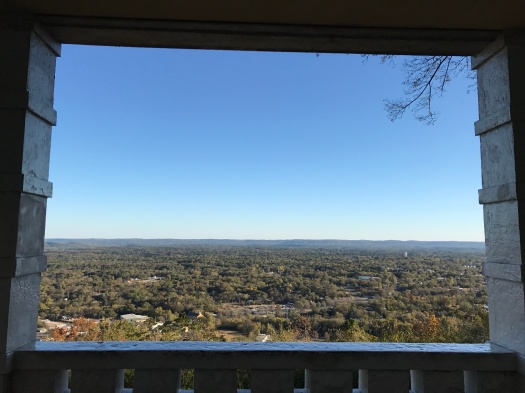
A cloudless blue sky peeked through the trees. We came out of them at a gazebo with a great view across the valley. A couple on horseback preceded us. Below, the town of Hot Springs stretched before us, water tower standing tall, mountains on the horizon.

IMG_9039IMG_9044IMG_9047

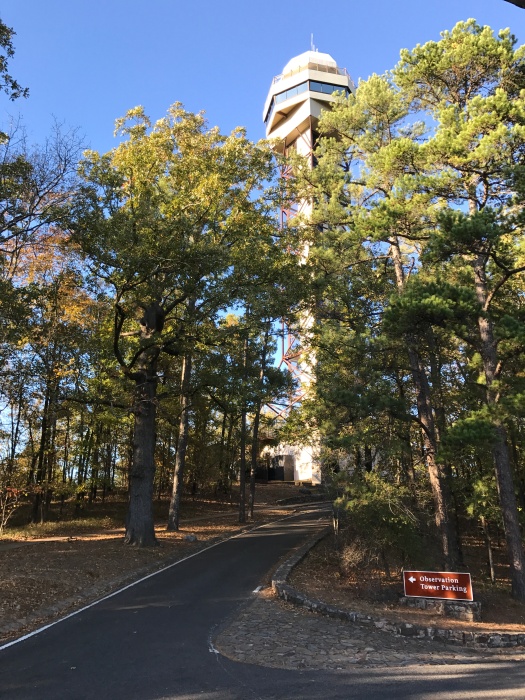
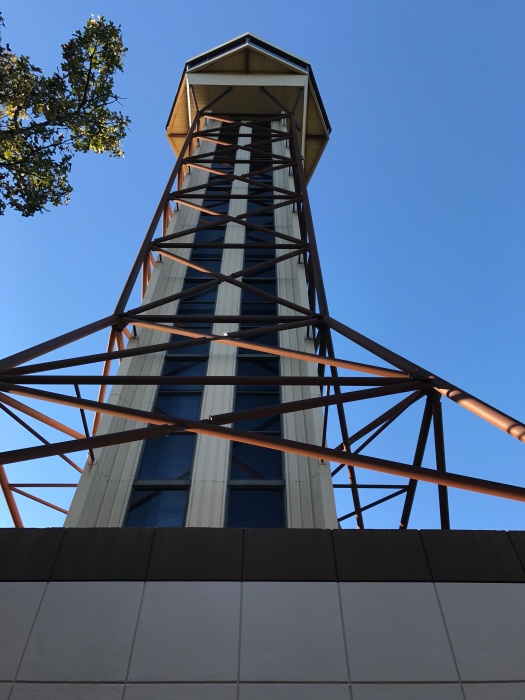
We walked into the Hot Springs Mountain Tower gift shop, but elected to skip the $8 fee to go to the top. We’d gotten our climb.

IMG_9046IMG_9048

On the way down we talked about families, favorite hiking spots, board meetings and travel plans, mountains and springs.

This was my sixth time at this conference, which is held someplace different every year, always a place where there are amazing outdoor activities nearby.  Last year in Roanoke, I joined a group of attendees for an eight-mile hike on the Appalachian Trail to McAfee Knob.

Everyone in this group is devoted to their profession and the conference is always full of things to learn. But you can find that in many professional organizations. The reason I love this group goes beyond work. As women journalists, we automatically share a bond, and challenges, before we even open our mouths. When we do, the things we have in common only become more evident.

What I love about this group is the chance to share things beyond work with each other.

And the side of a mountain is a great place to do that.

Hike length: 2 miles

Difficulty: moderate

Trail traffic: moderate

Wildlife spotted: squirrel, chipmunk, jays

A watched-for hawk never flies

The Buddha advises letting go of expectation.

But when you are hiking a trail called Hawk Watch, it is human nature to expect hawks.

So my eyes were glued to the sky as we climbed out of an arroyo in Tijeras Canyon.

The day was warm and brilliant blue, with a stiff and surprisingly cool wind blowing – sometimes hard – from the southwest.

Cactus, cedar, juniper and desert shrubs crowded in on the sun-baked trail. Herbaceous smells I didn’t recognize occasionally drifted my way.

Seemingly every rock on the trail displayed what looked to us like deposits of bear scat.

I salute any bear that could navigate this trail. It is wildly steep. It corkscrews, rather than switchbacks; when you come to a rare switchback, it feels like a break. No two websites agree on this hike, but a pretty authoritative one says it gains 1,500 feet in two miles.

We rapidly acquired the best views in existence of Tijeras Canyon, a ridge of rumpled foothills stretching to our south.

IMG_8977

Cottonwoods turning yellow in the valley. A few peaks of the Manzanitas jutted up beyond the valley, and further still, a glimpse of the Manzano crest.

Far below, the UNM golf course and the airport control tower. Way across the Rio Grande Valley to the west, the arrowhead range – the Sierra Ladrones – and the distant Magdalena and San Mateo ranges blending into one.

IMG_8990

In front of us, increasingly, were boulders. Pink and gray granite boulders with sprinklings of green, orange and pale blue moss. Balanced rocks. Flat boulders turned on their side, perfect for standing on. Kingly thrones.

IMG_9012


IMG_8968

IMG_8973

IMG_8980

IMG_9010

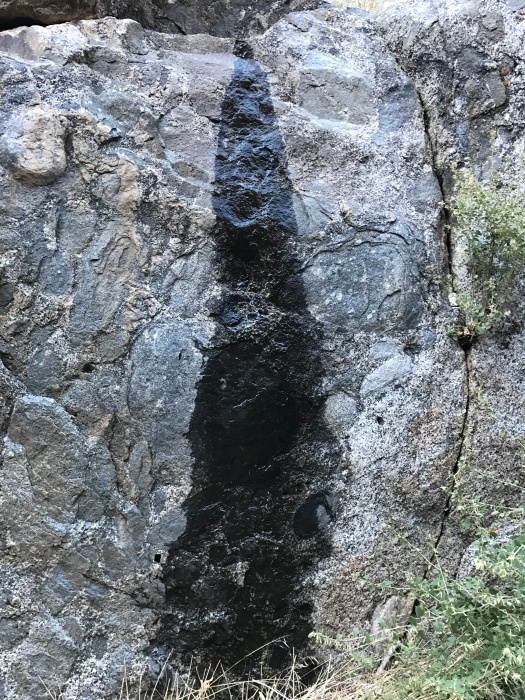
We climbed on them. We repeatedly crossed a seam of hollow-sounding black rock that felt almost like pavement.

One more push, gusts of wind lifting us up the mountain in the empty stretches between clusters of rock.

The trail turned, and we found a perfect group of flat boulders for sitting.

IMG_8998

IMG_9002

Bluejays flew overhead. A wren sang sweetly. We consulted our guide to Rocky Mountain animal scat (this is a thing – jealous?), which neither confirmed nor denied our scat identifications as bear and bobcat.

We could’ve kept going. Some friends of mine did when they hiked Hawk Watch, pushing all the way up the ridge to South Sandia Peak and back.

They must have bionic knees.

On many hikes, I put my exertion into the climb and coast on the way down, soaking up the scenery.

If there was anything different to see on the way down, I didn’t see it. I was focusing on keeping my feet under me on the steep and rocky grade. My lower body slowly composed a symphony of aches. My right knee was the tuba, blurting its presence regularly. The ball of my left foot, my right big toe and my hip flexors occasionally contributed a phrase.

I walked sideways or stagger-stepped to keep my balance. I fell on my arse (and was unharmed; God bless sturdy hiking pants.) Twice we found ourselves at the end of an arroyo because we’d missed a bend in the trail, eyes glued to our feet.

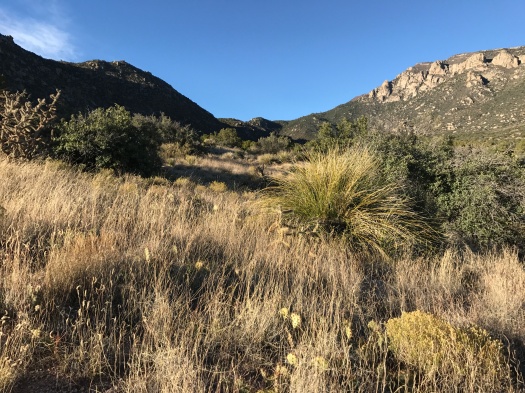
The half-mile of Three Gun Springs trail we borrowed to get back to the car was wide and gentle. The ache symphony quieted. Late-afternoon sun slanted through the canyon, wind sailing through the wild grasses, butterflies and birds making their late-day rounds.

IMG_9020

Hawks?

Not a one to be seen.

Hike length: 5 miles

Trail traffic: moderate

Difficulty: difficult

Wildlife spotted: butterflies, skinny and fat lizards, bluejays, wrens


When everything else in Burque is falling apart, you can still walk along a ditch

These are tough times in our beautiful city.

Violent crime is rising, and Burquenos are worried about it. They have reason to be. Our state already ranks among the worst in the nation on crime, domestic violence and drug addiction.

Then, this week came the news that a major mental health provider – an organization that treated thousands of people in Albuquerque, many of them low-income – would close its doors.

Another gaping hole in our city’s safety net.

Too often, our coffers are empty, our resources overstretched, when it comes to helping the neediest among us.

But there is one resource we have in abundance, one that studies have found could help reduce the risk of depression: our beautiful natural environment, with 310 days of sunshine a year.

It is no replacement for food, shelter, medical treatment, counseling, drug treatment, policies or laws addressing public health needs. We are going to have to find ways to make more of all those things accessible to our residents, or stay at the bottom of every list forever.

But being in the natural world more is one thing that could help many people in Albuquerque, at least a little, at least for a moment. Maybe that little boost could help more people continue the endless search for the more elusive resources they need.

The wilderness is as near and accessible here as it is almost anywhere in the country, but it is still not accessible to all.

Walking through a gate into the wilderness is usually free, or cheap. But you typically need a car to get there, and gasoline, and some basic gear for when you arrive (proper outdoor footwear, compass, map, extra food and water.) You also need time. If you’re juggling multiple jobs, working every day, a full-time caregiver, a hike can quickly edge out of the realm of possibility.

But there is one natural resource within immediate walking distance of virtually every person in Albuquerque.

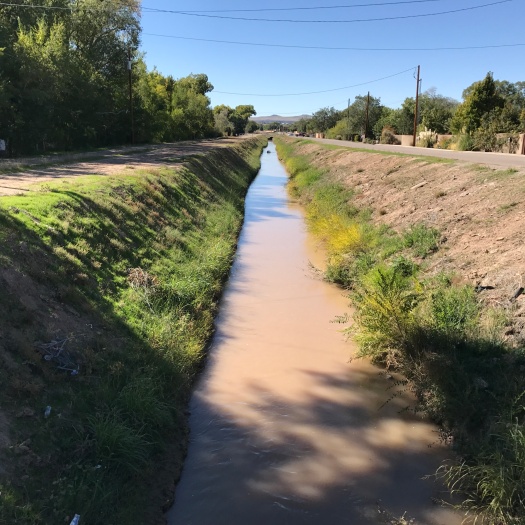
Ditches.

IMG_8935

There are 1,200 miles of irrigation ditches and acequias carrying water throughout the Middle Rio Grande Valley, according to the Middle Rio Grande Conservancy District. Some were first used by Native Americans 500 years ago. Others were built by Spanish settlers in the 1600s.

In a land where water was extremely scarce, people found ways to get the most precious of resources to people who need it.

If you have half an hour, you can spend time walking alongside a ditch. If you have more time and access to a bicycle, your options for exploring the paths along the city’s ditch network multiply. (To state the obvious: stay away from ditches and out of arroyos after we’ve been blessed with abundant rain, and respect the water’s power always.)

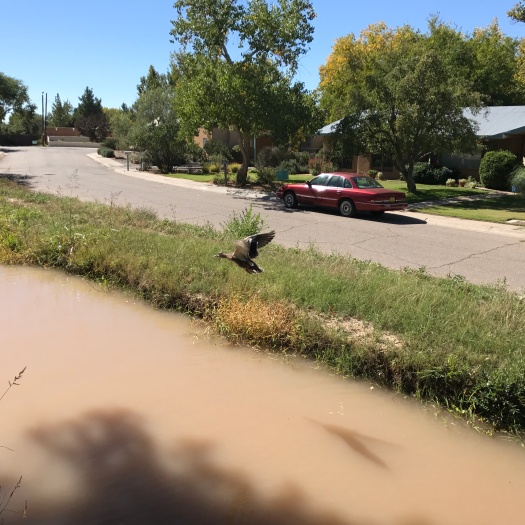
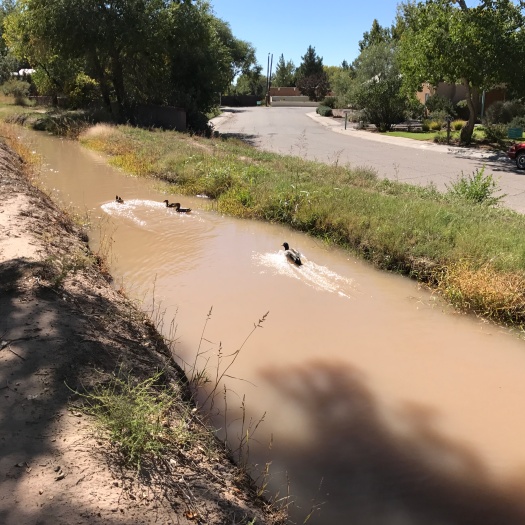
All ditch paths are not created equal. In Albuquerque’s agricultural valleys, you’ll walk under massive cottonwoods and see birds and ducks frolicking.

IMG_8936

IMG_8923IMG_8924

IMG_8927

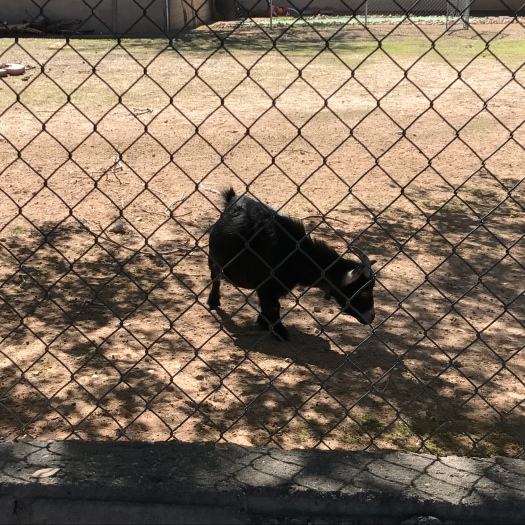
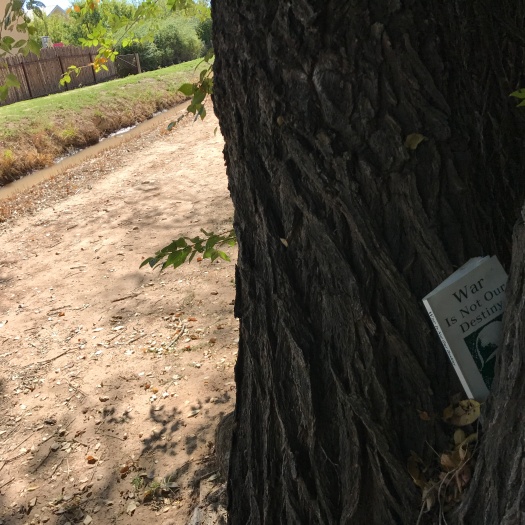
I saw more wildlife on a five-mile ditch path walk Saturday than I usually see in a day in the mountains or the open desert. Plus goats. And reading material.

IMG_8910

IMG_8937

In some neighborhoods, the closest ditch might be accompanied by a concrete path under the baking sun.

All ditch paths provide direct access to sunlight and fresh air, for free, in a matter of moments.

Our coffers may too often be empty, but, this year at least, our ditches are full.

May we find solace in walking alongside them, and may this abundant resource inspire us to build a network of resources where all the people of Albuquerque can get the help they need.

IMG_8942

This trail sucks for watching balloons. Good thing it’s great for hiking.

The sun hit our faces just before 9 a.m.

We’d been hiking for two hours.

We got an early start because I had the idea to watch a Balloon Fiesta mass ascension from the mountains. Brilliant as that idea seemed, it didn’t really work.

I had picked the Pino Trail in the Sandia foothills because it was far enough north and low enough elevation that I thought we’d get a good view of the field. I was right: we could see the field. We could even see some balloons hovering over it, floating along like chess pieces moved by an unseen hand. But they were tiny from where we stood, and as soon as we started ascending the trail, they became impossible to make out.

IMG_8840
There are balloons out there. Really.

So we focused on the hike.

I have history with the Pino Trail. When I first got interested in hiking and was looking to build stamina, I’d hike on this trail every weekend, going a little further each time. It was many months before I realized it was nearly 10 miles roundtrip and rated difficult by the Forest Service. I tried to do the whole thing last year but fell a mile short (the end of the trail is the toughest.)

The trail is steep and well-shaded after the first mile, with enormous boulders scattered along its lower half. On the upper half, a narrow trail climbs along the canyon wall, with steep dropoffs on the other side.

The sun comes slowly into this canyon. In the cold early morning, it touched two rocky peaks.

IMG_8844IMG_8850

Half an hour later, the top of a ridge. Half an hour after that, most of the ridge was bathed in sun, but we were still in layers and gloves in the shade.

By the time we finally caught up to the sun, our legs and lungs were pounding. We might have tried for the top again, since we’d gotten such an early start, but I had a midday commitment. So at a dark, cold spring seeping from the canyon wall, we turned and headed back down.

The light on the way back was spectacular, shimmering through pine needles, dancing on leaves, warming our backs and faces.

IMG_8861IMG_8871IMG_8872IMG_8877IMG_8882

The humans and dogs who’d been mostly absent from the trail on our early climb poured up as we moved down.

Birds and butterflies flittered past us into the light. As we finished the last open, unshaded section of trail, I spotted a tarantula hawk crawling on the ground and called to my husband. A man heading up with his family saw us looking at it and gaped.

“We don’t have anything like that in Montana!” he exclaimed.

“Do you know what it is?” I asked, ready to blow his mind.

But he was talking with his companions and didn’t hear me.

It’s for the best. Knowing the full beauty and horror of the tarantula hawk might have sent him packing back to Montana early.

Hike length: 6.5 miles

Difficulty: difficult

Trail traffic: moderate

Wildlife spotted: cottontail, jays, robin, sparrows, butterflies, tarantula hawk


Before I knew it, this hike had seeped into my heart

I doubt we would have seen the seeps if we’d gone on a different day.

Today’s hike followed five consecutive days of rain, the first time I’ve seen that in eight years of living here. The total haul at our house was over two inches.

So when we headed into Embudito Canyon, we knew we were likely to see some sights we wouldn’t get on another day. And almost immediately, we noticed the seeps.

IMG_8824

Trickles of water cascaded out of stacked rocks, coursed over the ground under us, pooled in depressions in smooth granite.

It was an amazing sight, and made for slippery going on said granite.

This is a tough hike. There’s a lot of clambering up and over giant rocks. It’s a hike you want to take with someone you’re comfortable giving a butt-boost up to the next level of the trail, or vice versa.

It is also spectacular.

The canyon walls are the tallest I’ve seen in the Sandias. They’re stone dominoes at first, transforming to forested coves as you ascend.

IMG_8807IMG_8813

Fall had already announced itself, chamisa blazing yellow, leaves shading through orange and brown, Virginia creeper bleeding deep red (how is there Virginia creeper in this canyon? If that wasn’t it, it was some fine mimicry.)

IMG_8819

I would be remiss if I did not note that this canyon also boasts an embarrassment of big flat rocks perfect for a rest.

IMG_8788

I found a boulder twice as long as I am where I could catch the breeze under a tree and practice my new hobby – photographing whatever I can see while lying on my back at the halfway point of a hike.

IMG_8794

But it wasn’t quite halfway. We scrambled on up a game path in search of a sweeping view. There wasn’t one, but we had no complaints about what we could see.

IMG_8802

The Sandia Mountain Hiking Guide promises even more delights if you keep going. The trail will take you to “one of the most secluded and prettiest spots in the Sandia Mountains,” it says.

I find it hard to believe the first two miles of Embudito Canyon could be improved upon, but I look forward to finding out whether they can.

Hike length: 4 miles

Difficulty: difficult

Trail traffic: light

Wildlife spotted: Gambel’s quail, finches, robins, bluejays, butterflies, cottontail, lizard, millipede, red beetles

Rerouted: A tale from the west face of the Sandias

We were not lost.

To be lost implies that you have been where you needed to be, and strayed from that place.

We had yet to be anywhere.

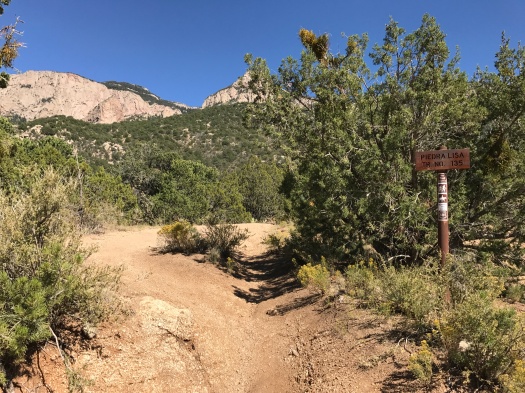
We were trying to access Movie Trail in the Sandias from the Piedra Lisa trailhead.

IMG_8733

Signs at the parking lot proclaimed that Piedra Lisa Trail had been rerouted, and the new route was across the road from the old trailhead. But when we walked up the road to the old trailhead, it was blocked, but there was no alternative across from it. We walked further, inspected a path into the woods, but it dead-ended.

Finally we walked back to the parking lot to start over, thinking we must have misread the signs.

There we saw the new route, well marked, right across from the parking lot. We’d walked right past it.

IMG_8734

I was annoyed with myself as we began to climb. Piedra Lisa is steep, rocky and brilliant on a clear blue fall day like today. It has killer views of three of the main features of the western face of the Sandias: the Shield, the Prow and the Needle. We were headed up to the base of the Prow.

IMG_8746
This is as close as we got to the Shield today.

Or so we thought.

We made the turn we believed our trusty guidebook was telling us to make, but we found ourselves in an arroyo. A sign informed us we were in Upper Juan Tabo Canyon, and we deduced from our guidebook that we were on Fletcher Trail, an unmaintained route that follows an arroyo to the base of a rock formation called UNM Spire. It’s only accessible six months of the year; the rest of the time it’s closed to protect bird habitat.

Since we’d already burned an unnecessary mile of walking on the road and we were on an identifiable trail, we stuck with it, even though it wasn’t the one we intended to hike.

I’ve done a lot of arroyo hikes. But until today, I’d never done one that climbed 1,000 feet. Spoiler alert: It’s hard.

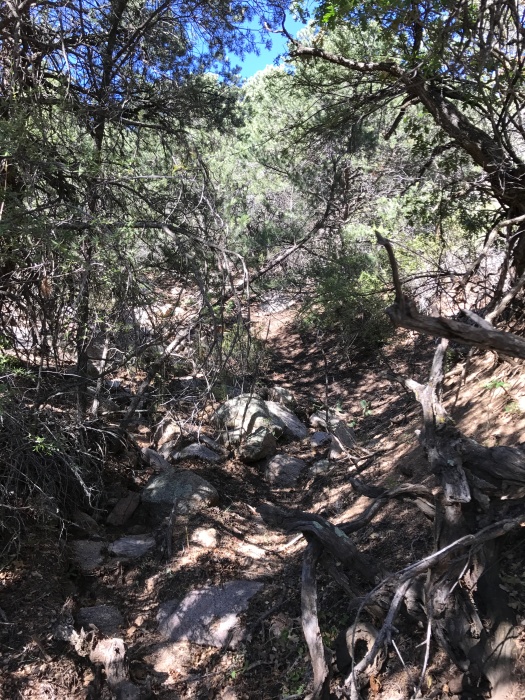
The sandy surface made climbing slow going. Brush taller than my husband choked the trail in some spots. At times we were climbing on rocks, ducking under tree branches and pushing aside brush all at the same time. All the Sandia butterfly greatest hits darted through and above the brush, from the orange, black and white ones to small ones in yellow, lavender and white. In spots where the brush was thick, flies swarmed us too.

It was clear pretty quickly we weren’t going to get to UNM Spire. Just under a mile into the arroyo, we encountered a thick tangle of tree branches. Rather than pushing through it, we sat down under it. In the shade, the breeze felt crisp and cool.

IMG_8739
View above our resting spot.
IMG_8740
View of the trail above us.
IMG_8741
View back at the trail where we’d been.

The hike back was much easier, and not just because it was downhill. You could see further; twists in the path that we could barely see on the way up were discernible on the way down. The falling autumn sun waved through the leaves and brush, lighting up thistles.

IMG_8748

We walked through big stands of oak, a rare sight in the Sandias, where the tree is usually of the Gambel oak scrub variety.

IMG_8752

Despite the double rerouting, I’d gotten my wish for the day: to explore a trail I’d never seen.

But for now, UNM Spire remains a mystery.

Hike length: 4.3 miles (including unintended 1-mile detour)

Difficulty: moderate

Wildlife spotted: bluejays, butterflies, dragonflies

Trail traffic: moderate on Piedra Lisa, none on Fletcher Trail

Disclaimer: I may have hallucinated this entire hike

The sky’s so blue it’s pulsing.

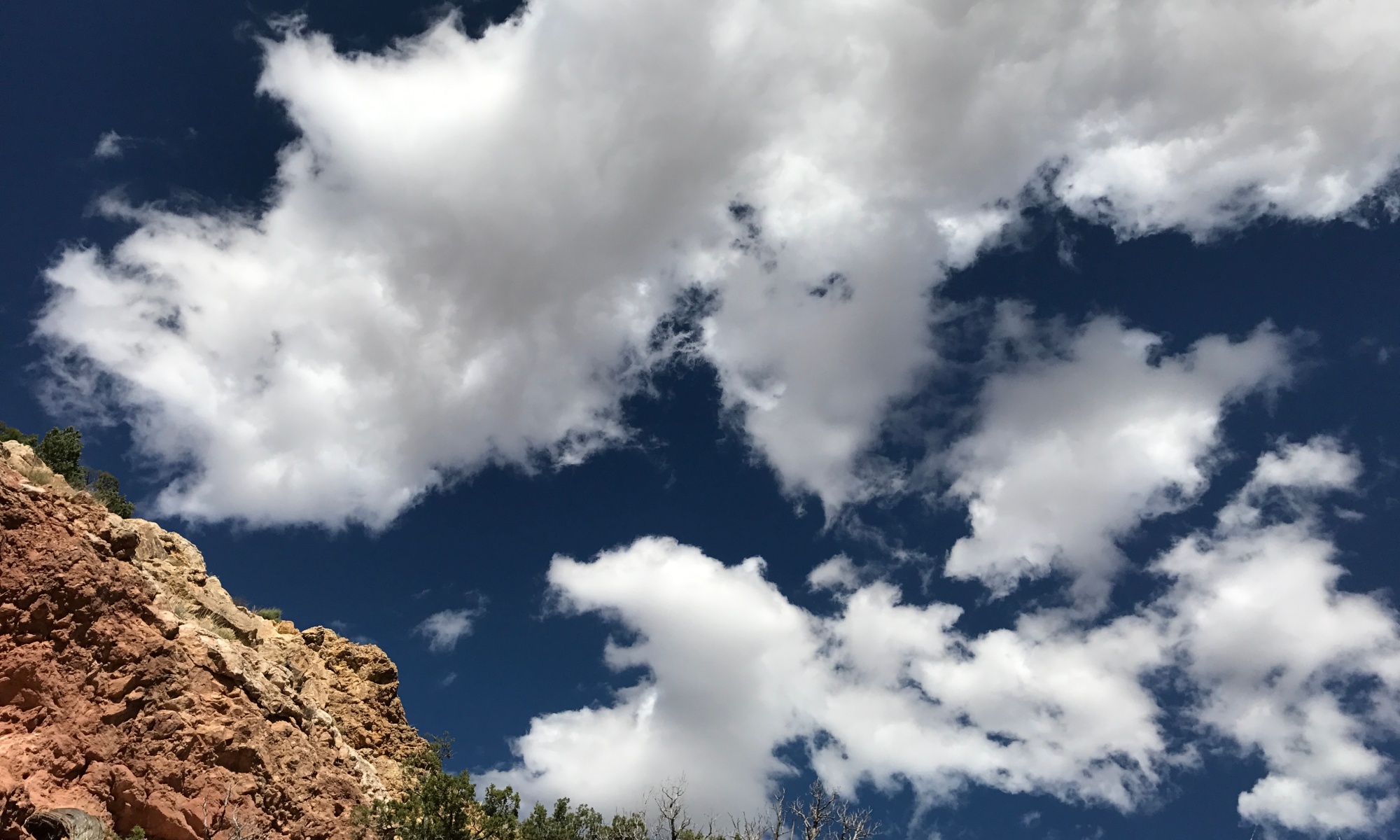
Giant cotton-candy clouds unfurl above us. One cloud is a dragon crossed with a seahorse. It spins off wisps that float and disappear. A hole opens in the cloud, swirls, then closes again. Two birds fly just below the cloud, so high they are specks.

IMG_8704

Gradually, I notice my surroundings other than this cloud. A small white butterfly dances around wildflowers growing out of red and beige rock walls. A breeze brushes my skin. I’m almost chilly. One hour ago, that was a feeling I thought I’d never have again.

We’ve been lying on rocks staring at this cloud for 30 minutes.

What is this trip we’re on?

***

This was a “Clerks” hike: “I’m not even supposed to BE here today!”

We were headed to hike in the San Pedro Mountains for the first time, a route out of Stephen Ausherman’s incomparable “60 Hikes Within 60 Miles of Albuquerque.”

But the dirt road to the hike was chained and padlocked.

We were less than a quarter-mile from the hike’s start, and it was our understanding that it was on public land, but we didn’t want to cross the padlocker, who clearly thought otherwise.

The only other hike we knew of in the area: Golden Open Space, an oasis in the Sandoval County hills owned by the City of Albuquerque, also a route we found in Ausherman’s book.

So we headed up lovely, twisty La Madera Road (even its name is glorious), notching three wrong turns even though we’d already been there.

We arrived at the open space just as some cyclists were leaving. They were the last souls we saw.

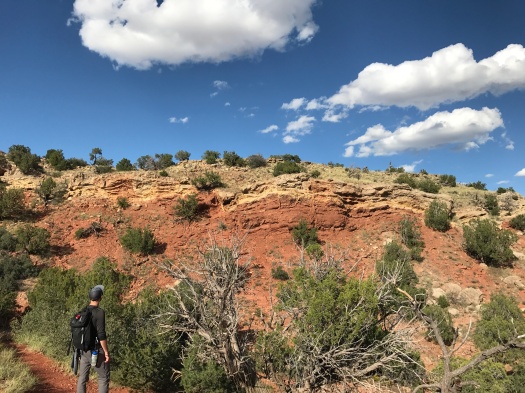
We followed a loop to an overlook with killer views of the Sandia, Ortiz and San Pedro Mountains. We could see the road we’d just driven in search of the San Pedro hike. The forested hills below us glowed brick red. A cottontail noticed us and bounded for cover, and a bluejay swept by.

IMG_8668

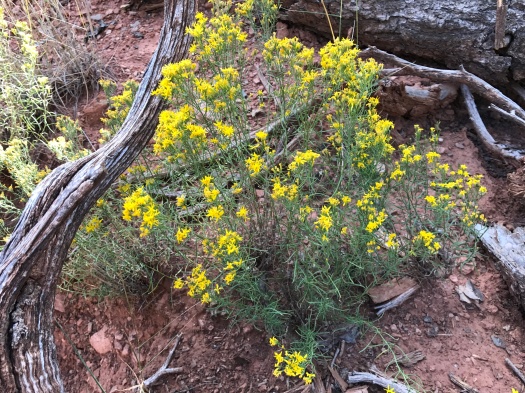
At least four kinds of yellow wildflowers covered the ground, and some looked almost chartreuse in the bright sun. We noticed yellow daisy-like flowers sprouting from the ground beneath the branches of twisty cedar trees.

IMG_8675

We set off for a shelter cave at the end of the loop. It takes some scrambling to get there, and though I’d done it before, I couldn’t look down.

IMG_8676

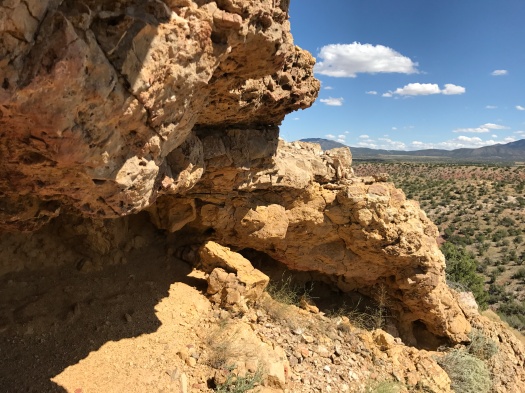
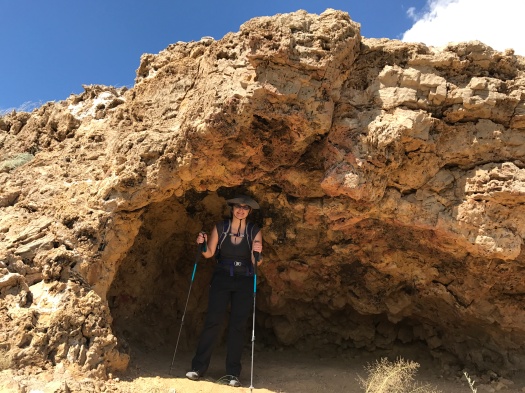
As cool as caves are to look at, they freak me out, because creatures live in them. I hadn’t gone inside the cave on our last visit. But that was before I had a hiking blog. People with hiking blogs don’t pass up the opportunity to take pictures in caves. So I climbed in.

IMG_8678

I liked it, actually. I could see the whole cave; I had room to stand up in its mouth, though it quickly tapered to a couple of feet high behind me.

IMG_8681

When I climbed down, I realized I was roasting like a chicken kabob.

The upper loop of this hike has no shade, and the lower loop doesn’t have much. It was a glorious day, about 76 degrees, but 76 degrees with the sun high in the sky and no shade at 7,000 feet is blistering. I reapplied sunscreen, we headed for the lower loop and left the trail for an arroyo in search of a little canyon shade. The arroyo quickly met a larger one, and my husband built a cairn so we’d recognize where the little arroyo that would lead us back to the trail branched off.

The big arroyo was pretty sunny. It was also pretty trippy.

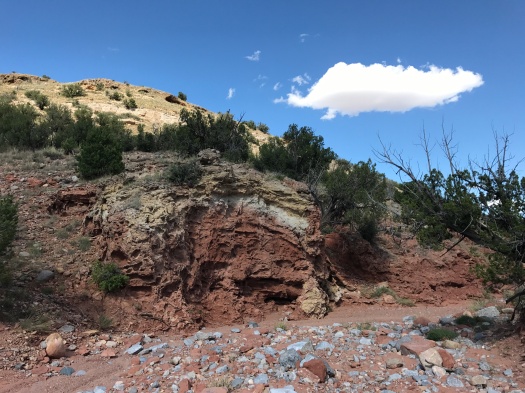
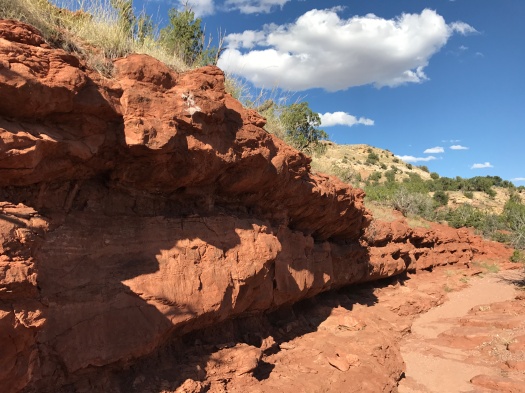
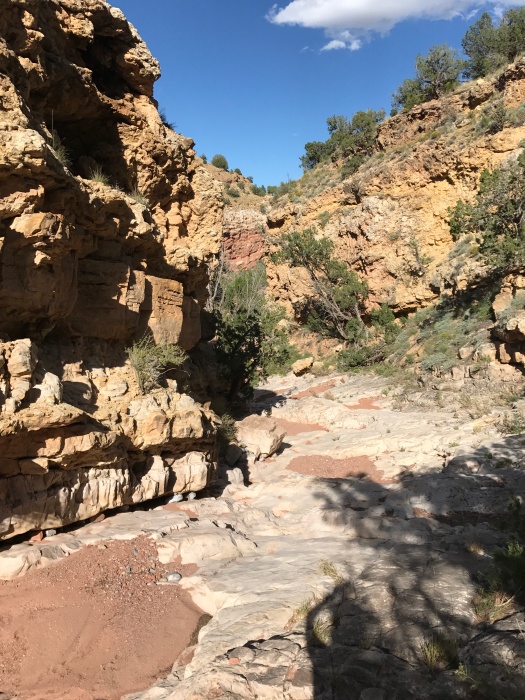
Corrugated red rocks undulated beneath our feet. Stepped layers of rock stretched down one side of the arroyo. Far above, the shelter cave we’d climbed into shimmered.

IMG_8687IMG_8714IMG_8719IMG_8720IMG_8708

At the end of the arroyo, where it met another, came cloudland. When I got up from our cloud hallucination to get a peek at the next arroyo, my husband saw a tarantula hawk walking along the rocks.

That next arroyo was a rock garden, the walls on each side twice as high as the channel we’d just been in.

I was too tired to explore it today.

But I can’t wait to see what kind of trip awaits us there.

Hike length: 5 miles

Difficulty: moderate

Trail traffic: nope

Wildlife spotted: blue jay, cottontail, tarantula hawk, dead rat in arroyo, violet gray swallow, finch