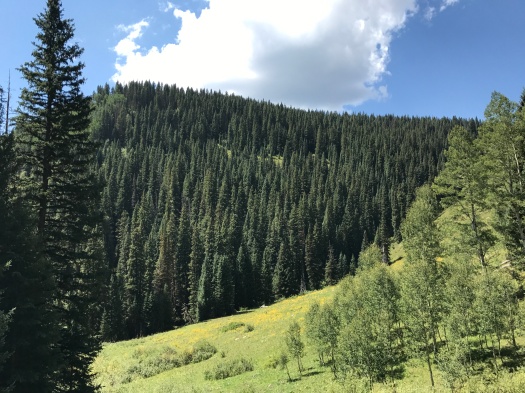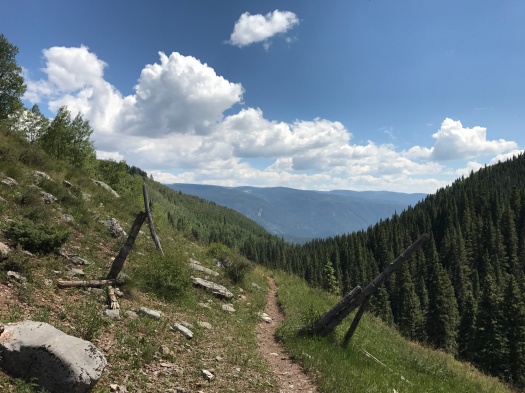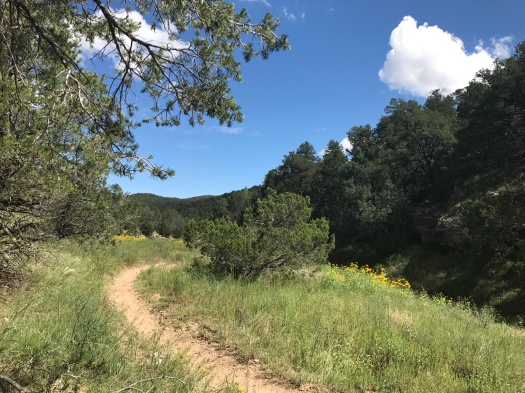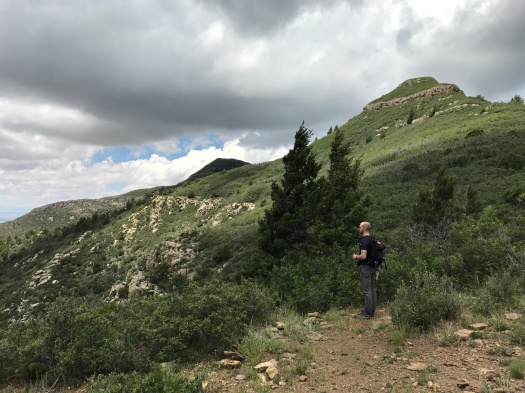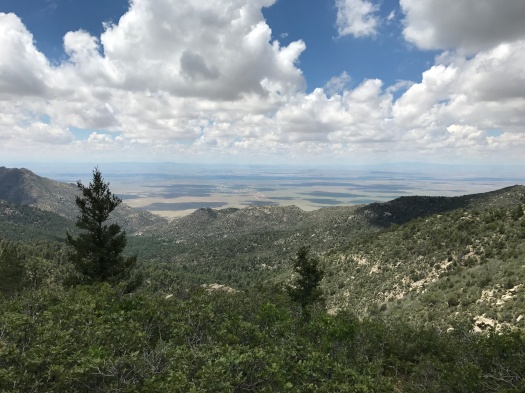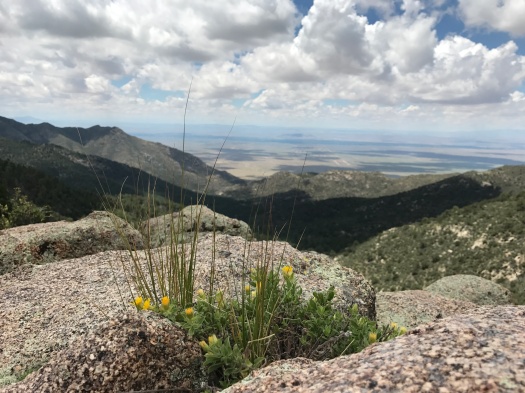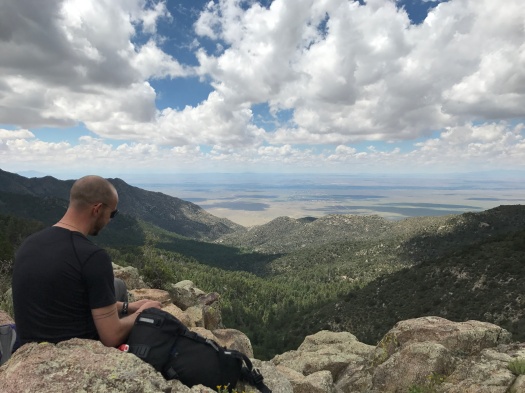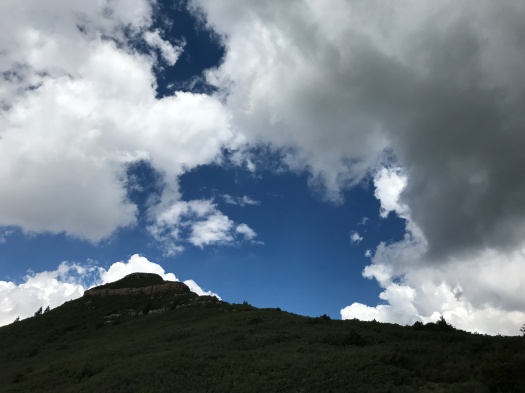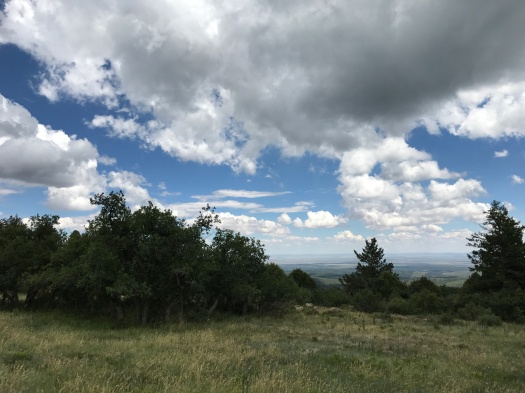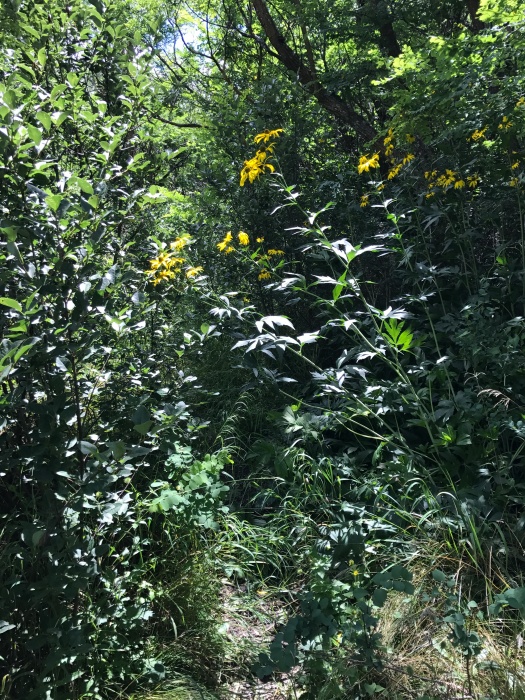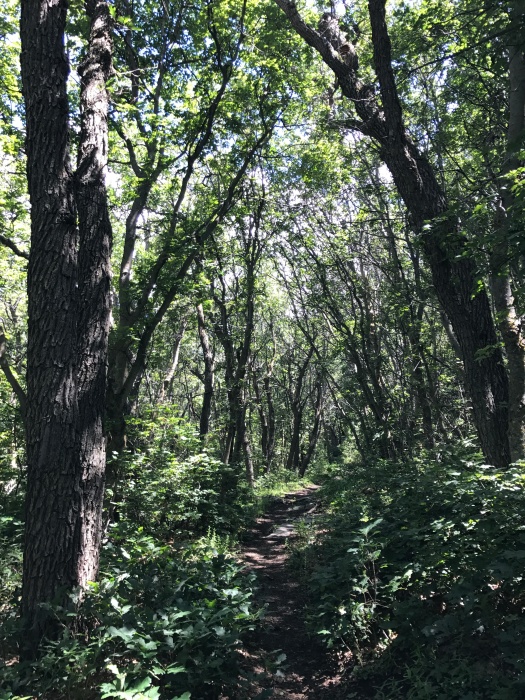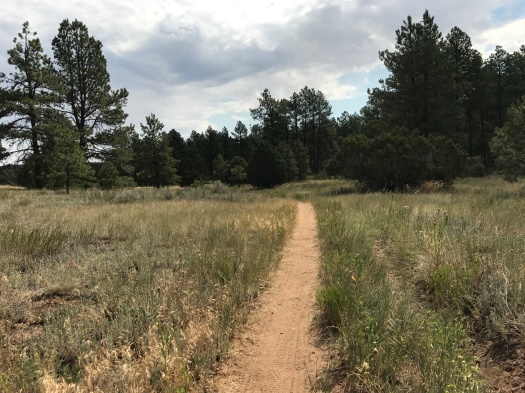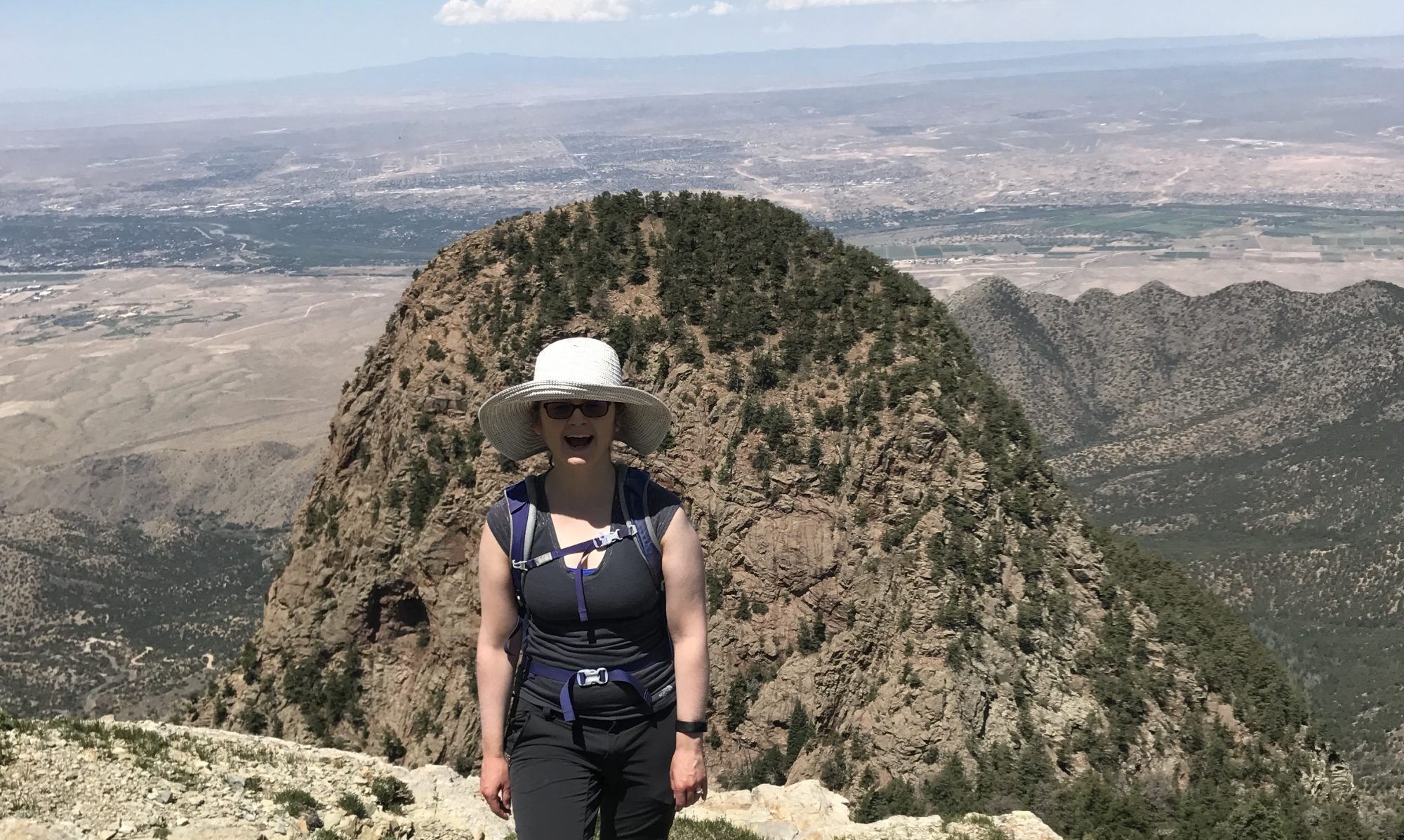
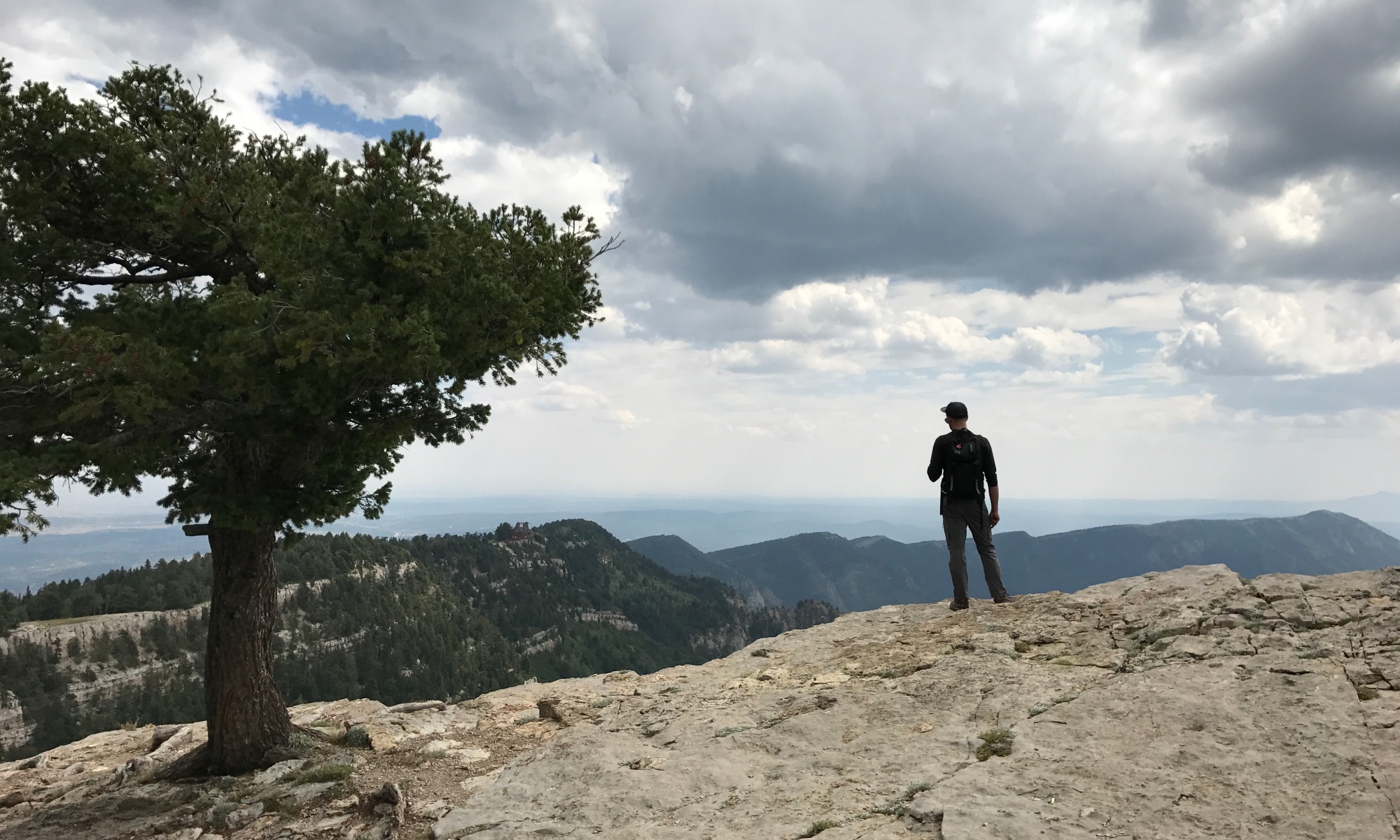
This hike’s only three miles, but it took me eight years

Before today, I had never been to the Sandia Crest.

That’s right. In eight years of living in Albuquerque, I had never had the quintessential local experience, the thing many visitors do within a few hours of arriving.

I can’t really say why. I’d hiked all over the mountain, including to the tram terminal at 10,400 feet. But I’d never made it up to the top, two trail miles and 300 feet higher.

Today was the day.

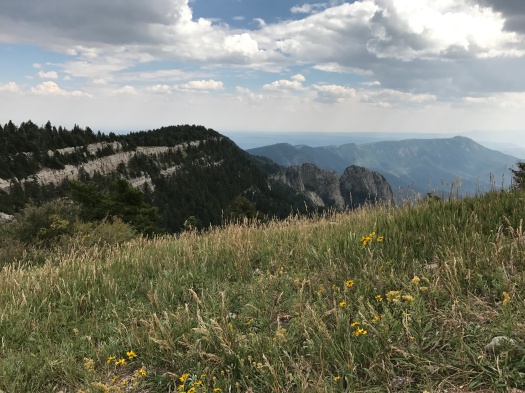
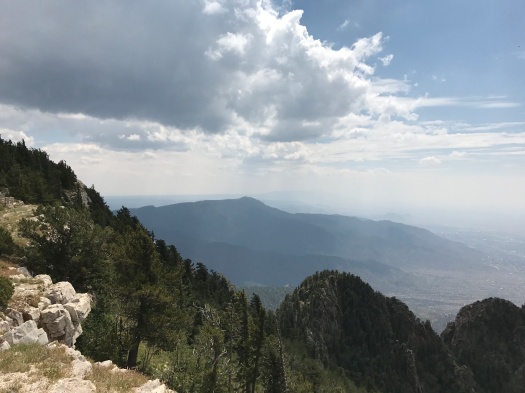
If you are beginning your hike from the Crest House, your first impression of the Crest Trail is staggering. I’ve hiked steep trails on many mountains, but none with such a steep dropoff so close on one side.
IMG_8575

The scene is breathtaking. With the dropoff and the elevation, I didn’t have much breath to spare.

“CAW!” hollered a crow cruising just above us, closer and louder than I’d ever heard one. Then, as we stared up, five vultures wheeled into sight, riding the wind.

I hoped they weren’t circling because of an instinct about my ability to keep from plunging over the edge.

It was 65 degrees, sun and clouds regularly trading off, as the temperature climbed to 90 on the valley floor below. A gentle rain fell.

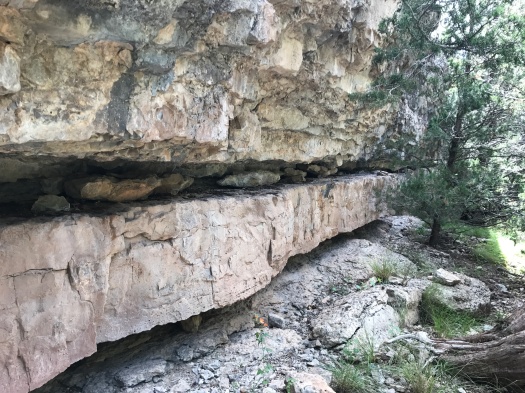
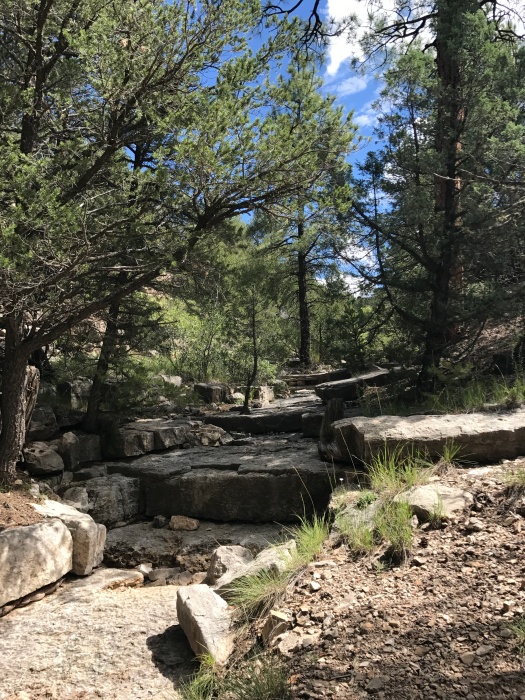
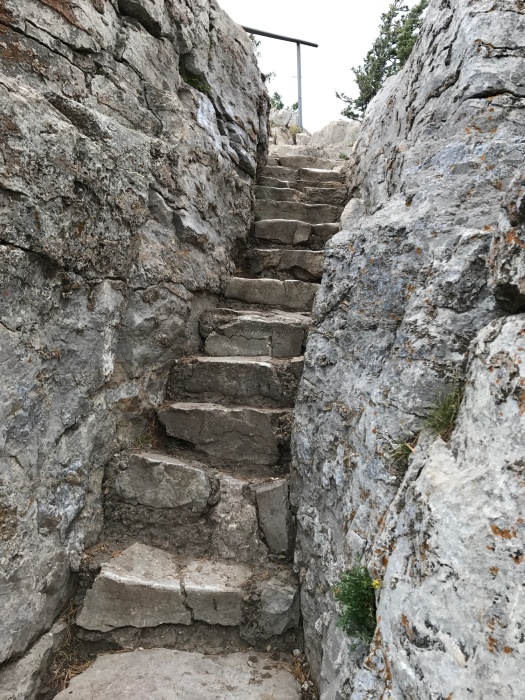
We climbed a short and narrow rock stairway, the limestone cool under our hands.
IMG_8648

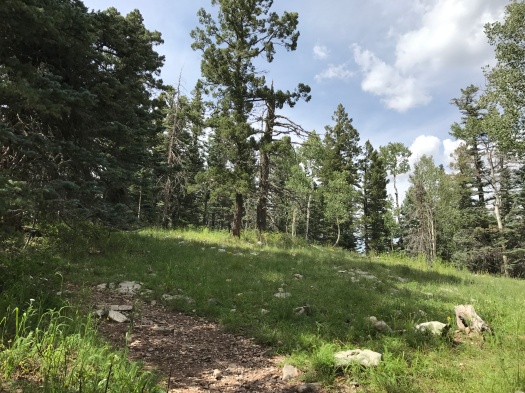
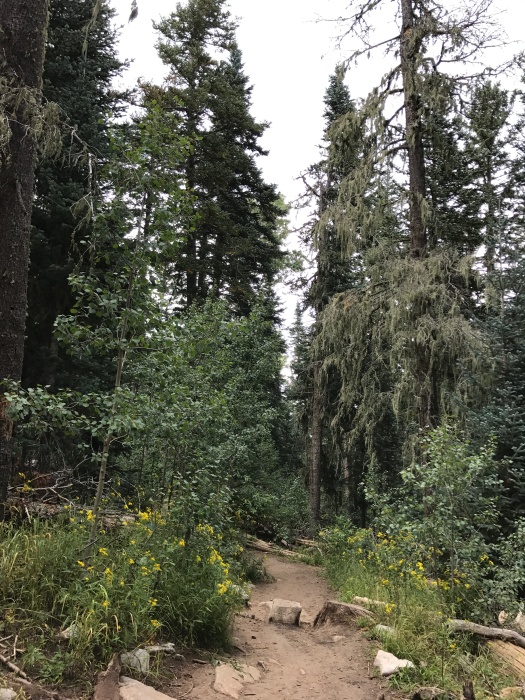
As we headed into the darkness of the tree cover, I felt steadier and more secure on my feet. Moss dangled from fir trees around us. The familiar scent of the forest filled my nostrils.
IMG_8581

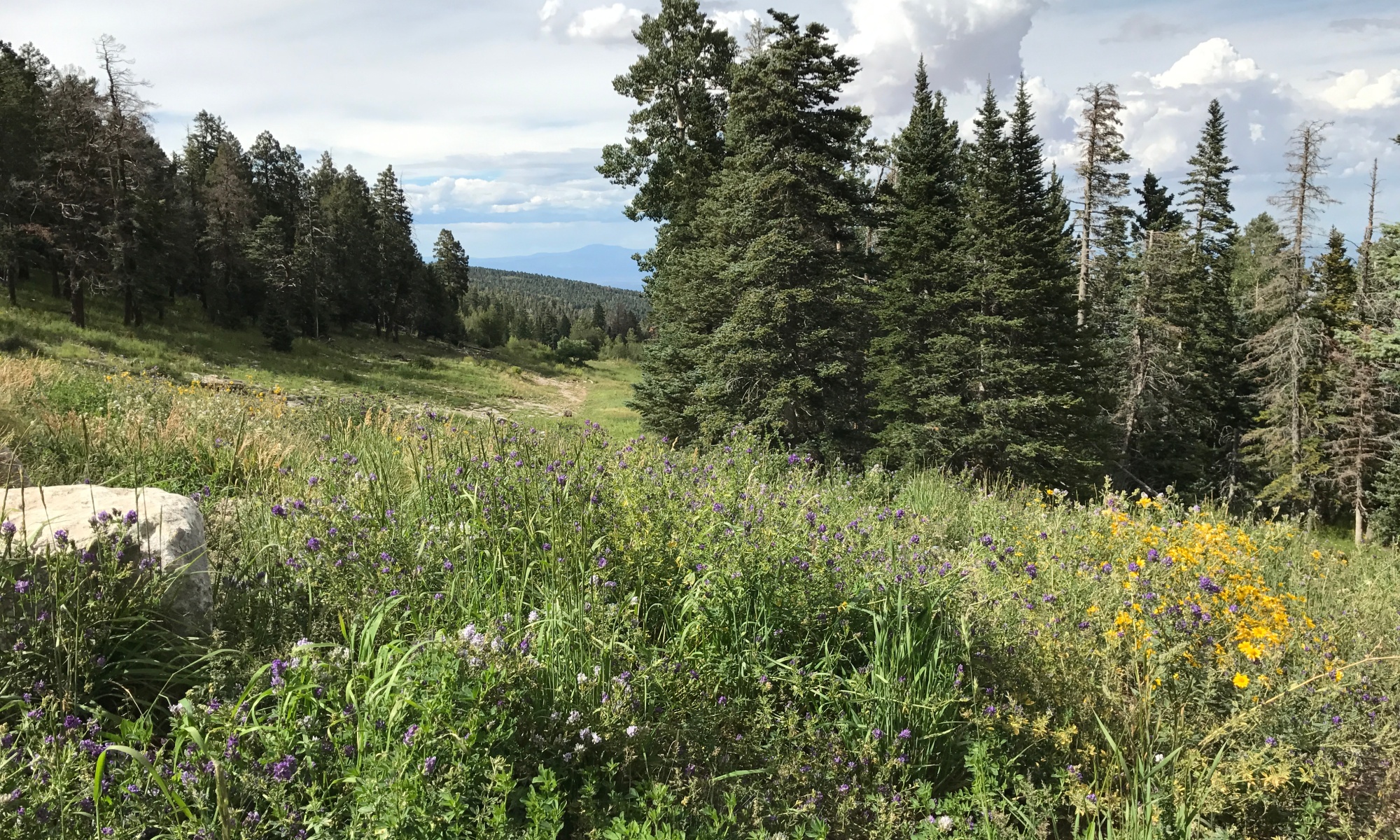
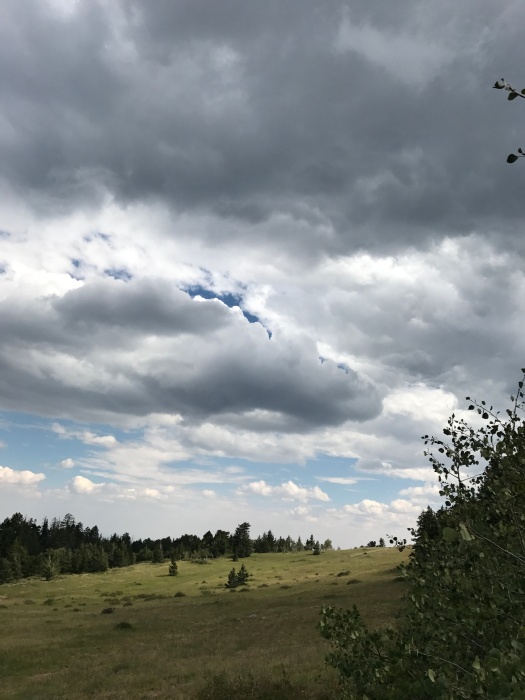
The sky ahead grew brighter, and a huge, lush meadow came into view on our left. It was closed to hikers, so we admired it from afar. The rain lessened, then stopped.
IMG_8644

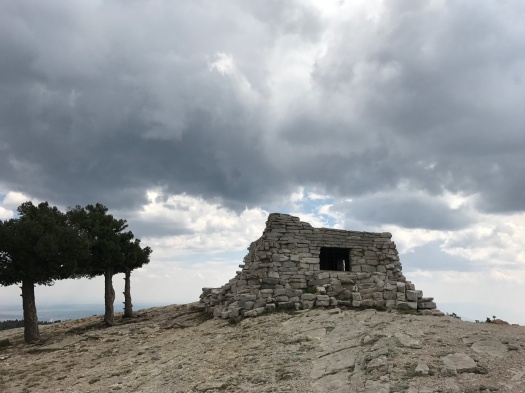
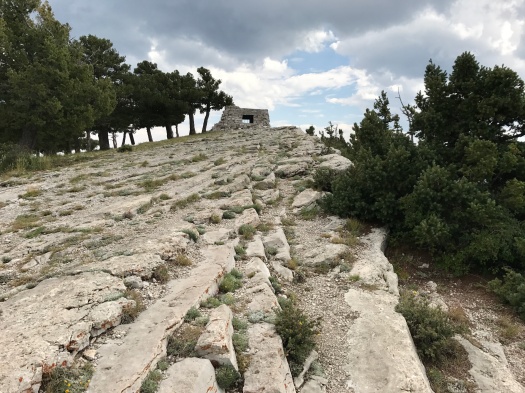
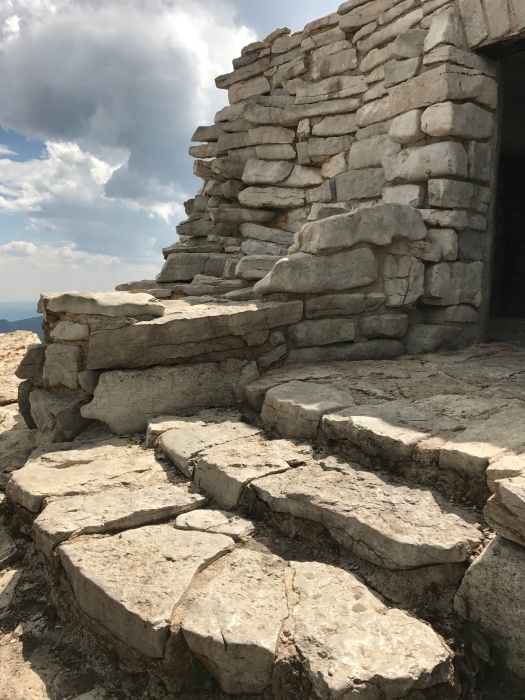
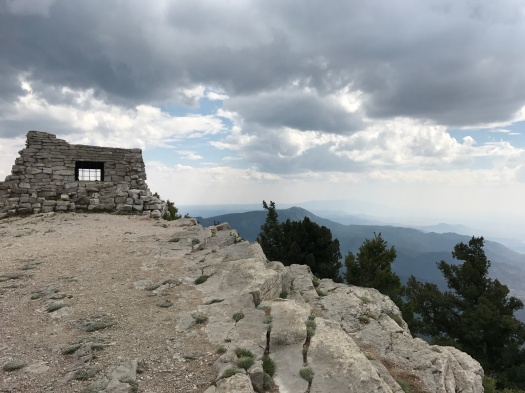
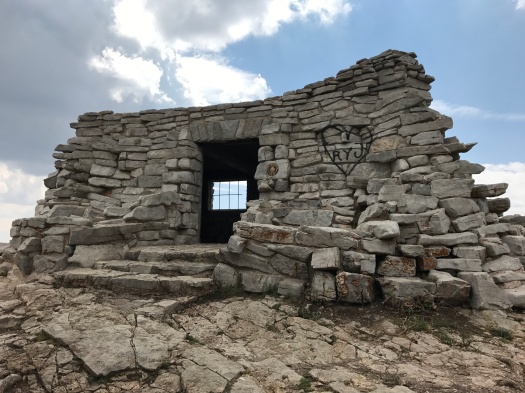
We spotted our destination: the Kiwanis Cabin, a stone cabin built by the Civilian Conservation Corps in the 1930s.

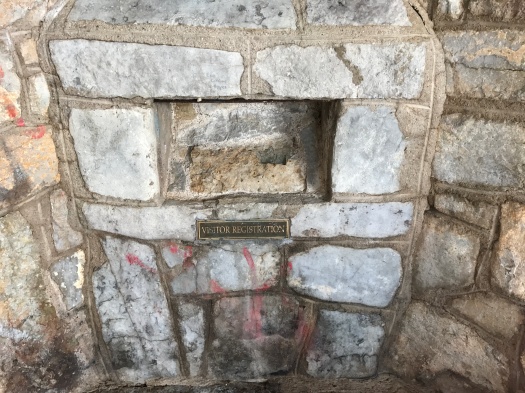
The cabin is amazing. It stands at the edge of a rocky limestone hill, sturdy and strong. Birds flutter onto its sills and into it.
IMG_8608IMG_8605IMG_8606IMG_8611IMG_8617IMG_8619IMG_8616

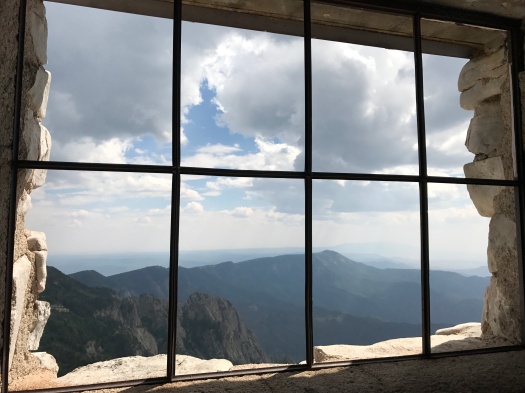
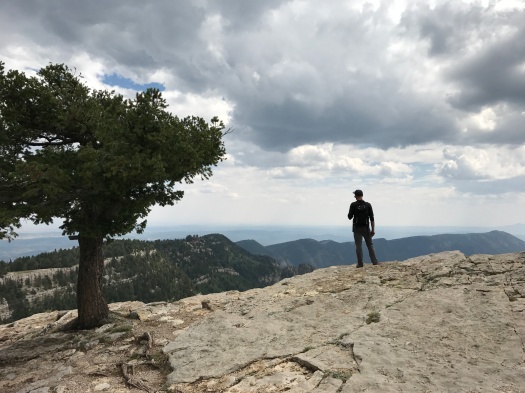
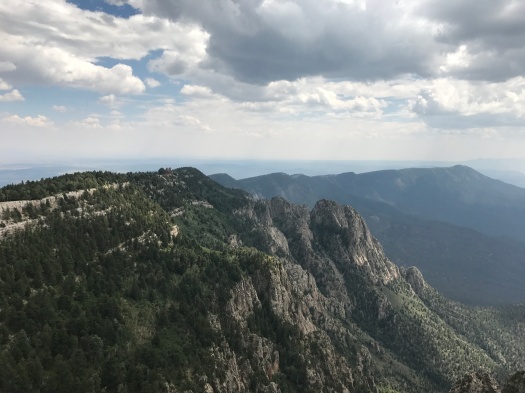
But as awesome as the cabin is, the view is even more incredible.
IMG_8589IMG_8592IMG_8595IMG_8622IMG_8633

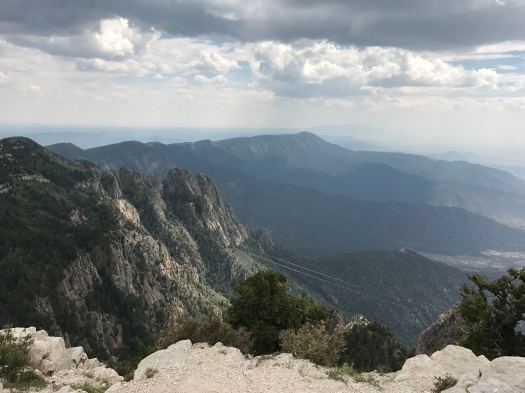
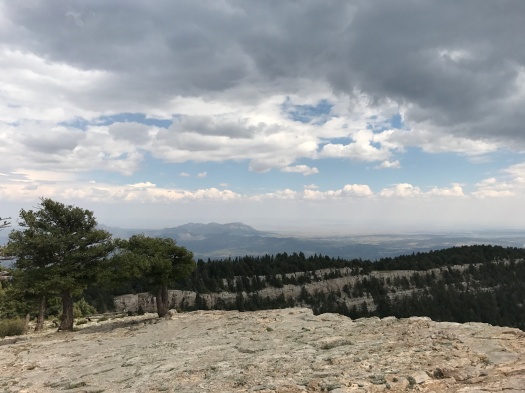
It offers a perfect vantage of the long limestone ridge where the tram terminal sits and the Ortiz and San Pedro mountains beyond. We could see the tram making its slow way down the mountain. It was hazy below because of smoke from the Oregon fire, but on most days, you’d be able to see the Jemez and Ladrones mountains, too. The cloudy, hazy sky created an incredible play of light and shadow on the ridge and the steep, rugged canyons below. I could have watched it all day.

I climbed down to get a better view of the meadow. As I climbed back up, my husband exclaimed, “Hey! I almost stepped on you.”

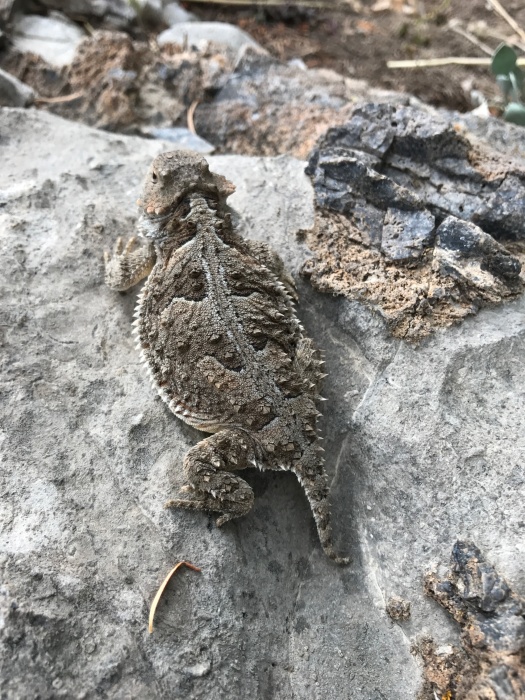
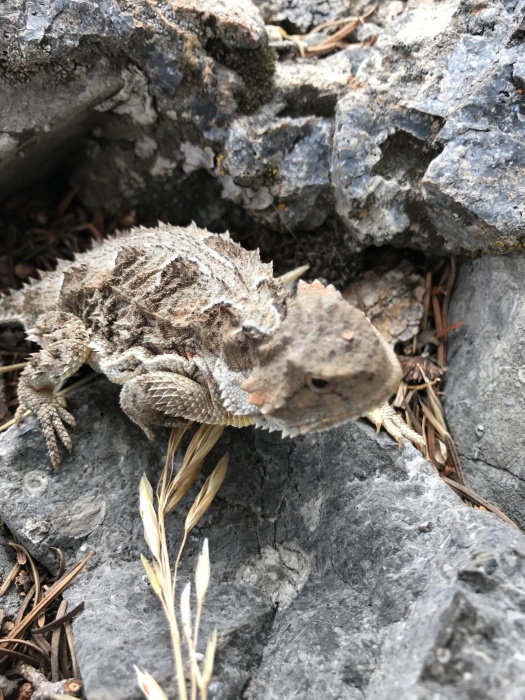
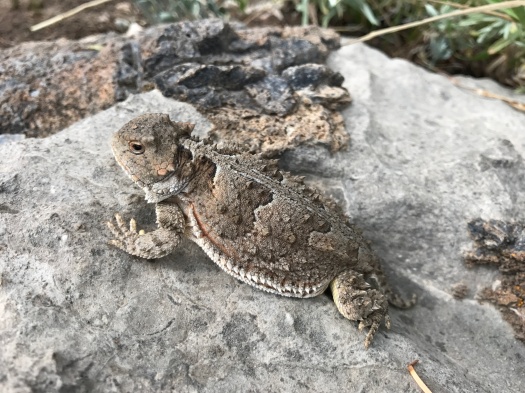
Luckily, he wasn’t talking to me. It was a horny toad, nosing around for a rock crevasse to disappear into.
IMG_8636IMG_8639IMG_8638

We headed back through the forest and emerged on the edge of the mountain. It started to rain again, or maybe it had been raining up there the whole time. But now that I had my bearings, I carefully explored the detours that ran a little closer to the edge than the main trail.

As I stood by our car stretching, a crow flew into a fir tree above us. It began a low, steady bleat from its spot within the branches.

On our way down the mountain, we saw two deer on the side of the Sandia Crest Highway, and a bluejay flew overhead.

I still don’t know what took me so long, but the view from up there was worth the wait.

Hike length: 3 miles

Difficulty: easy

Trail traffic: heavy

Wildlife spotted: horny toad, crows, ravens, vultures, towhees, chipmunk

TIP! The pit toilets at the Crest are super gross. They just get such heavy use that it’s kind of hopeless. The Tree Springs trailhead at 6 miles up the Crest Highway and the 10K trailhead at 10 miles have perfectly acceptable pit toilets. Go there.
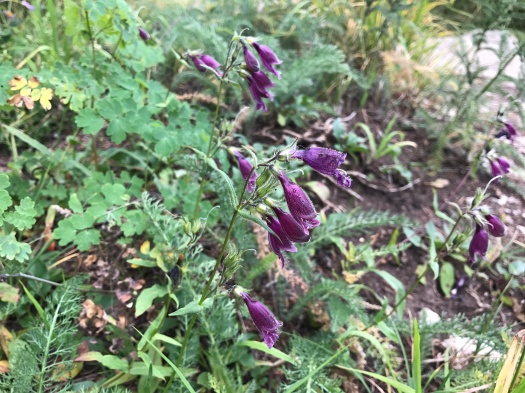
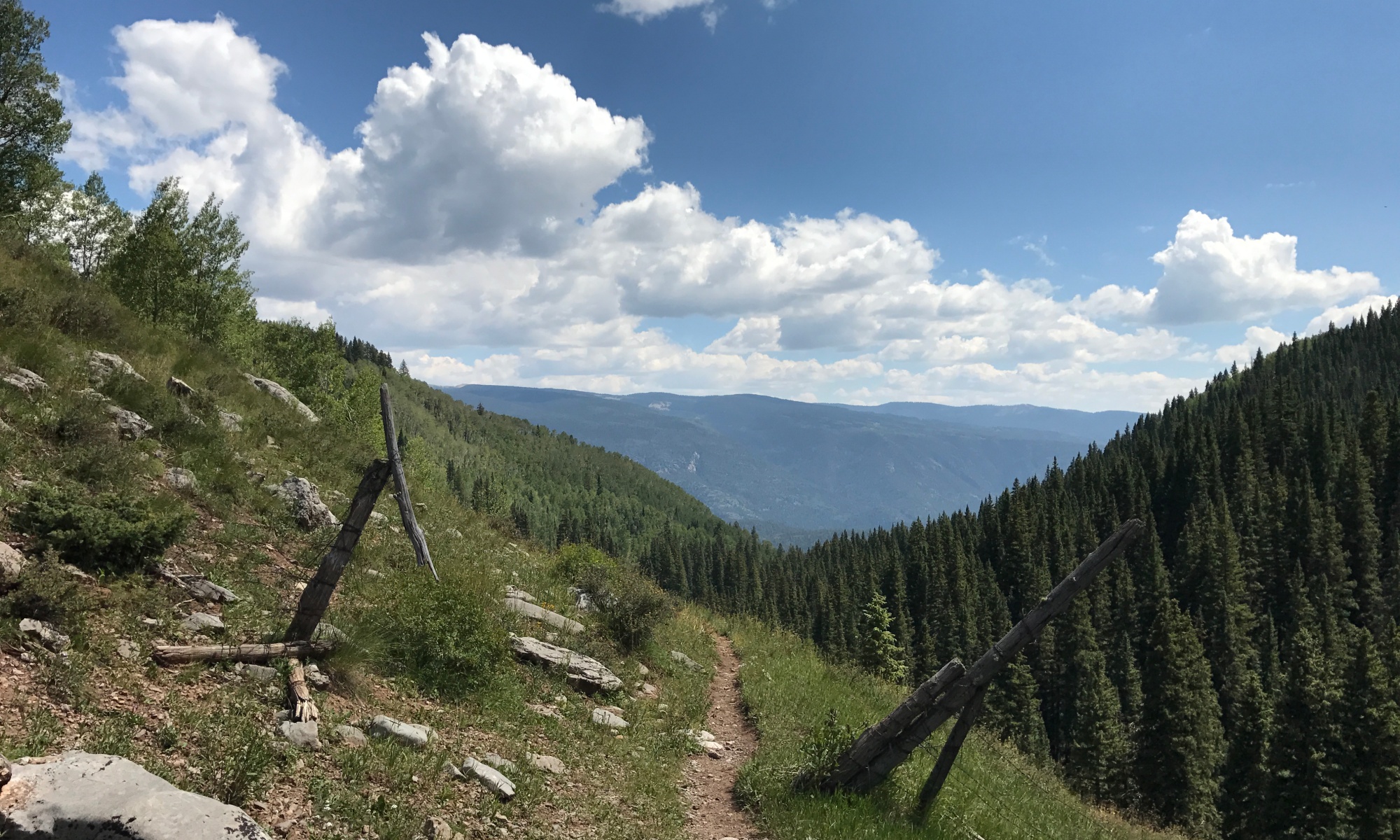
IMG_8647

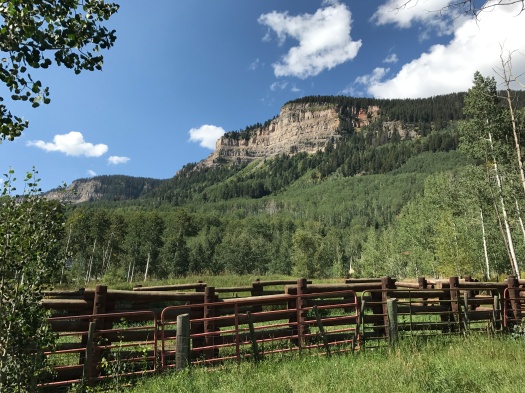
Durango, where we found the great cow crossing in the sky

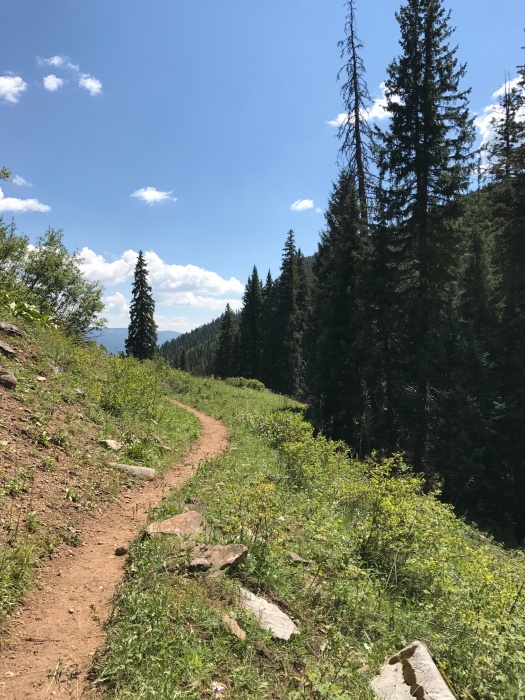
As I made my way cautiously along the side of the steep mountain, the sloping green meadows, soaring stand of fir and jagged peaks nearby kept catching my eye.

So did the fresh – and enormous – cow patties underfoot.

It blew my mind that a 1,000-pound creature could not only navigate the narrow path, but could relieve himself (or herself) there without toppling off.

I saluted that cow.

IMG_8562
Cows pretty clearly had rocked this path. And left their mark.

***

When I searched for a hike near Durango, the options overwhelmed me.

I found exactly what I wanted in a little guidebook in Maria’s Bookshop downtown: Castle Rock. A hiker stood triumphantly atop the rock in the picture, taking in 360-degree views.

IMG_8542
Where the climb to Castle Rock begins.

The hike was only 6 miles. Yes, it rose 1,600 feet to top out at 10,000 foot elevation, but I’d done a similar hike in length and altitude at home. No sweat.

Actually, sweat was one of the defining features of this hike. Copious amounts of it.

It was hot this Labor Day weekend in Durango, much hotter than when a thunderstorm chased us down from Engineer Mountain the same weekend last year.

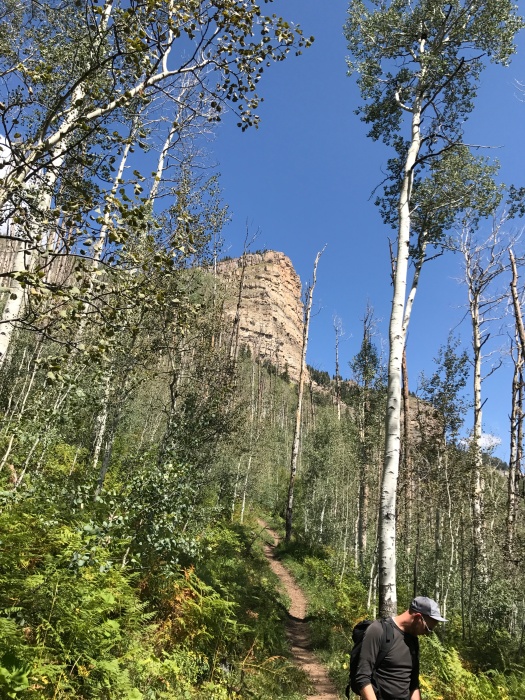
On this day, it was 80 degrees even at 8,500 feet. The brilliant sun blazed down as the first two miles of the trail switchbacked through some of the tallest aspens, spruces and firs I had ever seen.

IMG_8546
Looking up at Castle Rock from the trail

The tall, thin trees meant few sizable patches of solid shade.

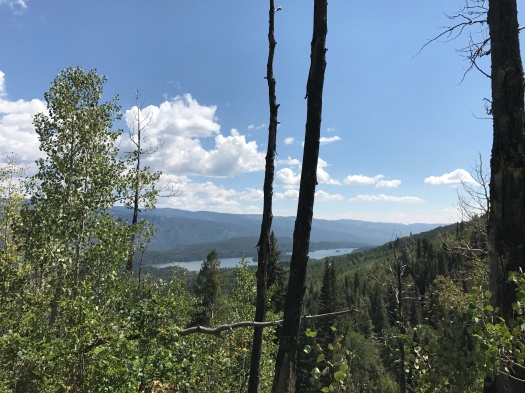
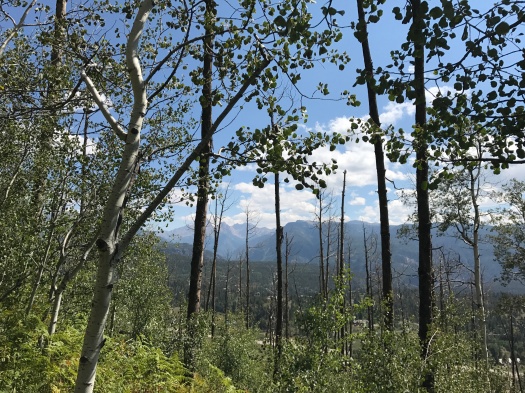
Electra Lake glimmered into view across Highway 550 as we climbed, followed by rocky peaks. The sounds of the highway began to fade.

IMG_8563
Electra Lake through the trees

IMG_8550

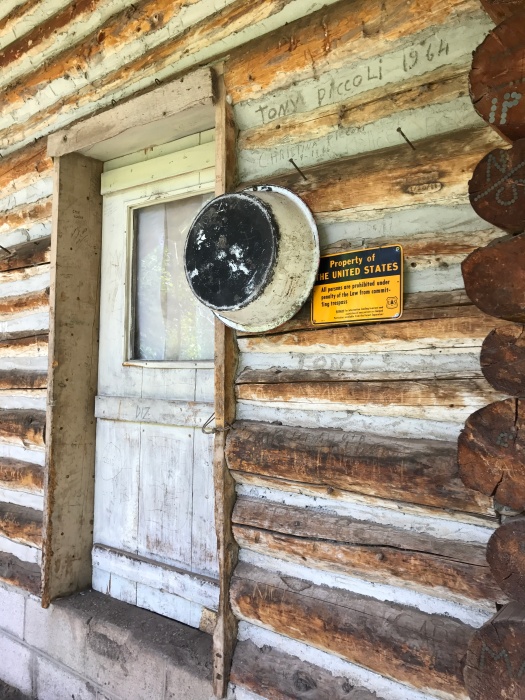
When we finally reached a cabin at the edge of a meadow, I wolfed a sandwich from the co-op and guzzled water.

IMG_8555

I knew I wouldn’t stand atop Castle Rock this day – the tree cover was basically finished, the steepest climb lay ahead and the day just kept getting hotter.

But before we turned back, we couldn’t resist climbing across the meadow to see what views lay around the bend. That took us out to Cow Patty Ledge.

IMG_8559IMG_8560

As we descended, the will-I-make-it-to-the-top chatter stilled, I focused on getting into a rhythm so my senses could engage more fully: with the scent of fir, the sound of crows in the trees 60 feet above us, the chickadees flitting from one side of the trail to another.

This is probably the last week heat will be a factor on that hike for a long time. Patches of aspen leaves already glimmered golden, and some swept down in the breeze around us as we descended.

I still want to see what southwest Colorado looks like from the top of Castle Rock.

Maybe I can catch a ride with a cow and see how they do it.

Hike length: 5 miles

Difficulty: moderate

Trail traffic: a bunch, including horses

Wildlife spotted: finches, chickadees, crows, butterflies, grasshoppers

I didn’t plan to get Gnasty on this hike, but I don’t regret it

On some maps of the Manzanita Mountain trails, it just appears as “Gnasty.” Which is eye-catching enough.

On others, its moniker is even more in-your-face: “Gnasty with a G.”

I hadn’t thought I would ever end up there. It’s a mountain bike path, and part of the warren of Manzanita trails where we tend to get lost.
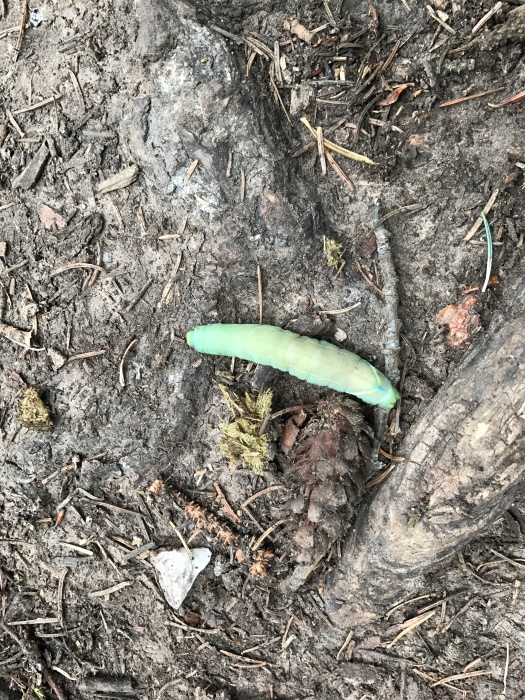
But I was destined for Gnasty today, though I didn’t know it.

Our hike began at Otero Canyon, the second pulloff where you can hike on Highway 337 south of Tijeras. I’d seen a friend post a beautiful picture of it and was intrigued.

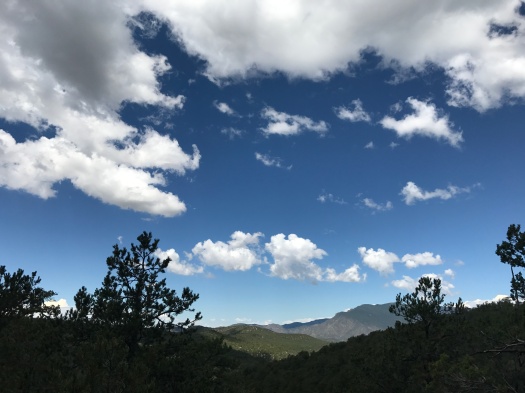
I’d slept late, and by the time we dawdled to the trail, it was nearly 11 a.m. We had three cool, cloudy days in Albuquerque this week, and the sky was that punch-me-in-the-face blue you get in fall.

But within our first steps onto the trail, it was obvious that it was still summer. There are many unshaded sections of this hike and the sun was absolutely blazing.

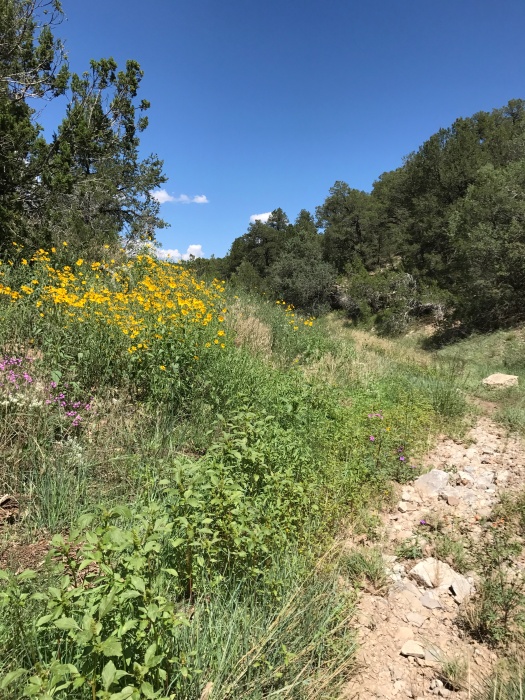
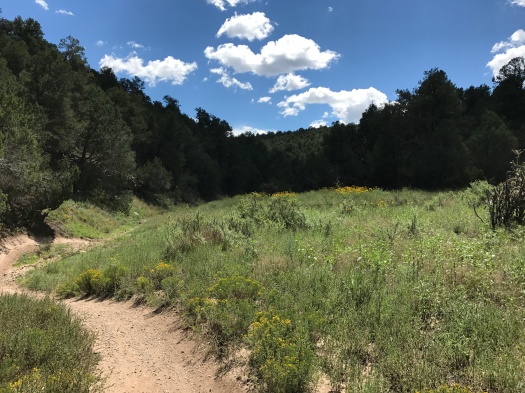
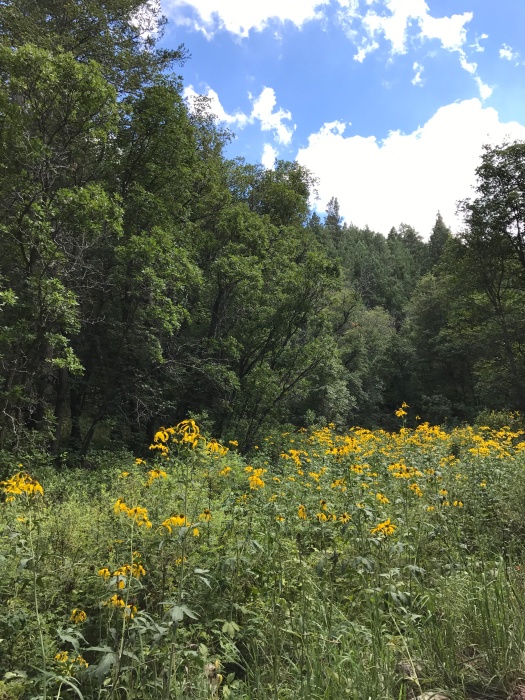
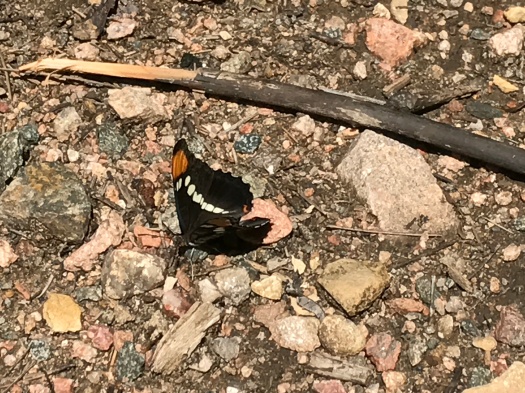
So were the wildflowers. If there is a better place within 20 miles of Albuquerque to see wildflowers right now, I don’t know of it. Sunflowers and yellow daisies danced in the wind, while red Indian paintbrush, lavender asters and tiny white flowers we couldn’t identify carpeted the ground. We saw every color of the rainbow and then some in wildflowers along the trail. All sizes and colors of butterflies danced around the canyon. The most plentiful were black, orange and white.

IMG_8469IMG_8511IMG_8518

IMG_8478
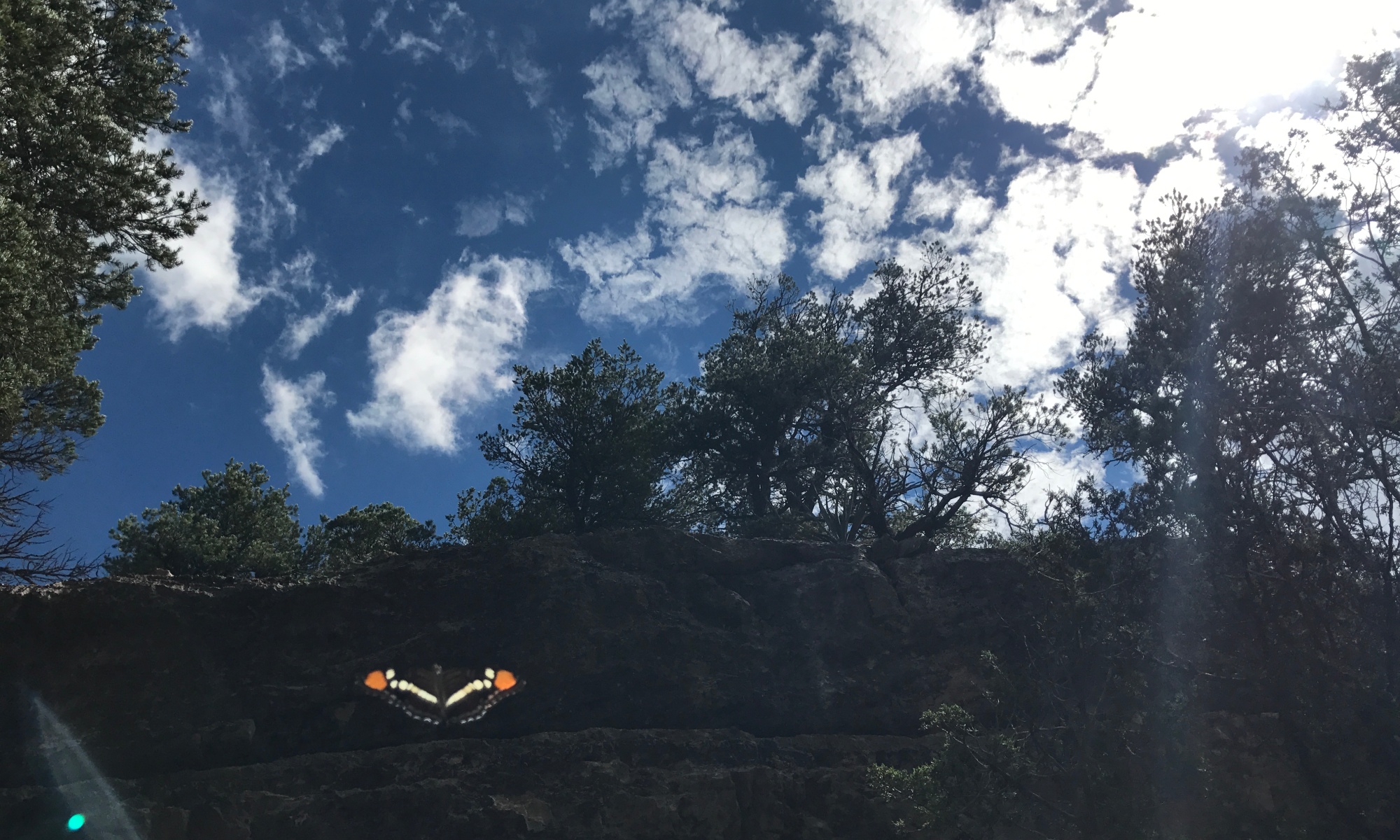
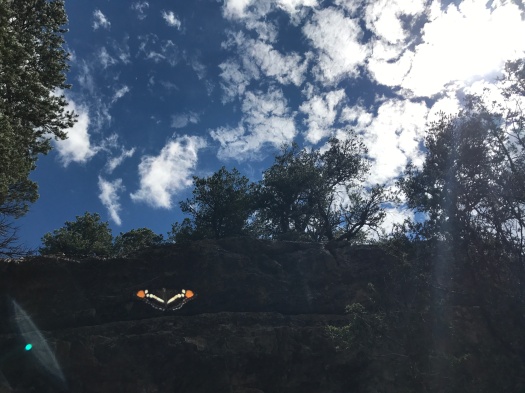
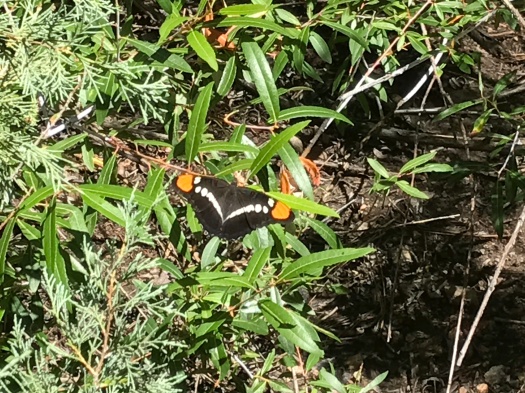
One of the canyon’s abundant butterflies photobombed me.

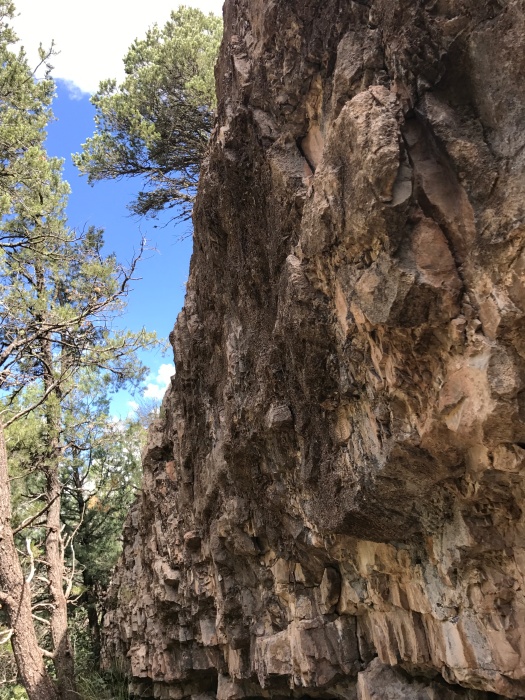
The Otero Canyon trail winds through stacked limestone formations. We saw no other hikers, but tons of mountain bikes and a few motorbikes. Luckily, there was pretty much always an arroyo when we needed to scoot off the trail.

IMG_8480IMG_8482

IMG_8485
How could you not climb on this, then sit and eat a snack?

We watched two Abert’s squirrels chase each other up and down a tree, and later, we saw a Cooper’s or sharp-shinned hawk chase another along a ridge. I knew I was anthropomorphizing them, but it was hard not to. There was no obvious evolutionary benefit to what they were doing; it seemed it had to be play.

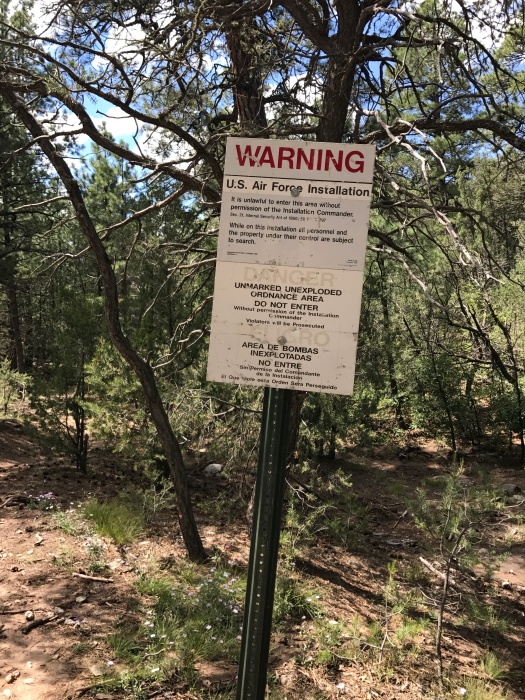
The maps showed the Otero Canyon trail extending nearly four miles. But two miles in, we came to a blatant Department of Defense stay-away-from-our-unexploded-bombs sign.IMG_8493

Plenty of bikes were whizzing in and out of that area, but I didn’t want to get arrested or exploded today.

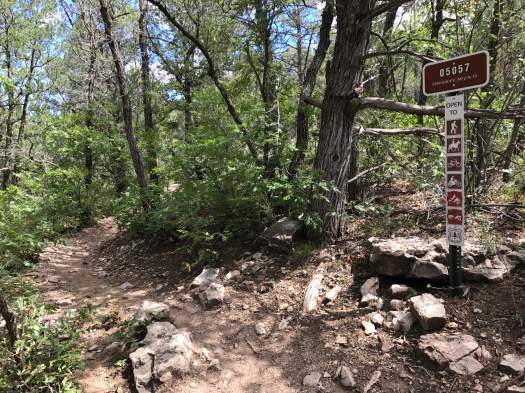
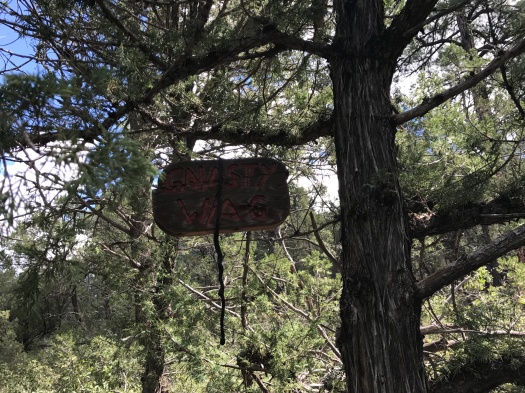
However, the trail climbing up a ridge just north of the unexploded-ordnance area was – you guessed it – Gnasty. Trail signage confirmed it, and there was even a hand-carved wooden sign, the kind you’d see on someone’s front porch, hanging from a tree: Gnasty with a G.

IMG_8492IMG_8494

Gnasty is lovely, though challenging. It’s steep, rocky and narrow, with Gambel oak squeezing in on both sides. Ridgeline vistas quickly come into view through the trees.

IMG_8498

As we ascended, a couple of folks on mountain bikes were descending. We watched a ripped 70-year-old man steer his bike rapidly and with complete control down a stepped hairpin turn.

We went about a half-mile up Gnasty, then reversed course. When we got back to Otero Canyon, we stopped at the first limestone arroyo for a snack.

IMG_8505IMG_8509

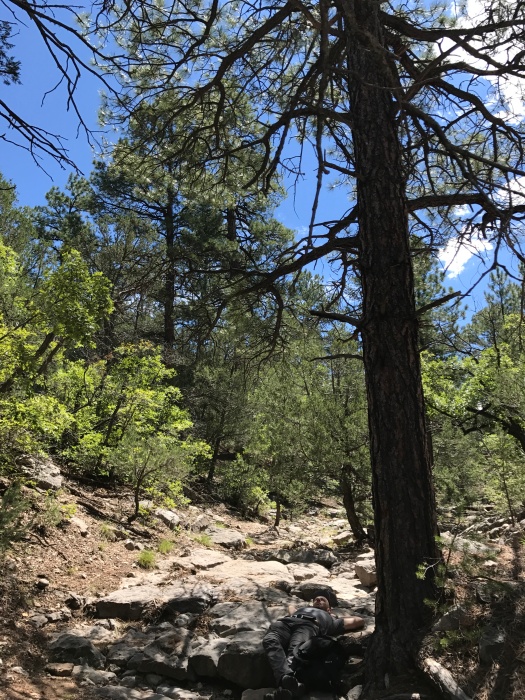
We lay on the cool rock beneath a giant ponderosa, watching clouds scuttle across the sky, listening to silence until the buzzing of flies overtook it.

That’s when it hit me: I could get used to Gnasty living.

Hike length: 5 miles

Difficulty: moderate

Trail traffic: moderate

Wildlife spotted: jays, crows, hawks (Cooper’s or sharp-shinned), butterflies, canyon towhees (we think), Abert’s squirrels

IMG_8526

There are 10,000 reasons to hike this trail, but I only needed one

The 10K trail got its name because it follows a ridge along the 10,000 foot elevation line in the Sandia Mountains.

I was here because I’d put the word out on social media for a hike I’d never done before. I’ve spent the past two summers chasing shade, and there are fewer and fewer cool, shady hikes close to Albuquerque that I haven’t done.

When a friend suggested the 10K trail, I knew we had a contender.

The trail gains a total of just 600 feet in elevation over its five-mile one-way length. Piece of cake, right?

Heh.

There’s plenty of up-and-down within that 600-foot range, but what really makes this trail challenging is 1) the high elevation (huff, puff) and 2) the ankle workout from the tree root networks poking out of the path.

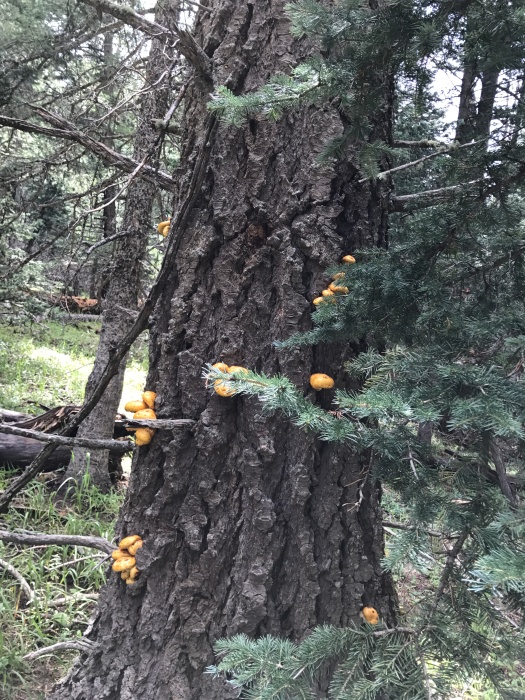
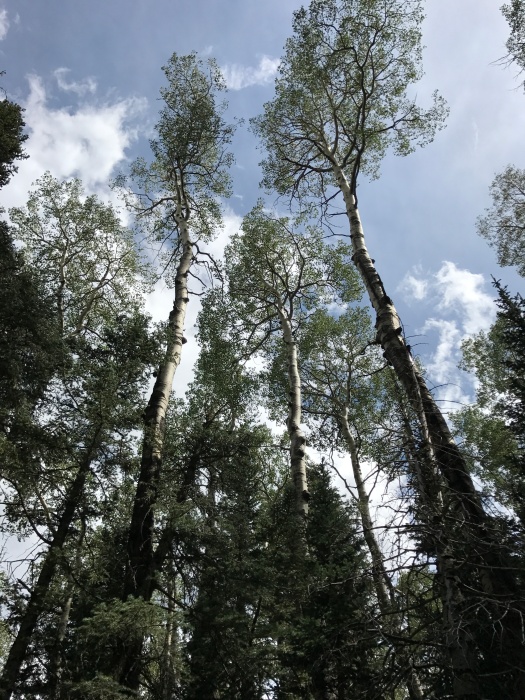
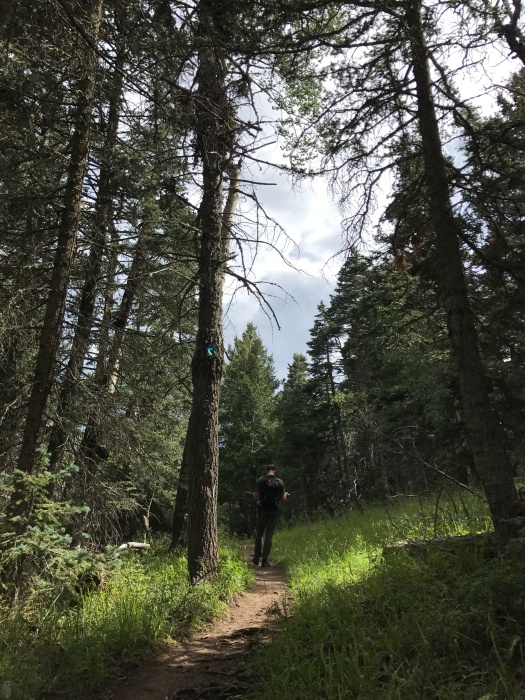
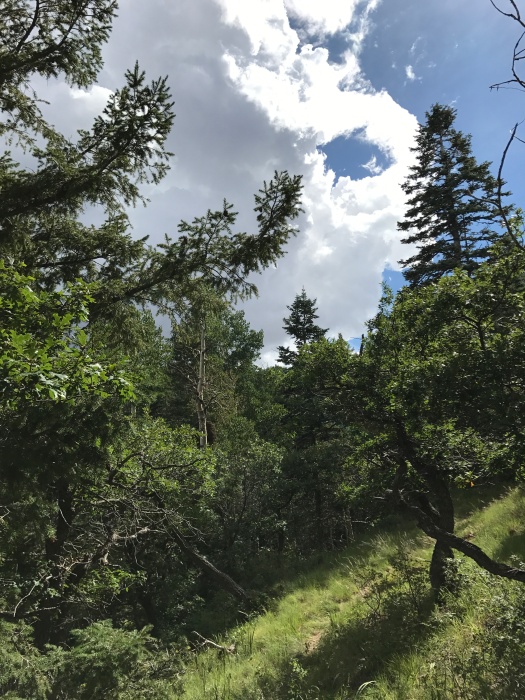
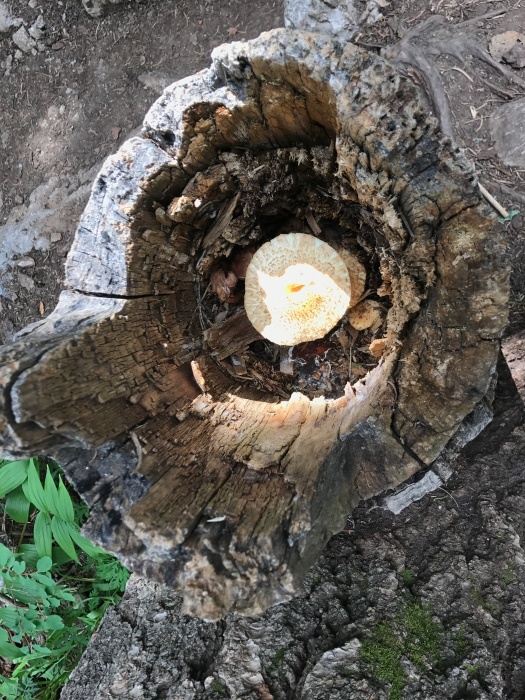
This is spruce-fir-aspen wonderland, complete with carpets of wildflowers and many kinds of mushrooms. The sweet-sharp smell of fir was our constant companion. Neither my husband nor I could resist poking a finger in a drip of fir sap. At some points the trail was mostly deadfall, mushrooms growing out of giant dead spruce trunks.

As we reached a beautiful overlook just a quarter-mile in, thunder rumbled. We debated turning back, but neither of us wanted to and both our instincts told us no storm was close enough to present danger, so we kept going.

There was plenty of traffic on this hike, but the folks who were just out there to gossip turned around after about a mile. The silence was even more welcome because we’d craved it.

I got into the rhythm of the hike, the trail leveled out more, and breathing became easier. We turned around after two and a half miles, and I realized why that last part of the trip out had felt so easy – it was all downhill. I huffed and puffed again.

Once we were close enough to the trailhead that I knew I’d get back under my own power, I had another problem; I did not want to leave.

Chickadees and nuthatches twittered above, squirrels and chipmunks darted along fallen logs, and sunlight filtered in through the trees. It was a cool 75 degrees with a refreshing breeze – even with rain nearby, the elevation kept it from being humid.

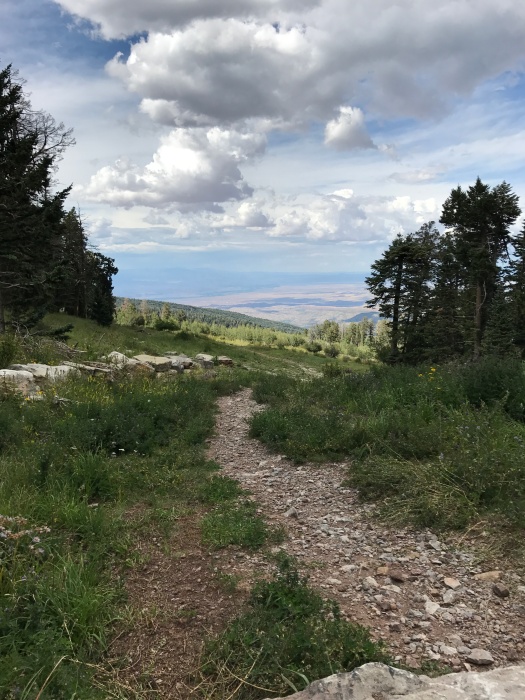
We heard thunder rumbling again on the last mile of the hike. But I couldn’t say no to stopping for a snack at the overlook, or walking down into a meadow to get a better view of the San Pedro Mountains.

The fields of wildflowers that had begun our hike greeted us again at the trailhead. Another side trail called to me, but the thunder grew more persistent and the dark clouds were rolling our way.

We climbed in the truck and drove the 11 miles back down the mountain. We caught the flint-smell of rain about halfway down. We drove through puddles. Mist rolled off the road’s surface. The temperature dropped another 10 degrees. Then, real rain, a steady beat against our windows that kept up all the way through Tijeras Canyon.

We passed the lovely trail that’s closed for three months due to heavy bear activity.

We passed the sign telling us we were leaving the Cibola National Forest, “Land of Many Uses.”

Hiker and motorcyclist and bear and caterpillar and chipmunk, all using the mountain in different ways.

I gave thanks for it and took my leave until I am lucky enough to be at 10,000 feet again.

Hike length: 5 miles

Difficulty: Moderate

Trail traffic: Moderate

Wildlife spotted: chickadees, nuthatches, caterpillar, butterflies, chipmunk, squirrel

IMG_8425
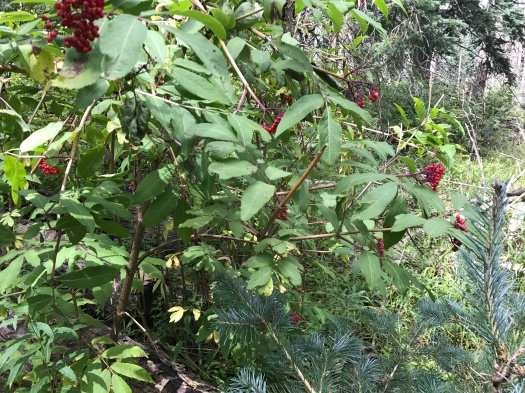
Chokecherries (right?) and fir
IMG_8428
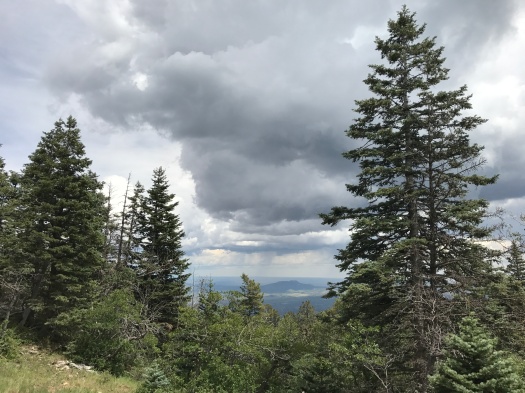
San Pedro Mountains getting rained on
IMG_8433
So many mushrooms, so little time…

IMG_8435IMG_8437IMG_8439

IMG_8442
That is one hefty caterpillar.

IMG_8446IMG_8449

IMG_8453
SNACKTIME…jk
IMG_8454
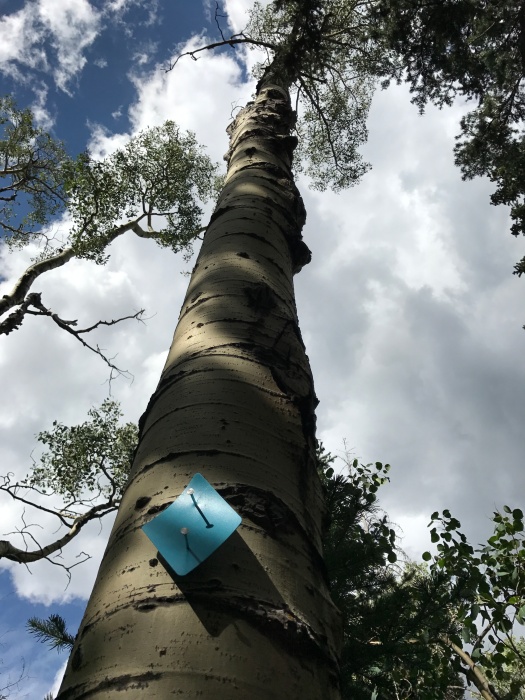
10K Trail blaze on an aspen
IMG_8455
You can tell that the hills are alive with the sound of music down there, right? But the thunder was rolling and the sky behind us was black, so we kept going.
IMG_8458
Parting shot

There will be goblins: The most delightfully weird hike in the Jemez

“Hey!” my husband yelled. “There’s a bunch of Swiss cheese penises!”

I’d already done more climbing and scrambling than I expected, and was ready to head back down.

But how do you not look at Swiss cheese penises?

I dug in my poles and pushed up the steep slope.

***

In fall 2015, my sister gave me the gift that started it all: Stephen Ausherman’s “60 Hikes Within 60 Miles of Albuquerque.”

When I opened it, the first thing I saw was a place called Paliza Canyon Goblin Colony.

Sold.

Upon our arrival there in November, a ginormous tarantula greeted us.

It’s my only hiking encounter with a tarantula. So far.

That day it was around 40 degrees, with a cold wind. We were eager to see the canyon in summer, and when we reached it today, the morning after an hours-long soaking rain, we were not disappointed.

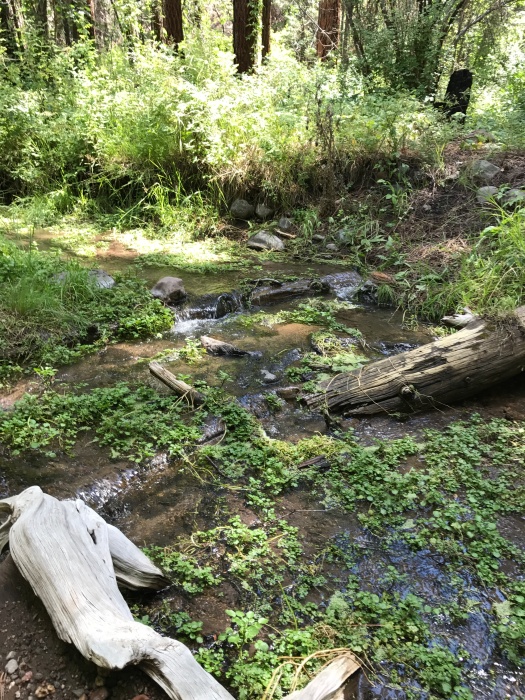
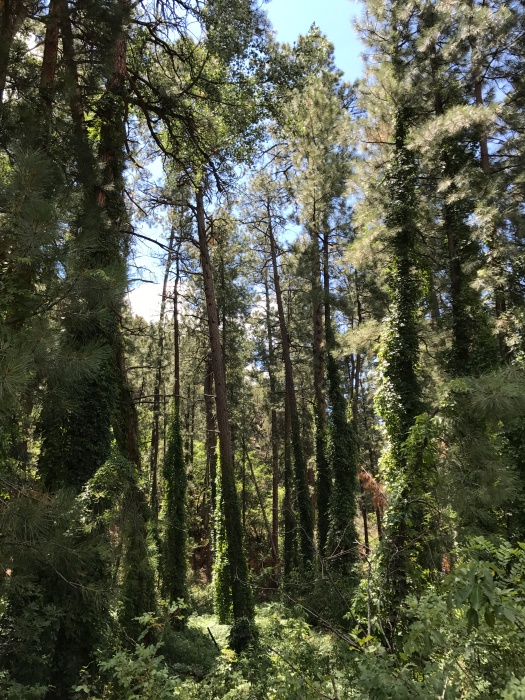
Paliza Canyon is seven miles up a narrow forest road from Ponderosa Winery. The hike is on another old forest road that winds along little Vallecito Creek. Brick-red dragonflies, a good 10 kinds of butterflies and little striped lizards darted across the road. Small electric-blue butterflies swarmed around what appeared to be elk scat. Ponderosa pines swayed in the wind above; thick vines wrapped around the trunks of the ones near the creek.

There are two gorgeous campsites tucked into the pines, right next to the gurgling creek. We didn’t see a soul there or anywhere on this hike, despite the full campground just a couple of miles away.

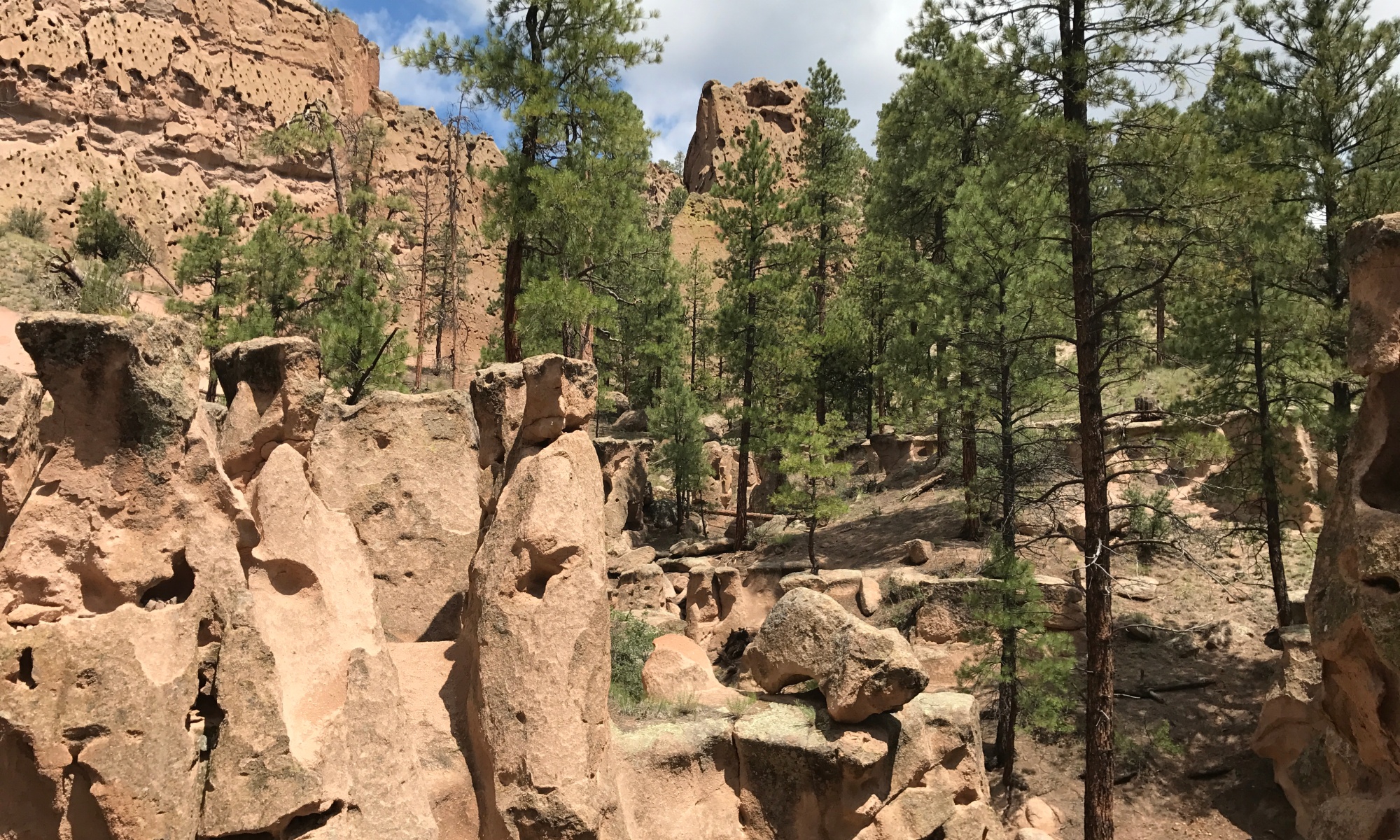
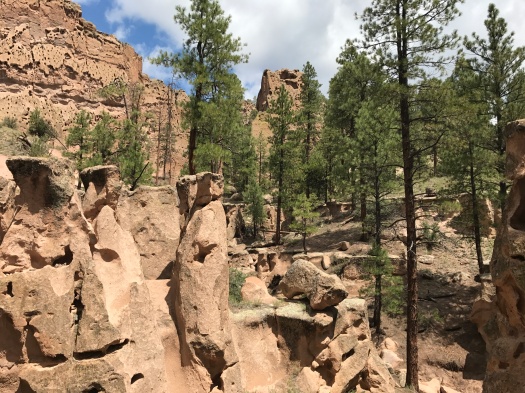
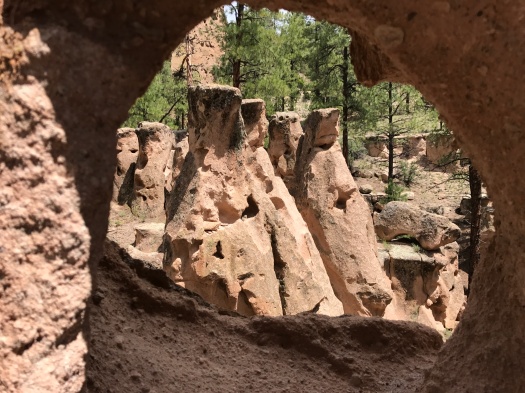
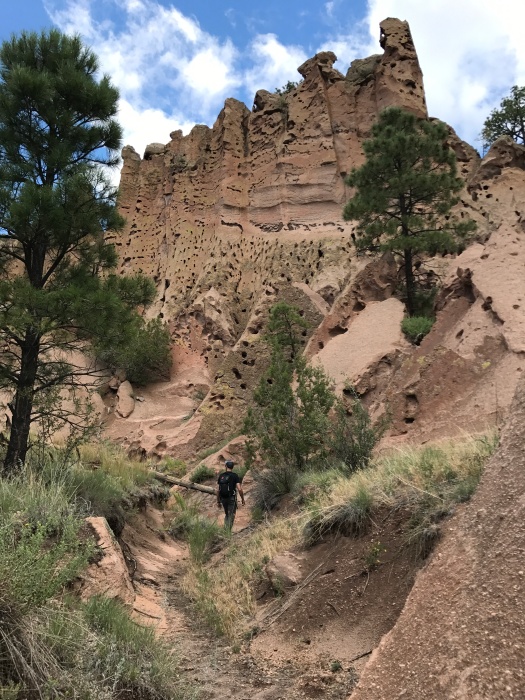
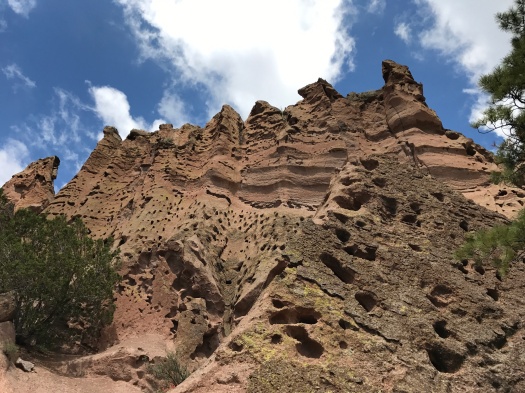
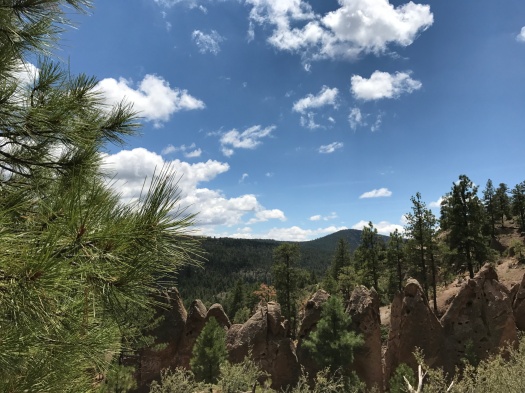
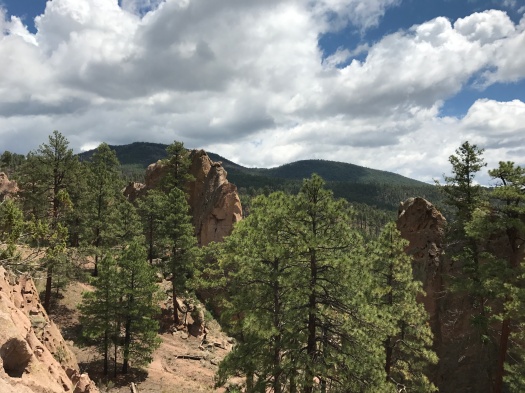
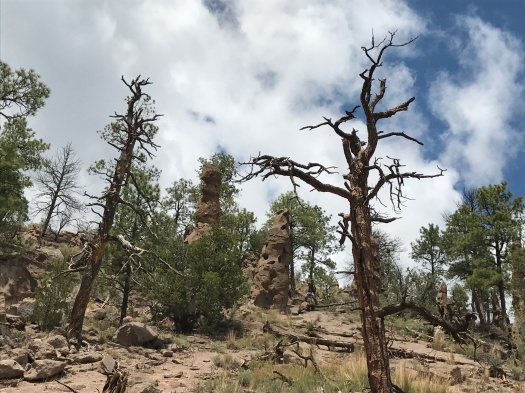
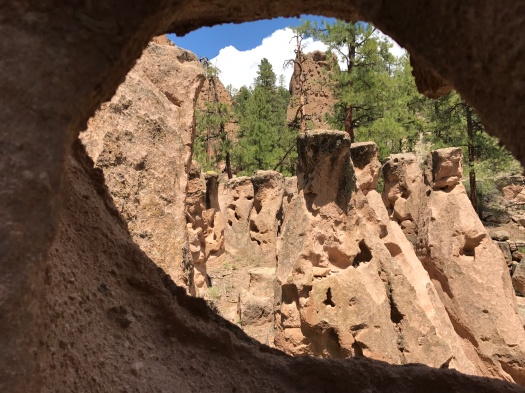
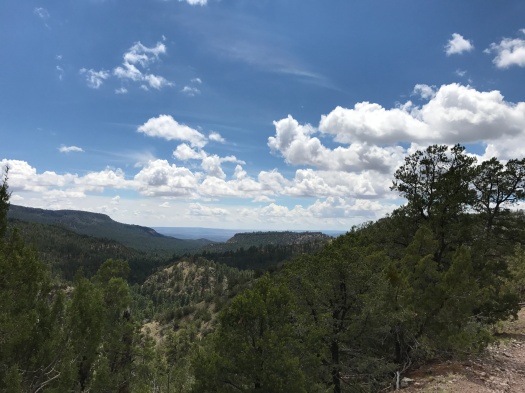
The road climbed gradually. Rock formations appeared. Then, a mile and a half up, the goblins. Acres of hoodoos, tombstones, fingers point into the sky. Your challenge: navigating the steep canyon for a closer look at them.

Bonus: As you climb, the view of the forested ridges around you just gets better and better.

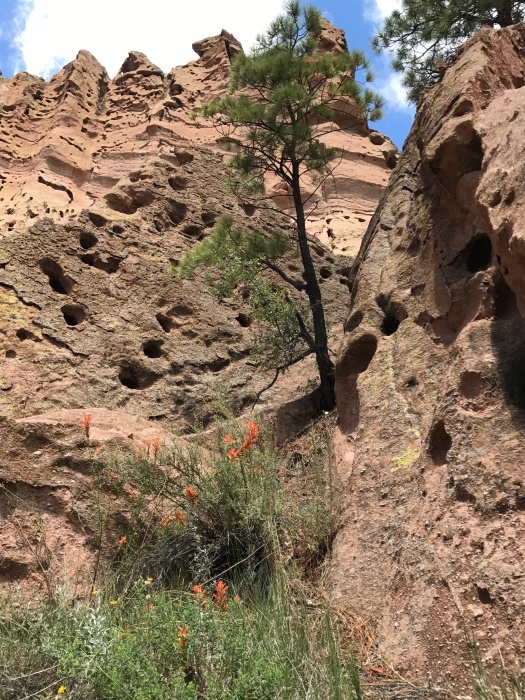
Indian paintbrush and other wildflowers lit up the base of some of the goblins. Tangles of vegetation grew out of shaded spots in the rock in the big formations.

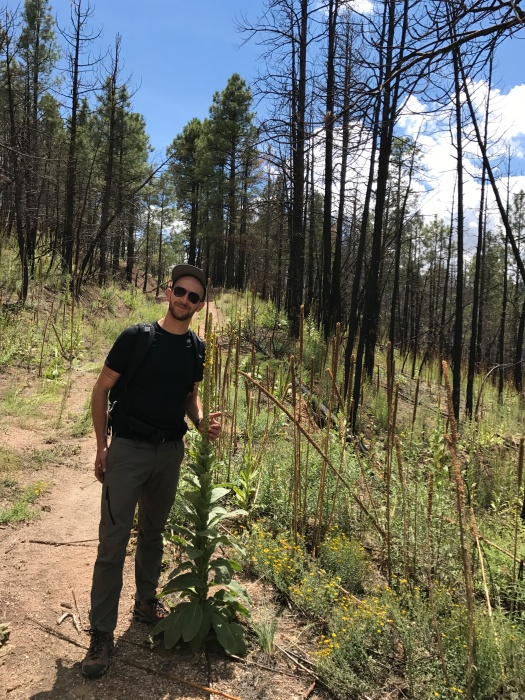
After a good hour of tramping around the goblins, we hiked further up the road. We passed through a small section of burned trees where new growth of wildflowers and vegetation carpeted the ground. A mullein plant stood as tall as my husband. We rounded a bend and views of mountain ranges and mesas opened before us.

So did a threatening bank of dark-gray clouds. We were running out of road. It was time to head back.

As we neared the creek again, I spotted an even smaller pocket of burned trees.

What kind of fire burns a few trees here and there? I asked my husband.

One that gets rained out, he said. The canyon serves as a natural firebreak too. (The area had been closed for remediation from the Cajete Fire when we tried to hike here three weeks ago.)

I stopped to take a picture of a butterfly on a bush, and thunder boomed in the black sky behind us. I abandoned picture-taking and hustled. Ahead, the sky was brilliant blue. There was no sign or sound of the storm when we reached our car.

As we drove back down through the valley, we admired a soaring ridge full of the same Swiss-cheese holes we’d seen on our hike.

No penises, though.

The goblin colony’s the only place I know of where you can see that.

Hike length: 5 miles

Difficulty: The hike’s easy; clambering around in the goblins is not

Trail traffic: none today

Wildlife spotted: bluebird, chipmunk, dragonflies, butterflies, nuthatches, jays, squirrels

Tip: This is a beautiful hike in the summer, but go early in the morning. While some sections are well-shaded, the sun really beats down on that first mile and the ridge.

IMG_8338

IMG_8343
Vallecito Creek
IMG_8344
Vine-covered ponderosas by the creek
IMG_8347
THEY’RE EVERYWHERE

IMG_8348IMG_8352IMG_8358IMG_8360

IMG_8367
Welcome to Stonehenge.

IMG_8368

IMG_8397
Ladies and gentlemen, I give you…Swiss cheese penises.

IMG_8401IMG_8403

IMG_8409
New life in the burn zone: husband-sized mullein.


You have probably never been here in the summer. But you should.

I.
It was because I was going slow that I saw her.
It was a steep section of trail and I was huffing and puffing, lifting one foot in front of the other. I looked to my right and saw something tawny above a rock outcropping fifty feet away. My first thought was “oh shit, bobcat.” Fear began.
Then I looked into gentle eyes and saw a doe, staring right back at me.
We stared for what felt like several minutes, but probably wasn’t. She also looked at my husband, who was about five feet ahead of me on the trail. She slowly began chewing, as if she’d frozen midbite when she saw us. I saw her blink several times.
Then she turned and walked calmly away into the forest.
II.
“These are the mountains everyone knows about and few people really know.”
The New Mexico Wilderness Alliance’s Wild Guide entry for these mountains is mournful, lamenting how far away they are from Albuquerque and how much effort it takes to get to them.
Those are the exact things I love most about them.
I will tell you how to get there.
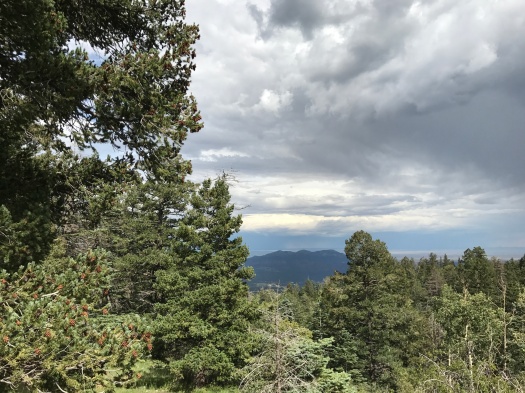
Get off I-40 at the Tijeras exit and drive south on Highway 337. Squeeze and wind your way up through narrow canyon walls, passing bicycles on your right. It’s dramatic and lovely, but also familiar. You’ve done this before, maybe for a picnic, maybe to reach trailheads in the Manzanitas. Maybe you’ve gotten lost on the trails in the Manzanitas. A lot.
Once the road’s steep climb levels out, you leave behind all that is familiar.
You are in a place densely forested with evergreens, but it is also a high, rolling green valley. Its settlements are named Yrisarri, Escobosa and Chilili.
No one hikes here. Signs along the road say things like “Land Grant Hiers’ Property! Not For Sale!” and “There is nothing beyond this fence worth risking your life for.”
You pass burn scars from the Dog Head Fire last year. Officials came to Chilili to evacuate it. But many people stayed. Those residents of this two-centuries-old land grant would rather risk fire than leave.
This morning, the entire populace of Chilili stands under the back awning of a small church, where the dance of Los Matachines is taking place. The dancers wear tall, dark headdresses and scarves.
South of the villages, the salt lakes in the Estancia Basin glimmer into view on the horizon. White wind turbines turn on a faraway mesa as you turn onto NM 55. You’re almost there.
If you had land here, you’d face off with a fire to keep it, too.
III.
The last time our car climbed the seven-mile dirt road to the trailhead, it was one of a line of dozens of cars doing so. The overflow from the hiker parking lot at the campground spilled onto the road.
As soon as we arrived, it was obvious that it was worth it.
Fourth of July Canyon in the Manzano Mountains is the site of New Mexico’s most spectacular display of fall foliage. We were there several days past its peak, and it was still astonishing. We hiked seven miles and every step was a fresh riot of reds, yellows and oranges.
We didn’t mind the crowds; all the people were happy, nice New Mexican leaf-peeping families, and the crowd thinned after about a mile and a half.
But to be there today, the forest a riot of sunflowers and wildflowers and foliage, and have it all to ourselves was exquisite.
The campgrounds were nearly deserted. My husband said it looked like someone had sent out a memo and we were the only ones that hadn’t gotten it. In four hours of hiking, we didn’t see another soul on the trail. The silence was a living thing. Even with a trickling spring, and later a creek, and pines sighing, and birds and squirrels chirping, the silence was a sound right there among the rest.
The forest is so lush – especially today, fresh off a rain last night, parts of the trail still damp – that at times it’s like you’re in the jungle, and daylight is far away. At one point, near the top, the trail is so overgrown with spiky honey locust that you can’t see your feet beneath you as you push through it.
Then glimpses of the very tops of the peaks above, or the brilliant blue sky, or the fluffy clouds, or the salt lakes, or the rolling valleys, remind you where you are and how you got there.
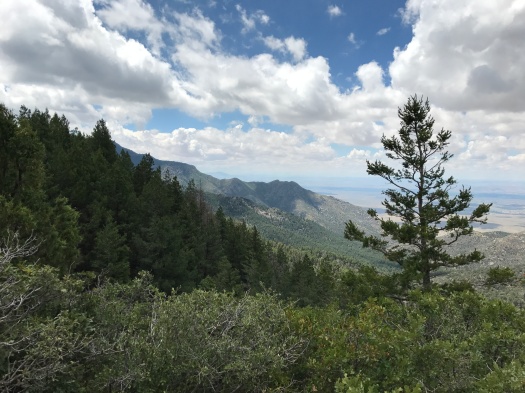
At the overlook at the top, a cool wind blew with ferocity and the clouds scuttled by fast, their shadows dotting the plain of Los Lunas and Belen far below.
A thousand feet below that, we closed the loop of this hike by walking along the forest road we drove in on. That’s where my husband spotted another deer and pointed. He was an adolescent, with small antlers, still growing. He watched us for a moment from a ridge across the creek.
We’d never been that close to a deer on the trail. The solitude of Fourth of July Canyon in August allowed us to experience it – twice.
All this hike has to offer could be yours and yours alone, for the day, or the night, if you go in the summer.
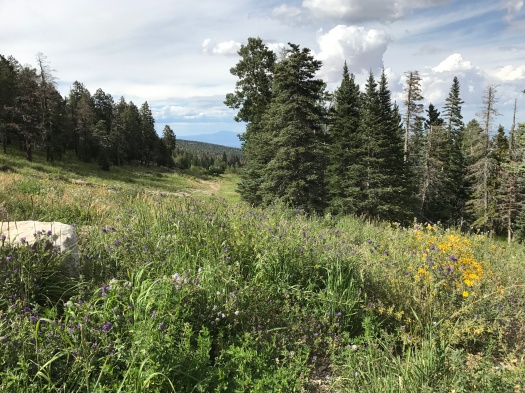
Do it.
Hike length: 6.5 miles (this spectacular route, and the tip to do it in summer, came from “60 Hikes Within 60 Miles of Albuquerque” by Stephen Ausherman)
Difficulty: moderate
Trail traffic: none
Wildlife spotted: doe and buck, woodpecker, jay, bluebird, vulture, crow, eagle (we think), squirrels, prairie dog (we think)
IMG_8280
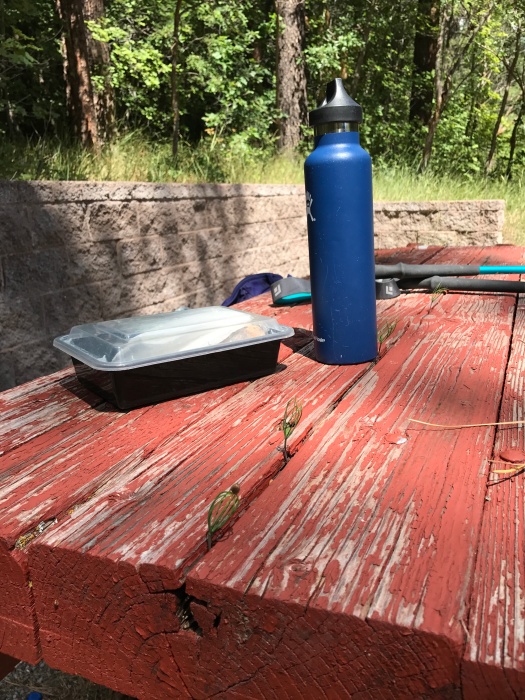
Even the picnic tables are green…check out the sprigs growing out of them!
IMG_8281
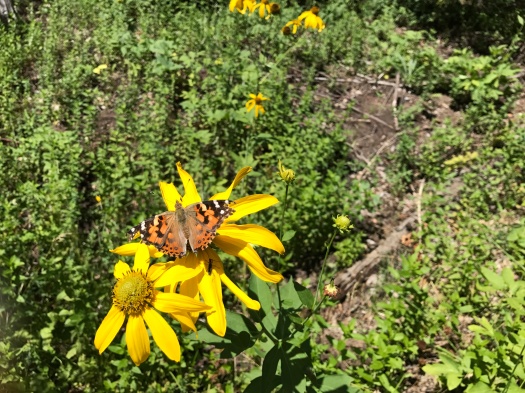
You weren’t gonna get out of a hiking blog about the Manzanos without a picture of a butterfly on a sunflower.

IMG_8297IMG_8306IMG_8307

IMG_8310
Dead center below: Los Lunas, home of a Facebook data center under construction.

IMG_8316IMG_8320IMG_8323

IMG_8325
High mountain meadow
IMG_8327
Welcome to the jungle…

IMG_8328

IMG_8329
Field of sunflowers along Forest Road 55

This hike ended at just the right time

Until today, I had only seen the Winsor Trail along Tesuque Creek buried in snow.
Today, Tesuque Creek was flowing fast along the Winsor, surrounded by lush foliage and wildflowers. A sign on the approach to the trail noted that about 100 dogs travel on it with their owners each day. We didn’t see all 100 – maybe a fifth of that.
When we began the hike, it was a perfect 71 degrees. It’s actually been raining in Santa Fe, so the humidity quickly worked us into a swelter when we were in the sun, and sometimes when we weren’t. The sky was vivid blue; fluffy, towering monsoon-season clouds built in the distance.
The hike begins along the creek, climbs above it, then meets it anew further up the trail.
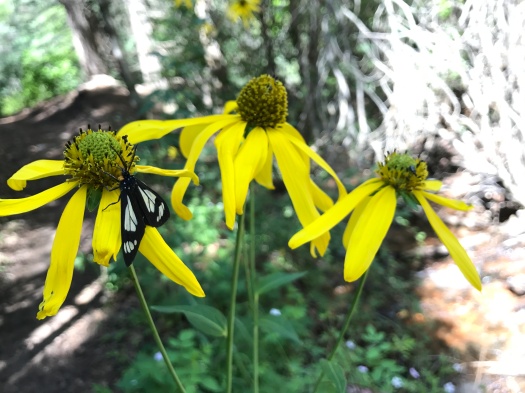
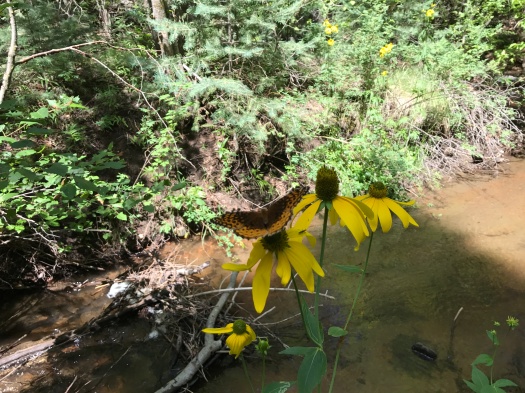
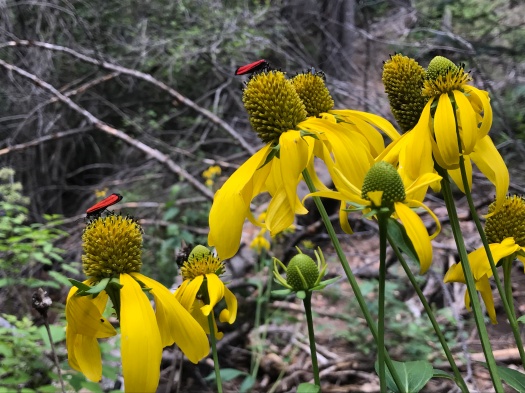
We began to see sunflowers as we climbed, first a couple at a time, then in clusters along the creek. We passed through a section of the trail with rows of sunflowers on each side. Several kinds of butterflies fluttered among them, along with some bee-like red insects we couldn’t identify.
The Winsor Trail goes all the way from Tesuque to Ski Santa Fe. You can use it to get up to Lake Katherine, one of the hardest hikes in New Mexico.
We weren’t going to get anywhere near that far this day.
We’d hoped to see more of the higher section of the trail, but after two and a half to three miles, we reluctantly decided to head back. I’ve been having some high desert summer nosebleeds and my allergies were starting to kick up, so I decided not to push my luck.
The sky above was inviting, beckoning us higher, just one single dark cloud among the fluffy white ones.
But we turned and headed back. Somehow, on the way down, my husband managed to spot a tiny horny toad, not much bigger than the tip of a finger, camouflaged perfectly among the beige and pink rocks.
We stopped at a ridgeline to take one last look behind us – and the entire sky was grayish-black. That one cloud had managed, before noon, to bloom into something much bigger.
As we walked out of the Winsor and into the surrounding neighborhood, thunder began to crackle.
I’ve seen my fair share of New Mexico monsoons, and my husband has seen them all his life. Neither of us would have turned back solely for that one cloud.
I’d like to thank my nose for perfect timing.
And perfect performance. It didn’t even bleed.
Hike length: 5.5 miles
Difficulty: moderate
Trail traffic: busy, though less so the higher you climb
Wildlife spotted: butterflies, Abert’s squirrel, dragonflies, tiny horny toad, magpies, crows
IMG_8246IMG_8227IMG_8236IMG_8237IMG_8243

IMG_8244
Perfect lunch-eating boulder above the creek.

IMG_8250IMG_8255

IMG_8263
We saw several insects we couldn’t identify, including these red and black butterflylet-esque things.
IMG_8264
That escalated quickly.
IMG_8265
Meanwhile, on this ridgeline, all is fluffy.

IMG_8267

IMG_8272
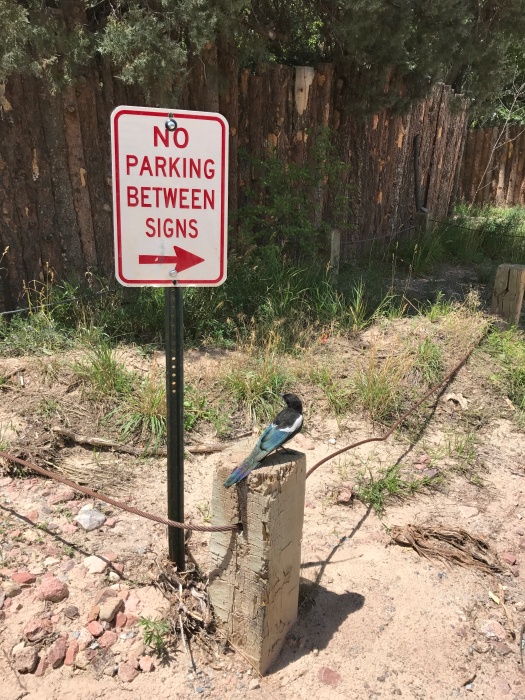
Magpie looking out for the neighborhood where you park at the base of the Winsor Trail

The Jemez is beautiful this summer – even minus the parts you can’t get to

I was really looking forward to hiking at Paliza Canyon Goblin Colony this weekend.
It’s a crazy conglomeration of hoodoos tucked into a beautiful canyon near Ponderosa Valley Vineyards. It’s cool and shaded – perfect for summer.
As our truck dipped through a fertile valley and climbed the forest road into Paliza Canyon, a chipmunk skittered across the road, and birds and butterflies darted by.
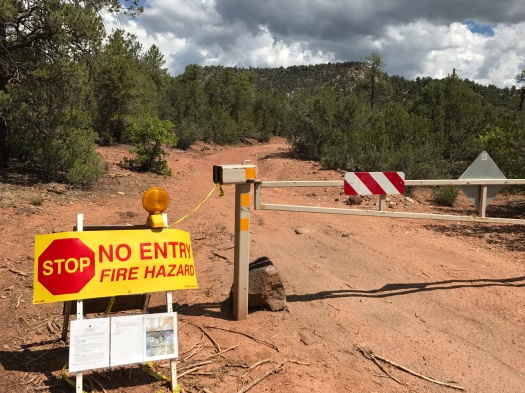
But when we got to the trail, just a few hundred feet down the path, we met a locked gate and caution tape. The area was closed until July 31 due to fire hazards. The posted sign said it was because of the Cajete Fire earlier in the summer, which puzzled me greatly, since that fire was a good 30 miles away.
We weighed our other options. Stable Mesa, about 20 miles away, was another well-shaded summer hike. But when we’d stopped in the Walatowa Visitor Center at Jemez Pueblo, we’d seen a notice that the road to Stable Mesa was closed for rockfall mitigation. And our favorite hike in the Jemez, the Las Conchas Trail, was right next to the Cajete Fire site, so we thought it was probably closed.
We decided to drive further into the Jemez and pull over at the first campground we could be sure had a hiking trail.
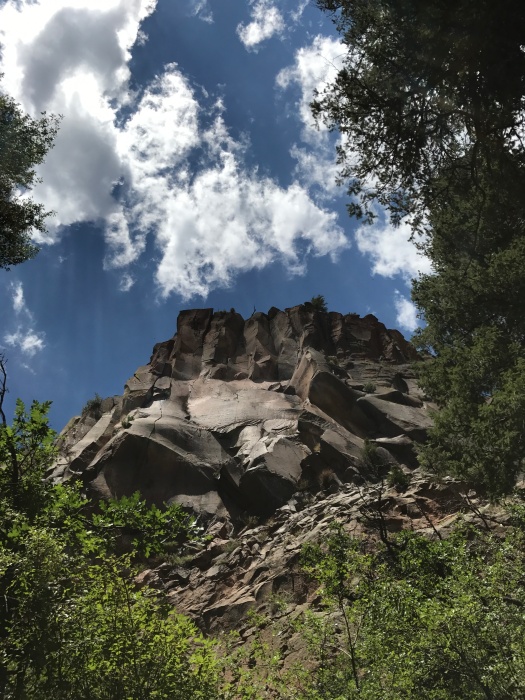
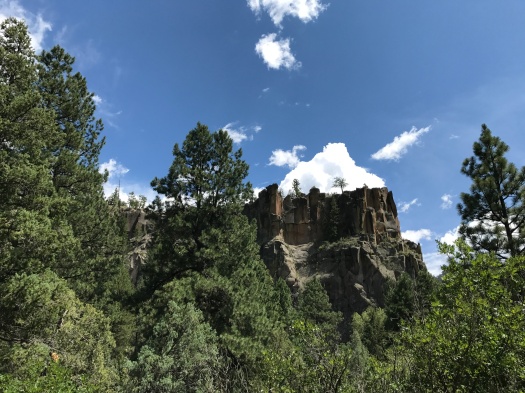
That turned out to be Battleship Rock, a few miles past Jemez Springs. We’d seen that rock formation towering over Highway 4 many times but never stopped.
The campground was mobbed, as we’d known it would be on a summer Saturday. The East Fork of the Jemez River was flowing well. I’d forgotten to bring my hiking poles and I was nervous about fording without them, but we crossed at a narrow, shallow spot and made it across without incident. Then we thought about the gray clouds threatening overhead and about being cut off if a downpour made the river too dangerous to ford. So we crossed back over and found a path along the base of Battleship Rock.
It was gray and humid and smelled like campfires and pit toilets. The trees and vines pushing in on both sides of the trail felt oppressive. We saw a trail heading upward and took it, thinking it was a back approach to Battleship Rock.
It wasn’t, at least not in the direction we headed. But it took us away from the crowds and up a ridge strewn with the shiniest black boulders we’d ever seen – probably basalt, although there are other lava forms in the area.
Incredible views of mesas edged with fingers of rock, deeply forested slopes and Highway 4 below came into view. The dark clouds slowly lifted and the sun came out – just as I’d hoped – and it was instantly really, really hot. Lizards scampered over the boulders as they heated up in the sun.
The climb was challenging without my poles, and the descent more so.
The way down brought even more amazing views, now that the clouds had cleared. When we came within earshot of the East Fork again, it was a welcome sound. And with the sun shining down on the riverbank, the plants and flowers at the base of looming Battleship Rock seemed to glow.
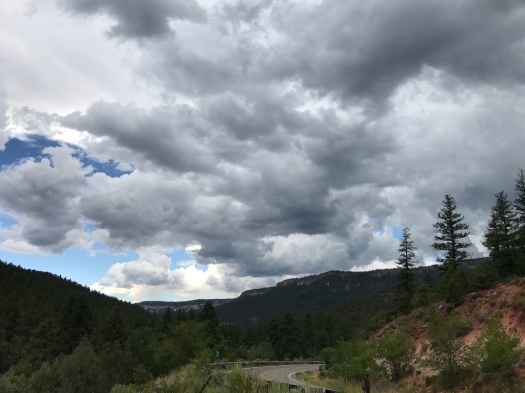
The sun was still beating down when we left, but more storm clouds were gathering.
I would love to hike up Battleship Rock itself one day.
Maybe that day will come soon, if everything else is closed.
Hike length: 3 miles
Difficulty: Moderate
Trail traffic: lots along the East Fork, less on the climb
Wildlife spotted: lizards, vultures, crows
IMG_8176
Paliza Canyon wasn’t happening this day.
IMG_8179
Arrival at Battleship Rock under threatening skies.
IMG_8180
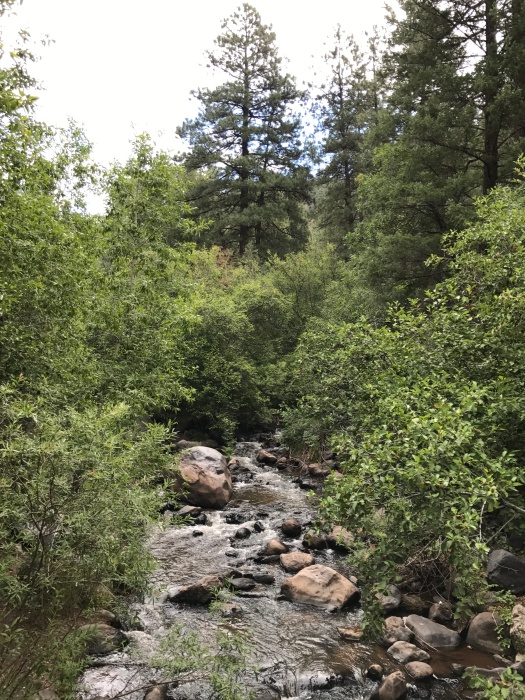
The East Fork of the Jemez River, looking good.
IMG_8184
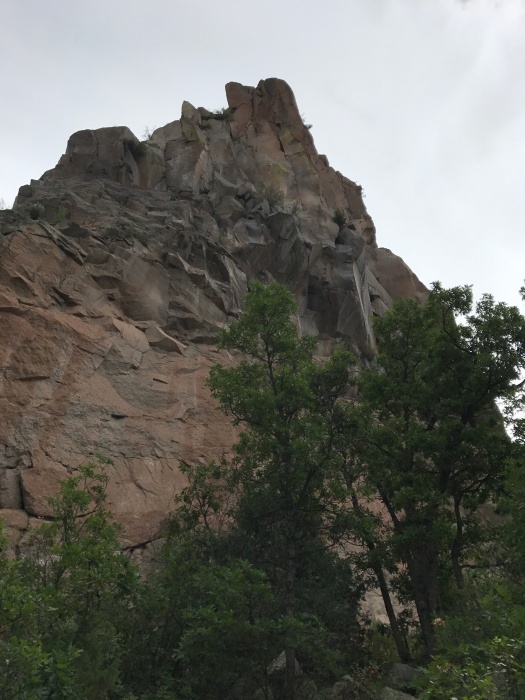
Battleship Rock
IMG_8189
Respect the boulder.

IMG_8192IMG_8195

IMG_8212
Battleship Rock in foreground

IMG_8218

IMG_8221
Our final glimpse of Battleship Rock

One summer night in the Mississippi Delta

When my sister asked, “You gonna hike?” I was like, “Are you crazy?”
We were home visiting my parents in the Mississippi Delta, where I grew up. Just walking from the house to the car in the heat of summer in the Delta is enough to give you the vapors. Most days, with the heat index, it feels like at least 100.
But on our third night home, a rainstorm washed everything clean and wiped the temperature down to 76.
The Delta is flat. I did not hike in it growing up. No one did.
I was also too busy hating it to really look at it. I saw and heard so many racist things growing up. I defined myself in opposition to a place where so much ugliness had happened and was still happening.
So when I went up in a hot-air balloon at age 13, I was shocked to love what I saw: a tapestry of green in shades I’d never seen outside a Crayola box, ribbons of rivers snaking through black soil.
In summer, in full-on primordial swamp mode, the Delta is freaking gorgeous.
This night in July, the light was soft, the air almost totally saturated with moisture, the neighborhood a tangle of trees and vines, flowers and grass.
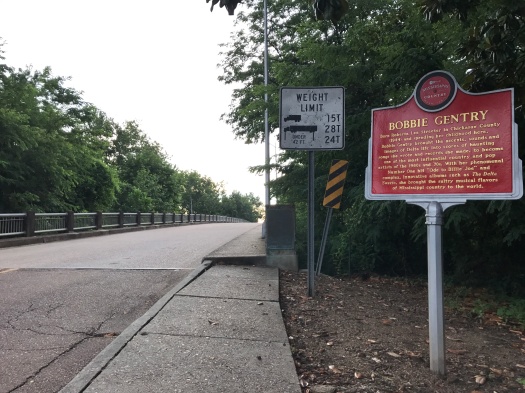
My husband, my sister and I walked up Grand Boulevard and crossed the Tallahatchie Bridge (yes, that one) onto Money Road.
Yes, that Money, Mississippi. The place where 14-year-old Emmitt Till was brutally murdered in 1955 in an act of racial hate.
The historical marker of Till’s death was vandalized just last month. Again.
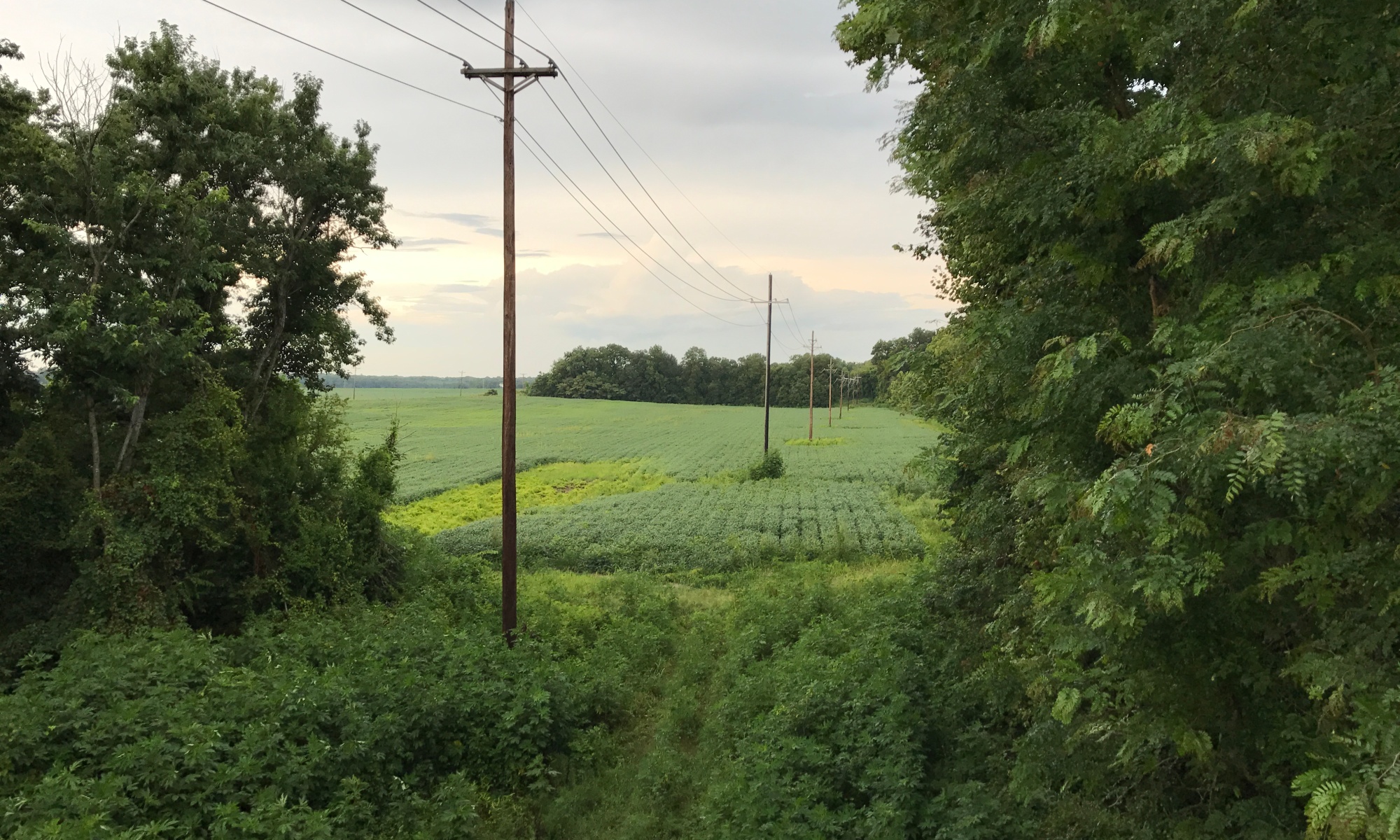
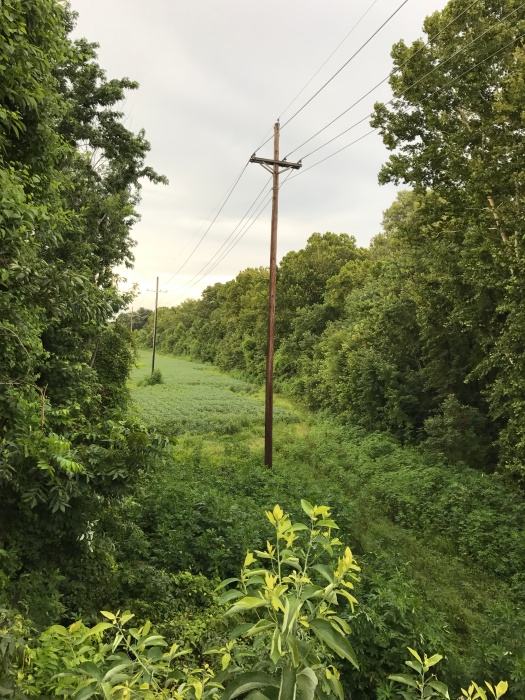
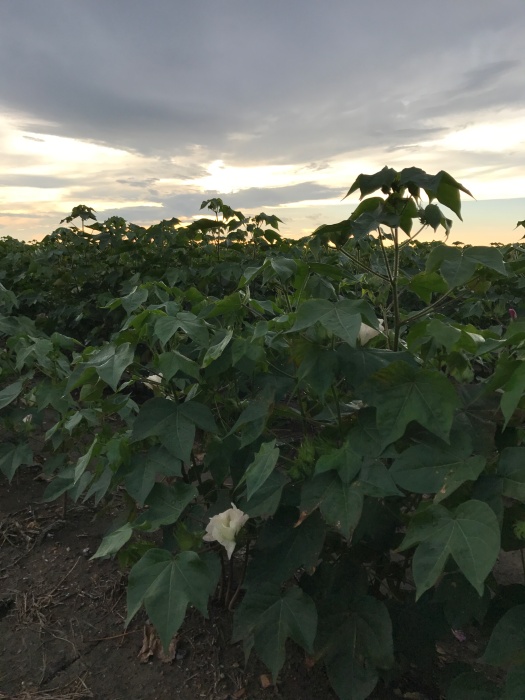
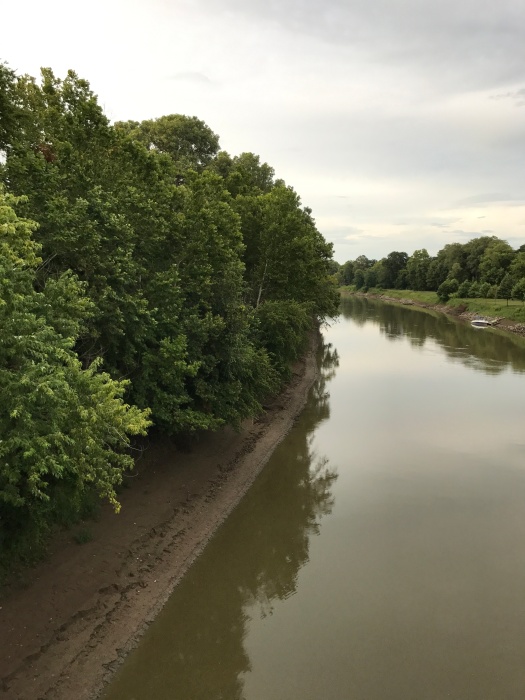
Money Road is not a place to travel on foot, so we immediately turned onto a dirt road that parallels the Tallahatchie River. Cotton and soybean fields stretched away into the unseeable distance. Despite all the cotton fields I’d seen in my life, it was the first time I’d actually seen cotton plants flowering.
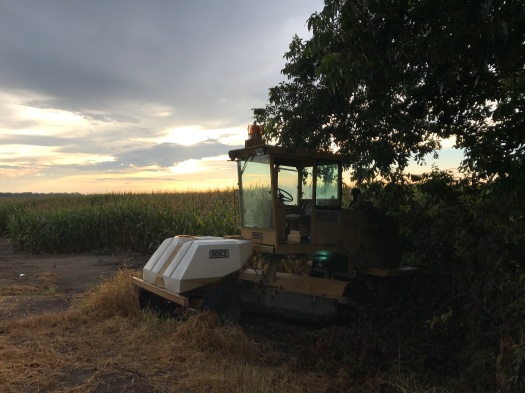
We passed a parked tractor, the glowing sun behind it. A deer bounded along the riverbank, leaping over tangles of brush.
We rounded a bend in the road, tried to remember where it led, and headed back so as not to be wandering around Money Road after dark.
That walk through fields in a Delta pulsing with life and light was one of the highlights of our visit home.
There are many myths about the Delta. Inevitably, they all ignore one of two things.
All of the hate and injustice and poverty and ugliness here was – and is – real.
So is the beauty.
Hike length: 1.6 miles
Difficulty: easy
Traffic: some in neighborhoods, none on the bridge or dirt road
Wildlife spotted: deer, red-headed woodpecker, squirrels
IMG_8127IMG_8129IMG_8137IMG_8139IMG_8143IMG_8145

Some who wander in the Manzanitas are lost

“If they don’t have to send out search and rescue, you weren’t lost.” -my husband
Mmm-hmm.
After our latest hike in the Manzanita Mountains just south of Tijeras, I took score.
Of the six hikes we’ve taken in the area, two were completed without any wrong turns. One required retracing our steps back to the car when we couldn’t find the trail that was supposed to lead us out. And one took us on an unintended three-and-a-half-mile detour.
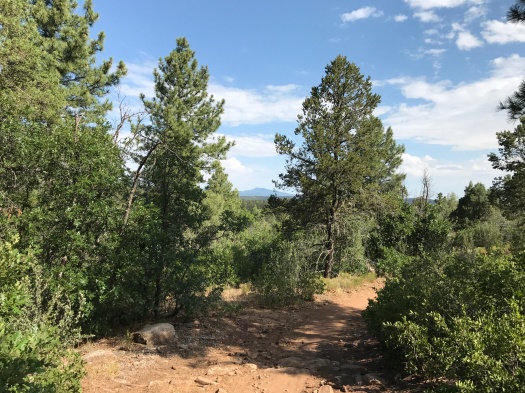
It’s a lovely landscape to hike in – deeply forested, a couple thousand feet above Albuquerque, with winding rock-lined canyons. But the trail system is primarily used by mountain bikers, and it’s a tangle, with informal trails cut between the official paths. It’s also a foothills area, with fewer distinctive landmarks visible from a distance than higher in the mountains.
Hence, directional challenges.
We were there for a short loop hike at Juan Tomas Open Space, which is City of Albuquerque property. We were the only hikers on Juan Tomas this morning, with plenty of mountain bikers, some of whom we saw multiple times as they made a circuit.
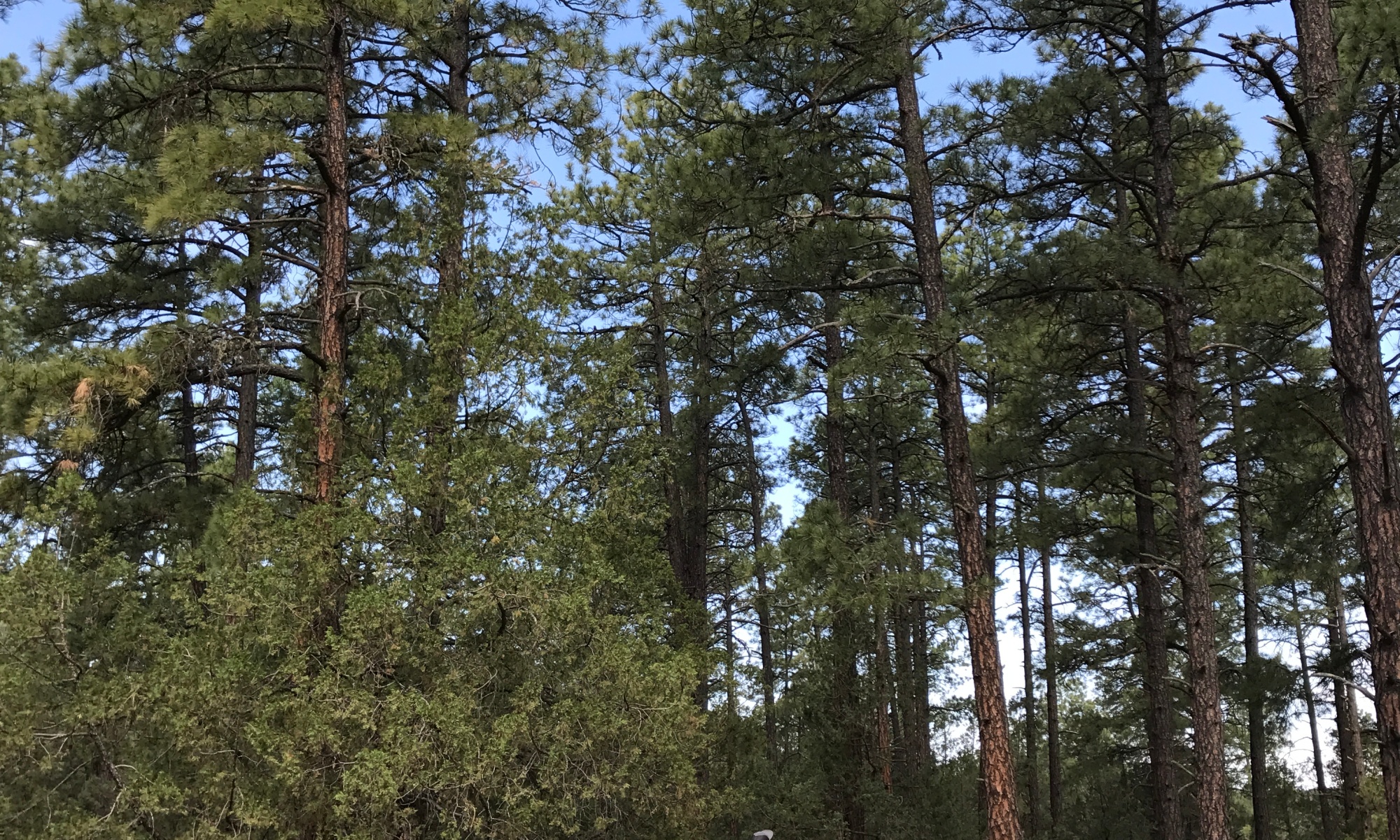
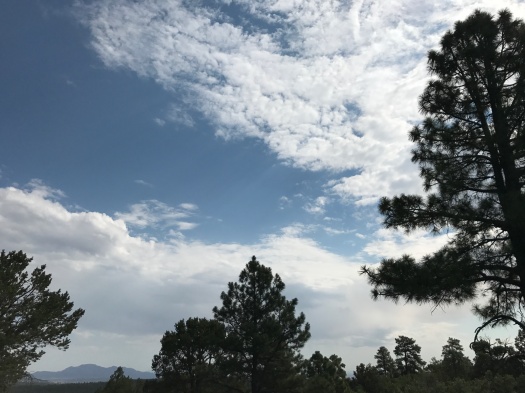
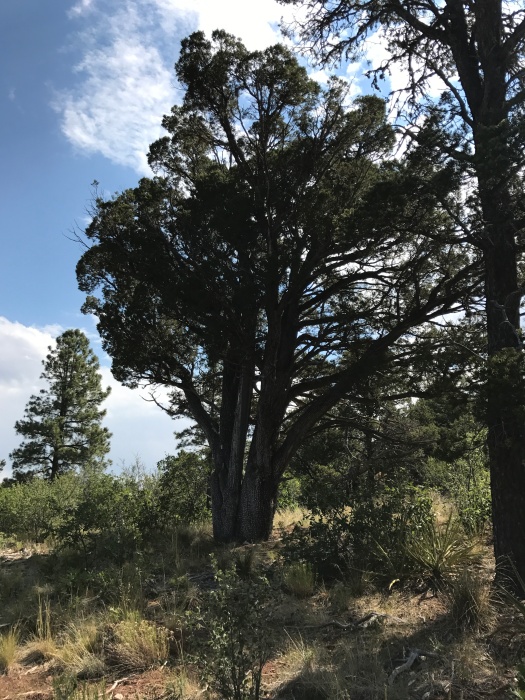
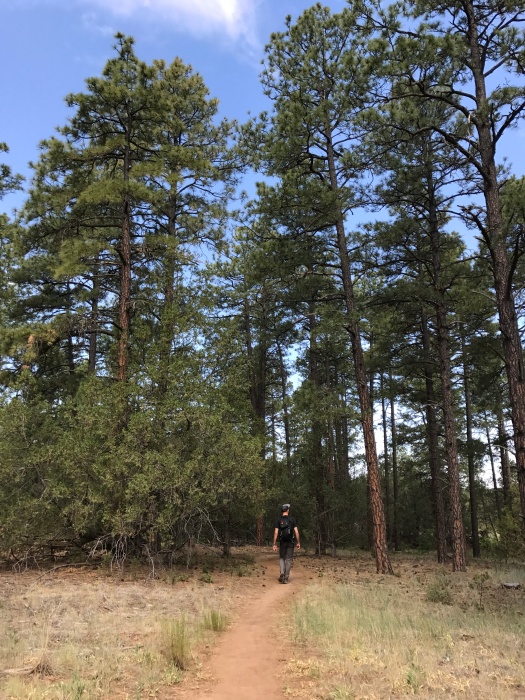
The area’s gently rolling terrain allows you a better grasp of just how towering ponderosa pines are than you get high in the mountains. This spot has some sweet alligator junipers, too.
Most of this hike is trees and meadows, but there’s a vista of Sandia Peak near the beginning of this loop. We could see the smoke from a small fire burning on the Sandia crest.
This is a beautiful hike during the period when the monsoon season is flirting but not committing. Clouds frequently slid by above, and when they did, a breeze rose that was just humid enough, without making you sweat buckets. The downside of summer hiking here: in some spots, there are lots of flies.
A black-and-white Abert’s squirrel darted across the path, then scampered up a massive ponderosa and looked down at us from high above. Birds chirped and called all around us.
Our guidebook refers to a spot toward the end of the loop where the trail splits four ways. We found two places where the trail split three ways, but never found the four-way split (something similar happened on our first hike here, a year and a half ago.) We took our best guess, but it quickly became clear it wasn’t leading us back to where we started.
We could see the road we drove in on through the trees, so we headed toward that and, about a third of a mile up the road, we found our car. (Oddly, the part of this hike that had the most flies was the part we hiked on the road.)
Our first hike here was in winter, with snow on the ground. Our second was in sweltering pre-monsoon summer. Both were worth taking.
But I’m beginning to think no matter how many times we hike this loop, we’ll never find the end.
Hike length: 3.2 miles
Difficulty: On the easy side of moderate
Trail traffic: A healthy dose o’mountain bikes
Wildlife spotted: coyote (on the drive in), crow, vulture, nuthatches (heard but not seen), Abert’s squirrel, lizard, juniper titmouse (I think) and many flies

IMG_8103IMG_8108

IMG_8106
Alligator juniper
IMG_8109
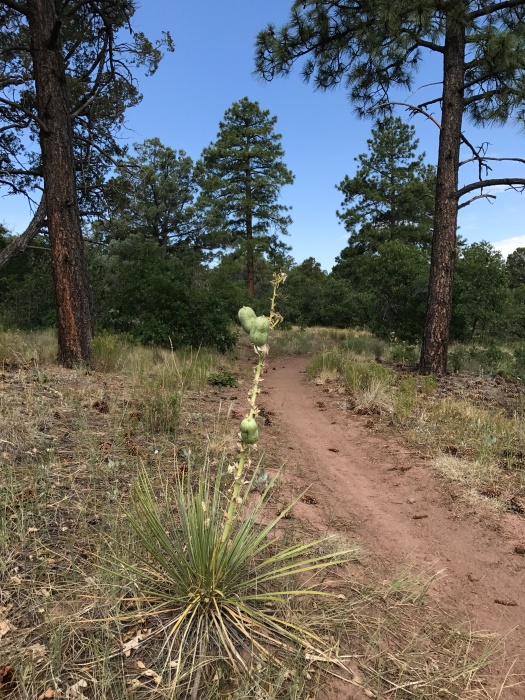
Yucca gone to seed

IMG_8111IMG_8112